Demystifying CBD & THC
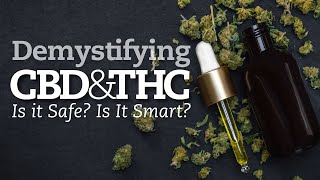
Aaron Hartman, MD explains the endocannabinoid system and how THC and CBD interact with it, focusing on clinical uses (primarily anxiety, sleep, and pain) and contrasting product types (full spectrum, broad spectrum, isolates). He reviews benefits (neuromodulation, anti-inflammatory, potential neuroprotection), notable risks (≈5% psychosis vulnerability, adolescent brain/developmental concerns, possible hormonal effects, synaptic/transmission changes), cautions about designer analogues (e.g., delta-8) and emphasizes sourcing, extraction, testing, and choosing clean full/broad-spectrum products for a wider therapeutic window and fewer side effects.
Chapters
So let's get the deep truth of the endocannabinoid system. What am I even talking about? I'm talking about THC and cbd. These have been hot topics over the last couple years. And so I wanted to just take a deep dive into what's going on with this. What's the big deal is THC is delta 9 THC, which is the technical term for it. That big of a deal? Does CBD actually help? Does it live up all the hype? Are these things 100% safe? How do you source it? How do you get it? I want to dive through all these topics right now to answer your questions on these. The first thing is, where does cbd, thc, where do they work? Well, they work in this thing called the endocannabinoid system. And this is a system that spans your entire body. The endocannabinoid system is in your organs, it's in your spinal cord. The CB1 receptors, which you may have heard that term used before, are primarily in your brain on neurons. But then you have neurons in your spinal cord, and the neurons in your midbrain areas actually regulate body temperature, hormones, heart rate. A whole bunch of your body's regulatory systems are actually regulated in your central nervous system. And then there's the CB2 receptors, which are on your immune cells, which 90% of the immune system is in your GI tract. So all of a sudden you can see how your CB1 with neurological issues, CB2 with gut issues. But then, as you realize, immune cells are also throughout your body. So it really does make sense how modulating or changing this endocannabinoid system could actually have a lot of systemic whole body uses and utilities. So what are some of the things we see? The research has shown us, and this research goes back to the 1980s, so that we're looking at 50 years, about 40 plus years of research on this. So we have a lot of great research actually on this topic of thcbd. What does it do? So we've seen with dysregulation from the research that it can affect your heart, be associated with heart inflammation, pancreatitis. It's associated with neurological issues, Parkinson's, Alzheimer's, we have animal models. We're actually using things to actually activate the endocrineabinoid system like THC and CBD can actually help with tumor growth and tissue growth and cancerous inflammatory cells. So there's a lot of things we actually, from research know this might have potential use, but what's the actual use? What do we have actual real world information on. It tends to settle into three major areas. Anxiety, sleep and pain. Those are the three major areas that a lot of clinical research, pharmaceutical research, and just people out there in the real world using these things for again, anxiety, pain and sleep, which again, that affects your gut, your immune system, your neurological system. So just kind of makes sense why this endocannabinoid system, why it's such a big deal right now. I wanted to find a few terms so you kind of know what we're talking about. The terms marijuana, hemp are actually legal terms. The word marijuana is used for any plant that has over 0.3% of THC per dry weight in it versus hemp has less than that. So you can't have a hemp product that has a small amount of THC in it. But for legal reasons, that's the definition. The term cannabis sativa indica, that's more marketing than anything else. Because of all the hybridization since the 1960s, 70s and 80s, most, most of the strains I use today have so much more THC concentration in them that functionally the difference between hemp and marijuana is it's not really, it's a legal term, not an actual term as far as, you know, medical stuff. And so we tend to use the word cannabis just to cover the overall terminology of what we're dealing with. Then as far as the hemp proper, we have full spectrum cannabinoids, full spectrum products, you have broad spectrum products and, and then you have cbd, straight cbd. So your full spectrum product is just taking the full plane, extracting everything out and there are amounts, there are trace amounts of thc. So if you're getting a full spectrum product, you have to realize that if you get a urine test done, you actually might test positive for thc. A broad spectrum has all the extra compounds and stuff in there that are actually have anti inflammatory effects, but they remove the THC molecule. Then isolates of CBD are just cbd. The issue is the research is showing there's this thing called the entourage effect. What that is is actually a lot of the medical effect you get from CBD is because there's hundreds of other types of cannabinoids, terpenes, plant phytosterols, chemicals, omega 3s, all these other things are in this herbal plant that have effect. So the result is when you look at research and you look at a straight CBD isolate or extract, you have to dose it almost ten times higher today's similar effect than you would for a full Spectrum product. So the way you think about that as A full spectrum 10 milligram or 5 milligram product would probably equal more to like a 100 milligram straight CBD product. And just because of side effects and other things, there's been a big change in the medical use of these products to go more towards the full, clean, full spectrum products that have all the cannabinoids in there. But again, that also does have a little bit of thc. One of the interesting things as well, the way this occurs naturally is if you're taking THC with cbd, the CBD tends to counteract some of the effects that come from the thc. So using a full spectrum product or product that has cbd, you're less likely to get some of the side effects that people are familiar with or know about that they know related to thc. So what are some of the side effects people can get from THC that are worrisome? One of the biggest ones people don't talk about is about 5% of the population can get a underlying psychosis from using thc. The other thing as well is there are people who have anxiety disorders, bipolar, schizophrenia, other kind of autistic tendencies. And use of THC over time can actually uncover those tendencies, which is concerning. And just the way the products are these days, they're more and more, more powerful than the stuff that people were using back in the 1970s and 80s. So that we're seeing a lot more kids who are getting, or adults, whoever that are using the products, having these bad side effects. The other thing that's important as well is that THC can affect brain development. Young adolescents brains are developing all the way through their late 20s. They're making new connections. That's one of the reasons why young 18 year old males tend not to have as much foresight and to do riskier behavior because that the part of the brain, the prefrontal cortex, is not 100% developed and that development can be actually blocked by use of THC. As you're, if you're an adult past your late 20s and your 30s, you don't see the same brain effects from, from THC because that part of your brain is already fully formed. So using THC products while you're, when you're younger actually can potentially affect brain development. That's one caveat. The other caveat is that there is a thing called synaptic lengthening that can happen with long term THC use. So it actually slows transmission of nerve potentials between nerves. There's a thing called disinhibition syndrome where people just don't have the same drive, they lose their drive and so they kind of again, they get disinhibited. And the other thing that can happen with long term THC use is actually for men. It can actually lower your testosterone level and increase your estrogen level. So you can actually get gynecomastia or mild male boobs that can suppress your testosterone level. But there are a lot of benefits from THC use as far as pain, anxiety, sleep and a bunch of other things. And that's where using products that actually have the CBD can be useful, because of the CBD's effect on continuing the THC as well as the other effects that the CBD has. And then the full spectrum products just have so much more stuff in it. And I want to talk about that a little bit as well. So let's talk a little bit about some of the benefits or the differences between CBD and thc. The one thing is you can't really get intoxicated on cbd. Even high doses might sedate you, make you tired, but you don't have psychological psychiatric effects of CBD like you do with thc, which makes it a lot more useful as far as using it for general population. The other thing about it is when you use a full spectrum product with the entourage effect on all of a sudden when I mentioned all the places in your body where these endocannabinoids are, you actually can hit those with a full spectrum product with less side effects, a lower dose. So that's one of the big advantages of that. Now on the market there are these designer drugs which are, some of you may have heard that term before, especially in the bodybuilder world. They use designer testosterone. That's a new molecule that can't be tested for Delta 9. THC is the natural quote, unquote, THC. But there's Delta 8 many of you all have heard about. It's a kind of designer drug. You take the regular THC and change it a little bit. It tends not to be as strong as your regular thc and you still have to worry about all the side effects. The doses tend to be a little higher, it's less regulated because it's kind of like the wild west out there. And also since there's not any quality standards, you're more likely to get solvent exposure, chemical exposure, heavy metal exposure in your Delta 8 Prox. So that's one thing to think about when you think about Delta 8 THC products versus your standard THC Delta 9 or your other CBD type products. One last thing I want to talk about as far as the pharmacological or the drug use with CBDs are these things called terpenes? Terpenes are actually plant chemicals that come in herbs. A lot of herbalists or aromatherapists are actually familiar with the word terpenes. Hemp has a lot of these as well. Or cannabis has a lot of these as well. And so a full spectrum puck will have all these terpenes and they can have anti inflammatory, anti immune, modulatory gut effects sometimes a lot about the effect that help modulate your immune system cells. Some of the research on tumor growth and some of the research on the brain protection effects of CBD actually related to some of these terpenes as well, which is one of the interesting caveats. There's a lot of interesting research coming out using CBD actually to protect the brain from traumatic brain injuries. The question is, is it purely a CBD response or is it from this entourage effect? Probably a little bit of both, but. But you tend to see that with a CBD product. You see the opposite with a THC product. Which is another reason why I tend to focus more on doing a CBD proc that's a full spectrum because you're getting some of the brain protective benefits that come with these, the full spectrum cbd and you don't have the psychotic psychiatric kind of bad stuff that happens with the THC products. So that's something keep in mind as well. So how does it compare with some of the current drugs in the market? There's dronabinol nabilone. These are synthetic THC molecules. The interesting thing, these were created in a time when THC was not available to be used. And they tend to not to work quite as well. They tend to have more side effects related to thc. And with the fact that now we have pretty clean broad spectrum CBD products as well as the cleaner THC is really the use of the pharmaceutical drug ones. It's kind of waning, not being used quite as much. Especially since we're having more knowledge about how these broad spectrum products work and we can actually dose them a little more. And knowing you have a very safe therapeutic window. Therapeutic window is the idea of how much of something can you take and have minimal side effects and have the drug be safe. And so that's one of the additional advantages of a broad spectrum product is of a very broad therapeutic window with minimal side effects and you can still get the therapeutic effect. So in summary, there's a lot of great benefits that can be health benefits you can do from using broad spectrum cbd. The question is you got to make sure you get a clean product. You got to know where it's sourced from. You want to make sure there's no different chemicals in there, and you also want to make sure that it's being tested appropriately. That's a big thing I want to talk about next. So when you're getting a product and looking at it, you want to make sure one, you're where it's coming from. Right now there's a lot of stuff grown all over the place. Sometimes you don't know where the stuff is coming from. A lot of the crops are sprayed with pesticides, material, arsenics and other kind of things. So you want to make sure you're getting a clean source of it. The second thing is like, how's it being processed, how's it extracted? What are the solvents being used to extract the cbd, terpenes, et cetera. And then is there some kind of distillation process where the product is actually cleaned? And that's a really important thing to know when you're getting a product, how this stuff has happened. And ultimately that comes into first and foremost, do no harm when people recommend stuff when you're doing things. As a medical doctor, the very, very first thing I'm supposed to do according to Hippocratic oath is do no harm. So I tend to take that seriously when I look at products. You want to make sure you're taking something that's clean, safe, been tested, and there are products out there that actually are being currently being researched and studied at the NIH as well as different universities, University of Colorado, Eastern Virginia Medical Center. We're actually using these higher grade products. That's where when I'm using something, I want to use that kind of product that I know is clean, I know it's safe. I know that at the very minimum you won't have any bad side effects from it, from the processing process of things. But again, thinking about a lot of the bad side effects that we have related to Sprox are from exclusively used, eating high doses of THC and not using the broad spectrum products that have all these terpenes, all these phytosterols, all these things that really have the positive immune modulating and neurological modulating effects. So hopefully that information was helpful. Just to give you a basic overview of CBD Prox, what there is out there. What? Thinking about how to use it. There's a lot of different uses for it. But first and foremost, you want to make sure you're doing something clean, safe, that doesn't cause any side effects. And most of all, you want to be smart how you do things. Take care. We'll talk to you soon.
More from Aaron


Too Many Gut Fixes Can Undo Your Healing. What Helps It Last | Dr. Sabine Hazan


Women’s Heart Attack Symptoms Differ From Men’s 95% of the Time — Only 30% Have Chest Pain #shorts

Heart Disease Kills More Women Than All Cancers Combined — 80% of Cardiac Research Is on Men #shorts

Women’s Physiology Was Systematically Ignored in Drug Research — The Consequences Are Still #shorts



It Took the FDA 20 Years to Realize Women Need Half the Dose of Ambien #shorts