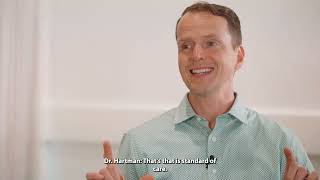
Aaron Hartman, MD, adopted a daughter with cerebral palsy and rejected standard medical recommendations including a feeding tube and eye surgery. His wife's research into growth norms for her condition led him to question conventional care and become an advocate for challenging medical assumptions.
Chapters
Can you walk me through your background? I mean, you, you've done a lot in this, in this space, but walk me through, like, what got you interested in this line of work and how did you arrive at doing what you do?
Well, man, I was. Ever since I was a little kid, I wanted to be a doctor ever since I was in fourth grade. There was a time in 10th grade where I wanted to be a lawyer because LA Law was a big thing back then. But I grew over that. I grew out of that, but went to medical school, became a doctor and just, I was going nutritional route. I mean, I like to study, I like to learn. But the inflection point in all that was when we adopted my first daughter. And she has cerebral palsy, which is a, it's a neurological issue where the kid typically has like no oxygen to their brain at some point in time before they're born, they can result in all kinds of neurological issues. And my daughter was never supposed to walk, talk or crawl. And she was actually one of my wife's. My wife's actually a pediatric OT who works with kids with special needs. And my daughter actually was one of her patients. Wow. So when her foster home was closing down, my wife was like, would you bring this little girl into our home?
And I'm like, I'm like.
And again, I was kind of like, we already mentioned this before. I was like, sure, I can always, I can always give her back. Right? Free trial, I know, exactly. And well, you know, again, I'm a little hard headed at times, but fell in love with a little girl. And so during the adoption process, or foster to adopt process, the gi, the gastrointestinal specialist was like, we need to cut a hole in your little girl's belly, put a plastic tube in there so we can pour sugar water called formula to help fatten her up because she's too small. And so my wife is like, well, this will affect. Even though she's never supposed to walk, this will affect crawling, which leads to walking even though she's not supposed to talk. It'll affect chewing and swelling, which affects speaking. So I was, we were like, okay, we'll just opt out of this one.
And sorry. This was, this was advice given by a doctor. This was somebody, a well intentioned person who felt as though this was the right solution for your daughter.
This was a pediatric gastrointestinal specialist at one of the top places in Florida with this amazing advice. And my wife, who was in that world already knew patients this person had seen. I knew they tended to do procedures on kids. And so we opted out of that. And the inflection point wasn't that it was six months later when my wife, who's very, who's a big researcher, found a growth chart for kids with cerebral palsy, which is what my daughter has. And my daughter was right in the middle of the growth chart. So she was normal for condition. And it was like, how did the specialist who we, you know, again, people around the state come to see this person, how did they not know that my daughter had a special growth chart for her?
I mean, how do they not know? I mean, because you're speaking about people who are likely highly intelligent that have probably the motives are gold, they really want to help people. But how is it, I mean, I'm just so curious as to how could that happen when you have a doctor who is meant to be a world class expert in particular field like it, why does that happen?
But it doesn't matter what level you're at. There's always people who are, there's always A players, B players and C players. It doesn't matter if you're an engineer, a lawyer, a physician. There's all those people and it's typically 20% of people are the A players who are like literally the best in what they do and will continue to be the best.
Right.
But even in a high level thing, there's most of them. Stop. I got my certification, I passed my board and I'm going to do the exact same thing for the next 30 years of my career.
Got it, got it, got it.
And that is standard of care.
Got it.
That's the norm. That's a group of the average physicians getting rather getting together and determining what the standard of care is for kids with issues, patients with heart disease, whatever it is. And so that's, it's just our system and it's just kind of what it's historically, it's always been like that. This is not a new thing. It's just now we have the ability to research on. You can research on your own, like my wife did and figure out what's going on. Because she worked with kids with special needs. She saw this happen over and over again. Where parents would be desperate for an answer. Go research something somewhere else and find out. They're doing this at Children's Hospital in Philadelphia or they're doing this up at Brigham and Young. They're doing something somewhere else. Why don't we do that here in Richmond? Right. And their parents will go there because that's what that's the way it works. And so that was when I first kind of got off the path of realizing I need to question the experts.
Sure.
And then what happened again with my daughter when they said, you know, she has this thing called strabismus, which is where her eyes would kind of wobble a little bit. Wow. That's related to some of her neurological issues. And they were like, let's cut her eye muscles, tie them down so that she looks more normal. I'm like, I don't want her to look more normal. I want her to be more functional and one day be a functioning adult, you know, who now can play chess and plays Battleship with me and walks around the house with her forearm crutches and won't stop talking and sings to her grandma. You know, it's like. It's like all the things. Yeah. But she was supposed to be a vegetable in the corner. Wow. To think that she would be like. Because I've seen those kids that are in wheelchairs in the corner. And just to think that could have been my daughter. Every time I talk about it, it just makes me emotional. And that's like, kids with special needs are unique Iris population for that. And so that's what kind of got me down this road of like, I need to be my daughter's advocate. I started to. I didn't trust the experts after those two times. Right. Someone said something like this, I'm going to dupont to talk to the CP expert there. I'm not trusting you. And so you that couple times. And you realize I have to be the expert for my daughter.
Right. You have to be her advocate. Because the standard care that Western medicine comes only go so far, and it's based on things that are taught, and this is how it is, and it's not moving, and this is what we do. And if you question that, you might become part of this renegade group of doctors that think differently. And we don't want that right now. We want people to toe the line.
It's amazing. That renegade group of people is becoming more and more mainstream, and there's so many people who are craving that now and looking for it, and they're seeking me out now because of that sa.