Healing is Non-Linear: The Journey of Overcoming Chronic Fatigue & Anxiety
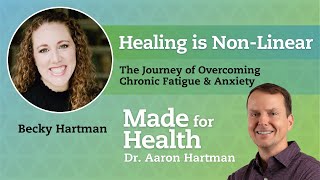
Becky Hartman describes decades of anxiety and chronic fatigue triggered by formaldehyde exposure and an extreme low-calorie diet that mobilized stored toxins. She recovered through nutrient repletion, electromagnetic field therapy, and breathwork, though healing involved setbacks and required processing family trauma.
Chapters
Welcome to another episode. And with this episode, I'm going to be interviewing co CEO of Richmond Integrative and Functional Medicine, Becky Hartman. We're going to learn a little bit about her health journey and what kind of got her into this field, as well as how it's impacted my practice. Welcome today, Becky, and let's start talking about your health story, your history. When, when did you first have a health event, a health issue? Like, walk us through some of your health crises up to the current point.
I feel like I can go pretty far back and actually find some, like, little things. The further forward you get, the further in this journey you get, the more you can go backwards and go, oh, I wonder if this was a thing. For instance, in my freshman year of high school, I actually threw my back out and hobbled around school for a couple weeks while I healed after running the mile in gym class. So that was kind of interesting. But then the next really time where I feel like it, my health really affected my functioning was in grad school. And I honestly kind of chalked things up to like, oh, finally, you know, I guess school's hard enough now that like, it's, it's taking its toll on me. And later on we. I kind of put some more pieces together, but I basically, I had anxiety for the first time in my life. I had. I actually, interestingly, like, couldn't. I didn't gain any weight then I actually, if anything, probably like stayed kind of thin, but I'm sure I probably lost muscle during that time, but. And I just really, really struggled to keep up. So school, my. It's like my brain wasn't functioning properly. I had brain fog. And I just. The anxiety was like, probably the worst part of it. That was the part where I was kind of like, you know, you just feel like you can't get a handle on things. And that was really the first time. And as it started, my first. We started classes in the summer, started in the summer, this, this issue happening. And it actually was probably the worst. The second semester in, it like kind of escalated over the summer. And then that first semester I just, I even struggled to like, keep my grades up and keep up with my, my classwork and stuff like that. And then as time went on a little bit, I kind of got some strategies in place and I got a little better handle on things. And I of got it together and started to succeed again in school. And I just thought, oh, I'm finally getting the hang of things.
And then one of the things I really remember with A lot of that, because when we met, it was probably a year, two years later.
It would have been the next year, I think after that.
You kept on telling me how you almost. How many times you almost dropped out of school, you almost quit, except for your roommate, you just. That was something like. And I remember thinking, okay, now that's over exaggeration, et cetera, et cetera. I think recurrent exposures have let have been anxiety. I think has been an ongoing kind of thing with you. Let's fast forward to when we kind of figured out what was going on back then, how we kind of put the pieces together. Like almost 15. It was 15 or 20 years later, we actually figured out why you had this to build anxiety and what kind of clued clears and include you into that.
So I noticed, I went to visit my parents and I know and they had put in new carpet through their. Through the main parts of their house and into the bedrooms and everything. And I noticed that by the end of the visit, you know, I slept there and everything. And our kids were not super young at that point, but I really felt just loud. I wasn't sleeping well. I actually got home and like, felt pretty sleepy for like a few days after I'd gotten back. And I thought, I wonder if like, something's going on with like the carpet. And then another time I was actually traveling for a homeschool conference to learn how to educate our kids. And I. They had just remodeled the whole, like. And redone the whole. The whole hotel and redecorated. New carpeting everywhere. New carpeting in the rooms. And you could smell it. I mean, you could smell that it was all. It looked lovely. But same situation. I was at the conference and I remember one afternoon I actually had to go back. We had some free time and instead of hanging out with friends, I actually like went back to the room to take a nap because I was just zonked. Like, I couldn't. I just wasn't normal and brain foggy, you know, same kind of situation. So it's sort of like, what's going on here? Like, and that's where you sort of take those pieces and start to like, pull them in and go like, what's going on? These are both like carpeting situations. What's in carpet? You know, making those connections.
It's really interesting because eventually, like the light bulb now, you know, you know, give credible credit to do. I'm not sure how much of your input or my input, but just the light bulb went off because I remember specifically going to the same anatomy lab you went to because you, you mentioned later on. Oh yeah, anatomy. And just the light bulb clicked in my head. I knew that anatomy lab. I knew the place that was filled for formaldehyde that I was at for three to four months straight. It was also a click. Like that's when you had a massive formaldehyde exposure for like half a year straight, maybe. Yeah, yeah. And so that then started the whole chemically induced triggered anxiety, fatigue, all those kind of things which led into other health issues. And why don't you walk us through some of those? Because you had some issues where you actually had debilitating fatigue for about five years where you were hardly even functioning.
Right. So the fun thing about being married is I remember it a little differently. I remember coming to you and asking, do you think it could have been the anatomy lab? And like all of it? And you were, we were both looked at each other and we were like, my gosh, that's totally it. And so, yeah, so that, that was kind of where we put that giant piece together that this is like started this cascade of other issues over a lot, over decades really. But yes, when our kids were, we've shared, you know, a lot about our family and some different stressors that we've had with our kids, adoptions and things like that. And so I certainly bore a lot of the brunt of making certain things happen and just having, pouring myself into helping our kids from hard places, which was stressful. And I think that in and of itself probably also impacted my health and led into some weight gain and things like that where I was like, oh, let me, let me see what I can do about this. And so I started a program that was very ill advised and essentially set off a five year journey of debilitating fatigue and struggling to function day to day. And it felt impossible to get out of bed, but I had to because I've got kids with special needs who needed a mom who could be there arms and legs that I still don't kind of know how exactly I got through it, but I, it led me down a path of like trying to figure out how I could fix myself and get better.
And that was also like one of the fad diet kind of thing where it was, I think you were doing like 500 calories a day, maybe it was really low for like a month straight taking these supplements. So basically you're going into great ketosis, burning off lots of fat and releasing fat soluble toxins which your body and we've since learned with Your hypermobility, you have a high protein need to help detoxify. And so basically it was like the perfect storm of releasing these toxins from fat melting, not having enough protein in your diet to cope with that. And just basically it was this. Back then we called it adrenal fatigue, which was all the rage. Back now. We know it is basically a kind of neuroendocrine dysfunction. The technical term would be HPA axis dysregulation, where the toxins of load hit your brain. Your brain's like, I'm done, I'm out. And created basically a chronic fatigue syndrome, which is what chronic fatigue is. It's inflammation in your brain. And so in. That took about five years. Some of the things we're able to do, including pulsed PMF for pulsed electromagnetic field therapy, which is a really cool way actually. It's really interesting. You can actually, um. It's a way to activate your parasympathetic nervous system. And the cool thing about it is that it can help reregulate some of these sympathetic parasympathetic, you know, fight or flight abnormalities. But it was, you know, that trigger on. On top of the previous stuff that accelerated things, nutrient deficiencies as well. Where are you at currently with your health? You know, a lot of times we talk about, talk about, search about our kids. Haven't really talked about myself that much. We haven't really talked about you a whole lot. Where are you at currently with your health? Because you've had these ups and downs and crashes. Times where you've been so actually crashed so bad you didn't think you could use someone's like a trauma response where you're kind of like, oh my gosh, this is all happening all over again. You know, where. Why don't you walk us through that? The mind. The mind. Because that's a big, big part. Because it was like the anxiety part. We know how the chemicals affect anxiety. But then we had our family trauma stuff happen and then your medical trauma. How did that play into like every time you had setback, how did you resp. What was the process of that?
So if we could go back a little bit further to where I still was like struggling with the fatigue. Just, just an example. And I'm sure a lot of people watching or listening can probably relate to this. Um, I, for instance, would be like, you know, what I really need to do is exercise. Like, I gotta build this muscle back. And I would try to work out and I would get, you know, I would do like high intensity intervals or something and which is, you know, 30 seconds of like intense, whatever. And then I would, I would immediately feel sleepy enough that I could go straight to sleep, which is weird, probably not super functional. So that's kind of where I was. And that was once I was at a point where I even could consider trying to do something active. So that was not even at the worst of it. So that's kind of where I'd come from. And then, because part of my issue was related to the fact that I did something really stupid and tried this fad diet that tanked me. And then I also continued doing it when I started to feel really poorly on it because I was like, I'm not a quitter. I don't quit things. Like I, I, I do whatever it takes.
Sometimes it's, sometimes it's good to quit bad things.
Right? Yeah. So that, you know, that really got me into that mess. And so then, you know, as I progressed toward health and started healing and really addressing a lot of the issues and fatigue wasn't as consuming. I, you know, I would try to do things like we took a trip and we tried to just walk to the top of a tall hill. It wasn't anything that I would even consider particularly strenuous now, but because it was just a walking path, people were probably pushing strollers up. It was, it was steep but, you know, not, it wasn't like I was hiking up the side of a mountain or climbing up rocks or anything. And I got, not even halfway, I think up and I started to feel that, just that feeling of fatigue sort of creeping in and like it was getting harder. And then anxiety kicks in and you start to get, it starts to get hard to breathe because you're feeling anxious about it. And then that in my body would make me feel like I'm crashing, I'm crashing, I'm crashing. And I fled the scene of that experience because I was like, I have to get down off this hill. You know, essentially my body was communicating to me that I was near death probably. And I just thought, I'm going to crash again. And in my mind I'm thinking, there goes another five years that I'm gonna struggle again and not be able to get a bed and miss out on my kids lives. And you know, you stepped into so many things and took over for a lot of my responsibilities and I missed, I just feel like I missed so much. Like I thankfully had a great, amazing support system that was willing to step in and do things and come home and not have dinner and have to make it after a full day of work and all these things. And you know, I. The fear of going back there again was that became the thing that was the most debilitating.
And this is on top of three kids with special needs, you know, dealing with their therapy, medical appointments, their education, on top of dealing with just being married, this life. Was there a particular stressful, traumatic event that also triggered some health issues for you?
Yeah. So thankfully it was after the most debilitating part of the fatigue aspect of things that this happened. But our son had an accident and I went to a very. Well, I ended up in a very like sympathetic overdrive state and sort of, I always had like this sense of foreboding that like horrible things would happen. I would be afraid if you took the kids out and did things, I'd be like, you know, I mean it was like not really rational but like I was afraid of everything. Like car crashes, you know, somebody falling into a pond and drowning, like, you know, anything. I, I just had constant anxiety. And after that, like after that process of obviously there was like the acute stage of like, you know, he was hurt, then he was sort of okay, but not all the way okay. And then we had to do like a lot of appointments and figure out what was going to be like the long term effects of the accident on him. And then after that it just became this like, just constant state of like me panicking about things like to put things in perspective.
Put things in perspective. Our son was actually crushed in the elevator.
Yeah.
So those kind of accents. Kids, if he's a miracle, he's a lot. They usually don't actually make it through that. And so there's that drop, eight hour drive back from Kentucky where you were just kind of like, you know, had time to ponder what was going on. And then one of the results after that was that every time he disappeared, we love Farm clear will disappear. And if you didn't know where he's at all of a sudden, like that trauma you'd spot and thing was he popped back up a few minutes later and still take you four to five hours to kind of gather yourself. It was this pathologic, limbic kindling kind of thing. And you actually did something that actually broke that cycle. So talk about that.
So I, I would, I probably worked through some degree of it just you know, as time was passing and a lot of different things that I tried related to like food and movement and things like that that, you know, I was on a progression of like getting a bit better. But it wasn't gone. Like, it wasn't going away. It wasn't. You know, we hear time heals all wounds. Well, usually it's a lot of hard work. That's nothing to do with time. It takes time to do all the hard work. But it's not necessarily like I can just sit here and whatever this issue is going to go away. And I, I think three or so years after his accident, two or three years after his accident, I participated in a breath work session that was like pretty intensive and we actually often link to it on our, in our communities and stuff. So Sachin Patel does a. It's called psychedelic breath work. It has nothing to do with consuming any psychedelic. No drugs here, drugs here, psychedelics or anything. But it's like the process of the breathing and the different. It's a little wacky seeming to some people. And one time of doing that, I did it live with, on zoom with a group of people. So, you know, you had a little bit of feeling like, I can, I can really press into this. Um, I honestly wasn't sure if I was going to do it. I was like, this seems a little out there. I don't know, like, what am I opening myself up to? Um, but I went ahead and, and participated. And I can truly say from that moment forward, that panic that like just that foreboding thing where I would worry all the time that like, you know, everyone I love is going to perish in a fiery crash or whatever, didn't happen. It hasn't happened anymore ever again since then.
It was really interesting kind of with that psychedelic breath with Sachin, because from my perspective, looking at it, it's like using your breath as a way to activate your sympathetic, your parasympathetic nervous system, which is your rest and digest your healing part of your immune system. But to do it almost in a pharmacologic drug like way where using your breath as a vagal nerve activator. And I've been in rooms, I've done it actually three times and been in rooms of like 100 people. And it's, you know, it's basically the, the breath work gets you to a place to actually let your body kind of heal, which sometimes we don't get into because we're so busy and we have time to like sit and doing breath work. And those of you out there that are like biohackers, that are in the whole biohacking thing might be familiar with this where you hyperventilate, you blow off CO2 and what happens, you get constriction of your vessels, then you do some slower breath and then you get higher CO2. And so actually this is actually almost like massaging in a certain way your central nervous system. Very, very powerful. But I've been rooms with patients with people and they have these breakthroughs with their own trauma. They go back to these past events and get healing. The point of me sharing of us, I think of us sharing that is that there's a lot of trauma work out there, not just emdr, not just tapping that actually biopacks your brain and bypasses these what appear to be, you know, irrational fears, irrational concerns that every time our son disappears, he's gonna, he's dead, he's in the pond somewhere, he's floating somewhere, you know, and it's like, no, he's the now 13 year old boy that does 13 year old boy stuff. But that's that irrationality of it that you can't talk someone out of trauma work actually can take people through that. And so we've done a lot of this stuff. It's interesting. I think part of our story, me being a functional medicine doctor, you being a health practitioner. For those who don't know, my wife Becky actually is a pediatric OT by training. So her field of expertise is actually kids with special needs. And so it took us some of these things 10 or 15 years to kind of figure out. So it wasn't overnight, it was a journey. And so we could talk about this for hours. We've actually discussed it back and forth three years. Do you have any parting thoughts to share with people, encouragement about their health journey? Like, because sometimes it's, it seems impossible. There are times where it seemed like, you know, you hit a dead wall, like this is your life for the rest of your life, right? And there's times where you have these really great insights. What, what advice, help, perspective would you give to people as far as their own health journeys from your own personal experience?
I think one huge takeaway is it's really important on the, on the front end or wherever you are in your health journey to understand that healing is non linear. You're not going to just, you know, start on a path and like you make a clear, clear, you know, I'm here and like I'm always going in this direction and eventually I end up, you know, in this better place, this, whatever this better place is, or I'm healthy or I'm, I'm whole as it's, you know, we've just discussed like I had one debilitating Fatigue situation. And I was definitely much better than that and then ended up in this other situation after our son's accident. But I did have tools going into that that I hadn't had, I wouldn't have had if I hadn't had the other difficulties and the things. So we talk often about how we believe you were made for health. Like we were made for this. Like we were made to heal. Our bodies are made to heal. It isn't, um, like the story is always being written that the journey's always happening. We're not kind of probably never arrived. We're always going to have new things that we need to contend with. But you also bring those tools with you to the next thing. And it's really important to try to look for that stuff. And then the, the mental battle has been the hardest for me. The psychological piece of not just always feeling like I'm gonna go back there again. And not that I, I'm more wise now I understand to listen to my body and I'm much, much, much more careful. For instance, we went and did a really cool thing in a Swiss clinic that was, you know, meant to be this great week of detoxing your liver. And they had all this food made for us and is a neat thing that we got to do. And I went completely toxic while we were there and knew immediately that I needed to go talk to them. And you know, you helped me navigate, you know, changing the plan so that it would fit me and I needed protein. I wasn't getting, I need something to support the detox. So that type of situation, you know, we just tackled it. We didn't, what, I didn't have to feel like I'm gonna die or be, you know, triggering this fatigue. We saw it happening and we were like, we gotta do something about this. Like, not just like I'm just gonna push through because they know what they're doing. It was like, no, actually help me.
They actually did. And that's where you have to figure out, you know, you know, I'm people's guide. I tell them, they're consultants. You know, ultimately it's your journey, it's the patient's journey. And they have to know their body well. They have to be educated enough and attuned to their health, health enough. And it was really interesting that situation where they just, just changed to a, a plant based vegan diet for the detox, which was very, lots of living vegetables, living food, right. A vegan's paradise, but almost no protein. And when you start feeling bad it was kind of like similar symptoms you had before. I'm like, let's get a blood count, because I was worried about you having a kidney stone or infection. And your white count was like 22,000, which usually when you're septic, we have pneumonia, it's that high. And then they check your CRP, which is over 15, which usually happens with bad infections. And literally giving you egg whites and amino acid capsules made that go away. And that was one of those things, you know, it's like, my wife is toxic. Not in a bad way, but you actually have a lot of toxins. And when you ramp up phase one detox, you know, the protein sitting there, your body's gonna freak out. And so it's one of our. That kind of played back. And we then we've looked back in the past to reinterpret the past, knowing that you just need more protein to detoxify. You feel better with whey protein for a reason. You feel better on a high protein diet for a reason. And just putting that, that bit of information, your toolkit take along. And next time someone says, hey, I got this great new fad diet, you're like, yeah, not here, you know, so it's a great. Thanks a lot for your time, your input. I know we'll be talking later on about some other things you're doing, and thanks a lot for sharing with us and the audience your experience. Of course.
Of course. I love our people.
Excellent. All right, take care, everybody. Be well, and we'll talk with you soon.
More from Aaron

Too Many Gut Fixes Can Undo Your Healing. What Helps It Last | Dr. Sabine Hazan


Women’s Heart Attack Symptoms Differ From Men’s 95% of the Time — Only 30% Have Chest Pain #shorts

Heart Disease Kills More Women Than All Cancers Combined — 80% of Cardiac Research Is on Men #shorts

Women’s Physiology Was Systematically Ignored in Drug Research — The Consequences Are Still #shorts



It Took the FDA 20 Years to Realize Women Need Half the Dose of Ambien #shorts

Until 1993, Women Were Banned From Clinical Drug Trials — Then Those Drugs Were Prescribed t #shorts