Healing Mold, CIRS, & Biotoxin Illness (What is CIRS?): Episode 1
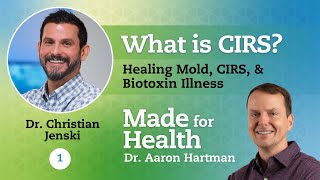
Chronic Inflammatory Response Syndrome is a biotoxin illness triggered by water-damaged buildings, mold, bacteria, and endotoxins in people with specific HLA genes. Symptoms include brain fog, fatigue, joint pain, and autonomic dysfunction. Treatment starts with removing exposure and using bile-acid binders like cholestyramine.
Chapters
Welcome, welcome. So glad you're all here to join us today. I'm excited to talk about all things mold, Chronic Inflammatory Response syndrome and the like. One thing of note, we will be doing answering people's questions as they pop up. So make sure if you have a question wherever you're seeing this, that you put it down below in the social media. Make sure as well that you like us, follow us, do the little bell thing, whatever, and share it. That way when the updates come up, when your questions are being answered, you, you'll be notified of it. Unfortunately, if you don't follow us and do those things, you won't be notified when we actually answer the questions when the next episode pops up. So, Dr. Jinsky, hello, Dr. Hart. We are here now. We're going to talk about all things Chronic Inflammatory Response syndrome, mold and the like. As you know, we see lots of this, it's kind of sort of everywhere. And so one of my goals was to have a repository of information where people can go and get a lot of great information from two certified board certified mold, chronic Inflammatory Response syndrome, whatever you want to call what we do, multi system, multi symptom disease experts, kind of what it is, what chronic inflammatory response syndrome is. So let's first start. What is chronic Inflammatory response syndrome?
Yeah, you just kind of answered it, so thank you for that. So the definition at its core is that it's a multi system, multi symptom, biotoxin induced disease state. So basically biological toxins from our environment that we're exposed to or internally made biotoxins and we'll kind of get into the difference between those as we get deeper in, as they affect the system in a variety of ways. You start to see a lot of symptomatology develop and, and the hardest part about that is that the symptomatology tends to be very vague and hard to pin down. And ultimately it's leads to multi system issues that eventually precipitate in something called SIRS or CIRS or Chronic Inflammatory Response Syndrome. So there's a continuum from this timeline of biotoxicity to worsening biotoxicity to eventually SERs. And they're not the same, but they are on the same continuum. And it goes from something with a genetic predisposition to exposure through to eventually this, this state of dysfunction.
So to jump off on actually the next question, is there a genetic presupposition? You answered that. And There is the HLA DRDQ gene, which like 20, 23% of the population has. Yeah.
So it's just huge. That's one out of five people, one out of four people, depending on what, what literature you're reading. And that's anywhere from mold susceptibility to multi susceptibility to post lyme susceptibility. And, and we used to, I think, believe that one might be worse than the other. But the reality now is that if you have one, you basically have them all. Which is to say that if you are susceptible to one biotoxic group, you're susceptible to all biotoxins or your body doesn't handle them as well as they should.
And one thing you mentioned before, the multi system, multi symptom disease, which you know is a big, big, a lot of words basically. This can look like anything.
Yeah.
It can look like chronic fatigue, fibro. It can look like brain fog, long Covid.
That's how it often presents. Right? Like how many of your service patients came in with a tag of ibs, anxiety, skin disorders, chronic fatigue syndrome, like all of those things that ultimately, for us at least I tell patients this, and I believe this is that I'm not saying those aren't diagnoses. I'm just saying that I think that there's something bigger behind a lot of those diagnoses. And ultimately we find that this is often the landing spot for that.
Well, that was one of the things when I first started doing this and we've had talk about this before. Like I was like, I'm not going to do Lyme disease, I'm not going to do mold, I'm just going to do autoimmune diseases and gut issues. And then you start realizing, wait a second, the house is moldy, you had a tick bite, your lyme titer is positive. I have to learn this. Otherwise I won't be able to take care of all these complicated, complex multisystem. Yeah. You know, the brain fog, gut issues, you know, sleep disturbances, anxiety, mood disturbances. Multi symptom. I saw multi symptom, multi system, gut, immune brain. Like you gotta know this to take care. And like that's like 30, 40% of the people we see.
Yeah, I mean I didn't have a choice. Cause this was my journey. So I was a SURS patient so I had to learn it. Well, I learned it because I wanted to understand what was going on. And through learning it, it felt inevitable that this is how I was going to practice and the patients that I was going to be able to see. And, and I think the numbers that we see are a lot higher. Like they don't sync up with the statistics because I think our demographic is kind of selected out for those individuals that have sought health care elsewhere, didn't get what they thought they needed or deserved and wind up coming to see us. And so I mean at this point I feel like every other patient I see is a potential service patient.
So, so. And you can feel free to ask other questions.
Yeah, yeah, yeah, Let me dive in.
Yeah.
So how significant is the issue of water damage in buildings across the United States and what implications does it have for public health?
This is a big deal. Half of all buildings in the country have water damage. So all of a sudden it's the 20 to 23%, the population has the gene. Half of all buildings have water damage. The problem with this, with chronic inflammatory response syndrome is mold is actually a minor player in the disease, which blows people's minds.
So this is newer, newer data.
Newer data information. Yeah. Like it's 80, 20. It's the 80, 20, 80, 20 split. Right. 80% is of chronic inflammatory response syndrome, which I lovingly call mold related illness because it's mold related. And we'll talk.
And that's what we always thought it was and that's what we were taught it was. And so you get stuck in that, using that verbiage and I have to correct myself all the time.
Yeah, well the thing is sirs, like that's, that's a mouthful. Chronic inflammatory. What does that even mean? So I use mold because it like that makes more sense to people because they think everything's mold and it's not.
Even just about inflammation. They'll even shoemaker at all will even explain and openly admit that we, we named this wrong. But we're not going to go back.
And change the name. Yeah, because that's already in the literature. It's already published articles and stuff. But so like 80% of this is a water damaged building and 20% is other and other are Pfisteria, which is actually the, the first cases of a shoemaker reported in 1997 or 98. Ciguatera recluse, spider bites, scorpion stings. I mean all this bizarre stuff.
Snake envenomation.
Yes.
VOCs, Lyme, other tick borne illnesses.
Yeah. Chronic post Lyme syndrome and then Asia syndrome, which is kind of Yahoya Schoenfeld's work, which is chronic infections. Breast implants, silicone adjuvants like metals. All of a sudden it's like very, very similar. And then coming back to the 80% which is water damaged buildings, but in the water damage, buildings. 80% is not mold. It's actinomyces and endotoxins, which is a big thing about that is crawl spaces. So you asked the question, your original question was how important are water damaged buildings? And it's like, well, for a significant number, beautiful, brand new home. I used to see this around this really nice neighborhood around here, see patients from there. These, you know, now they're million dollar houses. Back then they were, you know, quarter million dollar houses. Beautiful. And at year one, the patients are sick, the crawl spaces are filled full of mold. I'm sorry, not mold. The crawl spaces were filled full of bacteria because it was humid. And so like the actinomyces and toxins love crawl spaces. So all of a sudden, you know, mold by itself really is 16% of chronic inflammatory response syndrome. So water made buildings are a big part of that, the 80%. But it's the particles, it's like the glucomains, all these other things. So you really have to have a big a grasp on not just black mold, which, you know, anybody can see, but all these other nuances.
Which also explains why individuals that live in newer homes or are convinced that it's not their home are still sick. Until you play detective and figure out that, you know, especially the biggest culprit in all of this, which is actinomycetes, which is gram positive bacteria, they don't need much to grow, they don't need the environment to be horrible. And they could grow at the bottom of the ocean, they can grow in the Sahara desert, they can grow wherever.
They can grow on your skin.
They're pretty stalwart. Yeah, we'll get to that too. I mean, cause that's some of the newer stuff. And you know, they grow. And then the other part of that puzzle besides it, hey, it's not just mold. And in actuality, mold is a smaller portion of it. And that it's kind of the way that I equate it to patients is the same way that you get dysbiosis in your gut. The balance of your microbiome, what is dysbiosis? So the bugs in your gut, the microbiome, the probiotics, the good bugs, when they're imbalanced. The catch all term is dysbiosis. And that can mean that you have overgrowth of bacteria, could mean you have overgrowth of yeast, it could mean you have a parasite, could mean that you have too many of your own bugs, too few of your own bugs, they're in the wrong place. A Zoning issue called sibo, which is small intestinal bacterial overgrowth. So the same way that you have a microbiome that should be diverse and balanced and in harmony, so too does your home. And when your home has dysbiosis, essentially, if the wrong things are growing and they're kicking out these biotoxins and you're breathing them in, in the case of Actino, when it gets on your skin, penetrates through the skin, then it becomes a problem and it doesn't need much. And they tend to kind of synergistically, in a negative way, make each other worse. One begets the other because the other. And now all of a sudden, you have a really toxic issue at home. So, that being said, what are some of the symptoms of mold toxicity? And how would you say that they kind of mimic other conditions you talked a little bit about, like chronic fatigue and fibromyalgia and things like that?
Well, just. I'll answer that question. But to take a step back, you know, the whole adjuvant idea is how new homes by themselves, with all the VOCs, all the chemicals.
Yeah.
The formaldehyde, they bind on your proteins and you get this molecular mimicry activation, which is the innate activation of immune system, activation of sers. So all of a sudden the new home that has no mold issues because the chemicals and toxins. And that's where I think, taking Yuri Schoenfeld's work and kind of plugging into the equation, realizing, I think this thing is just going to keep on getting bigger and bigger and bigger and it's exciting, but challenging and scary.
Yeah.
So as far as the symptoms, you know, there's a cluster analysis that we, we do on patients. Right. The 13 point cluster analysis. And it can range from brain fog, fatigue, memory issues, cognition issues, gut problems, migrating pain, migrating symptoms, buzzing, tingling. Some of those symptoms that patients went to the neurologist with and were told they were crazy actually are validated symptoms in our, in our, our cluster analysis.
Cough, sinus congestion, metallic taste in your mouth, static shocks, like.
Well, I love that. That's the static shock thing. I love that. How many I talk to patients like, do you get a static shock in the wintertime? Oh, sure. Is it so much so that it's too much like you shock everything? Oh, well, yeah. And then you keep on going, does equipment, you actually break stuff? Does something sometimes break? Electrical things sometimes break? Well, things are kind of glitchy around me and people think it's weird. Or I drink water and goes right through me. Right. I drink I pee and I'm chronically dehydrated. Like, that's that whole dysautonomic aspect of the Sears.
It's an adh Osmolality.
Absolutely.
Which is common for this. Yeah.
And all these things we actually have on the blog series that kind of walk through all the details with that. But the point is, it can look like a whole bunch of stuff. And depending on the patient, you might have a little brain fog and a little of the weird buzzing and tingling thing, but your gut's a mess. You have Donald pain. Right. Some abdominal pain is one of the things as well. Like, how many of our kids are autistic kids?
Ice pick pain.
Yeah.
Stabbing ice pick pain.
Yeah, I love that one. Zingers, right? You know, I used to remember people telling me about that early my career. You're like. You're weird. Like, what's a zinger? Yeah. And now you say. I say zingers. And people like, oh, yeah, what that is. So it's, as you can see, it's amorphous. It can look like a lot of things. It's kind of the newer version of, like, back in the day, tuberculosis used to be considered the great imitator in many ways. This group of things, including chronic Lyme disease, which is a chronic inflammatory response syndrome, these are the great mimicker diseases of our time. And they're, unfortunately patients because of some of the psychiatric symptoms. Mood swings, like semi bipolar, semi.
Kind of like they're dismissed.
They feel kind of crazy. Your brain's on fire.
Right.
And they're like, well, that's. You see the psychiatrist for that.
But neuroinflammation is probably the most consistent symptom I see across the board. I mean, I don't know about you, but my first patients are fatigue, brain fog, unexplained weight gain, and then mood stuff. Those are probably the most common things that I see. And it makes sense when you understand the pathophysiology behind it. And then it also makes sense as to why they were dismissed, because their traditional lab testing is normal, and they have these symptoms that cross all kinds of party lines. And there's no known disease state in conventional medicine that explains it. So it's like, you must be crazy. Here's your ssri. Off you go. And the reality is that they have a justifiable reason. And I don't know if you do this, but anytime someone comes in and they have their list, right? Like fibromyalgia, ibs, chronic fatigue, et cetera, et cetera. Et cetera. And I eventually get to the root cause of it and in this case it's csrs. I look at that list again and I'm like, how many of these things on this list were actually SIRS and how many diagnosis? Maybe seven in total that are really just one. If you just went a step further upstream and now all these tags and labels that were given to them that made them feel like they had X, Y and Z, that made them have to go to all these different ologists and take all these different treatments was really one true disease state that could be managed differently with.
Well, you know, and I think it's also. We're understanding that surgery is getting bigger and bigger and bigger. Like you mentioned SIBO before, small intestinal bacterial liver growth. I'm seeing patients who are coming with the main symptom being gut issues. Yeah, I'm a little anxious, a little, little this, little that. And you kind of dig into it and their gut issue is actually water damage building, whether it's a school they're in or the place they live. And so again, I feel like this is getting bigger and bigger and bigger. You know, I've had a few patients recently come to me, you walk through the stuff and that you find out they have a dental. Dental infection. They. Again, that's where Schfeld's work comes in. Crack infections. That's one of the parts of this rejuvenation, this immune system activation illness, which is ultimately what? Chronic inflammatory response and immune system activation, your most basic part of your immune system. Yeah, it's like disregulation of your regulation.
Yeah.
Causes everything to kind of go. Go downstream. So tell us, how was this actually discovered? Like what was. Because it's really interesting how this all came about with Shoemaker and the Waterman up in Maryland. And a little history for us.
Yeah. So close to home because we're in Virginia and so up the road in Maryland and Pocomoke in the Pocomoke River. He has a practice in that area. I think he still does, actually. And ultimately he had. There was kind of like a local outbreak of secretory diarrhea. These patients were coming to him with watery diarrhea. And you know, he saw enough numbers to say, oh, there must be something going on and knew that there was this off label use for cholestyramine, which is a bio sequestrant acid or bile bile resin to help with secretory or watery diarrhea. So he started giving these patients cholestyramine to help with their diarrhea basically, that's it. Here's something for your diarrhea. Because the traditional stuff wasn't working. This didn't seem like a GI bug. It wasn't getting better. And there was enough people to say that maybe something's going on here. And two things happened. One, the diarrhea went away. Two, these patients would come back and say, yeah, you know, my diarrhea is better, thank you so much, but I have more energy, but my joints don't hurt anymore, but my skin cleared up, but I don't have brain fog, but I don't have anxiety. And the list would go on and on and on. And he knew that cholestyramine clearly could not do all these things. It made no sense that this was doing this. So it piqued his interest and he took it a step further. And as he dug deeper and deeper and deeper, it turns out that these individuals were being exposed to Pfiesteria in that fresh body of water, the Pocomoke river, from these kind of poison fish, essentially. And as they were being exposed, they were getting a biotoxic burden that was presenting in this biotoxic illness kind of continuum. And the cholestyramine was doing something to alleviate that. So he dug deeper and dug deeper and they started doing research and they started kind of identifying these biomarkers that were atypical and figuring out about the innate immune system and how it was still functioning appropriately and even more appropriately than you would want in a way that it was kind of like you were on fire, but no one was putting it out. And as patients were trying to get their adaptive immune system recruited to kind of help, and then eventually you would have whatever infection or toxin cleared and then everything go back to homeostasis or baseline that wasn't happening. And so we were able to identify the alternate complement pathway, which is C4A and C3A, that we measure and identify some of the adaptive dysregulation with TGF beta and yada, yada, yada, until he was able to kind of put together this pyramid of treatment, which is to say, identify exposure first and foremost, make sure that they meet diagnostic criteria, but identify exposure and then ultimately eliminate exposure, decrease neuroinflammation, bind toxins, remove toxins, diagnose and treat mark ons and work your way up that pyramid that we'll kind of get into in, in detail. But it was happenstance, and it was good clinical judgment followed by a little bit of luck, followed by, this doesn't make sense. I'm going to ask why and ask why again. Just keep digging deeper and ultimately coming to, to the conclusion that this was a biotoxin related illness.
So it's amazing from that was 97, 98 I believe to today, which is 20 or 23, 25 years later, maybe quarterback, 25 years, the quarter, whatever that silver is that silver, millennium silver, married 25 years, whatever. But to go from that to eventually water damage, buildings to Lyme, to vaccines and you know, to a bunch of different things to it's an rejuvenation kind of thing. And so to bring it back full circle ultimately, you know, with that in mind, Chronic inflammatory syndrome, you know, what is it? It's a big tent getting bigger for a lot of things that, you know, theory, not even mold started it, but it was a biotoxin. Yeah. And now it's spreading and we're learning more and more. But the treatments are regardless, are similar. Remove the exposure, work on detoxification, re regulate the disregarded immune system and then deal with all the havoc that's been caused, whether it's dyspersis, gut issues, nutrient deficiencies, fatty acid deficiencies, hormone imbalances, all that kind of stuff. You won't get those. You know, how many times do you see hormone patient come in or a cortisol patient come in or you know, menopause patient or a gut patient come in and you're the sixth, seventh, eighth expert and then when get some better and you come and you like you got smell kind of smell kind of moldy. Yeah, yeah.
You backed, I backed over the diagnosis sometimes. I mean I'm at a point now where like some patients come in and it's obvious that they're a service patient and you, we work them up right off the bat and there are others that you figure it out shortly thereafter and then there are others that you've been working with them and they're not obviously and they're doing the work and their results are getting a little bit better and a little bit better and a little bit better, but they don't get it across the finish line for me now that's also a clue that there's something else standing in the way. And, and you know, because I think we're blessed with a population that, that kind of sticks to the work and, and isn't non compliant. Like it's not that I can say, well you clearly aren't doing the work and that's why you're not getting better. They do the work. It's an investment in their own health. And that's why they're here. And so with, with that knowledge in hand, if they're getting close but not across the finish line, my mind always goes to what's standing in the way. And nine out of ten times it's sers. And it's not this obvious chronic fatigue with headaches and moods. It's just maybe your gut's not getting better or maybe your hormones aren't getting balanced like you mentioned. And I see that over and over again. So what are some of the treatment approaches for this and how is it different from traditional medical treatments or other things that conventional medicine would do for similar symptoms?
And the big thing is we're using, you start with binders to bind the biotoxins because they're primarily excreted through bile in the liver.
Yeah.
You know, besides that, you also test for other things, you know, more consistency binders.
What do you mean? Do you mean like activated charcoal?
Yeah, great question. Yeah. So the, the best binder and there's actually a nice study comparing the, the efficacy of buyers is cold staring.
Yeah.
It has like the equivalent of 100% bile acid binding. The next is well called. A distant third are different things like legumes, beets, okra, plant based. They're about 15 to 20% the efficacy of cholestymine. So in the ideal world you would use cholestyramine. But as you know, personally, when I took it, it gave me horrible constipation. I didn't really tolerate very well.
It's full of artificial sweeteners.
Yeah. It's horrible chalky, it doesn't mix. Yeah, but it works. It works. Yeah.
So it's tolerated.
So. Yeah. And then the next one. Well, call. Yeah, well call. Yeah. And if well people don't tolerate well call. Then you've got a combination of a beet extract and okra extract. But that's kind of the hierarchy. It is interesting that we do follow a lot of other practitioners and they use, you know, their other binders. Your activate charcoal, your clay, your alginate. Once you understand it's, you know, that's not part of the traditional SIRS binders. But what you realize that a lot of these people have environmental chemicals, right?
It's binding stuff. Stuff, it's getting stuff out, but it's not necessarily binding. The inflammations, associated toxicity and the way I explain it to patients is like these things are lipophilic. Right. They love fat, so that's why they store in your brain. That's why Your brain is on fire. That's why they store in your cell membranes, which your mitochondria also have membranes. They have a lipid bilayer. And so they're causing them to be dysfunctional, they're causing the cells to be dysfunctional. And the liver has to process that and turn it into some form that the body has an easier time excreting. Which means it has to take something lipophilic, fat loving and make it hydrophilic, water loving, or push it through the bile so that you can get rid of it. And that's where these bio sequestrant acids, it's almost like a positive negative charge. Here comes the negative biotoxin positive charge. Kind of catcher, waiting for the pitch. Bind it like a magnet and then you got to poop it out. But if you're constipated, then it's just recycling. I mean these other things, they help but they're not binding these biotoxins, the.
Inflammations per se, because they're primarily excreted in the bile and a lot of the other like mold related ones. Yeah, they might bind the mold toxins, but ultimately it's this amphipathic. Right. It's like a polar head, not polar tail.
Yeah.
And it floats through tissues. Literally this stuff floats through tissues. And so your liver captures it, puts it in bile, they can float right back out. So unless you bind it with something, which is where these bile acid sequestrants come into play. Something else we do with the therapy is also lipid therapy, which is actually us deviating from the traditional shoemaker protocol and some of the newer stuff you mentioned that with Dr. Heyman, with our, our certification course we did up at George Washington is using lipid therapy, which is basically pouring healthy fats in to make people make more bile so you can bind it up. So I say it's like an oral.
Change, it's a human oil change. It's great. It's a nice indirect way to detoxify so that they. Because I have a lot of patients that you do as well that have detox reactions. Even when you're doing it right and you're going low and slow, they, they don't tolerate it. So what do you do? You got to get them better. And you can only do so much with regards to removing toxins from the environment and controlling that aspect of it. But things like, like lipid exchange treatment protocols are fantastic for that. They really help out.
And then sometimes when patients combining other things, whether they're tight cob, butyrate that it's your, it's kind of you're doing the world change and then you're making the cells, the proxisomes. You're encouraging to burn off the toxins. And so it's this really cool like next level detox. And if the patient's having these kind of herx reactions from basically it's like a cytokine, a miniature cytokine storm. Right. Then with those patients sometimes using anti inflammatories, plant sterols you can use to kind of calm down that secondary reaction. And this is where the art comes into play. Where my experience, I'm not sure how similar to this your but a lot of patients don't tolerate cold storm. They feel awful. So that's like you do lipid therapy. Most people tolerate that. You add it back in, they have a reaction. So then you say let's start some of the anti inflammatories. You add that in. Oh by the way, have you, have you removed yourself from the environment? Okay, work on that. Have you checked the mark on. I've had multiple patients feel horrible. As soon as you treat that nasal infection that releases an inflammatory hemolysis.
These things that actually mess up biotoxins made from within.
Exactly.
Short distance from here to here, keeping that brain inflamed. And so now you got maybe mold and Actino and whatever else in your external environment that you're breathing in or getting in through vesicles in the skin and you're making a toxin from within. I mean it's no wonder that these people feel horrible.
Yeah. And just working through that whole thing. And that's what's unique about this is there's a ton of science behind it. Yeah. It's not. You've got chronic fatigue. So take your, take your Neurontin or take your Tramadol, you've got, or you, you, you've got some sleeping issues. So let's give you a trazodone or sleeping medication. We're kind of going beneath the hood and actually addressing these biotoxin driven innate immune system inflammatory condition. And that's what's really unique and cool, complicated.
I think that's the biggest difference is really not just the way in which we do it and how we're thinking about these cases. But like I don't know of many, I don't know of any off the top of my head in conventional medicine treatment options that, that revolve around detoxification. Like what condition in conventional medicine where like the first step or second step 1A, 1B is, is ramping up detox, like it just doesn't exist. Meaning we're not really factoring in toxins and environmental stuff.
So I was during Christmas holiday reading the textbook of environmental medicine and I was going to malicious reading. Yeah, yeah, we, we both read, we both read really weird stuff. But, but is interesting. 30%. And this is NHANES data, this is the national health, this is national government produced data. 30% of all heart disease in our country can directly be attributed to lead exposure metals. Yeah, yeah. And so all of a sudden it's like lead one heavy metal. Like, you know, if you're dealing with heart patients, you need to be a lead expert and you get the lead out. Right. And so all of a sudden now like really toxins are in mainstream medicine. It's just people don't realize that the cardiovascular disease, the chronic fatigue, the gut issues, like there's a big talk that, you know, the kid's adhd, you know, grandma's mild cognitive decline, your hormonal issues, all of a sudden these, whether biotoxins coming from, from animal, plant life, blood life, or synthetic toxins or heavy metals, that's a toxic soup. And so one of the things we do is not just, you know, limiting to, you know, the biotoxin, but taking the big, big ten approach. So, so today's, today's episode was mainly discussing like the mold problem. How would you summarize up in 30 seconds or less what we talked about?
What we talked about? So, all right, so it's everywhere. And I think the more that people learn about it, the more that clinicians learn about it, the more cases that are presented and defined, the better off we're all going to be. Because I think there's a lot of overlap with conditions that are still isolated. And I think ultimately a lot of chronically ill patients will finally start to get better for the first time, which is, which is huge. That's what this is all about. But it's, it's a ubiquitous, complex chronic illness that starts with genetic predisposition and continues with environmental exposure that leads to inevitability of chronic inflammation, immune dysregulation and mitochondrial dysfunction. At its core, that's what this is. Mitochondrial disease, a mitochondrialopathy that leads to cell danger response and ultimately hypometabolism and what we call proliferative physiology, which we'll discuss more of later. But the reality is, is as it's identified and as it's addressed, these patients can get better. And it has to be done in a thoughtful but sequential way, which is identify the source and remove it. Anti inflammatories I love curcumin. I love SPMs. I love fish oil. Diagnose and treat Marcons. Get that patient on binders and start to move methodically in the right direction until you can check all the boxes to get them on a neuropeptide called VIP that eventually reverses CSRs. That's something we haven't touched on yet, but we will.
That's a diagnosis. Don't, don't jump the gun.
I'm not going to jump the gun, but this is curable. That's key. People need to hear that. So that's really the synopsis, right?
Well, that's the problem. Hopefully this helps you understand the issue with mold. If you have questions, please post them below. Again like follow share this because then when you get to. When you ask your questions and we answer them, you'll be notified. Take care. We'll talk to you soon.
More from Aaron

Too Many Gut Fixes Can Undo Your Healing. What Helps It Last | Dr. Sabine Hazan


Women’s Heart Attack Symptoms Differ From Men’s 95% of the Time — Only 30% Have Chest Pain #shorts

Heart Disease Kills More Women Than All Cancers Combined — 80% of Cardiac Research Is on Men #shorts

Women’s Physiology Was Systematically Ignored in Drug Research — The Consequences Are Still #shorts



It Took the FDA 20 Years to Realize Women Need Half the Dose of Ambien #shorts

Until 1993, Women Were Banned From Clinical Drug Trials — Then Those Drugs Were Prescribed t #shorts