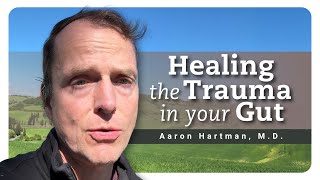
Aaron Hartman, MD explains how trauma and chronic stress can disrupt digestion via sympathetic overdrive (slowed GI motility, low stomach acid, reflux, bloating). He recommends practical digestive supports (bitters, betaine HCl, digestive enzymes, apple cider vinegar), and behavioral approaches: pre-meal breathwork/meditation, gratitude rituals, mindful communal meals (citing Blue Zones), and addressing trauma through counseling or brain-retraining methods to restore digestive function.
Chapters
Trauma can affect your gut health. A history of trauma, past experiences or current experiences can affect your gut health. So we talked about this previously, so I'd like to talk about now a couple things you can do to help you figure out is trauma part of your story and if so, what can you actually do about to help with your gut health. So one of the first things that happens with trauma life event is it can result in sympathetic overdrive which slows your GI tract down. So one of the results is you tend to get full quick, you tend to get reflux, you don't make as much stomach acid. This can result in gas bloating with a meal after meal. So using some basic supports like bitters, bathing, hydrochloride, digestive supports, some people will use things like apple cider vinegar. These can all be helpful to help with digestion, with trauma, stress induced gut issues. The next thing can be helpful with every meal. And this is like, you know, cultures have figured this out thousands of years ago. If you take a moment of rest, reprieve, you take, you have a prayer, you take a moment for thanks, take a big breath in and say something thankful for your food. That 30 seconds at 40 seconds can have a massive impact on your digestion. We know that 25% of digestive enzymes are released just by smelling your food. So just by sitting there, taking a deep breath, enjoying the meal, saying, oh yeah, okay, that can impact 25% of gastric secretions, pancreatic secretions to help with digestion. So just doing some kind of meditate practice before you eat, the next thing to think about is actually just being thankful for the meal itself. It's interesting how the connection between your mind and your gut, your mind and your pancreas, your mind and your digestive enzymes, just having that, that thankful, restorative, relaxing state of mind can be huge in helping you digest your food. Now here's the thing. If you're chronically stressed, if you're always in a rush, if you eat standing up, you eat in your car, you eat while watching tv, all these things you're eating during, activating brain things, and the result is going to be you're not going to make as much stomach acid. That's going to slow your gut down, that's going to affect that digestion. The other thing is working on other kind of things that can help with digestion. Pancreatic enzymes are huge if you have issues with those using a plant based enzyme. But even deeper than that, you got to deal with the trauma, you got to Deal through stress. Maybe doing a 5 or 10 minute breathwork session before a meal. You know, I personally will do this to help me sleep at night while I'll do some breath work before I lay down or while I'm laying down to help calm my nervous system. Doing that before eating a meal can be super, super helpful. And then the question is what other things really distress? What's the environment like at your, at your meal? Is your family there? Is your spouse or your kids there and what's their environment like? If you have a stressful situation, which unfortunately young kids can sometimes bring, or you're fighting or whatever, just having a, changing the, the environment of the family can have a massive impact on how you digest your food. We have tons of population data on people who eat meals together. We in our country, you know, the number of meals that you eat together as a family is directly correlated with teen pregnancies. Whether your kids graduate from high school or not. Even success of your kids future marriages. It's really interesting how developing a pattern of eating together communally and a family in a calm environment can actually impact your kids, your family long term life. So learning how to eat a meal in a healthy environment can have a huge health impact. You look at Blue Sounds which are places in the world where people live to be 100 more than anywhere else. Different places in the world, Sardinia, Loma Linda, out of California, Nicoya, Costa Rica. All these different places, you know, different foods, different cultures, different things. But they do share some similar life experiences. One of the similar life experiences that is shared in these environments is shared meals. People eat communally, they and the meal is an event. It's like going to the movies. You sit down and you spend an hour with your family. We're actually here in Tuscany right now. You can see in the background and there are no 20 minute meals. I mean this, you know, we had a quick meal, an hour, hour and a half. You know, here, the culture here is such that the expectation is you style to family, friends and you enjoy a nice meal. So just changing how you look at eating not as the necessary evil that has to be. I remember one point in time in my life during my residency and during my medical training that I was like, I didn't want to eat so I would just make protein mixes and throw them down. Because I looked at eating as a hassle. I looked at it as a time, a time suck. Basically it's actually the way you consume your food in the communal environment, the social environment has a massive impact on life. Values and a lot of different things that are important for your health. So the point is that learning from blue zones and how they consume food, eating real food but also in the way in which they do it can be impactful. And ultimately if you've had trauma, stress, traumatic life events, working through counseling, doing brain retraining, brain rewiring, whether it's limbic retraining, dynamic node retraining, primal trust, whatever it is to retrain your brain because when you get your brain into a calmer state, you're going to secrete more digestive enzymes, more pancreatic enzymes and actually digest your food better. If you have a stressful life event, something you like to talk about, share below, be great. I'd love to hear from you, to hear your life experience, your story and other people as well, just to learn from you as well. We can learn from you. So put that below. Otherwise take care and we'll talk to you soon.