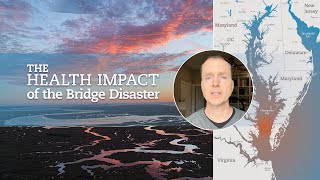
Aaron Hartman, MD (via a short YouTube video) warns that a boat crash into the Francisco Cay Bridge near Baltimore released toxic waste—reported to include lithium-ion battery parts—into a waterway that feeds the northern Chesapeake Bay. He expresses concern that the contamination may prevent divers from inspecting the site, could spread through the bay (a major US seafood source), and might affect seafood safety and public health. He cites regional experiences with runoff-related illnesses and historical contamination (Dupont) as context and urges more reporting and monitoring.
Chapters
Everybody, I want to briefly talk about the incident where the boat crashed into the Francisco Cay Bridge in Baltimore. And I want to talk about a topic about that that's not being discussed, which is what the boat was carrying. What's happening right now. The boat actually was carrying toxic waste materials, including lithium ion battery parts. Not quite sure where it was going, but one of the things that's happened has been a massive release of these toxins into the river up there outside of Baltimore. It's actually been so toxic that it's preventing divers from actually going to the area and figure out what's going on. The issue with this is that's a major inlet to the top. The northern part of the Chesapeake Bay, which just happens to be the biggest bay in the world, happens to be a big source for shrimp, scallops, fish, a whole host of seafood. And there's already been issues with the Chesapeake Bay. I practice in Richmond, Virginia, and see patients from all around the state, Maryland, North Carolina, and already have recognized people around Annapolis on the Eastern Shore having health issues related to pesticide runoff, chemical runoff from factories. This is a potential huge dump of toxic waste and chemicals into the northern part of the Chesapeake that can affect the entire aspect of the Chesapeake. I've actually had patients fishing outside of Deltaville, which is in Virginia, in the Chesapeake area, actually getting these crazy flushing bacteria infections related to some of the chicken farms, dumping the waste in into the river north 20, 30 miles from where they're fishing. So the issue with this is we don't quite know all the products on that ship that are being leached into it. We don't know the levels in the water. We're not really sure about a lot of details. It just brings concern to me that is that going to affect the quality of fish, seafood coming out of Chesapeake Bay? I'm personally going to watch what we eat until we really figure out what happens with us as far as seafood, make sure they're not coming from that part, but something to think about because, you know, going back to my childhood, I remember my mother having visual loss related to my dad getting some bluefish from the Chesapeake Bay. And come to find out later on, those fish had actually been contaminated by waste dumping into the bay from Dupont at that point in time back in the 70s. So this phenomena of a massive waterway dumps toxicity. It's not a new concept. It's not new. And this may be a potential increased source in the Chesapeake Bay area just by the relationship of where this is at. So stay tuned, keep on watching. I wish the news media would talk about this more. I wish we're getting more information about this because as a functional medicine practitioner, this is a really big concern to me. Is this going to affect food potentially across the whole United States? Seafood coming from this area as it is the largest bay in the world. So we'll try to keep you abreast as we learn more otherwise. Take care. We'll talk to you soon.