How Health Coaches Save Lives
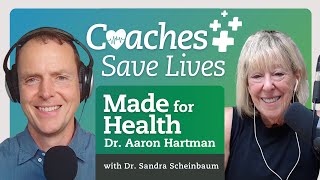
A recorded YouTube conversation (host: Aaron Hartman, MD; guest: Dr. Sandra Shinebaum) about the importance of health coaches in modern healthcare. Dr. Shinebaum—founder and CEO of the Functional Medicine Coaching Academy (FMCA) and author of Your Health Coach Will See You Now—describes her 50-year career in education, biofeedback (late 1970s), health psychology and functional medicine, explains how health coaches help people implement lifestyle medicine (small habits, self-efficacy, personalized plans), and contrasts 'pro-aging' (curiosity, strength training, social connection) with anti-aging. She argues coaches can extend primary care, improve prevention, reduce clinician burden, and foster community-based, behavior-focused health strategies. Practical resources and contact info (FunctionalMedicineCoaching.org, Instagram @DrSandi) are provided.
Questions this video answers
October 15, 2025.
About 5,000.
In the late 1970s.
Your Health Coach Will See You Now: Creating a Healthier Future Together.
FunctionalMedicineCoaching.org.
Chapters
Welcome back once again. I am super excited to be with everybody here with my friend Sandy. She's amazing health coach. She actually has a new book coming out and we're going to talk about as well and we're going to just give her introduction and then from there kind of have a great conversation. Dr. Sandra Shinebaum trains people to become functional medicine health coaches and she helps practitioners and businesses hire them because she believes that health coaches are the key to combating chronic diseases and reducing healthcare costs. As founder and CEO of Functional Medicine Coaching Academy, Sandra is a leader in the field of health coaching education. An educator, clinical psychologist, author, public speaker for nearly 50 years. She's found the FMCA at age 65 because rather than retiring, she's on a mission to grow the health coaching profession so that millions of people can get the support they need to help their live healthier lives. Her latest book, your Health Coach Will see now, creating a Healthier Future Together, advocates for health coaching as a critical component component to primary care. So Sandra, I'm super excited to have you today to share all your wisdom. I didn't realize man, 50, 50 years, that's. Yeah. And you, and you're starting your next career, you know, you're doing lots of things. So why don't you tell us a little bit because that's part of your story is actually living, is aging healthy and how do you, you know, your next stage of life, etc, once you kind of walk through, some of my audience may not know who you are, just kind of who you are, education background and what kind of got you to like the stage, you know, maybe your second or third act of your career. Right.
Yeah. Well, for those contemplating career change or think they're stuck, well there's really, it's never too late to start something new. And I could not have imagined back when I majored in elementary education in the late 60s, the that I would not be doing that for my career. Instead I went back, got more training to work with kids who had special needs, specifically learning disabilities, we don't call them that anymore. But I trained teachers then in how to teach children who may have had different styles of learning, who had challenges paying attention. And, and I look back at what I was doing at that time, early 70s, and I was actually doing non body medicine. It didn't really have a formal name. I was one of the few people in the state of Illinois doing biofeedback. I was working with kids, I was doing workshops, relaxation for teachers, for parents. I made a cassette tape for relaxation for Kids and got my doctorate and specialized in health psychology. So I was getting referrals for people who had physical conditions that I thought were exacerbated or often brought on by how they were dealing with stress in their lives, lack of relationships, poor sleep, what they were eating. And so I started doing lifestyle medicine, not realizing it. Then I trained for the Institute for Functional Medicine. Actually, I was the only psychologist. I was in the first class to be certified in functional medicine. And I had people coming to me to say, oh, you know, I was trained as a health coach, but I don't really feel confident as a coach. And so started the Functional Medicine Coaching Academy in collaboration with IFM Institute for Functional Medicine. And this is my mission now to train really thousands of people because. Because the need is so, so great out there.
Yeah, that's, that is, that's true. There's a lot of need for coaching and people just understand how to implement all this. People focus on these really fancy high end kind of techs and gadget, but really the foundational stuff is what we need to perfect and get really, really good at. Now you mentioned the biofeedback. That's interesting. Could you tell us a little bit about that? Because biofeedback is now becoming more commonly known, I guess. But you were doing that how long ago?
In the late 70s.
Late 70s.
I was president at one time, the Biofeedback Society of Illinois. I think there were 20 of us at a conference. And that was connected with a larger biofeedback association. And it was very simple back then. And the idea was that you can evoke certain imagery, you can relax your muscles, you can change your breathing pattern. And the biofeedback is getting information back. So I would tell people, you stand on a scale to see how much you weigh. That's biofeedback. Well, what we're going to do. And at the time, these were wooden boxes, they look like radios, they had dials and we would have little thermistors. I would tape to a fingertip and they would slow their breathing and they would imagine images of warmth flowing through their fingers. And then they would hear a different tone coming from this wooden box. And that would be. That's the biofeedback. That's confirmation that they were shifting into a more parasympathetic, more relaxed state. And there was an association as they focused on handwarming to migraines. They were feeling better that way. We were also doing the galvanic skin response, which is sweat gland activity. We were doing progressive muscle Relaxation. We were attaching electrodes in different areas and then as they relax, they would see changes there. And then when biofeedback, a form of biofeedback became neurofeedback, which is that you can change brainwave activity. I got that training and we did a controlled study of kids who had been diagnosed with ADHD and were on Ritalin. And we found very significant results just by training them to shift into a more attentive state and heart rate variability, which is of course now we can track through our aura ring and other wearables. And that was something that I was training as well, training breathing with biofeedback. It was really cool. We'd have these respiration belts they'd put. One would go across your chest, the other would go across your stomach. And then you would see on the computer there'd be two, two lines going, one from each site and they can see, oh, the, the, the pattern changed and it looks a whole lot more relaxed. So it was very, very effective. And, and now of course it could be an app on your phone and you could do this at Hub.
Well, I think what's amazing, you know, the, this is a common theme I talk about, you know, over and over again is a lot of these newer things we talk about, you know, lipid therapy and biofeedback and you know, all these energy things we, the new fancy thing and literally these things, some of them are decades, if not, you know, 25 years ago, that's quarter of a century ago, people actually doing this. So I just remind people that there's so much out there we. That you've never heard of, that there's other people like yourself have been doing it for a long time, you know, so just, you know, here's something that's kind of sounds kind of off, you're not quite sure about. Realize there are certain people that have been doing some of this stuff for quite a long, long time. And I think that's, that's one of the things I, I talk about a lot because you just gave a perfect example. I didn't know people were doing it actually back in the seventies. I didn't realize. That's pretty amazing.
Yeah, I mean I, I've got this bookshelf back and, and there are books by Judith Green early on these were talking late 70s when we were doing that work. And they were early pioneers actually. The breathing or progressive muscle relaxation, I should say that came from the University of Chicago in the 20s. Edmund Jacobson develop 20s so far, far back. And it still works, it's still, it's.
It still works very well. And as required for a lot of my trauma patients have to rewire their brain, have to do a lot of different kinds of biofeedback. So coaches, coaching, you started the fmca, so you know, some people don't quite get what coaching is like, rah, rah, good job. You know, you know, what actually is it? Because it's way more than that coaching. You know, it's really funny on the, the elite athlete end, lead athletes have athletic coaches. You know, executives will have elite coaches that help them like actually become focused, function at the top of their level. And then we talk about coaching in healthcare. We're like, well, that's kind of weird. And there's a, I think there's a big disconnect with what high level individuals are doing in different zones of genius and then how and what we're doing in healthcare. So did you kind of tell us jump, take that as a jumping board, like tell us about coaching, like, what is it and is it helpful? Should we even think about doing it?
A coach is somebody who will help you change when change is hard. And making these changes in your daily habits are really, really hard. They get help. You go from where you are now to where you want to be. And it all hinges on having this rapport that you build with somebody by asking the right questions. A coach is there to guide somebody in what direction, what they want to go. So that is what the critical difference. Whereas somebody who is a practitioner might be an expert in an area and they're going to say, okay, we've done, we've run this test, this is what the results are, this is what I think is going on with you and this is what I would recommend. That is often it's good and well intentioned, but it often isn't effective because people struggle. They may be starting out getting, oh yes, I'm going to do it, this makes sense. And then they get home and life gets in the way and they don't follow through. What a coach does is starts out by really asking those questions, like, what do you want your health for? What really matters most to you? Where would you like to be? And then you start, you backtrack, okay, where, where would you like to start now? And you've had all these recommendations, you've had this testing, where, where, where are you at now? Where? And then how can I support you? How do you want to be held accountable? And so every step of the way, that person feels like they're in charge. And that is so empowering. The number one research result, they've done countless studies on the effectiveness of health coaching. It's self efficacy. What that means is that you have a sense that you are in charge of your destiny. And when you feel that, you can say, yeah, I guess I can make changes in these daily habits and what I do matters. That is not just the luck of the draw. It's not just because it's all in my genes and there's nothing I can do or I'm too old. A health coach will help you to feel like, yeah, I'm ready, this is where I want to start. And it's often breaking down these big goals into achievable small steps.
Yeah, I think that's part that a big part is, you know, I like the book Tiny Habits. You take things that seem impossible, you know, at first glance, you make them into small achievable habits. And then as you go forward, you look back to where you've come from and it's interesting. The horizon, you never get to the horizon. It's always out there. But if you look back at where you come from, you see like, wow, I did this and this and this and this. And breaking into smaller, actionable, achievable snippets is this is what high level people do. This is not just, you know, health people, executives, athletes. This is kind of how they, you know, up level what they do, which I think is really important concept to think about as well. So with the book you wrote, your health coach will see you now. What was, what was your impetus for that? You know, you've got over 50 years of practicing experience. You started this amazing health coaching organization that trains, you know, I don't know. This is a. How many thousands of coaches have y' all trained?
Yeah, we've got 5,000.
That's amazing.
That's.
That's amazing. Like, why did you write this book? Like, what's the point? You've done so much. What's what. How does this add to. How is this part of your next.
You know, I want it to be a wake up call that our healthcare system is really in trouble and getting worse. And particularly with primary care and hearing so many stories. So my own stories, I look back and I had just a standard blood, new. Seeing a new internist, standard blood count. Oh, the tsh, which is the thyroid. It's a little off. So we'll put you on some Synthroid. Yeah, you do. And okay. Oh, and by the way, you'll be on this for the rest of your life and not even asking me any question. The fact that I was studying for the psychology licensing exam, I had just moved. I had a toddler, I was working full time. My eating habits were horrible. Basically a sugar diet. And I think I was over exercising on the treadmill five miles every day. You know, just, just like. But poor sleep. But all of these factors. I still might have needed that hormone replacement, but it was the fact that it was feeling like, oh, this is it. We have one tool in our toolbox. And fast forward to today. Now that was in the 80s, but today, same community. I never would have found a primary care doctor to get an appointment with because then I hear this over and over again from people saying that. I just heard the other day, this woman, she was in her 70s like me, and she was. Wanted to do preventive cardiology. So she said, oh, you know, I just really wanted to get it start with a cardiologist to see a baseline of how. And then like, you know, maybe I could prevent him. She said she called six practices and they were all closed and finally got one. The next appointment available for a new patient was in 2027. Okay, 2027 was when they gave her an appointment. I had to ask her again, what are you. Do you get that right? Like a year and a half from today. Like, yes, that was when they had an opening for a new patient.
Yeah. And so with, with, with your book, the health coach will see now what. What do you think? You know, there's a lot of themes in there. You know, healthy aging. You read, I think use the term pro aging. You know, what would you say is the. Is the most important concept in that book you think will actually help move people's health forward? If you're to pick one of the many, you know.
Yeah. So let's take that individual, if she had one of those practices, had said, our health coach can see you in, let's say next week they'll have a session and maybe there was a group which is a very effective way and they focus on lifestyle medicine. Because what this individual needed was we were. Her eating habits were really out of whack. She was under sarcopenic, under muscled, not working out the right way as I know her quite well and not eating enough protein. Not, you know, and focusing and very. People are often very stressed. They are sleeping poorly. They're. If they're exercising at all, they're often. Women are. I see it at the gym all the time. I'm in the weight room. Now there's the cardio, the ellipticals are full and, but the weight room, typically I'm the only woman in there, you know, my age. There might be some young girls who, who, who are working out, female athletes, but so those lifestyle factors, nine times out of 10. So if that individual who, it had gone to that practice, had a health coach, she would have been able to start initiating these changes. And as a result, that's the kind of prevention that would be important. I just want to also say the caveat. We need an acute care system. So if she was thinking she's having a heart attack, I mean, you don't get a health coach, you get the best of acute care. But in terms of someone interested in prevention or, or if someone does have a heart attack so they don't land back needing another procedure. It's lifestyle approaches and doctors, you know, they don't have time. They're maybe, well meaning they'll tell somebody to eat, you know, eat, change how you, you know, eat a healthier diet, go out and exercise, join a gym. But people are left bewildered. They don't know how to do that or what's best for them. It's, it's personalized. It's not one size fits all. And one of the main things, advantages of having a health coach, they will sit down with someone and will say, oh, that just because that social media influencer says that celery juice is good for you, is it right for you? And so they will help sharing the data, sharing, well, you know, here's some studies about it, here's some caveats and that it's still in the, that individual's hands to say, well, this is what I'm going to do. Because the coach is not telling you what, what to do, but they are guiding you to be a thoughtful, aware consumer.
I mean, the foundations of nutritional medicine, the foundations of preventive medicine, they, they're foundational. You 80% of heart disease and 70% of most cancers can be prevented by diet. Lifestyle alone, like, that's super basic. You know, having a sleeping, you know, we're chronically insomniac country. Not sleeping adequately increases your risk for metabolic syndrome, obesity. So all of a sudden, like the things that our country is struggling with right now, you don't necessarily need to see, you know, the most amazing specialists and whatever, but at the same time, you medical doctors, we were not trained on how to like, you know, eat healthy, exercise. Okay, you know, what does that mean? It means eat healthy and exercise. You know, like, how do you Apply that to the individual based on where they live in the country, based on their family, you know, their ethnicity. Like all that is where coaching comes in to kind of help the person figure out what this actually means. I think a lot of people don't realize that you're in a 15 minute doctor appointment. One, the physician, physicians aren't trained in it. Two, they still have the time to actually delve into that. And that's where coaching is a huge thing. But patients give me a lot of kickback with that. They're like, no, I want to see you as a doctor. What would you say to someone who's like, like, yeah, I know I need to change my diet, I need to work on exercise, sleep. I know taking pills is not the answer. I know you know, getting surgery is not the answer for a few things. It's, you know, obviously, but, but I don't know if a coach like, what would be your response to someone who's a little hesitant to I need to see the doctor for these things. How would you respond to that?
Yeah, so the practices that have very successfully onboarded health coaches see the practice that they describe it almost like a health coaching practice. So many times the person will see the coach is, they are the concierge. And so it's in some, some are described as, this is like your, your concierge, your friend. They're going to guide you through this practice so that you're going to have a positive outcome. And so it is first starting with that physician, that practitioner, being really sold on what, knowing what the coach does and being really sold on how effective it is. And so depending on that person, it's always personalized. Sometimes it's telling a story. Well, let me show share what some, you know, what people are saying that have worked with the coach or you know, identifying what it is they want. Like let's say they desperately trying to lose weight or they've been diagnosed as diabetic, they're having, they're having trouble eating, they're, they're very confused, conflicting opinions and so really describing. Well, let me tell you about, you know, what happens when you work with a coach and what that will be like or has there ever been a time when you had a trusted ally and you felt like you could tell this person everything and you had this great relationship where you really looked forward to interactions with them and they might say, oh yeah, you know that someone like that or, and so you would say that's what a coach, that's what that relationship would be like. And reassure them that I'm, this is my practice and I communicate with my coach or coaches and I'm there, I am there for you and I will be very aware of the progress you're, you're making. So again, I think it's often loading it at the front end where they're seeing that, that person and that they're really starting to interact. At Cleveland Clinic did this, the center for Functional Medicine, they had a long waiting list and everybody met with a coach and it was in a group format. And so nine times out of 10 symptoms resolved. They were feeling better before they even got to see the, the doctors.
That's pretty amazing. And we actually, we do use coaches in our practice and all of our new intakes for advanced functional medicine. And they all see coaching is part of their intake process because of how important it is. I do want to switch gears just a little bit because one of the concepts, one of the things you talk about is the idea of pro aging versus anti aging. I feel like you, there's been this kind of, maybe it's almost co opting in like the biohacker world of, you know, anti aging where you don't have to be 200 kind of stuff. And you've probably heard a lot of stuff. You know, could you talk about the difference between like anti aging versus pro aging? Because you use the term pro aging, which I like the term, what the difference is and how does that change how we think about living healthy as we age, as we actively age in a healthy fashion?
Sure. So I think that the, you know, the anti aging is often like, well, there's like a fear, fear of aging and, and no doubt, I mean certainly the having, the having youth is certainly desirable. And it, when you have an orientation though, that is still forward thinking, in other words. So I'm 75 at the time of this recording and I have things that I'm really looking forward to. You know, I am looking forward to things in the future. And I see many of my contemporaries who don't have that attitude. There's somebody I was speaking with, a longtime friend and she said, and she is a little older than I am, so she's turning 80, her husband's turning 81. And she said, well, you know, you know what they say, you enter your 80s and, and things are good. And then most people don't get out of their 80s. In other words, they don't survive. And I just, I had to block that thought from my head. I didn't challenge her, but I just thought that is an example. That's the type of thinking. And I hear this over and over again where people say, oh, it's just like, well, you're just getting old and what do you expect? And things just go downhill from here and it sucks to get old. And this is just the normal part of aging. And so it is that mindset that these conditions are inevitable, that your aches and pains are inevitable. Taking 12 medications for 20 medications, you know, having. And, and, and I don't want to deny that there are serious conditions that are, you know, cardiovascular, cardiometabolic disease, cancer certainly. And there are certain risks, of course, osteoporosis. And you know, I was at the generation of the Women's Health Initiative had lost out on all of those benefits. But the. What you can maintain is a mindset that is. And you talked about tiny habits. And I that's BJ Fog. He's a friend of mine as well. And in fact he's taught for us. And he says, every time I wake up, I. When my feet hit the floor, I tell myself, today's going to be a good day. And that really struck me because that was my mother's mantra. She would do that. And at the time, when I was young and didn't know much, I would think, oh, that's so Pollyanna ish. Like, sure, she has so many struggles. That's just like glossing over serious issues now. I say that every single time I wake up. Today's I'm going to make it a good day. And that is something that is mindset and a big part is curiosity. So I went to a social event and I did not know anybody in the room. And by the time I left, I had made some really good potential friendships. And what I find is a real risk is loneliness. People have their set friends and they don't expand, they don't join new new programs, they don't learn new activities. And that is a real risk factor in terms of social, emotional health. But also cognitive, you know, you're not learning new things, meeting new people. You're remembering, I was seated next to someone, I had to, you know. And so as I left, okay, this was her name, where she was from. These are her interests, these are the ideas of her grandkids. So remembering those details about people and so that as you are curious about new learning new people, that's really critical to pro aging as opposed to. And again, the other is anti aging where you're focused on surface level. So I have had cosmetic work that just does not appeal to me at all in terms of those kinds of things, but more staying strong with particularly resistance training is the main thing. Pro aging.
Yeah. I mean, I think, you know, one of the things that keep in mind as well as we do get older, you know, I remember, I think it actually may have been in one of the groups we're involved with together. Actually. I think it was maybe one of the books I read through Genius Network or one of the things. But talking about like productivity. People that are actually A level players. Their most, you know, their third most productive decade of their life is their 50s. Their second most productive decade of their life is Their 60s. And their first most productive decade of their life actually is their 70s. It's interesting how people who have developed a skill set, super high level, they have this expertise, this knowledge, this life experience that you can't reproduce except for having lived to be in their 70s. But we people retire and it's like, it's almost like they start going downhill after they retire. The mentality just goes into like, I'm going to be in a vegetative state now and watch TV and we do whatever. It's like, no, you still have like a lot to contribute. I think that's part of what I think about is this pro aging is that realizing that individuals like yourself can still be creative and still do really cool things. And it's a stage when you're 60s and 70s. 70s, it should be you doing what you want to do, not what you have to do. And that's a different way of thinking about it as well. Especially in regards to your health.
Oh, absolutely. I mean, that is critical. We have students who come to FMCA. They are in their 80s. We had a gentleman who was 90, his grandmother, daughter was taking our course and he decided, oh, that's really interesting. I'm going to take it along with her. It was wonderful. Now he's a health coach and. And he helps people of his generation, so. And younger.
Well, I've had a chance. Several patients decide to do the coaching through you, through your organization as well, because they just wanted to. They wanted to take what I was giving them and supercharge it. And so they actually went and got the training, which was kind of. I thought it's kind of funny. I'm like, okay, like, they come back and tell me what they're learning. I'm like, this is pretty cool. But it was like they took. And both these individuals are actually mid-60s, early-70s. And so it's like they were taking their, their Health, their aging. Super, super serious. I want to switch gears a little bit, talk about the mind, body connection. Because you did mention something about loneliness. Yeah, I think that's something that, you know, connectivity. People don't realize, like how important connectivity is, especially if you want to live to be older. People who tend to make it to be older for a long time and live healthy, productive lives, you know, they just tend to be in community, to have families, to have connection. Could you talk a little bit about that? Because I feel like we're in one of the most connected and yet probably the loneliest, you know, time or culture, like in modern history. We have so much access to stuff, but people are really lonely. Could you talk a little bit to that?
I think loneliness is one of the biggest risk factors for decline, mental as well as physical decline. There's something about being with people and I think being in person, I think with COVID we've really lost a lot and the, the benefits of, of being with people just can't be denied. And I think that's why when we talk about coaching and seeing people in groups, why it's so effective, because the community becomes the medicine. So I encourage people to find groups. So just before we started this interview, I had been at fitness center and I was taking a ballet class. And I've taken this class for years and I've taken dance on and off for years. And at this point I take that class because these are mostly people who are, are older, some young people as well. And we have become a very close knit group. And so we meet out of the community class, might have lunch together afterwards, or we plan special events and it has become a community. And so some days when I don't really feel like going to this class, but I remember that I will feel great afterwards because I will have connected with all these people who are now my friends. And when I first started the class, complete strangers. And I just moved to this community, but they were really welcoming. And so that is the benefit. And we have traditionally been involved in these kinds of, of activities. And I think basing it around an activity is a good way. So, you know, join pickleball, for example. It's the relationships. It's people who gather together. Same thing has been said about playing golf. My husband has a poker game that meets every Thursday night. It has been going on for 25 years. And it is these relationships. These guys get together and at first it used to bother me, oh, they're sitting so long, they're eating crappy food, pizzas and junk, you know, but I think that the connection override, it trumps the whatever's going on that's inflammatory with the food they may be eating or the diet Coke that they're drinking. But they are connecting with one another and I think that's such an anti inflammatory response. And when they studied the blue zones and this has been well documented, it's, these people were so closely connected to one another. It was one of the big factors, it was the, the solid close knit community and, and often we've, we've lost that people work remotely, they don't, they're not involved in these activities. As we think back years ago, I grew up in the 50s and there was the Elks Club and the, the MA, all of those clubs. Each community had a women's club or they had garden clubs, they had all of the sewing circles and it was a major part of their life. And actually I was really pleased to see they call them grandma. Hobbies are making a resurgence like mahjong and canasta and knitting, crocheting, those kinds of things. People come together, they have a craft group and, or they come together to play cards and the Gen Z is discovering the benefits of and it's social and it's really an important part of our lives especially as we're getting older.
Yeah, I've seen a lot of young, younger individuals getting into knitting. We have a young lady who helps with my daughter and when she's just sitting down she just starts, you know, crocheting stuff. It's really, I started talking about that and, and come to find out you're 100 correct. This is these, these things are actually making resurgence which is really kind of intriguing. Sometimes the older things are when you get back to the basics. Right?
That's right, yeah.
So with the future of healthcare, you've been involved with healthcare for 50 years. Healthcare is changing. You know, AI is here. Government regulations receive, you know, political change. There's a lot of, I feel like we're at a breaking point and I feel like, you know, the healthcare industry is going one way and then individuals are going a different way. What do you see as the, the future of healthcare in the next five or 10 years? Because you have this insight of 50 years of being involved. Where do you see things going in the next 10 to 20 years?
Well, I'm excited about the potential for AI to relieve a lot of pressure on the doctors to be the scribes, to help with all the burdens of EMRs entering things in record B and the sophistication of diagnosis that is very encouraging. And the fact that people might feel more empowered to take charge of their health and the, the risk is they'll, they'll do a direct to consumer lab test and they'll, they'll look it up, what it might mean and they'll get off of the wrong track. And that could be, that could lead to serious issues. But the positive is that they're tracking data, they're more aware, they're, they have their watch and their aura ring and other wearables and so they're taking charge of their health. And so more of this will be available for people to understand and, and have their, to be able to make better decisions. But I think that where I, I would hope that we're going to get, get it back and I'm, I want this to be through health coaches because the doctors do what they do best and that is act as the medical detectives and the things that we need acute care for. But those that, that we've lost bedside manner. And I hope it comes back. And bedside manner is what, you know, people would say, well, you know, he has good bedside manner. And what that would mean is that someone would make eye contact, they would listen to you and you felt like really there was a rapport that was with this individual and we've lost that. And there are so many, of course, well intentioned doctors, they just don't have the time. There's so many pressures, administrative pressures and pressures to, you know, speed it up. You're taking too long with patience. And that's what coaches are specialists in. They are specialists in bedside manner. That's what the coach approach is where you are really there with somebody, you develop a strong trusting relationship that you can tell that person anything. And I think that I'm hopeful that as we build that up that there will be this awakening that health coaches are the front line, their first line to help people not only with physical health, but emotional health. Because that's where we have so, so many challenges. There's a shortage to talk about, a shortage of physicians, the mental health crisis, a shortage of people who are available for mental health, the lack of reimbursement, it's not affordable. But often health coaches, because doing those basic things get people out in nature and walking and learning to knit and connecting with other people and eating real food and community gardens, for example, those kinds of things, this is community and this is I think where we need to go integrating as opposed to separating the physical from the, the mental health.
Even something as basic as real food and reading a label are skills that the average person doesn't know what real versus unreal and how to read a label and that's something that you don't need to see a doctor for. A coach can 100 help you with that to walk and that that's super basic but crazy impactful.
Yeah.
So, so great. Thank you so much for your time. Sandra, if people want to learn more about you, your book, they're interested in learning about coaching. Where would you recommend people go to find more about you and as well about coaching in general? Because I think still, still people a lot of people have questions.
Yeah. FunctionalMedicineCoaching.org is our website. They can go if they're on Instagram they can go to functional med coach or me personally. It's Dr. Sandy. That's D R S A N D I. The book your health coach will see now is on Amazon barnes and noble.com.
Great. Sandra, thank you so much for your time. Thank you for sharing your time with us today on this Friday after you know your, your time dancing and I know I'll see you later in probably next couple months. So take care. Take care and talk to.
Thank you so much. Dr. Aaron. It's been a pleasure to talk with you. Thank you for your support of coaching.
Thanks.
More from Aaron

Too Many Gut Fixes Can Undo Your Healing. What Helps It Last | Dr. Sabine Hazan


Women’s Heart Attack Symptoms Differ From Men’s 95% of the Time — Only 30% Have Chest Pain #shorts

Heart Disease Kills More Women Than All Cancers Combined — 80% of Cardiac Research Is on Men #shorts

Women’s Physiology Was Systematically Ignored in Drug Research — The Consequences Are Still #shorts



It Took the FDA 20 Years to Realize Women Need Half the Dose of Ambien #shorts

Until 1993, Women Were Banned From Clinical Drug Trials — Then Those Drugs Were Prescribed t #shorts