Intermittent Fasting Transformation with Cynthia Thurlow
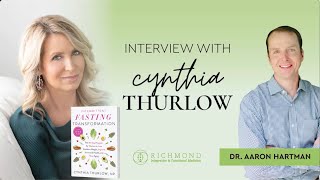
Nurse practitioner Cynthia Thurlow discusses how intermittent fasting affects women differently based on hormonal cycles. She explains why longer fasts during the late luteal phase can backfire, how sleep anchors metabolic health, and why most cholesterol is made in the liver, not from diet.
Questions this video answers
April 1, 2022
She states the book will be officially published on March 15 (year implied by interview context).
Perimenopause can be 5 to 10 years.
About 75% of cholesterol is produced by the liver and about 25% comes from the diet.
Chapters
All right, so I'm excited to introduce everybody to Cynthia Thurlow, a friend of mine, a colleague and a well respected author. I'm going to introduce her quick, go through a little her history and we're going to dive into her new book. It's coming out on Intermittent Fasting, the Intermittent Fasting Transformation. You see it in the background back there. It's a great book. I've actually already read through it. It was a great read. Actually. I read many books and there's a lot of them that I read that I'm like, yeah, it's okay. This actually has a lot of great information. It's actually learned some things. I'm going to ask you some questions actually, some things I actually didn't know. So you can help explain that to the audience as well. So a little bit about Cynthia. Cynthia is a nurse practitioner, CEO and founder of Everyday Wellness Project and an international speaker with over 10 million views for a second TEDx Talk Intermittent Fasting Transformational Technique. With over 20 years of experience in health and wellness, Cynthia is a globally recognized expert in intermittent fasting nutritional health and has been featured on ABC, Fox 5, KTLA, CW, Medium Entrepreneur, and the Megyn Kelly Show. She was listed in Yahoo. Finance as one of the 21 founders changing the way we do business. Cynthia hosts the Everyday Wellness Podcast, which actually is one of the 25 podcasts to expand you'd mind in 2021 by Business Insider. Her mission is to educate women on the benefits of intermittent fasting, overall holistic health and wellness so they feel empowered to live their optimal lives. Cynthia, welcome. I'm really super excited to have you here today.
Thank you. I've been really looking forward to our conversation.
Tell us a little bit about yourself. My audience may not be familiar with you, some of your background, your time at Hopkins, et cetera. Like your own health experience and what kind of got you to where you're at?
Great question. I'm a traditional allopathic trained nurse practitioner. I did all of my training in Baltimore and I'm a bit of an adrenaline junkie. I actually was an ER nurse before becoming a nurse practitioner and I did 16 years in cardiology. So as you can well imagine being an adrenaline junkie, those are really great places to be in terms of the complexity of patients and dealing with acute and urgent emergencies. And over time, after becoming a parent, I started to shift my focus quite a bit, largely because I had a child with life threatening food allergies and the words that I was left with by a colleague after we determined that he had life threatening food allergies, was carry an EpiPen and pray. And as anyone who's a parent can imagine, that that was not satisfactory to me, that I was not willing to let that be his destiny. And I really started to look much more comprehensively at the influence of food and health. We had always been healthy eaters, but started to kind of delve a little bit deeper into some of the things that influence the quality of the food that we consume at home or get in a grocery store or from our farmer's market. And so I always credit Jack, who is now going to be 17 this year, that it really changed my whole outlook on health and wellness. And so initially I started a PhD program, which I hated, and then I started a wellness coaching program. And then I read two books. I read a book called the Unhealthy Truth by Robin o', Brien, which, if you have not read it, is a book that really changed the trajectory of my career and I think so highly of her work. And then I read another book called Ethiopia, and I reached out to that author and said, where did you get your nutrition training? Because I think this is really the area I'm most interested in learning more about. And so I did a functional nutrition program and that really changed everything. I really struggled to continue working in the hospital and clinic because I was really constrained by a different medical model than I wanted to focus on. So in 2016, I left clinical medicine and started my own business and almost instantaneously started attracting a particular type of patient, a woman that was very much like I was, you know, middle aged, never had had any problems with weight gain and weight loss resistance. And, you know, probably in my early 40s, I was completely unaware of the impact of perimenopause. And honest to God, I don't think anyone had ever used that term. It was all new to me and I was completely frustrated with the options that my conventional GYN had offered me, which included things like synthetic hormones and IUD and ablation or hysterectomy. And I said there has to be a better way. And so through my own challenges and through my own trajectory of my own health journey, I came to intermittent fasting out of curiosity, which is, I love learning. And I read Jason Fung's book, the Complete Guide to Fasting, and that gave me the courage. I always say courage because I think that's the right word to use that as a traditionally trained nurse practitioner, that I could not only embrace that concept, there was really good research And I could then utilize that as a strategy with my female patients. And so that's really how I came to intermittent fasting. And I felt so much better nearly instantaneously. And then it started to bleed into the work that I was doing with women. And then it kind of evolved into programs and one on one group programs and things like that. And so I feel that intermittent fasting in a lot of ways opened up a whole other whole other ways and opportunities to look at aging and not just look at it through the lens of this is just the way things are, because I'm sure very much like you are. I don't like being told there are no solutions to a problem. I like to find solutions and I like to share the information that I learned so that other women and men can benefit enormously. So that's how I've kind of gotten to where I am today. What I'm most well known for at this point is a series of talks that I did in 2018 and 2019, one of which, as you mentioned, went viral. And then that kind of solidified that intermittent fasting was a strategy that I needed to be talking about and people needed to learn more about.
Well, I think intermittent fasting is also interesting because I was finished reading a book by this Austrian doctor, FX Mayer, if you ever heard of his name, and 1950s talking about intermittent fasting and how different fasting thing was helping his patients and even Dr. Volek's work. She's like one of the big researchers in fasting. His research goes back 40 years using fasting for type 1 diabetics, for cancer, for a whole lots of things. So I think it's really popular right now. It's been popularized in the news media. But really this is actually deep science. When I go to my my do my peptide therapy stuff, I do my peptide training and I realize a lot of things we're doing now are literally just replicating what fasting does naturally. So it's just such a powerful tool. So a couple of questions. You know your book Intermittent Fasting, you're a female hormone expert. You know, when people say hormones, you know, I think there's some confusion what that word means. Is it just estrogen? Is it just testosterone, progesterone? Can you walk us through all the different hormones and how they kind of interact with each other? Maybe not all of them, but maybe the triad and kind of the hierarchy, how adrenal pancreas, thyroid, all this plays and it's not just about estrogen and progesterone.
Well, and I think there's a lot of misinformation. I think people think of, like, one hormone just has one effect. And I remind people that there's this beautiful orchestration in the body that hormones really are chemical messengers, and they can be turned on or turned off for a variety of reasons, that they're ultimately under control by the endocrine system and the hypothalamus, pituitary axis. So in our brain, we have a specific part of our brain that controls the release of specific types of hormones. There are lots of hormones that act as exocrine or endocrine organs, so they may act solely on their own. They may need to be activated. I always like to use the example of thyroid hormone because I think the thyroid is so poorly understood by most, if not all of us, and that we have thyroid receptors on nearly every cell in every cell in the body. And so understanding that there's never any impact on a hormone that doesn't have a downward effect, meaning if you impact cortisol, you're ultimately going to impact insulin, you're going to end and ultimately impact thyroid hormone and sex hormones. And so let's really talk about the hierarchy, as you referred to. And oxytocin is a hormone that is not done, does not get enough respect. It's one that not a lot of people talk about. Ironically, I ran a webinar last night, and one of the participants that was speaking with me, a female physician, said, oxytocin gets no respect, but yet it's one of the most critically important hormones. And so oxytocin is released in response to hugging, cuddling, when a mom is breastfeeding her baby, when you have an orgasm with your partner or by yourself, you know, just doing things that bring you joy. And so I remind people that oxytocin doesn't hang around for a long time. So you want to get oxytocin hits, if you will, throughout the day. And that's why connecting to others is really important. You know, we're not, as humans, designed to live by ourselves forever. So oxytocin has a huge impact on cortisol. Cortisol is one of these hormones that really gets a bad rap in many, many ways that people think cortisol is bad, insulin is bad. And I remind people when they're properly balanced, they're actually beautiful hormones. The issue is, in our overharried, hedonistic environment that we're living in, cortisol is tapped into all the time. It is designed to be an emergency backup system. We're being chased by a rabid dog. Cortisol is our friend. It is shunting blood to extremities so that we can run. It is making our vision really clear. It shuts down digestion. It allows us to flee from danger. But cortisol in our current world is constantly tapped into. So we have a very sympathetic, dominant, you know, we have the autonomic nervous system, sympathetic dominance, and parasympathetic. And we want to find balance. But most people are constantly stressed, whether it's, you argued with your spouse, you got stuck in traffic, you're stressed about a bill, you're just having a bad day. That's tapping into cortisol. And over time, if cortisol is not properly balanced and oxytocin, when we are taking. Taking the time to connect with others and connect with our children or our dogs or significant other or spouse, we are releasing oxytocin, which can help buffer cortisol. And the other kind of big hormone is insulin. And insulin is thought of as a bad hormone because we hear about insulin resistance, we hear about diabetes, or about metabolic inflexibility. And I remind people, when insulin is properly balanced, all is well in the body. It is really an important hormone to understand how it works. You know, yes, when we eat, when our blood sugar goes up, insulin is secreted to bring down our blood sugar. But over time, if we're eating the wrong foods, if we're chronically stressed, we're not getting enough sleep, we're physically inactive, et cetera, et cetera, et cetera, we get into a situation where we are going to have chronically elevated insulin. And the important tie in with fasting and insulin is the understanding that when our insulin levels are low, when we're in an unfed state, it generally allows our body to tap into fat stores for energy. It's important for people to understand that if our insulin levels are up, guess what, you are not burning any fat, and you are in fat storage mode. And it's important for people to understand that the way to. One of the ways to master balancing insulin is to eat less frequently. So insulin, cortisol, and oxytocin are really important. And from there, there's downward impact on the gut, microbiome, immune function, our sex hormones. An important tie in to being chronically stressed is that your body differentiates priorities. And obviously, fleeing from danger is not going to set you up to have a libido or have sex or anything like that. So I remind people that in the hierarchy of hormones, if you're chronically stressed, you are going to get up regulation of cortisol initially, you'll get down regulation of dhea, which will impact testosterone, which will impact libido, which will impact potentially even the conversion of testosterone to estrogen. And so it's not any surprise when people are chronically habitually stressed that they have zero libido. It also has a downtrod effect on progesterone as well. But just for oversimplification, it's also important to kind of tie in another bigger hormone like thyroid hormone, which we have a whole series of middle aged men and women that are dealing with underactive thyroids, which I think a lot of it's environmental and stress mediated. We know the number one reason why people will develop Hashimoto's is because of an autoimmune condition. Most people with an underactive thyroid actually have Hashimoto's thyroiditis. And certainly for women this is the number one reason. I think if I remember the last statistic it was somewhere between 80 to 85% may even be higher depending on which research you're looking at. And it's not at all uncommon. If we look at the three legged stool, which is when I talk about your adrenals, the cortisol, DHEA and then talking about thyroid hormone and your sex hormones, that if one is imbalanced, they're all imbalanced. And so it's important to understand that all of our lifestyle choices, whether it's how frequently we eat, how much our how high quality our sleep is, our anti inflammatory nutrition choices, the type of exercise that we do, our connection to a higher purpose and for every one of us that might be very different has a tremendous net impact on regulation of appetite, cravings, balancing of these hormones. I didn't even touch on leptin and ghrelin, but those are our kind of key differentiated appetite control hormones and those get dysregulated when cortisol, insulin, et cetera, are not properly balanced. So it's important for everyone to understand that all the hormones communicate with one another. They are all interrelated. There's no way to have one that's off balance, that it doesn't have a downward effect on others. And I think once we understand that, that it's this tremendous orchestration between all of these hormones that allow our bodies to be in a state of homeostasis or not. I think that's a really key understanding to probably finding value. I think that my running kind of joke is I never had a healthy amount of Respect for the endocrine system. Until now, certainly not until I was a middle aged person. Because up until that point you don't think about your hormones or at least I, I wasn't thinking about them as, as intricately as I do now.
And I think, you know, take home point is it's really complicated, interconnected. You know, one of the issues I kind of run into is people think I'm, I just need more estrogen, I just need more thyroid, it's just my adrenals. And I, you know, I love what you're saying is that you're saying it's more than just women's ovaries, it's more than just your thyroid. It's actually this interconnectivity because our bodies are amazingly designed and made for this balance. And so I routinely will see people come in my clinic who are like on high levels of progesterone orally and makes your cortisol go up and so high progesterone can make you look really super anxious. And so same thing with thyroid, dosing thyroid to symptoms, which I didn't realize was a thing, but evidently it's a thing, you know, and like looking at everything and having that expertise, I feel like is huge and it's often overlooked. So really thanks for like touching those together. That was really insightful and I just think it's, it speaks to how interconnected all these things are. I want to quote your book back to you. We talked about this before because that's one of the reasons we're here. Your book was really interesting and it had some really interesting insight. So one of the quotes I came across in regards to fasting, I began to incorporate intermittent fasting into my life. I was amazed by what happened over time. I started to sleep soundly through the night. You resulted in balanced melatonin, insulin, estrogen, serotonin, not only through intervent fasting, but also through the changes you made to nutrition, to my exercise program, and to the way I was handling stress. It all works together in a rather wonderful fashion to balance hormones and then promoting sleep quality. The thing I heard there multiple times was sleep tied hormones and sleep and fasting together. For us a little bit, if you would.
Yeah. Sleep is foundational to our health. It is. It is not. I will sleep when I'm dead. I have a family member who had a very, very demanding job throughout her lifetime. She lost 30 pounds when she retired because she was finally not, she was finally actually sleeping well and had less stress. So foundational to our health really, it is without question one of the most important investments you can make in your health is to make sure you're getting high quality sleep. And I recognize there are people that are probably watching this are saying, I don't need more than six hours a night of sleep. Well, if you really look at the sleep research, yes, there are variants of people that have genetic susceptibilities or genetic kind of genetic epigenetic changes that allow them to get away with six and a half hours worth of sleep. But I remind most people that high quality sleep and high quality sleep means sufficient amount of REM deep sleep. It's restorative, it is so, so important. And I think the best example I can give that would be relevant to a lot of people is that when I became a parent and I was breastfeeding each one of my kids and it was like I was up every two hours for months and I was completely exhausted. Well, when you don't get a proper amount of sleep, you have appetite cues that are missed. You're not going to crave broccoli. You are going to make probably food choices for something that is going to be quick and is going to raise your blood sugar, make you feel better. So I craved cookies and brownies and cake and these are not normally things I eat, but my body was craving things that made it feel good, whether it was releasing serotonin, dopamine, et cetera. But when people are not sleeping properly, I remind that we know statistically that if you get less than six hours a night of sleep, you are going to have less well controlled blood sugar, you are going to impact dysregulation of other hormones, cortisol, you are not going to get those leptin and ghrelin cues for satiety or fullness. We know that it is very, very important that we're secreting sufficient amount of melatonin at night. What a lot of people don't understand, there's this whole glymphatic system that goes on. It requires so much brain power that we can only do this when we're asleep. You miss opportunities to do this waste and recycling process, much like autophagy when we're not eating. Really important there. Melatonin is not just a sleep hormone, it is a master antioxidant. The more I understand about melatonin, the more humbled I am by this hormone. There's so much to learn about it, but it's not only that it also impacts our menstrual cycles, it impacts our ability to Interact, it impacts memory, it impacts cognition, affects. I mean, there's so many downward effects in negative ways when we are not getting sufficient amount of sleep. And it tells our bodies that there's too much. It's like this degree of hormetic stress, stress in the right amount at the right time. Too little sleep is telling our bodies we need to kind of clamp down. It can impact fertility, it can impact our menstrual cycle. And so from my perspective, sleep is always foundational. It's the first thing I work on with all women. And certainly if I were working with men, I would be doing the same thing. We have to dial in on sleep because once I can get someone to sleep through the night, everything else will fall into place beautifully. And it's that important that I will say to people, if I can't get you to sleep through the night, I can't get you to lose weight. If I can't get you to sleep through the night, I don't want you to add an intermittent fasting. That's really how critically important it is. But certainly not during my training was this emphasized enough. Because as you, as all of us that are in the medical community, when you go through your training, there's this accepted realization that we're meant to be sleep deprived. We'll sleep when we're older. And I would be the first person to say that the way that I'm able to show up in the world every day and to do it with high integrity is to make sure that I'm getting enough sleep. So for everyone that's watching, sleep is foundational. If you're not sleeping well, figure out why and then you can start laying in these other types of beneficial stressors that can allow you to age with additional grace and tap into some of those wellness benefits.
I mean, I said the exact same thing during my medical training. I'll sleep when I'm dead. When you're working 36, my longest shift was a 42 hour shift. And you don't sleep for 42 hours straight. It's not, they don't do that anymore. But it's just you kind of have almost have to say you'll sleep when you're dead. And melatonin, you're so right. Melatonin is a master. Your antioxidant, it balances cortisol. You know, if your melatonin is not recharging, guess what, your cortisol is never going to reset as well. You know, and so it's really, really super huge. So hormones and Perimenopause, that's something you actually talk about. And I want to get to your phases A through E, which I learned some things about this that was kind of intriguing to me. You know, let's talk specifically about estrogen. I, you know, you mentioned that estrogen can go up 30% during the first part of perimenopause, which I think a lot of people don't know that your estrogen as the progesterone is going down, estrogen actually is going up. Can you talk to us a little bit like what kind of things women will experience during this phase? You get this imbalance that happens typically. I'm not going to say naturally because there's a lot of other things going there, but when the estrogen is going up and the progesterone is going down.
Yeah, I think that's really important for women to understand the changes that are going to happen because if you know what's coming, you can anticipate it, as opposed to me flying into the wall of perimenopause. So, number one, our ovaries are producing less progesterone. So you get this relative estrogen dominant state. And this can manifest in. So with lowered progesterone levels, anxiety, depression, sleep disturbances, and what are women typically offered? Antidepressants, anti anxiety agents, sleeping aids, when in essence they actually probably need a little bit of progesterone. When estrogen is in this dominant state, you can deal with weight gain. You may have very heavy periods. This is when my GYN so nicely offered me the four options of synthetic hormones and IUD and ablation or a hysterectomy, which I was completely taken aback by. But generally what you're dealing with is tender breasts, weight gain, you may have specific types of food cravings. This is when women will sometimes feel, I feel fluffy. They're just not feeling 100%. And so I think it's really important for people to understand it can be not just somaticized, so physical symptoms, it can be emotional symptoms. A lot of women, the anxiety and depression, they may feel like their cravings go up, they may be craving certain types of foods. And so really leaning into what's going on with the body and understanding that sometimes it can be something as subtle as eating more cruciferous vegetables as an example, can help you package up and get rid of estrogen. Again, it's this relative estrogen dominance in relationship to lowered progesterone levels. And so that's usually the beginning. And for many people it's very Subtle, at least initially. I feel like maybe in your late 30s when they start having these symptoms, but they chalk it up to having young children at home. They've got a demanding job, just a lot of stress. Maybe that's what's precipitating some of it. And then as perimenopause goes on, it then becomes you're not ovulating necessarily every month. You may bleed every month. Our eggs are as old as we are. We're not like men that replenish sperm, I think every 72 hours, if memory serves me correctly. And so it's important for women to understand, like if you're 42, your eggs are 42 years old, so they are not going to be as efficient. You're not at peak fertility anymore. And so you may not be ovulating every month. You may have cycles that start to become a little bit more irregular. Maybe they're a little lighter, they're a little heavier. It waxes and wanes. And perimenopause is as unique as we are as individuals. I think that's important for people to understand because I use per. Menopause is a litmus test for how well a woman is taking care of herself. And I don't know if you want me to kind of dive into my, my, you know, methodology behind that, but the better you take care of yourself in perimenopause, the less traumatizing that transition will be into menopause. And so this means the sleep pace. This means you're doing the right types of exercise. Gone are the days where you're doing CrossFit or Orange Theory Fitness five days a week. That is just going to elevate your cortisol. It is not going to help buffer. So all of a sudden there are specific types of exercise that I really like women to lean into. Managing your stress properly. And that's not just doing five minutes of meditation. That means you really genuinely have to find an array of strategies that appeal to you and that you kind of lean into on a daily basis. It also means anti inflammatory nutrition. It's not sexy to talk about inflammatory foods. A lot of these are triggering foods. They're a large component or constituent of the processed food industry. But things like gluten and dairy for a lot of women become hugely problematic. And I do want to talk about alcohol. You know, the last two years have been challenging for all of us. I'm seeing more and more women that have been using alcohol as a kind of like, let off the steam. Their kids finally get in bed, they want to have a couple of glasses of wine. Well, it's important for people to understand that alcohol, and there's no judgment, alcohol is one of these substances that for a lot of women, especially middle aged women, it will dysregulate your melatonin. So you're not going to get your sleep hormone working properly, it'll increase cortisol, so you're going to be wired and tired. It more than likely will also contribute to some degree of blood sugar dysregulation. So you're not going to be craving healthy food, you're going to crave crap, and then on top of it, you're probably not going to have a good night's sleep. So it is not at all uncommon for women to say, like, I don't know what happened to me, I only had two glasses of wine and then I had a terrible night of sleep and I felt awful the next day. So it's important for us to understand that inflammatory foods in general can be problematic along with processed sugars. And so a lot of what, what I do in that stage is really impressing upon women that choices sometimes have consequences and everything is a choice. So it may be that you choose to have the glass of wine, you know, your sleep is going to be terrible, but then you'll get back on track or, you know, it's a, it's a special event, you're going to have the cake, you're going to feel like crud a couple hours later, you're going to, you know, get back on track the following day. So I think it's important just to be transparent and say that, you know, as one example, hot flashes, which not everyone's going to experience, but there is a direct correlation with blood sugar dysregulation and the degree of hot flashes. And so the most metabolically inflexible, the most metabolically unhealthy women are going to have the most hot flashes. And I have seen women that have gone from having terrible hot flashes to just using intermittent fasting as a strategy, to feeling 1000% better and then figuring out what their triggers are. And so I think on a lot of levels, when we're talking to middle aged patients about what is to come, a lot of it is the lifestyle medicine piece that is so critically important and so needed. And I'll be the first person to say that hormones may also be necessary during this time, but it is not the first out of the gate focus that we should have. It really should be lifestyle stuff first get that all dialed in. And then if you still need hormones. And there's no shame in that, Absolutely no shame in that. I think I recorded on my podcast a few days ago with Avram Bleming, who wrote a book called Estrogen Matters, an amazing book. And that was a lot of what he was saying, was that he said, people are thanking me for having the conversation because everyone's paranoid about taking hormone replacement therapy. So I think from. I'm hoping I'm answer. I answered your question. But yes, perimenopause can be 5 to 10 years. Depends on the individual. If people are very attuned to their bodies, they may be aware of those subtle changes about sleep and anxiety and depression type things that start in your late 30s. For a lot of other people, they don't hit the wall until about 45. And then all of a sudden they're like, whoa, wait a minute. All of what I used to do no longer works. And what do I need to do differently? Because I'm not going to live feeling like this the rest of my life.
Yeah, I think, you know, you talked about sleep. You know, it's. I have an aura ring, which there's a. There's a newer ring. Different. Yeah, there's actually a new ring coming out. It's not. Or it's different that actually I might be getting because of the way it does sleep testing. But it's really interesting to use my aura and see how, like, I can't have a glass of wine after 6 o' clock at night and go to bed at 9 and not have it disrupt my deep sleep and my REM sleep, you know, and I get more restless legs. It's interesting to see how many awakenings I have, you know, just from a small amount. So I think people being aware of their bodies, listening to their bodies, and sometimes technology helps us interpret stuff better. I figured out personally fasting, for example, if I don't eat within three hours of going to bed at night, I get a lot more rem, a lot more deep sleep. If I eat right before going to bed the first half of my night, I have all these awakenings. And it's really interesting. I don't realize this, but I pick it up on this, on technology. And so it's. I've learned over the last year and wearing my ring and tracking it that I'm. The advice I give everybody else I have to follow as well, you know. And so I think that just sleep is such a huge, huge, huge thing. But I do want to get back a Little bit to some of the hormone stuff. Because one thing I think was insightful with your book was this perimenopausal stage that is not just, you know, hormones, the none. And it's different, unique. I loved what you said. It's every woman's different. You know, the analogy I give a lot of people is, you know, estrogen is your superpower. It allows you to have a career, to be an ER nurse and a cardiology nurse, raise kids and do all this crazy stuff. But if you're living this high cortisol life, which is almost like your kryptonite, and you lose your estrogen all of a sudden now, like you, like, almost like you mentioned, all of a sudden all these symptoms start going. And it is very much a window into people's health. You know, how, how well you're meeting stress, relationships, diet, sleep, all these basic things that make all the cool stuff work better. So if you could walk through some of those, the stages you mentioned, you know, when your estrogen's fluctuating, your LH is off, then the estradiol goes up, it fluctuates, progesterone goes low, and then how it kind of ends out, how does your method, the fasting, how's it actually mitigating all these perimenopausal changes? How can fasting alone on top of all this really help women deal with this better? You alluded to it briefly, because if you take a little deep dive, I'd really, really appreciate that.
Yeah, no, I think that along with sleeping a litmus test of how well we're taking care of ourselves, our menstrual cycle, it's really important to understand, and this is going to be an oversimplification, but there are times in our menstrual cycle where we should fast and there are times when we should not. It's important. You mentioned estradiol. So estrogen predominates from when we start bleeding until right before ovulation. And it's important to understand estrogen is an incredible hormone. It does a lot of different things, but one thing it allows us to is we can work out harder, we can fast longer, we're more insulin sensitive in the beginning of our menstrual cycle. And this is if you're looking at a 28 to 30 day cycle, let me just preemptively say that. And then we come to a point where testosterone and estrogen peak. And then the luteal phase, which is the second half of the menstrual cycle, is when progesterone predominates. And this is when we become a little more insulin resistance resistant. I'm not saying that all of a sudden this shows up that you're, you're, someone's telling you diabetes. It's just the recognition that progesterone's job is not to make you more insulin sensitive. It makes you a little more insulin resistant because your body is trying to determine whether or not you have fertilized an egg and whether or not you're going to then be moving on to supporting a pregnancy or you're going to be having a menstrual cycle. And so I remind women that when it comes to the luteal phase, you know, that first week of the luteal phase post ovulation, probably have to experiment to see how you feel. Five to seven days preceding your menstrual cycle, you back off of fasting. And this is because your body is actually requiring a little bit more carbohydrate. Although it was interesting, I did a webinar last night, and the statistic I brought up was 260% more refined. Carbs are consumed in the late luteal phase. So right before menstruation. This is an average. But all a woman needs to do is consume maybe half a cup of sweet potato or a little more root vegetables right before their menstrual cycle. And that will satisfy your body's needs for a little bit more carbohydrate, a little bit more calories. And so that is the time in a woman's menstrual cycle. I say no fasting. 12, 13 hours of digestive rest is perfect. I'm not suggesting you don't, you know, that you go back to eating mini meals and snacks. That's not what I'm advocating for. But really leaning into perimenopause and acknowledging or even if you're still cycling regularly and you're a bit younger, the acknowledgment that eating and exercising and fasting based on where you are in your cycle is going to allow you to balance some of these hormones that Dr. Hartman just alluded to. It's going to better balance cortisol, insulin. Again, this is an oversimplification. There's a lot of other factors that play into this. It's all about leaning into where you are with physical activity and nutrition and also being mindful of your sleep quality, your stress management. If you're doing those things properly, you are going to, you're going to successfully be able to fast during your menstrual cycle. Now I'm going to get the question of what are, what are women doing if they have very irregular cycles? You know, what are the things you can do? Well, sometimes I will recommend. And I know this is. Yeah, there's, there's conflicting research on whether or not this is helpful, but for a lot of women, they do fast based on their lunar calendar. So they look at a full moon as the day of menstruation. And, and then from there they will do, they will follow the same pattern. Certainly as women start going, getting closer and closer to the latter stages of perimenopause. Some women may continue bleeding every month. Some women may skip a cycle every couple of months. Some women will have a cycle every single month. And then it will just stop abruptly. So I think the bio individuality piece is really important for people to understand. Obviously, if your mother had a very typical, like maybe your mom menstruated every single month and then it just abruptly stopped, you probably will follow like your parent. Now, with that being said, there are many of us that we have completely the opposite of that. So recognizing that the choices we are making day to day, whether it's the frequency with which we eat, the quality of sleep that we actually embrace, the type of nutrition that we choose to consume, the type of exercise that we do, our stress management, those factors can really mitigate and buffer how successful we can be with fasting. One thing I do want to mention is that the first few months a woman is fasting, if she's still getting a menstrual cycle, you may see some changes. Your cycle may be lighter, it may be heavier. One or two cycles like that I have no issues with. If your period goes away and you're not pregnant, that may be a sign that it's too much stress. Remember we talked about hormetic stress, beneficial stress, stress in the right amount that makes us stronger. Sometimes our bodies are very, very attuned. And so the hypothalamus pituitary access is communicating with the ovaries. And, and if it perceives that you're not consuming enough food during your feeding window, it may say, timeout, there's a famine. And because there's a famine, we're shutting down all this reproductive capabilities right now. So I really do take missed menstrual cycles, cessation of menses. I take that very, very seriously. I'm sure it's probably conversations that you have with your patients as well, but I always think it's important to tie that in because I Feel like there's so much misinformation on the Internet that it's important to at least let people know that's another. Your menstrual cyc should be another. It should really be another vital sign in my estimation.
Now I can really love what you said about the lunar cycles. It was really funny. When I was at the Medical College of Virginia doing labor and delivery, we had way more deliveries during full moons and no one could ever explain it, but you kind of took a deep dive in some of the bioenergetic medicine. There actually is a. There is some communication with these things in our bodies. And just because we can't put our finger 100 on doesn't mean it's not valid. It just means we can't 100% explain it. Just like I can't 100% explain how acupuncture works. I think I do understand it, but I can't understand how massage makes your cortisol go down, but I know it does. So I think just recognizing that there's more to medicine than just articles, there's actually experience and using other healing traditions and the wisdom that's kind of built into them, that's really, really huge. You actually already answered. I was going to quote you a different quote and you already went through it. So I'm going to go to the next one, almost shift a little bit. As you know, I'm really big into fat. I'm really fat. Is super huge. I see so many patients with low cholesterol. People don't realize that if your cholesterol is too low, you actually have an increased risk for certain cancers like breast cancer, pancreatic cancer, colon cancer. You know, a quote from your book here, 75% of cholesterol in the body comes from what we does comes from the liver, not what we eat. About 25% is supplied by the diet from things we eat, from animal protein, et cetera. Can you talk about our misunderstanding of cholesterol about where it comes from and how fasting specifically helps modulate that?
Well, I think, and I laugh because this really starts back with Ancel keys in the 1950s, where the seven countries study and how fat became vilified as opposed to sugar. And so from there, we as a society really started to navigate away from eating a more nutrient dense whole foods diet. And this is when margarine and vegetable oils and all these other kind of fake fats cropped up. And all of a sudden steak and butter and eggs were vilified. And so I think as we've gotten farther away from that, although I'm grateful we're now kind of swinging back the opposite direction. The whole concept of understanding that fat lights up our taste buds. It makes food more appealing. It is intricately involved in hormonal regulation. It is critically important for cushioning joints and muscles and involved in so many processes that we don't give it enough credit. And as you can well imagine, in cardiology, we did a lot of lipid management and I used to routinely reduce patients statins because their total cholesterol was way too low. And I would get yelled at, which became a running joke. But yes, a low total cholesterol can be a poor prognostic indicator and marker of morbidity mortality. And so that was always the impetus that I came from. But I think it's important for people to not be fixated on lipid profiles. As one example, I want to make sure that I mention I'm far more interested in triglyceride levels. I'm far more interested in hdl, which is considered to be the heart healthy cholesterol, less concerned about LDL unless we're getting really nuanced and granular and looking at advanced lipid analysis and particle size and things like that. But I think that on a lot of levels, when we're eating a more nutrient dense diet, when we're consuming animal based protein and healthy fats, we are better able to modulate blood sugar, we're better able to modulate insulin. Along with that, we also have this eating less frequently model of which I'm a huge proponent of. And this can also be very helpful when people were looking as an example at triglycerides. And I used to tell my patients, if your triglycerides are up, what are you eating? What are the processed carbohydrates that you're eating? A lot of sugar, high fructose corn syrup is one example. I think that's one of those hidden non talked about. But when we talk about what forms triglycerides, what are they made in response to, how do we store sugar in the body and glycogen, et cetera, it's important for people to understand that our food choices and our food frequency have a lot to do with this. And I think on a lot of levels that when we're talking about fasting as a modulator of improving lipid profiles and kind of tapping into fat stores for energy, and I would imagine that's probably what you're wanting me to allude to, is that when we're In a less frequently eating state, if we're in a less fed state, our body intrinsically can tap into these fat stores for energy, free them up, and these ketones can be used as a form of energy. I think it's important for people to understand that this degree of energy efficiency, even allowing, for example, certain types of fatty acids and ketones to be diffused across the blood brain barrier, allows for tremendous mental clarity. So I remind people that we don't want to be not consuming healthy fats. We want to make sure that we're finding the right balance for our bodies. I'm sure for you, you see a lot of people that are fat malabsorbed and that's a whole separate conversation. But I see a lot of women with gut health issues and dysbiosis and other things that really have to be conscientious about portions of healthy fats. And if they're mindful of that, it's about finding a balance. What works for you, how well you digest your fats, making good food choices and eating less frequently can allow you to bring your overall lab values into better alignment.
Cynthia, I really love what you said about, you mentioned triglycerides, which actually don't get a whole lot of respect. And it's interesting how fasting, when you fast, you improve paroxysmal function, which is this little organelle in your cells that actually help control fat and actually particularly triglycerides. And their malfunction is actually marked by elevated triglycerides. And one of the best things to get that down is actually fasting. And simple. How many these things we trace with, we chase with medications. We say, hey, cut back the carbs, but it's not going down. And just that that eating sunrise of sunset, even if you're not eating a lot, but that that feeding cycle by itself can cause dysfunction in these parts of our cell that drive these metabolic things. And again, fasting is a huge player in that one thing. Actually, one thing I was wanting to talk about briefly was cholesterol and hormones. You know, a lot of people don't realize how cholesterol actually turns into all your sex hor I routinely see, I routinely see males who are on statins who have a cholesterol of like 1:4150 and their testosterone is low. And now the urologist is giving them testosterone injections and it's like maybe your cholesterol being too low is inducing that. Could you talk about that briefly in regards to hormonal health? Yeah.
And it's Important for people to understand. Like we don't want our cholesterol to be too low because we cleave off sex hormones from cholesterol. And it's critically important and much to your point, a lot of times we're not thinking upstream. And so if your testosterone is low, it could be stress mediated, it could be your cholesterol. So there's so many downstream net impact that it should never be that we're. The knee jerk reaction is to step in and want to. I'm not saying the hormone might not be needed, but that's not the first step. So making sure you're getting enough high quality animal based protein and healthy fats, making sure you're consuming enough that when you look at your lab values and I know there's a conventional ideal range and then there's a functional range and oftentimes there's not a lot of overlap and there's no gender preferences of any kind, I think it's important for people to understand that there are genetic susceptibilities. I'm actually someone that's called a lean hyper responder. There's an amazing engineer who's really changing the way that clinicians are looking at cholesterol values and LDL and particle size, et cetera. And so sometimes when people are making dietary changes as an example, their total cholesterol will go up, their LDL will go up, but it's not actually a reflection of something negative. Their body is getting into a position where they're upregulating some processes that allow their bodies to utilize these chylomicrons and other things more effectively. But getting back to your original question, we want our cholesterol to be at a healthy amount because if not, we cannot go on to make testosterone, progesterone, estradiol, we will not make enough of these hormones, and we're already in a metabolically inflexible state as a society. And a lot of the things we're exposed to, our environment, personal care products, our food, et cetera, already driving down testosterone, already driving down estrogen. A lot of men that I look at when they look very feminized as an example, they're aromatizing their testosterone to estrogen. So they're going from having probably a fairly decent testosterone level, but between the degree of insulin resistance they're experiencing and exposure from again, the personal care products, the food and the environment, they're driving down otherwise healthy hormone levels. And so I think it really stems from multiple factors. I know a lot of the topics that you talk about in your community are very aligned with this. But I think people are oftentimes surprised. It's so many things that will impact cholesterol and then indirectly sex hormones. But another key piece, and let's be honest, last two years have been super stressful. Stress has a major, major impact. Remember I said that sympathetic drive in our bodies. We're being chased by a rabid dog or running away from a saber toothed tiger. We're not stopping to have sex. Our bodies are kind of overriding our desire to stop and have sex because we're fleeing from danger. That's the body's perception. It doesn't differentiate that between just being stressed from your job, your circumstances, et cetera.
Yeah, those are all amazing points. I want to shift our focus just a little bit and talk about sugar just a little bit. I feel like people usually talk about sugar on the front end. But let's talk about briefly sugar swings, insulin sugar swings, stress, sleep apnea, sleep disturbance. All these things play into these sugar swings, which is ultimately looking at, it's reflecting insulin sensitivity. 80% of Americans have a certain degree of insulin resistance. You know, 15% of Americans are diabetic, 35% are pre diabetic. So when we talk about this, we are not talking about a small number of things. And so, you know, let's talk about sugar swings and hormones and fasting. You know, what are they? What do you consider a sugar swing? I think our numbers, you know, Cynthia, are probably different than the numbers people are used to talking about. What's a good sugar? How bad are they? And how do these sugar swings affect hormones and vice versa as well.
Yeah, well, so it's not normal to have these sugar swings or episodes of hypoglycemia or swinging high. It means that the receptors on the cell are getting dysregulated. It's almost like someone's knocking on your front door, but no one can hear the knock. And so I think this really stems from this kind of methodology that we're supposed to be eating to stoke our metabolism. We have to eat every two to three hours. We have to eat a highly processed grain focused diet. Heart healthy grains makes me cringe. And so I would argue that moving away from a nutrient dense model where we eat two or three times a day without snacks in between, and we don't drink our calories from sugary beverages has created the perfect storm for metabolic inflexibility. So it is not normal to have a fasting blood sugar over 100. In fact, I would argue that I like to see a fasting blood sugar in the 80 to 90 range. That's where I like to see it. I like to see fasting insulin between 2 to 5. I mean I've gotten uric acid levels under 5. So really the more I've learned and I'm so. I'm old enough that when I was graduating from my nurse practitioner program we would identify a high blood sugar as 140. So you know, now it's continued to creep down, thank goodness. But understanding that our meal frequency, our food choices, when we move away from nutrient density, animal based protein, healthy fats, non starchy vegetables, and we start focusing on eating more frequently, eating carbohydrate laden foods, drinking our calories is not going to sensitize the cells to be able to uptake the effect of insulin's messaging and blood sugar. I think that we could talk about what happens when people are primarily sugar burners or carbohydrate burners. They are frequently hungry, they get hangry, they have weight loss resistance, they have energy slumps. It is not normal if you struggle to get two hours after a meal. It's the wrong macronutrient profile. I think that's really important to talk about. Whereas when people can effectively and efficiently utilize, go back and forth between carbohydrates and fats for energy, that's what we want we flexible to be able to go back and forth, we have sustained energy, we can lose weight, we don't have energy slumps, we aren't falling asleep after a meal. That's also not normal. I tell people all the time if you feel like you need to fall asleep immediately after a meal, it's definitely a sign that you put your macros protein, fat and carbohydrates not together in a beneficial way. So really understanding that eating less often will teach your body to be able to be flexible with using different types of fuel sources to properly fuel the body. I always remind people that fasting is not new or novel, that it's been around since biblical times and it was around before refrigeration when there really was food scarcity. And so if this was not aligned with the way our bodies are designed to properly be homeostatic, it would not have been around for all this time. So I remind people that the sugar burners, the people that are dealing with energy slumps, that are told they're insulin resistant, they're told they're metabolically inflexible, they're struggling with energy, their sleep is terrible, it's fixable. That is the big message is completely fixable. But you have to do the work. There's no magic pill. There's definitely not. We can't wave our wand, as much as I would love to be able to do that and I'm sure you as well, but you have to put in the work to change the lifestyle piece so that you can successfully fast and to do it in a way that is sustainable. But I think blood sugar dysregulation is something I'm fascinated by. But I'll be the first person to say if someone tells me they're reactive hypoglycemic, I'm like, that's not good. Don't tell me you know your blood sugar is too high. Because that tells me work you have to do. And there's oftentimes it's beyond just eating less frequently, it's stress management, sleep quality, the right types of exercise, anti inflammatory nutrition. And especially for women we know as we get closer to menopause, we become increasingly more insulin resistant because it, because estrogen is buffering and it's an insulin sensitive hormone. And so I'll see women that will say, I don't understand, I'm 120 pounds, how could I be insulin resistant or prone to it? And a lot of it is this loss of estradiol. And for women it's not as if it's gradual. It's almost like you get trauma shoved off a cliff. I mean it really is that dramatic. Some people are more sensitive to this change than others, but a lot of it can be mitigated if you're watching and trending blood work in your 40s, late 30s, up into early 50s. And women will say, I don't understand why this is happening. But blood sugar dysregulation is not normal. We should not tolerate it. We should not believe that hypoglycemia should be normal. I have all sorts of tricks to how to work around that, but I think it's important for people to recognize it's not a normal thing.
I think, you know, knowing history is really interesting. Knowing the ancient Spartans ate one meal a day. In American Midwest we ate a meal and a half a day. It wasn't until the 1950s that the whole three square meals a day, then the 70s we started getting snack foods. It's only in recent times that we have these feeding cycles from sunrise to sunset which absolutely destroy our ability to switch from a sugar metabolism to fat metabolism. So what people are doing is they're getting Stuck. They're almost like the runners. When people get the run, they hit the wall. It's when their metabolism is switching from a sugar glycogen to fat metabolism. And some people, they get stuck there for a bit. And that's what people are experiencing on a daily basis. And so just getting out the word that actually the norm, the normal, the abnormal thing is what we're doing today. The normal thing actually is to have a little fasting in your life, spreading out meals. I feel like we could talk for hours about your book, about all this kind of stuff. I really. A couple of things I want to mention about the book I really thought were really cool is how you actually dove into like the different times of woman's life and the different cycles and how the food varieties could affect the hormones, which is something I had not actually heard before about how you can actually specify the foods. Then even the exercise, like changing exercise during the cycle. Like you said before, you know, when the estrogen is really high, you can. You can handle more stress versus when it's low. You know, I think there's. There's a lot of really cool nuggets, a lot of great information in your books. I encourage people to take a look at it. Any parting words? You know, how can we, you know, if we want to know more about you, where can we find more about you? What. What are you doing? What's next for you? Why don't you kind of close out with that?
Oh, thank you. Well, the book Intermittent Fasting transformation, I have 45, will be officially published on March 15th. So I'm really excited to bring that to birth that into the world. Feels like my third child. I have a great podcast for which you will be joining me shortly. Everyday Wellness. It's a great way to connect with me and other experts in the field. I feel very grateful. It's probably one of my favorite things I do in my business. Easiest way to connect is www.cynthia thurlow.com. that's my website. You can connect to the podcast. You can see me being snarky on Twitter, Instagram. I probably have my biggest presence there. I've got a free Facebook group called Intermittent Fasting. Backslash my name where you're more than welcome to join. And it's a very supportive community, but I feel very, very humbled and really excited that the book is finally here. It feels like it's been a long journey.
Yeah, I think it's a really approachable book about talking about fasting, and it's something I'M using all the time in my clinic, when I talk to people about SIBO and dysbiosis and gut health and a whole host of things that I think we're realizing how it's not just what you eat, it's when and how you don't eat that can actually have a massive health impact. So. So, Cynthia, thank you for your time today. I know you're busy. You know, it's been great talking with you, and hopefully your book and your message will change people's lives. I've already sent people your way, and they've been really impressed by the quality of work you're doing, and I'm really happy that you're in my ecosystem of people to turn to. So thanks a lot for being with us today.
Thank you. And likewise.
More from Aaron

Too Many Gut Fixes Can Undo Your Healing. What Helps It Last | Dr. Sabine Hazan


Women’s Heart Attack Symptoms Differ From Men’s 95% of the Time — Only 30% Have Chest Pain #shorts

Heart Disease Kills More Women Than All Cancers Combined — 80% of Cardiac Research Is on Men #shorts

Women’s Physiology Was Systematically Ignored in Drug Research — The Consequences Are Still #shorts



It Took the FDA 20 Years to Realize Women Need Half the Dose of Ambien #shorts

Until 1993, Women Were Banned From Clinical Drug Trials — Then Those Drugs Were Prescribed t #shorts