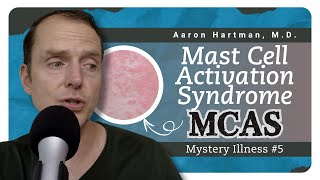
Aaron Hartman, MD concludes a series on mystery illnesses with mast cell activation syndrome, a condition that mimics many others and is likely underdiagnosed. MCAS causes multi-system symptoms and overlaps with Lyme, mold exposure, autoimmune disease, and dysautonomia. Treatment typically starts with H1 and H2 blockers, cromolyn, or nutraceuticals.
Questions this video answers
19% of Germans test positive (as cited in the video).
The video states the CDC reports as many new cases of Lyme disease each year as cases of breast cancer.
The video claims half of all buildings in the country have water/mold damage.
23% (as stated in the video).
Approximately 20% (as stated in the video).
Chapters
Mystery illnesses. This is the last of our five part saga on mystery illnesses. What they are, we've talked about Lyme, we've talked about mold, autoimmune issues, dysautonomia. And the last of these mystery illnesses I want to talk about is mast cell activation syndrome. Now this may be a new term to some people, but it's actually quite common. According to research from Dr. Moulderings in Germany, 19% of Germans test positive for this. So what does that mean? That means that it's probably pretty common here in the United States as well. We have a little more diverse population here than in Germany, but point being, Northern European descent, 19%. That's pretty common. So what does mast cell activation syndrome look like? Some people refer to it as histamine intolerance. Sometimes it can look like flushing. People have issues with food reactivity, can have sensitivities, multiple chemical sensitivities. It can look like fatigue, shortness of breath. One form is actually people get anaphylaxis spontaneously for no known reason. You can get GI tract issues, rectal itching, malabsorption, gas bloating, whole bunch of gut problems. You can get stomat mouth issues. You can actually have dental problems. You can get, there's actually certain cancers associated with mast cell activation syndrome, different recurrent infections, thinning of your bones, hormonal problems, osteoporosis. And there's a list of 30, 40 plus different parts of your body that can be affected by mast cell activation syndrome. It's a great imitator. So how do you make the diagnosis? Well, one, there's actually some symptom questionnaires we use in our clinic to kind of walk people through to see if they cluster in this area. Again, realize there's a lot of crossover with mast cell and the other mystery illnesses and they can be triggers for mast CE activation. So if someone has a lot of symptoms, you know, doing labs is helpful. The problem with the lab doing lab testing and this, this entity is that that the labs, the markers themselves, some of them live seconds or minutes. And so if the blood isn't processed just the right way, they're not caught just the right time. The testing results will be negative. And you might think someone doesn't have this, but they really do. And unfortunately, when people go to the emergency room, they feel really sick. They tend not to be able to get the testing done the right way because emergency rooms are not familiar with this, this illness as well. So we tend to do things called therapeutic trials where if Someone's having POTS or dysautonomia and gut issues and reactions. We'll use chromolin or H1, H2 blockers which would be Claritin, Pepcid, using nutritional things, resveratrol, quercetin. Some people are so bad to actually use biologics, different medications to help block mast cell responses. But the really thing with currently the way mast cell activation syndrome is dealt with is with these things called therapeutic trials where you list things out. And I have a list we give the patients that they walk through. But the point is that mast cell activation sy. It's complicated, involves multiple systems. Lab testing is not amazing. Even when done the right way, you actually are supposed to do three different lab tests at three different times. You need three times they're negative, which again it's hard to get people to do that. Especially when you need all your medications and supplements that might make you be helping you feel better. Then all the things I mentioned previously, mold, Lyme, autoimmune issues, POTS and Sonoma, they can all be part of or triggers of mast cell activation syndrome. So if you're having multiple symptoms and multiple systems in your body, you're having these mystery illnesses that no one can quite put their finger on and you probably should be working with someone who can kind of help you, walk you through these, these things that can deal with everything I mentioned. And there's other mystery illnesses that are out there that I haven't gone into, things related to oxalates and yeast overgrowth. The reality is there's a whole ecosystem maybe should make a specialty a mystery illness specialist, which in many ways is kind of what we do because you have to have a whole body system approach. Question I have for you all out there today is has anybody out there been diagnosed with mast cell activation syndrome, had histamine issues? What was your journey? Typically it takes several different doctors or practitioners to work with before you get the diagnosis. What was your journey? How long did it take for you to get the diagnosis and what did you go through? I think sharing this is helpful because it helps other people see that they're not alone and also gives them people information, what they need to advocate for and ultimately need to work with a practitioner who's familiar with these different mystery illnesses that can help walk them through this as well. This information is helpful. Please like Share Subscribe I'd be curious to hear your story if you're one of these mast cell individuals as well. And that ends our 5.5 part series on talking about mystery illnesses. Which one you might have what to think about especially. And the reality is with all of these, they are actually quite common. I didn't actually talk about this previously, so I guess I'll mention here since this one's a little shorter. According to the cdc, there are as many new cases of Lyme disease in our country as cases of breast cancer every year with mold. Half of all buildings have word order damage in our country. And 23% of population has the gene that increases their susceptibility to that autoimmune issues. Maybe 20% of population has antibodies related to autoimmune issues in certain populations. It's, it's, it's pretty. And then it gets more common as you get older. Pots dysautonomia. Some of the pots information says maybe 3 to 5% of the population has pots. When you add in dysautonomia in general, like the model forms, it's probably closer to 10% has some, some type of dysautonomia. And then mast cell activation syndrome from Dr. Mouldings work, maybe 19% of the population has it. And the thing I think it's interesting is the numbers with Lyme and mold is they're very similar numbers. And so there's a ton of overlap between these. These five, five characters don't come alone. They tend to come together. And so then having an ability to address all those is super huge when dealing with a health issue. That, again, is mystery type illness. If you have a mystery own mystery illness that I haven't mentioned, I'd be curious what it is. Put it below. Maybe it's something we're aware of, we could talk about. Maybe it's a new one to us. We're always open to learning new things. So if you have a mystery illness you've been dealing with and you want to share, I'd love to hear about it. Take care. We'll talk to you soon.