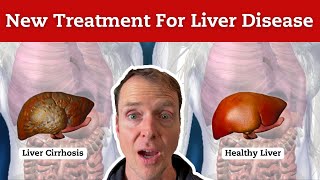
Aaron Hartman, MD reviews a new FDA-approved drug for primary biliary cirrhosis and compares prescription treatments like PPAR agonists with natural options including quercetin, turmeric, and resveratrol. He notes fatty liver disease is rising and argues some natural therapies may improve liver tests with fewer side effects.
Questions this video answers
Aaron Hartman, MD
February 27, 2025
Chapters
Why should you care about a new treatment for liver disease? I was actually recently reading in a prescriber's letter, which is one of the things I get every month, two times a month, it's about different drugs. There's a new FDA approved drug to treat primary bilio cirrhosis, or pbc, which is a liver disease. Now the interesting thing about this new medication is they're recommending to use be used with ursodal, which is a bile acid derivative, which in the functional medicine world we've been using forever in the form of tudcoming Tudca to treat people with liver detox, as well as in the Lyme world and mold world to help detoxify individuals. It's now become standard of care with people with primary bilocerosis, which is a autoimmune disease where it just eats up your liver to help slow that process and actually help preserve your liver. Now, what's interesting to me is that we have an FDA approved drug that's, you know, Ursodal. It's not super expensive, but we have a natural version of that as well. Technically, Ursodal is a bile derivative, so they're both kind of quote natural. But it's interesting reading in the prescriber's letter. They're talking about drug companies trying to create new versions of this old thing of bile acid derivative. And all of them, which were really expensive, actually worsened liver disease. So it's interesting how the drug companies try to make a newer version of an old thing to help with liver disease. And we still got tudka and ursodiol, which are available that work really, really well. But the new research with liver disease is looking at things called PPAR agonists. And this medical letter thing that kind of intrigued me was a newer PPAR agonist to use with the ursodal drug in liver patients. So again, like the so what? Well, there's a lot of other medications that do the exact same thing. The TZDs are a group of diabetes medications and other ones. But if you've ever heard of quercetin or turmeric or resveratrol, these are natural PPAR agonists that actually have been shown to help with liver detoxification and as well as liver inflammation. The metabolic syndrome, which is now referred to as mashed metabolically associates steatohepatitis, which is the new term for the fatty liver that up to a third of our country has right now. These nutrients have been shown to be helpful. Now, the reason I'm mentioning This is. This is gonna be big money. A lot of big drugs will be coming out in this in the next couple years because, you know, third of the world numbers are changing. So anywhere 10% of Americans, 30% of the world's population have fatty liver, these numbers are going up and up and up. And I feel like, you know, my patients with diabetes, probably half of them have fatty liver. When I actually do the evaluation, we'll be looking for new drugs to treat this. And in the liver research world, they're talking about looking at the gut microbiome, which, you know, which is really kind of interesting because we've been looking at that in our world for the last 20 years. And they're creating new drugs to treat this, which always concerns me because sometimes these newer drugs have side effects that are much more than just taking turmeric or curcumin or quercetin or tucker or ox bile or whatever. But all the big. The important thing about this is if you have fatty liver disease, if you've got metabolic syndrome, you have elevated liver enzymes and you don't have anything serious. Right now, the current treatment model is just watchful waiting and weight loss, which weight loss is huge and important, but a lot of my patients who lose weight still have the elevated liver enzymes, and we have to take a little deeper dive and look into additional therapies. And since this is so common, next couple of years, you know, fatty liver disease, or mash, MASH is going to be the most common cause of liver transplant in our country. That's a pretty crazy thing to think about. So what's the point? The point is, many times natural things can be helpful instead of harsh drugs. And of course, getting individualized care from your personal healthcare provider, super important. This is for educational purposes only, but it's really interesting how many of my patients I've seen with fatty liver and even cirrhosis have it stabilized and even on repeated ultrasounds reversed to a degree on these kind of natural therapies. So I always focus on individual doing the appropriate lab testing. But my point about all of this is just. It's interesting how this. Now we're just starting to hear more about these illnesses because drugs are being created to treat them, when in reality, we already have natural therapies that can work potentially at the same level, potentially better, because they don't have the side effects, which I always like to use things with the least amount of side effects. As a medical doctor, the very first thing I'm supposed to do is no harm. I take that seriously. So obviously that's important to do. So hopefully this information was helpful. If you or someone you know has an issue with med box syndrome, fatty liver disease, non alcoholic stehohepatitis or diabetes, elevated triglycerides, which are part of metabolic syndrome and they should look into this because the reality is a lot of them probably have fatty liver and waiting until you have hepatitis or cirrhosis or something else is not the best way. Preventive healthcare is the best healthcare and so hopefully this will be helpful. If you have any questions about that, please put them below. We will do. You know, we do question and answers from time to time, whether it's on a podcast or in social media. So you put those questions below. We can answer those when we get around to it. And if you follow us when we answer those questions, you'll be notified of that as well. So take care and we'll talk to you soon.