Olive Oil Exposed: Ancient Secrets, Modern Lies & What You’re Really Eating
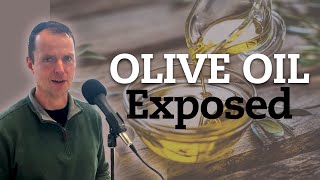
Conversation (YouTube) where Aaron Hartman, MD interviews Cody, an olive-oil retailer/expert, about olive oil history, how extra virgin olive oil is produced and graded, markers of quality (polyphenols, peppery/bitter taste), storage and oxidation risks (OLA: heat, oxygen, light, age), health effects (anti-inflammatory, cardiovascular, cognitive claims tied to polyphenols like oleocanthal, hydroxytyrosol), and industry controversies (adulteration/seed-oil cutting, weak US labeling, pesticides). The discussion includes practical sourcing, testing, dosing (roughly 2–4 tbsp/day; some studies use ~50 mL), and retail/shipping details for Cody’s shop.
Chapters
Welcome back once again. I'm super excited to be here with Cody. He is actually my personal olive oil provider. He does all things olive oil. He is an olive oil nerd. I lovingly refer to him at the olive oil tap room. And so we're going to talk today about all things olive oil. This is his passion, it's his family's business to actually provide high value olive oil. I'm here in the Richmond, local. Richmond area. But the point is, like, why is olive oil such a big deal? I want to talk about the history of olive oil, where it comes from. He actually just got back from a trip.
It was in Manassas.
Manassas. But you've been overseas or you're going overseas? Yes, I am going on. I need to get on that trip overseas olive oil expedition. We're going to learn all things olive oil, the history of it, where it came from. We're talking about adulteration. Did you know that typical stuff you buy in the store is usually cut 50, 50 with seed oils and rancid orals and then some health benefits of olive oil. So this is going to be enlightening, you know, and one of the things I want to talk about, we're going to take a deep dive into olive oil. But you have to realize this applies to all the fats you put in your body. Olive oil, coconut oil, butter ghee, omega 3s and omega 6s. The detail. We're going to talk about olive oil today. You have to apply it to all fats in your diet. Then ask yourself what your sources are. There's a whole new field of medicine called lipid medicine, which is actually using fats to heal your brain and heal your body. And. And if you get the wrong kind of fats in your system, they can actually make you sick. And as we're going to talk about, the right kind of fats can actually be anti inflammatory, anti cancer, anti cardiovascular disease. So with that, Cody, how'd you all get into olive oil? That's your thing. You got the olive oil tap room.
Well, there is a story there.
That's my point. What's your story?
Well, the story basically goes that I was going into nursing school and when I was working at hospice care, my mom started up a store. In short pump.
We.
It was just a gift shop at first. I mean, we were just talking about different oils and vinegars. Sourcing them was one distributor. We started there and then we continued from that point. We just expanded our different distributors, our different smaller groves that we go to. Lipid Paneling was a big part of it. HPLC testing, trying to find what was a high end extra virgin olive oil. What are called high phenolic olive oils.
Cool. So you actually started out wanting to be a nurse and ended up selling olive oil, which is interesting. The history of olive oil. I don't think people realize how you were actually mentioning about ancient Roman relics finding, you know, discoveries about olives going back before the common Greek language even existed. You know.
Oh, yeah, let's talk a little bit.
About the history of olive oil. I don't think people realize. How long have people been using this? You know, is it a part of cultures? Is it just Greek culture or is it. Give me the spiel.
Well, it isn't just Greek culture. I mean, it showed up in many different cultures. The Euphrates area, that's where it started. It's one of the oldest crops grown. You'll find that Greece has, is proliferated with different types of variants, but Italy has the most variants available. Have you heard of the seven hills of Rome or Italy?
Yes.
There actually is an eighth. There's a trash heap, and that is the eighth hill. And in that trash heap they were able to find old amphorae that actually had designations, names of the different types of olives on them. That's how they were designed. And that was. They actually predate the language, the Greek language Alphabet.
Interesting. So we've. Olive world's been around for a long time. How important was it to ancient cultures? Because it's really interesting. Things like salt, for example. You're not worth your salt. Salt used to be money, right? Yes. Was olive oil ever used as a monetary form? Ever. Was it ever so important for a culture historically that literally cultures rose and fell?
Oh, that's a myth. That's a total myth.
Tell us about it.
So there's myths about it, like Athena won the loyalty of Athens by gifting olive oil. And that's not exactly true.
Didn't gift olive oil to them.
No, it's not exactly true, but it's a total myth about it. There's, there's doctors from back in ancient times that they talk about deocytes, Marcus Gaius Officius, early celebrity chefs that were all in on extra virgin olive oil. There's actually a president that was in on extra virgin olive oil of the United States. Do you know, perhaps.
I don't know what you're talking about.
That would be Thomas Jefferson. He was a extreme fanatic of extra virgin olive oil. Well, just olive oil in their terms back in the Day for health benefit. I mean, it was known, it was a part of the culture that it was healthy, but it wasn't exact. It wasn't this. Yes or no, was it ever considered.
Medicinal in ancient cultures either in Rome?
Oh, yes, yes. Yeah. Specifically deosates. He talked a lot in old scriptures and old notes about extra virgin olive oil for curing different bowel diseases or different things that were happening with the intestinal tract. I mean, using the extra virgin olive oil to. To stop stomach aches, inflammation in particular. That's what we believe he was talking about.
Would they use them as a purgative, like drinking lots of olive oil to like flush out your bowels, or is like a well, that.
That wasn't exact. That wasn't exact in the notes. They're still. They're still very minimal. It wasn't exactly that that they were looking at what they're, what they're seeing. What they saw was that the inflammation was reducing and that was making the, the bowel condition better. Anything from, from an inflammation standpoint, how.
Are they looking at that? Because I know, like, you know, one of the ways they used to diagnose diabetes back in the day was the urine was sweet. You'd pee and then ants would come and eat the urine as it dried up. And they're all sweet urine. That's obviously a very extreme diabetic. But how are they looking at or measuring inflammation to talk about that?
Well, there's multiple tests that you can do to measure inflammation at a molecular level. Now, that goes very deep into an expertise that I don't want to delve too far into to misspeak. But the inflammation is happening at a molecular level. They're seeing the reduction the exact same way that ibuprofen reacts. They were seeing exactly differences between. No differences between the two. Inflammation was reducing overall. And they were able to actually write about it and have studies about that.
That's a modern times, not an ancient modern time.
Not ancient time. Ancient time. They had no way then. But they knew that people were getting healthier. It was much more anecdotal back in the day, which is. Which is a little rough.
It's more like you give it to little Bobby and he gets better versus dying. And they say, yeah, oval helped because he didn't die from the plague or whatever kind of thing.
Well, yeah, and their diets were a main contributor to that. What they were eating were a main contributor. The Mediterranean diet is the healthiest diet and it's been agreed upon in modern times. And it Was agreed upon in ancient times as well. That Mediterranean diet was important. Eating the right types of fats is extremely important. Extra virgin olive oil was just a part of that. Nowadays we're finding out that it's a larger part of that. A much larger part than I expected to learn.
And just to put. You'd mentioned this before, but the, the term extra virgin olive oil is a modern term, right? Back then they didn't refer that it was just olive oil. There was no, there was no extra virgin. It was just. Yes, you know, explain that to us because I think a lot of people don't realize that olive oil like extroversion olive oil is more like a. I would say it's a legal term, but it's like it has, it has meaning versus just good old fashioned.
It's a classification.
Okay.
You know, you classify olive oil in a few, a few different tiers. Basically you go from extra virgin to virgin to refined or pomace. And then the worst. Lamp grade. Lampate. Lamp grade is extremely bad for you. There is no health benefit, intrinsic health value at all. They're so rancid that it's actually an empty fat. Classified as an empty fat.
How you make lamp grade?
Oh, just don't take care of the olives. Olive flies allow it. Olive flies to proliferate and destroy the crop. Have, have mealy looking, sit them out in the sun for a long time. There's a myriad of ways that you get that type of olive oil but really just don't take care of it.
So just, just so, just like the, the worst, like worst quality possible. And the refined, how's the refined olive oil, how is that made?
Well, refined olive oils, they're gone through a chemical process.
It's a chemical refinement.
Okay. Yeah. So they'll chemically take out all the bad defects and then lengthen the long, the lifetime of it that you can use it. But there's still no health benefits. Those refined oils are actually, they can be added. Other oils can be added to those.
Refined oils or they refine them. Are they using like a hexane or a solvent in the refinement process?
They are using a solvent. They are a specific solvent. I don't have the name of it at this time. They are using solvents to, to refine them. That's what I've read in my notes.
Okay, so they've the extra virgin olive oil. What, what. Tell us how that's made. That's where everybody wants. Yes, it's the cloud. I like, I like the really cloudy stuff, it makes me feel like it's even better. But what's the process of making extra virgin olive oil?
Well, yeah, making extra virgin olive oil is. It is a process. And 85 to 80, I believe, 87%. I may be wrong there. Of all the extra virgin olive oil made today is made with a malaxing process. But let's start at the start. Harvesting begins and the correct season by shaking the tree. You can shake the tree with a rake, little electric rake, and shake off the olives into a net. Hopefully you're catching it before they hit the ground. If they hit the ground, that's a bad practice. That's bruising done to crop. So you shake it off the tree. Sometimes a machine is used. That's the best way to do it. Sometimes they're handpicked. That's the worst way to do it. Very hard, extremely hard. Once it gets off, it is. You should crush within 8 hours from it being harvested. 8 hours, 6 hours, 2 hours is amazing and great and very hard to do. And if that harvesting time is really important, it's probably one of the most important facts. If you don't get those olives to the mill, if you do not crush them within time, they will oxidize, they will sit, they will grow old. There's a segue that I like to talk about or an example.
Apples.
There's variants of apples that die within 24 hours straight off the orchard or off the tree. And they die so fast that you have to use them. Now, there's a reason why you don't see these specific type of olives in the supermarket. They're not. They don't last, they die. And same thing with olives. They will. They will die. They're not going to. They don't. They don't keep for long periods of time until you cure them. So once they're off the tree, they must be put into the mill and must be into the malaxer soon starting going from there. If I can continue? Yeah, yeah.
Because I'm like, what's a malax? Or tell me what's the process? You shake them off, you get them on the net. You don't touch them or crush them or whatever.
Yes, yes.
And then you take them to this place, then you malax them. So what does that mean?
Sometimes you add a little bit. It goes up a conveyor belt where there's a little bit of water to clean them. So you run them through a little bit of water to clean them, and then the olives are tossed into a malaxer which is basically a cylindrical tube with metal teeth. And that cylindrical tube, it's. It is at a right rotational speed so it's not too much heat added to the process. This is the big deal. Heat added to the process will degrade the. The polyphenol levels in your olive oil. The health benefits specifically. It can also make it go rancid much quicker. You don't want a lot of heat in this process. This is why they do it the malaxing way. These stainless steel malaxer big teeth tubes. Once it's malaxed in those tubes, it's this super thick slurry.
And wait, so a couple quick questions. So are there places that. Because with expellerpressed orals for example, you actually will create pressure and actually burn the oil. You actually get smoke come off of it. In the olive oil process, if they relax it too fast, does it actually heat it to the point that the oil burns or smokes or how hot? If it's done the wrong way, how hot does it get?
Well, it can get quite hot. I don't have the exact measurements, but you can burn that oil.
You can't. You can get hot enough. So it's almost like expeller press versus not the waxing process done. Right. You can actually burn the oil.
Yes.
Okay. And then are the seats chopped up in this process or they, they are the pits.
They, the pits are. There's not many processes to rem those bits. That is extremely time consuming. So the pits, how they get removed is through centrifuge spinning. So once we're done with relaxing, it goes into a centrifuge where they, where they spin the oil. Now you know when they spin this oil, the, the middle of the bowl is open. There's a hole in the very middle and on the edges that's where the slurry, the pulp goes and the clean clear product goes straight down the middle. So that's how the centrifuge works. If that works in a way in your mind to visualize it. So that hole in the middle of the bowl and then all the other pits, the slurry, the byproduct on the outside stays on the edges and you're left with a cleaner, clearer product. Now that's when we leave it lead to the most controversial point.
Okay.
Filtration. Oh, you're not supposed to filter extra virgin olive oil. You're supposed to keep those health benefits. If you filter, if you extremely filter your extra virgin olive oil, you're going to be left with a lower grade product. So much so that it could be classified as virgin or even into that refined point. All right. But it has to go through some kind of filter. It has to go through something minimal filtering. Minimal.
So even extra virgin Ovorol is going through like a minimal filtration process?
Oh, yes. Oh, yes, that. I mean, it's. And that's the problem with this. I mean, when you say unfiltered. How unfiltered?
So. So because, like, you see some ones that are extra virgin, they're kind of cloudy, I come to y' all store and get the ones that are like, I really like the green ones that are kind of cloudy. And other ones, they say they're extra virgin and they're clear as crystal. They're so like.
Oh.
So how do you tell if you're buying olive oil? How do you tell, you know, if in the United States, if it says extra virgin olive oil, by definition, is that good enough? Like, how do you tell if it's.
Well, the European Union standards. The European Union standard is much more exact and their standards are dealt with taste and then lab testing. Taste and lab testing. These are the only standards for extraversion olive oil. There's not another standard in the United States as well. In the United States as well. Yes, but the United States standards are so low, it's laughable. It's absolutely laughable. There is a standard on the FDA law right now that I can actually, I can tell you, and I've researched it extensively, the FDA standard specifically says if that you don't have the word extra as in extra virgin on the bottle, precluding the olive oil. So you can put extra at the bottom, you could put extra in other ways or extra healthy. But if you put extra before the olive oil, if you don't put extra for the olive, forgive me, you can put. 70% of what goes in that bottle does not have to be extra virgin olive oil. 70%, as long as it's an edible oil, does not have to be olive oil.
So it can be 60% canola, 60%.
Soy, 60%, 100% legal.
Expel pressed sunflower and you'll still say olive oil. Yes, but not extra virgin.
Not extra virgin. Extra. That's the one key point. That word is important.
So your olive oil needs to say extra virgin ol world, period. Anything else?
It's cut.
And you have no idea how much it's cut. Simply put, one of my patients who actually procured oil for restaurants, that was his job years ago. I Was talking to about this. He said like a lot of stuff they get through, through Cisco and places like that, you know, they was 50, 50, 50, 50 canola story and olive oil. And so you get some, some of the flavor of olive oil. Well, obviously, because the rancid, unhealthy oils. So you've done the maceration thing, fancy word. You said you filtered it out to some small degree. What happens next in the process of making.
What happens next is you try to bottle it. You try to bottle it. I mean, at that point we're in the right process, the right stance, the perfect amount of filtration, light amounts of filtration to leave you with an olive oil. Here's the bad part though. Too much sediment will make the olive oil go bad. Too little filtering and you. And you've got a time bomb. Basically the pulp, that sediment that you like so much that you purchase from us, if there's too much of it, you will make the olive oil go bad quite quickly within three to six months. So there is some sediment and that's important to see in some ways like very light amounts at the very, very bottom. But if you see like 3, 1/3 of the bottle full of sediment, I would never buy that bottle.
I've never seen a bottle like that before. That's.
Well, they do have them in Greece. They do have them. And you can see these. I mean it's even. There's bad practices everywhere, even in the Mecca, even in the home of extra virgin olive oil. To me there's bad practices.
So you get it, you filtered a little bit, you get it bottled and then you ship it.
Well, you can get it bottled at the facility, but most people keep it into, they put it into these big containers, these plastic containers or stainless. It's the best way is these big stainless steel containers or these. Or in plastic. Unfortunately, they still haven't gotten plastic out of the entire process and. Which is very, very sad. Which is very sad. But it is some of the best plastic that doesn't leach as much as others. The one they use for drinking water, a few other things. That's for someone else to talk about. But yes, plastic is a part of the process. It's going to have to be for shipping.
Okay, and how long does it take once they make, they make the olive oil? How long does it take to get from point A to like your store? Like whether it's, you know, Costco, Whole Foods, wherever.
So there's a lot of variants here. I mean, extra virgin olive oil that you get on the shelf could be as old as 2 years old before you even purchase the bottle, which is that the point of rancidity. And you can find this out with specific ways of looking at labeling. If you want to talk about that or go into that.
Well, you. Because I think one people don't realize that is when you get it in the store, typically. And some, some manufacturers will have the date and some don't. So I've looked at, you know, every time I go out and I'm always looking stuff in the grocery store and you know, I'll look at different olive, extra virgin olive oils. And they, they don't all have a date on them. Some do. I've seen ones, I've seen ones as young as a year after the. Like it was a year. Like I'm in the store. And the dates, like a year ago you were showing me a bottle that was two years.
Oh, yes.
It was sold and it was like two years.
Well, may I just.
The best. Yeah, sure. Well, yeah, yeah. Well, that. Because this is interesting because this was, this was bought. How long ago was this bought?
They bought it in June. June of last year.
So June 2024 and June 2024 on there, the expiration date is October. That's. There's.
There's their harvest date right there. The harvest date is. Is when they harvested the product. So that is its birth certificate. That lets you know, year and a half. But it says it's good until. Until 2025, but was harvested in 2022.
This is three years.
That is in. That is absolutely false.
How long? Typically. Well, I've just learned this about coffee. I used to think coffee, if it's a whole bean, they were good for months. And recently learned that once you open the coffee bag, even with whole beans, there's an oxidation process. And even if you don't grind the coffee and you left the beam within six weeks, it's oxidizing. So the flavor change. And I've noticed this in my own coffee that two months later it doesn't taste the same because things oxidize. The question becomes with olive oil.
Yes.
Like, what's the time frame? Like what. Okay, you crushed it. Like, when does it start oxidizing?
Now this, now this is an important and very scientific topic. So extra virgin olive oil oxidizes when it's open to the air. You want to leave it. You want to leave it closed from and away from oxygen. Nitrogen filling is a thing for this. There's some people who nitrogen fill their bottles. I can do that at the store. It's very expensive. Basically, what you want to do is keep your olive oil in a large enough container that the olive oil can stay fresher longer in a bigger container. That's been proven and very true. But you want to keep it away from extra oxygen, so keep it closed as much as possible. If your container is very large as a liter, and you and it's down to about a half a liter, you might want to put it into a smaller container for the extra oxygen. This is something that a lot of experts don't talk about. When you leave a lot of extra oxygen in the bottle, you can increase the oxidation rate so much so it can go from 85% protection within a year to 50% protection. You lose that, you lose that 35%.
And the protection is. Is that a quantity of the polyphenols in there or what is that protection?
That's just oxidation straight across the board. So that's how old the product is. You can test that with dice glycol, test the DAG test. Being able to test for that oxidation. You can do that at any time, anytime, whatsoever. But there's an acronym I love to talk about for extra virgin olive oil if you want to keep it fresh. You remember Ola.
Hola.
Hola. Oh, hello. So hola is heat, oxygen, light, and age. Again. Heat, oxygen, light and age. Keep it fresh, keep it away from direct sunlight or even light inside your home. Keep it away from extra oxygen and keep it away from heat. Everybody puts it right next to their oven. Don't put it right next to your oven. Please put it inside of a cabinet. Or even better, you can actually put it in the fridge. If you have a large quantity, it will coagulate and thicken, but it will contain the polyphenols very long. This was something that I wanted to talk to you about. The health benefits. They found that if you actually refrigerate extra virgin olive oil, you'll keep the efficacy for longer. The oxidation rates go down, but the olive oil will thicken to a point. And it's hard for you to unthicken it without adding heat to the process. Right.
So if you warm it back up to room temperature, it'll stay thick.
No, no, no. It will return back to.
Okay. If you just pull that lever and countertop three hours. There you go. Then it'll. Then it'll turn back to normal.
Yeah, but who does that? I mean, somebody forgets, you know, gotta pick up the kids, you know, you're gonna.
I'm just Asking questions. So it doesn't. There's no precipitation process by which you get. Because you said coagulation. You're not actually having fat droplets and things coagulate out. It'll. It'll go back to.
Oh no, no. Yeah. I probably misspoke on that fully. But it will thicken. It's viscous. It'll get like butter.
So you want it to be, you know, ola. Heat, oxygen, light and age. Age. I feel like age is the big one. People don't realize how long it takes for the olive oil to get here. The stuff you all have, how long. What's the crush date? So when you get something in your store is a crush date, like about six months. Like what's the timeframe between crushing and when you actually can get.
Get the product? Yeah, well, that varies. I've gotten some products that are air shipped over within a month.
Oh wow, really?
Within a month? Yeah. But I've got one right now at the store right now. But there. Is there. Most of the olive oils that I get in the store, they're gonna hit about the 3 month mark. 3, 3 month mark before I see them from their crush. So usually January, they'll be crushed in October or September and I'll get them in January.
Is there a spring crush or just a fall crush?
Of course there's a spring crush. You know. Yes, yes, we've talked. There is a spring crush. And that spring crush is, is the southern hemisphere, not the northern hemisphere. You won't see, you know what, in the summertime, if you're buying Italian olive oil, if you're buying Greek olive oil or even Spanish olive oil, you're kind of doing yourself a disservice. You should switch, switch your season, switch your hemisphere. Chilean olive oil. There's some extremely cool things coming out of Chile and Australia, even Australia actually won number two at the world olive oil tasting competition last year. Number two, Australia numbered. Yes. This is unheard of. Australia hadn't placed in the top 10 in ever so far as I, I realize.
So you. Okay, so north. So this makes sense. Northern hemisphere, which is going to be your, your European stuff. Europe, basically you want to get those after the fall crush, which is going to be our fall here in the United States.
Yes, yes.
Versus. So you want to get. So if you're getting that in the summer, during spring, winter and spring. And what are the countries right now? So you have, you have Chile, you've got Australia. What are other countries that have in the southern hemisphere? Yeah, Southern hemisphere.
Well, South Africa, South Africa, that's a great place to get it from. But a lot of South American ones right now there is specifically Chile. I want to harp on that point. There's some crazy things being found out about their altitude. We know about Chile being this, this, this mountainous country, humongous, mountainous, long mountain range country. The altitude is actually affecting polyphenol levels. I learned this from Aegitis prokopos. He's a 20 year lab researcher at the University of Athens. He is the one who was at the conference that I went to and he talked about it. High altitude and low temperatures, but not too low, like right around. So if you harvest right at about 53 to 56 degrees, like right there in the sweet spot, the polyphenols are actually higher.
So it's gonna be spicier. That's spicy.
Yes. You want to talk about that?
Well, we can because like this, I think that's where people, you know, when you get an old olive oil like you get like a smooth one that you consume and it's not spicy, there's no pepper or things like that. I think sometimes people don't realize that that's the actual polyphenols that you're tasting. And so a high polyphenol or high anti inflammatory. High anti inflammatory olive oil.
Yes.
It's gonna be spicy. It's gonna burn.
Yes.
It's not going to be like drinking milk or anything like that.
You are absolutely correct that that peppery finish is actually, there's actually a receptor in your throat called the TRPA1 receptor.
Okay.
This receptor at your, in your throat and the esophage. Now forgive me, I don't want to go too far in the terminology, but no. Anyways, in the throat there is that receptor and it reacts as a peppery finish. You start to cough almost that that is an indicator that you've gotten a high anti inflammatory content. It's directly indicative. This is not something that is fugazi. This is not something like oh, you got the pepper. It's fun. No, it's letting you know you've got the health. That is one part of the lab testing, one part of how to find if you've got an extra virgin olive oil. Taste, taste and how it, how it reacts with the backside of your palate at the throat level. The pepper should never touch your, you. I mean you shouldn't touch your tongue in such a strong way. It should hit your throat in a very strong.
I've noticed, I'm drank some of the stuff, it's like you drink it and it's like, it's almost like hot pepper. It's burning and like, and so it's okay in the front. Like, it's almost like, you know, it's different foods, like wines. Like, you hit your fire, your tongue have a taste. When you swallow it, you get these other aftertastes. So, so how you know it's extra virgin olive oil? You said the taste. What? How else can you tell if something's extra virgin?
Okay, okay. There's really only two things you need to look for. First was the pepper, and second was the bitterness. Bitterness, bitterness. There's ways to talk about bitterness. Okay? When I say bitter, people think, you know, crayon, musty, bitter as in harsh and disgusting. No, I'm talking about bitter as in herbaceous, fresh, grassy green arugula. I mean, if you just put a whole handful of microgreens in your mouth, it's going to taste a little bit bitter and a little green. But that's what we're looking for, that green type of bitter. And you can tell that, you can tell that when you taste a vegetable, how that green bitterness is influenced. Not this old, musty, nasty bitter. So bitter is actually indicative of certain health benefits there as well. Oleuroprene and oleasing, they're both indicative of the bitterness profile. Oleocanthal and hydroxytyrosol are more indicative of the peppery finish.
Are these names for polyphenols or what are these names? What chemicals are you naming for us?
Yes, they're names of specific polyphenols that you can get from a certificate of analysis. This certificate of analysis will show you the different compounds that are in. Well, I shouldn't say compounds. The different polyphenols that are in extra virgin olive oil. Now this is new science, okay? There's no 30 year studies on oleocanthal found in extra virgin olive oil. They're 14 year old. Okay? So they're quite young. And we're trying to learn more and more about them, which is why it's not so definitive. But they're getting more definitive. They're getting much more information. They're finding much more efficacy when you have high content of these polyphenols, oleocanthal in particular, when the oleocanthal is so high, you're seeing much more efficacy in inflammation reduction at a molecular level in lab tested levels. So if I could, could I explain those polyphenols?
Absolutely, yeah.
Top to bottom.
Top to bottom.
So top to bottom, you can start with Oleocanthal being the best in my opinion. Some doctors will disagree, some experts will disagree and that is okay. Olean canthal actually has in the most recent studies shown an anti cancerous availability. Like specifically inhibiting proteins that stop cancer cell growth or stop the migration of some of these cancerous cells. Now I've talked about a lot of this as being in in vitro, but there is a few studies that are in vivo inside the human body and, and that's what the more recent ones, the 2017 one, there's a few different ones. So olein canthal, that's an anti inflammatory and it has anti cancerous properties. You can find the studies and look them up yourself. They're at the the World Olive center for Health in Greece. Anyways, oleasing is the next one. Oleasing is a processor of cholesterol and it helps prevent the oxidation of low density lipids. The oxidation of these low density lipids that create these calcifications, it's preventative. So a lot of oleasing can help with that.
And that's interesting because you say specific for ldl, because I actually will measure oxidized LDL in people's blood work. And you can have elevated cholesterol, but elevated cholesterol doesn't give you heart disease. And you can have low cholesterol and have heart disease. The difference is the LDL being oxidized. And analogy, I tell people oxidation, these things are called advanced glycation end products. Ages is what we call them. So what are these ages? It's when you make your hamburger and you burn it, it gets really charred. Yes, that's an advanced glycation end product. When you make toast and you caramelize toast, it gets nice and toasty.
That's hexacyclines. Are we talking about hexacyclines?
No, we're talking about. That's the caramelization process. So when the actual sugar molecules burn together in bread or in meat, the protein molecules do this. And so it's an oxidative process. And so to bring this home, your hemoglobin A1C, which is a marker for diabetics, is a oxidative thing. It's an advanced glycation end product.
Yes.
And so we use this in diabetics to say how bad your diabetes, we look at oxidation in your red blood cells from sugar. And that's what the hemoglobin A1C is.
Yes, yes.
It's interesting that this is actually blocking oxidation because ultimately oxidation is at the root cause for the damage in cells from diabetes or burning your meat to taste yummy. I know. Or your toast. But it's interesting how like that oleocasin has. Did I say it right?
Oleason.
Oh yeah, sorry. Actually helps block the oxidation of ldl, which is a primary driver for cardiovascular disease.
It's kind of interesting. Well, it's something that I've read up on too in my own layman's sense. I mean I, I do read some of these studies and that was specifically the problem. Exactly what you said. Your, your expertise. And that's, that's what oliacin helps with continuing though there's ligdricide. Ligdricide, aglacone. It's another anti inflammatory. It's a very good anti inflammatory but not the best like ole and canthal. Moving on. Oleuroprine. Oleuroprine has shown to be more cancer preventative than anything as well as another anti inflammatory. And then oh my favorite, my favorite one and the one that I look for the most when I get my lab tested results is hydroxyrosol and its other pterosol derivatives. If I can get a high content of hydroxyrosol or its other derivatives, some of them are so small that they can pass the blood brain barrier. They're very good at removing smaller plaques in the blood vessels of the brain. And this is a very difficult process. This is something that invasive. There's no invasive surgery in the world that's going to remove these plaques. It's not possible. But being able to remove these plaques, soften these plaques, that's what hydroxyrosol is a big one.
Are these in animal models or what kind of studies have shown.
There is multiple studies on the lab tested result here at the National. They've been published by Magidis Prokopos and a few of his other. I can give you more of those here if I can.
All these people sound Greek. So are these like researchers or.
Of course they are straight from the.
Motherland of olive world, I guess.
Yes, yes.
But the point is like these are all things that are measurable that you can measure and get a number on.
Yes, yes.
To measure the purity of. Or not the purity, but the, the quality of olive work. Because if you're using food as a medicine and using it as an antioxidant, you want to have as much of whatever those things are. And this is all measurable.
Yes, they are, they are measurable. They're just. The studies are so small. That's the biggest problem is how, how Many participants. The biggest one that I'm referencing was like 79,000. 79,000 was the biggest. And that's, that's not amazing.
That's a lot. That's a lot for.
Well, that's the biggest. Most. Some of the studies that they were referencing or talking about at this event were a thousand people. One of the studies, I had 59 people in it and I kind of like pish poshed at that. I was like, maybe not, maybe not this one. It's hard to find efficacy without a larger sample size. I think you'd agree on that.
So what are some controversies? So we talked about olive oil, sourcing it, crushing it. What are some controversies? Because I feel like there's, you know, there is this thing maybe 20 years ago about the controversy of honey and how most of the honey in the world was coming from China and they were actually taking high fructose corn syrup and mixing it with the honey. And then we stopped game from there and they started actually taking honey hives. They actually put high fructose corn syrup out in front of the bees and they would, instead of flying around, they just go to the, the high fructose corn syrup and they make honey out of it. And so there's a lot of controversies when you're sourcing these things overseas. Like things get adulterated. Is it really olive oil? So what are some of the contra. Educate us.
I've got you, I've got you.
What are the controversies?
So the controversies in extra virgin olive oil is that you expect to get 100% extra virgin olive oil in the bottle and that's just not what's happening. There is an investigative journalist called Tom Mueller. I want you to look up his book Extra Virginity. It's been around for a decade or more. His book shows and details the, the mafia's hand in the proliferation of bad or seed cut extra virgin olive oil. It's been known that it's a, it's a thing that's been happening and in about, in 2019, I think about 79 people got arrested in Italy for this in particular. You can look up the cases yourself. About 79 people. 20, 19 and extra virginity. The expert, Tom Mueller, he was actually that investigative journalist. His family lived in Italy. Once he started doing this book, he literally left Italy afterwards because of death threats. It's quite scary. But at the same time, there's a simple way of thinking about it. Making money off of cutting extra virgin olive oil, it's billions of dollars, is much safer than doing it with drugs. And that's basically the whole premise. The whole premise is seed cutting extra virgin olive oils is a big business.
So are there any other controversies with chemicals and olive oil or pesticides or.
Oh, pesticides are proliferated, just like in a lot of foods. It's going to happen. Maybe not so in Spain or Greece with their higher standards. That's when you want to go towards the organic certification. If you can find a good organic certification, they can, they can exclude pesticides. They can tell you, hey, we did not use these. We use natural processes. We, we included ladybugs or another type of insect that destroyed the fly, the olive fly population. Things like this is what's going to happen with, with a better certification or more trust in your grove. If you live next to the grove and you know the farmer and you can see what their processes are, what.
Kind of chemicals do they. I know like with, like for example with apples back 100 years they would use mercurial arsenate, which is basically, you know, mercury and arsenic kind of put together as an antifungal and a pesticide. What kind of things they use. And they still, with grapes, actually use certain amounts of that as well even today. Like what are the chemicals they use typically to prevent molding or pesticides?
The classics, the classics ones that you mentioned, I can't name any offhand of specific pesticides that they would use, but it's the classics that you just mentioned. That's not a part of my expertise on the pesticides that they use, but I know the processes they use to keep the olives in a good condition. Like I said, introducing those insects, using wastewater from the facility, the olive wastewater, to increase nutrient in the area, treating the trees by if there's a cold, if there's a freeze, if you know it's going to freeze right before you're about to harvest, you can actually fully freeze your trees with water. If there's a freeze at night, you can encase the tree in ice and give it you an extra few weeks for that weather to leave. And that's another way they do it. But I don't know the actual specific pesticides that they're going to be using.
Question. Something you said just brought something to my mind. What do they do with the leftover pulp? So after they spin down, what happens to that?
Well, sometimes it's thrown out, sometimes it's used in feed, like animal feed. But they're finding that this wastewater, this pulp is.
So when you say wastewater, that's the same thing as this pulp.
Stuff, yes, it's part of the waste. It's not very, I mean there's nutrition parts in there, but it's actually pretty, not very edible. It's much harder for you to process it. And it's going to make any olive oil that you include with it go bad. It'll go bad pretty quick itself. So in turn, what you do is you take that waste and you use it all over the grove as a nutrient, as a part of the topsoil.
Almost like a composting kind of thing does. Is that a common practice or only certain places do that?
It's not a common practice. It's not. I learned about this from. I'm going to plug another grove here. Tropical in Andalusia in Spain. In the southeastern part. Lucia and Albert, the grove owners, have started to do these processes and they, they come out with some excellent extra virgin olive oil. So high in their polyphenols compared to their neighbors. That's the, that's the thing. When, when you have a sample size there, 100-year-old trees, same types of trees, same types of harvesting that's been done for 100 years, sometimes the same burlap sacks, which, which is bad. You can see that there's a, there's something else going on. The, the introduction of a better nutrient, a more natural nutrient, and nothing pesticide wise used for, for their groves. So you've got to find the groves. They're going to take care of their product. Do these new processes. I know specifically, they told me they were burning trees, old trees. Look, some of these olive trees die, okay? They don't live forever as you would think some of them do. Some of them live hundreds of years in produce. And those are the good ones, those are the really healthy trees. But some of them die. And what do you do with the rest of the wood? Some people turn it into a wood spoon, some people turn it into a little bowl, a little salt cellar. Sometimes they smoke meat with it, you know, just like we would with our hickory. But if you can take and burn the tree and create more, more carbon rich soil, a better topsoil, that's what, that's what they're doing.
So they're burning it down and taking that and putting it back out as a.
Yes.
What's kind of interesting because with one of the things that trees do is they actually, their roots go deep down the soil and because there's certain bacteria and yeast actually live in the soil, actually create this acid fulvic and humic acids that actually have Large amounts of trace and rare earth minerals. And then the trees actually put that into the roots, and it actually goes up. The xylem, phloem goes up and it eventually goes into leaves. And so one of the things that trees do is naturally is take deep minerals and put it on the topsoil.
Yes.
And so it's interesting how you actually get these things, get in the wood. And when you. One things I do, my farm actually is I'll take it and I burn stuff in the fireplace. I take it. Yeah. Use it as basically a way to boost the mineral content in my soil. Oh. So it's. Which is. It's. It's an old trick. I mean, they actually. There's some interesting stuff they actually made in Brazil. We don't know how they did it. They found these areas where the. Whatever ancient civilization was there before the. Before Brazil got colonized. They actually figured how to make soil. And they're burning something. We haven't figured out the magic sauce yet, but they actually now are mining that and using that as, like, one of the best fertilizers. That's crazy. But these people, millennia ago, figured out how to make soil by burning something. And there's some way they did it. We just don't know what it is. And it was unique to the Amazon river basin. So. So I hear people doing that. As far as. I'm like, well, this is. This is an ancient concept. It's not new or novel. It's been at least some cultures, it's been around for quite some time.
Well, in. In particular, for. For olive orchards. Look, they're called olive groves, but they should be called orchards because it's trees, by the way. Anyways. Anyways, the type of soil is what's just as interesting from what you're talking about, pulling those nutrients up. Well, there's a problem with olive trees. In the soil they grow in. They use a sandy loam, so it's a very sandy mixture at the bottom. There's a lot of. It's hard for them to get nutrients. It's very hard because of that sand.
How deep do the roots go for an olive tree?
I mean, a couple of. A few feet. It doesn't really go so deep. They spread wide.
They're not like grapevines that go down like 100ft or something crazy like that.
And so you need that topsoil, you need the nutrients at the top, so that's sandy at the bottom. So that's a big. There's a big reason for that, too. Your Your olive trees must struggle to produce. If they do not struggle, they don't produce. Just like human beings. I say this all the time. If you don't struggle, you're not going to produce either. Timmy. So the, the olive trees have to have three dry seasons and then one moderate season. These three dry seasons will, will help the tree to get into that mode, into that moderate season, to start producing in its adolescent state. These adolescent olives are producing and they're trying, and they're trying, they're struggling. They finally get water, they finally get sustenance, and then they, and then they, they usually. The polyphenols.
Is that a cycle, like where you have like four or five year cycles, where you have dry seasons and wet seasons and then the olive oil is different during the wet seasons, like better versus the.
Yes, exactly. Like right now, Spain has gone through five years of droughts and heat. All right, now, I've been doing this for about 14 years. Before that, Spain had bumper crops. For years in a row, Spain had bumper crops almost every single year. Like 110% yield, 120% yield. They were living it up. So these groves like Lucia and Albert's, they're doing these extra processes to beat climate. Speaking of which, if I could, the biggest indication that you're going to get a high polyphenolate extra virgin olive oil are just three things. Three things. The type of olive, the soil and the climate. This is what you've got. All right, you look after these three things. You can try to get a high polyphenated extra virgin olive oil. These are the three most important things. Now, there's subsets to that, of course, I could A, B, C and all these. But the type of olive. And they're finding there's certain types of olives that have high polyphenols in specifics, koroniki, in particular, the koroniki, that one has a high content of ole and canthal. I've seen many scatter plots of olean canthal from this, this same Greek diamond, gitis prokopos of the ole and canthal increasing with certain types.
All these names and these people and the people in Spain, Chile, whatever, these are places you're sourcing olive oil from.
Yes.
Like you make relationships with these individuals?
Well, not, not all of them. I've met recently some of these, but maybe one or two. I do get some from their grove, but not magitis. Magitis proceeds. This guy has been doing it for 20 years as a lab researcher. He doesn't have his own Grove, he's not, he's not hawking his own stuff. He's literally doing this for the love.
Of the game, love of the olive oil. So I think olive oil is interesting because it's, there's a lot interesting data using it for cardiovascular protection. You know, polyphenols, which are one of the things we've learned about gut health, is you need, you know, the peas, you know, your pro box, pre box and post box and your, your pro box, the bacteria that make all these good things for your health. The post box are the things they make, but the prebiotics are the fiber and things they eat. Right. Which is the reason fiber is a big deal in our diets. We've learned there's a whole other category called polyphenols, which are plant colors, which a lot of these things, these chemicals you're talking about are polyphenols. And actually they become food. They are food for bacteria in your gut. When people eat curcumin or turmeric or severatrol from grapes or whatever, most of it's not absorbed in your body. Most of it goes your colon. Bacteria ferment it and actually create these healthy byproducts for our body. We actually have this amazing synergy between plant chemicals and bacteria in our gut. And so knowing the polyphenol count in olive oil becomes a big deal because it's part of the health benefit. It's really been. I've had some patients, this is really interesting, who've had high particle counts, LDL particle counts, high cholesterols.
Yes.
And I've actually recommend them, you know, start doing some extra virgin olive oil. They've done that. I've actually seen them drop their cholesterol numbers and the particle numbers, you know, 30, 40, 50 points. And we're having this interesting conversation probably half a year ago, so that people. Now I want to hear about that people actually would bring in their cholesterol numbers to you.
Oh, yes.
Like the before and after numbers, because they were starting to use real olive oil and they actually had seen their numbers drop.
Okay. So, you know, and this is quick.
This is anecdotal. Yes, this is anecdotal.
Yes.
It's research based. There's data behind it. This is me telling, you know, patient stories of mine. This is talking about client people who bought your stuff.
There you go.
I need to put that. Caveat.
Good caveat, good qualifying.
We're not just not meant to diagnose or treat anything. Right.
See, that's where I was going so being able to see it has a different kind of effect. Being able to see blood works change in front of you. In front of you is. It's cool, it's cool. There you go. It's enlightening. It definitely feels good. Now I have a folder at my job where we make sure that we mark out all identifying information before we receive them from somebody. But we have folder with dozens if not hundreds of them at this point of their lipid panels. Reducing the low density lipids, reducing the triglyceride levels, reducing or. But what happens at the very beginning, which is kind of scary for them, sometimes your cholesterol will go up because your HDLs will increase, your high density lipids will in a slight bit at the very beginning. But I've seen it so many times and it really leads to some kind of efficacy within, within your own eyes and your own circle.
So question for you, I mean this is just off, off the cuff. Are these, do you have like collections of advanced lipid markers or these just standard cholesterol parts? So are they measuring both? You both, you have like particle number as well as oxidized LDL number.
There's both. Sometimes they just give me the specific number that's changed. But many times it's the more advanced amounts that are in the back end. Tons of paperwork that come with it. And being able to see that, like I said, being able to see them reduce is important. But watching this one case, there's this one case, there's this older lady who's about 93, I believe. 93. And she, she had a reduction of 100 points within six months and in her overall cholesterol and her LDLs were dropping like a rock. But her body weight was so low, her age was so advanced. I mean it could been, it could have been a bigger affecting effect, especially because it's a part of it is diet. It's not just the extra virgin olive oil, it's what you're eating. So when they change their diets, they get a diagnosis of something bad happening. And maybe Dr. Hartman told them to change their heart health and try a different diet. You'll find that that diet can be very helpful too. Here's the deal. What I learned at the conference was that extra virgin olive oil had a much higher part in the Mediterranean diet and the reduction of cholesterol than we thought. A few of the studies that they had, they actually had to stop their. One of the studies, it was a 10 year study. This is Dr. Simon Poole. I believe he's the one who talked about this, if you want to look up some of his studies, you can go straight to him. They had a 10 year study and they had to stop at the 7 year mark because of. What's the word? Ethical. Ethical issues. So at the seven year mark, they had removed olive oil from the control group. There was no olive oil in the control group. They weren't using extra virgin olive oil. They were using other fats, you know, canola oil, vegetable, maybe just lard or meat fats. They were using a myriad of fats, but they weren't using extra virgin. They were consistent about that. And at the seven year mark, they saw such an increase in cardiovascular disease, a decrease in health, that they had to stop the study and then re. Add the extra virgin olive oil to it. So they saw such a big difference. When you remove the good fats from your diet, I know you're a big proponent of good fats.
One thing about healthy fats as well is particularly with olive oil. Olive oil is unique for this because it actually helps increase bile production in your liver and so it actually helps almost flush your liver out a little bit, which is a big part of your gut health. So this is really, really interesting. I think, you know, my point of wanting to talk to you and share some information with my audience is just, you know, olive oil is one of many oils. I mean, I cook with it all the time. It's great. You know, but, you know, our food system is filled full of rancid seed oils, you know, canola oil. I'll tell people it's, it's actually rapeseed oil and it was used as an engine oil in the late 1800s. But who wants to understand this? You can't make this stuff up. It's, you know, I don't need to make stuff up because real life is crazy enough.
Exactly.
But it's like, and they, and who's going to use rapeseed oil? Like, you know, hey honey, I brought some rapeseed, you know. No, no. So they, and most of at that point I was coming from Canada, so Canadian oral canola oil. That's where the name comes from. But rapeseed oil smells horrible. It's unpalatable. So they started using solvents to deodorize it. Oh yeah.
I did not know.
Deodorize it. Yeah, to deodorize it. So when you get your canola whirlwind.
Yes.
It's actually gone through a solvent deuterization process to not stink and smell. And then here you go. Oh, by the way, it's a seed oil that's been expelled, oppressed. So it's burnt, right?
Yeah.
And then we're like, okay, this is not healthy. And like every single solitary oil, it's canoes. Or you can take healthy sunflower oil and you can make it either genetically modified, which means in the United States, we'll be putting lots of glyphosate around most of the world. At least here, most of the world's sunflower world before the, before the war was coming from Ukraine. Actually a huge, huge portion of America.
Oh, yes, yes.
Sunflower seeds was coming from there, but it was all expeller pressed. So they're burning the oral. It's coming off.
It's a bad process.
And so it's one of those things that once you realize that healthy fat is a huge part of, you know, a healthy brain, of a healthy, healthy vascular system, all of our vessels are of our cells, all of our cell walls are made of fat. Extra virgin olive oil is a pretty easy thing. And using it, food like medicine, you can cook with it. You can. One thing we mentioned before is oral pulling. And I have a lot of patients who have oral health issues. Your oral. There's a thing called the leaky mouth. You have leaky gut, leaky brain, leaky mouth, and you can actually get overgrowth of bacteria in your mouth. And now we're seeing an association between dysbiosis or bad bacteria in your mouth and cardiovascular disease.
Yes, yes.
And one of the ways you can actually change the bacteria makeup with your mouth is by oral pulling, which is just putting oil in your mouth. Yes. Swishing for five minutes. And it basically. What is soap? Soap is saponified fat. What does soap do? It dissolves solvent membranes, virus membranes, bacteria. So that's the reason soap is so amazing, because it's basically this saponified fat. You can kind of do that in your mouth with olive oil or coconut oil, the two oils I usually recommend. And personally, while I do it, my teeth feel so smooth.
Oh, yeah.
After doing it.
Extremely smooth. It's. It's a little wild afterwards.
It's almost like you washed your teeth.
Yes. And you kind of did in a way, with.
With soap.
Yeah.
You made in your mouth while you're.
But if you take my healthiest olive oil that we have and then. And then pull with it, I will be very sad. Put it in your body. Use it in your body.
Use it.
Use a lower grade for pulling. It works just as well. A little bit lower grade.
Just a Little grade.
Yeah. Yeah. It can be healthy, but not the healthiest, not the really good stuff.
Oh, you want? Yeah, I just. I try. I. I take. Buy your stuff and make. Make them some salad dressing. I always have basically a quart. A quart, right? Yeah, A quarter salad dressing on my countertop and my kids and family use for make for salads and stuff. And I actually bought and made it once and no one used it because it was so spicy. So I had to sneak it in cooking on vegetables and stuff like that. But it was to put in because I usually use like 4 tablespoons of salad dressing. So I'm getting a lot of.
It can be quite abrasive the first time you try a really healthy one. It just has a power to it.
It's got kick. It's got a little bit of kick. I have one patient, he just swallows. He's one of the people that dropped their. His cholesterol like 30 or 40 points, but he just does shots and swallows it.
Well, can we talk about that? Can we talk about how much you should be using? Sure.
How much? Well, I have some thoughts about that, but what information you have about what.
I've read, what I've read and what I learned from this most recent conference was at least 50 milliliters of high polyphenol.
At least.
At least 50 milliliters, which is like three and a half tablespoons or a little over three and a half tables. Was it.
It's like three milliliters in the tablespoon.
So 15. Yeah, 15.
Well, 15. 15. Yeah.
So it's right up there anyway. But if you. If you get. That's what most of the recent studies like a lot of the recent Studies, at least 50 milliliters is what they're using. They're not using just 15. They're not using just one tablespoon. I know I had a. To come in today talking about you and they. At least two tablespoons. At least.
I'd say two to four. Two. For a lot of people, that's a starting point. But you want to shoot for. If you're doing it medicinally.
Yes.
For like it's a drug. Food is a drug. You're shooting for three or four tablespoons a day. That's the number I tell people. And a lot of. A lot that number comes from some Mark Houston's work. He's runs the St. Thomas, he's the hypertensive clinic at Vanderbilt. He actually wrote the textbook of vascular biology. And so that information that I quote People is from his work in Vanderbilt.
So what's his name again?
Mark Houston. Mark Houston. He's got a book. I love the book with a bad title. It's what your doctor won't tell you about heart disease. I don't like, I don't like this. I don't like this book. I don't like the books like what your doctor won't tell you because, like I'm telling people this stuff. But, but, but he, you're the exception. Yeah, but, but it's an interesting book. It talks about all the causes for heart disease. And one of his big proponents, you know, the way he treats in people with food and he's used supplements and other things, but his polyphenols and his sources he recommends is a really good, high quality extra virgin olive oil. Which food is medicine. So great conversation. I love our conversation. The gist is we need to use food as a drug.
Yes.
And one of the many ways you can use it, you know, sourcing food locally from your local farmers markets, get using, you know, seasonally appropriate foods and using healthy fats, you know, and olive oil is relatively easy to procure. It's easier to get the bad stuff.
Oh, yeah, yeah.
It's easy to get the bad stuff. But every place I've traveled, there's always been some. It's strange enough I found there's always some local, some at least one or two businesses locally who are sourcing it the right way and getting it.
There's a few hundred, maybe about 500.
Now in the U.S. okay, so odds are locally, where people live, there's some source they can, they can find.
Well, the how. Yes, that's what you should be doing. Look, if we're going to talk about the how of sourcing your olive oil, anything, there's maybe one or two brands. I don't want to bring them up because I don't want to give them too much, too much headway, especially if they start seed cutting, cutting or whatever. What you want to do is look up, look a local tasting room for extra virgin olive oil. Talk to them about the health benefits in olive oil. You can find your, the people who are, who are really into it and take care of their products. They'll give you lipid panels, they'll give you oxidation rates, they'll put them on a label for you. Polyphenol levels are the biggest. If you can find a polyphenol level on your bottle of extra virgin olive oil or on or in the, the nomenclature in their store, I, I Want you to go with them hands down over anybody else. That's, that's just, it's going to be a better product. Yeah.
Yeah. So cool. So if people want to know more about you, what you do, your store, your business, where can people find more information about you?
Well, you can find more information about me on, on Facebook, on the, on the web@theoliveoiltaproom.com Olive oiltaproom.com I believe you can find us on Instagram. You can find us on many different platforms. But we have a brick and mortar that in the Chesterfield Midlothian area. That brick and mortar has been there for 14 years. It's our bread and butter. It's, it's where people come to see us. You can. Online from us. I'll ship it out to you all over the US But I really want you to come see us.
So you can actually ship across the country.
I can, I can do it.
Oh, cool. So, so you can ship this big. I get the big growlers.
Yeah. Oh, I can do it.
You can ship that. You wrap it up, make it break or anything. So difficult.
I put it in a box that's like half my height, but I do make sure that bottle gets, gets there, the growler gets there on time. I sent five bottles to a nursing home one time and a box that was about three, four my height. And the, the drop off and pickup, I know was a little crazy probably. I put so much packaging in those boxes to make sure that it's taken.
Care of because it breaks. It's a lot of money.
It's horrible, especially if it's a really healthy one. I've had people drop bottles leaving the store and you know how sad that is. I've had people gift bottles that their friends throw away. Oh, it's so peppery. I don't like it.
Sounds like my family.
It happens to all of us. Yeah.
Well, it's great to have you here today. Super excited about learning more about food is medicine, learning about olive oil. And hopefully after hearing this, you'll want to get some of your own Extra virgin cold press olive oil. Avoid the bad stuff. And if you, if this information was helpful, please like share. Subscribe below. That's how we get this kind of information out. It's a topic you'd. There's. There's their business. It's a topic you'd like to learn about. Please drop us a note below, let us know. We're trying to educate everybody ultimately so you can be the ultimate version of you you can be and otherwise. Take care, and we'll talk to y' all soon.
More from Aaron

Too Many Gut Fixes Can Undo Your Healing. What Helps It Last | Dr. Sabine Hazan


Women’s Heart Attack Symptoms Differ From Men’s 95% of the Time — Only 30% Have Chest Pain #shorts

Heart Disease Kills More Women Than All Cancers Combined — 80% of Cardiac Research Is on Men #shorts

Women’s Physiology Was Systematically Ignored in Drug Research — The Consequences Are Still #shorts



It Took the FDA 20 Years to Realize Women Need Half the Dose of Ambien #shorts

Until 1993, Women Were Banned From Clinical Drug Trials — Then Those Drugs Were Prescribed t #shorts