Proven Ways to Reverse Your Child's Mental Health
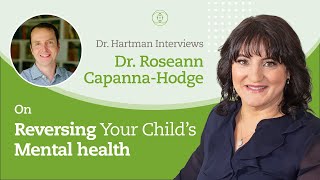
Dr. Roseanne Campana Hodge describes 30 years of treating ADHD, autism, and anxiety in children without medication, using dietary changes, supplements, neurofeedback, and brain mapping. She argues that root-cause assessment matters more than quick fixes, and shares stress-reduction strategies parents can do at home.
Questions this video answers
May 10, 2021.
Proven Ways to Improve Your Child's Mental Health (original working title: It's Going to Be Okay).
About 90–91% of people significantly improve with a course of neurofeedback (as stated in the interview).
She cites the American Academy of Pediatrics (2012) classifying neurofeedback as a Level I intervention, comparable to psychostimulants (as stated).
40% of college freshmen leave (drop out or transfer) during their first year (as stated).
Chapters
All right, everybody, it's great to see be with you once again. I am super excited to present to you Dr. Roseanne Campana Hodge. She is a super amazing psychologist up in Connecticut and actually got introduced to her not too long ago through actually clubhouse and actually was super excited to hear her story. She has a very similar story to mine how her. Her family's involved, her children have involved her with her healthcare, her practice. So I'm just going to kind of dive into it, go through her bio really quickly, introduce her, and then we're kind of just dive into interview. I think this is going to be great for everybody. It's a lot, a lot of great information and we'll kind of just go into it from here. So. Dr. Rowe is a psychologist, pediatric mental health expert, and founder of the Global Institute for children's mental health. Dr. Rowe has helped thousands of children and adults reverse the most challenging conditions from adhd, autism, anxiety, depression, concussion, learning disabilities, Lyme disease, which we have a lot of here in Richmond, as well as painism, pans. I'm really excited to dive into some of that stuff as well. All these conditions. We see a bunch down here. She's a Connecticut certified school psychologist, a licensed professional counselor, a certified integrated medicine mental health provider, a board certified neurobiofeedback provider, which is. I wish we had some of that here in Richmond. That would be super awesome. She serves on the board for the Northeast Regional Biofeedback Society and a Lyme Connection task force professional advisor. Dr. Rowe, welcome. We are so excited to have you here today.
Well, I am so excited to have this conversation. And, you know, it is Mental Health Awareness Month. Yesterday was Children's Mental Health Awareness Day. So I am really grateful to have this conversation because we all need a little hope and a little support in this time when people are struggling in a way that I have never seen.
Yeah, it's really kind of crazy. So what, you know, everybody's got a story. I feel like everybody who's in this field of medicine, this practice has their own personal story. They've got scan the game, you know. What got you into this field of practice and medicine? What's your story?
Yeah, my story really starts when I was a child. So, you know, when I was five years old, my mom's friend Angela asked me what I wanted to be. And I literally, the word psychiatrist came out of my mouth. And I had no experience, experience or exposure in the world of mental health. And, you know, as I got older, I realized that psychiatrists really just prescribe medication and don't do talk therapy. And that's what I wanted to do. I knew that I was a great healer and a helper of others. And I also am the daughter of Italian immigrants and was raised very holistic. You know, food was medicine and real immigrant Italian food is not what American Italians eat. You know, it's a lot of vegetables, it's really cooking from scratch. And. And you. When I started practicing 30 years ago this year, I only use integrative methodologies. Yes, at times when my training we recommend medications. But over this time, kids were struggling 30 years ago and I worked everywhere, Erin. I worked in residential treatment centers, I.
Worked with addicts, I worked in psychiatric hospitals, schools, in all capacities. And over this time, kids were increasingly having complex issues, right? So it wasn't just like a little ADD or a little anxiety. It was like they had add, they had eczema, they had rageful behaviors. Just so many things happened. And then I just kept getting deeper and deeper and just going to the research about what would help kids. And you know, so yeah, I would recommend supplements and dietary changes literally 30 years ago. But then I really went down to the microfiche and, you know, really started to find research to support it. Because people would always say what they say today is, well, if this stuff is so great, you know, why am I not hearing about it? What's the research? And so I started to build that and then lo and behold, as I spend time and working with kids and family, I wind up having my own two kids with special needs. A child, my older one, Max, has pans, which we started with chronic Lyme disease and then realized it's pans. And my younger son, Giancarlo is dyslexic. So it became even more personal for me during this time that I've been a parent. But at the same time, I've just seen pre the pandemic a worsening of of issues. Just an unbelievable amount of kids with anxiety.
And that anxiety shows up emotionally, physically, behaviorally. It's rough on them, it's rough on their families. And then I just started incorporate more and more and more of these evidence based approaches like neurofeedback, biofeedback and specific types of psychotherapy. And that's where we are today. And then in 2020, January 2020, right before the pandemic, I started the Global Institute of Children's Mental Health. Really just I'm on this mission to teach people that we've got to change what we're doing with kids and Parents need to know that there are many safe, natural and highly effective tools that they're just not aware of.
And one of the things you briefly alluded to right there, where you've seen things get. Seeing more complex patients in my world, in the functional medicine world, I'm hearing more and more that the typical Hashimo is the typical lyme patient, that 20 years ago you do a few things, a few diet things, and they would get better. Now the patients are getting more complex, more difficult. There's more layers in your field of mental health. Are you seeing the exact same thing?
Exact. And Dr. Aaron, it is rare that one of my mental health clients, behavioral clients, whatever you want to call it, clients that are struggling, that they don't have a physical problem that coincides with it or is a direct source of the problem, whether that's infectious disease, inflammation, you know, autoimmune disease, eczema, you know, a whole host of gastrointestinal problems, for sure. You know, that's almost like a given. You're going to see gastrointestinal problems and sleep issues when you have things like anxiety, depression and ocd.
I am seeing one thing that's interesting. I'm seeing so much sleep apnea these days. It, for me, it is like the elephant in the room. And I'm seeing with a lot of my long haulers, long COVID patients to date, all of them have come back, all the ones have followed through and got tests and they've all been positive to date for sleep apnea, mild sleep apnea, mild hypoxia, only desaturating to 90, 89%. Not that bad, right? But it's really interesting how all these things that are connecting those dots between your traditional diagnoses, but also these more complicated diagnoses. It's almost like you're becoming the expert and the connect the dots, kind of sort of for a mental health aspect.
That's exactly what I am. I have always told people, at the first PR piece that was done about me, called me a medical detective, right? Because I connect the dots and people will always say to me, how is it that I've seen this person, that person and that person and nobody put it together, number one, and nobody explained it. Please know, when I talk about cases, I protect identity and I mishmash things together so they're not recognizable. But here's a perfect example. I had a young adult who came to me and nobody knew what to make of him.
He had had a concussion as a relatively early teenage, supposedly recovered, he went off to college and had a great year, first year. And then towards the end of the year he had what seemed like almost.
Like a psychotic break.
But nobody could really figure this out, right? They didn't feel like it was that they weren't sure what happened. And nobody sat this family down. I wound up doing a QEG brain map and really said here, here, here is what are the possibilities? This is post concussion syndrome. There was some injury that you are not aware of because this was a difficult time that triggered the first concussion or this is a psychosis. That is a non standard psychosis because he was a kid that ate perfectly, meaning he had an anti inflammatory diet and exercised every day so he didn't fall apart in the same way. And I went over, I explained it in detail. They had had a neuropsych eval, they had gone to famous people. Nobody had ever explained it like this and had ever even talked about the possibility of psychosis with this kid. I mean he was an adult at this point. And this is what the standard of care is that we are not using tools available. Right? Qeg, brain map, lab work. That's a major, major problem that I feel like in mental health. I know it happens in physical health but it rarely happens that we use lab work in mental health when it should be a standard. And then we don't explain things to people so we do a visit with them and then it's like oh okay, well I'm not sure what it is. And then not really educating, it's okay. I literally sat this family down. I was like here's your two possibilities. And I said it doesn't matter which possibility is this is what we're going to do because it's the same treatment for both things. And they were so hung up on having knowing exactly what the answer is even though they had already spent I think six or seven years trying to chase down something. It was like you switch your efforts into the treatment because he's responding to diet and exercise in a positive way.
So it's so important to look at the root causes. But when we narrow things down, you have to just move forward and use whatever those symptoms are. You have to use the best evidence based approaches available.
So you're mentioning evidence based approaches as a mental health expert. Pandas and pans, you said one of your children has that. Evidently Richmond central Virginia is actually an epicenter for pandas and pans. There's a couple key centers around the country that actually getting tons of referrals from our area. You're Shaking your head.
You know, I have had many people from Virginia. Yes, I know clients who do remote neurofeedback with me from Virginia.
So, yeah, you can do remote biofeedback.
Yeah, we do remote neurofeedback as well as we set people up with pmf, too. So what? The process of that is one of two ways. So they're either doing. Coming in, if they're drivable, right In. In the old days, they flew in, they do a brain map, and then we send them back with equipment. My second way is we do statistical averages. We send them the equipment, and I know how to interpret raw data. So we do an average. It's a very common thing for people when they don't have cues, and then we start doing treatment. They use equipment remotely. I waited a very long time to do remote neurofeedback and started doing it right before the pandemic because the equipment is amazing and it works. It can be just as efficacious as if you're in the center. And, you know, I was forced to do this because, as you mentioned earlier.
There'S not a lot of people who do this.
There are people all over the world. They are. And you should always get a certified person. But it's to take the integrative approach with working with kids at the same time. Very hard to find a provider. So I would send people back to.
Their areas, and they're like, Dr. Rowe.
You'Re making me drive, like, an hour and a half each way and. Or sometimes three hours. I had families that would drive three hours each way. And so this was.
This is something that, you know, was a long time in the making. And we do it and we love it.
And when you say use pmf, I've actually done a lot with my daughter. Like, what kind of devices are you using? How are you utilizing? What's been your experience with that with, like, neurodevelopmental?
I mean, first of all, I have used neurofeedback with everything from. From individuals with neurodevelopmental disorders, a lot of birth trauma, concussion, brain injury, you know, add, anxiety, pants pandas, you know, Lyme disease. I mean, just. You name it, if we think it can help. And, you know, it's something that I feel like is an amazing resource. So I do multiple kinds of neurofeedback.
But the real anchor of what we.
Do and what we do remotely is EEG neurofeedback. So when I have sensitive brains and please know, there's no bad kind people get very competitive and give information. It's about what's right for the person. These are all FDA approved devices. It's really the number one determinant of success is the quality of the person making the protocol and that experience. And it's very much a science, but it's equally an art. So why do people come to me is because I work with thousands of people. You know, I can look at somebody's brain map and say, oh, you have a permeability issue in your gut. And my peers are like, how do you do that? Like, they don't even know how. It's not even in their consciousness. Right. 100% accuracy. If I tell you have Lyme disease, 100% accuracy is my record. And when I say that, it means I send them to a physician to get tested. So this all comes from experience. But EEG neurofeedback, you know, I'm dealing with very sensitive brains. And EEG neurofeedback means I can train one area at a time or two areas at a time. And it's really just making sure we're being very conservative. It's an incredibly, incredibly powerful tool. And for people that don't know what neurofeedback is, let me just tell you what it is. So we're training the subconscious brain. We're reinforcing the subconscious for literally regulating itself, regulating the central nervous system and then producing these brain waves that help you to, if somebody's unfocused, to be focused. If you're anxious or have ocd, get rid of intrusive, looping thoughts. And ideally it starts with a brain check or a brain map. We see which structures aren't working properly. And then I can see the neural networks when it's a qeeg. And I don't have to see the neural networks because I can hear by behaviors, if your neural networks, how the brain is talking to itself. And then a person uses this technology. They hook themselves up at home or in the center. And the technology it's provided reinforcement person a child. And it's super pleasant, safe and easy. And the reinforcement is a movie playing, so the movie won't play. And there's other forms of reinforcement. Unless a person produces a healthy combination of brainwaves two to three seconds from the first time anybody is hooked up, your brain will produce the exact healthy combination of brainwaves. And then you have to do it two or three times a week, sometimes more, if people want to, to build the muscle essentially to really change and never do less than 20 sessions. Most people are doing 40 or so sessions. And tens of thousands of research studies, 3,000 peer reviewed studies. It's great. It's highly, highly effective. My results are very consistent with the research.
About 90 to 91% of people significantly improve with a course of neurofeedback. I mean it's really pretty powerful stuff.
That is pretty cool. You hear about all these new things and technologies and actually the science behind neurofeedback is old. It's not new, it's just not so old. It's not penetrating. Yeah. I remember seeing a patient we did on Pons therapy with Anna up in Canada, which is for those who don't know, you basically get a device in your tongue that stimulates your nerves in your tongue that go to your brain. The first time that was used with a neuromuscular disease, Duchenne's muscular dystrophy was in the 1880s. They were stimulating the tongue and noticing neurological changes. And so you see these cool technologies and people like, well, what's the data for that? Sometimes it goes back a really, really, really long time. Yeah, yeah.
Most people don't realize. The American Academy of Pediatrics since 2012, their independent research says that neurofeedback is a level one intervention intervention, same as psychostimulants. So. But that information is not disseminated to every patient with adhd. Right. Because if it was, can you imagine the trickle effect of that? Like, it would be amazing. Parents come to me and it's probably like you, when, when you have a patient, they're like, first they're happy they found you and then they get mad. They get mad that they didn't know and they wasted all this time and effort and jeopardize. Like in my case, I mean I'm dealing with kids that get psychosis from psychiatric medications which is incredibly common. You know, other very severe adverse react reactions from cardiac problems to personality changes and you know, completely unable to eat. You know, these are severe reactions. You know, so we need to start this conversation about natural evidence based.
You know, these are science backed tools.
This is, these are not things that.
Just came out yesterday.
Yeah. So right now, you know, you've got a book coming out. It's going to be okay, right?
Yeah.
Is it really going to be okay?
It's going to be okay.
No, it's, you know, it's really interesting. Like the title of the book actually. When in the, I don't know if you can talk about this or not, but in the, the clubhouse room, you Talked about the title of the book.
Yeah.
Some of the massaging. I don't know how much you can talk about that.
Oh, I could talk about it. I would love. For me.
Well, it's funny, I'm going to, I'm going to preempt your story real quick. Yeah, well, yeah, we started, I was telling you before, in the time, you know, before we started the recording that I started doing social media and some of the research coming out of Europe was showing the association with pollution, air quality and severe Covid. So I put an article out about air pollution and Covid it was, it was censored by Facebook as political speech. And I was like, pollution. Like I had the article from. It was the British Medical Journal. I had the article. All my posts have a little article linked to it. So it was kind of like you have to this new world, we have to not only have good data to present, you have to present in a way that it doesn't get blocked, which is to me like insane, you know, if you can share your, your experience.
You know, first of all, my book is called it's going to be okay. And now it's called Proven ways to improve your child's mental health. And it was supposed to be reversed. Right. And please know there's over 40 pages of citations, single spaced citations in this book. Okay. I don't mess around. I'm a research nerd. And you know, I'm glad. I mean, it's going to be okay. I mean, so let's just say what that story is. So every time I work with somebody, it's the first thing I tell people because we're special needs parents and it doesn't matter what tools and what training we bring to it, we are still worried parents. And when you go to a provider, you want to have hope, right? And most of my parents have tried a lot of things. You know, they're distrustful, they are out of hope and they're scared. You know. And so I want to tell parents.
It'S going to be okay.
You know, then I tell them, you're.
Going to do what I'm going to say.
And then I whip out my magic wand at every appointment and let them know we don't have a magic wand because you know, these things work. But they take a commitment. Right? Like you can't just do something and just, you know, we have this sense in our culture that you take a medication, it's over. But so Amazon would let me sell my book with that title, but they told me I never could run an ad on it.
And I knew that if that happened that Facebook would never let me put this book out. You know, any, any stuff, they would.
Start blocking the content.
And you know, what's the goal of my book? I mean, I'm on this mission to change the way we view and treat children's mental health. I put my 30 years worth of work in this book. This book literally lays out exactly how to reduce and reverse mental health symptoms. And 80% of it, 80, 85% of is DIY. I mean you can do so many things on your own or having some involvement with a functional practitioner. Yes, there are. Sometimes you need to take your kid to neurofeedback. Like, you know, your kid had a birth trauma. You know, anytime there's a head injury, I'm going to tell you it's like a non negotiable, you need some neurofeedback or your, your kids got pans and you know, really serious clinical stuff where you've tried a lot of things and it's not getting better. We need to do that. But we have to question, we have to wonder like, why are people censoring this stuff? Right.
Why?
You know, and it's a, it's a.
Crazy world out there. You know, it's just like you think, you know, a professional with lots of letters behind their name has established practice. You can Google either one of us, find us, you know, like you think that would be, you know, that make it past the fact checkers. But it's unfortunately you have to, people have to be motivated. Then you have to have someone, God, to do this. And it's hard because it's hard for me to get the information out there. How much harder is it? That person who doesn't have our background to find information, find it.
And you know, I mean, not to sound like a conspiracy theorist, but you know, there is a lot of money being exchanged, you know, starting from pharma to block this information. So you know, Google accepted in 2019, $900 million to lower in searches the words natural and 5 HTP. Okay, so people, people need to know that it's common. You know, it's common knowledge. One pharma company paid them that. Who knows what other pharma companies did. And every physician training program in America accepts money from pharma. So they're being influe. And when we have one way being prescribed, right, we're not really thinking about root causes. We're telling parents that's only biochemical or genetic and it's just not what I see. It's just not what is the research is showing us when our kids have many, many layers of issues, and it's why there's treatment failure, right? So they try these meds and often they don't work and they exacerbate things. And, you know, Dr. Elisa Song, she was on my summit and she told me that 70% of medications used for children are off label, meaning there's no.
Research to substantiate it.
So we need to change this conversation. We need to show parents this research, and that's what this book is all about. So nobody's.
It's okay.
I changed it to improve. This information is getting out.
You know what? That's. I think you know what books like yours, it's like, you see the title and you're always like, that's kind of a. You know, I used to think that's kind of. That's not. I need the robust title. You know, that's like a paragraph deep. Because just my mind, the way my mind works. And after a while, you open them, I start open them up, looking at the. The index and then the bibliography before I look at the title. Because I've realized that titling a lot of times is just messaging and just making it through some of the filters, which is. I've done a lot of learning this past year and a half with my engagement with social media, which has been enlightening. But right now, one thing I'm seeing is a lot of kids with anxiety. And it kind of boggles my mind how kids are actually one of the safest from a health perspective. The risk for dying from COVID is actually minuscule. I think the last time I looked at the number about three or four weeks ago, about 1 in 51. 60,000 is that number, which is pretty, pretty small. But yet they seem to be in my clinic. I'm seeing tons and tons of tons of kids with an anxiety. You know, one of my patients I saw this past week runs, she has like a gym kind of thing with kids. Has 500 kids come there and they're all anxious, all petrified. You know, are you seeing this? And why do you think this is? And what, you know, what in your book will help us help people guide through this, you know.
Yeah.
It is certainly one of the biggest reasons I actually wrote this book, because if there are two things that are related, that is the. Well, I should say three, three things. Trends that I've seen in this 30 years. People say, what have you seen? Number one, an off the charts increase in autism and heck no. Is it related to better diagnostics? Because the diagnostics are as bad today as it was back then. But the other two are very much related. And one is unbelievable levels of anxiety in kids. Like I get 3 year olds and the parents are like, we have a loving home, we're eating organic, she goes to a Montessori school. This kid is worried about everything. What is going on, like what are we doing? This is like my standard, right? You know, and then there's kids where they have anxiety because stuff is going on, right? And I see mean kids, I mean 25 year older kids, you know, so. And the third thing is absolutely 100% related to the second thing. It is a complete, complete loss of coping skills and stress tolerance in kids today. And this is absolutely a nexus for this anxiety, right? I'm not saying 100% of the time. I'm saying this is a major, major reason. So we've changed our parenting style in the last 20 years from teaching our kids to have resilience and grit to over parenting and over worrying about them and over intervening. And our kids are not autonomous. And we've become a society where nobody.
Wants to be uncomfortable for a second.
Which is why 1 in 6 adults.
Are on psych meds. Okay. And so kids are supposed to learn how to tolerate being uncomfortable so that they can build resilience and tolerate when real stuff happens. So what we're seeing is that kids are so anxious like just like that gym teacher, My sister's a teacher in, I like to call it shishi poo poo school in elementary school. And she said that she did a, a robotics class, right? And she said her top students were hot mess sterical crying, that it their stuff wasn't perfect. Right.
And she was like, their parents are nice. Like it's, it's. These kids just don't know how to deal with things that are not 100%. And so we have a world, world where if you don't have any, if you don't have an A, you're nothing. Right? I mean kids tell me this, teenagers tell me this. And so we have to think differently about. Should we go back to the.
Absolutely, yes. So we broke up there for a second.
So I don't know. Okay, so I left off okay, so resilience.
Yes.
Yeah.
So, you know, kids are, there's multiple sources of stress.
Kids are lacking in coping skills and resiliency.
And you know what I talk a.
Lot about in my book is, you know, I talk about the eight pillars of mental health, and I like to call them the eight pillars of hope and healing. Because these, these are eight pillars that help with physical or mental health. But these are obviously specific to kids. And, you know, I have a whole section on parenting. And, you know, we're all doing the best we can, but because our kids are not learning how to be autonomous, they are not learning how to cope with stress. And so I give very simple ways to switch how you're actually talking to your kids so that they can be more confident. Because, you know, everybody wants their kid to be happy and healthy and successful. And your kid is not going to be successful in any area of their life if they have a lack of confidence. And that really stems from down and boils down to really having great coping skills, learning how to comfortably make mistakes, tolerate whatever emotion comes up for them when they make a mistake. Embarrassment, anger, not trying to, you know, smooth it over for them, but to support them and how they manage that. And these are really what builds that grit, that character. And these are the people that become leaders in the world. These are the people that are happy. These are, you know, these are the people. It is like they do yoga without doing yoga. You know, they are resilient. And that is what we want for our kids. It is those little moments that create big change.
Well, it is kind of interesting you say that one, that with a lot of business stuff, I tend to watch, you know, Shark Tank and all these cool things. You realize a lot of these really super successful people had dyslexia.
Yeah.
You mentioned your son. My son actually has dyslexia as well. And his brain sees things in 3D. He can actually look at something and tell how it works and tell where things are going to go. But he struggles with reading. And it's interesting, that struggle with going through a world that's so 2D paper reading. For someone whose brain doesn't think that way either, you become broken down and disheartened. And there's an unusual amount of criminals from dyslexia or crazy successful entrepreneurs. And you look at the entrepreneurs, they had a great family, they had a social support structure or a teacher that believed them, or someone who guided them through the struggle. And they get to the point. It's interesting. The guy who started Archaea, the guy who started IKEA, dyslexic. And during the 1960s, when he got kicked out of his Scandinavian country, he went to a Polish country during the height of the whole Cold War thing and started a Capitalistic adventure. Who would have thought to do that? And he's kind of like, you know, he just learned to like, hey, an idea. And now, you know, everybody knows what Ikea. You know, it's just all these stories of people developing resilience through their hardships and it's almost like we're taking that away. You know, I remember in college, I think it was my fourth year, we did an experiment in embryology. We hatched chicks and watched the immunological development and my partner helped the chicken come out one time, crack the egg. The chicken died the next day. I started researching it. The chicken needs the stress of coming out of the egg to get ready for life. If you take that stress away, they actually die. And so with that idea, it sounds like some of the ideas in the book are we want our kids to struggle, but in a controlled environment. We want them to deal with issues, but under our guidance. We don't want to remove all the struggle until the first struggle is they graduate from college and now they have to figure out how to.
Oh, and I'm going to tell you.
That they're not graduating from college, they're leaving college. You know, 40% of college freshmen leave their first year.
40%.
So that means they're either dropping out or transferring. 40% of college students in America leave or drop out.
They transfer, drop out their first year.
They are lacking coping skills. So first I'm going to tell you a fun fact. Number one, common characteristics of millionaires. Dyslexia.
Really? 40% of US businesses are owned by a dyslexic.
40% of US business.
40% of US businesses are owned by dyslexic.
I'm going to say it one more time. 40% of US businesses are owned by dyslexic.
Yeah.
What was the percentage of millionaires that are dyslexic?
Oh, it's the number one common characteristic.
Number one common characteristic.
So we're going to talk about strife and how this book frames things for parents.
But when we are, we're using grades.
As a benchmark of mental health. Ok. And we think if our kids are a straight A student, there's no way they can have anxiety, depression or suicidal thoughts. And this pandemic is shining itself on these issues and parents, so many parents are coming to me first time mental health, seeking out, you know, seeking out mental health because they're like, holy cow, my straight A high performing student really has anxiety or depression. And it actually probably was going on in a lower level before. But I Thought they're straight A students and they're seeing that. So, you know, school does a lot of great things. It puts a lot of bumpers in place for kids and a lot of structure.
And some kids thrive in that environment. And you know, when we start thinking about kids differently.
Your son.
My son. My son Giancarlo is beyond a spectacular human being. Every year multiple teachers write one word on his report card. Delightful.
Okay.
And you know, teachers write things like, it's hard to describe how I feel about him and it's beyond a pleasure to have him in my classroom. Okay. I don't care about anything else. He is a great friend. He is a sweet boy. He always offers help and you know, he doesn't walk, he skips, he hums. He is like a happy little bugger and he's so funny and okay, so reading, he's actually pretty great at reading now. It's the writing we're working on. He's only 10 and he knows he has dyslexia, but boy, he also knows that at 5 years old, you know his, he goes to a school where it's multi age and so they had.
To put him at five years old.
In with the teenagers in engineering. And he's doing, you know, they modified it. He couldn't read, he couldn't read at all until he was seven. But he got to blow up stuff and build stuff and do stuff. And his, his teacher was like, I don't think I've ever seen a kid that had hands on eye coordination like this ever in my entire career. He wind up retiring like two years later and he has these unbelievable hands on coordination skills. Right. If we were hammering reading, reading, reading, reading, reading, reading, we wouldn't have been able to develop these gifts. So the point of this conversation is a lot of these dyslexics, they, some they, they're not getting appropriate reading instruction. Right. Even though our methodology for teaching reading is the same for 104 years to dyslexic Orton Gillingham, that's the mother of how you teach reading. That their program. But they give up and they're like, you know what?
I'm really good at taking apart this engine.
I'm really great artist.
It tends to be these physical skills.
It also can be sales and really people skills. And so many leaders are dyslexics because guess what? They have a creative mind. They know how to think so out of the box. I mean I have to tell this.
Kid most of the time, one time.
Some interesting kind of Thing or fact.
Plus, he's inherited Nona's memory. And he can. He is like a location memory can run down the day. You know, he does all these interesting memory things. But.
But again, we have to support our.
Kids and develop them, right? We really focus on social emotional development in our kids because without great social emotional development, you're not going to be happy. You're going to have difficulty getting along with others. And that doesn't mean the playground people. That means other people at work. Okay? Because as we're like grades, grades, grades, so your kid can get a good job. Well, if they don't get along with people, they're going to not. I know these people. They go from job to job or they're unhappy and it's a difficult life. So we have to change what we think and what we value about kids. And at the same time, we have to stop overdoing things for our kids. And you are right. What an amazing story about this little chick that died because it didn't struggle. Right? And our job as parents is to teach those safe moments. And I definitely dive into it.
It's part of what we talk a lot about in our community. And, you know, it's. This is new for parents. They're not hearing that their kids should be uncomfortable. And they'll often say, yeah, but. Yeah, but they're a straight student.
A student.
I'm like, yeah, but they don't sleep. Yeah, but they don't have one friend. You know what I mean? So we have to change the dialogue. And thankfully, one silver lining of this pandemic is people are like, oh, my gosh, Mental health is really the most important thing.
You mentioned something that kind of piqued my curiosity. You said maybe I was misinterpreting. You said, maybe this is. I'm going to take what I heard, interpret it back to you, then you tear it apart. Okay. Like, I think I heard you say that potentially there was already in these kids a certain level of undiagnosed anxiety because of xyz. And no one and no one noticed it because they were good kids getting the grades. And then the pandemic put this thing. Now all of a sudden that. That it's almost like the iceberg, everything underneath it has exploded. Is that what. Did I hear that correctly?
Absolutely, 100%. Some kids, though, Dr. Aaron, some kids had no history of anything. But a lot of what I'm hearing from parents across the globe is that they knew their kid was a little anxious because maybe they weren't a Risk taker. Or they had sleep problems or they had not, you know, belly aches and gastrointestinal symptoms. But they said, but you know what? They're straight A student and it's okay, right? Or I talked to the teacher and the teacher told me, well, I don't know what you're concerned about or the spouse. You disagree with your spouse because your spouse is like, he's a straight A kid. Why are we going to bother it?
Let it be.
There's so many factors that happen.
And then what happened in this pandemic.
Is real stress happened. Like, you don't, you're, you're, you're getting 30 minutes of instruction a day and you can't ask for help from your teacher.
You have to do independent work. The quality of the instruction is terrible.
Your parents are arguing, nobody's talking to you.
Like your friends took you out of the group face, you know, FaceTime track. Just so many things have happened. These kids are reeling in a lot of disappointment appointment. Right. And then real life stressors, like loss of income for parents, you know, concerns over getting food on the table, you know, and so it's exploded.
I mean, mental.
It's actually hard to get into a therapist today. Most psychiatric hospitals in America have a weeks or months wait list right now.
Weeks or months, wow. It's enrichment. It's always been hard to get in. It's nothing new. And so you're saying across the country now, right, Weeks or months. That's crazy. One thing. Do you see adult patients in your clinic or is it.
I do see adult patients. Kids are my kids and young adults and kids are my fave. Because kids don't know that they can't get better. And they are full of possibilities. And they will say, oh, of course, you know, I'll say to a teenager like, you're 100% going to lick this anxiety. And they're like, okay, you know what I mean? And maybe they're like, okay, where's the hand? I'm going to believe you. But adults get, get on the worry train.
But I see a lot of adults.
I see a lot of adults with.
Lyme disease is who I see.
So that's one of the biggest ones. And I also see a lot of treatment failure adults, like adults that have done a lot of different things and nothing has worked for them.
Okay, so you're full spectrum. Your passions, your kids. Because. Because your passions are kids, right? Passions. Yeah.
And parents will do it. Parents will do the work. When it's their kids, they'll do for their kids what they won't do for themselves.
The great part about what I do.
Is when they see the success and the change that happens in these kids.
They'Re like, I'm going to do this for myself. And I'm like, yes.
You know, so I love to see the family change that happens.
So if anything, if I get anything out of our conversation today, it's going to be okay. It's going to be okay. We just need some guidance. We just need some guidance. We need some professional guidance. We need some insight. And, you know, I feel like we could talk for hours.
Yeah.
I think in many ways we're kindred spirits with our personal experience and etc. So if people want to know more about you, about your book, about your practice, about your expertise, you know, where can they get that information?
Yeah. So I'm Dr. Roseanne Everywhere. So it's D R R O S E a N N. And that's dot com. That's me on Instagram. That's me on TikTok and YouTube. And this book is. It's gonna be okay. And for people that sign, you know, get the book and show that they've bought the book, you can enter in your order number on Amazon, from Amazon and you get some free. I give free gifts, one of which is improving your child's mental health. Right now it's a video for me and a bunch of ready to use things to help your kids build coping skills. But, you know, this book is about really giving actionable tips and tools for people to get started in reducing and reversing symptoms. And, you know, most things parents can do on their own. And sometimes they need guidance, sometimes they need therapy, sometimes they need neurofeedback. But there's a lot they can do to get started. And, you know, reducing stress is for your child and reducing stress for yourself is critical. If we're not regulating that nervous system, it's not possible for your brain and body to heal. It's not possible for your child to learn in the way that's optimal. And so I dive into many, many different ways in the book to do that.
Now I was like, your mind's like yours. I'm always curious. So you're finishing your book up. So what's on the horizon after the book? What's on your radar? If there is something, and if so, can you give us a sneak, sneak preview of what that might be?
Yeah. Well, I don't know if you know this, Dr. Aaron, but I wrote four books in the first four months of the pandemic, you got three more coming. So one already came out was for professionals. Teletherapy toolkit. And then I wrote two books that go with this one is a gratitude journal for moms and fun book. It's fun. It's actually fun. So anybody knows me is I'm really fun and I love to have a good time. And it's one of the Hodge family principles is to have a darn good time no matter what. Because when our kids are struggling and.
You know, I've had a kid with pans, I could sit here and bawl my eyes out within the next five minutes talking about his journey.
And so we already were fun people.
And we just made sure to have fun in the little moments. It's wonderful for so many things, but we really, really pride ourselves on being silly. And I really am silly as much as I can be. And so I think that's really, really important. But so this journal is part of that. But, you know, what's next for me is I am really, really just pushing the limits in mental health, both with parents, but also with professionals, too. And just keep getting my, you know, this message out for parents because, my gosh, they need it and they do not know about how effective natural therapies can be. And if they did, they would 100% start and they would do it.
Yeah. Awesome. Awesome. Yeah, it's been a great time, great conversation. I know we'll see you again where we. Where we're in same similar circles and similar masterminds. So and so it's been this been great conversation, great time. So what's your parting word? If you had a parting word for the people in my group and my community and my network that we hearing from you, what would your parting jot of wisdom be for those people?
Yeah, I would just say that, you know, really honestly pick one way to reach reduce stress for both yourself and your child and really be very consistent. Like, take 30 days, get a blank calendar, check in with your child, ask them on a scale of 1 to 5 or 1 to 10 if they're over age 10. You could do 1 to 10 and say, what level of stress are you? And write it down. And then do something like a breathing technique or biofeedback and monitor it. And there is no way that if you're doing that 10 minutes a day that you're not going to feel better. You're going to have physical health improvements and mental health improvements. And it's as simple as that. That can have a dramatic effect and really to just believe and hold the vision that you have for your child. Like, you didn't let somebody say to you, oh, this kid's never going to walk and talk? Heck, no. No, Absolutely not. You held the vision and you adjust as you go along. And so, so important, you know, to do that. I have a lot to say. You can read the book, but that is my biggest thing, stress management, and it's about regulating the nervous system. Ten minutes a day. Make it a priority.
Awesome. Well, thank you very much for your time. I really appreciate it. And I'm looking forward to hearing more from you, actually, probably when you read your book. It sounds super amazing and I know we will talk and see you soon.
Thank you.
Hi. Bye. Bye.
More from Aaron

Too Many Gut Fixes Can Undo Your Healing. What Helps It Last | Dr. Sabine Hazan


Women’s Heart Attack Symptoms Differ From Men’s 95% of the Time — Only 30% Have Chest Pain #shorts

Heart Disease Kills More Women Than All Cancers Combined — 80% of Cardiac Research Is on Men #shorts

Women’s Physiology Was Systematically Ignored in Drug Research — The Consequences Are Still #shorts



It Took the FDA 20 Years to Realize Women Need Half the Dose of Ambien #shorts

Until 1993, Women Were Banned From Clinical Drug Trials — Then Those Drugs Were Prescribed t #shorts