The Dirt That Heals: How Soil Bacteria Rebuild Your Gut, Brain, and Immunity
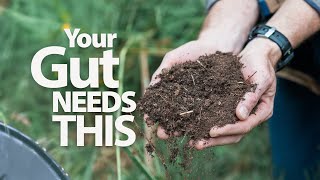
Aaron Hartman traces how soil bacteria produce compounds that dissolve minerals into plants, which concentrate in animal products like milk and bones. He connects this to why humans lost access to organ meats and bone broths, and how that shift damaged gut health, immunity, and brain function.
Chapters
So I want to talk a little bit about dirt and its influence on our health. I do briefly talk about this in my book Uncurable From Hopeless Diagnosis to Defy All Odds. But I want to take a little behind the scenes deep dive into soil health and how it actually impacts human health. I was talking with someone, I was doing an interview, and they were asking me, who are my mentors, you know, who do I look up to? And it was hard for me to pick one because every year it's someone different. For the last 15 years, I find an expert in the field. And what led me down the Sorrowless health thing was actually meeting Joel Salatin, who I've interviewed on my podcast, reading some of his books, and then being introduced to other characters in the past, like Sir Albert Howard, who was a entomologist in the British Empire before World War I, and he realized in India. And he was actually put over in India to figure out how to maximize food production for the Empire at that point in time. And one of the things he saw was that people did, traditional farming methods actually had healthier animals and the people were healthier. The people had less diseases, less tuberculosis, less pneumonias. They lived, they were taller. And so it was looking at those strange things like, huh, what's going on? So he actually started as a scientist, started studying, and realized that what the difference was is people using chemical fertilizers and natural fertilizers. In the 1800s, you may or may not know that initially we used bat guano that was being shipped from the Pacific over to Europe as a nitrogen based fertilizer. After World War I, we realized, hey, you can use chemical nitrogen. And they kind of moved away from using that, which was kind of hard to get and really expensive. And they were actually using that in India. And one of the things that happened was that the soil that that was used on became acidic and it actually didn't grow healthy yeast and healthy bacteria. So one of the things with soil science is, you know, soil is basically minerals, rocks that are kind of broken down and ground up with humus, organic material. What happens is bacteria and yeast in the soil secrete acids like humic acid, fulvic acid, dissolve minerals, and the minerals actually get incorporated into the plant. So you have to have this healthy symbiosis between healthy soil that has a mixture of crushed rocks, basically crushed minerals, and humus, which is organic material compost. That's kind of where compost comes from. And you need a healthy soil like that because then the soil can incorporate all of These rare. There's like. There's like 98 rare earth minerals that mammals need, for example, for health. If animals are fed only grain, they get about 60, 65 of those minerals. So if you're fed a grain diet and you're an animal, human whatnot, you will actually automatically develop nutrient deficiencies. And he was seeing that the places where animals ate only stuff growing on chemical fertilizer, that the soil is acidified, that those animals weren't as healthy. And then the humans that consumed the milk from the goats and sheep eggs from the chickens, et cetera, they were not as healthy. And he kind of narrowed it down to there's something about the soil. Soil and Health is actually the name of his book that changes the health of plants. And so I started thinking, cows are mammals, humans are mammals. Are there rare earth minerals that we need for our health? How would we get them? Because we. I'm not eating, you know, tons of grass a day or whatever and chewing, you know, 18 hours a day. Like we're. We're omnivores, not ruminators, right? So I started thinking about how do humans. And what I realized was animals, ruminators will concentrate minerals from the soil in their bones and milk. That's where does calcium come from in milk, it comes from the cow concentrating it from the grass, whereas protein comes from in beef and in milk, it comes from the cow fermenting grass, turning into amino acids that then that animal's body turns into protein. All of a sudden realizing, is there a connection between how that affects humans health? One of the things I also was learning about is the history of nutrient deficiencies and how we still have nutrient deficiencies today. And we've talked about lot and other places, but started realizing these rare earth minerals that humans get through eating organ meat, through bone broth, is one of the biggest sources of those things, and we've removed those from our diet. So one of the things I started doing is incorporating minerals, trace minerals, rare earth minerals, mineral source from sea salt that extracts the sodium that has just the rare earth minerals, bone broth. And that humic acid, folvic acid is another form of some of these trace rare earth minerals. These are kind of popular right now. They come into vogue. But I was using these 10 years ago with patients with connective tissue issues, because with connective tissue issues, you need more of these rare. These trace minerals to make really good collagen and whatnot. But that's how I learned from animal husbandry, from a scientist, you know, almost 100 years ago. How important some of these, these rare things you might think aren't important, how important they are. And then from that led me down to the pathway of Weston A. Price, who was a dentist in the 1940s. I believe his son died from a dental abscess. And he went on his crusade around the world to figure out why. And he realized that people who e. It didn't matter where in the world they were, whether the Mari. Whereas the Logan Stahl Valley in Switzerland, people who eat a traditional diet, not processed grains, but they can grow catch in their local environment, they tend to be healthier, taller. And they didn't get cavities, which was really amazing for that time in history because cavities were rampant throughout Europe and the United States at that point in time. They had broader palates. And it's really interesting, when people are malnourished, it changes your head structure and your facial structure. So one of the first things that happens is your jaw will become smaller, your midface becomes smaller, your brain, your body wants to. Wants to preserve your brain, right? And so he would see that families like in the aborigines in Australia, for example, moved out of the bush, moved into the city. Their kids and grandkids, they would have. Their facial structure would be different, they would have crowning of their teeth, they would have smaller jaws. And essentially now we're seeing more sleep apnea related to some of these mid facial things as well. But another topic for another day, but the point was it's like learning from these individuals how important diet was for facial structure and for health was taught to me by Weston A. Price, a guy who died, I don't know, probably over half a century ago. And so part of my journey has not just been studying smart people currently, and it's been learning from the past, learning from traditions and wisdom in the past. And so another caveat, if you want to go back 4,000 years ago, in Ayurvedic texts, they were talking about using ghee to treat neurological conditions that today we'd consider like Parkinson's illness. And so I first heard about that. I'm like, that's kind of weird. Like why would ghee help with these kind of things? Was I got into lipid medicine and I was learning under Patricia Kane. One of the things I learned about that is butyrate actually is the thing we use in lipid medicine all the time to actually burn off toxins and mitochondria. It actually helps rejuvenate cell metabolism, mitochondrial function, helps get out lipid Rafts as well as long chain fatty acids, which are horrible for cell function. It's one of several things help burn that off. But nature is so butyrate, great. And there's actually an FDA approved product that's currently used for symptoms of ALS that has phenyl butyrate in it. But the point is like, what is nature's best source for this? And I learned, wait a second, it's ghee. So that's one of the things, how did these ancient people 4000 years ago connect the dots? And that's where intuition and observation, I mean, that's one of the things the Greek, ancient Greeks did, was just observing things along through observation, which unfortunately our current culture is kind of left behind. But that enabled me to realize there was actually wisdom and ancient wisdom. But you have to parse out things like obviously illnesses aren't caused by evil humors in our body and stuff like that. But the point being is that each step of the way, whether it was my wife introducing me to real food or which led me down a pathway, and then me being therapist and reading a book that led me down a pathway, doing that year after year after year, that's what enabled us every year to have new therapies, new things to do with my daughter. And it's bled into my practice of medicine. So much so that there'll be times where I'll be reading and learning things and seeing a new patient in the clinic a couple weeks later. I'm like, I did not know this a month ago and I'm literally seeing you now and I know it and I can help you. So it's really a cool place to be, but also a little stressful because, you know, you can't ever stop learning. You know, you can't ever stop looking for new things because people are going to keep on coming to you, asking you questions and wanting you to help them. And we kind of become the pit stop for individuals looking for outside the box thinking outside the box care. So I hope that was a little help behind the scenes on how I think what's shaped my thinking and hopefully helps give you a little bit deeper insight into the book. Incurable From Hopeless Diagnosis to the Final Odds. And the question is, how can you apply to yourself? It's in the book as well. But hopefully this information is helpful. Take care and we hope to talk to you soon.
More from Aaron

Too Many Gut Fixes Can Undo Your Healing. What Helps It Last | Dr. Sabine Hazan


Women’s Heart Attack Symptoms Differ From Men’s 95% of the Time — Only 30% Have Chest Pain #shorts

Heart Disease Kills More Women Than All Cancers Combined — 80% of Cardiac Research Is on Men #shorts

Women’s Physiology Was Systematically Ignored in Drug Research — The Consequences Are Still #shorts



It Took the FDA 20 Years to Realize Women Need Half the Dose of Ambien #shorts

Until 1993, Women Were Banned From Clinical Drug Trials — Then Those Drugs Were Prescribed t #shorts