The Most Dangerous Thing in Medicine Isn’t Ignorance It’s Certainty
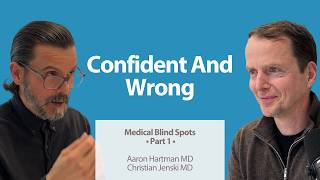
Dr. Aaron Hartman and Dr. Christian Jansky argue that medical certainty and entrenched dogma harm patients, especially women. They trace how false beliefs persist from Semmelweis's hand-washing to Marshall's H. pylori discovery, and show how doctors dismiss real symptoms as psychosomatic. Short appointments, siloed specialties, and rigid guidelines create blind spots that functional medicine can help bridge.
Chapters
Everybody, welcome back once again to another episode of Made for Health. Myself and my partner in crime, Dr. Christian Jansky.
Hello.
Yeah. And so this next series of conversations is going to be— it's going to be different than what we usually do. And I need to do a little bit intro into it. It's going to be talking— the concept is this: as medical doctors, we're supposed to inform us to do no harm. But what if, you know, the system itself has harm built into it? What if, you know, science, we were talking before we started this conversation, you know, the idea of people talking about science and what science is, but ultimately science is just a way in which you discover information. It's not actually a thing. It's a way in which you discover information. And a lot of times it results in dogma, which are firmly held beliefs that always, always, and always true. And so sometimes the system itself, and this is just the way it is, can be the source for harm, misdiagnosis, overlooking. And so we're going to develop this concept over the next 3 or 4 episodes. Um, and in terms of the idea of blind spots, blind spots are things that we think that are right, they're just plain wrong. And the blind spots can turn into— and they're dogma. We believe that, you know, smoking is healthy for you. We believe that you can treat mental health disease with a lobotomy, cutting part of your brain out. Like, these are things that were standard of care. Um, but what can happen as dogma hold on, they can result in gaslighting where people are told there's nothing wrong with you. It's all in your head. And that's where things like fibromyalgia or autism or other diseases, you know, we used to call autism for the frigid mother syndrome. We used to blame the moms. Um, we gaslight people. And for, you know, I think I'll let Dr. Zinski, because this concept of becoming a medical feminist is something that he actually mentioned one of our earlier podcasts. But for me, it's been like, what? Part of our population is most hurt by the dogma and the gaslighting. It's actually women. Yeah, women get overlooked. They get— they say it's all in your head, can't be helped. You look at autoimmune diseases, you look at chronic fatigue and fibro, hormonal issues, fertility issues. Many times the women are gaslit, they're blamed. And part of this conversation is understanding the system, the limits, so you can minimize harm. Because as a doctor, We're first and foremost not supposed to do any harm. So we're going to try to do is walk through the concept of blind spots, gaslighting, which has resulted in, I think, both of us actually— you said this for yourself— becoming medical feminists. Yeah. Because we have to advocate for our patients and our patients who are females are the ones that this affects by far the most. By far the most. So those are my introductory comments. Since the idea of medical feminist, which you actually coined the phrase, though I'm stealing it. Yeah. You coined the phrase. You're going to come after me in a couple of years, but, um, um, you're not, but, but, um, the point is like, do you have any things to fill in to say?
I think the key, that was a great intro. And I think the key is, um, that it's unintentional harm, right? Like this is not about a poisoned system that is intentionally poisonous. It's, um, a system that is unintentionally hurting patients by ignoring them, by gaslighting them, by mistreating sometimes, by not doing the appropriate testing, by all the things that we're gonna hopefully attempt to maybe start to point out or uncover in this podcast series so that this concept that is already out there, we're just trying to kind of cohesively tie it together so you can see how that lineage fits. And what can you do from your personal standpoint to be proactive and an advocate for your own health by learning some of these things that we're going to point out, like whether it be a blind spot that you were unaware of or treatments that, although they're the standard of care that should be a foundation, not specific for every single individual, like what are certain standard of care treatments that might be problematic for you or for certain subsets of the population that are being overlooked? And then ultimately, yeah, this concept of, of medical feminism that, that we were to, I think it was the hormone lecture or hormone series that we did. And, and it was because it was predicated on the fact that, you know, you kind of know when you start your functional medicine journey that like, you gotta know a lot about the gut and you gotta know a lot about hormones and, and like, that's kind of the core, right? Like lifestyle, diet, exercise, activity, all these things, stress management. But like what you're taught at the foundation is. The gut-brain axis and how integral it is, and then ultimately know how to treat guts and know how to— all the way down to a microscopic level— and know how to treat that hormone hierarchy. What I didn't know is like how much of my demographic was going to be female and how much of my demographic were going to have these stories that we're about to talk about, and how much of my demographic was gonna have so many hormonal issues. Um, so we, we found ourselves just like needing to be experts because there was no one around that was doing it that we can refer them to. So it was like they're not getting better, let, let's just do it. So we learned some, but then we learned more and more and became triple board certified and got all the, got all the pieces of paper to basically essentially train to become medical feminists. I mean, you have a wife and a mother and a mother-in-law and daughters, same for me. And like, and then you see all these female patients, which make up more than half the practice, and, and they constantly have these issues and they constantly have these backstories. Like I ha— it felt like it was just like, at this point in time, you got to step up. And even though this wasn't necessarily your wheelhouse, make it so, become a medical feminist and like move forward to making these changes. Because these women become our mothers and our grandmothers that nurtured society. And like, they're the ones that are being told that they're crazy and like not being given appropriate management. That's just insane to me.
Like, I said, a story, like, I'm gonna— maybe while I'm talking, you can think of a story in your head, a non-identifying patient story. But yeah, There's someone I'm working with now, I've been working with for 3 years and she's early 70s and she developed chronic fatigue and fibro in her 30s. So before I was even practicing medicine. And so back then it was like, your chronic pain, your fibro, your fatigue, it's a psychiatric issue. Life is hard. You know, I know, you know, it's hard being, you know, blah, blah, blah. You'll be home. You'll be fine, sweetie. I've had so many patients tell me they were told you'd be fine, sweetie. Oh my God. Yeah. And so she just put her head down. And just went forward, got married, had a family, had kids, had a career, retired. And so I'm not sure how she ended up at our office, probably, you know, saw something somewhere. And on the first visit I'm listening to her, I'm like, huh, have you even checked for Lyme before? Now rewind a little bit. As of last year, Lyme disease was not a thing. Now, as of January this year, the government's actually acknowledged maybe there's a thing called chronic Lyme disease. So anyway, so maybe, so when I diagnosed her, this didn't exist, right? It does potentially now maybe, but did a Lyme titer on her. Started treating her a year later. She's symptom-free. And, you know, to go through, it's all in your head, da da da. So it was a blind spot. Then she was gaslit because of, you know, it's the symptom, a lot of symptoms, the hormonal issues, the mood swings, the chronic fatigue, the poor sleep. Those are just things that women deal with more. And she got blown off and it's actually, she had a real thing, a real illness caused by real infection. I did real lab testing.
Yeah.
Got a diagnosis, treat it, and now it's gone. That's like, and so that story happens way too much.
Yeah. All the time.
So I don't know if you have a, a short story that's similar.
I mean, I, I'll just, I'll summarize quickly. Every female SIRS patient I treat. Okay. I mean, every, every female, every middle-aged female biotoxin patient that I treat has the same story. Because what are the, what are the most common symptoms of presentation? Weight gain, fatigue, brain fog, memory issues, mood disorders, gut, autoimmunity, chronic pain, insomnia. So they get all the workups, all the specific workups, and you don't have sleep apnea and you don't have a thyroid issue and you're not premenopausal, like whatever. They get like the basic workups and they're all told It's negative. And so their gut gets routinely called IBS and their chronic pain and fatigue gets called fibromyalgia or chronic fatigue syndrome. And then they're all put on an SSRI or an anxiolytic or told you need therapy or work on your stress or whatever. And they unfortunately start to internalize that. Like, it's not just gaslighting, but it's gaslighting that, that then becomes the problem because they internalize that, that they're the— they start to believe it, that they're the problem. And that centralizes so many of those symptoms that were still maybe peripheral and easier to treat. So just by gaslighting, yeah, that sucks, but gaslighting alone actually entrenches the problem even deeper. And then we have to dig even harder. So that is a problem where these things, if someone's paying attention, can deal with it when it's fairly superficial and you don't even get to that point. But these women inevitably show up on our doorstep and then I take their history and, and I will recheck a lot of these things. And, and even though they're basic stuff, basic profiles, I'll find things that were missed. Thyroid, sex hormones, gut. But like IBS to me is, is, is not really a diagnosis. IBS means something else. It's usually small intestinal bacterial overgrowth or dysbiosis or leaky gut or food sensitivities, whatever. But we dig and we find it, we treat that thing and then it gets better and it's like, Do I really have IBS? Probably not. And then, and then with regards to like the other symptomatology, ultimately I discovered that they're a biotoxin patient or a SIRS patient, which they absolutely fit the bill. It's been vetted in the, in the peer-reviewed literature. There are screening tools, biomarkers that are peer-reviewed, and then response to treatment. There's a case definition that you can make. All of this is real medicine. And then they get better and it's just, this happens over and over and over again. And then one shorter one is the cardiovascular one that I'll just refer to on the last series that we did.
We'll be talking about that.
And we'll talk about that. Like, that's like, she was basically told you have no risk. And when we finally had to wait for her to be symptomatic to get a stress test and then go to the cath lab, she had a 90+ percent occlusion in her left anterior descending artery. And the entire time, like, I knew it, she knew it. We tried to get the studies, couldn't get them done. Insurance said no. Like, that's just crazy.
Yeah. And ultimately, as—
I mean, it's lucky she's alive.
Yeah. And as medical doctors, the first— we took a Hippocratic oath before we even knew what we were supposed to do. And part of her oath was first and foremost, do no harm. Yeah. So that's part of this conversation also is, you know, the very first thing with your 3 board certifications, my 3 board certifications, between the 2 of us, you know, over half a century of, you know, clinical expertise, about half a century. Yeah. It's like, the very first thing we're supposed to do whenever we see a patient is do no harm. Nothing. Sit there and sit back and go, okay, can I actually help this person or is what I'm getting ready to do going to be potentially more harmful? And the good news about what we do is actually safer than standard of care.
Yeah.
So we're going to start the conversation with blind spots. I've kind of taken some notes because I remember just— I've heard— we've heard so many stories of blind spots and things. But why don't you talk about the classic one we all learned about in medical school, which was The, the hand washing. Yeah, the hand washing thing. Tell us about the hand washing thing, because that, you know, it's, it's, we, we act as if this stuff doesn't happen anymore and it's happening today, but we have to— and this was like mid-1800s, 1830-ish.
Yeah.
So, um, it wasn't that long ago.
Yeah. So it was a, he was a Hungarian physician, I think his name was Ignaz Semmelweis. Um, and he had noticed a trend in post- and peripartum infections, fevers in women that were causing them ultimately to die. So, um, a high mortality rate peri-postpartum. And he postulated that it was secondary to the spread of bacteria, or at least of an infection, something. And so he said, why don't we wash our hands before we deliver these babies? Why don't we wash our hands before we are examining these women? And he was completely chastised. He was, um, pariahed. He was institutionalized. And ultimately he was— he died. He succumbed to a wound infection secondary to the beatings that he sustained in the asylum that he was put in because he said we should wash our hands when we go from one patient's private area to another patient's private area. And maybe that might help these infections that are killing young women that otherwise shouldn't be dying. That, and then years later, obviously, we, we wind up with Pasteur and the, and the germ theory and all these other things. Like, that was the beginning of it.
Yeah.
And this guy basically got murdered because he said, let's wash our hands.
And the funny thing, that was back, you know, the phrase, we're gonna beat the crazy out of them. Yeah, that was when they actually were literal. They actually would beat the crazy out of people. And he got— buddy, but he got wounds that got infected. Yeah. And, and back in the day, you would do the autopsies in the basement. Bomb level of the hospital. So the interns and the doctors were doing autopsies without gloves, without washing their hands, up delivering on whatever. They would go up and deliver a baby. Yeah, after— it's like, did no one see a problem with this? Yeah, but the, the, the mantra, the, um, the, the hubris, the mantra, the science, the science, you know, so false, like all the science, you know. Was that there's no problem. And part of the, the German thinking was that how dare you say that we austere German male physicians could possibly carry— that was also back when you wouldn't touch patients because they're dirty. And yeah, I think in the late 1800s when the first stethoscopes came out, they were like, these are really long things.
So you'd like listen to your patient, you throw it to them, here, hold this on your chest for a second.
Yeah. Yeah. So, so it's, Yeah, these, these real life is crazier than all make-believe.
I mean, this looks, this seems so obvious and, and made up, but, but, but like back then this was real. Like this was literally how they felt and this is what happened. This is a true story.
Well, let's fast forward to maybe the 1940s. Um, to, and this actually, I read this story in the book, The Emperor of All Maladies, which is a book about the history of cancer. It was a really interesting story because the very first case of cancer was a choriangiocarcinoma, which is a female cancer you get. And it's tra— tra— traceable with a lab called an HCG. And this Chinese researcher physician, they'd— women would come in, they'd have these choriangiocarcinomas, they would— and they would pop up, they'd give them methotrexate, which is a drug that actually helps block fast cells turning over. And the HCG would come down, they stop it, and the cancer would come back and the women would die. And so this Chinese, um, physician was like, well, why don't we just keep it on them until the HCG becomes undetectable? So he did that and he lost his career over it. What are you doing giving chemotherapy to this, these females when the levels are— you have no evidence for that. You have no data for that. And he was actually, um, shunned out of the American healthcare system stopped doing cancer research. And the patient that he cured was the first cure for any cancer using methotrexate, which is something now we all use for, you know, all kinds of things.
For rheumatoid. Yeah. And a host of other conditions.
But at that point in time, because it was not the— and there's the— Every Malady Has a Lot of Different Stories about the first, the first kids being cured with leukemia and the guy who created the cure actually was pretty hardcore and he was a man on a mission, but it's, he almost lost his career over the first cures of kids with leukemia. And so like, and this, that's like in the 1950s, late '40s, early '50s. That's not, that's, you know, within the lifetime of my father. So the idea that really brilliant people, bright people are going to think outside the box and sometimes think things that seem a little crazy. Well, let's talk about Marshall. H. pylori.
I don't know that one.
Oh, okay. Oh, I'm sorry.
Yeah, it's all right.
So, you know what, it's just, bam, just throwing it. So, Dr. Marshall, Australian gastroenterologist, was looking one day at some gastric aspirates. And he saw these little rods in the stomach. And at that point in time, they were thinking that there's no way any bacteria can live in the stomach. And so, he had a hypothesis, maybe bacteria can cause stomach ulcers. No way, did it. There's no way. And this was back when, and to put things in perspective, probably one of the most common surgeries for bad ulcers was actually a vagotomy. So they'd cut you open, cut your vagal nerve so that you no longer produced stomach acid and would make—
Stomach acid or digestive enzymes or—
Yeah.
Yeah.
Yeah. So everybody got SIBO and now we treat that with PPIs and we don't— literally surgeons are getting out of school not knowing how to do the surgery anymore because they don't do 'em. Like That's how well treating using PPIs and using antibiotics for H. pylori, because 80% of stomach ulcers are actually caused by bacteria. Anyway, so what he did was him and his partner, um, he, they scoped him, no ulcers. He drank a slurry of bacteria, started getting stomach pain, got scoped, stomach ulcers, took some antibiotics, pain went away, scoped, no stomach ulcers. Published it and was, was, um, humiliated, um, shunned. Like, you're crazy. What are you doing? First, you're crazy. Like, oh my gosh, I hear your story. You're crazy. And everybody knows bacteria can cause stomach ulcers. Fast forward 20 years, he gets the Nobel Prize for being the guy who discovers that, um, you know, the H. pylori bacteria causes stomach ulcers. And so, and that is, that, this is early, this is '80s. This is, this is now we're getting to a 40, 45 years in our life, you know. Yeah. Um, not that long ago.
Yeah, we were alive.
We were alive. Yeah, we were alive in this. And so, um, these blind spots, these stories are— they're anecdotal. If you don't lose from your— if you don't learn from the past, you're doomed to repeat it. Yeah, there's two quotes I like, you know. Those who do not learn from the past are doomed to repeat it. Another one is that, um, history doesn't repeat itself, But it rhymes a whole lot.
Yeah.
And so like seeing the patterns in the past, you can kind of, you know, predict.
Yeah. I mean, there's some of these stories are being written right now. We just don't know what they are yet.
Well, that's, we're going to talk about that in episode 3 or 4 about, you know, maybe philosophizing or, you know, what are the current blind spots? Where are the places now? I can, we can talk about last year, but anyway, we won't go there. It's, we're jumping ahead. Do you have any other blind spots, things that pop in your head? I mean, I think about smoking is one of the big ones I think about that. Yeah. I quote the patients all the time.
Yeah. I mean, I think— would the Women's Health Initiative classify as one of those? Is that more a gaslight?
The Women's Health Initiative, that's a great— well, it would be a blind spot that became a gaslight because hormones aren't a problem, right? Yeah. Hurt a lot of women and now all of a sudden it's okay to do now. But we've tried— that's a great topic. Go ahead, you take it because I know you like it because it traumatized a whole generation of women now that still are thinking— I still see patients now, it's—
are deathly afraid of taking hormones like and don't understand that not only were they not a problem, but it was, it was prophesied that they were causing problems.
So why don't you take that one, go right before, before 2002.
Yeah.
And then kind of go through.
So Women's Health Initiative was a study that was actually run by a cardiologist, or at least designed by a cardiologist, not a women's health expert, not an OB-GYN, not even a primary care doctor that did women's health. And so his whole goal was to determine if bioidentical hormone replacement or hormone replacement in general, let's call it that, because it wasn't all bioidentical, could decrease cardiovascular risk. The goal of the study was, was apropos to his field. Um, but his claims should not have been made because he wasn't an expert in, in the field of hormones. And so he basically put together the study and during the study, um, one branch showed an increase in cancer risk and breast cancer risk. And so he wound up halting the study in its tracks and making the declaration that all hormones cause cancer and didn't tease out the data to see the why behind it, if it was clinically relevant. Factoring the fact that the average age of the women in the study were in their mid-60s, didn't take out of the equation whether or not they were smokers or diabetics or any of these other variables that are clearly important to determine not only risk of cardiovascular disease, which is what he was studying, but also cancer risk and some of these other things. And, and then at that, from that point on, any woman that was on hormones was basically, they were taken away and generations of women were told hormones cause cancer and you can't have 'em. And so they just suffered and they suffered in silence. And what happens on the back end of peri-postmenopause? Cardiovascular risk goes up. Cancer risk goes up. Immune system gets imbalanced. Bone loss, dementia risk. I mean, you name it, all things go sideways for these female patients. Hence the point of us doing hormone therapy. It's not for sexual dysfunction. That's an indication, but that's not the main reason that we're doing it. And then ultimately The study was walked back and that was in 2005, I believe. Um, and 2019 actually, they walked it back and ultimately said, look, maybe we were wrong. Not all hormones cause cancer. Um, ultimately in the right setting, some hormones might be appropriate, but still didn't kind of remove the black box warning or any of these other things that were there. Um, so there was still a lot of fear around it and, and then until this last year. When they removed the black box warning and now more people are curious about, we've been doing this for, for decades. Yeah. I mean, the reality is, is that it was a study that was designed badly and then the declaration literally messed with generations of women and their offspring. And so, uh, that was a big one. That's a big problem. And that's the big reason why we see a lot of these patients now is because we have the information and the advocacy and the ability to monitor and, and the training to understand how and, and when to do these things.
Well, think about, you know, Looking at the data from 2002 to when the, 2019, but the FDA removed the black box warning in November of 2025.
Yeah, last year.
It's like 23 years, right? Yeah. And so during that 23 years, depends on what you read and look at, but the numbers roughly are between 40 and 60 million women were undertreated, resulting in between 140,000 to 170,000 premature deaths. So when you say it like that, that's a big deal.
Yeah.
For us to get it that wrong. And the thing is, the physicians who were doing hormone replacement, like bioidentical hormones, were laughed out. You're idiots. Doesn't work. Doesn't make a difference. Da da da da. And now, like, that things have switched. It's very recent because we've been indoctrinated for 23 years that you're going to get cancer, you're going to get strokes, you're going to get heart attacks. Whatever, both physicians and patients are very hesitant to get back, put their toes back into the water. And, you know, when people say, well, is that typical? And I remember this story personally with pap smears. We've been practicing long enough to, you know, remember back in the day, but people forget that the most common cause of death of women in the 1950s was cervical cancer. I've never had a patient die of cervical cancer. And the reason is the pap smear. And so we do 'em every year, boom, boom, boom. And so we catch women super early with things. But what happens is with young women, 17, 18, or 19, who've, um, started having sex early, who smoke, overweight, have other health issues, will get abnormal pap smears. And I was actually trained in my training to do colposcopies, um, to do, um, ED&Cs, to do partial cone things, which, which can actually cause infertility, can actually have some significant side effects in a 19 or 20-year-old female. But we do these to prevent the cancer. 2006, new data came out. You actually can do pap smears every 3 to 5 years. You risk stratify it. So we, in the military, we're like, boom, new data. We just changed it cuz the military's all about efficiency. Came back up here to Richmond, 2007, and everybody's still getting their pap smear every year. It took almost a decade for it to catch on in the community cuz people were so like scared. What if I miss a cancer? It's like you're hurting people. Like the data is clear and now it's commonly accepted. You can do it 3 to 5 years, do HPV. And if you're in a stable relationship, no risks, you can do it every 5 years if your HPV virus is negative thing. But it took almost— after the data came out, it took almost a decade for that to actually become accepted standard of care. And so people say the standard of care, I'm like, I don't want to wait for everybody in the community to agree like what's acceptable.
Yeah.
You know, because if you wait till then, like herd mentality. It's like, what's the herd say? The herd says, you know, this is okay to do. And this kind of the blind spots, the gaslight people, ultimately in our country, the people that are hurt most by this process—
Women.
—tend to be women. Yeah. So I think we've probably given enough examples of blind spots. The gaslighting, I think, is a little more interesting because I think people resonate with that a lot more. And it's happening so much even now. So Do you have any closing thoughts about what we talked about? Blind spots? No, I think it's a good opener.
I think, um, this is, these are topics that need to be talked about more and more and more until we see some change. And, and again, like a lot of the things that we're gonna talk about from a gaslighting standpoint, these were fringe conditions or, you know, the air at the tip of the spear, the stuff that in the beginning when we were just like, oh, we rarely see this, or. In traditional medical school, you never even hear about it. We see this all the time. It's not uncommon, so it's not fringe. And it needs to be something that any well-meaning clinician that has strong intellectual curiosity will be willing to do the work to expand the knowledge beyond their foundation that they were given. Like, do no harm is a code of ethics that we should abide by, and that's our Hippocratic oath. But I feel like built in there should be maintain childlike curiosity, do right by your patients, have hunger for knowledge. And those are the things that we're trying to instill by doing these series. It's just basically shake the cage a little bit and hopefully people will start learning.
And the thing is, you know, you were in the ER for 15 years. Yeah, 15 years, almost 19 years, almost 20 years. Round up.
But I say 20 because it I mean, it aged me at least 40 years.
Yeah, it does.
So I'm going to add.
But when you're in a situation like that, you know, I was primary care for 20 years and there was about 5 years where I was primary care and clinical research and yes, had 3 full-time jobs. But it's when you're in a situation where you're working hard, if you see something that's a, that's, that's an outlier to your mindset, you can either, I'm going to come back in 2 weeks and we'll talk about it. Or you just refer them to a specialist and move on because you're so busy. And part of this is just the system. When you have 7 to 8 minutes with a patient, you know, if you're, you know, there's some specialists that see 70 or 80 patients a day, you know, you don't have time for figuring out what's going on. Yeah. And so that's where part of this is also recognizing the deficiencies of the system. They're not going to, you know, if someone comes in with chronic fatigue and fibro, the rheumatologist is going to work up rheumatologic issues. The endocrinologists work up hormonal-related issues. The infectious disease doctors are not going to do Lyme titer testing on you. Yeah. You know, and so it's like, what's the one-stop shop that you can go and get all those? And that's going to be your friendly, friendly local functional medicine person. Yeah. Not, which specializes, you know, by what I say is functional medicine is a specialty between the silos. Got your cardiology, rheumatology, endocrinology. We need all these people. I need my cardiologist. I need my vascular surgeons. There's a space between those, and that's where we kind of fit in to fill that gap.
Yeah, yeah, the glue, the glue.
Yeah, the fascia, the fascia.
We are kind of— we're the healthcare fascia. I kind of like that.
I'm trademarking it before you steal that one. You know I like to steal stuff, but it's not stealing if it's public. Oh yes, yes. Anyway, thanks a lot for everybody. Um, we will be back next. We're going to talk about, um, um, medical gaslighting, what that concept is, and give you more examples of, um, Things to be aware of. I think the end just is listen to yourself, listen to your body. No one knows you better than you and never give up on yourself. Otherwise, we'll talk to y'all later. Take care. See ya.
More from Aaron

Too Many Gut Fixes Can Undo Your Healing. What Helps It Last | Dr. Sabine Hazan


Women’s Heart Attack Symptoms Differ From Men’s 95% of the Time — Only 30% Have Chest Pain #shorts

Heart Disease Kills More Women Than All Cancers Combined — 80% of Cardiac Research Is on Men #shorts

Women’s Physiology Was Systematically Ignored in Drug Research — The Consequences Are Still #shorts



It Took the FDA 20 Years to Realize Women Need Half the Dose of Ambien #shorts

Until 1993, Women Were Banned From Clinical Drug Trials — Then Those Drugs Were Prescribed t #shorts