The Quiet Redefinition of Thyroid Disease
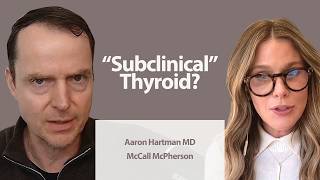
In this podcast, Dr. Aaron Hartman interviews thyroid‑and‑hormone‑health expert McCall McPherson, a PA who turned her own experience with severe hypothyroidism into a national practice. They critique the conventional reliance on TSH alone, argue for a full thyroid panel (TSH, free T4, free T3, reverse T3) and propose tighter optimal ranges (TSH < 2, free T4 0.9‑1.2 ng/dL, free T3 3.6‑4.2 pg/mL, reverse T3 8‑12 ng/dL). The conversation highlights how many patients are “gas‑lit” by standard care, especially women, and introduces the concept of “medical feminism” – the need to advocate for gender‑biased gaps in diagnosis. They discuss the physiology of reverse T3, the limitations of levothyroxine (synthetic T4) and the benefits of adding T3 or using natural desiccated thyroid (NDT) when appropriately titrated. Hormonal hierarchy is outlined (thyroid → insulin → cortisol → gut/sex hormones), and they note common co‑factors that mask thyroid dysfunction: insulin resistance, adrenal fatigue, and sex‑hormone imbalances. Environmental contributors such as mold, PFAS, micro‑plastics, and other toxins are described as major, often overlooked drivers of Hashimoto’s and poor hormone conversion. Practical management tips include personalized dosing, timing labs around short‑acting T3, careful weaning, and detox strategies. The episode ends with McPherson promoting her upcoming book, podcast, and social media channels for further education.
Chapters
Welcome back everybody. Once again, I am super excited to be here with McCall McPherson. She's an amazing thyroid expert. I think everybody's going to enjoy today's conversation. So after a brief introduction, we're just going to dive into it and talk about all things thyroid. So McCall McPherson is a nationally recognized thyroid and hormone health expert, TEDx speaker, and founder of Modern Thyroid Clinic, Modern Weight Loss, and Thyroid Nation. A former thyroid patient herself, which is always helpful to work through it yourself first before you do it with patients. She has dedicated her career to fixing thyroid care worldwide by offering progressive treatments that go beyond standard protocols. Through her clinics, media features and advocacy work, McCall has helped thousands finally feel like themselves again after years of mismanaged care. She believes that no one should still have thyroid symptoms. And she's made it her mission to ensure people get the treatment they deserve. Her workers are a national recognition, including being named to Inc 5000 Inc 500 female founders. And the list goes on. So McCall, I am super excited to have you here today on our podcast.
Hey, thanks for having me. I'm excited to be here.
Now some of my listeners may not be familiar with you, so why don't you give us a brief overview of your journey. Obviously you had your own thyroid issues that got you into what you're doing now. Kind of just first to know like where you're coming from and what got you to where you're at right now.
Absolutely. So you know, I'm a PA. I was practicing medicine already at 27 and my thyroid problem took me down. I was on Synthroid, I was on the medication that I was supposed to be on, you know, taking my meds and I had every symptom of a thyroid disorder. So I'm like, okay, this is a simple fix. I'll go to my clinician, my doctor will increase my medication. Surely it's, you know, just that I went and based on, you know, a single piece of lab data, my doctor told me, hey, no, your labs are normal. Well, I was spending 16 hours a day in bed. I was literally coming home from my, my job at 3:30 and in bed till the next morning when I had to go back to work. And weekends were honestly the same. I was non functioning in most of my life and barely functioning at work. So immediately I'm like, wait, you, I, I, I need help. Like please help me. You know, was kind of blown off. I was a little bit gaslit, sent on my way. And I know that's a topic close to near and dear to your heart as well, and, you know, eventually figured out, hey, this man is not going to help me. I'm literally told to eat less, exercise more. He was absolutely open to putting me on Lipitor, though, but certainly could not increase my synthroid as a 27 year old. So I, I ended up on a wait list, saw someone about a year later and got my life back and had a different approach. We looked deeper, we used different lab data, we used different medications because as you and I know, 89 plus percent of people on thyroid meds are on one class of medication that didn't work for me and doesn't for so many others. So immediately, the man that gave me my life back became my mentor. I devoured everything that I could from research, from data, from data from my own patients. And from that, slowly over the last decade, have sort of honed and developed our modern thyroid method. And now we get to, you know, reach every corner of our country with access to good and true and progressive thyroid care. So it's kind of an honor.
So how many years had you been practicing as a clinician before you were 20s? And when did you start your practice?
I was practicing working for someone else and I had been practicing for about three years.
Three years.
Okay, so enough to know, hey, yeah, this is probably my problem, you know, hey, maybe he'll take me seriously.
Yeah, well, the question, the reason I had that question was when you went to this, your thyroid, the expert, I guess, so to speak, and they looked at you. What, what? When you started studying and you start, you found your mentor, what were a couple things that you realized they're just missing? Like, oh, my gosh, I had no idea. I've been, I'm licensed practitioner. I can. Because you're in Texas, I believe, correct? Yeah, I'm licensed. I can practice in the state of Texas. I had no idea about these things. There are a couple things you can share with us that as you started your journey, you're like, oh, my gosh, I can't believe this was overlooked. How come everybody doesn't know about this?
Absolutely. So, you know, first and foremost, I mean, I know you're so aware of this too. There are so many barriers for people to get diagnosed and access good thyroid treatment. But number one, pervasively, medicine has accepted, you know, TSH as the marker, the main piece of information that is used to diagnose and manage people's medication, thyroid dysfunction, whatever it is. And that accounts for in research, about 1% of the fluctuation of our most important hormone, which is free T3. So, you know, to look at how someone's thyroid is functioning, we need to be checking a full thyroid Panel, which is TSH free T4, free T3, reverse T3. If our active thyroid hormone that we're assuming TSH reflects, we should probably be really certain that that's the case. And when research says it only reflects T3, 1% of the time, I'd say, hey, we probably have an issue.
So 1% of the time that's, that's missing a lot of people who are probably still having issues.
Oh, yeah, I think, you know, and they're being written off as, hey, well, your TSH is normal, so it can't be your thyroid. But no one, you know, diagnosing and managing people's thyroid medication via tsh, in my opinion, is throwing dartboards at a dartboard blindfolded, just hoping to hit a bullseye.
Well, it's, it's a, it's. I think people forget it's a screening test. So it kind of, in screen tests are meant to, like, you know, you look at a general population, we're going to screen you. But when you have so many people, and the assumption is that in this population, thyroid disorders are not that common. So you, you kind of. They're tuned a certain way, right. The range is a certain way. And when you realize, wait a second, this is really common, all of a sudden that screening test is going to overlook a lot of people. And I think that's one of the basic, you know, things people forget about. With just a single tsh, a single hemoglobin for, you know, iron levels, all my hemoglobin's 13. It's okay, right? Same, same kind of idea. It's like, well, what's your ferritin? What's your iron binding? So all of a sudden, these screening tests to look for rare, uncommon things in the general population don't work when the things are really common.
Absolutely. I couldn't, Couldn't agree more.
So one thing you mentioned early, which you kind of hit hot button with me, I guess use the word gaslighting. Let's, let's go back, you know, let's talk about medical. I call it. I like whether it's blind spots or gaslighting, it's things that our healthcare system thinks to be right. They're just plain wrong. Let's talk about thyroid a little bit because that's like a very common thing. Lots of women deal with it. Postpartum, menopause, life stressors. It goes with a lot of things. But yet if we do this tsh, you're fine, and then women go down this pathway. It's all in your head. There's nothing wrong with you, you can't be helped. See your psychologist. Could you talk about that aspect? Because I feel like that's something that is. We're not coming to realize that a lot of women's health is being overlooked because we're looking at with the wrong lens. And then the result is we say there's nothing wrong and we literally gaslight people into massive blind spot. I feel like in our healthcare system.
Gosh, I couldn't agree more. You know, I think it's a pervasive and essentially ubiquitous issue in the world of thyroid, even in the, in the construct that medicine views hypothyroid symptoms as very non specific in general. And that's what's reiterated in all of these studies. Hey, look, just because someone has this, this constellation of symptoms doesn't mean they have a thyroid issue. When in fact I actually find that if you look deep enough and they have five or six of these symptoms, they most, most of the time it is a thyroid issue. But there's a couple dynamics that I see over and over and over again. And I witnessed this firsthand because the people that come to modern thyroid clinic have gone everywhere else. Like we're not people's first stop. We're like the last ditch effort because we're expensive and we're cash pay and it's a pain, et cetera. So, you know, a couple things are number one, the mental health issue, right? Like people are told, oh well, you have depression, you have anxiety, go see a psychiatrist. In all honesty, the foundation of modern thyroid clinic. When I started my practice, I was a psychiatric functional medicine PA who never marketed myself as a thyroid person. Treated a handful of treatment resistant thyroid patients. Treatment resistant depression. People with thyroid dysfunction changed their lives. They took my information, spread it across the Internet across thyroid advocacy platforms, and they actually built modern thyroid clinic without me ever intentionally doing it. I remember when my first person flew in from out of state, I was like, I think I'm doing the wrong thing. Like, I think psychiatry is not my stick. I think I need to be in the niche of thyroid. So mental health is pervasive. Research shows that labs need to be extraordinarily tightly controlled when looking at TSH alone. Psychiatric studies show for treatment resistant depression, their TSH needs to be below 2. No medical kind of construct identifies that in terms of real life treatment. And then second, you know, it's blaming the patient sort of situation. Eat less, exercise more. Right? Like that's what I was told. Sent on my way. This isn't a thyroid problem. This is a lifestyle problem. But these women cannot lifestyle their way out of this. Like, this is a biochemical issue. And it's so pervasive. I'm not exaggerating when I tell you that 90 to 95% of patients that are new to me come to see me on the day we review their labs for the first time. They tell me one of two things. Either one, it's. So you're telling me all of this is not in my head, or. So you're telling me I'm not crazy, which speaks volumes about the level of gaslighting and just gross kind of negligence that these people are experiencing.
It's funny, you know, in our clinic, I'm kind of one of the practitioners coined this term medical feminism. And I kind of. That kind of. From first I'm like, wait a second, this is kind of, I'm a guy, this is kind of off. But then it's like, no, literally, it's like this idea that you, you have to particularly fight for women's health because of this process of, oh, you know, sweetie, it's all in your head, you know, don't worry about it. That's that stomach pain you're having isn't your heart attack. Oops, we don't, we got women's heart disease wrong. That your chronic fatigue years, depression, now we know it's chronic Lyme and mold and stuff. And so we, we do this a lot and we do it a lot, particularly to women. And so it's one of those things that you really have to be an advocate in our healthcare system if you're a female, because if you're kind of many ways going upstream against a system that has these blinders, that's, this is, this is the evidence base, this is the data. And because women's bodies, they're very more nuanced. I mean, being a life in the world is a very difficult thing to do. And it requires a lot of nuanced hormonal things that, you know, guys are the dump trucks and women are the Maseratis. And a dump truck just goes. And the Maserati, it's like much more fine tuned. And I think that's what some of the lab things you're referring to have to do with this higher fine tuning. Just do what your body was made to do. On that note, I want you to talk because briefly, before we started recording you mentioned some new things you got about the range of lab normals. I'm kind of curious because I'm reading things as well. What is, what are your thoughts as far as like, TSH, T4, T3, reverse T3, you know, total T4, total T3, you know, these other labs, their significance and the ranges, what are you seeing right now as being optimal for all these? I'm kind of curious your thoughts on that.
Yeah, absolutely. I freely share that. So, you know, basically at Modern Thyroid clinic, we've analyzed and reanalyzed all of our patients data for almost 10 years now about. So when we started, we started with ranges that were more narrow for TSH, free T4, free T3, reverse T3. And I just analyzed and reanalyzed. Okay, our patients are coming back. This is where they're still symptomatic. This is where they no longer have symptoms. And every year to 18 months, I slowly narrowed them down from the start, which was like normal functional medicine. Ranges take a little off the top, take a little off the bottom, starting a little more narrow. So we've revised them repetitiously so many times now we're left with margins that are very, very small. But I find if people get into them, they actually get their lives back and their symptoms go away. So with TSH, we want people's TSH to be below 2, ideally less than 1.8. Okay. In a perfect world, it'd be close to one free T4. We like between 0.9 and 1.2. Anything above 1.2, someone's TSH is being unnecessarily suppressed and their reverse T3 has an opportunity to increase. Also, what's so fascinating is that in studies, higher normal levels of T4 are associated with increased mortality across the board. But in our medical training, I'm sure you can agree, we're trained to be terrified of T3. So free T3 is your most important hormone. It's your active hormone. I think about T4 like crude oil. We don't put crude oil in our car, but we need it to make gasoline. T3 is the gasoline that we need to put in our car to run T3 gets checked less than 4% of the time in America on labs. So very, very rare. And I like that between 3.6 and 4.2 for the bulk of someone's day. Now, if they're on an active hormone, timing of medication before labs really matters. And this can get kind of nuanced, but reverse T3 I like between about 8 to 15 in a perfect world, 8 to 12. So interestingly enough, inversely of T4 studies show that free T3 higher normal levels that again, we are trained as clinicians don't use T3. T3 gives people heart attacks. It's associated with lower all cause mortality, lower heart disease risk, higher socioeconomic status, later retirement and higher or reduced rates of disability. Fascinating.
That's really interesting. It's one thing that's interesting as well. At the free T3 part you mentioned in my training, when I was doing my psychiatry training there had treatment resistant depression, which you mentioned a little bit before and actually using and even in my literature and family medicine literature, first board certification using it for depression. And you have to wonder like, okay, so if using T3 to T depression, is it really depression or is it a thyroid dysfunction and insufficiency kind of thing which the psychiatrist kind of in that little sliver recognize. But why, why don't we take that and generalize it to people who feel down who people are just aren't optimal? Like, why is that stuck in that little. Even the psychiatry world, it's still only rarely used in certain situations after failing multiple things.
I would love your thought on that thoughts on this too, but I think medicine is inherited. It's inherited from the people that that taught us, that inherited it from people who taught them. And it sort of becomes generational. And what's really sad is when that medical kind of construct gets passed down and it's flawed, it's wrong, but it's propagated over and over and over. And the more I dig into studies over the years, the sadder I kind of get. Because right now we're in a season since about 2018 in the world of thyroid medicine, has been invested in kind of something we chatted about right before we got on stratifying people further and further out of treatment, whether that's what's called subclinical hypothyroidism, which is not, which is in my opinion, overt hypothyroidism. It's linked to dementia, cancer, heart disease, fatty liver depression, infertility, like linked to all of these things. Clearly it's an issue. But we're trying to label more and more people as subclinical hypothyroidism, meaning they do not require treatment and they'll quote, normalize on their own, which they rarely do if you look at the full picture. And we haven't been invested in how can we make people feel better? What could we do to maybe evolve our Career, maybe option, maybe offer more than one treatment option, AKA levothyroxine, for pretty much everyone. And that's not happening. Like, we are not invested in looking at safety efficacy of active thyroid hormones of T3, like you mentioned, that can be used for treatment resistant depression, the key to so many of these people's lifelong battle with these symptoms. And instead we're kind of more worried about treating less people with levothyroxine, which is, if I can go on a small tangent, which is crazy because what happened in 2018 was a big study came out that reaffirmed one from 2004 that said, look, these people with subclinical hypothyroidism, these people that have a mild thyroid issue that we do not need to treat, don't really get better with treatment, their symptoms don't improve, their hypothyroid quality of life scores don't improve, so we simply don't need to treat them. So now it's quite accepted not to treat people with subclinical hypothyroidism until their TSH is over 10, which is crazy. But the entire flaw of the 2018 study and the study in 2004 was operating on the assumption that levothyroxine worked so completely presumes, okay, these people aren't getting better with treatment, so we shouldn't treat them because we're not impacting their life anyway. But it never took into account, hey, maybe our treatment is inherently flawed. Maybe it doesn't work for everyone like most medications don't. And that's not what happened. And we've been kind of in a downward spiral sense. If I'm being a little honest, I.
Think what I'm hearing from you, and it's interesting because I have the same experience, I think if you're just a clinician and you know, a clinician scientist, right. You have science. But ultimately, you know, the rubber meets the road is what's the real world experience with data points? And ultimately it's data points or data points. They're like this one, this one, this one. And so I've been practicing for 25 years now. And you see people who come in whose TSH is 2,5 and they're T4 and T3 are bottom first quartile and you start seeing and you got chronic fatigue and fibro and mold and you had a concussion and you know, you've had three kids and you kind of layer up the things and they feel really good when their TSH is 0.8 and they're free. T4 and T3 are like the upper quartile and you see that over and over again and they're like, oh my gosh, I'm super feeling horrible. I need you to bump this up. After all, you realize that everybody's unique and some people need these things like literally fine tuned and dialed in. Which is one of the reasons I compound a lot of stuff for patients, because that allows me to literally fine tune and dial those things in. I'm not sure if you're aware of this. There's something actually one of the things I read called the medical letter just came out. New FDA approved drug to treat fatty liver disease and actually is a thyroid receptor beta receptor stimulator. So it only, it's basically taking thyroid medication that only works on your liver.
Wow.
Like the liver to treat fat to treat fatty liver disease. And that just came out in the last month or so. But to, to some things you said before, like for metabolic syndrome and other things, like literally we now have a drug that they've engineered only to work on your thyroid in your liver. Fatty liver disease. I'm like.
Should we be approaching this differently?
Maybe, certainly. And I love as a clinician, you take these data points and you're not and you put them into the collage and go, wait a second, maybe I need to look at different things in relation to thyroid function, nutritional things, iodine levels, not just say here's this new FDA approved drug that treats this condition when there's a lot more than that. No, by the way, what is it? 25% of T4 is converted to T3 or GI tract in the microbiome. So all of a sudden this is a big, big deal. You had mentioned Levoxyl previously. I want you to talk about that because I don't think a lot of people realize like generic levothyroxine, Synthroid, Levoxyl, like all the different brands, like aren't they all just the same? Can't you just take generic Thyroid is just as good as everything else, right? Or is that not the case?
I mean, so I would say look like maybe for people who only have access to that class of meds, which is the vast majority of people, maybe if they have an or absorption issue, tyresin solution might be better than levothyroxine. But the big message here is, you know, and I kind of view it as gaslighting again in part because levothyroxine is the generic form of these medications. Okay. We're thinking again, crude oil. We have to be able to take that crude oil and convert it into gasoline to make our body run for. It's our fuel, right? So levothyroxine is the crude oil. Synthroid, tyrosine, Levoxyl, Unithroid, I left one out, I don't even remember which one. But they are all crude oil too. There's different nuances of branding and fillers, et cetera, but you're getting crude oil. So the worse you are at taking that crude oil and making it into gasoline, number one, the worse you're going to feel. You're going to have persistent symptoms. Because if you have a garage full of crude oil and your gas tank is on empty and you don't have a way to convert it, you're not going anywhere in your car. It's the same. You can take all the levothyroxine based meds in the world. If you can't activate them, you're not, you're not going to function. You're going to persistently have symptoms. And what really is fascinating, the worse you are at activating those medications, the better your labs. Look to a regular clinician. So you accumulate crude oil in your garage, you stockpile it, your T4, that sends a message back to your brain and it actually lowers your tsh. And so to a regular clinician who's just checking your tsh. Oh gosh, this is what happened to me. You have plenty of thyroid hormone. In fact, maybe you have too much. We need to reduce your medication. Oh, well, let's look deeper. Let's check your free T4, which is the second most common lab that's checked in medicine. What's going to happen if you're a poor converter? You're going to have a garage full of crude oil. You're going to have plenty of it, your levels are going to be high. And again, your clinician's going to say, you have plenty of medication, you have plenty of thyroid hormone. This isn't a thyroid issue. Your fatigue, your weight gain, your hair loss, your dry skin, your lack of libido, it has to be something else. And they're sent on their way. Meanwhile, these people have chronically low T3 gasoline hormone. And again, if you're a poor converter, most people have elevations in reverse T3 that can bind and block the absorption of your gasoline hormone, your free T3. So you have this, you know, multifaceted issue. And all the while, if no one's taking a deeper look under the hood, everyone's being written off and told, this isn't your Thyroid, it's something else. Go see a psychiatrist or go, you know, eat less and exercise more.
I guess I'm just a little less nuanced. I think about it being the one hammer that you're trying to hit and you got like screws and you got nails and you've got all kind. And like, literally it's a T4 is your hammer. And it, it works great on one kind of nail. But everything else, and to your, to the point of all the nuances, you know, women are complicated, people are complicated, our physiology is complicated. And when you only have one solution, it will help some people, but unfortunately it won't help. In my clinical experiences, the majority of people that I'm actually seeing. When you mentioned reverse T3, this is something even in the functional world, I'll get people coming to me and they'll have a T4. They'll have like a total T3, a total T4, three in total. But they won't. Like, I always get a reverse T3. For me, that's super important. Could you talk to that a little bit? Because I feel like a lot of people even now in the functionality, understanding world, realizing some of the nuances don't always order a reverse T3, which for me it's like, like, why not? Like, that helps me so much understand what's going on. Could you talk about that a little bit?
Absolutely. So reverse T3 is checked less than 1% of the time in America. And I want people to understand a little bit of the physiology. So we have your crude oil hormone, your T4, what a lot of people are taking in the form of levothyroxine that can activate it, convert to gap, can convert to gasoline, or it can shunt to an inhibitory hormone called reverse T3. Think about those two hormones, free T3, reverse T3 as very similar shape but different orientation. And what that allows reverse T3 to do, land on the binding spot for T3. But instead of activating things like your energy, your metabolism, your mood, it just sits there and it doesn't let free T3 bind. And in a country, in a society where almost everyone is given a Fair amount of T4, think about that crude oil reservoir. If they're not converting it, that is literally the Source for reverse T3 to be formed. And so we need to factor in how much of that inhibitory hormone is blocking your active hormone. And the fascinating thing about it is reverse T3. It's a purposeful mechanism of our physiology. Okay. Like, this isn't just a random thing that our body does when we're sick, we're pregnant, we're stressed, we're inflamed, we have gut dysbiosis, we're micronutrient depleted, calorically restricted over exercising, stressed on our drive to work, our body halts the activation of our T4 and it shunts it to reverse T3. Why? So that we can rest. It makes us tired. It's like, I need you to recover from the stress or whatever it is. Lay down, rest and recover. But in my opinion, and I'm sure you're seeing the same thing, standard American lifestyle facilitates poor conversion of thyroid hormones. Day in and day out, we are all a little inflamed. We all have some gut dysbiosis. We're all a little bit stressed, you know, and so there's this lack of facilitation and activation of our thyroid hormones that has become ubiquitous, but again, is being missed if we're not checking and doing our due diligence.
Gotcha. So you got your thyroid hormones. But. But there's other hormones that interact with thyroid, like thyroid, like cortisol, like insulin, other things in your body. Could you talk about, pick, like, the three top ones in your, in your, in your opinion that you like. If you're, if someone's coming with thyroid symptoms and their thyroid labs are mostly on track, what else could be going on and as far as other hormones that you want to hone in on and what are what's commonly missed with those hormones called normal when it's not normal?
Yeah, absolutely. So, like, for me, and one of the first things that show up with thyroid dysfunction that medicine recognizes is insulin resistance and lipid metabolism. So people start to say, oh, well, your blood sugar's really increasing, your cholesterol's increasing. We really need to figure that out. Meanwhile, that can honestly be a mild, mild thyroid issue that happens so. So early on. So seeing fasting insulin rise, blood sugar rise, and cholesterol rise. So that's number one. Number two is adrenal issues and thyroid issues, they go hand in hand. When you have thyroid dysfunction, your adrenals compensate, they pick up the slack, they overwork, right? And like anything that's used and overused and overworked, they get tired. And the symptoms of adrenal issues can vary, manifest very similarly to thyroid issues. And so both of those honestly, need to be addressed in most every patient. And then lastly, you know, especially in women, thyroid dysfunction impacts our hormones. So really early on, our testosterone plummets, and that reduces our Metabolism, our ability to work out, our libido, how we feel every day. Our stamina progesterone follows suit really quickly, and we become anxious, irritated, heavy periods, crampy periods, dysregulated cycles, miscarriage risk increases. So, you know, that's the thing that I love about functional medicine, about holistic medicine, is we view all of these systems as interactive, and medicine has sort of began to silo things so separately. It's hard to maintain that holistic viewpoint with all of these different specialists and things. So your thyroid impacts everything like it is the master, master hormone. And that's not just because I'm invested in the conversation like it truly is. And so, you know, it's so important when I hear people say, I don't want to take thyroid medication, just kind of like, well, look, if you don't want to treat your thyroid issue, you're going to end up on diabetes medication, you're going to end up on cholesterol meds, on, you know, all of these other sequelae from an unaddressed hormone deficiency.
So one of the things people will say to me all the time, when can I get off of my thyroid medication? Like, I want to get off of it. So how do you address that? How do you respond to people? Because that's one of the first things that I'll hear, like, okay, I'll take it, but when can I get off? Like, yeah, I'm sure you hear that as well. What, how do you, like, navigate that? What's your response to individuals when they ask you that question?
And I think it's unique for us because we're, we're living in the land of both worlds of, like, functional medicine and medicine that we can prescribe. You know, I do get that a lot as well. And my answer is, look, think about the way that people get a thyroid issue. 80 to 90% of hypothyroidism is due to Hashimoto's. Hashimoto's is an autoimmune condition where your body attacks your thyroid gland. And that attack slowly erodes away hormone secreting tissue, and it replaces it with scarring inflammatory tissue that doesn't secrete hormones sufficiently. Okay, so I'm a perfect example of this. I had severe Hashimoto's. I used to have an enormous goiter. I've been in remission for over 12 years now. So been a long time. I don't have a goiter anymore, but I had Hashimoto's for probably 15 years. What does that leave? That leaves me with A lot of thyroid tissue that is damaged, eroded and will no longer work. And even though I was able to go from severe Hashimoto's to complete remission, that doesn't mean I'm going to regrow that tissue. Right. It's like, look, if you cut off your pinky and you eat really well and you take care of yourself, hey, it's going to heal, it's going to have less of a scar, it's going to not get infected, but it's not going to regrow back. And it's the same thing with hypothyroidism in most cases. Now the rare, the rare exception is people with what I call a pure conversion issue. They, they simply have difficulty converting crude oil to gasoline, but they're producing plenty of hormones. And then you can sometimes work on lifestyle supplementation, et cetera, and allow those people to be off of meds or come off of meds eventually. That is way less than 5% of people. And if someone works to stop their thyroid medication, first of all, you need to be incredibly careful that you're working with a licensed medical prescriber and not someone that says that they practice functional medicine can take you off your thyroid meds, but also they can't prescribe them. Right. Because that is a real risk now with a lot of doctors. But the reality is if you need thyroid meds and you stop it, you will end up with pre diabetes. Diabetes, you will end up with heart disease. Your increase for cancer is substantial. The impacts again are so far reaching. So it begs the question, would you rather take one tiny pill that will massively improve your quality of life if it's diet done well, give you more energy, vitality, improve your work life, your relationships, your ability to show up as a mother, or would you not do that, suffer and then also suffer lifespan, healthspan consequences?
Yeah. And so I think that's just a good point where people don't realize depending on how long they've had. I think one of the things I had read previously, like by the time you get your diagnosis of Hashimoto's, average person has had antibodies 8 to 10 years. So it's, I don't know if you have a different number than that because depending on what you read, but it's, it's a while, it's a bit. And so getting that unless you see a functional person in this, that's fine. This within a year or two or three, typically it's being found maybe almost a decade out. Which begs the point, like are you Gonna be able to fix that A hundred percent. If it's been inflamed and scarring over 8 to 10 years.
Absolutely spot on. My estimation is 10 years.
10 years.
Yeah, but that's based on me, not on. Not on research data.
Yeah, so it's, it's one of the things, I mean, I tell people, whole data point stuff, like you'll read three articles, I'll read three articles, and they'll say three different things, but it's in the ballpark. It's like 8 to 9, 9 to 11, 8 to 12. It's like it's all kind of sort of the same. They're saying the same thing. We'll argue about. No, it's eight. No, it's 12. I'm like, it's all this. It's roughly the same thing. So you really beautifully outlined the thing that I refer to as a hormonal hierarchy, which is thyroid, insulin, cortisol, then you are top of the gut and sex hormones. Those are internal factors that relate to thyroid function. What are, are there external things? You know, these supposed neuroendocrine disruptors? What is that like? Is that a thing that can affect. Once you, once you unravel that for. Because I think a lot of people still aren't quite grasping. Okay, I've got my TSH rolled in and I'm working on insulin. Da, da, da. But what's this? What are the external factors that can literally disrupt, destroy our hormonal, particularly thyroid function?
Such a good question. As I was waiting for this, this talk, I was reading a new study that came out. I haven't finished it yet, but it was looking at PFAs, and they're linked to thyroid hormone production. And I've seen multiple studies on the same topic. So, you know, things in our environment people don't recognize as much, like simple things, like things, air that we breathe. So we breathe in a fair amount of microplastics, we breathe in a fair amount of pollutants. Breathing is the most powerful and quickest way to get pollutants into our body. And guess what? We do it all day, every day. So it's not like, oh, well, I've got a water filtration and I use clean mascara. Like, let's talk about really big, big shifts in people's health and quality of life and outcomes. Breathing is a big one. So it's, it's inherent, it's around us. Fragrances, chemicals, plastics, it's everywhere at this point. And those things impact thyroid function in a couple ways. Number one, they can promote Hashimoto's activity, meaning they can influence your risk for developing Hashimoto's number two is they can impact your ability to activate your hormones as well. And so we have this multiple kind of facets. And so our environment is huge. Like it is a very, very big player mold in your home. I'm sure you're very well aware of this. Some of the most severe abrupt Hashimoto's cases that I've had where they didn't have Hashi and then all of a sudden their antibodies are 6, 8, 900. They literally moved into a moldy home and there was a huge exacerbation in their immune response and it triggered Hashi. So again, like environment is huge. Genetics is also huge. You know, autoimmune risk can be passed down from mother from father. I find if the father has autoimmune thyroid issues, Graves or Hashi, their kids almost ubiquitously end up with it. For whatever reason, those genes tend to run stronger. And then there's lifestyle choices too. Diet, inflammatory foods. Micronutrients are a huge one to either promote Hashimoto's things like over access to iodine, excess iodine can influence Hashimoto's in a negative way. Or things like selenium can reduce antibodies. So those are some big ones. Did I leave any out that you were thinking?
Well, I just want to a quick question I had for you. It was in regards to where in Texas do you live? Which city? Austin. I was wondering because I think it's interesting to the mold point because I'm in Virginia. We have lots of mold here, but people move to Texas and Arizona. There's no mold in Texas or Arizona. Right. Because they get out. It's funny because I traveled a lot to Texas. We have a lot of colleagues there in Arizona. And even these places you think are drier, there's still can be massive amounts of mold there, particularly in the Austin area. Actually, I've got several patients and people don't realize that just because it's sunny most of the time, they forget air conditioners, they forget building envelopes. All these things that, you know, Arizona, you know, it's a desert and you'll go to a hotel there and you walk indoors and you're like, I can smell the mold. You know, how is this possible? But we actually induce, by the way we build buildings, by the way we live our lives. You know, are there exhaust fans in your bathrooms? Do you have a good vent fan in your kitchen? We can actually make our houses Unhealthy places. And to your point with the thyroid issue, if you're growing this stuff in your home or being exposed in your home, all of a sudden, is your house making you sick? Is it messing with your thyroid? And in Texas, I was, I've been surprised to learn over the last several years, like it's a big deal, which your thoughts about that because you're in Austin, you know, in the middle of it. What do you think? What do you think about what you said?
A. A couple interesting thoughts. One, mold is so bad in Austin, it is incredibly difficult to find a home and office school that does not have mold. Like, I know so many colleagues, even physicians who've struggled with mold exposure. Two, off the top of my head, that had to leave Austin and move because they simply could not find a mold free place. What's really interesting too about this concept of geographical location. For years we were a brick and mortar practice. Now we're a nationwide telemedicine practice. But we had a brick and mortar in Austin and we had a high patient population from the Houston area. The discrepancy in the severity of antibodies between those two locations was profound. Literally the worst Hashimoto's patients that I had at the time, and this was really early on in the process, were all from the Houston area. And I don't know if it was mold because it's incredibly even more humid in Houston. What I'm more suspicious of is Dow Chemical. A lot of them were concentrated around big industrial manufacturing facilities and what was getting put into the air there. But it's fascinating, it's fascinating to compare geography with outcomes, especially when you're so niched in and you can see the data patterns over time. It really is. It's impressive.
Yeah, I'm brick and mortar and we have people from around the country similar to you come to see us. And I've learned over the last couple of years, like different niches and pockets of places that are. It's like, why have all these people coming to me from this part of the country? And it's like, you start looking into it, you're like, oh my gosh. I thought, you know, you know, for example, when we go to Arizona. So one time I decided to check the Environmental Working Group, the water tap database. And it's like, oh my gosh, there's so much arsenic in this water. Like now that I'm paranoid. I need to like take my filter with me when I go to go to Phoenix, you know, four or five times a year. And it's like there's all these pockets. Every state has their pocket every place. And so this is a, I think this is in my practice at least. Maybe it's because I also practice, have a lot of mold patients and I'm certified in Sears. Is that the environment can be a big, big player with people's thyroid, their hormones, their sex hormones, their insulin, insulin resistance. And I feel like it's not given the respect it needs to get, especially in today's day and age. You know, a quick story for you. Working with a young guy, he's 32, just got a urine toxin testing back on. He had over 32 toxins in his urine and 20 of them were in the 95th percentile. This is a 32 year old guy. 32 year old guy, professional computer guy. And it's like, yes, crazy amount of time. And he's just, and, and he, he, and he's one of my optimization patients. That he just wants to feel better. And we've worked through his cholesterol, it's still kind of high. He's got a few auto antibodies. He feels fine though. And I'm like, okay, let's do this during toxin tests. And it's like, wow. And it's just one of those things, if you don't look for it, you won't see it, you know?
Right.
I feel like a lot of patients who are hormone experts or whatever, they don't realize, they don't doing this kind of toxin testing to give patients stuff to go. Look, you need to check your house, check your car, check your workplace. You know, it's a big deal.
Wow. Where, where did he live? Do you think it was environmental or more of the micro ecosystem of homeowners?
What's funny, because most of his toxins actually were chemicals. Like the minority were microtoxins. He had a lot of environmental chemicals. Atrazine was one of the many ones, you know, and so I need to revisit. Cause I'm like, you know, I need to ask him where he lives. Does he live near a golf course? You know, one of the things that's happened since the pandemic is in schools using a lot more chemicals in schools to, you know, in healthcare. Like during the pandemic, it was like I'd walk in every morning and like you'd smell the, like that smell. And all the toilets were purple. And I'm like, oh my gosh. I would open up all the doors, right. Flush all the toilets. I'm like, oh my gosh. We're good. But it's like, I don't know, I haven't seen him. I just got that back a day or two ago. But we're going to send him an email, but we need to talk because it's like his next thing is we got detox. Detox. Detox, yeah.
No kidding. Well, he's incredibly lucky to have you on his team and have found that. And gosh, imagine how much better he's gonna feel.
What's gonna, it's gonna stress him out a bit, but we'll work through it.
Especially if he's an engineer for sure.
Yeah, he's very, very detail oriented. He has his little, you know, so this will be, he'll figure it out though. Cause he's a smart guy. So.
Yeah, for sure.
So. So it sounds like the environment's a big deal. You gotta work on these different levels. What are we missing? If there's something, you know, you could tell people because this is very superficial. 10,000 foot, you know, as we know, gets, it gets, you can get in the weeds really quick. If there's something we haven't mentioned that you feel like if someone's feeling depressed, anxious, hair loss, heavy periods, like all the typical things you kind of see and mentioned. What have we not mentioned that you want to make sure we don't forget to talk about in regards to thyroid and hormonal health or any things that affect thyroid, which is like kind of sort of everything in general.
Yeah, we could go on and on. But you know, one thing that I wish that more women knew is, you know, a couple things. One is if you're having again a constellation of thyroid symptoms, 5, 6, the chances are you're struggling with a thyroid issue. So obviously step one is get a full thyroid panel. I have like a thyroid lab guide I'm happy to send you that tells labs what labs they need, what they mean, the ranges, all of it. Happy to share that in your, in your notes. Second, I would say look like if, if someone is on this really high dose of a levothyroxine based meds and they're plagued with symptoms and they get a full thyroid panel and hey, maybe their T3 is a little low, they're a poor converter. What I tell people is so many people get locked into this concept of oh well, I want a natural desiccated thyroid medication and I love desiccated thyroid, I'm on it. But that is a very difficult transition to do between a levomed and desiccated thyroid. A lot of people get worse before they get better. And 99% of clinicians absolutely do not know how to do that safely, effectively. And so the easiest way for these people to get their lives back quickly in real time is to layer in pure T3 to their T4 Med, meaning add something like cytomel or lyothyrenine that you can just add on to what you're already taking. It's short acting, it takes effect really quickly. People start to feel improvement in a matter of days, often the same day. Other people that are on lower doses or maybe novel to meds could absolutely do desiccated thyroid. It's safe. It's been around for over 100 years. But you know, you need to have a clinician on board that knows how to use these meds because T3 is incredibly safe. It really impacts the health span lifespan in a positive way. But overdoing it truly, I mean, it can be dangerous. It takes a lot. But for the first time in my career in the last three years or so, I'm actually seeing people on completely irresponsible doses of T3 that could actually impact them negatively. And it says a lot because you have a lot of leeway room before something like that happens.
Yeah, it's funny, when I did my functional training years and years ago, I remember one of the, the guys lecturing and he was like, never dose thyroid based on symptoms. Don't, don't take symptoms to do testing. And I was thinking, like, who would dose someone's thyroid? I'm a medical doctor, like, why would you ever dose thyroid based on symptoms? Then when I started doing this, this kind of medicine, people would come in with ridiculous doses and they still felt low thyroid. And it's like, yeah, oh, people actually do this.
This is, they do, they really do. It's crazy. And then that impacts so much like it impacts hugely your hormones, just hair, everything. It ends up being a, a terrible situation and can take years to recover from because it impacts even your thyroid hormone metabolism.
You know, I had one patient, it took me almost a year to wean. I had to wean her off. She was on crazy high doses of thyroid and hormones, her sex hormones as well. And all of her numbers were off the charts high and she felt low for everything. And that's meant the first year working with her was just weaning her office stuff for a year and she felt like, great. At the end that year, we hadn't done anything yet besides. Well, we did like nutritional stuff and got, you know, all the usual functional things. But as Far as her hormones, all we did was wean her off of stuff for a year. And it was really, it was funny because she actually had lichen sclerosis. And it got better as her hormones got lower because the level which was like, I've never seen that before, but it was kind of like, wow, you can overdose and then basically just your body starts ignoring it.
It's kind of, it really does. And it starts ignoring everything else too. And the, the two ways that I see this happening, one are just people who don't know what they're doing. But the most common way, honestly that's pervasive is people are chronically getting tested off of their T3 meds, which are short acting. So if you take it on a Monday and you get your labs done on Tuesday morning, your T3 will always look low because that's peaked and troughed in about six to eight hours in your blood measurably. So they'll get increased and then they'll go back three months later. Your T3 is still low. Your T3 will be low if you're on 150 micrograms of T3, but you don't take it before your lab. So that's kind of the way that even functional medicine hasn't quite caught up yet is that these people need to be checked at a predictable time after taking their meds so we can see what their short acting meds are doing in their bloodstream.
Understood. And one thing I want to go back to the, the natural desiccate thyroid if you give me a few because I have seen like I only want natural thyroid because it's natural. And you know, they, some people don't convert the T4 to T3 very well. And so all of a sudden it's like, maybe you do need a little more T3. But could you talk about that briefly? Like in which situations is a natural form better than either like giving someone the T4 or the T3? And when have you seen people do really well on getting a natural desiccated thyroid?
So natural desiccated thyroid is meds like NP Armor ren thyroid is a new one and it's natural because it comes from pig thyroid gland with that is a set ratio of T4 inactive hormone and T3 active hormone. And there's a lot more T4 than there is T3 in these medications. And, and what happens on like thyroid thyroid forums is people are like, oh my gosh, I feel so much better because I'm on natural desiccated thyroid and it's changed my whole life. And that's true. But it's not because it's natural that it's life changing. It's because there's T3 in it really at the core. So I think in 99.9% of patients in my experience, it, it doesn't matter if they're on an ndt, a natural desiccated thyroid or synthetic if their labs are good. It's the same limitations with natural desiccated thyroid are exactly as you said. So a lot of people can't convert all that T4 to enough T3 to ever feel good. They'll start dumping into reverse T3. Also, if you don't have a really attuned clinician, it's hard to get that ratio correctly. It takes a couple doses during the day and it's just a little more complicated. And again, there are people who will never get well enough on that ratio of T4 to T3 as compared to people that you can individually titrate the T4 and the T3 and make those adjustments. Now, you know, the, the cases that I think that people do really well on NDT are a couple. One, I kind of like to layer it in for people who are post thyroidectomy, who are, who have no endogenous T2 production, et cetera. I still will leave them on a synthetic because of the long acting nature of T4, but sometimes I'll layer that in people who are new to thyroid meds. NDT is very easy to go on, start, titrate up. And then lastly, people who are really sensitive to cytomel, like T3, pure T3 cytomel, lyothyrenine is quite potent. It peaks and it troughs really quickly and it's kind of can be a jolt to some people's nervous system. And overstimulating desiccated thyroid has more of a slow up and a slow down, a slow, more drawn out peak. So it's not so overstimulating for some people. So those are kind of the cases. But in the end, what I want people to know is it's not the natural desiccated thyroid that's changing your Life. It's the T3 in most every case. And you can easily access that by layering in pure T3 to A, you know, a long term plan that you've already been on of, of T4 or levothyroxine.
And maybe, you know, the way I think I try to keep things as simple as possible for my, for my patients and myself. What you're Saying just got. Personalize it. You got to listen, do their labs, know them, and not just say rubber stamp. Here's your, you know, Starting dose of 75 to 50 micrograms of levothroxine, because that's what I was told to do. But literally listen to them, do labs and personalize pretty much everything what you do for patients.
Thyroid is incredibly nuanced. It will never successfully fall into just a general medical algorithm. One size fits all, one class of medication fits all. It is way more nuanced than medicine has got given it credit for. So I totally agree.
That's. That's well said. Well said. Thank you for your time. I don't want to. Yeah, I feel like we can keep on talking for a long. I know, because we're. This is fun.
It is fun.
People want to know more about you, what you're doing, learn about you. Well, first of all, is there anything new you're up to maybe share with us? And then if people want to know more about you, where could they. Where should I point them?
Yeah. So I have a book coming out, not until 2027 with penguin random House. I'm so incredibly excited. This is the first podcast. I'll share the name. It's going to be called take back your thyroid. So please stay tuned for that. People can always find me on my podcast, which I will interview you for a little bit later today. Very exciting. It's called Modern Thyroid and Wellness. We talk about thyroid, but we also talk about how to live your best, most vibrant life. Biohacking, skincare. It's like everything. It's. It's so much for women. Mainly men can be included, too, but a lot of women listeners. And then I love social media, so. So I'm on TikTokMcPherson and Instagram. Call McPhersonPA. Love, love, love my social media followers. And then you can find us everywhere@modern thyroidclinic.com sounds great.
We'll make sure we include that in the show notes. But so thank you so much for your time. Really appreciate it. Take care. Thank you.
More from Aaron

Too Many Gut Fixes Can Undo Your Healing. What Helps It Last | Dr. Sabine Hazan


Women’s Heart Attack Symptoms Differ From Men’s 95% of the Time — Only 30% Have Chest Pain #shorts

Heart Disease Kills More Women Than All Cancers Combined — 80% of Cardiac Research Is on Men #shorts

Women’s Physiology Was Systematically Ignored in Drug Research — The Consequences Are Still #shorts



It Took the FDA 20 Years to Realize Women Need Half the Dose of Ambien #shorts

Until 1993, Women Were Banned From Clinical Drug Trials — Then Those Drugs Were Prescribed t #shorts