"The Thyroid Fixer": Beating Misdiagnosis and Finding Healing with Dr. Amie Hornaman
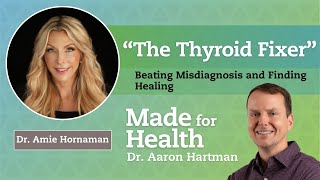
Dr. Amie Hornaman discusses thyroid misdiagnosis and functional medicine approaches to treatment. She covers overlooked hypothyroid symptoms like fatigue and hair loss, the role of reverse T3 in blocking thyroid hormone action, and T2 as a metabolic tool that doesn't suppress TSH. She also addresses how GLP-1 drugs, cortisol, and insulin resistance complicate thyroid care.
Questions this video answers
November 11, 2024
Height 5'2"; competing weight ~105 lb (pre-competition ~115–120 lb)
About 40 pounds
150–300 micrograms (Dr. Hornaman prefers 150 µg; 300 µg used in a human study cited with ~9 lb loss in 28 days)
Microdoses discussed: 0.5–1.25 mg weekly (1.25 mg noted as a 'sweet spot'); standard pharmaceutical tirzepatide dosing examples: 2.5–10 mg escalation
Chapters
Welcome back again everybody. I'm so excited to be here with my friend and colleague Dr. Amy Horneman. She is known as a thyroid fixer. We're going to talk about all things thyroid today. After I read a brief introductory on her, we'll kind of hop into things. So Dr. Amy Amy Hornerman, the thyroid fixer is also host the top rate podcast in one top rated medicine alternative health, the Thyroid Fixer. She has listeners around the world in the globe. She's a founder of the Institute for Thyroid and Hormone Optimization, an organization with transformation proven approaches to address thyroid dysfunction and support people in return to full health after your own experience, which I actually want to start with that because your experience actually is quite intriguing. As I was researching a little bit about this, I've been several symptoms, misdiagnosis and improper treatment. Dr. Amy set out to help others who she knew were going through the exact same set of frustrations, who were on the same medical roller coaster, which I feel like is kind of all of us these days. And she's actually created a whole thing around that, which I think in many ways is what we do right. We have a personal healthcare issue, we don't get the answers, we go around the struggles and all of a sudden we find the answer and then we create a new life outlet. So I want to talk about that with you because you were you actually like in many ways a professional athlete. That was your job and you all of a sudden tanked. Could you walk us through like that whole situation seeing seven different doctors? And I think that that in of itself which led to you. We're getting on, getting your, your, your, your doctor nutrition, like walk us through that because that's some kind of interesting.
Yeah, yeah, no, definitely. And thank you for having me. So, you know, it started back in my twenties actually and I was competing pretty heavily in fitness and figure competitions. I was doing fitness modeling. So for all of those I would diet down because I wasn't walking around like a bean pole. And obviously with what I did, you had to put on muscle, you had to be strong, you had to be athletic looking. You also had to hit the gym twice a day that my diet consisted of chicken, broccoli, asparagus, fish. I mean it was very, very bland, very basic. And I've done that many, many times. I've gotten, I gotten ready for probably around 20 shows and 10 to 15 different photo shoots which I would prep the same way for each time. This one show I was getting ready for and I worked with the coach because you Know, I mean, we need, we need somebody to guide us. We don't want to think for ourselves. So I was working with a coach, and I had to send him my progress pics and my weight every single week. And he would be tracking it and sending me a new diet, new exercise regimen. Well, I kept getting on the scale and the scale would go up and it's like the first time I got on, I was up five pounds. I'm like, all right, well, maybe I'm just holding some water. Maybe I ate like some carbs for a cheat meal or whatever. Fluctuating hormones that time of the month, I don't know. So call it a day, whatever. Then I get on the next week, ends up ten pounds. All right, now I start thinking, I'm like, okay, maybe I'm eating too much. Maybe I'm not exercising enough. You know, what am I doing? And kind of the embarrassment and the worry starts to set in. You're like, oh gosh, are people judging me? Do they not think I'm a sting to my diet? I really am. Then the third week, it's at £15. Finally, it climbed up £25. After that, I stopped weighing. I want to say in total, my body put on about 40 pounds in just a few months.
And how much did you weigh? Just perspective. What were you weighing right then? Because 40 pounds for, you know, you know, 100 pound person versus 300 pound. These are not the same number. So what were you weighing at that point in time?
Well, I'm five two and I was competing at 105. So I was probably, you know, pre competition. I was like 1:15,120, just in the dieting down process. And you want to do it nice and slow. You don't want to crash diet because you want to keep your muscle and all of that. So, yeah, that was a lot for a 5:2. I mean, I had the back pain that went with carrying around all that extra weight. I had just, I mean, the frustration, the depression, the self blame, the self loathing, like, oh my gosh, it must be me. And then that self blame was, was exacerbated by my trips to the doctor. So I started going to doctors and because that's what we do, I mean, we got to start somewhere. And I did not know the world of functional medicine back then, so I did what we all do. I went to my doctor and, and I actually started. My sister, she's a geriatric doctor, but I'm like, well, I got medicine in my family. Let's Just start there. And she ran some tests and she's like, I don't know. Everything looks good here. Let me send you my colleague who's a metabolic disease specialist, I. E. Endocrinologist. And I remember he showed me some BMI chart and then said, you know, you're normal. Everything's fine. And I left there and I put my head on the steering wheel and I just cried and I just prayed for. For a diagnosis of some sort.
You gained 30 pounds.
Yeah.
Doctor said, this is fine, fine.
You're normal. Just one of the doctors out of the seven did tell me to eat less and exercise more. Now I was literally, I was bringing in my diet. I was like, here's what I'm eating, sir. You know, no, I'm really not eating donuts and bon bons. I swear to God. So, yeah, one of them told me to eat less and exercise more, which was virtually impossible. I would have put my body into some type of cortisol shutdown starvation mode. But, yeah, I went through. I went through six different doctors who all blow me off. Blew me off. The seventh doctor touched my neck and said, swallow and said, I'm feeling something on your thyroid. A little goiter, little nodule. We're going to get that ultrasound, check that out, but I'm going to put you on. On centroid. So I was excited. I'm like, okay, I got hypothyroidism as a diagnosis. There's an answer. And I got a pill and I was pumped up. I'm like, this is the answer. This is the answer to my prayers. We'll lose weight. I'm going to feel better. This is awesome. And I gave it five months, and there was zero change, Nothing at all. So I go back to Dr. Google and I joke. At the time, it was one of those big gateway computers, right? So we didn't even have the resources we have now by any way, shape or form. But I went back to Dr. Google and I start reading up on thyroid and hypothyroidism. And I'm like, wait, I'm taking Synthroid. That's T4. That's an inactive thyroid hormone. Wait, over here we have T3. And there are medications that have T3 in them. That's the active thyroid hormone. So I go back to my endo and I go, you know, there you have me on this T4. It's not working. Turns out there's the active thyroid hormone. Can we use some of that? She goes, no, that's not standard of care. I don't do that, I go, I'm going to go find somebody who will fit. So that's what led me to functional medicine at the time, Aaron, I don't even think we use the term functional. It was integrative, alternative, you know, but. But this guy who became my mentor, who saved my life, sat down with me for 90 minutes after drawing, you know, 36 vials of blood out of my arm and. And actually painted the picture of what's going on with me and connected the dots in the blood work, too, like no one else had ever done for me, ever. Put me on the right supplement regimen, really didn't have to change my diet. That was on point. Put me on the right thyroid hormone replacement and treatment for my hypothyroidism. Then I finally started losing weight and feeling better. So that really was the change in my career. I completely shifted careers at that point. He became my mentor. I studied under him, went back to get multiple degrees and trainings, and here I am today.
Wow, that is really super interesting. And it's kind of interesting how, like, you went to a specialist, they said, here's the box. Here are the basic things we do for everybody. We're not going to individualize it for you. We're just going to give you the cookie cutter thing and five months later. And that's what. It's really funny, isn't it? Kind of funny looking back, you're like, you waited five months after. Like, in hindsight, you know, obviously you're. You're a different Amy now than you were back then, but now it's like waiting five months with no result. That just seems like a forever. Oh.
Oh, my gosh, you're so right. Like, I, you know, I'm so impatient. I would give it a week, but. But now think about our patients. They've waited years, if not decades, and have felt like garbage with no answers or just accepted what their doctor said, which let me go back. I mean, and no judgment whatsoever. I often think, like, well, you know, I could have easily stopped the doctor number five, because that's five medical professionals, specialists, right, supposedly, that are telling me there's nothing wrong. I should just accept that and move on. But I did it. And. And I think a lot of people do. And that's really. I mean, that's our message too, to. To the audiences, is that, no, do not accept feeling like garbage. Because when you have a symptom that is your body giving you a gift, I always call it a gift. It's a beautiful signal. It is A gift to say, you know what? You just need to look a little bit deeper. You might need some help. You might need a guide to figure out what's going on with you. But there's something going on in your body that is not right.
So to segue. You know, thyroid is really. It's interesting in many ways. It's the master hormone. There's a. You know, in my training, we talk about the hormonal hierarchy, and the first hierarchy is your thyroid, your pancreas, your insulin, your cortisol. Like, and as you kind of go through this, like, so many things sound similar. So why don't you walk us through, like, you know, thyroid dysfunction, what the. The range, it's almost very amorphous. It's almost like it could be anything from a head concussion to, you know, chronic Lyme disease. It really can sound like almost everything. So why don't you walk through, like, some of the things? Typically when you see people with thyroid dysfunction, some of the things they might present with that they don't think this thyroid. But actually is.
But actually is. Yeah. So I will go with the main symptoms first and then kind of the downward cascade. So main symptoms of thyroid, that, of course can overlap, but weight gain, like I had, inability to lose weight, like, I had fatigue, had that too. Hair loss, constipation, losing the outer corners of your eyebrows, heat and. Or cold intolerance, really low body temperature, low blood pressure, low heart rate. Know, I'll get patients say, well, my resting heart rate is 50. I'm like, hey, you're not Lance Armstrong. It's 50 because you're hypothyroid and everything is slowed down. So, you know, you have that as those, Those big symptoms, even things like joint pain, frozen shoulder that can be tied in the thyroid. But then down from that, you might see insulin resistance or even. Well, in our world, I mean, we call diabetes a lot earlier than. Than conventional medicine would. But an elevated A1C insulin resistance, and you might have people that are eating a ketogenic diet. They're really not consuming carbohydrates at all. Yeah, of course, we can look at cortisol and stress and sleep and lifestyle to see if they're. They're doing things that would increase their glucose. But oftentimes it's because they are hypothyroid. The thyroid is off, and it's. It's screwing up the signals to the pancreas and the regulation of glucose. So you just, you get this overproduction of insulin from the pancreas. And, or you'll just get these spikes in your glucose that are not related to what you're actually eating. So we have that, we have over here the sex hormones. So now we can really start morphing those symptoms that occur. Now you have a, let's say a dysregulated thyroid, non functioning thyroid, low and slow thyroid. Now all of a sudden a woman's cycles are messed up. Her progesterone plummets, she goes into early menopause, her testosterone falls off a cliff in their 20s and 30s when it really shouldn't be. So we see a lot of hormonal dysregulation. Then of course those hormones being off will present a boatload of symptoms that'll kind of layer on top of the thyroid symptoms. So then it's like, okay, I'm gaining weight. Is it the thyroid? Is it the insulin resistance? Is it the low testosterone, low estradiol, low progesterone or all three at the same time? You know, it just, it overlaps. So I have a very basic term I use in practice, it's just both and because I get this question, as I'm sure you do all the time, well, what should we start first? It's like, well, since you have no progesterone, no testosterone, your thyroid's out of whack and you're insulin resistant. We're going to do everything like let's work on your diet and work on the insulin resistance with berberine or if we have to, a glp, whatever, microdosing. Let's go over here and add in the hormones and let's actually treat your thyroid properly all at the same time so it can all work beautifully together as well.
Well, I'm going to take a little deviation off the path because you did throw this, this little phrase glp. You put the one in there. But right now, as the recording of this, there's a lot of backlash, I guess I could say a lot of negative PR. And I've been using these medications actually since 2006, it came out in 2005 and actually have done my clinical research company actually did a lot of research with them and cardiovascular disease stuff. So I, you know, I, I'm, you know, either or both in kind of thing. I recognize that these medications in certain people can be useful, but at the same time it's not the answer for pediatric obesity. That's not the answer for an 8 year old obesity. The answer is Coke out of the schools, get the vending machines out of the schools, get the kid Actors. So I, I reckon I'm going to throw that out there. But you did throw out the GLP one. Talk about that a little bit because I feel like those, you know, in the right situations, I gotta say that caveat. Cause right now there's a lot of kickback can be quite useful especially with hormonal issues in people that are inflamed. Could you talk a little bit about that? Because I've had, I've seen some really interesting responses in 50 year old type A exec type females with lots of cortisol, with hormone issues with a little bit of GLP1 actually back with its anti inflammatory hormonal balancing effects. Could you like since you threw it out there, why don't we take a little dive into that real quick?
Love it. I love it. No, I went down the rabbit hole of the benefits of microdosing because it really is. What's the saying Aaron? It's the, the, the cure and the poison is in the dose or the poisons in the dose. So it really is about your dose and how much you are using, whether or not you are going to get amazing benefits. Anti inflammatory, improved mood, hormonal balance, lowering of inflammation, a calming down of the food noise, but not a total destruction of your appetite. No loss of facial fat, no loss of lean body mass. In fact it might even in the right dose help improve your muscle, your body composition and improve muscle performance. And then over here we have, if you just double that beautiful dose, that microdose now you have the complete destruction of appetite. You have nausea, vomiting, gastroparesis, acid reflux out the wazoo, you're losing facial fat, you're looking like skeletor, you lose all of your muscle. I mean it really is in the dose. So you have to use these GLPs correctly and I'm 100% with you, they should not be used in pediatrics. There has to be massive lifestyle and nutrition changes in that patient population. But when you are talking about someone with autoimmunity or hormonal imbalance like you said, the 50 year old that's going into perimenopause, menopause, you know, this really is a fantastic tool and can really move the needle and change lives when used properly. And it really is all about using it properly and working with someone that can guide you on the right dose to be on.
Yeah, I think you know, you know I've used this for over a month, probably over 15 years before, before all of a sudden you start hearing all these horror stories and I feel like a lot of that's people going online, getting an online provider to overdose them. No one knows their story. No one asked them if they had the gallbladder removed. No one asked them if they have gastroparesis or bad reflux or chronic constipation. They throw these high doses on them and all of a sudden it's like, yes, that is a recipe for disaster. Like, it's like any, any medication, any drug, any supplement, anything. You got to do weigh the risks and benefits and you need to have it in the hands of someone who actually kind of knows what they're doing. Now you did mention on microdosing, that is a pretty new concept. I think some people are familiar with microdosing, like with low dose naltrexone and some of the peptides. Can you talk a little bit about that?
Yes. So when we say microdosing, the GLPs, if we look at standard medical doses, so prescription doses, if you were to go to your doctor and you're probably not going to qualify unless you're full blown diabetic. But let's just say, you know, when we look at the manjaros of the world or the Zepp bounds of the world, I'm going to use tirzepatide as an example. So Tirzepatide Manjaro is dosed usually at. They'll start people at a 2.5, but then they'll immediately move you up to a 5, 7.5 and a 10. Really? Even at the 5 milligram, Mark, personally, when I was playing around with it, because you know, you and I experiment on ourselves before we do anything with patient. So I was playing around with it. It's five milligram, Mark. I got, I got all of it. I got the complete loss of appetite to literally where I took two bites of a beautiful juicy ribeye. Could not eat another bite. Acid reflux, even if I stopped eating five to six hours before bed, I would wake up in the middle of the night with acid reflux. I did lose my, the facial fat in my, in my face. I had to get that re put in. I lost muscle. Gosh. I mean, just all of the side effects as opposed to a micro dose of 1.25 milligrams every week. And you think, oh wait, you're just going from 5 to 1.25. Huge difference. Huge 1.25 milligrams per week. And some people will go as low as 0.5 to truly micro, micro dose. But at that dose, I have I. I don't even know I took it. I have zero loss of appetite, zero acid reflux, absolutely nothing. But what I notice is that I maintain a very good metabolic profile, meaning I can eat a little bit more and I can really consume that protein that I really want to consume to put on muscle and keep my muscle. I don't lose my appetite. But the cravings and the food noise has. The dial's been, like, turned down just a little bit, you know, to where I wouldn't even notice it unless I tune in and I go, oh, yeah, I really haven't had cravings or overeat this week. And I can, you know, stop eating hours before bed like I should be. And what I hear from my patients that we're using this true microdose on. I actually was just talking to one yesterday, and she goes, the. The mood thing with this. She goes, it's just like someone took my mood that was kind of blase, not enough for an antidepressant. I wouldn't want her on an antidepressant anyways. But she goes, it just kind of. Oh, my gosh, my brain is, like, functioning, and I'm getting my work done, and it just, It. It just lit me up. And I'm. I'm. I'm doing things every day. I feel so good. And this wasn't even having to do with weight loss, appetite control. This was all that, that neurological connection with. And you could probably talk more about this than I could, the serotonin connection with the GLPs, but it. It improved her mood. So we're really seeing it's all about the dose. So a true micro dose would be anywhere between like a 0.5 milligram weekly dose to maybe a 2.5, although 2.5, you're still in that pharmaceutical dosing. But a lot of people do well with a 2.5 and. And notice no side effects whatsoever. But 0.5 to 1.25 is really just a nice sweet spot.
I think it's really interesting because part of the. The way the FDA approved these medications for weight loss is particularly for some, with semaglutide and Victoz and these other. The older ones is that the regular dose for, like, semaglutide, you know, diabetes is, you know, 0,25, 0.5 up to 2 milligrams. And the weight loss dose magically becomes, you know, 2.4 milligrams. And so the push is also get people to that dose. And the reality is when you do that, you many Times you create lots of horrible side effects. I had one, one person actually were in the panic attacks. Horrible, horrible pain. It almost took like three or four months for them to calm down after, after he got off of it. So I think having the flexibility, being able to personalize it, which I'm not. I'm not assuming you're compounding that. Yeah, yeah. Because like, because the way it comes from the pharmacy, there's really no way to go outside of those regimens. You get these pre dosed pens, you can't really have those. You can't personalize it at all.
No, no, you really can't compound it. Well, that is for now, Aaron. So did you hear that yesterday? Eli Lilly has smacked down and sent a cease and desist letter to all 503, I want to say, like CA or 503A compounding pharmacies. And the B's are next. So we only have about a couple more months to use tirzepatide, but semaglutide is still out and then there's new ones coming down the pipe, like retrue time. So yeah, there'll be alternatives.
I did not hear about that. That's.
It's not shocking, right?
We're in the peptide world. We ever spent this past March, and we've been in the mold world. We've been using VIP nasal for people with mold issues for 10, 15 years. And it's just one of those things where you have to have the data and the literature. Give the FDA for safety and they're kind of coming around because now there's a bunch of products in mind that'll be coming to market soon. That. So they're taking these things away from us because there'll be much more expensive products probably in three to five years. Lorazotide's one used for celiac disease. We can compound it now. It's in trials. There's a bunch of those. So it's unfortunate that the ability to help people is gonna be further limited. It just means we have to be more creative with what we do and how we do it.
Yeah, exactly.
Which is also a pain because I can't focus on learning new things. I have to focus on continuing to work around the system, which is a lot of what you do. You know, thyroid cortisol, insulin stuff. Talk about a little bit more about the connection with thyroid. Because I think right now, just with the political world we're in right now, people are realizing more about metabolic syndrome, insulin resistance, how it's related with Alzheimer's, a Bunch of stuff. But a lot of people don't necessarily talk as much about the correlation with your thyroid and cortisol with. With insulin. Could you talk about that tribe a little bit and how you really need to balance those in order for all those things to work the right way?
Work the right way? Yeah, absolutely. So, you know, we think of, we think of cortisol, and we almost demonize cortisol a little bit. So we can't be scared of cortisol because we need it. It's needed for life. But it's all about the right amounts and pulse in the right. In the right amounts throughout the day, at the right time of day. So we want to start off by pulsing our cortisol higher in the morning. That's what our bodies naturally do to wake us up, get us going. And then if we look at a proper cortisol curve, it's almost like a half bell curve. It'll come down through the day and then really level out lower at night. And that's ultimately what we want for you to be able to kind of chill out, calm down, go to sleep. Now, thyroid needs cortisol. Cortisol needs thyroid, specifically T3. So we're talking about the active thyroid hormone, T3. And what we'll see is if someone is, let's say, an adrenal burnout, adrenal fatigue, where they're flatline low, they just don't have enough cortisol. If we give them T3, they might, I would say in about like 70% of those cases, they're going to be really sensitive to it. So we'll give them this little baby dose of T3. And they're like, I'm crawling out of my skin. I'm anxious and like sweating and jittery, and I can't sleep. And because they're so super sensitive to that, because they don't even have enough cortisol to play with the T3. So what we have to do with those people is sometimes a slow release T3. But we absolutely have to rebuild their cortisol. Now we can. It's funny because we can use something called the circadian T3 method, which was developed by Paul Robinson. And, and it works. So it's, it's dosing that T3 sometimes two hours before a person is supposed to wake up. If they naturally have a low cortisol in the morning, have them wake up a couple hours before they normally would take their teeth through medication, go back to sleep. Then that T3 is kind of working on the body to, to support and push up cortisol. And we can really multi dose baby amounts of T3 through the day to keep pushing that cortisol up. Mainly in that, that beginning stage of the day where we want it a little bit higher and then we allow it to drop down into the low at night. Obviously supporting the adrenals, using things like adrenal cocktails, salt, making sure their sodium is optimal, making sure their electrolytes are all balanced, vitamin C, magnesium, all the things that support the adrenals, sometimes using an adrenal glandular, sometimes in extreme cases using hydrocortisone, but not, not very often, not I would say I've used that one time in the last three years. But it is important to balance that out. On the flip side, you could have someone with high cortisol. Now we have that high glucose state, right? That high cortisol, high insulin, insulin resistant. They're pushing up their glucose because their cortisol is so high. They're stressed, they're stressed, they're stressed. They're in this big inflamed state because now they have high insulin, high glucose, high cortisol. Just a ball of inflammation that can often result in elevated reverse T3. So we talked about T4 is inactive, T3 is active. One of the main tests that we test for thyroid is reverse T3, which is the, the analogy that I like to use for reverse T3 is a bouncer at a club. So if your reverse is really high, it's almost like a bouncer outside a club door, like outside your cell going, yeah, T3, you're not getting in tonight, we're not letting you in because reverse. And, and I know that's not the, the proper biological description of it, but it's a great way for people to understand it. So if your reverse T3 is high, your T3, that beautiful active thyroid hormone that wants to get to the receptor site on the cell, it knows that's where it's supposed to go so it can get to that receptor site and turn on that cell and give you a metabolism and give you energy and grow your hair and light your brain up, can't get there. So if we're walking around in this high stressed out state, high cortisol, high glucose, high insulin, your reverse T3 is going to go up. Now we have to really adjust your thyroid hormone treatment because you're not converting properly and you have too many bouncers. So that, that brings us to just a different scenario of having to adjust people's lifestyle supplementation Sometimes the thyroid medication to get that reverse T3 to lower and get their cortisol to come back down as well into that perfect pattern that we want. It all plays together. It just does.
It does. It's really interesting. It's really interesting. Talk to practitioners. Everybody's got their own analogy about, you know, things. So, like, the balancer, like, analogy I usually use is it's like driving your car. You have the brake and the gas, and when your T3 is high, the gas is on. So when, when we jack people and give them med, it's like you literally, you're pushing them both at the same time and the car doesn't go any faster, but you start to feel, smell your brakes burning. It just, everything's revving up in the car. You feel the anxiety in the car, but it's really not going any faster. Everybody's got their own analogy, but ultimately it's like that recognition that we really. You have to look at that reverse T3. If you don't look at it, you're kind of, it's, it's your body's feedback, you know, hey, I can't handle extra thyroid right now. Give me some other help. And if you just throw more on top of that, they might feel better for a short period of time. But I've had patients, I don't know if you've ever had this. I've had patients come see me on like 2, 300 milligrams of thyroid glandular. And I spent like a year and a half weaning them off of it because they were so mis, mistreated. I remember when my training Dr. Kaser at the IFM saying, you know, never dose people based on symptoms, always check labs. And I remember thinking, that's weird. Like, of course, check labs. Like, I think out in the real world, I'm like, oh my gosh, there's actually a whole group of people who don't check labs. Like, how can you figure these things out sometimes when they sound so, so, so similar?
Yeah, no, you have to pair it up together. And, and yeah, to your point, on the, on the, on the thyroid glandular or even like NDT medication, many people in our world, in our space, functional integrative. And I try to educate my, my audience on this as well, that when you're out there looking for a practitioner to help, you don't just go because they have integrative, functional or alternative in front of their name. Because what I see in this world is if they really don't know the thyroid they will do exactly what you just said. They will give more and more and more armor or NP or a glandular not understanding that that is comprised of around 80% T4 and 20% T3. And this is where more is not better. Because that T4, if you are not properly converting in us, what can push up reverse T3? Oh my gosh. A D101, D102, genetic SNP, iodine deficiency, magnesium deficiency, estrogen dominance, insulin resistance. I mean the list go high cortisol, low cortisol. I mean the list goes on and on and on and on. So if you don't have someone really digging and figuring out what you need to look at to Lower your reverse T3 or they're not checking reverse T3 because I've seen that as well even in our world, then all of that NDT medication or thyroid glandular they give you is going to make you worse because all of that T4, since you don't have the ability to convert T4 into T3, all of that T4 is getting converted to reverse T3. And, and now like you said, you have the brakes on. So it doesn't matter how much medication you're taking on in give the brakes on constantly.
Yeah, it's really the wild. In many ways it's the Wild West. I like the Wild west because the Wild west is where you get to do cool things that aren't happening in other places. But, but at the same time there's not really as firm of a standardization. And that's I think one of the advantages and disadvantages of what we do. Because you know, you've got your, you got your doctor, you have your doctor, you went and went through it. But most people go to do a week course or a weekend thing and they, they, they plum. I, I'm holistically minded. Like I grow, I have a garden in the backyard. And like, well, that's not quite the same thing as taking years and years and years. And it's you, you have to really take a deep dive and understand and once you do that it makes it, you know, the people you really know what they're doing can explain it really easily in an understandable way. That's, that's, that's really the true definition. We know someone is really knows what they're doing. They can explain it at 10th to 12th grade level and people like, oh, that's what that means. Um, yeah, so I want to segue because we talked about this a little before we start recording. Um, actually you have to be humble and actually had a patient of mine maybe last year bring up the whole concept of T2 to me and then T1. And so that was kind of news to me. So could you walk us through that a little bit? Because that is not when I did start looking into it. That's not in the endocrinology like in the journals, that's not really taught even the functional medicine world. Like I've not yet had a lecture in my training anywhere on like T2. Could you talk about that a little bit?
Yeah, absolutely. So what's crazy is that T2 or 3,5 DIY is the big long, long terminology for it. T2 is a thyroid hormone. So the thyroid gland makes T1, T2, T3, T4. So we already said T4 is inactive, T3 is active. What about T1 and T2? T1 is inactive. We can kind of set that aside. T2 is very active, very metabolically active. So T2 has 30 years of research behind it and I've been digging into it for the past 15. And it is crazy that you don't really see this used medically. I mean, it's just not like you said, it's not in the medical literature. There's not a lot of well known studies and people aren't talking about it outside of our world. So I went deep into this because about 15 years ago there was an over the counter supplement and it was in the bro science world world, it was in the bodybuilding world and it had a big angry name to it, but it had 3,5 dietohyronine in it. And I found this very interesting when I started looking into the research. I'm like, okay, I'm gonna try this, I'm gonna try this on my patients. And this is long before we could prescribe to all 50 states. So I was working with these people that had to, you know, bang their head up against the wall trying to convince their doctor to do anything for them. And most of them were on T4 only, which doesn't work. So I said, okay, you know, let's, let's start using this in, in practice supplementally and see what happens. Making a difference with these women especially that could not lose weight. And they were just dragging their butts through the day with low energy and it was really changing their energy and changing their metabolism. And when we look at T2, the fascinating thing about it is that it, it does not change thyroid lab value. So if we were to, and I'll give you an analogy from the OR stories From the bodybuilding world. In the bodybuilding world, like it or not, people are abusing medication and they absolutely will use T3 to lose weight. I mean, they'll just get it off the black market. So we have all these bodybuilders, bigger competitors, using T3 to lose weight. Then they get done with the show and they literally, you will see these people put on 30, 40 pounds in a couple of weeks. Because, number one, I mean, they went from caloric deprivation to eating, you know, pizza and brownies. And then number two, it's because they created their own thyroid problem by abusing T3. And now they've, because of the feedback loop, they've shut down their own thyroid production and now they actually need thyroid hormone to, to have a metabolism. T2 doesn't do that. It doesn't have that negative feedback loop on the thyroid. So, number one, it's not going to change your thyroid lab values to where your doctor will look at your suppressed TSH and go, oh, my gosh, you're hyperthyroid. It's not going to do that and it's not going to have that negative feedback shutdown. So we can use it to literally increase our basal metabolic rate, the amount of fat that you're burning at rest. And it works at the mitochondrial level to stimulate ATP production. It helps to brown white adipose tissue. So why are we jumping in cold plunges to turn that white, squishy fat brown and make it more mitochondrial active. So it browns white adipose tissue. It helps with cholesterol, lipid panels, it helps with insulin resistance as well. And so I saw that the very first time. It really ding, ding, ding. In my head, I saw this interview with a trainer to the bodybuilding pros, and he said, for my women, I do not let them use an abuse T3, because, number one, yeah, you're gonna come out the other side with a thyroid problem. Number two, you're gonna burn your muscle. Because T3 doesn't differentiate burning muscle from fat. It just increases metabolism all the way around. And yes, you can get some burning of your muscle tissue, which is the last thing you want when you're busting your butt lifting and training for these shows. He goes, I have. My ladies use T2 because it leaves muscle alone. It only burns body fat. And they're not going to come out the other side of the show with a thyroid problem. They'll be able to cycle off of it and go back on it just like they should. They could and reap all the benefits. And I was like, oh my gosh, that's amazing. So all of these people on T4 only or people that are just struggling with weight and a low metabolism from their thyroid or low metabolism from anything can actually implement T2 because it's not going to give them a thyroid problem. It's not going to have that negative feedback loop. So that's where I, I was researching it and that was the first supplement in my line that came out was Thyroid Fixer and that contained T2 because I've been studying for 15 years. It's amazing.
What's the dosing on that?
Anywhere between 150 and 300 micrograms was used in the studies. I keep my dose at 150 and then if somebody wants to go up to 300 to experiment they certainly can because in the human studies that showed an average of a 9 pound weight loss in 28 days, they were using 300. I think that's a little bit extreme and you are going to start risking burning some muscle if you are losing weight that quickly. Unless you know you're like 300 pounds and you have that, you know 250, you have that weight to lose. But if you're just looking to lose like let's say between that 10 pound and maybe 2030 pound mark, I would say in 150 microgram range.
Gotcha. Gotcha. Interesting. That's really intriguing that it doesn't feed back at all does. There's no receptors in the, I guess in the hypothalamus for the feedback to TSH suppression. That's interesting.
Right.
So all things thyroid. Right. So I want to drop a little story. Someone you know, we have talked about my wife before. She actually years and years ago did this diet with a local practitioner. I should have been more forceful. I told, I recommended against it but it was like a 500 a day calorie diet. She may have told you this to you before. Actually she may not. And some herbs that she, lots of herbs she was taken to basically suppress her appetite and she started getting tired. Fatigue pushed way her way herself through. Cuz she's not a quitter. Yep. And that triggered a fatigue it almost took five years to get out of. Um and so it was. And she, she had other issues going on and you know a bunch of other stuff going on. But this was like the, the straw that broke the Pamela's back in many ways because it was a massive stressor. And you, you talked about that early on about the diet, the cordova, the diet stressor. And she wasn't ready for that. Could you. And I feel like that it, that that concept cycles in out with what's popular now, won't be popular next year, but it'll come back right style back. And so I, if it's not popular right now, it'll come back again sometime soon where it'll be like the 500 calorie diet. Could you talk about that a little bit as far as how it interplays with particularly their HPA axis? Because all the adrenal fatigue issues actually aren't. Your adrenal doesn't stop. It's the brain that's like I need to hibernate for six months or whatever. Could you talk about some of these crazy. Like some people aren't healthy enough to fast, some people aren't healthy enough to do that. Could you talk about that a little bit and how that stressor could actually cause dysfunction and thyroid and cortisol and you know, all kinds of stuff.
Yeah, yeah. No, I did not know that. I did not. I never heard that story. She never told me so. Oh, craziness. Yeah. The pro, the HCG diet was the main one that came out years ago. 500 calories. Oh my gosh. But I would even see, I would see some of the trainers when I was competing and they have these ladies on 500, 900 calories a day. I'm like, oh my gosh, you're just going to shut down your body. Because you know, back in the 80s and 90s you heard about this, you know, survival mode. Don't put your body in survival mode. You know, you have to eat 1200 calories minimum a day. It would be in like Fitness and, and hers magazine, whatever, 1200 calorie a day diet. But realistically, it's whatever that caloric deprivation is that, that puts you in survival mode. It might be 500, might be 900, might be 1200. That 1200 might be too low for you. So when you are taking in such low amounts of calories and then we can go one step further and say, okay, if you're over fasting, you're obviously your caloric intake is going to be down. If you are, are over fasting, your protein intake is going to be down. There's no way you're going to get in the protein to preserve your muscle tissue and to give you those amino acids for all organ function. So there's a whole host of detrimental effects from low calorie dieting. But the main one is, is that over? We'll put low calorie dieting and over fasting, all in one big basket, is that you will. You're not taking in the amount of nutrients. So nutrients like minerals, magnesium, vitamin D, all of those beautiful nutrients, protein, amino acids that your body needs to run on. And our bodies are smart. So almost going back to that reverse T3 issue, reverse T3 was built into our bodies to protect us. It's not a bad thing. So if we're in an accident and we're lying there fighting for our life, reverse T3 rises because it knows at this point in time you don't need to burn fat, have energy, make major decisions, grow your hair, have beautiful skin, you don't even need to poop, you need to lie there and survive. And so it's really, I mean it's fantastic because all of those unnecessary bodily processes shut down and all energy is focused on healing and survival. It's a great thing. But the same thing happens when we are calorically deprived, when we're doing these crazy diets, when we're doing crazy fasting is our body goes, yes, there is not enough of anything going on in your body to, to, to do the necessary day to day processes. So why don't we conserve, let's conserve energy, let's shut down metabolism first and foremost. And oh yeah, she doesn't need to grow her hair either. Forget that. Like hair can fall out, it can go to straw, that doesn't matter, doesn't need to burn fat. And, and so you end up storing body fat on your body because you're in this severe deprivation. And then like you said, that whole hpa, hpt, hp, all hp, everything access gets shut down. Now you're probably producing more cortisol because it's a stressor. Stress fasting is a stressor. So you might be pumping out too much cortisol. You might put your body into an insulin resistant state. Even though you're calorically deprived, you will lose muscle tissue because you're not taking in enough protein. You're definitely going to lose your hair because you're not taking in enough protein. So it's just a mess all the way around. It just, it literally makes no sense. I understand. Especially women. I understand where a woman's mind goes. Because when you're on that struggle bus and you're like, nothing I am doing is working, so I might as well just do this 500 calorie diet. It seems like it's the only answer, but it's not. It's gonna make the situation worse.
Yeah, there's something you've said. I think that's the fifth time that I've heard you reference and I want, I got getting close to the end of our time here, so I wanna make sure at least have a few minutes to talk about this. It's underrepresented and under talked about. Now I feel like people you were talking about protein, you know, you know, we low protein, low all these, you know, and now we're realizing, wait a second, women actually need more protein. Can you talk about that briefly and like how that can play with thyroid. You're doing all kinds of stuff. Cause I feel like where the public consciousness is now finally maybe getting to the point where we're realizing, wait a second, we've been protein deficient for a couple of decades and maybe that's part of the whole midlife crisis in women. Is this, you know, dietary induced protein deficiency, yada, yada kind of thing. Could you end off with that? That. I think that's a big thing that we can't talk about enough.
Yeah, no, I, I am happy to see that the, you know, even like social media talk is starting to increase around the importance of protein pounding that point home because when. And it really kind of comes back to muscle. So muscle is our organ of longevity. We want to keep it. We want to keep it, you know, till the day that we die. It's protecting our muscular skeletal system. It's protecting, you know, us from, from falling and breaking our hip as we age. Because that increases your mortality by 50%. 50% of people who break their hip, you die in the hospital. So keeping on that muscle tissue, that lean, sexy, aesthetically pleasing, but also musculoskeletal protecting organ of longevity is key. But you need protein to do that. And then when we look at the effects of amino acids on our appetite, on our brain function, on our heart, our heart needs protein to beat because the heart is a muscle as well. You know, we see all kind, I mean it's just, it's almost like common sense, but yet people still don't get it. It's common sense that we would need enough protein to run this body of ours. That requires protein and amino acids and it, and it helps it help. It's helpful to say also that amino acids are present in animal based protein. So you can't be a vegan, a vegetarian and get enough amino acids. It just doesn't work. So when we're talking about protein, we're talking about complete proteins comprised of amino acids. And that's what your body really Requires. And you know, it's funny. It's. It's man. I will total up protein intake for my patients. If I'm sitting there looking at their 3D food journal, I'm like, okay, so you're getting enough protein? Oh, yeah, I get enough protein. I'm like, huh? Okay, so did you know that you're only getting in about 60 grams of protein per day and you need one gram per pound. And the easiest way to do this is. Is this way. One gram per pound of lean body mass. So how do we figure that out? Take your fighting weight, you know, take where, you know, this is really my comfortable weight. And, and do that, you know, eat that much protein every single day. And really, as we age, we need more. And that's kind of like, wait, what? My appetite is going down as I age? Yeah, but you need more protein. Because of sarcopenia. We start to lose muscle as we age, and we need to protect it. We need to hold on to it for dear life. And the one way to do that, outside of resistance training and lifting heavy, you still want to do that. You know, get some kind of. Even if it's body weight, resistance, air squats, push ups off of a bench, a chair, you. You have to have the protein on board to repair those muscles that you want to break down with resistance training and to protect those muscles. And, you know, your hair, your skin, your heart, all of that good stuff. So, yeah, one gram per pound of lean body mass is my. Is my advice for people.
Yeah, I mean, there's so much great information. I want to respect your time. We're getting the top of the hour, but you speak so clearly. It's just, you know, the common sense and it's just really clear. Everything understood it. I really enjoyed this. I think it's gonna be really super helpful for a lot of people. If people want to learn more about you, about what you're doing. They actually like your style of talking. Clarity. Where could people get more of you?
Yeah, absolutely. So you can go to doctorami.com that's D R A M I E. And then you can also jump on the thyroid fixer podcast and listen to our 460some episodes on there. So the boatload of information on there. And then I do have a Facebook group. It's called just fix your thyroid. It's open to the public. It's a fantastic group. There's, there's my nurse practitioners and coaches are in there, former patients are in there. I'm in there answering questions. But it's a great place to go and really get your questions answered. Where you can even post lab and say, hey, I don't know, I heard you on this podcast. I think there's something going on. Or I'm on, you know, T4 only. This is what's happening with my reverse T3. So it's a great place to get some feedback even before you take that next step of finding a practitioner to work with to properly get diagnosed and treated.
Great information. Great. Well, thank you so much. Thank you for your time. Thank you for all those nuggets of information and sharing those with us today.
My pleasure. Thanks for having me.
Take care of.
More from Aaron

Too Many Gut Fixes Can Undo Your Healing. What Helps It Last | Dr. Sabine Hazan


Women’s Heart Attack Symptoms Differ From Men’s 95% of the Time — Only 30% Have Chest Pain #shorts

Heart Disease Kills More Women Than All Cancers Combined — 80% of Cardiac Research Is on Men #shorts

Women’s Physiology Was Systematically Ignored in Drug Research — The Consequences Are Still #shorts



It Took the FDA 20 Years to Realize Women Need Half the Dose of Ambien #shorts

Until 1993, Women Were Banned From Clinical Drug Trials — Then Those Drugs Were Prescribed t #shorts