Tin Man Gets A Heart: Dr. Hartman's Journey into Functional Medicine
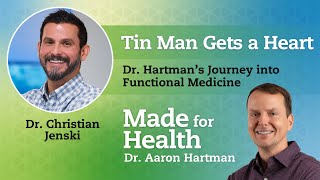
Dr. Aaron Hartman left conventional family medicine to start Richmond Integrative and Functional Medicine after adopting his daughter Anna, who has cerebral palsy. Her care exposed gaps in standard treatment, pushing him toward genetics, nutrition, and therapies like PEMF and tDCS. He discusses building his practice and plans to expand procedural services.
Chapters
Hey there. My name is Dr. Christian Jensky and I am one of the clinicians at Richmond Integrative and Functional Medicine and I am here with the infamous Dr. Aaron Hartman. Dr. Hartman is the founder and co CEO of Richmond Integrative and Functional Medicine. And we have been colleagues and friends for a while now. And he wears many hats. Previously practicing as a family practitioner, also has a research group, also was in the military, has done some mission work, has done many, many things. And the goal of today is to kind of learn a little bit about him and what he's done in his life. And so we're going to start by talking about your journey in medicine and ultimately kind of how you found your way to medicine. And then secondary question to that would be how you found your way to functional medicine specifically. So let's start there.
Sorry. Yeah, my journey, it's kind of the typical atypical journey. I remember being, I think maybe in second or third grade, walking through the park with my parents saying I was gonna be a doctor when I growed up. Grew up. And I mean the usual kind of things that kids like, you know, wouldn't be astronaut or whatever. Yeah. And I think my parents just kind of like, oh, that's nice, dear. My dad was like the first person in my family to graduate from actually high school and college. So it's kind of like, you know, yeah, sure, I'll be a doctor kind of thing. Right. And did the usual pathway, got into medical school. I liked learning. After I finished my residency, I did the typical thing, which I thought was typical, was like trying to learn a new procedure, a new thing every year. So just over the first 10 years out of practice, just started developing a deeper clinical skill set. Worked in a lot of different places. That's kind of counting up a while ago, practice medicine, seven different countries and I think five different continents. So four different continents. So I've had a lot of clinical experience, which is very much what a standard academic doctor kind of does. You just learn and you grow and you practice like for uchicago and all these different places you've been and you just build up your clinical armamentarium. But that got me to a point. And you get to a point after 12 years in practice, we feel pretty like I feel took me about 12 years in practice to feel confident like, okay, I can handle a hospitalized patient, I can take care of someone in the icu, I can admit someone to the ER after the ER guys and make sure they're not, you know, dying. Right. But then that inflection point came with my daughter, with the medical world. And one of the things that happened with our oldest daughter, Anna is that the process of adopting her while we had as a foster kid, one of the GI doctors that was taking care of her recommended her putting a peg tube in for feeding because she has cerebral palsy. And one of the things with kids with CP is they're just really small. And so this. And you've seen this happens with lots of kids. They're small, they got special needs. And so the typical thing is give them formula, give them lots of food, fatten them up, because that's kind of all you can do for them. And we just felt like. My wife and I felt like that wasn't. It didn't feel right. My wife and I had conversations about feeding and talking and crawling, even though my daughter was never supposed to walk and she was never supposed to talk and she was never supposed to crawl. We just had higher expectations for her. Again, that point in time. She's fostering. She's not our daughter technically yet. And so we opted out. We said, no, we're not going to put a peg tube in. We're not going to put a feeding tube in. We're going to do this the hard way.
Yeah, the right way.
The right way. Yeah. The first inflection point was the response to the healthcare system. The GI doctor reported us to Child Protective Services. Oh, my gosh. Yeah. For child neglect. Yeah. We refused the doctor's orders, and so we got investigated for child abuse via neglect because we refused to do. The doctor told us to do.
Oh, my gosh.
Even though my wife is an expert with kids with special needs. No te. I'm a medical doctor. The funniest thing is the nurse that came out to investigate us actually was one of my wife's colleagues because my wife worked in the system. So it's literally the person comes out and investigate us for being bad people. Like, hey, how you doing? It's nice conversation. And they talked about the GI doctor. Yeah. They put tubes in everybody. And it's one of those conversations you have in hindsight. You're like, they do put tubes in every single kid who has feeding issues. Like, that's not right. So that was our first kind of like, bump up to the system what the system thinks when you don't go with the flow. The second aha moment, which was like the really, like, question experts.
Right.
Was six months later, she was doing research and found a growth chart for kids with cerebral palsy. My daughter was right. In the middle. So the gi, the expert was looking at a typical developmental child growth chart for which my daughter was like less than the second percentile. But for a typical CP kid, she was in the middle. She didn't need the feeding tube, she didn't need that. But the GI doctor didn't know that.
Wrong frame of reference.
Wrong frame of reference. And so all of a sudden it was like, can you trust the experts? Because sometimes they don't know. And so that was like our second aha moment. Like not just does the system not like you bucking it and they might report you to authorities, but they're wrong sometimes. And so those were like, I think to say it, it's the ancient Cape Canaveral. That's the mile at the moon, right? A little deviation off course when you add a year or two or three. And another deviation of deviation was like the path we started down that. Now how many. This is, that was 2006. So this is. It was 18 years later.
And you hadn't had any experience similar while practicing medicine. I mean, clearly there are moments when you're practicing as a clinician where you're questioning things and maybe you don't agree with a colleague or a specialist that you're referring patients to, but nothing of this magnitude. And then there's the emotionality that's attached to it too, because this is your daughter or future daughter, someone that you're already falling in love with. So this was a really big turning point for you and your wife at this time, right?
For me, I will say it was a process of falling in love with my daughter. That's another story altogether. You know, my wife says a tin man got a heart, you know, kind of thing. And for me it was more of awakening. It was like, whoa, this is the thing. This is the thing that the experts are wrong. And this is the thing that a well meaning person doing the right thing, adopting a child that literally no one else wants can be investigated.
Right.
This is crazy. And actually in the special needs world, for kids with special needs with rare diseases, this actually happens a lot. Bunch my wife's side colleagues who they've gone, they've been locally here for like GI issues, been said, hey, we can't help you go up to Harvard to go up to Mass General, get up there, say, hey, I'm here for Dr. XYZ. And the intern admitting them is like, you're crazy. And they lose their kid for three months and have to fight over this whole. Like that actually happens way more than it should happen. It shouldn't happen at all in the world of kids with special needs. So it was our first. Aha. Like, it can happen to us too. This is supposed to happen to those people, not us. And then you realize this happens a lot more than we think. And then being now, both of us being healthcare for a while, how many people get. The term for it now is gaslit. They didn't have a term for it back then. Now it's like, oh, I'm getting gaslit. It happens. For me, it was more of like a recognition. Like, oh, I need to start questioning these people that say they know. They're all knowing. So that happened when, like a year later. Like, it wasn't actually. It was in the same year because we're still in Florida at that point in time where the eye doctor, my daughter, also has this issue with strabismus. Her eyes kind of wander and wobble and looks kind of weird, but it wasn't. It was discordant. So basically they wouldn't go together and come and go. So it was a processing thing. It was a midbrain. I kind of later learned functional neurology. It was actually one for strokes. She had a mid brain damage issue and the ophthalmologist was like, let's cut her eyeballs and make her look normal. I'm like, well, at this stage, I don't care. I want functional. I want her to be able to see and read. I want a kid who's never seen.
This isn't about aesthetics.
Yeah, no. And so like, thank you for that opinion. Yeah. Got a consult with an older ophthalmologist, was like, you know, you can do it in the six. Just. There's no rush. Just patch the eye, make her ear, her hands try to hit her, lift her head up so she. Which she couldn't do at that point in time either. And then that kept on going from later on. They recommend, because of some of her spinal issues, doing a surgical procedure called a dorsal rhizotomy, which is where they cut nerves in your back so that you lose tone in your legs. But the problem is you lose strength. So you, you can't ever walk and you look good in a wheelchair, but your legs become non functional. And then when you're 14, you have contractures, so you get surgeries. So we're like, I don't know about. And so we end up going up to Dupont in Jersey, who's actually the guy who actually wrote the textbook on cerebral palsy. He was like, no, I Don't want to do that. I want to do this surgery instead. So we were kind of like, okay, well, surgery. And he was like, well, give it a year and see what happens. So we had this happen so many times where we get to a point, her journey, and someone would be like, we cannot offer your daughter anything else. Here's the surgical procedure to do. And we would just.
And that was good enough, right? You just accepted it?
No, of course we said, well, after a while, I was like, hey, no. After a while, I was like, I'm not. Pack up my daughter.
One instance, going all the way back to the feeding tube became a series of instances where it was like, this is the norm. And every issue that we find wrong with our child and we see a specialist for, they're suggesting something that we ultimately disagree with, and they're not giving us an alternative. And that's kind of crazy.
Yeah, it's happens a lot more. I feel like that was me. It was 2006 to 2008. Ish. 9ish was when we were kind of going that process. So that was before, at least in my understanding, before the Internet was like, before it was what it is today. We just find stuff. I mean, as a respectable doctor, I never went to the Internet for anything. Right. You know, now it's like I can go to PubMed and pull stuff up. I read textbooks, but I just, you know, but it just was one of the things where it's like to be in that situation personally and then to walk through that and then figuring out all these different pathways through doing gene testing and finding out her nutritional epigenetic expression and changing certain nutrients, and then doing advanced gut testing and doing lipid analysis on her, then realizing that in Germany, they have this thing called the Galileo, which is an alternating vibration device they use with people with spinal cord injuries. And that can actually make her brain think she's walking and actually activate her leg muscles and then start studying functional neurology and realizing, actually you can actually do exercise to activate the brain. So I went to Atlanta to a clinic, was associated with Kerr Clinic. They do this rotational stuff to learn how to stimulate her. Her inner ear for muscle stuff, and then realize, wait a second, they were doing, like, these oral stimulation devices there, which I thought was the weirdest thing I've ever seen. And then four years later, I'm going to Canada to get this thing called PONs, which is not FDA approved in the United States to treat balance issues and multiple sclerosis. Well, in Russia, they use it to treat kids with cp. So I had to go to Canada to get that. So it just kept on building and building and building. And so today she's 17, getting ready to turn 18. And she's never had a surgical procedure. She's on no medications and drugs. She's had antibiotics once since we've got her.
And she walks.
She walks with form crutches. Yeah, well, actually that's really interesting. So she started doing puzzles where she started being able to read like two years ago. And now she can actually read a text, read her phone, read text. And now she can actually like text grandma and grandparents. And she can actually read the text they send back to her now, which is kind of cool. And she started doing puzzles and she actually does 60. She had a little help with this one but 60 piece puzzle a couple weeks ago. And this is a kid who we're told would never see, never read, who would be a vegetable. And this is one of the things my wife makes a big deal about. In the therapy world, kids with CP usually peak out between four to six years of age. And after that you start doing surgeries and they just don't because of they're sitting in a chair and not moving. About 17, she's never peaked out. She gets better every year. She learns to do something new every year. She's a rock star, you know. And so basically she's got this go to it attitude. She'll do anything, give it. She complains, I'm tired, dad, I don't want to take these pills. I don't want to do that. You know, but she's like, I don't want to do that. As she's putting them down, she's like, dad, I don't want to do that device. We started a new thing with her recently, transcranial direct current stimulation. Because I was reading some stuff about using that with people with ADHD and focusing. And my thinking was we could actually, if she's doing these puzzles and reading, could I, through transcranial direct current stimulation, actually reinforce those pathways. So we started doing that and she's like, I hate this, dad, I don't want to do it. But now she's like, dad, are we gonna do it now? And then she's complaining about, but she does it. So she is just a rock star.
Yeah, I've met her. It's true. One of my favorite Anna stories is when I came over to your house and she literally, with assistance, but mostly her was walked down the stairs, walked all the way across the room. And when she got to me. Becky said, hey, you remember Dr. Jensky. Do you want to say hi? And she said, can I sit down first? And she was like sweating. She sat down and then she was like, hi, Dr. Jetsky. And I just started laughing like I am now because that was a lot of work and work that she wasn't expected to ever be able to do. It was just. That kind of speaks volumes about the commitment of you and your wife and what you guys. That kind of no quit, never give up attitude. And that clearly was an inflection point for you that kind of transformed your trajectory as a clinician, as a medical scientist, as a provider, and really, I think kind of opened your eyes to many things and pushed you towards the realm of functional medicine and integrated medicine. And so that was a massive inflection point. You also have other children as well. And so how have they influenced you and how have you been influenced by them in this whole functional journey and how has it kind of in totality affected your family?
Well, me and that was where we started. Our second daughter, Rita, and I don't talk as much about her because she's 16 and she has her own story to say, but she had her own health issues that we've worked through. Very, very, very significant. Our son was interesting when we got him because he almost six months old when we got him and he had horrible, horrible eczema. His skin was awful. Two of our kids were African American. And when we got Khalil, he had all the typical, you see like these brown and dark skinned individuals when they get bad eczema, like it just makes her skin blotchy and just looks. It can be kind of bad, especially with young kids that scratch and he had the blotchiness on his face. It was just really, really, really bad. First night we had him, my wife actually slept with him on her chest all night long because she was scared to stop breathing because he was wheezing horribly, you know. And so fast forward six months later. Actually not six months because we ended up losing him for three or four months and then getting him back. So that's a trauma story. That's a trauma story.
That's a story for your wife to tell. She's the pit bull that got him back.
Yeah, she is. That's very true. So, but I'm trying to think how it was probably maybe more like six months later, nine months later, asthma's mostly gone. A year later, asthma's like gone. Eczema's gone. At this stage in his life, if he watches what he eats, which is hard because he's 13 now. You know, he doesn't. The only time he, like, wheeze a little bit is when he gets up a rest from tracking fight infection, which happens. You know, kids get a little head cold a couple times a year, no big deal. He has never had antibiotics since we got him at six months. Our daughter Abigail, we got her at two years of age, she's never had antibiotics. So I have three kids, no antibiotics. Like, how often does that happen? And the answer is never.
Never.
Between the three of them, I used to be able to say that none of them had cavities until Khalil decided to start making homemade lemon juice and then sucking it through a straw and he went to the dentist and had cavities right here. And you've been er. I've seen typically for those who don't know, when people do crystal meth and drugs and street drugs and meth mouth, they'll get cavities right here. And I was looking at him like, how is he getting this? It wasn't like the typical kid, cavities in the back. Right. And come to find out with some drinking, making his homemade lemon juice. And we told him that and he got the feelings, he stopped doing that. So besides that, none of our kids have had cavities when they didn't come from amazing places. I kind of joked that with Cleo once. We took away the donut holes and got him out of a moldy, smoky environment, took away the donut holes and gave them real food.
Everything's better, the sky's the limit. Yeah. So it's like none of this was done with a bunch of medications and seeing a bunch of. It was lifestyle. Right. It's the kind of epitome and the core of what we do in functional medicine. And granted, we use those things when necessary and sometimes we have to use those, especially in the adult population that has decades of disease that we're trying to prevent from getting worse and reverse. With a child, it tends to be a little bit easier depending on the situation. Clearly not an easy situation with Anna and potentially with either of them as well. But all of their lives have been transformed by you and Becky and your lives by them. And I think that is really the foundation of the impetus behind why you're currently doing what you're doing and continue to do it. So let's talk a little bit about that. How the heck do you go from. I am a family practice doctor and I'm learning these things and this makes sense, and this is an aha moment for me, but maybe I'm just going to provide my family this type of care to. I want to give this to whomever wants it. I'm going to practice functional medicine. I'm going to learn functional medicine. I'm going to open up shop and put up my shingle. Was it a. I gradually started to kind of experiment with patients as I was learning. Or like, you know, hands tied behind your back, blindfold on, you dove straight in. Like, how did you kind of approach.
The situation from a business perspective? I'm very conservative. You know, I got to pay the bills and take care of the family. We've had conversations about that kind of stuff. And so it was like, well, how do I do this? After moving back to Richmond, being here, Moved back here in 2007, in 2010, opened up Virginia Research center, which is a research company. And so focusing on that and really learning really some really cool things about one of the things we do a research study is you get these investigative brochures called Ibe's and basically has all. It's like, usually 80, 100 pages of all the research going into, like, why this drug might work. So start just enjoying reading those because it's like, oh, wow. Like, this drug coming to market, the research that will result in this coming to market in 5 years has 20 years of research behind it. And you're like, whoa, Like, I thought, this new fancy drug. Yeah, the new fancy drug, the stuff on it is decades old. Now start thinking, huh, what if I could go back 10 years ago and use that data? Is there other way to recreate what that drug is doing, like, with other stuff?
Right.
And that's kind of. We do that all the time now, right?
Repurposing it.
Yeah, yeah, right. So just thinking that those seeds dropped in my mind, reading the consultant, my little throwaway journals, that I was one of the few people that actually read those things. And then I kept on getting these things from, like, different AHIM at that point in time with, I think it's now the ABIHM, American Board of Integrative Medicine, and then the IFM Institute of Functional Medicine. So eventually, in 2011, I believe I went to one of the annual conferences in Tampa for the American Board of those. Ah. I'm at that point in time. The abl. I get these initials. There's a lot of them. I know, I know this was a conference. And those three days of me going, what is going on? Like, people are saying words, indole, three Carbamol. I'm like, what is that? You know, quercetin? Like, what is this? Berberine. I'm like, what are these things you're talking about?
Gibberish.
Gibberish. You know, small nucleotide polymorphisms.
Yeah.
And I'm like. So I would leave that. I'm like, this is. I talked to some older guys. They're like, how do you do this? Because I have no idea how to do this. That planted the seeds. But I was already doing this with my daughter, and I'd stumbled across Amy Yasko's work, who's a PhD who had a child with autism. And so she used her scientific background to research SNPs and has a whole protocol on kids with autism doing gene analysis. And based on their SNPs, these are the nutrients that are right for your genes. So I started out with my daughter, then started training with a ihm, then came across the ifm, and then just started doing that. And then there's all of a sudden, okay, well, let me do a Nutrival, which is this organic acid test that they do in kids. I started at translational medicine because in IFM now and a form now, there is no track for kids with cp. There's no track for kids who have massive drug exposures and strokes before birth. When's the last time you read you saw a conference about that? Never. So I was at the get go, like, okay, like, my daughter's here. What kind of has biologic plausibility? So I started with autism because there was just a lot more things with that, and started learning about different things. Stumbled across functional neurology, which is Dr. T. Karazi and Dr. Brock, if you've heard, like, that kind of stuff, I'm like, wait a second. I can watch how someone walks and tell what's going on with their brain. Right. It's kind of interesting for me because I have an issue, like, in loud rooms, I can't understand speech very well because I can't decode your words very well with this background noise. And I have horrible handwriting, as you know. Yeah. Everybody who's ever worked with me knows. Right. That actually can be a parietal lobe issue. And then I'm like, wait a second. I had this bad concussion when I was in second grade. Huh. There's a link between my inability to understand speech and loud areas and my poor handwriting. And so I kind of started, let's do some of these things with Anna. So it was just this process of root causality, right? Yeah. Tracking it back, turning it back to well again. How many lectures did we have in our IFM training on functional neurology?
Not many.
One or two maybe it's gut, It's.
It's gut hormones.
Yeah, exactly. And so there's actually a fellowship you can do. A two year fellowship you can do on this. I did that. I did it in a little about six months. And so I did that and just got that information. So then all of a sudden it's like, okay, how can I use energy E stem, nms then even. It's going to be a pretty big world now. Then you realize waste. In Germany, they've been doing this stuff since the 50s. Yeah. And then you know, you go to a conference and you realize PEMF is actually used in the, in professional like million dollar horses. Like these high end athletes that are horses, they actually use hyperbaric, like a horse, like bigger. In this room the horses go in and PEMF to help them heal quicker for injuries. So how come this world, they're using it on these million dollar athletes and, and in my world it's hooey. But there's a book I can read on it that goes over the last 50 years of research on it. So started doing that and then you see people come to your office and you're just kind of like, you've got chronic fatigue, you've got fibro, you've got post concussive syndrome, you've got this whatever chronic Lyme disease thing is. Your gut's a mess, your hormones are off, you've got this weird skin disease they call psychogenic parasitosis. Right. Morgellons. Well actually maybe it's a chronic skin Lyme disease. So the traditional world says that's basically all in your head. And then there's basically it actually could be there's a parasite that might be going on.
So you started seeing patterns and you started realizing clinically that there were disease states that you were maybe missing or at least overlooking because of. I mean, you went to medical school, you went to residency, you had the best training, you graduated at the top of your class, you had experience and now all of a sudden you're learning these things and your whole world opens up to the actual world that we live in and where things are being utilized for decades in other countries and now you're learning about it and you go into your clinic and you're seeing patients and you're like, maybe they got this and maybe they got this and you're starting to kind of Draw those connections. So how does that translate into the next step?
Well, I start to cherry pick because I'm seeing 26 to 28 people a day. A lot of people. And so 12 minute time slots, 10 minute time slots, and fast food. Yeah, Come in. You know, Big Mac is a Big Mac no matter where you go in the country. Right, Right. Diabecy, Diabec. No matter where you go in the country. Right. Chronic fatigue is chronic fatigue no matter where you go in the country. And the reality is that is not the case. You know, if you have diabetes because you're in the Gulf War, because you're in Vietnam, or because you have silver fillings in your mouth, you treat all those differently. So I started.
We do, we.
Yeah, we do. Yeah. Sorry, we do. Correct. Correct. Yeah, yeah, I. I stand corrected, though. Yeah. Thank you, Dr. Jensky. You're welcome. So I started saying, okay, these people come in like, hey, you know, would you consider doing this? So I'd order a Nutrival Gifx.
Were people receptive?
I was picking the people I thought would be open to it. Yeah. Because again, you don't have time to convince someone that you might have to pay $200 from some labs. Yeah, I gotta figure out what to do with them.
Yeah.
So I don't have the time. So you just kind of start playing with it a little bit. I started doing that probably 2013ish.
Family's helpful for that, by the way.
They are. Well, I was arguing with family. You were, you were? Yeah.
Yeah. That's where in laws come in, brothers and cousins, if they're amenable to it.
The key is if they're amenable.
Yeah.
So start doing that. Starting playing with it and just experimenting. I mean, the practice of medicine is the practice. After all these years, I think we're in the same place after all these years. I feel like I know less now than I did when I finished my residency. Let me rephrase it. I feel like I have less of a grasp. Yeah, I know. Way more. But it's like back then, I remember talking with my cousin. I was at the end of my residency program and I read all the textbooks you get, you know, I read my OBGYN textbook, my surgical textbook, my pediatric textbook. I mastered those, took my boards, scored the top 10 percentile. I could literally ignore. Stuff was in the books. I remember having a conversation with my cousin. Trevor May or not remember this conversation, but I've mastered medicine. I've mastered it. I know it, I've got it. I vocally expressed these words outside. You said that? I said that, yes. And he countered me in my. Well, you're just a young kid. The good news is I grew out of that. The good news, I grew out of that. But that's how the system trained you. They trained you. You know it all, buddy.
Yeah, you know it all. And then you can go even beyond that and subspecialize and get to the point where you feel like you know it even better and know it even more and know it even deeper. And the reality is, the deeper you go, sometimes the less you know. And you have to take that step back and take more of a 50,000 foot view sometimes the step back, the questioning what you're doing, and that kind of segues into my next question, which is self doubt. Right. Like, this is a nice segue where you're learning these things. And we'll get back to how you kind of developed this functional practice. But along the way, there's no way you can't have doubt, especially when you're going from a system where I'm learning X, Y and Z, everybody else is learning it the same way. You graduate, you pick where you want to go, what you want to do. Right. I want to be a pediatrician. I want to be family practice. I want to be er. I want to be a surgeon. You hopefully match. You get a residency, you hone your skills in that subspecialty, maybe you go onto a fellowship to do even more of a honing. And then you practice and you think you know everything you need to know, and you go on to practice what you've learned during that timeframe for the rest of your career and years down the road, you're maybe practicing antiquated medicine. In our case, we're constantly learning and learning and learning. But now you're in a situation where you're learning all new stuff, completely rethinking things. How does doubt play a role in all of this? How do you get to the point where it's like, is this hooey? Am I doing what I'm supposed to be doing? This does. Does this make sense to me? Am I barking up the wrong tree or is this true?
I think I had doubts early on because. Well, no, I guess it was intriguing early on as I was studying and learning it. I think the big inflection point for that was probably when I started coming across patients with mold issues with. With sirs. Yeah. And because it was so different than all the different about the different. I've already been doing yeah. It's like, did we learn about that in our functional mass and strength? No, no. Like, we had to do a separate certification that's like 70 credit hours through George Washington. And I also did the shoemaker stuff, which is like a over a year of stuff, you know, so difficult.
It's more known now, but it's still French. And this was then. I mean, this was when it was like, this is like, you're crazy. If you're crazy, say that.
You say small. Yeah, exactly. So what. What happened was I came across that. And then you're like, let's start testing patients for it. And these labs come back and they're positive. And you see it over and over again.
I'm like, how can everybody be mold?
How can it be. How can every gut patient also be a mold patient? How can not every. I'm thinking, like, probably a third, a quarter to third.
Yeah.
But it's like a lot.
Quarter fit statistics.
We'll talk about that when we do our molding.
We will talk about.
That'll be our next big series. Yes, it does fit the genetics. That's very bright. Dr. Jason, thank you so much. A great insight. You're right. Yeah. But it's like, how is it, like, this many people? And you're like, wait a second. Am I misdiagnosing a whole bunch of people? So it was like six months where I'm like, what's going on? And you have to realize, like, after a while. And that's where we're kind of practicing in a bubble. It's not like I can walk down the hall and talk with my partners. I'm practicing, practicing with. Or I can go online and consult with someone. Or you call the local specialist up and say, hey, how many mold patients are you seeing and how many Marcons are positive? And what do your C4As look like in the Richmond area? You can't. There's no one referring. So you have to such a good point, because how often did you do that in hospital? You had a question. You basically, who's your favorite cardiologist? Who's your favorite neurologist? Who's your. The guy coming onto the day shift or night shift that you respect as.
An ergo, it was so much easier to get answers to questions from somebody who had been doing it longer than you.
Yeah. And we didn't have that right. This is the first practice in Richmond doing this. And at that point in time, there were. Even now, there aren't mentoring resources where we can reach out, which has been Great for us to be working together because it's like we. We're both quick uptakes, we're both quick studies, and we tend to have good memories about.
But it's nice to have that sounding board, right? Isn't it nice to be able to talk? I find it, and I know you probably feel the same way. I personally find it rewarding to be able to bounce something off of you and get that feedback. Because otherwise, what are you doing? You're going back to lectures you listen to, or you're trying to find some textbook that doesn't exist, and maybe a webinar buried somewhere, some notes that you scribbled down that you probably can't even read if it's in your writing. And the reality is, like, you have to just have grit and desire to want to learn and continue to learn. And if there's a question and you don't know the answer, where do you get that answer? How do you figure it out? Like, how do you get to that point? So clearly doubt has to play a role. So keep going.
So it did. About six months after that, I kind of realized this is a thing and I need to commit to learning this. So how do you do that? And then part of my journey, you start the IFM with a 4M training and you go on the pathway. Then you kind of go off the pathway for three to six months and go down this pathway. And that mold was one of those pathways. I went down for about a year and then came back and went back to my regular path and went down the pathway again, came back, then went down the mast cell pathway, right? Then the hypermobile pathway. Then you realize the hypermobile pathway kind of connects with the serous pathway and the breast implant and the mast cell. And then you're like a sudden, you're like, no one's talking about hypermobility. And then you talk with our colleagues who are pediatricians or psychiatrists, and they're like, oh, yeah, you're right. A lot of my autistic kids are hypermobile. Oh, you're right. Like, a lot of my long COVID patients are hypermobile. And so it's just this learning thing. And you get to the point where you're like, you know what? It's like the wild West. The first time you go out to the wild west, you're kind of uncomfortable. Everybody's got a gun and you don't have a shoot. You're kind of scared. And after a while you're like, you know what? Now it's like, where else am I going to be? Right. The joke we talk about between the two of us, you know, there's people talk about the tip of the sphere. We're like the compressed air at the tip of the sphere.
Yeah.
That's like we're kind of. We're practicing seeing patients and we're seeing stuff before it comes to the consciousness of even with our functional world, our institutions. Right. And so whether it's a forum, IFM or ABI JAM or University of Arizona, University of Maryland or whoever, it's like we're kind of seeing stuff and then do our own search and seeing it and be like, whoa. And then we're implementing our practices and all of a sudden, a year or two later, we Hear, oh, yeah, Dr. XYZ is talking about this now. It's like, okay, cool. It's kind of a cool place to be.
It is. It's nice. And it's rewarding in the sense that you have the foundation, which I think IFM has become that where it's the foundation of functional medicine so that you can understand kind of what it means to most people. And that's really where the impetus towards the mainstream push is coming from. So they're careful, and I get it, they're careful about some of the fringe stuff and putting it out there. It's not that they don't believe it. It's not that some of them don't practice it, but they're careful about teaching it. And I get that it's probably more of a business decision, but then there's a 4M who's kind of has that, like, I don't give a leap attitude. And it's like, we're going to put out whatever. And we've trained through both of those, and we have board certification, or at least for ifm. It's not board, but it's a certification through both. And I think that's the beauty of it is like, one wasn't enough for us. We wanted foundation and then some, because I'm seeing things that weren't explained by one, so I need to get them explained by something else. And so you just search out where you're going to get that. So that's awesome. So how did you then go from these patients that were amenable to this extra testing and you kind of figuring out what it meant and I guess quickly talk about how that translated to improvement in their health and then this aha moment or another inflection point of maybe I need to open up shop, maybe I Need to start a practice.
Well, it's just more like you do that again. I did that for a couple of years and eventually you're like, people want this and I need more to do this the right way. Not to do it haphazardly, not to do it kind of gunslinging the old way to do this the right way. I need two hours with this person. I need time. So talking with my wife who has been along there with me this whole process, she was like, you should just build it and they will come. She said, she said, you have the dreams. Yeah. She was like, you put up just. I was like, ah, I guess I'll put a shingle and see what happens. Right now for me, saying I was gonna put a shingle, see what happens. I say it haphazardly like, I'll put up a shingle, see what happens. And within six months, I was like a quarter of the half booked. And this is with me not looking for anybody. Now that sounds haphazard, but I spent a year creating a website, like creating verbiage, trying to figure out what resonated with people, putting little articles together, getting the frame for the website. Then I got my brother in law to put the graphics together for the website. So it was like an hour of preparation. Yeah. So in January 1st of 2017 popped up and the website went live. It wasn't like I put like a Aaron Hartman md, you know, whatever, but it was some thought into it. But I didn't look for anybody. I just put the shingle up and let's see what happens. Right. And people started coming in and I had my schedule start filling up. And by 2020, before the pandemic hit, I was probably 50, 50. Functional medicine, primary care. But I was kind of primed as well for when the pandemic hit. As far as about to happen and.
Never expecting this, never expecting that kind of response, maybe hoping for it, but not expecting it, and then also never expecting to probably need or want a colleague. And then I know come 2018, you're like, when are you done? I need some help. Because you were filling up and you were like, when is your fellowship done? I need help now and do you want to join? And it was amazing to see. And I go back to when I was saying, how did you kind of get in? Did you put your arms behind your back, blindfold and dive in? Anyone that knows you knows that's not how you do anything, which is why it was a joke. And the reality is everything you do is incredibly well thought. Out and almost methodical in the way that you've kind of weighed all the pros and cons of every potential situation and then move in a way that, although it may seem as a risk, you're also cautious and protected in the same way. And I think that's the beauty behind a lot of what you do. And so you were set up for success, in my opinion. I know in the moment you probably didn't feel that way, but in hindsight, I don't see how any other way it could have gone. So you continue to grow, and you continue to grow, and then recently you move the practice. And so that's another inflection point. Let's talk about that. So when did the practice move, and what does that mean, meant for you, your family, and the practice as a whole?
Well, it's the practice physically we have now. We're 100% functional here, you know, across the street. We did that November of 2022. And so what it was was basically my practice had become so much so. I had full time family medicine practice, a full time clinical research company, and a full time functional medicine practice. And so.
And a family.
And then kids, you know, farm as well.
And maybe a couple of hobbies.
Those are common hobbies? Yeah, Yeah. A couple hobbies, yeah. Hobbies. What are those? Yeah. Do you have hobbies? I used to. You watch sports, don't you? I do soccer.
I do, yeah.
Like soccer, you know, things like that.
I do, yeah.
So I wish sometimes I hear people, you say sports things, I'm like, huh?
I grew up playing those things. So just, it's kind of embedded and ingrained in my life now beautifully. My children are taking to it. It's kind of nice. I've been patiently waiting to see if they would like sports, and they both do. And they're both starting to play soccer.
Nice.
As of last night, first soccer practice, first games this weekend, if they don't get rained out. But that's exciting.
Yeah. Cool. Cool. Yeah.
Makes me happy.
So it was one of those things where it was just kind of building. And it came to a point where I was like, again, being very thoughtful and careful. Like, when you came on board, it was like, this thing is growing too fast. People are scheduling at six months, nine months. What am I gonna do with them? And you came up. We kind of melted together because you were like, still in the er. You didn't quite, like, you realized ER was not where you want to be forever. You're actually trying to get out, you.
Know, And I'M more of a hands behind the back, blindfold, diving head first.
Yeah, yeah. So that works. Well, thing was one of those things where it's like, hey, you want to come here part time and again, you have to. We both have to support our families. We have to put in the savings. We have to like, we can't just not get paid for a year or two. I mean a typical practice, you don't actually break even for two or three years. And the functional practice is probably three to five years. It could either one of us go without getting paid for two to four years. And the answer is no. So it's kind of like that meld where. Okay, cool, let's start. You know, you come on board. Cool. I start building and building and then I get to this inflection point where it's like kind of drowning what's next? And so my wife, it's funny, we had been to one of our bigger, these business strategy kind of meetings, like how do you build your practice? And kind of in. In the world just very need a lot of high level people who think at a different level than I'm used to thinking. And one of those meetings the year prior, my wife, like her moonshot goal, she didn't tell me was I want to move the practice. And Aaron does fold. And she wrote that down, shared it there, then tell me about it. Awesome. And I've been looking for spaces, but March of 2022 found what appeared to be the perfect place and started the process. Because my thing is I kind of in my life, I go through doors. Like my daughter, she shows up to us and I say, I believe certain things because our personal faith. And it's like, okay, if I say, I know taking care of WIs and orphans is supposed to be something part of my DNA as a person of faith. And now there's a kid without a home. Do I actually believe what I say? I believe. And so I'm very methodical, very robotic and like, well, if I say I believe what I say I believe, then I should be willing to bring this child into my home. We do that and I hence after fall in love with her. And the race begins. The struggle begins. The struggle is real, you know, and that's where it was, was the last door opened. I'm like, well, I'll walk through the door now. So started negotiating the building. That was like six months of like back and forth. So it's kind of painful. Back and forth. Yeah. 100 and some page contract. Kind of, kind of crazy.
Thank God, for you and Becky.
Yeah.
I get to see patience.
So did that process and then finished that. Actually, that was more like a thumbs up. That was three months. That was three months. And then it's like, crud. I'm just signing this massive contract and when you sign a contract, you're saying, I will pay this for seven years. So I'm putting my name down, saying I'm personally guaranteeing over a million dollars to this third party over the next seven years. Like, oh my gosh, what did I just do? You know, well, we need furniture. And so all of a sudden, so just that door opens up and the door opens up and all of a sudden November 1st comes and we're here. You know, I was just walking through, doing this. It just in hindsight, it's like, what was I thinking? Like, how did I get here? But in the walking and the journey was just literally, I'm looking down at my toes going, there's one toe, there's another foot, there's another foot. I see a little pathway there. I wasn't getting stuck in the weeds. But it's in hindsight, you know, how did I get here? How did you get here? And in hindsight, like, where else would I want to be? Well, nowhere. Like, I can't imagine myself being anywhere else. I have no idea how I got here. Yeah, like, very much. For me, it was like a faith journey. The shingle up again, open the doors up. And at this stage, our practices, like I am in a maintenance phase phase. You're about the same phase. Now we brought on a new nurse practitioner that we're training. She's learning a lot, actually most of her IFM training. Now I'm like excited for the next thing. We've started IV room.
What is next? Keep going.
Well, the next things, I want to take things to the next level because like, functional medicine is cool. Integrative medicine is really cool. Energy medicine is really cool. Biophotomodulation is really cool. Lipid therapy is really cool. I mean, there's all these things that are really cool, like create a space where people can come in, we can evaluate them, figure out the basic, what we call basic, which is pretty advanced stuff. Then when the physiology gets stuck doing IV nutritionals to bump over those, instead of a drug, let's do high dose vitamin C, let's do IV glutathione, they get stuck. Then can we use pulse electromagnetic field therapy to re regulate their autonomic nervous system? Which you've experienced that before. I've been Using that at home with an opportunity. Pick some patients with that. You know, can we add in photobiomodulation? There's so many cool things you can.
Expanding the arsenal. Right. Tools. More tools to treat patients and therefore expanding the ability to get people well. But also the expansive depth of pathology that we're then able to treat, but all under one roof, which is kind of crazy and beautiful and awesome all at the same time. So that, I guess, is the next step. And where are you in that process? Where are we now? Just to kind of speak, when he said maintenance, you know, it means that he and I are basically right now as we're making this capped from a patient volume standpoint, kind of on maintenance. And as we're building, the goal is to kind of maintain a certain number, continue to treat patients, and we have some IV stuff. What would be the next thing that you'd really want to consider?
Well, the next thing is like, we've. I've looked at. I don't know, I'm just putting one foot in front of another.
Right.
I've looked at. And we haven't talked about this yet, but I've looked at things like having the idea of personalized doctor, having that being available to patients, which is something we're probably looking at doing once we finish what we're doing right now, filling up our procedure room, doing IVs, potentially doing ozone, doing EBU. You know, there's some really interesting research out there with plasmapheresis, maybe filling with. Or I'm doing IV albumin. There's. And how it modulates the immune system. Well, maybe you can do that with dialysis and then taking the dialyzed blood and exposing it to ozone and UV.
Light and then putting it back in.
Putting it back in. And the data on that is really, really fascinating. And it's actually something you can. Now, we can't do plasmapheresis here, but we can do EBOO here. We can do UV blood irradiation here. It's really interesting. They were actually doing this before antibiotics were discovered in 1920s in Germany. These big machines in Germany that were doing that to treat sepsis and blood infections and all these kind of things because they didn't have antibiotics. And so they actually worked. But the thing was, this massive machine, you couldn't take it home with you. You had to be in the hospital. And so it wasn't practical, the population. Right. And so when antibiotics came around, it was like, penicillin is amazing. Yeah. Well, now these little devices that you literally, you can Put on a little IV pole and have it in clinic in the country. And in Germany, they actually do that. Russia, they do that. Yeah. So why not here? Why not here? And so what's funny, I was talking with a PMNR guy who's doing some functional stuff in the area, and he's like, yeah, I want to do some ozone, like injection stuff. And he has some friends at that who's a PNR at the local medical college that does it all himself at home at the university, but can't do it in the clinic because it's just not. You can't do that. So it's kind of funny like, how in that world people recognize it. Let's bring it to market. Yeah. You know? Yeah. And the reality is with these procedures, how anything we do has to be at least as safe as standard of care. Right. If you look at biologics, if you look at bone resorptives, if you look at even the safety of something basic like statins and Cipro, I think most people know, and PPIs, these safe medications that have pretty significant side effects, whatever we do has to be at least as safe as standard of care. And you look at some of these things, they're actually like the risks. As long as we know what we're doing, we don't lick the needles and use dirty needles and stuff, which obviously we don't do because we're medical doctors or board certified and we have medical license the state of the state of Virginia. But if you do things the right way, the risk is really, really low.
And the benefit is incredibly high. That is the epitome of the air in front of the tip of the spear when you're doing stuff like that. I mean, I would even love to be able to do some injectable peptides here, things of that nature. But it's just kind of incredible. One of the beautiful aspects of what we do is that, and I think you feel the same way, is that we're never going to know everything. You're never going to go back to that previously naive comment of, I have mastered medicine and I know everything.
Right.
Because you never will. And that's the beauty of it, is that we're never going to know everything. We have to constantly learn and relearn and expand and try, and it's just great. And all along the process, we get the benefit of the reward of patients healing and getting better where they went somewhere else. And maybe they didn't get that or they went 16 other places. I just had a new intake and she said 17 and I said 18.
And I was waiting for her to say 19.
And she said, no, no, no, you're number 17, the 17th clinician I'm seeing for this problem. And I was just like, huh, no pressure, she's doing great. And, and so it's kind of crazy that someone has to see 16 different doctors before they start to, to feel better. And I'm not saying that I can fix every problem, nor you, but we are willing to try harder than most and, and have more tools at our fingertips.
One of the ways, and we talk about the art, the membership model, we do things here. And one of the reasons that I set up the membership model was when someone comes in as a patient, I'm committing to them to not give up. Someone comes in, you come in. Whoever comes in, I'm like, I'm committing. I'm not gonna give up. As long as you fight, I'm gonna fight. Yeah. And so I just want someone who will commit the same to me. Yeah. And so a lot of people will be like, I'm gonna put my toes in the water. I want to come in and do a consult or just do a one off. I want to come in and just see if I'm into this functional medicine stuff. And like, I'm all in. I want people ready to jump in there. You might have a life preserver.
Yeah.
But we got you. And so the way we have things set up here, and I think that's one of the reasons why we do so well with patients we do, is because we're requiring patients to make a commitment for a year to work with us. So they can't just, I like that guy. I had a bad experience, or I didn't like the way that supplement made me feel, or I don't feel better after eight weeks or 12 weeks.
It's well thought out that before it even starts. And there's little to no non compliance. I mean, patients are doing what they're asked to do and they might have a difficult time, but they try and I tell them all. And I'm sure you're the same way. I'm not asking for perfection that doesn't exist. It's an unattainable goal. I expect you to. And I don't love expectations, but I expect you to just try, try your best. And there'll be days as a human where life isn't great and you don't take your supplements and you deviate from your diet. That's okay. Don't let that landslide pick Yourself up, get back on the horse, and do what we're asked to do, and you will methodically move in the right direction. But I think that's kind of the beauty of the setup. So we'll talk more about your no quit attitude, and we'll talk more about what drives you and motivates you when we talk a little bit more about your family. Just kind of wrapping up, because this was a nice overview of kind of how we came to be and how we are where we are now and what the future may or may not hold. One last question before we finish up. When you moved here, when we moved here as a practice, you stopped practicing primary care altogether, correct?
Correct.
How did that translate for you? How scary or difficult was that something that you had hung onto for your career, something that you made a conscious decision? I mean, for people that don't know, when you go into medicine, you may go in knowing exactly what you want to do, and that might pan out linearly. You may not have a clue, and you figure it out along the way, or you think you know what you want to do, and then you get there and you get exposed to it in a way that you've never been. And it's like, I don't want to do this at all now what? And so there's a lot of It's a crapshoot, and you have to just kind of figure it out. But the reality is that you chose a field that was difficult and not a lot of reward in the way of monetary reimbursement and overwhelmed and not a lot of time and not. And so you went from service and inundation to, I'm not doing that anymore, and I'm just going to put all my eggs in one basket, which I know is never really a comfort zone for you. How did that translate, and how do you feel about that decision?
Well, I mean, it was just part of the process. We now offer functional primary care. If that means, you know, softens the blow. Yeah. So I think ultimately the problem is that if someone comes and sees us and they go get another opinion, and they get an antibiotic for the bronchitis, and they get a steroid for their bronchitis, and they get back on a PPI for the gut, then we can lose a lot of gains. And so you really need to have that primary care aspect to it. As you know, I kept on trying to do primary care. We moved over here. It just became like it was hard to see someone for their 15 problems. And then, oh, by the way, I got this rash. No, by the way, I got this.
So it's hard to be everything for everyone.
Yes, it's hard to be everything for everybody. So we actually brought that back into our practice with what we're calling functional primary care, which is primary care from a functional perspective.
Unique and very innovative, actually.
Yeah. As far as I know, it's nowhere else in the country. Like, literally talk to people with functional medicine, they do not want to do primary care, and you can't get them to do any primary. Where we actually have that here, which is awesome. Yeah.
Yeah. And that kind of covers that aspect, which was my point in kind of bringing it up, because I remember the conversations where I was, like, literally trying to talk you out of continuing to do primary care.
Like, dude, just cut the cord, man. Cut the cord.
But that just kind of is a testament to your service to your patients. Like, you were unwilling to let that happen to them. Like, you literally didn't want them to have this backslide or side slide in some way by not providing that for them to the detriment of your own health at times and, like, lack of time, et cetera, which is pretty awesome, but probably not fun. So, anywho, so, been great getting to know you a little bit better, and thanks for sharing these insights, and we will do some more of these and talk a little bit more about your family, but I guess that'll be it. Thank you all for listening, and we'll see you soon.
More from Aaron

Too Many Gut Fixes Can Undo Your Healing. What Helps It Last | Dr. Sabine Hazan


Women’s Heart Attack Symptoms Differ From Men’s 95% of the Time — Only 30% Have Chest Pain #shorts

Heart Disease Kills More Women Than All Cancers Combined — 80% of Cardiac Research Is on Men #shorts

Women’s Physiology Was Systematically Ignored in Drug Research — The Consequences Are Still #shorts



It Took the FDA 20 Years to Realize Women Need Half the Dose of Ambien #shorts

Until 1993, Women Were Banned From Clinical Drug Trials — Then Those Drugs Were Prescribed t #shorts