When a Mother's Love Changed EVERYTHING (and Launched Veronica Porterfield's Healing Career)
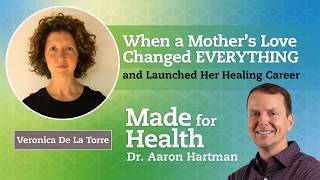
Veronica Porterfield's daughter's eczema and constipation disappeared once a nutritionist found wheat sensitivity. That discovery sent her back to school for functional medicine training, and now she treats complex chronic illnesses like Lyme disease and long COVID by addressing root causes instead of symptoms.
Chapters
Welcome back. Once again, I am super excited to be here with Veronica Porterfield. She is actually joining us here at Richmond Engraving Functional Medicine. Probably by the time this is out there, she'll already be with us. So this is just an opportunity for everybody to get to know her. She's an amazing practitioner, has a great story and so I'm, you know, part of this is going to be learn about her, but also like what you know for other. We have a lot of practitioners who watch our show. Show, like, how do you transition in this kind of medicine? How do you get into it? Like that's, that's a question a lot of people ask and a lot of patients also want to know, like, you know, what makes us tick. Because people who tend to do functional medicine, integrated medicine, tend to be a different breed of people. So after a brief introduction, we'll just hop into it. As always, if this information is useful or helpful, please share, like, subscribe. That's how we get this information out there. And as always, if you have a question about this, you can always post those on social media and we'll answer those as we can do. So with that, we'll hop into it. Twenty years ago, Veronica's life changed forever when a nutritionist solved her infant daughter's health issues through a simple diet change. This revealed a weight wheat sensitivity that conventional medicine had missed. And this is a common story. You hear that we go to the regular medicine, they miss something and we find it and we're like, how is this dismissed? This watershed moment transferred Veronica from a international affairs profession focused on humanitarian work in Latin America into a passionate functional medicine advocate. Her journey has been relentless. She earned a master's in human nutrition, becoming a certified physician assistant, completed her IFM certification, which all of our practitioners here have done, and gaining specialized expertise in treating complex conditions including Lyme disease. And she has an expertise actually in Lyme disease, mcas, hormones, hormone, GI disorders. Now she's here joining us at Richmond Engraving Functional Medicine. She brings her unique blend of conventional and functional medicine wisdom to patients, meeting them exactly where they are, guiding them through a healing with unwavering conviction that everybody has the inherent ability to restore itself with the root causes. And that's one of the things we believe in, that your body was made to self heal and self repair. So with that, Veronica, where welcome to our practice and welcome to the podcast.
Thank you so much for the warm welcome, Dr. Hartman. It's a real pleasure to be here.
Yeah, awesome. So I just want to start, you know, tell us about Your daughter. Because it's, you know, it's interesting. Dr. Jinsky's had that similar story with his daughter. With. He's talked about her celiac diagnosis that was missed, and he kind of, you know, got her in remission. My story with my daughter with cereal palsy and my other daughter and my son. So we all have a. We, you know, know a similar kind of story. Can you tell us about what was going on? Because I think people. It's strange how common things are still overlooked even with all the technology we have today. So could you just, like, walk us through what that was like and what happened?
Oh, absolutely. Yeah. So when Zoe was an infant, she was experiencing very minor symptoms, I guess through like a medical lens. She wasn't acutely ill, but she had kind of chronic constipation and also was developing eczema, which seemed to worsen around the age of six months when we were introducing foods a little bit more with greater variety. And we went to the pediatrician and he recommended that we could do a little bit of hydrocortisone for the eczema and corn syrup for the constipation. And I thought, you know, what if I give this baby corn syrup, she's never going to eat a vegetable in her life. Like, this is just never going to work. So we had friends living in Maryland at the time who had had a life changing experience with a nutritionist, and they recommended that we see one. So we. So we found a nutritionist in our area who had a PhD. And I thought, okay, well, this person knows nutrition, you know, and it was not a super helpful visit. The person recommended that we give her plenty of water and that we do kind of give her plenty of vegetables. And I thought, well, this is not, you know, life changing advice. So we made the trip to Maryland to the nutritionist that our friends were seeing, and she found that Zoe had wheat sensitivity. And we. When we removed wheat from her diet, the constipation, the eczema, both cleared up. And I remember asking the nutritionist at that time, like, you know, you have a different credential. Obviously, she had a master's degree. The other Nutritionist had a PhD. I said, you have a different credential than the other person, but you definitely have a different way of looking at things. Can you tell me, you know, what kind of education or background you have that helps you to see things through this lens? And she was like, it's functional medicine. So I remember writing that down on a piece of paper. The Institute for Functional Medicine on a little piece of paper and putting it in my, you know, my folder. And years later I was like, okay, this is definitely what I want to do and how I want to help people. And I did sort of a 180 from thinking that I was going to do international humanitarian work to thinking that I could maybe help people a little closer to home with health issues of, you know, varying degrees of severity through finding the root cause.
So what kind of testing they do? How, how old was your daughter when they actually did, I think you said six months. And what test did they do on her to find she had the wheat sensitivity?
Yeah, that's a good question. So she was actually six months when everything kind of picked up. And by the time we found that nutrition, she was almost a year. And at the time it was very, you know, it wasn't invasive like blood testing, but it was skin prick testing for her for igg food sensit. And you know, we've learned a lot about IGG food testing since then, and I'm just thankful that we were able to find kind of what we were looking for at that time.
And so, so a PhD, which sounds more educated than a master's down one pathway, didn't think about actually doing a test on a one year old to figure out stuff that's. Unfortunately, that's a pretty common story where people, you know, people know what they know and they don't sometimes don't know what they don't know. And you have to kind of reach out and get a bigger, get some additional help to find out stuff when you, you did that, which is really awesome, at that point in time you're doing international affairs, like, what were you actually doing at that point in time?
That's a really good question too. So I had finished a foreign service degree at Georgetown and was at a point. So we got married. My husband and I got married when I was just 20. I was still in college and he was about to turn 22. So we were quite young. Zoe came a couple of years later. But the way that things worked for was I finished college first while he worked, and then I went to work actually at a tech startup at the time, while he finished college. And I was thinking, okay, what's my next step professionally? Am I going to go for a master's in foreign service, or am I going to go for a master's in economics or, you know, kind of what's my next step? So I was in the midst of kind of thinking that through when this is all occurring for our daughter.
And you went down the pathway and actually ended up studying human nutrition and got a master's, which I think, I think a lot of people don't realize that a nutritionist at actually is a master's level. It's actually like a legit master's degree. Tell us about that whole experience of going down that nutrition, the nutritionist pathway.
I actually studied in a program that was really interesting. So the master's of human nutrition through the University of Bridgeport was a largely virtual program at the time. And it allowed for people who were physicians, who were naturopaths, who were chiropractors, like with all different backgrounds to be studying nutrition. So it was actually quite an eye opening program and an eye opening experience. I realized afterwards that you don't really get certified as a nutritionist in the state of Virginia, but if you're certified or licensed as a nutritionist in another state, Virginia recognizes that. So I got licensed when I was finished. I know it's very strange unless you're a dietitian. So you can be licensed as a dietitian in Virginia, of course, but as a nutritionist, they don't have a particular path. So anyway, I finished my master's and I had to take the dietetics test, so the, you know, kind of comprehensive dietetics test in order to be licensed through the District of Columbia as a nutritionist at the time. And you know, that was, that was kind of the story there.
And then you went on to PA school. Did PA school. When in time wise was that and how. And tell us about that experience because that's obviously you're doing a place where it's like food is first, then you're going someplace where it's like food doesn't do a whole lot. Because when I went to school, that was kind of basically what I was told. So tell us about that because that's almost like enough of itself going from. From two different to two different worlds.
Yeah. So I always knew that I wanted to practice functional medicine. And at the time when I first started studying nutrition, I thought, I'm going to do this with the nutritionist hat on and I'm going to help people through functional nutrition and change people's lives through what they're eating. So I finished that degree in 2006. I got licensed a couple of years later and was practicing as a nutritionist and nutrition coach for about a decade. And by the end of that time I thought, well, you know, this is really powerful. And I feel like my scope is pretty limited as a Nutritionist. So at the age of 40, I went back to school to be a physician assistant. And you kind of intuitively hit on a really good point. I wasn't sure if I would study naturopathic medicine or go back and be a pa. There was some debate about that. My husband thought that I would probably be better suited for naturopathic medicine. But at the end of the day, I really wanted to be able to integrate the best of conventional medicine with the best of functional medicine for the sake of my patients. And in order to, to do that, I felt like I really needed to learn conventional medicine. It was frustrating at times. There wasn't a lot of time to ask why in the courses. And I don't know what it was like for you in medical school if there was time to ask a lot of like, why, why does this happen? Why, what's the kind of reason for the breakdown when there's, you know, an issue with somebody, like, why is that happening? There wasn't a lot of opportunity to. We were just kind of marching through the systems and the issues and the treatments over the course of about two and a half years.
Yeah, the joke in medical school was that we were spoon fed in medical school with a dump truck. So there's really not like time for that because you're just trying to swim, you're trying to make, you're trying not to drown. Basically. I was staying 12 to 14 hours a day, seven days a week. So there's really not. I actually didn't go to class because I didn't have time to actually learn the material. If you sit in class for eight hours, you know, and you have to study 14 hours, that's more hours in the day. So it's, I think at least from my perspective, when I was going through, there wasn't time to like ask those kind of questions. I didn't start asking those questions till I got out and I was working with my daughter and they're like, hey, cut a hole in your stomach, cut this, cut that. And I'm like, whoa, whoa, whoa, whoa, whoa. Like, what do you mean cut stuff? It's just, you know, everybody has a different, different kind of journey. So you went, so you did mention something that's interesting, is that you wanted to marry the, the best of both worlds together. I think that's something people often my perspective is the best. You know, this is just good medicine, this is good care and this is, you know, call it functional medicine, biologic medicine, translational, whatever you want to call it. But it's just good medicine. Applying all the information from different walks of life, from different mindsets across the ages and applying to the person in front of you. I just think this is just the way we all should practice medicine. But we got called something, so we're going to call it functional medicine. And so you finished your school and went into primary care, I believe, and did that for a very short while. Tell us about that.
I had the privilege really of working with a dual board certified physician. He was both an internal medicine specialist as well as a pediatrician. So at the practice we saw people from birth to age 100. I literally had a 100-year-old patient which was pretty great. And I really enjoyed primary care from the perspective of knowing families, knowing people, kind of through the course of their lives, really developing relationships. That physician was great too, from the perspective. I think he really wanted to offer more holistic medicine. At the end of the day, Even, you know, 18 months in, there really wasn't time to. Nobody had kind of the bandwidth to change the scope of the practice really or to kind of incorporate that. So I recognized that probably wasn't going to happen at that practice. But it was really an education in conventional medicine. Even still though there were opportunities to weave in functional medicine and kind of a more root cause approach, if you will.
So this is something people often ask me and so we've done some videos and things about this, but how do you. What advice would you give someone who's working with a conventional practitioner? Pennurs practitioner, medical doctor, do you know, licensed practitioner. And you have 10 minutes, right? I mean literally that's it. But they have someone who's open, they have, they have a good person who wants to help them, but within constraints. What kind of recommendations or insight would you give them if they're working with a conventional provider to help them navigate this? Because you know that's where most people are is they're working with, they have their 10 minute time slot with their provider if they're trying to work through a healthcare issue from a functional perspective. Do you have like, you know, two or three tips you give them how to do that?
That's a really, really good question. So if possible I would definitely schedule an extended office visit with your provider if they're open and they're curious and they know you and they're really well intentioned and they do want to help you get to the bottom of something. So schedule an extended office visit if you can. If the person, you can ask if the person has time or is open to Any research that you found, if you have studies or kind of data that would kind of back up what you're asking or testing that you're interested in. I know before I was a physician assistant and I was working with a provider who I was trying to kind of partner with to help me deal with Hashimoto's and I would ask her to run my thyroid antibodies. She would continuously say, you know, no, I'm not going to run those because it's not going to change our treatment. I'm not going to run that test because it's not going to alter how I care for you. And I think at a certain point, recognizing kind of who you're working with and accepting like this is a person who will partner with me to kind of dig a little deeper, or this is a person who maybe is overwhelmed and doesn't really have the bandwidth to do that and then finding somebody who will. But you know, I think if you give yourself the time, so schedule an extended visit or maybe multiple visits, so you having the willingness to advocate for yourself and knowing what you want and having some kind of reasoning or rationale to back it up that you're willing to share with the provider can be a good step. And then assessing the provider's openness to, like I said, partnering on that front, I think that's really important too.
I think that the reason, those are all amazing points. I think just people realizing you got, they've the average, I think the numbers were the average primary care provider in our country is spending six to eight minutes with the patient. If you get 10 or 12 minutes, that's like a lot of time. So you can only really do two issues. So just keeping that in mind, if, you know, if you've got two issues like thyroid antibodies and thyroid or, you know, gut, you got to keep it down. Because when you go in there with a list of five or six things, you can almost guarantee that their whole entire focus is going to be how can I get out here as fast as possible? Because I've got time for two things and you just gave me a list of five to six, you know, and that's just the nature of the beast. So, which is one of the reasons why we have two hour intakes and all of our follow ups are 45 minutes, 30 to 45 minutes, because people need time. That's, that's a big thing. So you did, you did that for a while, did the primary care thing and tell us about the transition from that to going into integrative functional medicine. Because you're in, I think I love med peds. That was awesome. You know, that's what we do in family practices, you know, from the cradle to the grave. What was the next. Your next, you know, part of your career.
So for me, after 18 months in primary care, especially looking at things through a more lens, it became really challenging to time with people that I hoped for, if that makes sense. So I think even though it doesn't sound like a lot of time in primary care, burnout started to kind of seep in, if you will, at about 18 months, just because I felt like there really wasn't time to ask why. And that became a little bit of a challenge in terms of my day, in terms of my patients, in terms of the kind of care I was able to provide, and in terms of, you know, my ability to kind of keep up with all of the administrative work in addition to the patients, in addition to, you know, all of the, you know, responsibilities of a primary care provider. So since I had already kind of even before starting PA school, I knew I would want it to be a functional medicine practitioner. Eighteen months in, I thought, okay, this is a good, solid foundation in conventional medicine. And now it's time to change course and go into kind of the realm that I always hoped to. And at the time, there was a practice just outside of Philadelphia that was hiring an integrative medicine practice that was really well established, and I got along really well with the other providers there. And even though I didn't have a ton of functional medicine experience, I had functional nutrition experience, there was an orientation to patient care that was very resonant, I think, with the team. So they invited me to join them. And. And that was the next phase of my journey.
And how many years were you at.
That practice for about three years.
Three years. Okay. How many patients were you seeing a day? On a typical average day? How about an average day and a busy day at the. At your primary care practice?
So an average day at the primary care practice, it would have been about 15 patients, and a busy day might have been between 17 and 20.
Okay. And at the integrative practice. Why don't you tell us about that? Because I think, you know, one of the things when people talk about. Talk about integrative, this, that can mean anything, right? Integrative could be, you know, hormone health, it could be gut health. So what kind of things did you see at the integrated practice in Philadelphia?
So initially, it was a lot of gut health. It did kind of lean more towards alternative medicine, just in Terms of.
I.
Would say maybe the bias of the main physician at the practice, she preferred not to use hormones. I think she was a little hesitant to prescribe bioidentical hormones. She wasn't a huge fan of pharmaceuticals either. So she tried to use more herbs and supplements to address and lifestyle to address issues that people were having. I remember very clearly my first week at that practice, and this is kind of where, like, the best of conventional and. And functional medicine come together. So my first week at that practice, I saw a patient who had been a longtime patient of the practice, and she'd been complaining of right upper quadrant pain for some time. And so the thought was, well, she has sibo. We're going to do this test, we're going to do that test. I thought, okay, well, has anybody done a right upper quadrant ultrasound? Like, have we done our due diligence? You know, we can't forget the importance of foundational good medicine like you were describing. So it was kind of interesting. Initially, when I arrived at that practice, I was seen as kind of bringing more. Strangely, I was the more conventional provider there because they were like, oh, she's recommending, you know, ultrasounds and CT scans, and, you know, she's giving people, like, pharmaceuticals when they need them. So that was a little bit interesting. But by the time I finished there, and this was. I started in the fall of 2021, among my very first patients were some long COVID patients. And I started on a path with those patients because of their need of developing a little bit of a niche or a niche in more complex chronic illness and exploring mast cell activation. So by the time I left, I came and I was thought of as the more kind of bringing more conventional medicine into this integrative practice. And by the time I left, I was more of like the complex chronic chronic illness person.
Yeah, it's one of those things you can't, you know, you don't assume everything's a functional bowel issue. You don't want to miss, you know, gallbladder issues. You don't want to miss, you know, gallstones. You don't want to miss stomach ulcers or helicobacter in the stomach. You know, just. There's ultimately good, good medicine's medicine. You know, you might have alternative medicine or functional or holistic, but the foundation is still the same. You're still working with people, and you don't want to miss, you know, the things that, you know, are. Can kill them, basically. You know, I was reading some of Dr. Makary's work. He actually published this thing in the British Medical journal back in 2016. And according to some his research, maybe, you know, medical error is the third most common cause of death in our country, which is like, you know, insane. So it's kind of like, you know, we need, we need to do a good job at the basics and then once we've figured that stuff out, you know, go down those pathways. So one thing, we're actually in a group together. Dr. Afrin has this group mass, it's called the masterminds. Masterminds? Yeah, it's. And it's about 700 practitioners around the world. And it's a really interesting group. I want you to talk about that a little bit because these are like some pretty high level people that are doing some really cool things around the world and you're in that group and pretty much they're all dealing with complicated patients like mast cell dysautonomia, pots, long Covid, chronic lyme. A bunch of things that you know, are kind of our have become yours. And my are meat and butter, meat and potatoes or bread and butter. There you go. There we go. So can you talk about that group a little bit? Because I feel like people need to know that there's things like this out there that provide, you know, providers, doctors, PAs need to be a part of, to have places to go to ask questions, but also to hone our skills.
I think the beauty of that group is even though there are multiple specialties within that group, the masterminds group, there's a recognition by all those providers, people who have been in that group for years and people who are newer to that group, about the role of mast cell activation in a variety of presentations. And you know, when you go to their annual conference, the Masterminds conference, or when you participate in kind of their daily conversations, it's a place of really fertile thought, if you will. You know, where people may ask questions or they may share a success story. People who are new to mast cell activation, who are beginning to implement some things with patients and can kind of say, like, I'm not necessarily an expert, but I'm starting on this path and there's a lot of encouragement. So I mean, on a daily basis there's a wealth of knowledge that's shared. But also, like I said, it's a group that's very supportive for practitioners who are new to the kind of more chronic illness space.
But it's also interesting because you have like academic hematologists, which is Dr. Afman, you have academic Immunologists, academic gastroenterologists. And that's where I also learned out. I think it's the University of Utah. They actually have nature paths and acupuncturists as a part of their healthcare system. Which on the east coast sounds like so bizarre but it's a part of their healthcare system out there. Physical therapists who specialize with hypermobility. It's a really interesting group of. There's a breast, a breast surgeon that specializes in doing explants in Australia that's a part of it. So it's really cool group. I've learned a lot, a lot of really cool things. Particularly even like microdosing GLPs they were talking about in the group before became their age and I don't think still regular conventional physicians or even microdose. Have you heard any conventional, traditional providers talking about microdosing with people at all?
I haven't heard a conventional provider doing it now.
Okay, so. Because that's a thing I've been talking about. But the point of that is people that are doing this, like yourself, like me, we're in groups where with group is other people doing this around the world, constantly learning and it's humbling to realize how little, you know, after all these years, which is something I'm reminded of, I feel like if not daily, at least weekly.
Oh absolutely, absolutely.
So. So you did that. You're up in Philadelphia and then you transition to a, a line practice in Northern Virginia. Tell, tell, tell me about that a little bit. Tell us about that. Because that's one of the things that kind of interested me when I met you because I feel like we have Lyme disease in the water around here and that it's really not, it's not a functional medicine thing. It kind of is. They've got their own group called ilads. It's, it's really this own unique niche that also includes mast cells and a bunch of things. So why don't you talk about that transition, that practice and what it's like to work in a practice that deals with people with chronic Lyme and tick borne illnesses.
Yeah, that's a great question too. So. Well, for a variety of personal reasons I wasn't able to stay in the Philadelphia area. My family, we had thought that we would all move up to Pennsylvania but you know, for a number of reasons my family wasn't able to move up and join me up there. So after a period of time I needed to move back to Virginia and I thought, well, you know, I would really like to Continue to practice some form of root cause medicine and continue to expand my knowledge base. I think one area in Pennsylvania that I felt was lacking for me was tick borne and vector borne infections. So I didn't have a lot of training prior to joining Philadelphia Integrative Medicine. I didn't have a lot of training in that and I didn't have a lot of training while I was there either. There was an approach, like I said, that was a little bit reluctant to incorporate a lot of pharmaceuticals at that practice. So not a lot of antibiotics used, not a lot of kind of conventional treatments. So I thought, well okay, you know, there are herbs that are very helpful in tick borne illness. But I would like to understand kind of the bigger picture of treatment and I had an opportunity to do that with an expert in the field. So the physician that I work, have worked with previously or that was recently working with has published a lot of papers on first of all, you know, the definition of chronic Lyme disease, which is an area of some controversy in medicine, whether that even exists. And you know, he's published papers on treatments in like more herbal approaches that can be combined with antibiotic approaches. So there's a whole level of nuance with infections, whether it's Borrelia, Bartonella or Babesia that I think it's important to at least educate patients on options they have for treatment for testing how maybe an ILADS based approach would differ from what the center for Disease Control might recommend. Really I think that the goal at the end of the day is to help people to feel better and we kind of take a pragmatic approach to doing that.
Yeah, I did this interesting course maybe five or six years ago. It was like a mini course through the University of Denmark on chronic infections. It was actually by a bunch of orthopedic surgeons and infectious disease doctors at Denmark, at their one of the universities. And it was one of those aha moments where all they talked about was biofilms for like half the thing. And these are orthopedic surgeons in another country of course. And it was one of these like, you know, aha moments like huh. And there's a statement, they said every chronic infection is a biofilm issue and that's something sensitive that's played out the Lyme world. It's interesting how, how people with long Covid tend to get biofilm issues which is where these other infections sit that cause cytokines, inflammation related cytokine storm stuff. And the paradigm that people have been talking about chronic infections and biofilms, I Feel like longer has been in the Lyme world. And that's where I think herbs come into play. That's where I think a lot of these immunomodulators, because you get these biofilms. Could you briefly talk about biofilms? I think that's something that a lot of people don't know what they are. They hear the word and they're like, you know, this is interesting, but it's actually a big deal in any chronic infection, particularly tick borne illnesses.
Yeah. So it's a conversation that I recently had with my dad. My dad retired from a long course of practice as a radiologist and was in the last year diagnosed with H. Pylori. And I was explaining to him, so he was like, well, they're recommending, you know, this antibiotic therapy. What do you think I should do? And so we kind of talked it through, but I said, whatever you do, whether you do, you know, traditional antibiotics or whether you do antimicrobials, like more herbal antimicrobials, you have to address the biofilm. And he was like, in all of my years practicing medicine, I've never heard of a biofilm. Never heard about it in medical school, never heard about it at continuing education. Like, I've never ever heard about that. So the way that I explain it or I explained it to him and I explained it to patients is that microbes like to produce like a force field around themselves to prevent, you know, antimicrobials and kind of the immune system and other things from coming into contact with them. It's a product, it's like a protective force field. It can involve fibrin, it can involve mucus, it can involve, you know, any number of cells. But basically it's a way that bacteria can protect themselves. So prevent the immune system from coming into contact with them. Like I said, prevent antibiotics from coming into contact with them. H. Pylori in the stomach are famous for producing biofilm. And it's really interesting. I think for a long time there was a thought that H. Pylori was. That there were strains of H. Pylori that were antibiotic resistant. You know, people would do this, you know, like triple antibiotic therapy for H. Pylori and still six months later, test positive for H. Pylori. And I was like, well, no, it's not necessarily that your H. Pylori is antibiotic resistant. It could be that your H. Pylori is hiding within a biofilm. And unless you break the biofilm up, the antibiotics can't actually come into contact with the bacteria. So yeah, that's kind of my understanding or my explanation of biofilm is kind of like a 101 for patients who are like, why does this matter and why do we care? But the same applies in Lyme and other tick borne illness. There's now testing that you can kind of see if you're producing biofilms. So sometimes if we can't find active Lyme in the bloodstream or active Bartonella in the bloodstream, we can look for biofilms that are the indicator where those bacteria can be hiding. And that can be a clue too, that maybe you do have an active infection that we're not actually, we haven't been able to pinpoint, but it's probably in there somewhere.
Yeah. And so I think that just speaks to the complexity and that's one small sliver of a tick borne illness. And within the mass of that, there's one small thing about biofilms and that plays in with complex patients. There's complexity and simplicity. Right. And you have to understand the big picture stuff, but you also have to know these nuances. And without that, it's hard to get people to heal and get better. So. So now you're coming to join us here in Richmond when we're happy to have you excited. Yeah. What's, what's, so what, what led to that transition? Because, you know, you, your family's been in Virginia, you know, all throughout this time, you actually moved to, traveled up to Philly to work and then now, you know, it looks like you met your family, may be moving to the Richmond area. Tell us about like what's bringing you to Richmond or what's the next phase, I guess, of, you know, of your career, life, et cetera?
Well, I think there are a couple of things that are converging to allow this to happen professionally without divulging too much information about my previous practice. There was a transition happening at my previous practice. The lead physician was retiring and selling the practice. So that was kind of one piece that was kind of inspiring, this move or this transition. But I was looking for functional and integrative medicine home where I felt like I could really plant my roots and grow. So one of the hardest things when I've had to leave a practice, whether I've been there for a year or for three years, is disrupting the relationships that I've developed with patients. So, you know, when you partner with people and you're kind of watching them progress towards better health, it's really hard to leave and just Kind of. Well, at some level, you kind of feel like you're not participating in the rest of their wellness journey and you don't really hear how it ends up. And obviously there are. There's a rapport that's developed. You know, you like your patients and your patients like you. I mean, it kind of boils down to that, and it is hard to go. So I thought, I can't. I don't. I don't want to do this again. I want to go to a practice that is capable both of seeing patients with complex chronic illness, but also in a more primary care capacity, able to see people who maybe aren't as sick, but do still value and see the benefit of root cause medicine. And as I was kind of looking to see, well, where. Where will my next home be? I also wanted to find a place where I could continue to grow, too. People who understood, you know, mast cell activation. And we're already working along those lines with patients and people that I could continue to learn from, but also a team that I could contribute to. So as I was looking, I very happily came across a posting that Richmond Integrative and Functional Medicine had for a physician assistant. I think it was a little bit of a different role than I'll ultimately be transitioning into, but I think through the course of conversations, we did really kind of, kind of nail down the fact that it is a great mutual fit. So I'm really excited.
I think, you know, one of the things is just your openness to try different things. You know, ultimately I just want people to get better. We just want people to get better here. And sometimes that means you do. You hammer the traditional medicine nail as hard as you can, and sometimes you. You don't. And you have to understand those nuances. And it's really interesting. You know, my wife has this phrase, green allopathy.
Yes.
And it's like, you know, well, I only use herbs. Like, you have diabetes. So we use metformin. And you've got a chronic infection. So he's astragalus and you have headaches. Let's use, you know, B6, riboflavin and magnesium. And it's like, like. Well, it's almost similar to conventional medicine. You have your list of things you do for indications, but it's not like, getting to the root. And ultimately you have to be willing to. Able to do kind of all those, which is what we do here. And it's interesting how in the functional integrative medicine world, people still kind of get in their lanes where it's like, I'm not going to do that medication, I'm not going to do that because it's, you know, outside my scope or whatever. And like if someone's in front of you, needs help, you just, you know, I'm a lifelong intern or lifelong resident. You just gotta figure it out because you know where else they're gonna go. You know, I mean it's literally the training that Dr. Jensen and I have maybe 200 people in the country and have the training. There's only 2,000 people that are certified in the country. It's not, you can't, it's kind of hard to find these things. So you really need to be willing. And that was one things that I really liked about you was you had, you came across as you're gonna, you're going to figure it out and that's how you learn. And that's the kind of people we need to help us take care of people. There's people that are just going to keep on fighting and won't give up. And that's kind of what got us here as individuals, which got you there fighting for your daughter. And that's kind of what our practice tries, is trying to do. One of the things I think it's going to be interesting about you coming on board is you were doing functional primary care as well as advanced functional medicine. Could you talk a little bit? And that's something that we've kind of coined here at RFM just to help us kind of wrap our brains around that. You want to talk about that briefly? You know, your understanding, maybe you don't. You're still learning about how we wrap our brains around things. But that's kind of, you know, regular functional medicine versus the advanced or like regular versus the complex. Could you talk about that a little bit?
Yeah. So I actually have had an opportunity to live that I think and you can certainly clarify and correct me as I'm kind of going. But over the last year I've worked part of the week every week at functional medicine, specialty practice that deals with tick borne and vector borne illness. And the other part of the week I've worked at a primary care practice that really does, I think to the extent that I have experienced it in primary care. The main physician here really does try to get to the root cause of an issue to the extent that her training allows her. And I was brought on board to bring some of my functional medicine knowledge to bear on, I would say either some of her kind of trickier primary care cases like you know, she doesn't have a background, for instance, in mast cell activation and she has a host of patients with mast cell activation. So, you know, she's like, can you help me with these people? Or, you know, things like just balancing hormones. She hasn't done a lot of training in hormone replacement and sort of a more functional approach to hormone replacement therapy. So, you know, I think I was brought initially to kind of bring some of that information and that knowledge base to that practice. But what's ended up happening and what I found is as new patients have joined the practice and I've been seeing new patients at that practice, you know, whether it's because this is the way the practice normally works or because they know what kind of provider I am, they will always schedule an hour. And even if it's a person who walks in with like, I have very few concerns or very few items, kind of really getting to the heart of, you know, how their lifestyle is either hindering their progress towards their health goals or is helping their progress to their health goals and kind of partnering together to the extent that they want to have a level of partnership with their primary care physician. And honestly, most people who come to this practice do want a partnership in their health. So it's like the patients understand that we want to know them as people, not just what their diagnoses are and what medications they're taking, but what their life looks like day to day. How much are they sleeping, what are they eating, are they under a lot of stress, are they moving, are they practicing any sort of stress management or resilience practice? What kind of historic health background do they have? All the things that would help us to know them as holistic people that would help us to take care of them even though, you know, they may not have multiple diagnoses or multiple medications. I think all of those things are really important in understanding the individual before you and being able to help them to be as healthy as they can be.
You said something that's kind of, kind of triggered a thought in my head. There's a saying. You may remember who said this. I don't remember the author. There was a very well known physician in the last century. But the quote was, it's not that we need to know the type of disease a person has, as it is the person who has the disease. I feel like that's something that we've, we've missed. Like we focus on what's the disease you have and we don't.
More from Aaron

Too Many Gut Fixes Can Undo Your Healing. What Helps It Last | Dr. Sabine Hazan


Women’s Heart Attack Symptoms Differ From Men’s 95% of the Time — Only 30% Have Chest Pain #shorts

Heart Disease Kills More Women Than All Cancers Combined — 80% of Cardiac Research Is on Men #shorts

Women’s Physiology Was Systematically Ignored in Drug Research — The Consequences Are Still #shorts



It Took the FDA 20 Years to Realize Women Need Half the Dose of Ambien #shorts

Until 1993, Women Were Banned From Clinical Drug Trials — Then Those Drugs Were Prescribed t #shorts