Why We’ve Been Wrong About Fat, Cholesterol, and Real Food for 100 Years
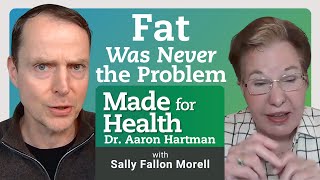
Sally Fallon of the Weston A. Price Foundation argues that saturated fat and cholesterol aren't the villains we've been told. She points to industrial seed oils, pesticides, and pasteurization as real culprits in modern disease, and advocates for raw milk, butter, and traditional foods rich in fat-soluble vitamins.
Chapters
Welcome back once again, everybody. I am super excited to be here with Sally Fallon. I've been reading her stuff for years. When we first got our kids and we're trying to figure out how to do real food, her Nourishing traditions was actually one of the places I got one of my mayonnaise recipes from. So super excited to have her here. Talk about all things real food, Weston A. Price, and who knows what we'll talk about. That's always fun to see what comes up in the conversation. So many of you all probably do not know her or not familiar with her. So I'm going to do her introduction, let her tell you about herself, and then we'll kind of dive into the conversation. I'm going to put my glasses on here. Perfect. Awesome. Sally Fallon is a founding member of the Weston A. Price foundation, which is a non profit nutrition education foundation dedicated to returning nutrient dense food to American tables. She's also editor of the foundation's quarterly journal, Wives Traditions. She's also the founder of a campaign for real milk. We should talk about milk. What is real milk? Which has its goal, universal access, clean raw milk and pasture fed animals. She's author of many, many books including Nourishing Traditions, Nursing Traditions, Book of Baby and Childcare, Nourishing Facts, Nourishing diets. Her latest book is the Contagion Myth. Maybe we should talk about this as well. Co authored by with Dr. Callum. She's the owner of a Pa Bourne farmstead in southern Maryland where she produces raw cheese, raw milk, pastures cows, pastor meat, and a whole host of things. So, Sally, welcome to our podcast. I'm so glad you could spend some time with us today.
Thank you. Thank you.
So we, you know, you know, I talk a lot about blind spots, things in our healthcare system that we used to think were right and now we know we're wrong. And I've mentioned things, you know, this past year the FDA changed their feeling on bioidentical hormones and literally this past week we have changed our food guidelines. Could you talk about that a little bit? Because it's, you know, some people are raising their heads what, you know, fat's healthy meat. You know, even in our world, some people are talking about you. The whole meat thing is red meat, actually. Okay, could you kind of tell us a little bit about like, how do we get to where we are, like the food guideline and why is this monumental thing just the natural expression of what people like yourself have been talking about for decades?
Well, the food guidelines up until just now were I would Call them genocidal. They lead to infertility. Low fat, very high carb, high fiber, low salt, impossible to stay on. I call it the puritanical diet. And people try to be puritans and they can't tolerate it any long, and it shoves them right into the arms of the pornographic foods. So all of the junk foods. So the new guidelines are very welcome. They recognize the role of meats, including red meat. Red meat is the most nutritious type of meat. And butter, we wish the butter had been a little bit higher up on that pyramid, but butter is nature's perfect fat and we should all be eating butter. Whole milk, they recognize that had cheese right up there. I'm not sure about the big flour broccoli, but it's really a huge improvement and hopefully people can get over there. You know, people still think butter is bad after all the research that's come out about the healthy components of butter. But there's a big but here. They have kept the 10% limit on saturated fat and this is its calories, so you can't eat much fat and before bypassing that limit. And this means that school lunches are not going to change because they can't do it without violating this. The kind of the first commandment of the diet dictocrats, which is only 10% of calories, that saturated fat. And people have been led to believe that saturated fats are dangerous, that they cause heart disease, that they clog your arteries. Right? And they don't clog your arteries. And you know why? Because we are not room temperature. We're at 98.6 degrees. That's a pretty hot day, you know, and saturated fats are very fluid at that temperature. And they give stability to our cell membranes and play many, many other roles in the body chemistry. We have to have saturated fats, and if we don't eat them, then the body has a way of making them out of carbohydrates. And people who are avoiding saturated fats tend to crave carbohydrates, especially simple carbohydrates like sugar and white flour. So it's just so important to, you know, get our facts right, as we say, and get back to the real foods that nourish people. For thousands and thousands of years, you know, up until 1900, even maybe 1950, Americans ate 19 pounds of butter per year. And now it's only four or five. As butter consumption has gone down, heart disease, cancer, and all these other ailments have have risen. So it doesn't take a PhD in statistics to realize that the butter and also saturated fats are not causing these illnesses. Quite the contrary. So I'll stop there.
I think, you know, when you said, you said a phrase or word that just kind of like, caught me off guard. And it was pornographic food. And I had this innate internal, like, pushback against that, like, pornographic food. And then my brain went down. Dopamine Nation, Dr. Lempkey's book, and all these other dopamine addiction behavior. And we know that, you know, besides pornography and video games and drugs, like food cravings. And so even though my initial, like, emotional response to that word was like, whoa, is this going to turn people off? I'm like, I mean, you're just saying what the data says. I'm using a word that's a little.
Well, it's fluffy, colorful, addictive food. And as you say, the addictions, whether it's sugar, caffeine, chocolate, or cigarettes or alcohol, raises dopamine levels. That's why it's addictive. But guess what? Saturated fats raise those dopamine levels. And the best way to get off these addictions is to eat plenty of saturated fat. And there's studies that show this one. Once they addicted rats to sugar, sugar water, and then they fed them a DIET that was 40% lard, and the rats didn't want the sugar water anymore. And researchers were really disappointed. They said, oh, the rats don't want this wonderful sugar water because they're on what they call the chronic high fat diet. But, you know, we cooked in lard, we ate butter, fried things were in tallow because tallow is the most stable fat if you want fried foods. And french fries were done in tallow up until 1984. And then they changed because they use this cholesterol, saturated fat dogma, but they really changed because the vegetable oils were cheaper and something.
You're using different words for fats and things. And one thing I've talked a lot in the past is this concept of lipid medicine or lipid therapy, where we use certain kinds of fats, certain ratios to heal brains. And one of the things I've found, particularly with my autistic kids, that I've seen my clinic, all of them to date have had low cholesterol numbers. Yep.
That is interesting. Very interesting.
And you ask yourself, where, where do they get their fat from at birth? And it's usually from mom and then breast milk. And it just makes you wonder, like, that's just a weird data point to hats.
It is. I, I'm very interested in that. Well, we've talked a lot about cholesterol. Cholesterol is vital to our health. And this, what the studies have actually shown is that there's no increase in heart disease at any level of cholesterol up to about 300, 300. And for women at any age and for men over the age of 60, that's a lot of people. The higher your cholesterol, the longer you live. And low cholesterol is a marker for cancer. It is a risk factor for cancer and looks like it is a risk factor for autism as well. Brain just can't function without cholesterol.
It's what, what is it, 80% fat? Like the number?
Yeah, yeah. And it's mostly. It's more saturated than any other organ in the body.
And the other thing to think about as well is like the cholesterol, the half life of cholesterol on the brain is like on the order of magnitude, like 20 years versus the cholesterol in your blood is maybe 7 to 7 to 28 days pretending. So, so if you have.
I didn't know that.
Yeah, I learned that from actually some lipid specialists. And the thing about it though is if you have a low cholesterol diet, low this it takes, it will catch up with your brain just as it will catch up with your brain. What's gonna lag? So your cholesterol might come down, your, your heart disease might get quote unquote better, but your brain will pay a decade or two.
Right. Well, and, and you know what is the most, one of the most serious health problems we have today? It's Alzheimer's. And Alzheimer's is a side effect of cholesterol lowering measures like statin drugs. It's a definite side effect. There's no question about that.
Now you mentioned. Oh yeah. The one thing you mentioned as well that's. I never heard that number 300 being the optimal car cholesterol number. There's one.
Well, it's not necessarily optimal. The average is about 250 and they've made the. So you would think that at least you wouldn't try lowering it when you were the average. But they do.
Well, there's one interesting Japanese study looking at, you know, Japanese populations, 80,000 individuals and they showed the lowest all cause mortality, which is the risk for dying. Of all it was a meniscus. So we went. If you got below this, the risk of dying went up. If you went above it, the risk. And for this, this population was 220 to, to, to 250. So it was still like way above what we're telling people right now.
Yeah, I've heard 180, your risk of dying goes up. But that's very interesting, about 220 to 250. I'd like to see that study. Please send it to me.
I mean, there's. I think the point is that we have been wrong for over half a century.
For a century, really? This. Yeah, well, it started in 1913, actually, when the book the Story of Crisco was published. And they said in this book that if you. It was aimed at the housewife. It was a cookbook. And if you use Crisco instead of lard, you were. Or butter, you were more modern, your houses smelled better, the houses were cleaner, and your children would grow up with better character. If you use Crisco instead of lard, you know, all the hot buttons of the, you know, aspiring American housewife. And this thing about bitter character. If you want your kids not to ever be interested in sex, just don't give them animal fats because they need them for.
To make hormones maybe, when. That's what they meant about the better character thing. That's interesting. You know, it's really interesting. You know, heart disease. You know, in 1900, the most common cause of heart disease were infections. Typhoid.
Yes. Typhus. Yeah.
You get. You get aneurysms, you get strep throat and get strep rheumatic heart disease. And by the 1950s, infections have been wiped out. But yet heart disease was going up, soaring.
Yes.
What do, what do you.
What would you.
I have my own theories about that. But it's interesting because Crisco got introduced like in that stage, like 1908, 1909. Time frame.
1913. Yes. The first recorded myocardial infarction in the American medical literature was 1921. Interesting. It's a few years after Crisco came out, really. And by 1950, I believe it was about 50,000 a year, 500,000 a year. So half a million heart attacks per year, and Today it's about 6, 650,000 heart attacks per year. So none of this has helped, you know, all the statins and the low fat diets, and none of this is.
So 1921 was. And we've known it hard to tax. We've been about these. We've been doing autopsies. I mean, Michelangelo is doing autopsies. We've been doing this for hundreds of years. But I did not know that data point that 1921, in the American literature was the first. That was the first one that's, that's striking. We had heart disease, infection related anabox came on board. You know, the world War, I think.
It was actually a little bit earlier in Europe, but Europe had a tradition of using sunflower oil that we didn't have. And the first oils that we use, you see, you couldn't get oils out of a non oily seed. The sunflower is an oily seed. But you couldn't get, you couldn't get oil out of corn, canola, cottonseed, et cetera, unless you had a stainless steel roller press. And that's what was invented in 1890. And so the first vegetable oils were cottonseed oil because we had so much cottonseed in the south and that was used to adulterate olive oil that was shipped to Europe. But then they made Crisco out of it. Crisco means crystallized cottonseed oil. And that was the partial hydrogenation. That was a process developed to make these vegetable oils hard so they could be used in candles. And then electricity came along and there was no more need for candles. And so what did they do? Well, just feed it to people.
You mentioned red meat and this. I was actually interviewing an engineer who now runs a thing called Nourish Food Club. Farmer Ash. She's really interesting, super smart young lady. And she had, she said this statement and I want you to unravel it because you mentioned red meat. Her statement was that red meat is actually the B vitamin source of the natural world, that it's like one of the richest sources of B vitamins. And you mentioned that would be one of the top nutritional sources. Could you help us understand that? Because I feel like this is gonna be a sticking point for a lot of people with the health recommendation changes that happened in the last week.
Well, surprisingly, the highest source of B vitamins is pork. Is pork, meat, ham, salami, all those things. And the salami and ham are actually great foods, great foods for kids because they're full of fat, they stabilize the blood sugar, and they're great sources of B vitamins. I don't know about beef so much. What we get from beef is zinc. It is the highest source of zinc. It's even higher than liver. And we need zinc. We need zinc for our brains, we need zinc for fertility, we need zinc for hundreds of enzymes in our body.
So raw milk. I still have conversations with my family about that to this day. When we adopted our kids, our third child, he had horrible eczema and asthma. And my wife Ended up making formula from him and ended up using raw milk as the base for the formula. And his eczema and asthma. His eczema went away in like about six months. His asthma was mostly gone within a year. Can you like, let's break down raw milk because in my way it's controversial, quote unquote, but yet it's not. Could you talk to us a little bit about like, how did we get into the conundrum of saying raw milk is going to kill us all from bovine tuberculosis or whatever, food poisoning, using ultra pasteurized milk that, you know, people what an oral. Don't mix unless it's, it's homogenized. Right. So could you kind of walk us through that a little bit? Because I feel like people still sticking.
First, let me tell you a story. My, one of my grandsons was really getting a lot of asthma and it turns out he was in public school and he was drinking the milk that they gave him, which is ultra pasteurized, no low fat. And I said to my son, you, you go out and find him some raw milk. Which we did. And we said to him, don't drink the school milk. It gives you asthma. When you come home, we'll give you raw milk. And at four years old he said, sally, do you know that I don't have asthma when I drink raw milk? So what a lesson to learn at that age. And there are studies, really good studies out of Europe showing that raw milk protects against asthma, respiratory disease, allergies, skin problems, just like you saw with your child. It's a real, it's nature's perfect food. I mean, it is the food in nature for all mammals and it's always raw. And the proteins in milk are different from proteins in other foods. They're very fragile, three dimensional objects that have very precise electrical charges on each section of that little ribbon that makes the protein. And they're very sensitive to heat. And when you heat them, they warp and distort. And the body says, I don't know what this protein is and has to mount an immune response. And one thing they never tell you is that there's 20 to 30 deaths. This isn't illness, this is deaths per year from anaphylactic shock to pasteurized milk. It's a very dangerous food. So why do we think the raw milk is dangerous? Well, this is because of a century of intense propaganda from the milk industry. The price they're giving the farmers today is the same price these farmers got in World War II, about $1.50 a gallon, so I've heard as low as 65 cents a gallon. And when the farmer sells raw milk, he gets anywhere from 5 to $25 a gallon. And they don't want to have to compete with this price. They want to keep the prices as low as possible for the farmer. So they make lots of money. And believe me, the heads of these companies make salaries in the seven figures. So I heard $3 million for one of them per year. And they can't get those big salaries if they pay the farmers a fair price. So it's all economics. But it's easy to make people afraid because we're still wedded to the germ theory of disease. And what you're not being told is that there are antimicrobial components in raw milk that kill pathogens. I mean, think of a, a calf born in the muck and nobody cleans the mother's teeth for that calf and they don't get sick. And that's because of these antimicrobial components. Now, I produce raw milk at my farm and we are extremely clean. And it can be done. You can get milk that's cleaner than pasteurized milk, and we routinely do that.
Now, do you know what the temperature is? Because this is a question. What's the temperature at which you get that conformational change where the protein structure changes? Because you typically, when you get yogurt, you're heating yogurt up.
Oh, yeah, yeah. It's 113 degrees when the enzymes start to be killed. And enzymes are proteins. The pasteurization. All milk is ultra pasteurized today, and that's 284 degrees that it is very, very hot. And the reason they do it so hot is because they found that pasteurization, which was about 160 degrees, didn't work very well. There was a, the biggest outbreak of foodborne illness in the history of the world was in 1985 from a pasteurizing plant in the Midwest. And hundreds of thousands of people got sick. So don't tell me that pasteurized milk is safe.
So they got sick because they were pasteurizing it, not ultra pasteurizing it.
And so the st. Well, there were still germs there. For some reason the people got sick. And the industry, as I say, instead of going cleaner, they went hotter. Okay, this, this was the advent of these huge confinement dairies where the cows are standing in manure all day long. And of course, we would never recommend raw milk from one of these dairies.
Yeah, where I get my raw milk from, they Check the smack cell count. It's absolutely. In Virginia, you may have heard of them. And they check the smack cell count. If a cow gets sick, they take it out of the line. The cow, they take it out and then when it comes, gets healthy, they come back in the line. It's funny.
Yeah. Yeah. And we, we every, every batch, we test for coliform, usually at zero. And if it goes up one or two, then we, I say, hey, you guys haven't cleaned something. It's a way for me to check up on people.
So what I'm hearing.
But it's what you keep the milk really clean.
What I'm hearing is if you're doing raw milk, and this is what I tell people a lot, if you're doing raw milk, you have to make sure you're getting from a place that's really strict about cleanliness.
And it's pasture feeding and not giving them a lot of grain because that'll make the milk very acidic. And those components may not work anymore. The antimicrobial component.
Now going back, because I want to. Because I make yogurt at home. So I want, I want to this answer for you because I'm a little curious about this personally, because with the temperature thing, because the recipe I use tells me to heat my milk up to about 165, cool it down and put the cultures in. Should I be concerned? That obviously breaks enzymes down and it kills some bacteria. The concern with the allergenicity, the chance.
Of milk causing it kills all the bacteria, and that's what they want. So there's no competition with the other strain. But I think you start out with really fresh milk. You don't need to heat it that hot. I would heat it to110.110, but you're not going to get the thick custard like yogurt. See, yogurt in most cultures is a drink. I lived in Iran in 1965 and we drank the yogurt. It was a beverage.
Oh, interesting.
Excuse me. Excuse me.
So that's, that's a, that's a new thing for me. So the actual worldwide, which is important. Yogurt typically is a drink, but here in America, we just heat it up more to make it thicker. So it's more of like a cereal type.
Mustard. Yeah. Bo.
So fats. Let's talk about fats. Because all of a sudden now fat is back. Fat is fat's back, back. And it's interesting because you know what? I wrote a book about my daughter and her health journey and stuff. And we actually used Healthy fast to actually help heal, heal her brain. I use it with patients as well. And I was, it's a sticking point because people are so used to hearing, well fat's bad, cholesterol's bad, mega threes, omega 6s, et cetera. Walk us through a little, take a little deeper, dive into the fat thing because I've been using it in my world for patients with chronic fatigue, fibro mold related illness.
And so what kind of fats do you give them? Butter?
Well, I recommend being, you know, eating healthy fats but you know, on the, on the supplement sides we're using phosphatidylcholine, phospholipids. We're using a balance omega 3, 6 that's a 4 to 1 ratio. Not expella pressed, cold pressed, so it's not heated, which is, you know, there's only one source to have for that. Um, and then we do blood testing on the people to look at their actual fatty acid levels. And it's amazing how many people like you'll measure and have zero alpha L acid, which is the essential omega 3. They have like nothing in their blood. So it's amazing how many people will like not have, either not have measurable amounts or they have like high trans fats or something. So, and you try to kind of balance it to the person. But walk us through that a little bit because I feel like that's going to take a lot of education with Americans. We're going to need to hear this over and over again that healthy fats, essential fats are essential. Right?
Yeah, that. And, and well, well yeah, I've, I've, I've written about this in Nourishing Traditions and I also have a book called Nourishing Fats where I go into even more detail. But there's basically four basic types of fat molecules. One is the saturated fat and that's a straight molecule. And they, they stick together easily. They make a kind of crystalline structure. And that's what the number one fat we need in our bodies because that keeps our cell membrane stable. And if we didn't have plenty of saturated fat, we wouldn't exist. We really wouldn't exist. And you're talking about omega 6 and omega 3. The, especially the omega 3 saturated fats conserve the omega 3 and they conserve them in the tissues where they're supposed to be. So you can do a lot of Omega 3, but if you're not getting the saturated fats they might go to waste. So number one is Saturated fat number two is the monounsaturated fat which is missing some hydrogens and it's a little bit softer, it kind of bends a little. And we have about 45% monounsaturated fats in our body, 50% saturated. And then you've got your two essential fatty acids, omega 3, omega 6 and omega 3. And you're right, the omega 3 is really important. It's also really, really fragile and you need to get it from your food, inside the food. Once it's pressed out into an oil, it will oxidize and break down and not do you much good. So what foods have the good omega 3 fatty acids? Well, egg yolks are one, especially from grass fed animals. The butter has a little bit, let's see, egg yolks are the best. Liver is another source. Organ meat. We don't eat blood in this country, but in Europe they eat blood sausage, blood pudding and very nutritious food. I wish we had it here. And that's got a lot of omega or a little. You don't want a lot, you just want a little Omega 3.
Now the seed oil thing is, is been popularized in the last year. Seed oils, you know, you know we need omega threes and, and, and flaxseed chia seeds are sources of omega 3s. You know, fish are sort, you know, right.
You can, you can use flax seed and it's gotta be truly cold pressed and kept cold.
But, but my thing about is, could you talk to. Because like seed oils are bad. So people are literally like running away from flax and chia and C like and avoiding sources of plant because the, the ala source for omega 3 you only get from a plant. You don't get that from any animal sources.
Oh yeah, oh yeah, it's in, yeah, it's in egg yolks, it's in the liver. But anyway, so yes, you need to press them very carefully and cold press and so forth and, but yes, but what you really need is the elongated ala, which is the dha and that comes from animal foods.
Yeah, fish is a source for that.
But yes. And fish. Well, cod liver oil is a great source and we're big proponents of cod liver oil. I take it every day and, but it needs to be unheated because the DHA is very fragile. And we have three brands of unheated cod liver oil that we recommend. And of course cod liver oil provides A and D in a very nice balance.
Yeah.
Then there's another fat that's an omega 6 fatty acid, that's called arachidonic acid. And that's a very important fat for the brain, for digestion. It helps your body, makes, you know, you, you have a marijuana factory in your body and receptors for this called, they're called endocannabinoids. And you make those out of arachidonic acid. So the best source of arachidonic acid is butter and other animal fats. And when you eat plenty of butter, you feel good. You don't need to go anywhere else to have that endocannabinoid rush in the brain.
Yeah, we actually have raw butter that's, that's been frozen. It's spring butter. So it's the really yellow stuff, nutrient dense. Could you talk to us about that? Because that's something that actually the west, you know, think human gen was Weston A. Price's book. Human diet, Human degeneration.
Yeah, nutrition and physical degeneration.
And he talks about high, high vitamin butter in there.
Butter oil. Yes, yes. And, and you can buy that actually. Um, but it was a source of vitamin K, a really good source of vitamin K. So at the Weston A. Price foundation, this is our number one emphasis, these fat soluble vitamins, because Dr. Price found that they were 10 times higher in the traditional diet, the primitive diet as he called it, compared to the modern diet of his day. And it would be an even greater dis. Discrepancy today. So these three vitamins are vitamin A and vitamin D and we need to get those together. If we take vitamin D without vitamin A, we actually deplete vitamin A. We're very concerned about people taking vitamin D supplements and then the vitamin K. So there's not many sources of vitamin K. Butter is one. And egg yolks, all from pastured animals. Poultry fat and poultry liver are really good sources. We did some testing. The highest source was goose fat.
Goose.
And Americans don't do goose. We, they do them in Europe. They use a lot of goose fat in Europe, especially in Scandinavia. It's maybe why they're such a handsome people, because they use a lot of goose fat. And so these fats are very rich in vitamin K and the butter oil which is made from butter and concentrates the vitamin K. And this is what tells our calcium and phosphorus where to go. It puts the calcium and phosphorus in the bones and teeth and makes them strong and keeps it out of the soft tissues like the arteries. And this was discovered in Holland by some researchers and they said, well, the problem with that is if we eat vitamin K foods rich in vitamin K Like cheese and butter and egg yolks will get heart disease. And yet they show that the vitamin K protected against heart disease.
Yeah, it's, it's really interesting how doses of vitamin K over 700 micrograms have been shown to actually help minimize. Actually if you have an elevated coronary artery calcium score, you can actually get that to go down. And so it.
Yes. It clears out your arteries.
It does, yeah. It's a super powerful.
And it's very important for the brain.
Yes.
Also important for reproduction. It's. It's important for everything. And we need to eat more of these fats, at least eat the skin on the chicken.
And unfortunately, when you heat a lot of butter, these natural force of these, you actually destroy or oxidize some of these fat, solid vitamins. So getting it from a real source I think is an important thing. What would be your thoughts about the idea?
Well, I would say that these fats typically are rendered like the goose fat and so forth. I think they're somewhat stable. But, um, you know, most of these fats should be eaten like unpasteurized, as you say.
Okay. So we talked about the food pyramid being turned upside down. We talked about fat milk, a bunch of different topics. What would you think, you know, one of your most recent book, the Cadagian Myth and the Germ Theory, which I'm kind of curious to hear some of your thoughts about that. Yeah, you know, it's the feel, you know, the. Does you know, Louis Pasteur, you know, the, the germ theory. And then during the same time, I forget the name of the gentleman who said the field.
Yeah. Bo. Bo or something.
He had the exact opposite theory.
Pasture.
On Pasteur's deathbed, supposedly he said, the germ is nothing. The field is everything. You have missed that quote.
I, I never could find a reference for that, by the way. A primary reference. It's just. He may have said it.
Thank you.
Okay, so we start with contagion studies. And during the Spanish flu, where so many people got sick and hundreds of thousands died, the US government did a contagion study and they took sick people and well people, and they had the sick people breathe on the well people. They had them spit on the well people. They puffed sick people's, you know, sp. Spit them down the. Into the lungs. They put the blood of sick people into the blood of well people. They never, they didn't have one time when they could make a well person sick by exposure to someone who had the Spanish flu. And then later there were a whole Bunch of contagion studies on cold and flu done in England. And again, it was. They could not prove that contact spread the disease. The other thing that we looked at was the, this so called virus, okay? And they do these electron micron, electron photographs, microscope photographs, and they see these little round things. But they are most likely artifacts of how they prepare the slides because the culture is actually kind of metallicized. You're actually looking at silver when you look at the viruses, so called viruses. And then they could never show, they could never isolate these viruses. They could never show that they made anybody sick. So we're the virus deniers. We're the famous virus deniers, Tom and I and quite a few others. And so then it comes to, well, what makes us sick and what caused the Spanish flu and what causes Covid. And it's three things. It's nutrient deficiencies, it's toxins, and it's injury. And injury includes emotional injury because we know that that predisposes to certain diseases. Well, in the case of the Spanish flu and the COVID we argue that it was electromagnetic toxicity. We go back to the first early railroads where they had the wires for telegraphs. Telegraph wires. That was our first exposure to non native electromagnetic fields. And there was a disease called telegraph disease. A lot of people got sick, they got chronic fatigue. And they actually sent out investigators to find out why so many telegraph operators got heart disease as this. And then came the Spanish flu that coincided with the installation of radio towers all over the world, 1918, but especially in military bases. And then there were several other bouts of really bad flu over the years. And they all corresponded with the introduction of some new technology like radar, whatever, and then Covid. So the outbreak of, first outbreak of COVID was in Wuhan, China. And it was, it happened right after the introduction of 5G. 10,000 base stations were turned on at the same time in Wuhan. It was the first city and people, it was like they were lying on the sidewalk twitching, you know, it was, that's not caused by a virus, believe me. And then the disease moved to Europe where they rolled out 5G in Italy, Spain, San Marino, France, and then it came to America where it was rolled out in the major cities. And now it's everywhere. There was a big outbreak in a nursing home in Washington state, which was just down the road from a company that was developing 5G for interior settings. So the suspicion is that they were the nursing home that got it first. Don't believe me, go to our website. And there is a very Interesting article called Questioning Covid. And it was written by a doctor in Italy who saw Covid come when they put Wi fi in the nursing home. And she talked about how different it was from any other type of flu. The lungs behaved differently and who was most susceptible and so forth.
That's interesting. Yeah, it's yum. So the idea of injury, toxins and nutrients, it's kind of interesting. I finished reading up, reading a book called Guns, Germs and Steel, and it was kind of tracking history of war, et cetera. It's interesting how war, malnutrition, particularly with big armies and war, like how that. How many epidemics, pandemics historically, actually revolve around war. And people forget that when you're in war, basically you don't eat. Even soldiers get malnourished.
Well, the Civil War is a perfect example. We had as many deaths from diseases, from guns. One of the things that happens is war is tb. And I talk about TB in quite a bit of detail. The Crimean War was when they first really had this huge problem with tb and it was in trenches. I argue that TB is the same as a disease called siderosis, which is iron poisoning in the lungs. It's called welder's disease. And the symptoms are identical and the X rays look identical. And in the Crimean War, everything was iron, iron bullets, iron grenades, iron cannonballs, and iron cookware. And they were in trenches. So it's a very heavy kind of pollution that just lingered in the trenches. And people would come to fight in this war who were perfectly healthy, and then all of a sudden they had TB. And, you know, TB is still our biggest killer. It's 3,000 deaths a year in the United States. Not in the United States, in the world. And a lot of people are still using cast iron in hovels, still burning coal, which has a very high iron smoke. And. Yeah, so that's. That's the theory I proposed in the contagion myth.
Yeah, it's really interesting. One of the things that Weston A. Price talks about in his book is the whole thing with vitamin D, the nutrition related to tuberculosis, and how you go to places where people are eating traditional foods and you didn't see tuberculosis, basically, and then talk about that. Can you talk about that a little? Because some of the.
That's very interesting because, you know, a lot of these places he went that had been modernized, they would have these wood burning stoves with iron pipes. We had that in our house on the farm when we bought this. There was a cast iron stove in the Front hall and these iron pipes that took the heat up to the second and third floor. And they give off iron fumes. And same with radiators. They give off iron fumes. So until we got stainless steel, we were exposed to quite a bit of iron in what we breathed. But Dr. Price also thought that just as you got a malformation of the face when. And narrow jaws and crooked teeth when they went to the processed food, you also got a narrowing of the lungs. And he felt that this had to do with an injury to the lungs as well as whatever exposures that you have.
So we can debate the kind of toxin, but I think we can agree that toxins are.
And there's plenty of toxins in our world. I'm. One of the worst toxins is glyphosate. It's a very slow, insidious toxin. It. The glyphosate substitutes for glycine in the body, and that's why it's. Well, I argue that Lyme disease is glyphosate poisoning, and that number one symptom is degeneration of the joints and tendons and. Yeah. Pain in the joints and tendons. Yeah. And that's exactly what happens with exposure to glyphosate.
Well, that could all. You know, the question always is, why are we seeing more Lyme disease? Why is it more aggressive? Because it's been around since at least 5,000 B.C. you know. Yeah, we heard this. There's this. This frozen person that was found in the mountains of Switzerland.
Oh, yeah.
They had, like, the DNA for Borrelia in their system, but.
Well, that's assuming that the. Just the corollary on the contagion myth. We're not against viruses. I mean. I mean, bacteria. We can see bacteria. But we argue that they are not the cause of anything. They are the scavengers after the tissues begin to break down. But, you know, Lyme came in, and it was 1985, there was an outbreak of juvenile arthritis in the town of Lyme and a few other towns. And glyphosate was introduced for public use in 1984. So the real question is, were they spraying glyphosate on the playgrounds?
Interesting.
And I've heard of people get really sick if they lie on grass that's been sprayed with glyphosate. The dogs won't go on it. You know, if it's been sprayed, they.
Won'T go on it.
Well, they know.
But it makes me think back a little bit to, like, the cases of Lymphoma and kids and soccer players and you go back, you realize that if you play on AstroTurf because they are incre and the goalkeepers have a higher incidence than the other players and they're the one.
Oh, that's interesting.
They're ones that are more diving and getting more arsenic exposure. And it's like how many playgrounds, kids, playgrounds now are like that rubberized stuff? You know the answer is like a lot. There's lots of arsenic in tire.
Oh, there's arsenic in the AstroTurf.
Yeah, it. Yes, as well. Like that rubberized stuff.
Yeah.
So it's. It. My point is that. Yeah, there's.
Oh, I didn't know.
What's interesting, you know, if you do a urine whole body toxin test on someone based on NHANES data, currently the average American has 13 different toxins, including mycotoxins, including glyphosate and forever chemicals. You know, 10 years ago was 7 to 8 and 20 years ago it was 2 to 3. So just from standard NHANES national data we see a significant increase. And, and it's unlimited.
And is, is arsenic one of them?
Arsenic is one of the things they test for in the urine. Correct. It's heavy metals including mycotoxins, forever chemicals. Glyphosate's one of the other things. And the my point is that over 20 years we've seen this accumulation of stuff in our body of things we can measure, which is like maybe a hundred things. There's over 80,000 of these chemicals in the environment. So when you start talking about toxins, I think the, the devil's in the details. Cuz I might focus on, you know, petroleum based products and I might focus on pesticides and you might focus on electromagnetic smog and someone else focuses on iron and it's like pick your poison. Right. And so much stuff that I think we fight, I think we fight in our world. We fight over which toxin it is instead of saying there's just a bunch of it kind of sort of everywhere, you know and.
Well, there's something I realized recently. The, the biggest protection we have against toxin is bile because bile sequesters the toxins that we've eaten and takes them out of the body. And you don't produce bile unless you're eating fat. So for me the best way to detoxify is to, or to maybe not the toxins that have accumulated in the body, but to get rid of the ones that you're being exposed to in real time is to eat a high fat Diet, and they will be captured by the bile and taken out of the body.
Yeah. In my clinic with people with chronic inflammatory response syndrome, which is mold illness, we'll use PC. We'll use, actually, tudka, which is a purified version of bile. Obviously, a diet's a big part, but we use this to help people detoxify. And there's great literature on it. Obviously, you want your diet or just.
Taking a bile tablet sometimes can help immensely if people are having digestive problems.
But it's funny how the fancy lipid stuff is actually, if you go back, it's rooted in just eating the stuff. Right. So if we ate it, if we ate it, if we ate it, would we get as sick as we, you know, are getting and then need to use fancy concentrated supplements to get better? Right.
Yeah, yeah. Well, you know, everything has its place. But, yeah, we neglect the. The important role of bile in digestion. The other thing is hydrochloric acid, because your stomach is supposed to be acid to activate the protein to digest fat. Otherwise those fats just rot. And people taking antacids and not eating enough salt are going to have low stomach acid. And that's. That's the beginning of a lot of problems. Jonathan Wright, you know who he is, he's a holistic practitioner in Washington state. He. He says even headaches can come from having low acid in the stomach.
Yeah, it's our modern luxuries and modern conveniences, unfortunately, have come with a lot of costs. The glyphosate thing in Lyme is that. That's the first time I've heard that. That's interesting. I have to look into that. But it's one of the many things we love to spray everywhere and tell people it's safe. And it's actually not, you know, in.
Europe, it's not so much here, but in Europe, they use a lot of biodiesel, especially in buses and vehicles in the cities. And the biodiesel puts glyphosate in the air as part of the exhaust. And Stephanie Senhoff, who's a researcher who's written a lot of articles for us, she believes that that's one of the causes of COVID and it could be contributing factor. Yeah. So. And. And the thing about glyphosate, it. And if it's just sprayed at the beginning of the season, in the spring, it. It will break down. But in 2005, the. I think it was, the FDA said, well, you can spray it on wheat and oats and lentils as a desiccant two days before harvest. So you're getting the full brunt of the glyphosate. And it is since that date that we've seen the huge increase in what people call gluten intolerance. But is it glyphosate intolerance?
That's. You know, one of my patients who actually has a farm locally would talk about when he reaps his grain and he's getting it, like, his hands get covered with all the oil from the glyphosate. It's like that, putting that much on it that literally when he's getting the stuff, he's literally getting his arms covered with this stuff. And so. And then it goes into the cows, the keep, the chickens eat. It gets turned into bread. It's. I mean, sometimes it's just. The thing is, like, for me, like, it's kind of crazy. You can't make this up. And real life is sometimes crazier than what we kind of make up in our mind.
Yeah. Well, you need to write an article for us about your practice and what you're seeing and what some of the treatments you do are. We'd love to publish that in the journal.
I'd love to do that. I'm always trying to put information out there and encourage people.
Yeah, we need to learn from everybody. But I think you agree that the fats are so important. Well, and what you've done with the autistic and, you know, ADHD children, that would be really great to get.
I mean, fats are. I mean, you're. Most of these fats are fat soluble. And if we are, my thing is like in, you know, what is plastic? Plastic is partially solidified oil. Right, Right. And so this container is made out of plastic. Right. Used to be liquid petroleum. So let's take corn oil or sunflower or whatever and let's.
Well, they can make plastic out of those things.
What's margarine? What's Crisco? It's partially plasticized oil. And then we eat it.
Yeah, well, it's, it's. It's not the same chemical structure as plastic, but. But there's. There's endocrine disruptors and stuff in plastic and there is. In, certainly in the Crisco now they, you know, they don't do it that way anymore. They don't make trans fats anymore. They. They have other methods for hardening these oils. A lot of them have to do with adding soy protein to them.
Oh, really?
But, yeah, but you don't want to eat them. And I live out in the country. You know, we have a little grocery store here which does sell grass fed butter. But I, what I see are the hands reaching for the 32 ounce containers of spread. That's what people are eating.
Spread?
Yeah, you know, like I can't believe it's not butter. Those kind of things.
Yeah, that stuff. It's. I feel like we could keep on talking and rifting for.
Fascinating. But yeah, we now you've, you've had the call. We'd love to hear from you with an article.
Cool.
Awesome. Because you obviously have tremendous experience and are seeing results with what you're doing.
I'd love to contribute any way I can. And after we get off this, I'll, I'll send an email. But as far as you're doing, where could. Well, first of all, what are you doing right now? And if people want to learn more about you, how can they learn more about you and what you're doing?
Oh, okay. I'm working on another book right now. So I've been kind of a hermit for the last year. But first of all, the Weston A. Price Foundation is westonaprice.org It's a huge website. I would suggest if you're new to it, you go on and on the nav bar on the right hand side is one that says take a tour. Take a tour of the website and we urge you people to become members. Receive our quarterly journal, which people love, and all of our literature. We also have a wonderful podcast which has had millions of downloads. So some people learn by hearing, some people learn by reading, some people learn by reading short things. And some people like to read long things. So our journal always starts with very scientific articles. But then in the second part of the journal we have practical articles and always updates on raw milk and new research. We've just paid for a study on vitamin content of raw and pasteurized milk which we're. Yeah, we're going to publish in the next journal. So. And then if you're looking for raw milk, that's realmilk.com, you just put your zip code in and you can come up with where it is near you. And my website is nourishingtraditions.com and I was very faithful about writing blogs until I got into this book. So I haven't done a blog in a while. But your listeners may find them interesting. Cool.
Awesome. Well, thank you so much for your time. I really appreciate it, your wealth of information. You're someone that we, when we started our food journey, I literally went to the website and started looking at all those things and went through those. I was learning about real food that led me down, you know, West N. Price and Sir Albert Howard and a bunch of other kind of paths. So really appreciate what you've done and really enjoy our conversation. I'm sure my community will as well. So thank you so much for your time.
Thank you, Aaron. Thanks so much for having me. And I'm waiting for that article.
Okay, thanks.
More from Aaron

Too Many Gut Fixes Can Undo Your Healing. What Helps It Last | Dr. Sabine Hazan


Women’s Heart Attack Symptoms Differ From Men’s 95% of the Time — Only 30% Have Chest Pain #shorts

Heart Disease Kills More Women Than All Cancers Combined — 80% of Cardiac Research Is on Men #shorts

Women’s Physiology Was Systematically Ignored in Drug Research — The Consequences Are Still #shorts



It Took the FDA 20 Years to Realize Women Need Half the Dose of Ambien #shorts

Until 1993, Women Were Banned From Clinical Drug Trials — Then Those Drugs Were Prescribed t #shorts