Your Teeth Are Poisoning Your Body
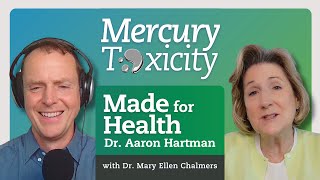
Dr. Mary Ellen Chalmers, a functional dentist with 40 years of experience, explains how mercury fillings, infected root canals, and oral bacteria can trigger heart disease, autoimmune disorders, and neurodegeneration. She describes tests like OralDNA PCR and CBCT imaging to find these problems, and treatments including laser therapy and specific toothpastes.
Questions this video answers
Quicksilver Mercury Tri Test (hair, urine, blood — non-challenge three-sample test).
OralDNA (oraldna.com).
Amoxicillin and metronidazole (10-day course).
Fig and Risewell Pro (Nanoxim-sourced nano‑hydroxyapatite).
Chapters
Welcome back Once again. I am super excited to be here with Dr. Chamber. She is one of the top, if not the top, functional dentist in the country. She's an educator, a pioneer. She's actually who first taught me about functional dentistry. So I'm super excited to be here and talk about some amazing concepts about oral health and how it infects your entire body. So after a brief introduction, we're going to dive into a lot of interesting topics. Today we're joined by Dr. Mary Ellen Chalmers, a pioneering dentist from Santa Rosa, California. She's been revolutionizing oral health through functional medicine based dentistry. She has over 40 years of experience since graduating from Tufts University. Dr. Chalmers is both a licensed dentist. She's a board certified naturopath who brings traditional biological dentistry. She holds the unique distinction of being the first dentist certified in frequency specific microcurrent therapy and, and actually holds a US patent for dental application of this technology. As a faculty member of the Institute of Functional Medicine and co founder of the Functional Synergy Corporation, she's at the forefront by understanding how the oral health connects to whole body wellness. Dr. Chalmers, welcome to the podcast.
Thank you. I'm so delighted to be here. You're asking me to talk about my favorite subject?
Well, hopefully it's your favorite subject since it's what you do on a daily basis.
Exactly, exactly, exactly. It was interesting. I was just at a reunion recently and so Covid drove out a lot of my colleagues and classmates. They're head for the doors and retired. But integrating functional medicine, gosh, 20 years ago. I took AFMCP in 2008, so it's almost 20 years ago into what I do. I'm a restorative dentist. I fill teeth, I do crowns and bridges, and I also have a master's in orofacial pain and oral medicine. So there's that part of my practice. But I do, the majority of my practice is restorative work and I feel raring to go. I think there's a handful of us out of a class of 150 left. But you know, I just, I can't see the exit ramp. I'm just having too much fun.
We've done so much. I mean, we actually were talking before we started recording about how you're starting a new functional dental industry educational program for dentists.
Correct.
So why don't you kind of tell us a little about my audience. Some people may imagine. Why don't you tell us a little bit about yourself, how you got to where you're at and maybe how that's led to you to actually doing this amazing educational thing for functional dentistry. So give us the 10,000 foot overview of Dr.
Okay. Well, so my, you know, my introduction for functional medicine came because I was in a major automobile accident when I was 35 weeks pregnant with my second daughter. And I'd been practicing dentistry for 15 years at that point. I had my kids at 38 and 40. So this is my second one. And, you know, I didn't get better. I had great, you know, medical care. Wonderful, wonderful medical care. I developed a closed head injury and I had bilateral carpal tunnel. Anyway, didn't get better. Fortunately, acupuncturist OMD was one of the early attendees at AFMCP back in either 96 or 97. And she figured out that I was mercury toxic, which nobody was talking about then. And it would make sense having been placing amalgam. Well, I hadn't placed amalgam for a while. We had composite resins in the late 80s. And so there was no reason for me to put amalgam in anymore. However, I was taking it out and I wasn't using precautions, which of course I do now. But it was her that figured out that it was the mercury toxicity that was keeping my brain not being able to heal. And as well as the significant musculoskeletal injuries weren't healing either. So with medical foods and diet, diet and lifestyle, sleep was tough. I had toddlers, so that part of the lifestyle was, was a little more challenging. So once I started, I was out of work, stopped practicing for about four and a half years. It took me about four and a half years to get back. And, and then I was determined to learn about this. And so, you know, I started attending seminars given by Lisa Portera and different nutraceutical companies. But Lisa was fundamental. And when I could understand Jeff Bland at that, back in that days would have a, he'd have a seminar every year. And when I, by 2008, I had gotten to the point that I could understand 75% of it. So I thought it was green light to take afmcp. And there was this paradigm shifting statement from John Klein who was talking about detox back then and he said standard American dentistry can be an antecedent trigger or mediator for chronic disease. And the light bulb went on. I mean, I knew that there was an oral systemic connection, but, you know, I really didn't have a way to think about how to diagnose it and how to integrate it or just developing a structure to think about it. And that statement was just a paradigm shift in my career. And went on and got my functional medicine certification and started my first lecture for IFM was in 2010 on Integrating Dentistry into cancer prevention. But functional medicine really served as the foundation. And so there's a handful of us IFMCPs out there. I think there's probably about 10 of us now. But a couple of two others, Val, Dr. Stacey Whitman and Dr. Valerie Kantor, a pediatric dentist and an endodontist, have founded the Institute for Functional Dentistry. Because I now no longer have to convince people that the oral systemic connection exists. It's all over the literature. I mean, you can't open a journal without having them talk about the link between the mouth and the rest of the body. But for most dentists, it's the integration that's tough. And so that's why I feel so strongly that a functional medicine education will make a huge difference. Because when I look in the mouth, I don't, I see a tooth, but I don't really see a tooth. I see a body. And that with their medical history and, you know, some of their health concerns, I think I develop a different treatment plan than a strictly evidence based dentist might do.
You said so much that I want to unpack a few things. That's a lot of amazing information. But the one thing, one thing I tell people all the time is like some of the new cutting edge things we talk about now literally are decades old. And I didn't realize. It's crazy that you said you were in your practice. Were you in California back in the 80s?
Yeah, I, I, I started practicing, moved from Boston. I practiced in Boston. The first three years of my practice, I was in the Boston area. And then I had, it was always my dream to come to California. I had a boyfriend in dental school that lived out here. And I just, you know, I came out here to visit and just fell in love with it. So.
Yeah, well, the reason I was asking that, because, you know, you, you said that in the 80s when composites came out, you stopped putting amalgam fillings in. And here in Richmond, where I've been practicing since 2007, I was in the military for a while. Like in 2012, dentists were still putting amalgam fillings in.
Well, they're still putting them in. I mean, I think it's dramatically less dental schools. A lot of the more progressive dental schools aren't teaching it anymore. I have my youngest daughter, actually the one that I was pregnant with when I had the accident. She graduated from UCLA School of Dentistry last year. And she's now two years ago, actually, 2020. Well, yeah, 2024 last year. And she's a periodontal resident at UCLA, but she got through dental school without having to put an amalgam in. I mean, you know, she had been raised. Her. Her dad, my late husband, was an endodontist. But we shared similar philosophies. Particularly he developed a change in his perception of root Canals about 2005, 2006, when we had physician to. To dinner and was. They entered into an interesting conversation, but I digress. But anyway, but she. So she grew up in this household, and so she knew what the issues with mercury were. And, you know, at one point she texted me, she said, I can't listen to this anymore. And I said, honey, just no red flags. Just, you know, get through it. But she got through. She didn't place an amalgam at all. And actually, when she was in the pediatric clinic at ucla, UCLA teaches them about amalgam, but doesn't ever require them to do it as a need for graduation. So, for instance, when she was in the pediatric clinic there, she asked about amalgam, and the head of the clinic said, that's just not something we do here. And I got my master's at USC when I was getting my master's at USC in oral medicine and oral facial pain. They don't even teach amalgam anymore. I think the one thing they need to educate about is the toxicity when we as dentists and assistants are removing it. So that's an important part of their education that I think is missing. But the IAOMT does a fabulous job educating dentists about the problems with mercury. So it's less. There was a paper that was published. It was in one of the more recent environmental health presentations, where for years we were saying about 50% of the dentists were placing mercury amalgam. And it's dropped considerably because of the education of the younger dentists.
But it's still something that's out there. And I see patients routinely who still have mercury in their mouth. And just the idea just borrows my mind. You know, if. If you have mercury at a fluorescent light and it breaks, it's a hazard. If you take it out of your mouth, it's a hazard. But if it's in your. If it's in your mouth, it's 100% safe. That just still bothers my mind. That's the way we thought for decades.
Yeah, well. And, you know, the justification was that like any metal, when it's implanted in the body, it develops a passivation layer. It's that thin oxide layer that happens whether it's a titanium implant or, you know, mercury filling. But, you know, with eating and chewing and drinking acidic drinks, juices, sodas, it off gases, it corrodes and releases mercury. And there's good ways to measure it. There's a mercury chew test where you can measure it. Tom McGuire has got a website. Dr. Tom McGuire, he's a retired dentist, but he has a video where he had a meter that was measuring off gassing of mercury. When you brush your teeth, Bruxers, you know, people with mercury fillings. So, you know, I saw a patient, just happened to see a patient yesterday. I'm not removing as much amalgam as I used to, and I think that's a function of being in California and the education that the younger dentists are getting here. So there's just not as many being placed. But I saw a woman, these fillings were probably placed when she was a kid and she's in her early 60s. She saw a naturopath who found that she had really elevated heavy metal tighters. Hasn't had significant health issues. But I think the act, the operational word there is yet.
Well, let's talk about that briefly because there's a couple things. When I look as a functional physician, I look in someone's mouth, I'm looking for, obviously, this is your bread and butter, your zone of genius, so to speak. One of those top things is amalgams. So let me walk through a couple things like amalgams. When you see amalgams in the mouth, what does that mean to you from a functional dentistry perspective? Because I'm thinking about systemic toxicity and peripheral neuropathy and cardiomyopathy and hypertension. But when you're looking at what kind of things are going through your head when you see a patient with amalgams.
When I see a patient with amalgams, I'm correlating that with different things that may come up in their medical history. So, for example, hypertension. In 2011, Dr. Mark Houston, the fabulous Dr. Houston, he wrote a paper linking mercury to hypertension. And actually in the paper talked about the way in which mercury damages endothelium. If I have a patient with hypertension and they have mercury amalgams, we're going to recommend that those amalgams come out. The other thing to think about, sometimes you'll see a patient, I mean, I have a woman, she was late 50s, I think, when she was diagnosed with hypertension she had a mouthful of porcelain which crowns and onlays, inlays which indicated that she had mercury amalgam fillings at a later D at a previous date. Those fillings were not taken out with precautions. So when you see someone and she was thin, she was fit, she was active, just not who you would think about to have hypertension. And so that would be someone where you'd think, well, geez, if, if they have a lot of restorations in their mouth, maybe we need to think about looking at a heavy metal tighter. The other medical history, the autoimmune patient. I worry about mercury with the autoimmune patient. There was a study, believe I, was published in 2015 with NHANES data, so very high quality data. It was about 6,000 women. And what they found was a correlation. They ran antinuclear antibody, which is an early marker for autoimmune disease. Or when they noticed a lot of. They noticed that women with elevated ANA levels also correlated often with elevated mercury levels. And this was in advance of any autoimmune symptoms. So when I see a patient with autoimmune tendencies, family history of autoimmune disease, when I open their mouth and I'm suspicious about autoimmune disease based on what I'm looking at their, you know, findings in their tongue, that's going to be another patient who has mercury amalgams. That concerns me. The final is patients with family history of neurological disease. So, you know, when I see someone, I mean, obviously if they have neurological disease, the amalgams need to come out. But it's. We, I think we need to look closely at the family history. So patients with a history of Alzheimer's disease or any kind of dementia, Parkinson's disease in their family. Because the research now is really pretty clear. The links have been, the pathways have been identified with respect to amyloid plaque and neurofibrillary tangles. And so those are other patients where I'm going to suggest even in a filling that looks clinically sound, we're going to recommend that they consider getting those mercury fillings replaced with something different.
So what kind of testing for mercury? Because there's hair testing, there's some blood testing, there's serum testing, there's urine testing. What kind of testing do you do if you want to see if someone has an elevated or concerning mercury level?
So I refer back to the physician for that. I do believe that it's not within our purview as dentists to do the actual testing. With one exception. There's a mercury tri test with quicksilver where they're not being challenged. Oftentimes challenge tests I think are out of our purview simply because it's not within our purview to manage the downstream consequences. If the challenge, you know, the DMSA, the DMPs, whatever is being used to challenge that patient. In very sensitive patients, it can provoke a significant reaction. And so I rely heavily on my MDs and NDs to do that challenge testing. But the quicksilver mercury tri test I found to be very good. It will show you elimination. You know, are the kidneys working properly and or and is their liver eliminating through the glutathione pathways? Is liver working properly? And that's a non challenge test. It looks at, it's a three sample its hair, its urine and its blood.
So some fillings are one of the major things you look for in the mouth. You know, I tend to think of people with gingivitis as a marker for inflammation. They have leaky mouth. Could you talk about gingivitis and periodontal issues a little bit as far as how they play into oral health and systemic health?
Yeah, well. And so when we talk about the effects of the oral cavity on the rest of the body and at baseline, what we're talking about for the most part is toxicity. And you know, the sources of toxicity are metals and sometimes metal allergy in an autoimmune patient. But the other very important area of toxicity is infections. And infections can come from either periodontal disease, gingivitis, more often periodontal disease than gingivitis. And it can also come from root canals. Because what we find is we find very similar systemic effects. So we do know in early days with respect to periodontal disease, we could only talk about an association. We really weren't. The literature really didn't support us talking about bidirectional relationships or cause and effects. Now that with the exception of diabetes, it's long been established that there is a bi directional relationship between diabetes. And that's because of the effect that the hyperactive, because of fat and the obesity and then the stimulation of hyperactive immune cells, they have a distinct reactivity to certain pathogens. P. Gingivalis, fusobacterium nucleatum. I mean, there's about 10 or 11 pathogens that the company that I use for testing is oral DNA, DNA, pcr. It's fabulous. And so it's important to identify those pathogens. But the. So those pathogens, we now call it microbial translocation. And it's very interesting. Pingivalis infusobacterium, nucleatum specifically have the ability to survive the stomach environment. The acidity in the stomach, it's like they have a protective coating and are able to translocate to the small intestine where these pathogens embed very much in the same way that they embed into gingival tissues and they can contribute to irritable bowel and ibs. So that's one way we know that these pathogens have been linked to respiratory diseases. Pneumonia, bronchitis, cardiovascular disease. P. Gingivalis and Fusobacterium nucleatum have been found in atherosclerotic plaques. It's because of the acute phase proteins that they activate that then lead to cardiovascular inflammation and damage of the endothelium. And finally we know that there's through the action of ginger pains. And we know that P. Gingivalis has a dramatic effect on Alzheimer's. It's been linked to Alzheimer's autoimmune disease. We know that the bacteria, it's called aa stands for aggregator bacteria comitans. But it has a ability to stimulate citrullinated proteins that are often when you look. One of the most sensitive blood tests for rheumatoid arthritis is anti ccp. And so it's these elevated citrullinated proteins that can have a direct impact on triggering rheumatoid arthritis. So, you know, it really depends upon a patient's family history and genetics and what their predisposition is to. With respect to what the systemic effects are going to be from these periodontal pathogens.
So that's really intriguing because I've not heard the association with oral bacteria. The aa, I'm not going to say the word, but the aa.
I have to practice. I practice before.
That's right.
I'm gonna have to say it.
I have to practice, say like 20 times. You get down. But. And rheumatoid arthritis. I know about in the GI tract with Proteus mirabilis in the association with simulating being activator through molecular mimicry for matory. But the oral. That's really interesting. I actually had a patient a couple weeks ago who I did a gut test on and it was really interesting. Their. Their gut on pcr, their GI tract showed bacteria that specific, particularly the P. Gingivalis. And so they had, they had colitis. They have actually have a microscopic colitis. I'm sorry, Colit colitis. Colitis. And have had recurrent, recurrent dental things. So it's really interesting how the gut and the mouth interact well and there.
Is a bi directional relationship with the gut and the oral microbiome. We were talking about one of the topics that the environmental health team is addressing this year as we update the current advanced practice module for IFM is we're looking at PFAS and. PFAS and cholestyramine is a wonderful ability to be able to help eliminate those forever chemicals as well as beta glucans. And my role is to take a look at. So what's the effect of using those agents on the oral microbiome? And there really isn't much effect on the oral microbiome. They have a very beneficial effect on the gut microbiome. But anyway, what I took away from those studies was that the oral microbiome has a much more dramatic effect on the gut microbiome than the reverse. I mean, there is some effect of the gut microbiome within the mouth, but it's overwhelmingly the oral microbiome can dramatically affect the gut microbiome. So, you know, we do a lot of oral microbiome testing, particularly in people with stubborn gut issues. And the other thing I forgot to mention about mercury is that we do know that mercury has a direct impact on gut dysbiosis. So I was sitting with one of my really good friends who's a IFMCP nurse practitioner in San Francisco, and she was talking about this patient where she was struggling with sibo. And I said, does he have amalgams? You know, I mean, have you made sure that there isn't any mercury? And she just, you know, it's things. It's just things, you know, but yeah, just sometimes putting the pieces together, it's good to bounce it around with different colleagues because everybody has their own lens. That's the beauty of the collaborative nature of functional medicine.
Well, sometimes you're also too close and you've seen someone for years and you kind of lose perspective because you've been dealing with their issues for years and you kind of. Sometimes having someone like second set of eyes that's a little distant can give you a better re evaluation. But the one thing you said, I was listening to you talk, actually, Neil, Neil Nathan has this thing where he brings individuals like you together to educate his own collaborative, his group. And you said this thing that just boggled my mind, that made me think a little bit. And you said, the average person swallows. I may get this number wrong, but I think it was like a Trillion bacteria a day.
Trillion bacteria a day. Right.
And when you said that, I was like, I use my fancy probiotics that have like a hundred billion, you know, CFU's and. And like. But they don't compare, you know, 10 times more. You. You literally, in your mouth, you make 10 times more bacteria that you swallow every day than you take in a fancy probiotic. So really, your mouth becomes. Set your gun up for health or not. But. Yeah, but back to like the a hundred trillion bacteria. So all of a sudden, it's like your mouth is way more important than any probiotic you might take for. That can set your gut up for health or disease.
You know, that's an interesting. That's a really interesting. That's a great way to conceptualize it. It really is to have you. That's the first time I've heard anyone put that together, and I think that that's true. That's. I mean, yeah, you can take all the probiotics you want. However, if you're not doing the basics in terms of getting cleanings, regular cleanings, and it doesn't. There was a paper, Robert Luby pushed me on this back in 2024. You know, I mean, every. Oh, you need your teeth cleaned every six years. Every six months. Sorry. Every six years. Every six months. And the literature really doesn't bear that out, you know, so everybody should. Should have their cleanings really personalized to what their needs are. The other important thing to know, as I mentioned, with these bacterias, and I glossed over it because we talked about P. Gingivalis and F. Nucleatum tenerella, these bacteria that invaginate and embed into the small intestine tissues, intestinal tissues. Well, they also embed into gingival tissues. And so one of the big fallacies is that scaling and root planing. And I see this happen a lot in periodontal offices. I'll have patients referred in from the functional medicine practitioners in the Bay Area. One in particular was referred in. Her MD Was able to get her gut in shape, but was not able to. To address her HBA1C. She had a persistently elevated HBA1C and in spite of anything, she couldn't get it down. And she knew she had periodontal disease. However, she was seeing a periodontist every three months for cleanings. However, when she came into my office and we did the oral microbiome testing, through oral DNA, we found that she had elevated levels of P. Gingivalis fusobacterium Nucleatum. I think she had a total of about seven or eight of the pathogens present. So she needed a course of antibiotics. It's, you know, it's a 10 day course. We, in her case we used amoxicillin and metronidazole. Gone. I mean, and for years she had been seeing a very good periodontist, but he wasn't addressing the fact that these pathogens burned burrow into the tissues. And sometimes we also use lasers. So not everybody gets a course of antibiotics. But if we find that the levels are elevated, then we do antibiotics. But then they're followed up regularly with diode lasers. So they'll get their traditional cleaning. But then we use a laser in the gingival crevice in the pocket because the laser can also address bacterial load in the tissues. But it's these nasty little buggers they embed in those tissues. And unless we're really addressing that with oral microbiome testing, we often just figure our manual procedures will eradicate the pathogens. And we're finding that that's simply just not the case.
Two quick questions off that. One is Oral DNA. Is that the actual name of the test?
Yep, oral DNA. The company is orldna.com there's other DNA PCRs testing out there. I just don't know their name. I mean, I've been working with them. They're the one that's been around the longest. And you know, it's just the protocols work. It just, they work. There's a new test out now called Bristle, which is a, it's a shotgun metagenomic test with one sample will tell you about commensal bacteria, it'll tell you about bacteria related to decay, periodontal pathogens. But the problem that we found with the shotgun metagenomic methodology is that the way they're reporting is they're reporting on their population that have had testing. So it's relative to other people. It's not empiric like a DNA PCR test is. Yeah, so we think that there's limitations with that test. I had a kid, a child in who all of a sudden has decay that. I mean, he's been my patient now. He's now nine. He's been my patient since he was six. Now all of a sudden I'm seeing these large carious lesions. And so we did a bristle test to see what's going on because I want to know what's going on with his microbiome. And so we'll use it in that instance but for periodontal disease, I like the DNA PCR testing much better.
And the one patient that you gave them the. I think you said amoxicillin and flagyl. Did you. Did their A1C come down after that?
Yeah, and. Yeah, no, her A1C is now low sixes. It was in the sevens to eights persistently seven to eight. Yeah, yeah. It made a huge difference.
That's pretty amazing. So let's talk about root canals, because I feel like, you know, most people get gingivitis, their gums, blade or then scaling. Like those are things that I don't have to convince people. You need to address it. But the root canals is tricky because people are like, oh, they've been there for 10, 20 years, they're safe. You know, it's a dentist, they did the X ray, I'm fine. And yet, you know, outpatients, three, four, five years later, one gets infected all of a sudden. Right. Or they get a cone CT done and you're like, oh, my gosh, you got. Could you talk to that? Because I feel like that's, you know, in my. With my patients, it's a big roadblock. Or maybe it's a stumbling block. Or they also don't quite get. Like, if you have a root canal. Root canal. I assume, I personally assume they're all infected. Maybe I'm wrong, but until they're proven otherwise. But why don't you educate us about that?
So, you know, when my husband retired from doing root canals in 2012, he retired, referring him to. Referring to himself as a preacher that didn't believe in God anymore. This was a Harvard trained endodontist who, at dinner we had a MD who does integrative oncology. And he leaned across the table. This is at a dinner party. His wife was there. We had a bunch of people. He said, john, I'm seeing cancer along meridians of failing root canals. Can you talk to me about that? And my initial reaction was, oh, my God, there goes the dinner party. It's going to be awful for me. But to my amazement, he leaned across the table and he said, isaac, what are you. Talk to me about this. And then from that point, he always wondered. He did a lot of. He had done some reading anyway. But his perspective changed now, fortunately. And I wish he had gotten a chance to meet Val Cantor before he passed. He died of fractured frontotemporal dementia, early onset dementia. But she has really. The technology today for root canals is not what it was 2010, even 10 years ago. I mean, John Once. Once he understood that, he, we. It was shortly after that that we integrated ozone into our practice. And I had a diode laser. So he was using a diode laser, which is nowhere near as effective as the fotana lasers that Dr. Kantor uses. But he started integrating those and saw better resolution and better healing. The issue with root canals is the roots of the teeth are comprised of what we call dentinal tubules, and they're microscopic tubules. And say an average molar can have anywhere from 2 to 3 miles of tubules where pathogens can hide out. So in the older root canals specifically didn't have these enhanced techniques that are much more effective at disinfecting those microscopic tubules. So we are now back. I mean, Val, there were years where we were more likely, unless a patient was absolutely insistent that they wanted to save that tooth, we were more likely to extract the tooth and put an implant in than we were to do a root canal. Dr. Kantor has changed that. And for your patients who want more information, Joe Mercola interviewed her years ago, five or six years ago. So she's, she's. There are videos out there, but it's the technology. So if a patient is going to have a root canal today, it's critically important that CBCT X ray be done, that a microscope is used, that either a laser or a gentle wave. Dr. Kantor is one of the few dentists, she's in LA that has both her office. She's got three endodontists in there. But it's these advanced technologies that do such a wonderful job actually disinfecting the dentinal tubules and creating an area where we don't have residual infection lingering in those teeth. Now, that said, there are patients within their medical history where we're going to think twice. The literature has been clear for years. Excuse me. That diabetics just don't do well. We see persistent periapical radiolucencies. Periapical radiolucencies are those dark areas around the roots of the teeth. And for years, you know, they were called bone scars. Everybody thought that it was just a fibrous lesion. You know, the bone didn't heal, not a problem. But we now know that these persistent periapical lesions do emit inflammatory cytokines and have systemic effects for a patient very much in the same way that periodontal disease does. There was a study published in the American Dental association journal, actually, and I believe it was 2009 where they had a. It was out of Harvard. They had a large number of population, I think was either 55 or 6,500. And what they found was that patients with two or more root canals had two to three times more likelihood of having cardiovascular disease. So we know that those lesions can contribute to cardiovascular disease. We also know, and this is more recent literature, that patients with autoimmune disease don't seem to heal very well when they've had a root canal. So there just doesn't seem to be the resolution of the infection in the bone. And the cytokines and the chronic inflammatory chemicals that are produced as a result of these persistent infections are just simply a problem and a long term problem. So it's important and the hard thing is that they don't often these areas of infection are silent and so the patient has no pain. And it's just, I think it's important for dentists to be able to discuss the literature and say, well, I know you're not, not in pain, but this is what the current literature shows and it's high evidence. It's all systematic reviews. So it's, I think the, the best way to diagnose them. You often can't see these periapical lesions. You need a CBCT cone beam. And so with our patients with a number of root canals, we'll, we don't do a cone beam every year because I think it's far too much radiation patients, but we'll follow them and make sure that we can see and intact. The lamina dura is the hard white line, the cortical plate. It's evidence of an intact cortical plate and it's evidence of healing. So we'll very carefully make sure that we can see lamina dura around these root canal teeth. But being guided, you know, if you've got autoimmune disease that is stubborn and persistent and you know, you've addressed your diet, you've addressed lifestyle factors. You know, I would take a look at the root canals and see if that's driving it. Same thing with cardiovascular disease, diabetes. And we're careful now with diabetic patients. You know, these are the patients that we're going to talk about. Well, maybe we don't have a root canal. Maybe we put an implant in instead because that might be a better investment for you long term.
Yeah. In the Richmond, I'm in Virginia, in the central Virginia area. There's only one periodontist that I know of that actually, he actually has a general wave. He's the only person that I know in our it's about 4.5 million people live in central Virginia. No one else has it. There's one local dentist that does has a CT code in his practice for diagnosing infections. So it's just something people aren't aware of. And so is this a safe statement to say that. Well, this is the way I kind of look at patients. If you come to see me, you usually have multiple issues, usually all immune issues and chronic fatigue and long Covid and, you know, you name it. Right. So for those individuals, when I see them, if they've had root canals, I pretty much universally say you should get the CT code to make sure they're not infected because it could be part of your health issue. Is that a pretty safe.
Exactly that. And my staff has been my friend. Front desk has been instructed to screen new patients. You know, she. When we're doing an intake on patients and we may get a CBCT up front so that, you know, their time with me is well used. Is well utilized. So if they have root canals, then we want to know up front. 3D.
Yeah.
With the.
I love numbers. That's. You've given me two great numbers so far. You gave me the one trillion bacteria. Now the two or three miles of tubulin. I mean, it's like, if you just say that, it's like, oh, exactly. Of course, two or three miles of microcellular. Of course it can be. Other stuff can be infected. It's not a stretch, you know.
Right. The other thing too is, you know, we. You don't see many endodontists using ozone. I think it's helpful. I mean, I just remember lesions resolving when John was using ozone. I mean, he had a patient that came in, this is 2009 maybe, and patient really wanted to save a tooth. He had a very large area of bone loss. And John said, you know, I don't know, man. I don't know that this is going to heal. But he was insistent and used the ozone and he was. He was blown away by what a difference it made because the gas, you know, so you have to. There's lots of training for that too. It's appropriate. It's important to be trained appropriately. But the use of ozone has been very helpful in. In those situations. I know Dr. Cantor uses it, and I know she uses ozonated water in addition to. But the bottom line is endodontics has come a long way. However, who you see and the technology that they have invested in makes a difference. So, I mean, I know the biological perspective still is, you know, all root canals are bad. But, you know, as Dr. Kantor says, she feels that a root canal. Well done, where the infection has resolved is going to be a better. Better for the. It'll be less of a trigger to. For the immune system than, say, a titanium implant.
I forget which lecture it was somewhere. It was like one of those things you hear, you know, eight or 10 years ago. But it was talking about there's these nerves that go to the roots of the teeth that are activated when you chew, that stimulate your brain. And so there's an association with people without teeth ad intention with dementia. And so it's this thing where, like, okay, don't pull. You know, you need your teeth to shoot. Activate the nerves to activate the brain, to keep your brain active. So you got that side. But then if you have infection. So it's like bouncing. It's a bouncing act.
Yeah. I have this slide. I think you. I probably had it in that presentation with Dr. Nathan, the Root canal conundrum. And that research, that was fascinating research. I became acquainted with that research back in 2010. There were two studies done. One was called Occlusion in the Brain. The other was Mastication in the Mind. One was out of the Netherlands, the other was out of Japan. And what they found was that patients who were edentulous, meaning they had no teeth, had a significantly higher incidence of dementia than patients that did. And so what's been determined, and this research has progressed over the years. The most recent paper is really fascinating. What we now know. The early papers were trying to determine exactly how those pathways worked and what areas of the brain were the ones affected. Well, we know it's the hippocampus, and it's. We have nerve fibers that run. You're correct, the proprioceptive fibers that run around the outside of the tooth in the periodontal ligament. So when you tap your teeth together, impulses are sent to the hippocampus that have a direct impact on memory and cognition. There was a study done. It was published in the Journal of Dental Research. And they had put rats in a maze, and they messed up their occlusion. They kept filing down their front teeth. And what they found that rats who didn't have ideal occlusion couldn't find their way out of the maze. Fascinating stuff. So, you know, we. In our office, we use something called a T scan, which is a computer wafer. It's a very thin wafer that connects to my. With a handpiece to my computer. And so we measure how teeth come together in time. Increments of a hundredth of a second and force values of a hundredth of an inch. So, so we know very accurately which tooth hits first when. But having one of the, as I was started to say, one of the most recent papers talked about that even in children, you might wanna look at their occlusion. If they're having ADHD or cognitive issues, that, that's something that we really, we need to address. So keeping our teeth is important and an implant does not, does not transmit those proprioceptive impulses. So, you know, one of the favorite restorative things now is an all on four where they'll take out all the upper teeth and they'll put two implants here and two implants there and they build a denture. But the problem with that is those implants don't have those proprioceptive fibers. So you're right. That's, you know, it's an important consideration when we're talking about cognition and maintaining cognition is perhaps having a root canal done, but having it done with the appropriate technology.
You mentioned kids. I want to talk about that a little bit because with kids they have teeth that are cockeyed and they get pulled and then they have issues with sleep apnea. Could you talk a couple a little bit about some of the issues with kids teeth?
Right. I'm going to tell. So Dr. Stacy Whitman would be someone you want to interview. She's brilliant. I have this much knowledge about airway and children. She's just amazing. And she's on this crusade because of what she's seeing happening with children's teeth. So airway is a big factor. It's a huge factor. And you know, gosh, in my day you basically took teeth out and just made them line up where now much more importance is given to airway. And the orthodontists that I refer to are airway centric orthodontists, meaning that they use this CBCT technology to evaluate a child's airway and that they are more. What's more important to them is establishing appropriate bony architecture between the maxilla and the mandible and making sure that these kids are not going to be set up for sleep apnea. And then they'll worry about lining their teeth up and giving them a nice smile. So finding airway centric orthodontists, I think are especially important.
One of the things as well with that that I've seen, because of nutritional issues, you tend to have less development of your lower jaw.
Correct.
So some of these kids that have Teeth pulled. It's actually a marker of smaller airways and yarrowing the airways. And so I'm always worried about. Okay, you got these pulled. You're probably more likely as an adult to have sleep apnea, as a teen to have sleep apnea. And if you're not sleeping well, you know, it's. It can look like adhd, it can look like anxiety, it can look like a lot.
Correct.
Well, B, Learning. Learning disabilities, processing problems. It could just be the child has sleep apnea, is not sleeping.
Exactly. I mean, it can be lead to a whole host of behavioral problems. And a lot of this comes back to the old Weston Price research about jaw development and our processed, heavily processed foods. So diet is always an important conversation in my office. And.
Yeah, yeah. I think one of the few people who actually read Weston A. Price's textbook of nutrition and physical degeneration. It's. It was a great read, but also there's a lot of stuff that's in it that people who claim to follow Winston A. Price. Actually, it was. It wasn't actually in the textbook. So it's a great read, though. And it. There's a huge correlation. Nutrition and facial structure.
Yes. Yeah, yeah. His work is still relevant, I feel.
100%. Yeah. So what. Is there anything else in the mouth here? We talked about, you know, gingivitis, periodontal issues, some alignment stuff, root canals. Is there any other, like, hot button topics or red flags in someone's mouth? You're looking at metals or anything else that you will see when you're thinking about someone's systemic health in their mouth?
Well, so gluten, I mean, there, you know, I. I want to talk a little bit about gluten because we now know that gluten. Gluten sensitivity can be. And celiac disease has a dramatic impact on the mouth. For years, we've known about the white spots, you know, the little white hypocalcification spots. When I went to dental school, I was taught that those were because a patient had a fever. Well, actually, we now know that when those white hypocalcification spots are present in the teeth, five out of ten. No, no. One out of five celiacs. And actually a more recent paper out of France actually put that at more about 2/3. So 2 out of 3, but the white spots are. Maybe 1 in 100, will be due to a fever. But patients with those white spots, two out of three of them will be celiac, will have a celiac disease and geographic tongue, which is those areas when you have Lack of papilla on the tongue. I was taught it was idiopathic. Just something you observe and you don't pay any attention to. We now know that that is often due to gluten sensitivity and celiac disease. Canker sores, apthys, ulcers. Again, you know, we knew that maybe it was food related. Sodium laureth sulfate, the additive in toothpastes. They. We now know that aptha selcers have a direct correlation with gluten sensitivity and celiac disease. So there is a terrific article published and if you want I can send you the link and you can link it with the video. It was published. It's a systematic review published out of Italy in 2023 where it very comprehensively identified all the list now is like this as opposed to like this. All the different ways in which gluten sensitivity and celiac disease have an impact on the oral cavity. One of the most important ones and I really. We've felt justified. There was a patient who came in, she had been seeing a periodontist. She was from the South Bay, she'd been seeing a periodontist. Somehow she got my name up in the North Bay and she was in her early 40s and she had uniform horizontal bone loss. So she had lost about a third of her bone height in her jawbone and it was uniform. Most often with periodontal disease you'll see angled pockets. The bone loss pattern won't be uniformly straight. So she was told by the periodontist just, you know, with, by the time you're 50, you're going to have most of your molars gone. So she came up and I have a brilliant hygienist, Jessica Kamich. She's also taken afmcp. She's been educated in functional medicine and she scaled her teeth. We did an oral DNA. We did our, as we usually do, we do the DNA PCR testing And she said, you know, Mary Ellen, she doesn't have. She, she's not inflamed. Her home care is perfect, the tissues don't bleed. She said, something's something. This doesn't feel infectious to me. So we did a DNA PCR test but at the same time we also did a test for celiac disease and gluten sensitivity. And at that time we were using entero lab, the stool test. And sure enough she came back with no periodontal pathogens. However, she had significant levels of antiglidin antibodies and tissue transglutaminase antibodies. And we did the American Heart Association. We identified that she had I believe it was an HLA DQ8 celiac gene. So that was back in 2016. This paper for the first time actually talked about inflammatory based periodontal disease. And I think for patients that have intractable periodontal disease, I think taking a look at. And it's this pattern, it's this pattern of uniform horizontal bone loss. So, yeah, I think that that's a really important thing to identify the role that gluten and celiac disease can play in some patients with periodontal disease. The others. Go ahead.
No, sir. Go ahead.
No, no, no, There'll be another topic. There's one other thing that. Yeah, perfect.
Well, I just want to recap because I see this all the time. The white spots at the sulcers, canker sores, geographic tongue, if you have any, or all of those, which I see on a routine basis, you need to make sure you're checked for celiac disease, which any standard doctor can do. A celiac panel, it's a pretty easy blood, usually for the blood. But that, I think that's huge. That's a big deal because I see this all the time.
Right.
And I had not heard before the correlation with, at the sulcers and the white spots with celiac. So that's, that's a big deal because that's something that I personally, just as a regular, you know, regular clinic, I'm seeing people with, with all of those all the time.
Right. And, and it makes a huge difference because canker people, I've seen people with chronic canker sores and you know, well, they've stopped strawberries and they've stopped tomatoes and we've changed out their toothpaste so that they're using a toothpaste without sodium Lauren sulfate, the emulsifiers, the sudsing agents. But yeah, that was just a great finding.
So what was the other thing you want to say?
The only other. So I want to just talk a little bit about toothpaste and oral. So, you know, one of the. There's very little that impresses me after 40, after more than 40 years in practice. But this new technology, the nano hydroxyapatite toothpastes are a game changer. But you have to be very careful about the sourcing. And I'll talk about that in a minute. But we had, gosh, she was late 20s, early 30s, she needed six gumline fillings, which, you know, was going to come to about $2,500, and it was hard for her to afford that. This is about a year and a half, almost two years ago And I said well you know, we just got this new. Because this is through Stacy Whitman. Stacey Whitman has developed a phenomenal. It's called FIG F Y G G Feed your good guys. I said, I just found out about this new toothpaste. We're starting to stock it in the office. Why don't you try it and we'll see. She used the toothpaste for six months because they weren't so deep and so terrible that I was worried that we were going to, you know, it was going to be dangerous to the tooth. So I said let's, let's try it and see. She came back two weeks before her scheduled appointment and we canceled the appointment. These, the, it remineralized these lesions and I was floored because we've been using. So with respect to fluoride, I think of fluoride in my practice as chemotherapy. I don't not use it. I know that there's a lot of controversy particularly now about kids brains. We know that it can have an impact on bones. I think the American Dental association has called this junk science. I've read the studies. I don't think so. But if I have an oral cancer patient who's xerostomic, we're going to use every tool in our shed. Topical fluoride works, does work. Nanohydroxyapatite is so much more effective. And we were, before that we were using something called am amorphous calcium phosphate and a product called MI paste. Again, the nanohydroxyapatite is much, much, much more effective. So I, I, I just, I can't say enough about that. Now the, the, the criticism and the concern is the shape of the particles. So it's important to source your nano hydroxy toothpaste with a product called Nanoxim. N A N O X I M Nanoxim is been developed in port. It's a product source from Portugal. It's of course more expensive than the other nano products that are ostensibly coming from China. But it has got European safety, it's met European safety standards. It is a rod shaped, it's a rod shaped particle as opposed to a needle shape or a cone shaped. So it isn't going to embed in the tissues. I think some of the concern with nanoparticles is that they embed in the tissues. So it's important. I believe there's currently four toothpastes that use the nonoxim Boca Biocidin, Ryswell and Ryzwell Pro and Fig. And so we stock Ryswell and Fig in our Office. They have different characteristics and patients may have a preference, one or the other. But I am, as I said, so little has impressed me. But I'm blown away, just blown away by how effective that is. Now, there will also be micro hydroxyapatite toothpaste. And the difference between the micro and the nano is that the micro does not penetrate as deeply as the nanoparticles will. But it's these nano toothpaste, specifically with nanoxim that are a game changer with kids and even in adults, you know, because you're drinking red wine and coffee. And I've been using it now for a year. I just use it once a day. I don't use it all the time. I have other. I have another microbiome friendly toothpaste that I use for my breath and it's herbal based tooth and gum paste. But I feel we see a difference in the quality of enamel even in adults who don't have issues with decay. I think that's an important takeaway.
So to clarify the. Because Roswell, I've actually used that product with my son when he had some cavities. But the Roswell. You referred to the toothpaste of the rinse.
Toothpaste.
Toothpaste. Okay.
Yeah, we stock Roswell Pro. There's a new study that's coming out in the Journal of Dentistry where they evaluated a bunch. They evaluated, I think Crest, Colgate, a couple of micro hydroxy toothpastes, as well as Fig, Ryzwell, Boca. The ones that performed the best were Fig and Risewell Pro. They were equivalent.
Cool. I feel like I could keep on talking. Every time I feel like I've gotten you say something, I'm like, oh my gosh. Now I have 20 more questions as far as that. But I want to respect your time because we've been talking for a little over an hour now. This is a great conversation, Dr. Chalmers. Lots of information is going to be super helpful for my community and my patients as well. If people want to learn more about this, more about you, what would you recommend? Hey, I want to learn more about this idea of. From a patient's perspective, of course. You know about functional dentistry or just more about you. What would you, what would you.
Well, I have a website, so actually to learn more. I don't have a very big social media presence. I, you know, I spend a lot of time educating and teaching and I have a very busy practice. I'm still practicing four days a week. Stacy Whitman, Dr. Stacy Whitman has a, she's on Instagram. She's her posts are fabulous and. And she will teach you a lot. Val Cantor is on Instagram. I think she posts a lot less than Stacy. Stacy's pretty. Stacy posts quite a bit. You can go to my website, but I don't know how much. I mean, my. It's just basically information about. Basically information just about what the services that we provide in the practice. Talk to your dentists about the Institute for Functional Dentistry. And as I said, it's that partnership organization with ifm. I'm hoping we're getting a lot of good response. I think finally, you know, the tide is, you know, the tide is turning and, and I think we're going to see a big change in dentistry with respect to how the mouth working with a treatment plan that integrates into the whole body.
Sounds great. Thank you so much for your time.
You're welcome.
Thank you for giving us your time to educate us as well, my community, my patients. Thank you so much. And I probably will hear you lecture again because every time I go to a conference, I tend to see your stuff somewhere. So or so. Take care. Thank you so much.
Thank you. You're welcome.
More from Aaron

Too Many Gut Fixes Can Undo Your Healing. What Helps It Last | Dr. Sabine Hazan


Women’s Heart Attack Symptoms Differ From Men’s 95% of the Time — Only 30% Have Chest Pain #shorts

Heart Disease Kills More Women Than All Cancers Combined — 80% of Cardiac Research Is on Men #shorts

Women’s Physiology Was Systematically Ignored in Drug Research — The Consequences Are Still #shorts



It Took the FDA 20 Years to Realize Women Need Half the Dose of Ambien #shorts

Until 1993, Women Were Banned From Clinical Drug Trials — Then Those Drugs Were Prescribed t #shorts