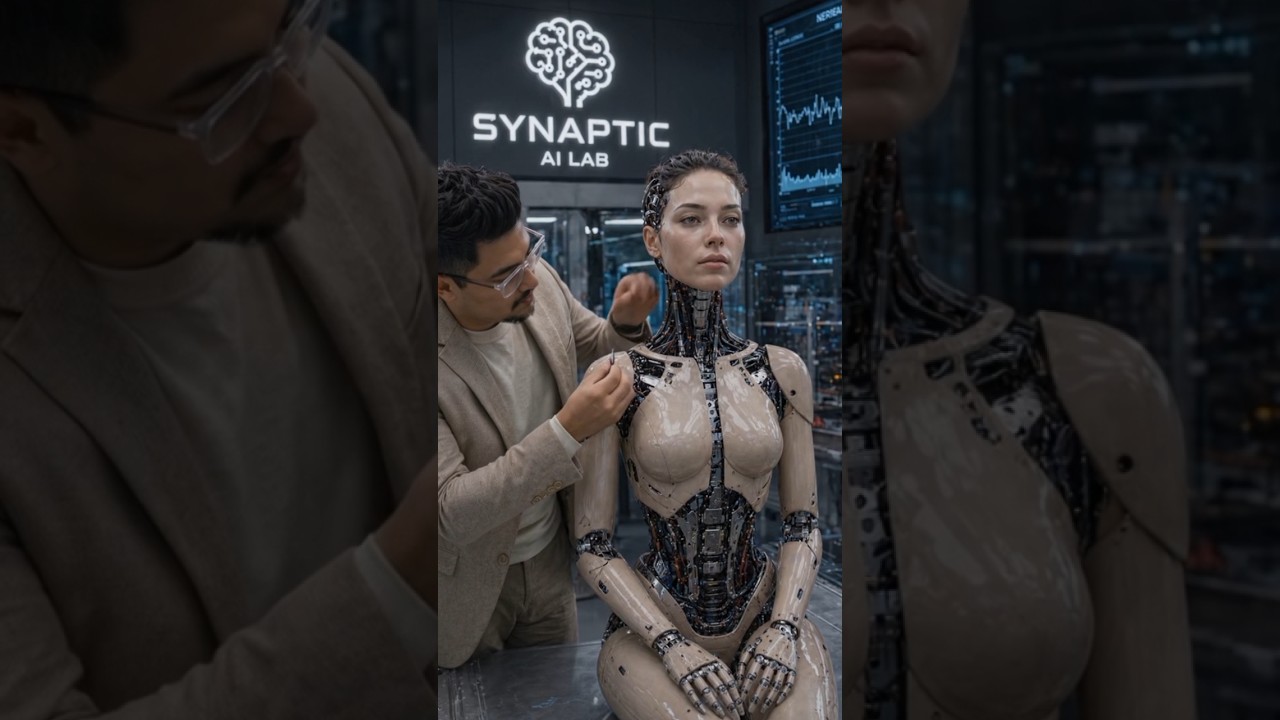
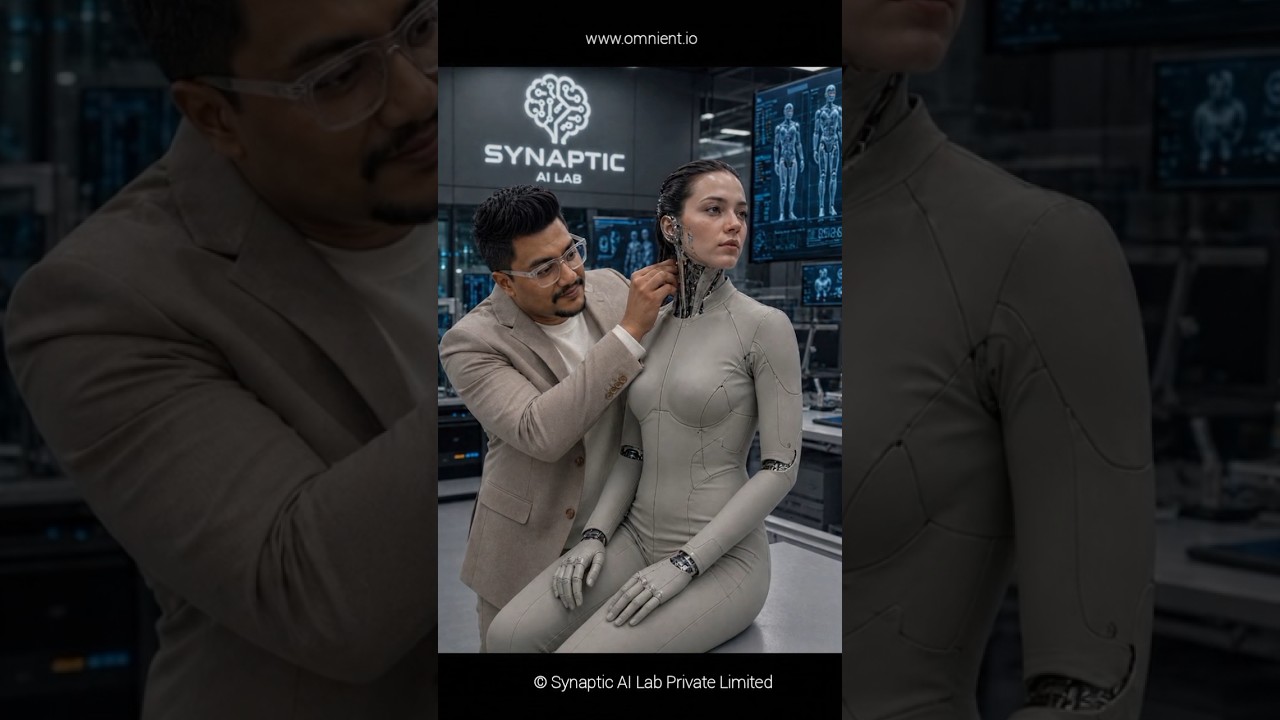
Abhijeet Sarkar, founder of Synaptic AI Lab, has published multiple books and papers since 2024 exploring AI consciousness, fairness in design, and deepfakes. His Superintelligence Blueprint proposes governance strategies for controlling advanced AI, while he's also building an AI-literacy curriculum to make these ideas accessible to the public.
Chapters
Today's deep dive is all about getting a clearer look at, uh, one person's thinking on AI.
Right? Someone really grappling with the huge changes AI is bringing.
Exactly. We're focusing on the work of Abhijeet Sarkar.
Yeah. And Sarkar is interesting because he's not just, you know, a tech guy. He is a researcher, philosopher.
Okay.
But he's also become this really prolific author. He's positioning himself right at the intersection of AI, tech, philosophy, ethics, H, how it all impacts society.
And he founded a lab too.
That's right, Synaptic AA Lab.
Got it. So, our mission here is basically to pull out the key ideas from his work, his books, his research, um, to quickly give you a handle on his perspective and, uh, you know, why he thinks it's so critical we engage with this stuff right now.
Because it's not future tech anymore, is it?
It's—
well, it's here.
It's reshaping everything, and understanding it means looking beyond just the, uh, the code.
Definitely! And what's really insightful about Sarkar is how he connects that tech background, that M.Tech, with this deep philosophical thinking.
Uh-huh.
I mean, his lab, Synaptic AI Lab, its stated focus is on advancing responsible superintelligence.
Responsible superintelligence? Okay.
That really sets the tone. He's not just describing what AI could do; he's He's actively suggesting frameworks for how we should, uh, navigate it.
And he's not afraid to tackle the really big, almost like mind-bending stuff either.
No, not at all. Take AI consciousness. In Synthesized Minds, he really dives into whether advanced AI could actually be conscious.
Or is it just a very, very good simulation?
Exactly! And then he connects it back to us. If machines could potentially surpass us cognitively, What does that mean for how we understand our own consciousness? Are our human theories even the right way to look at artificial systems? It's a big question.
But it's not our philosophical speculation, is it? There seems to be this constant thread back to, um, the practical, to ethics.
Oh, absolutely. That's foundational for him. Ethics isn't some add-on; it's like, built into the design.
So, fairness, accountability...
Fairness, accountability, transparency, The FAIR principles, basically. He talks a lot about that. And he confronts the real-world issues, like manipulation.
Which he covers in The Psychology of AI.
Right. Looking at deepfakes, algorithmic bias, how misinformation spreads. His whole aim seems to be making sure technology serves humanity, not, you know, the other way around.
It sounds like he sees a future of collaboration, not replacement. He uses the term human-AI symbiosis.
Precisely. That's a core concept— how humans and AI can coexist, collaborate, even co-create.
Right.
In books like Generative AI and The New Wave of Digital Creativity, he explores how AI can augment our skills, change learning, unlock new creativity. It's AI less as a tool, more as a potential partner.
And that partnership, that interaction, it affects us psychologically too, doesn't it? Feels like a really distinctive part of his work.
Yes, definitely. The psychology of AI is key there. He really digs into how these systems— social media algorithms, creative tools, whatever— influence our behavior, our emotions.
And decisions.
Exactly. It's about making us aware of those influences so you can engage critically, understand the upsides, like mental well-being applications, but also the serious risks of manipulation.
And looking further out, he's also focused on, well, the really big picture— superintelligence, governance.
Yeah, the Superintelligence Blueprint. It's kind of a roadmap for dealing with AI that could be vastly smarter than us.
The control problem.
He tackles the control problem head-on. How do we ensure superintelligent AI actually aligns with human values? And he argues really strongly for urgent governance now, involving everyone.
It ties back to his lab's mission, right? Responsible superintelligence.
Exactly. It's pragmatic— plan proactively to mitigate the existential risks. Don't wait.
You know, what's striking is just the sheer volume of his work recently, especially this concentration in 2024. 2025. So many books covering so much ground.
Yeah, and if you think about the bigger picture, that timing, it doesn't feel accidental.
You think it's strategic?
I think it suggests a really deliberate effort to build comprehensive AI literacy fast, right when AI development is just exploding.
So, he's creating a kind of curriculum, almost?
Kind of. Guiding you from the basics, through the tech and psychology, right up to the, uh, the ultimate potential and the need for us to respond thoughtfully.
So, if we're pulling it all together, what's the main takeaway from Sarkar?
It's a call for being proactive and keeping humans at the center of AI development.
Balancing the potential with the risks.
Right, constantly coming back to ethics, envisioning that human-AI symbiosis, and insisting we need to plan, seriously plan, for advanced AI, for superintelligence.
And that intense output recently really underlines how urgent he feels this is.
Mm-hmm.
Making these complex ideas accessible.
For everyone. Whether you're just starting to think about AI or you're deep in the field, his insights give you, the listener, a solid framework for thinking about AI's role.
Huh.
In your life, in the world.
Which leaves you with a pretty big thought, doesn't it? If AI's future isn't set in stone, if it's shaped by our choices, our values—
Then what choices are we actually making right now?