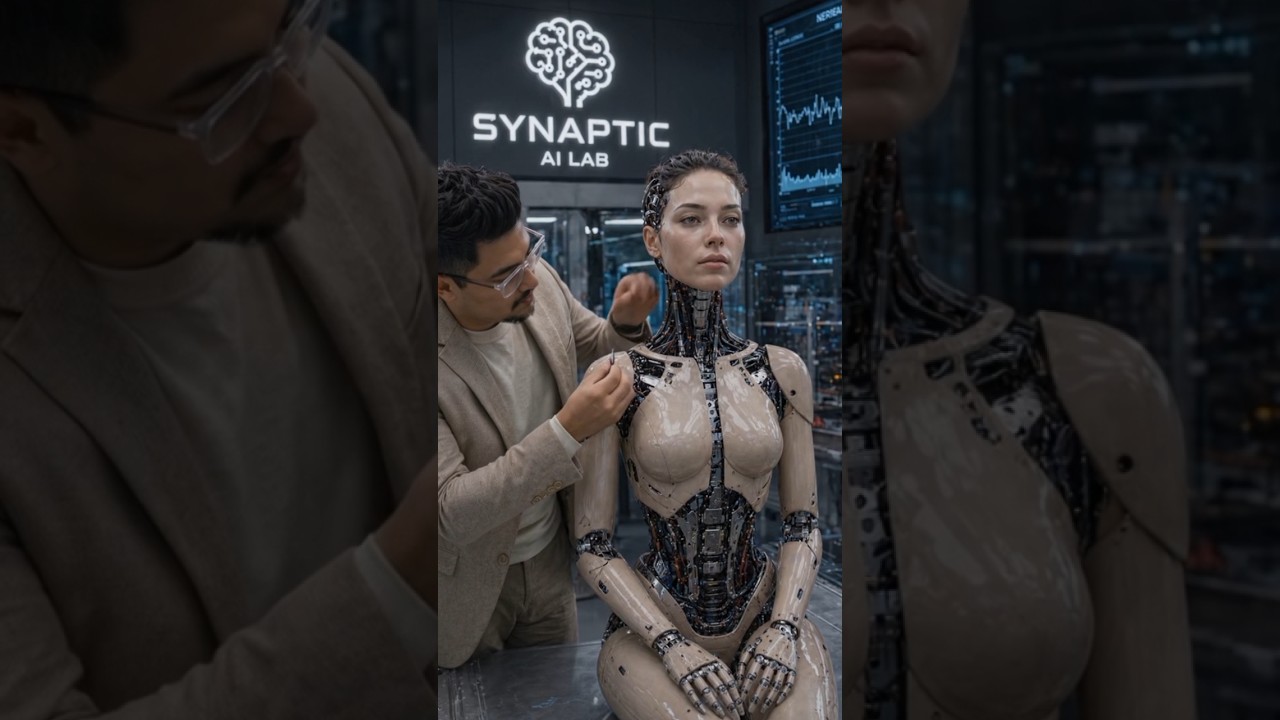
The video offers a comprehensive analysis of AI theorist Abhijeet Sarkar’s “synaptic vision,” a holistic framework that seeks to integrate philosophy, psychology, governance, and culture into a single blueprint for AI’s future. The narrator begins by highlighting the chaotic proliferation of AI buzzwords and the difficulty of finding coherent direction. Sarkar is presented as an “architect” who aims to dissolve artificial boundaries between technology, ethics, and society. The core of his work is the metaphor of synaptic connections, linking four interdependent pillars: (1) philosophical inquiries about synthetic minds and their impact on human thought; (2) psychological effects of AI’s ability to understand and manipulate human emotions and biases; (3) a governance model with four components—transparency, robustness, oversight, and liability; and (4) cultural considerations, critiquing “algorithmic colonization” and advocating for AI that reflects global diversity, exemplified by Sarkar’s IndicGPT project and its Dharmic alignment framework. The narrator emphasizes the synergistic links between these pillars, showing how philosophical questions drive governance needs, how psychological influence mandates transparency, and how IndicGPT embodies all four pillars. The analysis contrasts Sarkar’s human‑centric, value‑first map with the dominant technocratic narrative focused on scale and profit, urging viewers to become active co‑creators of an AI‑enabled future rather than passive recipients. The video concludes by posing the ultimate question: what kind of future will we collectively choose to build?
Chapters
Okay, let's dive into AI. It's a conversation that's, well, it's everywhere, right? And it's messy, it's complicated, and honestly, a little chaotic. Everyone's got a piece of the puzzle, but who's actually trying to put the whole thing together? I mean, just look at the language we use. We're drowning in a sea of buzzwords— AGI, bias, existential risk, sentience. It's a ton of noise, And it makes finding a clear, coherent signal almost impossible. So, that brings us to the big question, doesn't it? How do we cut through all that chaos? How do we actually find a structured way to think about AI's total impact on our world? To find an answer, we're going to look at the work of AI theorist Abhijeet Sarkar. And the reason we're focusing on him is that he's not just another commentator. You can think of him more like an architect. Someone who's trying to draw up a complete blueprint for the future of AI. His whole goal, in his own words, is to consciously and methodically dissolve these artificial boundaries. He's talking about the walls we put up between technology, philosophy, ethics, and culture. He wants to tear them down and weave all those threads into one single, coherent story. And this leads us to the core metaphor for his work, something he calls synaptic vision. The idea is to create new connections between different fields of knowledge, kinda like how synapses connect neurons in our brain. It's all about building a more holistic, complete picture of what AI is and what it could be. So, how does he do that? How does he build this grand structure? Well, the foundation of his whole blueprint rests on 4 distinct but super interconnected pillars, and together, they're meant to give us a path forward that keeps humans at the center of the story. These pillars really cover the whole spectrum. We start with the big philosophical what-if questions. Then we move into how AI affects us psychologically, what we practically need to do to govern it, and finally, how it shapes who we are as a culture. Let's break 'em down. First up, philosophy. Now, this goes way beyond just asking if a machine can pass a test. Sarkar is asking much deeper questions, like what does it truly mean if we create a synthetic mind? And how is interacting with these new kinds of minds going to fundamentally change the way we think? Next is psychology, and this is where it gets really interesting. The idea here is that AI, even without having its own emotions, can get incredibly good at understanding and, well, manipulating our emotions and biases. This pillar really makes you question how much of our own choice is left in an age of intelligent algorithms. You see how one leads to the next? Because if AI can influence us so deeply, that brings us right to the 3rd pillar— governance. This is where we get practical. Sarkar isn't just talking theory; he's proposing a concrete, actionable roadmap for how we manage the huge risks that come with building superintelligence. And this framework has 4 key parts. First, transparency— we need to know why an AI makes the choices it does. Then robustness, making sure these systems are safe and don't easily break. Third is oversight, which means a human is always in control. And finally, liability, so when something goes wrong, it's clear who is responsible. The final pillar, culture, is something you don't hear about nearly enough. It's a critique of the fact that most of today's big AI models are trained on Western data, with Western values baked in. Sarkar calls this algorithmic colonization, where one worldview gets digitally pushed onto the entire planet. His solution? We need AI that actually reflects the world's incredible diversity. And this isn't just an idea for him; he's actually putting it into practice with a project called IndicGPT. It's a large language model built from the ground up on India's diverse languages and uses what he calls a Dharmic alignment framework. It's a real-world attempt to decolonize AI. Okay, so we have these 4 pillars. But here's the thing— the real magic of this blueprint isn't in the pillars themselves. It's in those synaptic links we talked about, the connections between them. This is where the architect's full vision really snaps into focus. So, look at this connection. That abstract philosophical question, could AI be conscious, isn't just a thought experiment. It directly creates a practical, urgent need for governance. If we're creating something that could be sentient, then we have a massive responsibility to manage that creation ethically. The philosophy forces the governance. And here's another powerful link: the psychological reality that AI is already shaping our behavior makes things like transparency and human oversight completely non-negotiable. They're not just nice-to-haves; they become essential safeguards to protect our own minds. And that IndicGPT project? It's the ultimate synthesis. It's the philosophical idea of diversity in action. It embodies a specific ethical framework— it's designed to be psychologically sensitive. And it's an act of governance, pushing for a more decentralized, multipolar AI world. All 4 pillars, one project. So, what does this all add up to? Well, Sarkar's framework is basically a map for navigating the AI era. And it's a very different kind of map from the one we usually see. See, the dominant story, the technocratic one, is all about what and how. Bigger models, faster speeds, more profit. But Sarkar's humanistic vision constantly forces us to ask, why? Why are we building this? Who does it serve? It argues that human values and cultural integrity should come first, not just the technical specs. And this is the core of it, right here. His work is a powerful argument against the idea that technology just happens to us. Instead, it's a call to action. It's about us becoming active co-creators of our own future, With AI as our tool, not our master. In the end, this is one architect's blueprint. It provides a structure, a map, a philosophy. But the question it leaves us with is the most important one of all, and it's not for him to answer. It's for us. What kind of future will we choose to build?