Episode 119: Who's Eating Your Pie? with Erik Weir
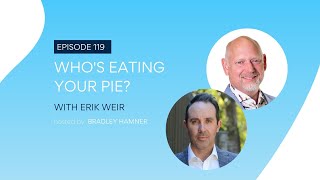
In this Club Capital Leadership Podcast episode, host Bradley Hamner interviews entrepreneur and author Erik Weir. The conversation begins with Weir’s origin story—from a childhood car accident and a lemonade‑stand hustle to real‑estate deals, Wall Street experience, and diverse ventures—illustrating how early adversity shaped his money mindset. Weir shares practical wealth‑building principles: confronting fear, dismantling limiting beliefs, and adopting a vision‑steeped yet mission‑flexible approach. He introduces the "5 Fs" (faith, family, fitness, finance, friends) as a holistic balance, and the "1 % rule"/compound productivity concept for incremental daily improvement. A detailed case study shows how solving multiple problems created a lucrative textile‑mill flip, underscoring problem‑solving as wealth creation. He challenges common myths about debt, market timing, and short‑term focus, advocating long‑term orientation akin to Buffett and successful athletes. The episode also covers practical habits like calorie tracking as an analogy for financial tracking, promotes his Amazon bestseller Who’s Eating Your Pie?, and includes rapid‑fire Q&A on books, travel, tools, and personal talents. Throughout, sponsor messages for Club Capital, DirectClicks, and Coach P Consulting are interwoven. The episode aims to equip small‑business owners with mindset shifts, actionable frameworks, and leadership advice to scale profitably.
Chapters
So the big question is this: how do small business owners like us grow our leadership, develop our teams, and scale our business in a way that allows us to get our products and services out to the world yet still remain profitable? That is the question, and this podcast will give you the answers. I'm Bradley Hamner, and this is the Club Capital Leadership Podcast.
Hey, before we get into today's episode, did you know that Club Capital is the largest accounting and advisory firm for insurance agency owners in the country, providing monthly accounting, CFO services, and tax preparation. Check them out at club.capital.
Have you ever tried online marketing before and weren't sure if it was working?
Maybe your rep talked about all the impressive features and stats and said things were going great, but you didn't know how all that tied into raw new policies written. Well, that's not the case with DirectClicks. DirectClicks is the premier Google Ads and SEO option exclusively for State Farm agents.
Why?
They're 100% results-oriented with an exclusivity guarantee. Every review call you have with your account manager focuses on what really matters to your business, and that's leads and call-ins received. Everything will get broken down to cost per lead received. By investing with DirectClicks, you're going to free up time and energy to focus on what's most important in your agency and doing what it is you do best. This will be the best investment you make for your team by spending confidently and scaling your agency today with exclusive online marketing partner DirectClicks. Visit us at directclicksinc.com. Ambition is the first step towards success. It's time to level up your agency, and Coach P Consulting will help you do just that by using the same strategies he used to sell over 700 life insurance policies in 2021 alone. Now, this is not your regular one-and-done type coaching. You'll get personalized coaching 2 days a week, every week of the month, and you'll get a live look behind the scenes of his team training and an office that's performing at the highest level. There's a reason Coach P Consulting is the fastest growing coaching company for insurance agency owners in the country. Coach P will train your team alongside his own and show you the exact steps they are taking to achieve Chairman's Circle, Exotic Travel, and Multi-Line Presence Club and be one of the few agents to be selected to have a third office. So whether your goal is to be at the top of your local market or amongst the best in the country, this training will give you the strategies and the tactics to get there. For just $250 a month, you'll get high-level coaching each week from someone who is already getting it done at that level and his strategies work, and it's time to put them to work for you. Sign up at coachpeakconsulting.com and get your first full month for free when you mention the Club Capital Leadership Podcast. Eric Weir, welcome to the Club Capital Leadership Podcast.
I'm glad to be here. Thanks for having me.
Excited to have you. We always start with background and origin story. And as I was telling you before, we kind of kept rolling. I thought that your story would be great for our listening audience. Why don't you just kind of take people back and bring us to present day and give a little bit of your journey?
Oh my goodness, that's a, that's a big question here. So I, I guess one of the most interesting things that I start my book with is, uh, is how I got started with a, with an automobile accident that kind of ended up being a positive in my life that started off being a negative, where at the age of 5 I was in a wreck. And, uh, that wreck, um, you know, when the car was hit and they put spinning around, then I saw people on stretchers going by. I was real nervous that the car would explode. And for about an hour, I waited in the car, and the police were telling me to stay in the car. My parent, my mom was, and I had a lot of trauma associated with that. When I got home, I go to dinner, I'm asking my parents to please pass the potatoes, but it came out, please pass the potatoes. And they realized real quickly I had a massive speech impediment that really plagued me for the next probably 30, 35 years. And I went to a speech therapist and they told them, they told me, and my mind's on my hand, my legs are kind of dangling off the, the chair there because I'm 5, it's 1972, it's not super PC. And they said, Eric, life's going to be hard for you. It's going to come, it's going to be difficult. You're going to have to work to push through. You're going to be a recluse and keep to yourself and maybe be a failure, or you can be very successful because you'll have to learn to push through frequently. So he came up with an idea of having some way to encourage me to talk to people and, uh, that I would want to do it. So they came up with a lemonade stand. So I put a lemonade stand at the end of my driveway when I was 5, and I made a sign and said lemonade 50 cents. And I did that because I didn't want to talk to people. And lo and behold, every car came up and goes, how much is lemonade? Then I would point to the sign hoping they wouldn't ask again, but they always did. And I goes, 50 cents. And I learned real quick that Stedman was really rough at school and being picked on, but I never got paid 50 cents. It was either a dollar or $5. So I made $82 in 1972 selling lemonade, which is more than my dad made that day, he told me later. And I was like, that's a good start. And then I ended up going from there to getting my real estate license, you know, and black belt karate in my teens, did my first real estate deal in my teens. Shopping center, went on to work on Wall Street and moved to San Francisco, did some different Wall Street work, investment banking, was around that. So just, you know, this started then, you know, fast forward, we've done Topgolf, faith-based films, movies, hedge funds, uh, lots of different things involving, uh, investments, uh, you know, since I began my career professionally in real estate in '85 and then securities in '89.
Mm-hmm. Where do you think that the biggest impact on your life from your, um, understanding of money and financial advice, building wealth— what do you think? I mean, I think it's probably not just one thing. I'm sure there's a lot of events obviously that happen in your life. I mean, from the lemonade stand and everything else on. Um, I can certainly see parts of myself in my father and the way that he manages money, both good and bad. And some of that was more just acquired by observing, not necessarily him teaching me per se. Where do you think that— where do you think that your financial advice and just your understanding of money came from?
I would say it came from several different places. I mean, I listened to a lot of, uh, self-help things from Zig Ziglar and other people, picked up pieces. I've also, you know, as a kid, we've had— my parents have had highs and lows. I remember as a kid seeing my parents' cars being repossessed one day, moving out of our house and renting it so we didn't lose it, moving from Georgia to California to start a business, living on a family sofa for 3 or 4 months and really not knowing we had terrible financial— at that time, having a good time with my parents. It was unifying. My dad started a business and sold it a year and a half later. Kind of made up for lost time, had a very good, very good exit. Um, but recognizing this stuff's temporal and that if you lose it, it's not the end of the world. You can come back. And also realizing that what limits us is fear. And having a stutter where you're fearful of every person you meet, you don't want to— it's hard to do that. I've had to face fear tens of thousands of times of meeting people. It's weird cold calling at Merrill Lynch, where, you know, try to reach, you know, 500 dials a day and being hung up on lots of times. You overcome fear in little tiny pieces, and you realize that it's not failure that limits people, it's the fear of failure that limits people. And it's our own fear, our own self-perceived limitations. So if we're able to envision something a little bit bigger than what we currently allow ourselves to envision, if we're able to remove our current limitations and think, how do we overcome those, we can accomplish vastly more in a much shorter period of time. But really the greatest limiting factor is what we believe. So if you believe somebody told you you're a loser, you'll never count anything, then you won't. Henry Ford once said, whether you believe you can or believe you can't, in either case, you're probably right. And I think that's really some of the things that have stuck with me is what do I allow myself to believe? And we all have, no matter who you are, you have some limits you put on yourself. Elon Musk is colonizing Mars, right? But maybe he's not colonizing— he's not doing a further out planet, right? Or, you know, what are we doing? So everyone has a limit. Or I want to change electric cars. He's not trying to change electric cars and airplanes and, and, and. He has a focus. So we all have some limits for ourselves, but most of the time the limits we put on ourselves are, you know, can't— are likely lower than our capability.
Yeah, that's so true. You know, I think about whenever I'm talking to my wife and we're setting, you know, just goals for our family, I send— I tend to set these just incredibly big goals. And she, she, she, she just almost can't allow herself to go there because she is more concerned about, well, if I set that big goal, now I'm concerned, I almost have to feel like I'm gonna let myself down. So allowing her mind to to really go there sometimes becomes really difficult. And I think for other people, they, they have that struggle of saying, man, I just don't even know if that's actually possible. I mean, it sounds great for us to have this amount in the bank and have all of our debt paid off, and that would be wonderful, but I'm afraid of letting myself down. To your point around fear of failure—
fear of failure is so painful. In my book, I talk one of the early on chapters about a friend of mine who's now a friend. I just met him this day. And he just went through bankruptcy and, you know, had his washer dryer, things like that repossessed. And I was speaking at a men's retreat and about goal setting and setting, you know, believing what you can accomplish. And I said, you know, knowing what you now know, what would you do? And he said, well, I would, you know, if you had no limitations, you couldn't fail, had all the money, all the connections, all the talents, all the resources, and you wouldn't fail, what would you do? He said, well, I would buy I'd buy this textile mill on this river that has, you know, millions of dollars of copper and wood in it and brick, and I'd buy it for less than that and I'd sell it and make the money on the copper, wood, and brick. This is the recession of 2008-9 when this happened. And I said, why don't you do it? He goes, I don't have the money. I said, what are they asking for? It's $2 million. What's the contents worth? Way more than that. And I said, well, offer them $500 grand. He goes, I don't have $500 grand. I said, do you know the people that have the copper, They buy copper, yes. Some people buy the wood, yes. People buy the brick, yeah, I know them. Offer $500 grand. I offered $500 grand. It was near the end of that year and the bank needed to take a loss. So, they accepted the offer. All closed in 30 days. He's like, what? And I said, yeah, well, now call the copper guy, the brick guy, and the wood guy, have them come down. And he did. And I said, have them appraise the value. Well, this is worth $500,000, this is $750,000, whatever numbers. Ended up being, as I have them give you a third down as a deposit, and that third is greater than the $500,000, use that $500,000 to buy the property and then have them give you the other two-thirds after you close. So he ended up doing that, and within, you know, 30, 45 days, he went from no net worth to hundreds of thousands of dollars in the bank and having a paid-off, uh, 10-plus acres on a river in North Carolina. And he's like, oh my word. I said, it doesn't take money, it doesn't take anything to have to create wealth. What it takes is solving a problem. The bigger problem you can solve, the more wealth you can create. So you solve that company's problem that had the mill they want to get rid of. You solved the guy's problem that needed the brick to sell to customers. You solved the copper vendor's problem needing copper to resell. You solved the pine— heart pine guy's problem, and you solved your problem. So you solve your problem, but you also solve 4 or 5 other people's problems at the same time, and you can create a win-win situation that will transform your life financially.
You have got a unique perspective. You have been around— I mean, obviously people have been very successful, but you've been around people who have literally hundreds of millions, billions of dollars. What are the, what are the, what are the things that you've picked up from the mindsets, in addition to what you've already shared, with those people that have that kind of wealth? I mean, you mentioned Elon, he's obviously the richest person in the world right now. But, you know, there's so many other people that are billionaires, you know, there's obviously not— I don't know how many there is at this point. But what are some of the things that you've been able to learn from them?
There's some people I've learned from, their designers, their Grammy Award-winning people, they, you know, they're household names. But they really are just, they're not bound by the same limitations we put on ourselves. It's just like, what do we want to do? So if I'm talking to an entertainer around somebody, I'm not limited by, they just don't agree to be limited by the small details. So what they try to do is create a vision that they're pretty hard and fast to, and a mission that they're flexible. So think about it this way, vision's where you want to go, missions are the steps to get there. So if like a Kanye says, I want to do— Kanye West says, I want to accomplish this vision, he may not be the one that does all the steps, but he's committed to the vision. And it's weird, like the laws of attraction, people come into your life that can help you with the steps. It's the same thing if you want to pick a restaurateur or some of the people, you know, in my book who endorsed it, their names, you can kind of see that they've been massive problem solvers in life. And they do it by being steadfast on the vision and flexible on the mission, on the steps. And also by recognizing there's going to be setbacks. I don't care who you are, there's going to be setbacks, going to be disappointments. Sometimes things go better than you expect them to, but oftentimes they're slower, harder, take longer, not done right the first time. So there has to be a resolve. And I talked the other day about like The Rock. The Rock will get up and speak to Dwayne Johnson will speak to 1,000, 5,000, 10,000, even TV. And he goes, no one outworks me. No one, no one, no one outworks me. And he tells you exactly what he does to be in great shape, to be an actor, to push. And people still don't do it. You, you, you look at a Kobe Bryant who every, every Laker knew. He got up and practiced before the morning practice, and then he gave the practice, then he would eat, have another practice, eat, and then he would practice in the evening. So he did 3 practices a day and all the other players had 1 practice a day and he just got better. So if you imagine, if you're doing 3 times the productivity of the next guy over 1 year, you have 3 years. Over 10 years, you've got a compounding of many, many years more productivity. And what I encourage people, because we all overestimate what we can accomplish near term. And we wildly underestimate what we can do long term. So if I can make 1% change a day and with the rule of compound, I call it the rule of 72, I double my productivity in 1 year. And then, excuse me, I double my productivity in 72 days, excuse me. In 144 days, I double the double. In another 72 days, I double the double the double. In a year, I'm 1,400% more productive. And I give a quick illustration of what does that mean? How can I do that? I said, well, imagine you wanted to join a health club for a decade, which you never did.
Yeah.
You want to be really after your health. Okay. Well, let's just make a 1% change today. Turn on your computer and then you're done for the day. Don't do too much. You're going fast. Number 2, open the search window, but stop. Don't go too fast. Number 3, put health club near me, press send, but don't do anything else. The next day, call, but hang up because if you talk to the trainer, you are moving too fast. The next day, call and speak to them. And then the next day, go see them. The next day, you join. And then, you know, plus or minus a week, you have gone from 10 years of dreaming of doing this to making very, very small steps a day. Now you are a member of a health club with a trainer and you are exercising. That is a short period of time. Now, what happens is we think we are going to lose 20 lbs. the first month and we are just not. Because we have to overcome habits, thought patterns, you know, dietary needs, exercise, sleep, so many different things. So if I can just attack a little bit each day and hold the ground and add a little more to it, then I can make very tiny changes that make massive change in my life.
That's so true. You know, um, this is why I'm such a big believer in all business owners setting a 3-year vision for where they want to take the company. And I love what you say about being steadfast with the vision and being flexible with the mission. I really, I really do like that because, I mean, if you had to set out a 3-year vision at the end of 20— uh, say, say January of 2020, well, that clearly would have pivoted within, uh, 2 months, right?
Correct.
Yeah. So, yeah, you know, the path to actually get there, you could have still said this is what we're going to grow our company to, but how you were going to go about doing that clearly was going to have to change and pivot because of, because of economic and, you know, this global pandemic, for goodness sakes. And that's just an obvious big example that's happened. Why do you think though, that people hear that? And they just don't do it?
It goes back to fear, because you fear you won't stick with it, you fear you'll come up short. And I think what people have got to embrace is what does failure look like? And this may sound terrible to a lot of people, but I mean, we have, uh, homeless shelters, we have churches, we have nonprofits, you have family members, you have friends. Bad oftentimes is not that bad. I mean, I've seen— I've literally have seen my parents' cars repossessed and we had to leave our house. Yeah, we— and I didn't even know it was being that bad of a time. We're living with family, we're eating their food, I mean, have more conversation. I kind of liked it better than I did a month earlier in my old house, you know, got to see the country, drove across country, started a business. And I'm working in, you know, I don't think they had too much child labor laws, so I'm in there helping Dad with the business. It's the summertime, changing oil on trucks, and, you know, what am I supposed to be doing this, you know? Here's your fresca for your doing your work. And it was so fun and great memories. And it's like, that was the low. I mean, we lost everything, lost everything, and that was the low. And I think what people What people worry about, and I talk about the 5 F's— faith, family, fitness, finance, friends. We're all worried about our money, but at the end of our life, if you have $100 million, you're wondering where your family is and where your friends are, not where your money is. And how do we remember that it's relationships that keep things going? It's okay to have wealth, but if you got wealth and you're spending it on yourself or you're paying for friends, it's not the same thing. So life is a balance How do you move ahead? Faith, family, fitness, finance, friends. Your wheel is what you believe, and then your— to have your wheels, your belief system, and out of your belief system manifests everything else. And what I say is, people, is what I ignore today will consume me tomorrow. So if I ignore my health to get wealth, my wealth will be consumed to save my health. If I ignore my family and my health to get wealth, I will use my money to try to re-establish relationship and help— and help my wealth. And those are just things that are just, that have been, I've seen lived out over and over again. And that's the benefit you can have of seeing other people's mistakes. And you can learn from, you can literally learn from everybody. Some lessons good, some lessons bad. I want to avoid this. I want to do this. And there's 4 ways to make change. Start something you haven't done before. Stop something you're doing right now. Do more of something you're currently doing or doing less of something you're currently doing. So start, Start, stop, more or less. That's it. And if you look at your life and say, what do I want to start doing, stop doing, doing more of, doing less of, it just helps a lot. And then give yourself a break. You're going to have setbacks, you're going to have disappointments, you're going to have bad days, and just recognize that that's just part of it. And over time, you begin to realize that goals are— have a goal, you can change a goal, you can adjust it if you come up short, but you'll accomplish more just by doing this process and starting them than you will if you never do. And then, you know, don't be too terrible on yourself, you know, give yourself a break if you mess up, but just keep pushing ahead, keep the resolve.
That's so good. You know, I, uh, I, I can't remember where I first heard of the 5 Fs before, but, uh, and, and I would give credit to it, but I love that you have that, um, in your book because I think that that is such a good way to be able to think about all of those things. And obviously the title of your book, Who's Eating Your Pie, about having all of those to be maybe not proportional— you can certainly speak to that— but having all of those as pieces of the pie. Because I can think of— so this past year we were renovating our house in town and we were staying at another house. It was an hour away. Well, my schedule on a daily basis got way off from a fitness perspective. My, you know, eating habits, because we were on the road driving a lot, was bad. I wasn't working out, and I could tell. I could tell. And so this year, uh, my one word of the year was health. And so I really dedicated to doing that, and I took some steps to do it, is going as far as paying an online trainer to hold me accountable weekly, um, for my nutrition and working out. There is literally nothing this guy has told me that I didn't already know. I mean, no, seriously, it's so basic. Eat less calories, work out. And a few weeks ago, because you were talking about fitness a minute ago, so I'll tell this. A few weeks ago, he said, uh, this was maybe a month ago, he said, uh, how many times you get in the gym last week? And I have a workout, you know, schedule he gave me, but there's nothing like— there's nothing incredible about this workout schedule, right? You could Google this thing and put it on, right?
Right, right, right.
And, uh, I said, I, I went in, I worked out once, I lifted once. And he said, how come? And I thought, that's a really good question. I don't have an answer. I just didn't. And so then I had to realize, okay, what are the character traits about me that's making me not get my butt in the gym? Get your butt in the gym. And from that moment, totally changed, and I feel a lot better. I've lost 9 pounds, as a matter of fact, now. So, you know, anyway, um, but anyway, so the point of just having— I was just giving that one for around fitness. Yeah, is to realize that that one had really kind of fallen by the wayside because I was focusing on other Yeah, it's a whole thing.
It's like everyone thinks there's a big mystique around it. And it's just like the simplicity is blinding. And at the same time, you know, sometimes we develop real estate and I say people are blinded by familiarity. You know, you see things the way they've always been. And if you go through, particularly in Alabama and South Carolina, Tennessee, and it's not just here, it's other states, but you've had a lot of people move to Alabama and it's changed a lot. You've had a lot of growth the last 20 years. And there are people like, man, what if I bought this property 20 years ago? What if I've done this? So there's so much change to take advantage of, and you can be blinded by what you see today. And the— and this, it could be obvious, you know. I had a guy say exercise boils down to one thing: eat less, move more. I mean, wow, that's so simple, you know. And yet it's so, so complicated, right? Because it comes back to our own desires and and our own, uh, our own need to, uh, maybe to, to eat as a way to, uh, to offset other things in life that maybe aren't going our way.
Well, and I will say, I mean, around that, just one thing, and this kind of gets into— you, you can, uh, I'll come around to like tracking for setting goals and personal finances. So what he first did, I'd never done this. I mean, I turned 40 this past year And so I'd realistically never been— never needed to, to lose weight. And quite frankly, most people wouldn't realize— would, wouldn't even look at me, not even think that I needed to lose weight. I needed to do it for me. Okay. And so, um, I'm saying all that to say that he made me start tracking in MyFitnessPal, you know, the app. I'm sure most people are familiar with that.
Well, I had never done that.
I'd never tracked how many calories I was eating. It was completely eye-opening. I did not realize how many calories things were. I mean, I would eat lunch and take in 1300 calories without even knowing, right? And so I started to become aware before we even set goals. He didn't even tell me how many calories. He just said, I want you to track your calories for the next 2 weeks. And, uh, so I did and started getting in the habit of doing that, to your point about incremental change. And then he said, okay, I was around 2700, 2800 calories. He said, okay, we've gotta, we gotta ramp it up. We gotta go down to 2300. I was like, oh wow, 2300, this is gonna be It's gonna be tough to do. But think of it now, I think of it like a scoreboard to where I had a goal. And of course, this one, I need to stay below, and then do that consistently over a period of time. And that's where all the changes happen. And so how do we take that same idea around like our personal or even our business finances, saving money, having, you know, actually building wealth, so to speak, take that same concept and do it around our money.
Are you an agency owner looking to grow your revenue, increase your bottom line, and better manage your taxes? Club Capital is here to help. Club Capital is the largest accounting and advisory firm for insurance agents in the country, providing monthly accounting, tax strategy, and CFO services. Way more than bookkeeping and your everyday run-of-the-mill tax prep, Club Capital is focused on providing financial and tax advisory services that help you plan and forecast your agency's performance. Their financial dashboards and agency forecasting tools help you better understand your agency's historical performance, create, measure future targets, and see how your agency compares to your peers around the country. Imagine what it would be like to understand the impact to your bottom line when deciding to hire a new employee, or forecast the impact rate changes or commission rates will have on your business. With over $200 million in tracked annual revenue and $140 million in tracked annual expenses, Club Capital has the data and the team to help you make better informed decisions for for your agency. They will help you turn that back office stress into the backbone of your agency's success by giving you the tools to take your agency and your leadership to the next level. Visit club.capital today to book a solution overview with one of our business consultants. Club Capital, way more than a CPA firm.
Yeah, it's just begin with the end in sight. And I talk to people, if you go on vacation, You know, you have a roadmap, you know, where are you going to sleep, particularly a road trip, what hotels you're going to go to, what sites you're going to see. You know, if we buy a new iPhone, we can tell you about the, you know, the extra, the larger one, the smaller one, the memory options. And we spend probably more time doing that than we do planning our finances. So I like to start with like, do you want to be independent of Social Security and pension when you retire? Yes. How long is that? Okay, what would that look like to you today? You just do basic skills. What do I need to do to get there? And sometimes the thoughts can be so overwhelming. We could be in our 60s and we haven't planned or prepared. And then it's never too late, you know, so then you just start to think, how can I add value? How can I solve problems? How much capital do I need to create? And I try to back into it, you know, with 1, 3, 5, 10-year goals. And the earlier you start, obviously the better, but the later you start, there's still options. I mean, McDonald's— Ray Kroc had started McDonald's to advanced years, and Kentucky Fried Chicken was started by a man in the '70s. And you just realize that, you know, you can do a lot in a little amount of time if you have a clear objective and a clear vision. But not having clarity of where you want to end is probably, uh, one of the worst things. And I tell people to think about is, is, um, you know, somebody told me I was young to write my own epitaph as a kid. You know, it sounds pretty morbid, but what do you want said about you when you leave? Because we, we all want to leave a legacy and we all want to leave a good impact. We are going to all leave a legacy and we're all going to leave an impact no matter what, because we'll be remembered one way or the other. So how do you live with that in mind? And then the next thing is, I don't have the time to do that. And I would say, you don't have the time not to do that, you know, because dreaming without goals is just a hallucination, you know. So how do I, how do I begin to dream and then have goals? And it doesn't have to all be done at one setting. Go back to 1% rule. If I can just think for 3 minutes of where I want to be in 20 years, that's probably more than I've thought about the last 10 years about that goal. And the next day, if I can think 3 or 4 minutes about Where do I want to be in 10 years or 5 years? What am I good at? What problems can I solve? Do I have any savings now? Do I have any debt now? Just to begin to go through how to systematically, and I go through it in my book, to eliminate debt, begin to build wealth, look at marketable securities, real estate, things you may want to think about that may or may not be appropriate, and how to work with a financial advisor along the way who can give you advice and see what's best for you.
What are a couple of the biggest myths or things that you see that is like, quote, good advice, but you disagree with when it comes to building wealth?
A lot of it just has to come from— you got the, the no-debt guys where, you know, if I've got credit card debt, I think that's a really good idea to pay off because it's 15, 16, 18% interest. But, you know, if you have debt on your house that you live in, I'm not a super big I'm like, okay with that. I'd like to have it paid off, but I'm okay with that because there's some tax reasons for deductions you get with the IRS. So there's some things in my mind anyway that can offset that. Of course, you can do too much of anything, have too much debt. You can always go to extremes. But I think that is one thing. And I think, you know, also just trying to be long-term oriented and realize that, you know, like right now the market's having a setback and people are are concerned. We may have a recession. We may have— we have inflation. We may have an expanding war, uh, in between Russia and Ukraine. There's a lot of concern out there. And generally, when there are times of concern, we get scared and want to pull back. But history would indicate that those are the times you want to let your sails out and begin to invest, because there's all— things typically return back to the normal. Sometimes they go fantastic, and sometimes go really badly. But if they're going poorly, you can be pretty, pretty assured based on history that it improves at some point, right? Or just becomes the new normal and it's no longer a big deal because it's just everyone's accepted it. So I think, I think that, that recognize if you're having a terrible day, you can probably have a good day in the future. Having a good day, you may have a terrible day in the future, but things change. And be ready for change and, and lean into opportunities when they present themselves. Because I mean, common wisdom would say The same people that were saying buy the markets when it's at all-time highs are probably telling you to wait right now. And it's probably a good idea to invest when things are bad. And it's probably a good idea to invest when things are really good too. Just keep investing if you— to the extent you can over a long period of time.
[Speaker:CLAY_STONE] It seems like some of the people that I know that have the most money or the wealthiest seem to be the most long-term oriented. But the people that I know that don't are much more short-term focused versus, you know, a couple people I know, they seem to, they seem to think in 5, 10, and 15-year spans than they do about, you know, what's going to happen in the next 5 months, per se. That's just what I've seen.
Totally true. And I mean, Warren Buffett says stocks are a terrible investment day to day, but a very good investment for the long haul. Same thing can be said about real estate or owning your own business. And those are all, all things that could be said, but It's so true. And if you look, I'll give you an example. If I finish high school, the job I qualify for will pay, you know, X amount per hour. And if I go to college, the guy who just finished high school is doing better than me because I'm in college, I'm spending more money. After college, I can earn maybe a little bit more. At graduate school, maybe more still. Maybe go to medical school, more still. But I've deferred gratification now in, you know, many, many years if I become a physician. But my earnings after becoming a physician are probably higher than other people who didn't invest that time in education. Now there's also been an entrepreneur and there's plenty of sales or things you can even earn more than that person. So I'm not saying there's any one track, but the point is, to the extent you, you can be committed for the long haul, you'll likely experience more success and realize that life's a marathon, it's not a sprint. And the good news about that, when you have setbacks or failures or things that really, you know, undo you. You, you, you know, look at it as a marathon and not, not a sprint, and don't let it unseat you emotionally and keep, keep moving ahead.
Have you read the book by David Schwartz, uh, The Magic, uh, of Thinking Big, I think is what it's called?
I'm familiar with the book, yes. Yeah.
How do we— what are your thoughts around, uh— I thought you gave a good example is that Elon says, well, we're going to colonize Mars, we're not going to colonize Pluto. As an example or whatever. And obviously there's some about like, well, you literally couldn't live on the planet.
I get all that. That's not the point.
Point is, how do we reconcile? Okay. Yeah. You're really thinking big. That's, that's amazing. That's going to stretch yourself versus, okay, there's some realism that needs to be applied to that.
The best example I've had is it starts with yourself. And I'll give an example. There's a poem, I'll paraphrase it. When I was young, I wanted to change the world. I came a little older. I want to change my country. As I began to age, I want to change my stayed and older still, I wanted to just change my county. As I began to age even more, I decided to change myself. And by changing myself, I changed my family. By changing my family, I changed my town. By changing my town, I changed my state. By changing my state, I changed my nation. By changing my nation, I changed the world. So change starts with yourself and recognizing that you are exactly where you are because of the decisions you made to be where you are. And you may say, I'm blaming somebody else. And there's some truth in that. It's people who have an impact on you. But as long as you blame somebody else for where you are, you have a hard time making change. And if you accept things and say, I am where I am, I'll make change, that's a very healthy spot to be. And then you can then begin— the good news and the bad news about— the good news about that, if it's up to you, then you can be the one that can make the change. If it's somebody else, then you're, you know, it's harder, right? So accept responsibility and just build a plan and just take baby steps. I mean, what's next? What's a small thing I can do to get a goal. If you've never set goals, get a piece of paper out and set it. Look, don't do anything else. Next day, get a pen. Third day says, you know, think of the 5— my fitness, what I want to look like, my friends, my faith, my finances, you know, how do I want to do these things, what do they look like. And just invest as much time as it makes sense for you to do that, and just do a little more each day, and you'll be surprised what happens. And at some point, the the nuance or the fear of planning or setting goals really goes away because you realize it's no more than what you've planned for a road trip or when you've planned to put iPhone to buy. It's a similar skill. It just takes a few minutes to be quiet and think and include people in your life that you want their input on.
That's so good. Congrats on the book. Uh, tell us about it.
Well, so, Who's Eating Your Pie? And the subtitle is Essential Financial Advice That Will Transform Your Life. We're excited about it. It's an Amazon bestseller now. It's probably the best ways to get it is just put in Amazon search, but who's eating your pie? Or my name, Erik Weir, E-R-I-K Weir, W-E-I-R. You can learn more about it and have a chapter you can download for free to see if you like it.
I love the COVID image. You did really good with the, with the, with the COVID of it. I think it's great. I know that was a big endeavor to get that book written.
It was a really, really big endeavor, bigger than I thought for sure. And it was, uh, something I got most of the way through and thought, eh, it's not that good. I'm gonna go back and work on it longer. So I had to double down and spend more time on it. I'm pleased with the outcome, but it was, uh, it was a lot of work.
How long did it take you to finish it?
Uh, it took about a year and a half because after about 7 months I thought the product was average. And I'm like, I really want to— I want each chapter to give somebody reason to hope, a challenge, hope, and permission to dream. And, and, and, and to be— offer somebody a truly transformative life each chapter. If it doesn't do that, I want to keep working on it. And, uh, we've had feedback so far that, that, that people have found, uh, some chapters— some, some— each chapter and some few of the chapters very helpful to their lives. And that's really what we want to have happen because you're around— I've learned so much from other people along the way. And if I can take what I've learned from other people and pass it on, that really is, uh, uh, something I'd like to do.
Core tenet of mine, that's a core value, is growth to contribution. You grew so that you could then go on to contribute to the lives of other people. All right, Eric, you ready to go to E9 rapid-fire questions? We'll wrap up.
Yeah, whatever you like. I'm ready. All right, here we go.
What's the last book that you read?
I read books all the time. I guess the last book that I read is called The River of Doubt by Candace Millard. It's the story of Theodore Roosevelt's journey through the Amazon.
Oh, fantastic. Was it good?
It was really good.
All right.
Book you would recommend the most to small business owners?
Oh, you could do— I guess do See at the Top by Zig Ziglar.
Favorite travel destination?
I have several of those, so, uh, I guess something I could drive to is Charleston, South Carolina.
Oh, that's a good place to eat now.
Yeah, it is.
It's got good food. I had to— I'd have to save up calories for weeks before going over there.
Yeah, I break, I break a lot of rules when I'm there.
Yes. Yeah, there's rules and then there's exceptions to the rules. And if you go to Charleston, don't take your— don't, don't just delete MyFitnessPal. Just don't even do it.
It needs to stay behind, particularly when the grits show up. That's really good.
When you're not working, what do you love to do?
I'm not working. I enjoy playing golf. I enjoy travel. I enjoy exercise, you know, bicycling, riding motorcycles, karate. I'd like a lot— I like a— I have an eclectic taste of things to do.
Here's my invitation for you to come down to the ledges and play golf with me on my home course. Okay.
Oh, that'd be fun. That'd be fun. I enjoy, I enjoy that. That'd be fun.
Yeah, I, I love to play, if you can't tell by my, by my golf attire.
Golf hat, you know, golf shirt. Yeah, I trust the part too. That's— I don't— we'll see how— what golfer shows up though. Yeah, in the last 6 games I've had an honest 30 and a 93 I sort of fudged again, so I was 80 in the '90s, we had to push it, but it's fine. Enjoy the game. Love it.
Uh, to all my listeners, listen, you can come at— you can come to Huntsville, and we will— we will— I would love to have any of you out to play 18 holes of golf, and we'll talk business. Uh, we'll talk business the whole time. Uh, it'd be fun. All right, uh, what's your favorite tech tool or app that you use every day?
I, I love— what I end up using all the time is my, my Apple phone is my favorite device, and I use CNBC to watch stock quotes just about all day long. There you go.
What's your most unusual talent?
That's a huge talent. Wow, I didn't even think about that. That's a good one. Unusual talent. Well, I do— I've done a lot of martial arts, so I can, uh, I'm good with swords. That's good with both staff. Nachakas, any kind of throwing knives. So I can shoot, like shooting outdoors, you know, shooting. So any kind of, any kind of thing like that is probably at least a little bit unusual.
Yeah, I love that. What did you learn the most about yourself during the pandemic?
Uh, I, I learned that I really, you know, it was, it was a time of— I, I enjoy, I enjoy time to think. So, that was really, really good. And I really saw that there was ridiculous opportunity being created in the world by basically taking a great economy, you take everything's going well and an outside force shuts it down and they create opportunity worldwide. And I just saw, I mean, I learned about myself that I'm okay having the less interaction, more thinking. And I also learned that I— that's really motivated me to write the book is I wanted people— I saw people being depressed, down, feeling the world's coming to an end. We never fly again, we never travel again, we never have a family reunion again. And I'm like, this is not the case. The sun will rise again. And I wanted to write— gave me time to write the book to think about how to give back and encourage people at a larger scale.
I love that. 10-hour flight, dead or alive, who would you love to sit next to?
Dead or alive, I like to— I like to sit with, uh, with Elon Musk. I mean, just, just talk to him. He's a fascinating person. Um, I would enjoy that.
Yeah, no doubt. All right, it is the Club Capital Leadership Podcast. What is the best piece of leadership advice you've ever received?
I think put yourself in other people's shoes, right? So I mean, try to lead with conviction and clarity, but also seek— try to— you know, there's a lot you don't know. So I think you can learn from people all levels of an organization. So it'd be, you know, I see, you know, you need bottom-up information in order to make the best decision. So I think, you know, in order to be a good leader, You need to be thoughtful, reflective, compassionate. You need to be resolute, and you need to be able to overcome obstacles and then have confidence when sometimes other people around you may not, you know, and hold true, you know, 'cause over time when holding true, if you're convicted about your vision, where you're trying to go, I mean, more often than not, it works out great, and other people will come along the way.
Love it.
But a lot of people get frustrated and scared with the first buffets of wind and the first difficulty.
That's great. All right, everyone, go to ericweir.com, pick up the book, go to Amazon, leave him a review. Eric, it's great having you on. Hope to have you back on in the future.
It's my pleasure, and thank you.
Well, uh, as I said at the beginning, there was one thing that really stood out to me in that conversation with Eric, and it was being steadfast on the vision and yet being flexible on the mission. I, as I said in the conversation, that I am such a big believer in a 3-year vision for your business. And so if you don't have that and haven't taken the time— and it's not just a pithy statement, there's some great books out there. Michael Hyatt has one on The Vision-Driven Leader. One of my favorites is Cameron Herald's book, Vivid Vision. But those books really are speaking about the same thing. And that is having a comprehensive vision for where you want to take your business. And I do think 3 years is the perfect amount of time to do that. And when you do that, you know, whatever you believe begins to kind of conspire to be able to make those things happen. And understanding that there's going to be some things that are going to derail you along the way. I mean, the COVID is obviously kind of an extreme example, but things may happen in your home life, things may happen in the business itself, you lose, lose a key employee, and also the same time, you could bring on an A-player that completely transforms your business overnight. So that was one thing that definitely stood out to me. I think number 2 is just a good— another good reminder around limiting beliefs. And then I thought whenever he gave the example of, you know, Elon saying, okay, well, obviously that's somebody who's really not limited by very many beliefs, but he obviously set Mars as to where he wants to go. And he wasn't— and then maybe even a more, uh, tangible example is around doing electric cars. And then he'll maybe expand that into, you know, airplanes and trains and so many other things. But I thought that was a really, really good point, is that Elon is— while he's considering Twitter and other things right now, he's also incredibly disciplined and very focused on the vision of where he wants to go. And he's certainly surrounding himself with an incredible team. Those are a couple things that stood out. And then also the 5 Fs, you know, faith, family, fitness, um, finances, etc. I think it's a really good way, um, to even consider that whenever you're doing your weekly planning as a business owner. We recommend— I recommend doing that on a Sunday night. I think that's the best time. Most people try to do it either on a Friday afternoon, Sunday night, or Monday morning. Um, but generally speaking, for most business owners, Sunday night's gonna be the best place to be able to do that. And that is a really great time to bring in The Five F's. So make sure you go to ericweir.com, pick up his book that just came out. Um, at the time that this podcast is going to drop, about 2 months ago, I think it came out first part of May. You don't often be able to hear from someone who has obviously, number one, been very successful himself, but also been exposed to some of the most successful sports stars, celebrity recording artists, etc., in the world. I really enjoyed that conversation with Eric. A big shout out to our sponsors for this podcast: Club Capital, DirectClicks, and Coach P. You know what, I think that you— it's been said that your net worth is your network. So thankful to be partnering with such incredible business owners and people who are doing so many great things for our podcast listeners. If you haven't, go to directclicksinc.com. They can help you to make sure that you have the type of online presence that, you know, you need to have in 2022. You know, you obviously— there's traditional media and advertising platforms out there that are very, very profitable for you, but absolutely still need to be able to have a presence online so people can find you through organic Google search. But also, what about pay-per-click? And if you don't know, you're not familiar with pay-per-click, and you've been listening to us for a long time, just reach out Go to DirectClicks, reach out to somebody on there with their team, and they'll talk to you about your situation and walk you through the steps about how they've been able to get results for hundreds of clients around the country. You know, I think it's one thing to hear from myself about, you know, the quality of the training on a consistent basis that you can get with Coach P, but somebody else wrote in and said that they just had someone in their office over the past 12 years, one person in their office just broke a record in their agency for production 3 months in a row just because of Coach P. Go to coachpconsulting.com and give him a test drive. Give him a test drive, try it out for a month. He will let you— if when you mentioned that you heard about him on the Club Capital Leadership Podcast, you get your entire first month free. That means 8 coaching sessions for you and your team, and you can see why everyone else and why he is the fastest growing insurance coach on the market today. Go to coachpconsulting.com. You can't talk about wealth building as we did with Eric without obviously mentioning Club Capital. And I was given the example on there, which is 100% true, about me tracking on MyFitnessPal. And I know many of you are, you know, really, really great shape. And this is all new for me to learn this, and I'm super committed to trying to get into the best shape of my life. But not only that, but to keep it consistent. Well, what does this have to do with money? I think it has to do with tracking. I think that there's so many other things that you got to, you got to have. And if you don't have a plan, don't have a scoreboard, don't have the perspective and the numbers, it makes it really incredibly difficult to be able to know whether or not you're on track or off track. And I think one of the easiest places that we start with is our production numbers and sales. And, and then it kind of trickles down into, into marketing efforts and return on investment. And all of those are incredibly important too. But I think ironically enough, one of the ones that we tend to forget about is our finances and our business numbers. It's one thing to know our top line revenue number. But I mean, when you begin to kind of track that at that level, you'll find opportunities for you to become more profitable. And if you can become more profitable, you can take home more money. You took a lot of risk in starting your small business, and you owe it to yourself to be able to take chips off the table on a monthly basis. And, you know, For those of you that love to go to Vegas, you want to be able to come home with more chips than what, than what you started with. And I think our businesses are the same way. So make sure you go to club.capital, book a no-obligation demo and make sure whenever you talk to somebody, mention that you listen to the Club Capital Leadership Podcast and ask them about the CFO services. They stood that up this year and it's been incredible success. Just even more detail, more perspective to be able to help you to really understand some of the changes that happen, whether it's, you know, rating insurance increases, or if you have these milestones of wanting to add on another salesperson, how's it going to affect profitability, cash flow, etc.? Go to club.capital. All right, everyone, I'm grateful for your time and I'm grateful for your attention. I don't take it lightly. We hope that these episodes— and if you've started following us on YouTube, we just started putting these episodes on YouTube as well. We take it really seriously that we try to provide a ton of value to you because we know your time and most importantly, your attention is precious. So this was helpful to you. Share it with someone else. Thanks, everyone. Until next week, lead well. So the big question is this: how do small business owners like us grow our leadership, develop our teams, and scale our business in a way that allows us to get our products and services out out to the world yet still remain profitable? That is the question, and this podcast will give you the answers. I'm Bradley Hamner, and this is the Club Capital Leadership Podcast.
Hey, before we get into today's episode, did you know that Club Capital is the largest accounting advisory firm for insurance agency owners in the country, providing monthly accounting, CFO services, and tax preparation? Check them out at club.capital.










