Episode 147: Developing Your Team with Future Legacy Partners
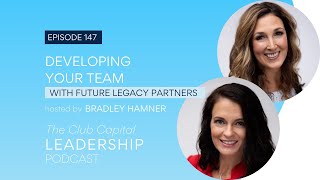
Krista Hawkins and Wendy Smith of Future Legacy Partners discuss how agency owners build strong teams through intentional culture, clear values, and John Maxwell's Five Levels of Leadership framework. They cover onboarding, one-on-one conversations, setting boundaries, and recognizing small wins to develop high performers.
Chapters
So the big question is this: how do small business owners like us grow our leadership, develop our teams, and scale our business in a way that allows us to get our products and services out to the world yet still remain profitable? That is the question, and this podcast will give you the answers. I'm Bradley Hamner, and this is the Club Capital Leadership Podcast. Hey, before we get into today's episode, did you know that Club Capital is the largest accounting advisory firm for insurance agency owners in the country, providing monthly accounting, CFO services, and tax preparation. Check them out at club.capital.
Welcome to another episode of the Club Capital Leadership Podcast. My name is Bradley Hamner, your host. On today's episode, we have return guests Krista Hawkins and Wendy Smith. If you haven't, go back and listen to the very first episode I did with them on March 29th, 2021. I believe it's episode 49. In today's episode, we talk a lot about how do we develop our current teams. We talk about culture and leadership courage. If you're like me, you may be really good at strategy, but when it comes to the soft skills of leadership business, maybe it doesn't come as natural. Well, this podcast is for you. Without further ado, here's my conversation with Wendy Smith and Crystal Hawkins.
Have you ever tried online marketing before and wasn't sure if it was working? Maybe your rep talked about all the impressive features and stats and said things were going great, but you didn't know how all that tied into to raw new policies written. Well, that's not the case with DirectClicks. DirectClicks is the premier Google Ads and SEO option exclusively for State Farm agents. Why? They're 100% results-oriented with an exclusivity guarantee. Every review call you have with your account manager focuses on what really matters to your business, and that's leads and call-ins received. Everything will get broken down to cost per lead received. By investing with DirectClicks, you're going to free up time and energy to focus on what's most important in your agency and doing what it is you do best. This will be the best investment you make for your team by spending confidently and scaling your agency today with exclusive online marketing partner DirectClicks. Visit us at directclicksinc.com. Ambition is the first step towards success. It's time to level up your agency, and Coach P Consulting will help you do just that by using the same strategies he used to sell over 700 life insurance policies in 2021 alone. No, this is not your regular one-and-done type coaching. You'll get personalized coaching 2 days a week, every week of the month, and you'll get a live look behind the scenes of his team training and an office that's performing at the highest level. There's a reason Coach P Consulting is the fastest growing coaching company for insurance agency owners in the country. Coach P will train your team alongside his own and show you the exact steps they are taking to achieve Chairman's Circle, Exotic Travel, and Multi-Line Presence Club and be one of the few agents to be selected to have a third office. So whether your goal is to be at the top of your local market or amongst the best in the country, this training will give you the strategies and the tactics to get there. For just $250 a month, you'll get high-level coaching each week from someone who is already getting it done at that level. And his strategies work, and it's time to put them to work for you. Sign up at coachpeakconsulting.com and get your first full month for free when you mention the Club Capital Leadership Podcast.
Wendy Smith and Krista Hawkins, welcome back to the Club Capital Leadership Podcast.
Thanks, Bradley. Glad to be here.
We are super excited to have you. So this time we want to spend— last time, if you go back and listen to the episode we did in March of 2021, we get a lot more into your background and how you guys got to where you are. So we're not going to do that today, and we'll make sure we put in the show notes links to that episode. But where I want to first start is at— in last week's episode, we were talking a lot about recruiting. So people that were listening to the episode we just dropped last week with David. But today I think it's a great place for us to start with you guys talking about culture. And culture is almost like this big word, like leadership, you know. There's just so many different things with leadership. So, Krista, whenever someone is talking about culture and intentionally designing a culture, I think that that's where I kind of want to begin the discussion. When you start thinking and working with a, a uh, an agency owner on their culture. Where do you guys begin and how do you guys think about culture?
Well, I think number one, we have to begin with the leader. Um, they're probably the center point for creating the culture that needs to happen inside the agency. And so the leader tapping into their purpose and their why for what they're doing, um, the type of team that they desire to have, you know, and does that funnel into their ultimate, their vision, you know, for the agency and for the business and their mission and their operating philosophies, all those things. They have to be centered. They have to know what their core values are. Their driving core values, those things that are non-negotiable for them. They have to know what their boundaries are as a leader. They need to know what their strengths and their areas of growth are. And then obviously hiring the right talent, you know, getting the right people in on their bus, like John Gordon says. And then once they get those folks in, then it's about creating an environment where they're able to, you know, first you got to train them. You can't just bring them in and, you know, show them some videos and sit them with a team member and say, okay, you ready to rock and roll? You ready to go? You have to spend time with them. You have to mentor them. You have to put them through a training program that invests in them. You can't sell them on an opportunity and then bait and switch them, you know, once they, they get into the office. So you owe them the opportunity to learn and grow and develop. But then too, on that side of development, you know, how are you going to help each person become a better human being? A better person, really connecting with them and their why and why they're doing what they're doing in the office besides earning the paycheck, because that's important. The paycheck is certainly important. We want to help the team members figure out how to spend that money on things that they, they desire, connect with that because that helps with motivation. But beyond the paycheck, what's really motivating that person? And then talking about that as a team so that they understand each other's motivating factors. I think that's super helpful in having fun in the office. I mean, this is a loaded question on culture, but all that to go back to pointing, I guess, the finger at the back at the leader, it starts It starts with them.
Yeah, it is a loaded question, right? I mean, it is like, how do you define leadership? I mean, there's— my goodness, where do you begin? Wendy, I'm curious. I've heard this before, it really has stuck with me for a long time, that generalizations kill clarity. And so a lot of times, you know, the business owner may just be not able to articulate because they just may not be able to articulate what they want their culture to be. I mean, they just know that they don't want it to be what it is right now for one reason or the other. Like, I don't know what I want it to be. I just don't want it to be this. What is the work that they need to do to actually get clear on what it is that they want their culture to be?
Oh, wow. Um, I love that question so much because of two reasons. One, it's a great question that we all need to answer. But, um, the second reason I love it so much is because it speaks exactly to what we do at Future Legacy Partners. Everything that we design and we offer to business teams and leaders is really centered around helping them clearly define and get away from those generalizations, really digging into the details of things, whether we're doing performance planning and really defining and fine-tuning the marketing plan and the goals you're after, but also like your values and your philosophies, right? Krista spoke to that a moment ago. And so, so many times, just take something as simple I say simple, as simple as the vision for the business. So many people throw words on paper, but it's so general, it doesn't really mean anything. And so helping them really, like, giving them tools to help them think through what is— what are the actions that you do every day that impacts people's lives? What are the adjectives that would best describe the business team that you want to be, right? Helping them get very, very clear and weed through the words to find the ones that truly resonate, right? And so, and then And once you've done that, speaking to the values and the philosophies and those things that you want to describe you and talking about that as a team on a regular basis. So many times we'll write that vision statement out, slap it on a binder, put it on the shelf, and we never look at it again. And I think those teams that really have such a solid, enjoyable, meaningful culture are the ones that talk about what do they believe in, and what do they value as people and as professionals and as members of their community. And they do that on a regular basis. I think that makes a big difference, you know, talking about how you want to make a difference in, in your town, in your community, in the work that you do. What do you find rewarding? Also, what you are excited about and proud of in your work and about what this business is accomplishing, whether it's just becoming an employment center for people in your community or it's having a direct impact on the community members. So just really fine-tuning and getting down to the specifics, I think, is something that we do really well at Future Legacy.
You know, there was a part where— I mean, it's sad to admit this, but I mean, it is what it is. You know, the first time I ever really heard about core values, I thought, that's a good idea, core values, that sounds great, I'm going to do that. So I'm going to Google what are good core values, and you end up just like blindly adopting, like, oh, that's a good word, I like that one too, that's a good one, versus is actually really truly what do I want the business to be? And I think, Krista, that the words that we use, whether it is in specifically core values or if it's articulating our philosophies in the business, those words really matter. And blindly taking it off the shelf because somebody else has said it versus Was that really what your culture is like? I mean, I can't— I wish I had the skills that you, you guys, you ladies have. I really do. But like, I can't be you, you know? I don't have— I just don't have that gift. But I hope that I have some gifts that I bring to the table and some uniqueness that I bring to the table and some strengths. And I bring some weaknesses too that can be uniquely myself. And so, but not having the right prompts and not being asked the right questions, it's really hard for me to just be like, well, what do you want your business to be? I don't know. I don't even know where to begin. It's almost like in college, you know, you, you start at a blank Word document. It's like, I got to write this paper and you're like, I don't even know how to write the first paragraph because if I get started, I could, I could actually get going.
Krista, that's a big question right there. And so I think it goes back to number one, defining what success looks like for you. And so we need to look at that and break that down to what does success look like with your team? What does it look like with your business? What does it look like with your operating hours, meaning your operating hours? What does it look like with your goals and, and breaking those down from your yearly goals to your monthly goals to the weekly goals to what each team member is responsible for bringing to the table each week and to the systems and processes with a daily method of organization, like breaking that down in terms of what does success look like, you know, with the numbers? What does success look like with the amount of money that you want to bring home and what do you want to do with that money? What does success look like with your boundaries? As a leader, um, in terms of, you know, how much time do you want to spend working on your business? How much time do you want to spend working in your business? How much time do you want to be spending at home if you have a family? What does that look like? It's defining what success looks like for you and really breaking that down to the minute. Level, because I think that's, that's your roadmap for figuring out, okay, what kind of leader do I want to be? What kind of business do I want to operate? How do I want my, my team, my employees, um, to feel while they're in the office? You know, I want them to have pride of ownership around, you know, where they work, and they'll truly understand why they're doing what they're doing. You know, they get excited about it, but most certainly there's lots of things that we don't love about the jobs that we, that we do day in and day out, if we're being honest. So how do we overcome those things and get, get through them, push through them so that we can have excitement about, about our roles? You know, in the office. And so for the agent, I think it goes— I think that when you're defining words, I would define what does success look like for you as a leader. That's number one. And then from there, you can start to develop, truly develop the words that are meaningful for your vision. You know, what do you want to become or what do you want to be? And then your mission, how are you going to accomplish that? At a high level and be able to communicate all of those words with your team and actually, you know, brainstorm as a team. Well, what do those words mean to you? And then we all are on the same page for what we are doing in the, in the business.
Um, Wendy, I think, well, let me first say this. I love the, the business end of business. I love strategy. I love scoreboards, I love tracking KPIs, etc. Like the hard skills of business, I really do enjoy it. And but it's the softer skills of business, it's the culture aspect of it that did not come as easy to me. But Peter Drucker said culture eats strategy for breakfast, and I found that out the hard way myself around, oh man, okay, like I've got these business skills that I really enjoy, but the culture is not really where it needs, needs to be. Can you just speak to when you're driving around the country, you, you all travel quite a bit, so you're in different parts of the country speaking. I would be remiss to say that almost everywhere you go, you see now hiring signs everywhere for every type of business, not just restaurants. That's the easy one to think about, but everywhere. It is one thing to talk about how do you get good people on the team. It maybe is the hardest and the, the toughest part is when you lose good people, right? And you spend all this time training and developing people. How does culture relate to retention of our teams?
Well, let's speak to when you said you spent all this time training and developing. Most of the time, from what we observe, the training and development that you— these leaders say they invested, it's all just production-related training and development, first of all. And a lot of times, um, it's good intentions with poor follow-through on the training and development.
Are you an agency owner looking to grow your revenue, increase your bottom line, and better manage your taxes? Club Capital is here to help. Club Capital is the largest accounting and advisory firm for insurance agents in the country, providing monthly accounting, tax strategy, and CFO services. Way more than bookkeeping and your everyday run-of-the-mill tax prep, Club Capital is focused on providing financial and tax advisory services that help you plan and forecast your agency's performance. Their financial dashboards and agency forecasting tools help you better understand your agency's historical performance, create and measure future targets, and see how your agency compares to your peers around the country. Imagine what it would be like to understand the impact to your bottom line when deciding to hire a new employee, or forecast the impact rate changes or commission rates will have on your business. With over $200 million in tracked annual revenue and $140 million in tracked annual expenses, Club Capital has the data and the team to help you make better informed decisions for your agency. They will help you turn that back office stress into the backbone of your agency's success by giving you the tools to take your agency and your leadership to the next level. Visit club.capital today to book a solution overview with one of our business consultants. Club Capital, way more than a CPA firm.
Meaning at the very beginning, the leader might be involved on day 1, day 2, day 3, and then the leader exits and leaves this team member with online training, shadowing teammates, and then throwing them into the job to sink or swim. And every training development opportunity they give them moving forward is all about production-based. So we're not really providing true training and development, first of all. So that's part of the problem. But then going back to you, I'm going to use an example. You said you like the strategic side, right? The measurement side of business a little bit more. Well, then turn the softer parts into strategy and tracking. Even, even something as simple as John Maxwell's Five Levels of Leadership. Okay, Bradley, you could take Maxwell's Five Levels of Leadership and you could do a very quick assessment for each member of your team. What level are you at as a leader for each member of your team? You know, and for those that don't recall, if it's been a few years since you read his book, you know, you have these five levels and Maxwell describes them. The first level is people follow you because they have to. Level 2 is they follow you because they want to. Level 3 is they follow you because of what you've done for the organization. Level 4 is they follow because of what you've done for them. And then Level 5 is that pinnacle. It's because they follow you because of what you represent, who you are, right? And you could have all these leaders out here, and I've seen it time and again, and Krista has too, these leaders who've been in the role for several years or even longer, right? And they forget that, um, their tenure does not automatically generate fellowship because of who they are, what they've done for someone. Just because I gave you a job doesn't mean that I've earned your fellowship, right? Um, and so when you have day one for a new team member, guess what? That's day one for you too. You're— that's day one for you of earning their fellowship because of what you do for them and who you are as a person and what you represent. On day 1, they're just following you because they have to, because you're writing their paycheck, right? And so when we think about leadership and we think about exciting people about working for you so that they never want to leave you, um, you're going to have to be intentional in tracking your own ability to move up those levels with your employees. And that begins on day 1, that onboarding process. Of setting that foundation for that team member so that they have the ability to not only adopt the mission and the vision that you've so clearly defined, but also for them to emotionally connect to their role in the— in that team, to connect to the team members they'd be working with, but also to emotionally connect to you, the leader. And I think that's where we have the disconnect. Employees aren't emotionally connecting to the job, the team, or more importantly, the leader, right? And so Your job as leader is to capture their excitement and to get them involved. And you do that by holding a conversation. We call it a discovery conversation, but you can call it whatever you want to, but a conversation with that team member to uncover what is their why beyond the paycheck. Krista talks about that a lot, but also what do they enjoy in their life? What do they love to do? What's great about their life today and what would they love to see be different a year or 2 years from now? And then what do they enjoy about the work they're doing there in your office? What energizes them and gives them fuel? You really have to be a student of your team members, and each one of them are individual and very different. And so you need to begin tracking how well am I connecting with each member of my team to do that. And I know it sounds like a lot, and it can be very overwhelming for leaders because they feel like they don't have enough time in the day as is. And so you have to be very intentional, not only with managing your time and your energy, but also your focus. And if you're not focusing on becoming a student of your team members, then you're failing them and you're never going to move up the levels according to Maxwell. That makes sense.
Yeah, yeah, it really does, Krista. Um, I, I think what she said there that really stands out is I think everybody listening to this podcast— I mean, if you're listening to a podcast, this one or others, um, you want to grow up, you, you want to develop. I mean, you're not at the gym, driving home from work just to, just to kill time. You want to develop, you want to grow in your leadership, you want to be able to develop your team. And so the best of intentions are there. However, I've got goals to hit. We've got numbers to hit. I've got some sales I need to make. I've got 17 emails that just came in. I've got some, you know, life production numbers we need to hit. We've got some sales targets we've got to hit. And so you end up in this drift of like, okay, I'll get to that. I need to do that. I need to set that up. I need to pour into my team. I just don't— I just don't— can't find the time. Can you speak to somebody who is in that situation that wants to wants to do all those things. Everything that they're— that you're saying makes sense to them. They just can't seem to find the time even though they want to make it a priority.
Yes, I'm smiling, and I see Wendy smiling on, uh, on the Zoom too, because, um, this is a primary thing that I'm working with so many of my individual clients on. Um, you know, I just— I'm overwhelmed. You know, the day is eating me alive. And so we have to go back to, um, what are, what are you actually doing? You know, doing an exercise with them where they are actually writing down what they're doing over, let's say, a 3-day period of time, everything that they're doing. And if they're doing something multiple times, they can just put a tick mark, you know, next to that, that thing. that task that they're doing. And over the course of 3 days or maybe 5 days that they're tracking this, you can actually go back and see what am I actually doing. Um, and then 2, what should I be doing as the leader of this business? Where should I be investing, you know, my time? What are those money-making activities? And, and Wendy and I would both argue pretty hard to say money-making activities are investing in your team by developing, developing them, developing yourself, like taking that step back to invest in yourself and in your team. And that might not be a sales appointment, yet it's just as critical, it's just as important. So where, where would you, or where do you need to be investing your time? Then we need to look at the, the calendar, and we need to time block based off of those most important activities, those most important tasks. But we have to time block in, and you know, I am so big on emotional health and mental health and physical health. We have to time block those things in as well, because If we aren't the healthiest version of ourselves, we are not going to be bringing our A-game to that business and to our team. And we're not modeling that for our team. We want our teammates, you know, to be as structured and holistically healthy as we are. And so I think, you know, breaking things down into a realistic time block so that those areas where you have to have uninterrupted time for your work, where you need 100% focus. You've got to block that off on your calendar, and everyone in your office needs to know that's uninterrupted time where I have to, I have to focus. I have to take mental breaks throughout the day. That's important too. Sometimes we just get so lost in, um, the frustration and the craziness of the day. We get cloudy brain, that's what we call it, where you just can't even think straight. So we have to take, we have to take a mental break and know what our limits are to, to come back. But I think making sure that we keep our goals, obviously those are important because we're not running nonprofits, um, at least in, you know, the agencies and the businesses we're coaching. So you have to know what those goals are, but you also have to spend the time up front breaking those goals down. Who's doing what? Why are they doing it? How often are they doing it? How am I tracking it? How am I following up if there's something getting in their way, um, that's tripping them up and they're not being consistent, or I'm not being consistent with my goals? What is that? And how do I overcome or prevent that obstacle? And then of course, I have to be diligent. If I have something going on in that business one time, we need a system or a process around it. It needs to be written down, it needs to be thought through, it needs to be communicated, it needs to be reviewed. And so all of that helps me as a leader kind of tame that wildness of a day or of a week or a month and puts me more in the driver's seat. But again, it's the long way is the shortcut. I have to spend the time breaking it down and figuring out what am I currently doing and what do I really need to be doing that are income-producing activities for me as the leader. And again, I will reiterate, we absolutely believe mentoring and investing in your team and their development is a critical component of all of that.
Yeah. And investing in your own development too, first, so that you can be the best version for them. There's— I have to tell you, so one of the most impactful things that ever happened to me, my mentor said, Bradley, tell me your priorities. I said, what do you mean? He said, tell me your priorities for the business. So I said, oh, perfect. So I drift on that for about 3 minutes. He said, okay, you're pretty clear. Now tell me, uh, show me your calendar. I said, what do you mean? He said, no, literally, I want you to show me your calendar. So I flipped through there, and you know, I was busy, like all these things, all these time blocks on my Google Calendar. He said, I don't see a single one of the things you just mentioned that are going to help you to get to all these priorities. And I was like, okay, point taken. That was enough. That was enough for me that I got— I learned the lesson for the first time. I learned the lesson because I heard that something like similar to what you just mentioned there. Yeah, I got to get on my calendar. Sure. Okay. But let me get all this stuff done first. Let me get all this stuff done first and then I'll get to it. Wendy, also, second thing that I was thinking about is we're really good at painting a very clear description of Oz, but we're not so good at actually building the yellow brick road to get there.
Yes. And so I'm really excited to share, like, in our— what we do for agents in private coaching, we also offer this in our leader series. Is basically the roadmap, right?
So brick by brick.
And an example of that is to speak to what Krista shared a moment ago about all those things that need your priority and how do you time those out? Well, we, we teach on all the areas of business management. And so those areas are all the things, everything from business oversight to recruiting to team development to marketing and the elements within there. And then we help our leaders kind of break those down into their small pieces and determine, okay, with this area, how often should I be spending time looking at this area? So whether it's my accounting needs, my legal needs, or if it's, um, you know, ordering supplies for the business, or if it's doing a team, a team meeting or one-on-one meetings, right? Anything and everything. And I'm just touching on a few that's in this toolbox that we give to the leaders that we coach. And so not only is it how often should that be occurring, but also is that my responsibility or could that be outsourced to someone on my team or to another vendor, i.e., my accountant, my attorneys, right? Or another trainer and developer team out there, whatever it might be. And then what are my resources for this? How do I support that? And so helping them think through all the different pieces of the business Once we have that, we have the frequency of how often it should be occurring, when is the best time for that to occur, and who should be doing it. Then we show the leader, okay, now that we have this and we've narrowed down your priorities, to use your word, Bradley, then we pull out the calendar. We look at some templates and then we look at some blanks and say, okay, build out your perfect 4 weeks calendar because we're not going to do exactly the same thing every single week. Some things only require our attention once a quarter or once a month versus something— some things we want to occur every single day within our, within our work role. And so really breaking that down, and that's just a very small piece, big piece, but small piece of the overarching leader series that we coach. And then we also involve, we pull that in for those agents or leaders that need it in our private coaching sessions. So we help them build out the road and be very intentional. With those pieces.
Before we move on, I want, I want to transition to, um, a little bit about some of our current team members, and I'll get to that in just a sec. But before we do that, Wendy, I want to ask you a follow-up question on that because it was mentioned— Krista mentioned it— but I, but I think that it's worth, um, going a little deeper on, and that is scheduling not only the priorities and having them in your calendar but an awareness of your energy of when to do certain activities. Can you speak to that?
Absolutely. This is really, this is a really big one for Christa, um, and me as well. And that is being wise about when you do certain activities, not only you as the leader but also helping your team members be wise about when they do certain activities. Now obviously we can think of timing as far as, let's say, the activity of of cold calling, right? You're probably going to have much more, um, better results calling in the afternoon or evenings versus early in the morning, per se, depending on your client base. So we know that logically that makes sense, but from an energy level, it also makes sense. And so we teach, um, in our TEAM Series and other programs that, um, our personality type— depending on our personality type— is either going to fuel our energy, what the activities we're doing, or it's going to drain our energy. Um, and it doesn't— we're not talking about being an extrovert versus introvert necessarily. Even like the difference between me and Krista, um, she's a J and I'm a P on the Myers-Briggs personality types. Well, what that means is Krista loves having an agenda and having everything timed out and a plan in place. And so when we're coaching all day long, back-to-back sessions on a strict schedule, right, coaching different groups all across across the country. She— that's energizing her, and she's loving it and having fun. And at the end of the day, when we finish coaching our classes, she's ready to go out and privately coach somebody. She's fired up and ready to go. Whereas me, I'm a P, and so working according to a very strict schedule all day, I'm being forced to flex over to that J side, and that's exhausting. It's draining all of my energy. So when we get done teaching our classes, Krista knows Wendy can't brainstorm on anything. When we get done teaching, Wendy can't coach someone privately after we get done teaching our classes. She needs an hour break to go recharge her battery cuz she's depleted of energy. So I don't need to call a prospective client, um, to sell them on our programs after I've just finished teaching classes all day. I don't have the energy for it. Right. And so it's just being smart about when do I have energy to do something and when I don't. If you're not a morning person, then don't do that critical activity that's required your focus and your, you know, strategic thinking abilities first thing in the morning. Um, I hit my zone in the afternoons. Krista hits her— she's a man, she gets up at 4:30 in the morning and goes, works out every morning. That's not me, right? Um, but boy, can I hit my zone and I can work late into the night when she's toast. So just knowing when your energy levels are the highest for different activities.
Yeah, you can do the right things at the wrong time for you, right? You know, I mean, some people getting up at 4:30 in the morning working out, they're like, forget it, I'm not, you know, I'm not doing it. Like, you know, it's just not the thing. If I'm— if success means getting up at 4:30, then I'm just not going to be successful, you know. That's okay, you know, like, that's, that's— everybody is. And by the way, not only that, I think there's different times in our life too based on ages of kids and dynamics and other things that that are really at play. Uh, depth and nuance is required for everybody's individual situation, but there are principles to be able to take. Krista, um, I want to talk about, um, a team, uh, somebody on our team that maybe has been with us for a period of time, maybe a long period of time, but they need a reboot. They're not necessarily burnout. They're not necessarily looking to leave, although, you know, they could, right? But more so, they're, they're, they're in a rut, you know, the kind of the same old, same old, it's kind of monotonous. Been with us a long time, you know, it's like, oh yeah, same song, whatever. Like, how do you get that person kind of re-energized and re-engaged into their vision for their own future? And also the business?
I think it's staying sincerely curious. So as a leader, plugging in, whether that's in your regular one-on-ones with the team, with that team member— what we encourage that with every team member or employee that you have, be really, really diligent, be very consistent in connecting with your people. So that's number one. And whether that's in the office or whether you take them out, you know, for coffee, sitting down and being curious about, okay, tell me what you love about or what you really like about the job, and just listen, you know. And then tell me more, ask the follow-up questions, you know. What is it that causes you to like that? You know, why is that important to you? Really touching on those things that give them fuel and passion and purpose for the job that they're doing, but also asking them questions about, you know, if things are perfect for you, you know, this time next year, what kinds of things would you like to see going on in your life, in your world? And asking them about home and, you know, asking them about, you know, traveling and trips. And things that they like to do for fun, whatever that might be. Asking them about like financially, is there anything that you want to work to pay off or you want to work to save for? You know, figuring out, okay, what do you want in terms of your health and your wellness? What would you like to see, you know, see in that regard a year from now? And just kind of breaking down each area of their life and letting them tell you what, what they envision for, for their life a year from now. And you can watch them light up. I have not met somebody yet that hasn't lit up in talking about something that they want for their future. And when you can connect with somebody like that and then be able to connect back the work that they're doing, the money that they're earning, to whatever it is that they would like to achieve a year from now. Now you've made that connection and you can, you can ignite that, that spark. The other thing is, you know, what do they really like and enjoy about their job? What don't they like? What do they dislike? What, like Wendy was alluding to earlier, like those draining activities Tell me about those things and what is it about that activity or that task that is draining for you? And perhaps, you know, you have to do it anyway. It's just part of the job. I'm sorry, but maybe we can switch out some tasks within the team.
The best use of money is to buy back your time. And one of the best ways to do that is with a virtual assistant. Rock Solid Virtual Assistants brings together top business leaders with exceptional virtual assistants to build successful relationship-driven teams. The services they provide range from graphic design and marketing to executive admin assistants and everything in between. There are many virtual assistant companies on the market to choose from, but at RockSolid, their processes and passion for what they do place them at the very top of that list. Not only is their hiring process exceptional, which nets them the very best assistants, but they also provide superior support to their teams for the duration of your time with them. The matching process at Rock Solid is unlike any other, and they have the track record to prove it. Their hands-on approach has proven to increase the success rate of their teams exponentially. So if you're looking to build a rock solid team for your business, reach out to Tracy and the team for a no-pressure discovery call at rocksolidassistance.com. They value your success as if it were their own, because it is.
Something drains you, you hate it. But you know, you've got another team, team member that really loves doing that and gains energy, then swap out some of those tasks. And if not, if they do have to continue performing those kinds of things, then how can I partner it with something that does give me excitement and give me energy? Wendy calls it playing, you know, mental gymnastics. So, you know, if I do have to do that, those particular things, I can partner them with things that bring me excitement about the job. And I think if a leader does all of those things, you can find somebody's spark, you know, that, that can be relit and, you know, hopefully help them, you know, really think about their future and what they want just over the next, you know, the next next year. Most, most of us can think that far in the future.
Yeah, I do wonder, um, because I'm actually— I'm genuinely curious about your answer to this, to a follow-up, which is, okay, that makes sense, but Dr. Henry Cloud, and you— I think it's come up twice— you use the word boundaries. So how do I reconcile this idea of, okay, I genuinely want to make an impact to my team's life I come from the best places. I've not done this stuff before. Now all of a sudden I'm gonna go to them and expect them just to open up about their life. But then that crosses a boundary of, well, that's too much information. And how does that— you see what I'm saying? Like, that, that, that's— for some people have that emotional intelligence and that ability, and they have that kind of a connection. But for somebody else who's trying to develop this softer skill they genuinely come from a good place, but the team is like, I'm gonna tell you that, like, I'm not gonna open up about, about those kind of things. Or they'll just say something to make it sound good versus actually really sharing what's true. Krista, can you just— I'm curious about that.
Yes, it's how you set it up, how you set up that, that conversation. So if you're coming from a place where you have never had these kind of conversations you know, before, they might look at you like, okay, what kind of conference did you just come from?
Exactly.
What did you just read? I'm not telling you anything, mister.
Right.
I think you have to be authentic and say, hey, I'm in this coaching program, um, right now, and I'm working with Wendy and Krista at Future Legacy. And, you know, they are taking me through some of these conversations, and I have really learned a lot about myself. And, you know, what I want in the future. And I'm excited to bring this conversation to you. Now, granted, you know, I, I may ask you some questions, and if there's something that you're not comfortable talking about, by all means tell me, and we'll put, you know, we'll put the brakes on. But if there's something that you really do feel excited about and you want to explore, just know that my intention is to become better and stronger as a leader. I need to be a better listener, and I need— I needed to have been doing more of this in the past. And so I'm, I'm, I'm coming to you with open arms here, letting you know I'm growing and developing right along, you know, right along with you. But I am sincerely curious, and I want to do better for you to help you achieve the things that you want and you desire for your future. So be authentic and be honest, because I would say a lot of leaders haven't been as consistent or intentional around these kinds of conversations, and some of them aren't comfortable doing it. And so it comes out as discomfort. And so I think just being open and honest and curious about your team. Because what do you want? You want a team member who wants to be led by you, who respects you, and you want a team member that you can retain for the long term. So you kind of have to do these things.
You know, the biggest benefit to me personally as a, as a, as a leader has been of doing the podcast has helped me to become a better listener. I wasn't— and still have a long way to go, but to actually listen to what the guests were versus— and, you know, early I was like, okay, what's my next question? I wasn't even listening to what the person was saying because I, I'm, you know, trying to learn how to do the podcast versus actually listening to what they say and then having a dialogue back and forth. I think it has helped me to be more present in conversations. Well, not just with team, but also family, my kids, my wife, uh, customers, clients. I mean, all of it just in that one skill of actually being a better listener. And still have a long ways to go with that, but I mean, that's just one benefit. And I think that Craig Groeschel says people would rather follow a leader who is real than one that is always right. I think that speaks to the authentic. Wendy, I want to ask you this question around courage. I've heard it said that most failures of leadership can, at the root, have a lack of courage, saying what needs to be said. Can you just speak to the part of around leadership courage?
Yes. And I'll even hone in on what you said of not saying what needs to be said. And this is a big one. You know, I think I saw recently that about 40% of employees feel overlooked or undervalued, right? And I would say a large part of that is due to the leader's lack of courage. It could be lack of courage to even just ask those discovery questions that you and Krista were just discussing, right, of crossing that boundary, being willing to be vulnerable. And to really want to engage with their team member in a new way to discover what's important to them. Some leaders are afraid to even go down that path because of what it might uncover, and they don't feel equipped to deal with it. Or it could be, on the other hand, where leaders lack the courage to address, you know, an issue within the team or within a— with a certain team member. And that can cause a lot of problems as well by not being willing to have an open, honest, hard conversation with respect and honesty, right, and patience, um, in dealing with that. Maybe it's a performance issue, maybe it's a disengagement issue, maybe you have a team member who's on the brink of burnout, um, and we're not addressing it, then that can cause a lot of problems. And what can happen is either the team member that's in distress leaves, or worse, your big hitter, your star player, gets so frustrated with the leader's lack of courage and addressing it, your big hitter will leave because they lose respect for the leader for not having the courage to address the problem with the other team member. Um, and so we, we actually see a lot of that, um, with our private coaching in particular. That'll show up a lot. Um, and agents will be very vulnerable and it becomes obvious to us very quickly that the agent needs to take action, either having an honest, hard conversation with a team member, and they've been putting it off or avoiding it or finding reasons to just hold on a little bit longer, give them another month to show their stuff. And every time the agent finally steps up to have that conversation, to be brave, after they've had the conversation, regardless of the outcome of the conversation, we asked the leader, 'Looking back on that situation now, what do you— what would you do differently?' And every single time they say, 'I should have acted sooner. I should have spoke up sooner.' In other words, they should have gathered their courage sooner. Does that make sense? So, um, yeah. And we don't have to be afraid of hard conversations, but we can equip ourselves. We can equip ourselves through listening to podcasts, reading books, seeking out coaching or mentoring so that we can develop the skills to have emotional intelligence, to have emotional control, to remain calm and respectful in spite of difficult circumstances. And I actually got to witness an example of that recently, um, and I was just in awe of this leader and how well He has developed his ability to maintain his composure and to stay grounded in spite of difficult and very difficult situation that honestly would make any other human I know extremely angry to the point of acting on the anger. And the way he handled it and the way he handles his employees, I'm just in awe. And I asked him, I said, how on earth have you been able to develop this ability? To stay grounded and to speak in the ways that you do and set these healthy boundaries in your conversations. And he said it took time. He had a family member who talked with him about the power of emotion when he was younger, like a teenager, and then that stirred his curiosity and he read books about it. And he said, I even took some classes on emotional intelligence, and I've, I've been honing this skill for a long time. And he appreciated me acknowledging the hard work he'd put in. And I respect him so much for that. He has never raised his voice to an employee. He has never expressed his frustration in a harmful way. And he said he takes pride in that, in having that ability to do that. So I think that takes a lot of courage to be willing to go out and learn and uncover resources to help you grow your own skill set when you know you're lacking.
Yeah, I mean, I think it speaks to a lot of things. I think it speaks to the fact that over a long period of time really stands out to me. I mean, he didn't listen to one— he didn't listen to this podcast and then just go, oh, okay, I got it, I'm emotionally stable now. It just doesn't work that way. I mean, a lot of people listening to this are competitive, fiery, emotionally driven people, which can have some amazing— like a magnet, right? People are just like driven to your passion, you know. But at the same time, there's the, there's the flip side of that. There's the, there's this counteracting emotion of like, well, that can also go unchecked to where it's like you're flying off the handle one moment. One moment you're praising the team and celebrating and everybody, you know, just— and then the next moment you're you know, throwing stuff up against the wall or whatever. It's like, well, that's, that's not healthy, you know, either. So you're not trying to make the person become like a plank, you know, to where they, they show no, uh, emotion. You know, one thing that I got some feedback, uh, I don't know, 4 years ago, 5 years ago, and then I got it again recently, so I heard it twice. I did not pick up the lesson the first time, but I picked it up recently, and that is they said, look, we we appreciate how much that you find areas for us to grow and areas for us to improve. Growth is a core value. And, um, and, but however, sometimes you overlook acknowledging the, the, the progress that we have made and the good things that we do, and it feels that we're always falling a little short of your standards. And I thought, oh man, because that's not how I actually feel about the team, right? I see like, you're doing so great. Okay, let's go to the next level. You're doing great. Let's go to the next level. Kristin, can you speak to that? I'm sure you see that.
Yes, we do see that. And it's important to stop and recognize small things, you know, small wins, wins of the day, wins of the week, behaviors that I can recognize are helpful. You know, how you helped a customer, what you actually said on the phone that was just excellent, you know, your problem-solving skills, how you work together as teammates. So small wins that are, that are big, but stop and recognize, um, those, those daily wins and those weekly wins and celebrate as a team. But I think more importantly, when you're sincerely curious and you're really getting to know each team member, you know how they're wired. And so for me, you know, words of affirmation go a long way. Send me an email, write me a card, and I'm just happy as can be. I'd run through a brick wall, you know, for you. I also like gifts too. So, you know, as you know, a good cup of coffee from Just Love Coffee Shop. It's a little local coffee shop. I'm going to be super happy and so thankful. And it costs what, you know, $3.50 saying, hey, you did a great job. I'm super, super proud of you. I think that takes what, moments? And it can go a really long way for others. If you really know your team members and time off for that really busy, you know, working mama, right? If you say, you know what, you have been killing it this week, I'm super proud of you, why don't you take off an hour early today? Oh my gosh, you know, go run those errands, go do something for yourself. If you really want to kick it up a notch, here's $50, go get yourself a manicure. You know, it's knowing what motivates and incents your, your team, incentivizes your team, but taking time to do those celebrations. It might be— I mean, we are coaching agents that— and I'm coaching a team. They take their team to lunch. They buy them lunch every single Friday, which is a really cool thing. And the team's so appreciative. Of it. And so I think it doesn't have to be huge, it doesn't have to be big, but it does have to be intentional. And you do have to be consistent about it. And you need to be accountable. You need to be accountable. Those are my 3 big things for absolutely everything in life, by the way.
But I think that Krista coffee people, if you listen, you're in Team Series, not in Team Series, send her some coffee. I will say this too, a handwritten note, just no gift card. Forget a gift card, forget a gift or anything. Just a handwritten note says, hey, I just want to acknowledge you. See you. I got a handwritten note about a month ago and I was like, wow, that meant a lot to me more than— I mean, email's great too. Yes, but a handwritten note just, I don't know, it just stands out.
So it goes so, so far. I got a handwritten note from an employee at Nordstrom's and, you know, I told my husband, they're so thankful. For me. And he laughed. And that's one of my favorite stories. He said, no, they're thankful for your money. And that is a great tactic. I said, well, it worked. It worked.
Yeah, well, it worked. Exactly. Exactly. Wendy, is there anything that we haven't touched on or any point that you wanted to make that we haven't hit on? I think it's been great.
No, I think it's been a really great conversation. And honestly, I think when the three of us get together, we could probably talk well into the night, you know, about all kinds of things. So you'll just have to have us back again at some point. I would just say that, you know, based on the conversation we've had today, and for your listeners out there, you know, just think about the ways that you as a leader are able to influence your team to build a culture of wellness. How do you take care of yourselves? How are you showing concern for your team members' wellness and how are you taking care of your own wellness? How are you modeling respect with your team, with yourself, with your customers, with challenging circumstances, right? And then also, how are you guys learning to build your resiliency as a team together? How do you craft a plan, you know, and just thinking about How are you choosing to persevere through the difficult days? You know, how are you staying true to your values? Who are you calling on for support when you need it? How do you take proper action at the right time? And how do you rely on past wisdom? In this call today, Bradley, you've mentioned several occasions on past little wisdom nuggets you've picked up along the way that you still carry with you you lean on them when you need to. I think that's important. It's a part of your resiliency plan. And so, and then how do you seek feedback and coaching from others, whether it's a professional or someone you admire, you know? Because all of those things help you to build that resiliency with yourself and with your team. And through that, then, you know, you can build a really strong mindset and heart step as a leader. And boy, if we can get our team members doing the same thing for themselves Wow, what a difference, you know, that we can make out in the world. Um, not to mention the retention you generate on your team, but just the influence and the difference you can make in the world, I think, is pretty powerful. So I'll just leave the listeners with that— creating a culture of wellness, respect, resiliency, and that mindset and heart set, you know, to make a difference.
Krista, I love to— I love to play golf. I don't play nearly as much as I as I used to. But, you know, I, I have a swing instructor. But if we go all the way to Tiger Woods, he's had all kinds of coaches, not just swing coaches but putting coaches and all these things. The end of the day, Tiger is still the one hitting the shots. He's still the one hitting the shots. He can see the ball flight, but he's leveraged and utilized coaches over his career to be able to help him, because whenever he's swinging, he can't see his own swing. So obviously there's a value in there in coaching. Somebody has listened to this today and they said, okay, I kind of get it, that this is the kind of stuff I need to work on, right? Because different people are at different stages of their career in the, in the areas that they need to improve. But somebody's, uh, heard this, wants to reach out to you guys How can they connect with you? Where's the best place you would point them to?
They can definitely connect with us. They can go to our website. It's www.ourfuturelegacy.com, and they can request a discovery conversation through that website, or they can send us an email at info@ourfuturelegacy.com, and we would love to talk with them about whether or not we're the best fit for them with any of our programs, whether it's performance planning. You know, we're getting ready to start a new year soon, and a lot of business leaders are looking to invest in performance planning. So we do a great, great program around that, whether it's our team series which is for all team. The leader is included in that. They get to be poured into at the same time as their team developing and growing, which is a beautiful, beautiful thing in the community that we create with the Team Series. It might be with the Leader Series where the leader just needs to invest in themselves and be in a small community with other leaders to really be vulnerable and to talk through some of those things that we've talked about today to grow and, and to develop there, or whether it's through private coaching, um, when they really need an individual experience. So we are here to lend a helping hand and lift our leaders up so that they can be the best that they can be.
Awesome. Wendy? Krista, appreciate you both. Hope to have you back on in the future.
Thank you.
Thank you.
I feel like every time I talk to them, even if it's a casual conversation, it's almost like a coaching session for me. I love them so much. You know, a few things that really stand out to me is number one, what does success look like to you? But they even gave some examples, just even answering that question, but then having some specifics. What does success look like with your team? With your goals, with your time, with your money, with your boundaries, even. I think that was a big one for me. Number 2, just the statement when they said, yeah, training and development, you have the best of intentions, but poor follow-through. Felt like, boy, that one really hit me hard, right? Best of intentions, but poor follow-through. And I think number 3 is, you know, getting clear. And I mentioned it because it was an impactful moment to me, but once I'm clear on what success looks like and what those priorities are, then an awareness of my own calendar time and time blocking at the times that make the most sense for me. That has been very helpful to me. I am still very much a work in progress with that. So for instance, we recorded this episode today on Tuesday. It's a Tuesday when we record this, and it was at 3 o'clock. Well, That's a tough time for me, actually. So it was a heavy day. We're coming off of Labor Day, so it's been a really busy day. Well, I understand that, and I'm aware of that, but— and, and it's not really the best time for me. That said, though, there are things that I tried to do around those days, and if I had every day where I was just kind of willy-nilly, that wouldn't work either. So I try to not be, you medieval about my schedule or my calendar. I mean, be flexible to certainly accommodate people's, uh, people's, um, you know, guest speakers, podcast guests, and, and their time as well. But having an ideal schedule, a time that this makes the most sense for me. And I think also along those lines too, just kind of a sub-point that really stood out to me, I think it was Wendy that said not just a week But there are some things that you do just maybe once or twice a month. So looking at it over the course of a 4-week period of time, because there's not one week that's just duplicated 13 weeks in a row. I mean, we like to think that, but the reality is that's just certainly not the case. As a matter of fact, if you heard me talk about quarterlies, that 13th week in a quarter is a really great week to begin to kind of look back review the previous quarter, and then look forward. Make sure you visit them at ourfuturelegacy.com, ourfuturelegacy.com. A big shout out as always to our podcast partners and sponsors: DirectClicks, Rock Solid Assistance, Coach P Consulting, and Club Capital. You want more leads, want to finish the year out great. You want to have warm leads that are quality that your team can actually convert. You want to have an online presence. You know, you need to be on the Googles, so to speak. Go to DirectClicks, go to directclicksinc.com. You listened to last week's episode with David Peterson and then this week's. I think they just go hand in hand. I really do think that they just build off one another. Talking about when we dove in with David, and that's a good example of both incredible coaches that point it but come at it from a little bit different of a lens. You can get into the specificity and some of the word tracks and that sort of thing with, with David, uh, and specifically with your team. But then even with your team, you look at what, how amazing that Krista and Wendy are, that you can just tell they come at it from a different perspective, and it helps you to be well-rounded. So if you want to be able to develop your team and give them some of the things that's actually working real time with his team members, go to coachpconsulting.com. Make sure you mention you heard about him on the Club Capital Leadership Podcast, and he'll give you an entire first month off. There's really no way that I would be able to put on this podcast if it wasn't for my team. Um, Ellie and Courtney have been with me for a really long time. and I do talk about them a lot, but if it wasn't for Rock Solid, I wouldn't have them. I wouldn't have quality people. That's what Rock Solid does is they help you. They find great clients and they find great assistants to be able to help you so you can go further, faster. Go to rocksolidassistance.com. Just no reason why not to reach out to them and just have a conversation about what an EA or a marketing assistant could be able to do for you. Rock Solid Assistance. Clubcapital.com. You know, um, I'm grateful for the partnership and collaboration that I have with Micah and his team, and they're growing. And we talked about culture today, and the Club Capital team has such a great culture that they've developed, and, and, and team members that are in the Maryland-DC area but even around the country. And I think it's because they know that they're making a difference in the lives of agency owners around the country. Mike and I were talking about that and, and just really the true difference that they make. And so if you want to be able to see the difference that they can make with you in your agency, book a demo, book a demo and see what this whole financial thing is about. Even if you're not a numbers person, go to club.capital. I really enjoy those conversations with Krista and with Wendy, we've had a really great run of guests. I'm so grateful for all of you to share these episodes with people on social media. You guys, you know, tag me, uh, but just even if you don't do that, just sharing it with somebody else that you think could get a benefit from listening to this podcast, it means so much to me so we can continue to get great guests on. I hope, as I do every week, I hope that this time, this investment that you've made into listening to this podcast, even if you're this far into it, I hope it was a good return on your investment. Till next week, everyone, lead well.
So the big question is this: how do small business owners like us grow our leadership, develop our teams, and scale our business in a way that allows us to get our products and services out to the world yet still remain profitable? That is the question, and this podcast will give you the answers. I'm Bradley Hamner, and this is the Club Capital Leadership Podcast. Hey, before we get into today's episode, did you know that Club Capital is the largest accounting advisory firm for insurance agency owners in the country, providing monthly accounting, CFO services, and tax preparation? Check them out at club.capital.










