Episode 149: The Power of Losing Control with Joe Caruso
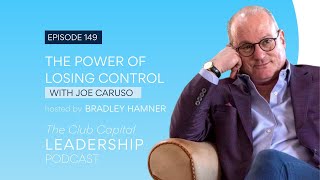
In this Club Capital Leadership Podcast episode, host Bradley Hamner interviews Joe Caruso, a former metastatic testicular cancer survivor who turned his near‑death experience into a consulting empire. Caruso shares his origin story, the pivotal conversation with an oncology nurse that shifted his focus from planning his funeral to living purposefully, and his subsequent self‑education through philosophy, psychology, and theology. He explains his core principle that knowledge without action is dead, coining "wisdom is knowledge put to work," and outlines how curiosity, will, and narrative shape effective leadership. Caruso illustrates concepts with vivid analogies—Clydesdale horses for synergy, the three‑solution rule for problem‑solving, and the law of growth that discomfort drives progress. He discusses the importance of presence, meditation, and empathic listening, and debates the balance between rigid systems and flexible, relationship‑focused leadership. Practical takeaways include encouraging teams to bring solutions, using storytelling to motivate, and fostering synergy across functions. The episode also contains sponsor messages for Club Capital, DirectClicks, Coach P Consulting, and Rock Solid Virtual Assistants, but the core content centers on Caruso’s philosophy and actionable leadership advice.
Chapters
So the big question is this: how do small business owners like us grow our leadership, develop our teams, and scale our business in a way that allows us to get our products and services out to the world yet still remain profitable?
That is the question, and this podcast will give you the answers.
I'm Bradley Hamner, and this is the Club Capital Leadership Podcast. Hey, before we get into today's episode, did you know that Club Capital is the largest accounting advisory firm for insurance agency owners in the country, providing monthly accounting, CFO services, and tax preparation. Check them out at club.capital.
And Chris Tell Hawkins.
Have you ever tried online marketing before and weren't sure if it was working? Maybe your rep talked about all the impressive features and stats and said things were going great, but you didn't know how all that tied into raw new policies written. Well, that's not the case with DirectClicks. DirectClicks is the premier Google Ads and SEO option exclusively for State Farm agents. Why? They're 100% results-oriented with an exclusivity guarantee. Every review call you have with your account manager focuses on what really matters to your business, and that's leads and call-ins received. Everything will get broken down to cost per lead received. By investing with DirectClicks, you're going to free up time and energy to focus on what's most important in your agency and doing what it is you do best. This will be the best investment you make for your team by spending confidently and scaling your agency today with exclusive online marketing partner DirectClicks. Visit us at directclicksinc.com. Ambition is the first step towards success. It's time to level up your agency, and Coach P Consulting will help you do just that by using the same strategies he used to sell over 700 life insurance policies in 2021 alone. Now, this is not your regular one-and-done type coaching. You'll get personalized coaching 2 days a week, every week of the month, and you'll get a live look behind the scenes of his team training and an office that's performing at the highest level. There's a reason Coach P Consulting is the fastest growing coaching company for insurance agency owners in the country. Coach P will train your team alongside his own and show you the exact steps they are taking to achieve Chairman's Circle, Exotic Travel, and Multi-Line Presence Club and be one of the few agents to be selected to have a third office. So whether your goal is to be at the top of your local market or amongst the best in the country, this training will give you the strategies and the tactics to get there. For just $250 a month, you'll get high-level coaching each week from someone who is already getting it done at that level and his strategies work, and it's time to put them to work for you. Sign up at coachpeakconsulting.com and get your first full month for free when you mention the Club Capital Leadership Podcast.
Welcome to another episode of the Club Capital Leadership Podcast. My name is Bradley Hamner, your host. On today's episode, we have Joe Caruso. He's an expert on the individual mind, the collective mind of an organization, and how meaning drives our behavior and determines our outcomes in all aspects. Of life. You guys all know every time I ask people for their background and origin story, because I do think it's fascinating to see how people get to kind of where they are. Well, Joe's story is pretty remarkable. He gets right into it from the very get-go, from whenever he became one of the very first people to ever be cured of metastasized testicular cancer. Whenever he was 18 years old, and that experience shaped the rest of his life for him to be able to give back to others. I enjoyed this conversation with Joe. He is— pretty much everybody I have on the podcast is far smarter and intelligent than me, and Joe is one of the smartest people that, uh, that I've ever met, and certainly is, uh, just very well read. I think you're gonna get a lot out of this episode with Joe. Without further ado, here's my conversation with Joe Caruso.
Joe Caruso, welcome to the Club Capital Leadership Podcast.
Thanks, Brad. I appreciate it. So I've been looking forward to talking to you.
Excited to have you. Well, we always start with background and origin story with every one of our guests. And as I was sharing with you before we hit record, you have a fascinating background and a story about kind of how you got to where you are today in your journey. So why don't you just take people back on, uh, yeah, a little bit about your journey.
It's pretty unusual journey. Um, I was, uh, class president in high school. I'm gonna go way back there. Successful, 4 scholarships to college, including ACT, really excited. And I got sick and they had diagnosed me as having a very rare cancer that was absolutely incurable. And I was 18, I just turned 18 years old. So they said, we'd like to try radical chemotherapy and radical surgery on you, but we're going to push it so far because it's incurable, we could kill you. So you have to sign your rights away to sue us, but you're dead anyway. And this is a university hospital, these are— they're not screwing around, just trying to be You know, honest. And so dealt with that for a while and started planning my funeral. And I didn't know it was just depressing my mother. I thought it was the responsible thing to do. So there was a young nurse named Jeannie McDonough. Well, then it was Jeannie Midashevsky. She was a young oncology nurse. I know I'm 18, she's probably 23, 24, 22, somewhere in there. And, um, bouncy and, you know, just lovely, lovely person. And I was just finishing a chest X-ray and she comes in and says, what are you doing? So putting my shirt on. And she says, talking to your mother about your funeral. Who told you you're going to die? I said, well, you guys. She says, never mind that. What did we say? I said, you told me I have 4-inch tumor in my stomach. You took my left testicle. I have 2, uh, in my left lung and 1 in my right lung, or vice versa. It's a long time ago. And 1 right here. And, and, uh, and it could be in my brain. And she said, "Let me ask you a question. You just signed up for the most radical chemotherapy ever given. We know half of the people in this program nationwide aren't going to live for the first— just through the first part. 3% of those might make it to the surgeries because it was the chemo, then the surgery." And after that, we have no idea, but we don't think anybody's going to survive this. We're just going to learn. You're a guinea pig. She said, but let me ask you another question. So she— Bradley, she's really getting Socratic with me, if you notice. And she says, why would you put yourself through this? His doctor even said you're going to wish you were dead, then you're going to die. Take you apart cellularly, chemically. Physically. And I said, well, I'm hoping that maybe someday through what you're doing with guys like me, you find a cure for this cancer. And she says, oh, I see. So you think someday somebody might be the first person cured of this metastatic— metastatic— metastatic, sorry— testicular cancer. No, I, I wasn't thinking that way, Bradley. I was thinking of, um, like polio, you know. I wasn't thinking like one person would be the first, you know. Never crossed my mind, whatever. And she said, um, I said, well, I guess somebody would have to be first. And she said, I see you think it won't be you. She said, let me tell you something, everyone's going to work really hard to try to make you the first, but if you're not working harder than we are, there's nothing we can do to help you. She walked out.
Hmm.
And that's when I stopped thinking about my funeral. I started thinking about my life. You know, if I'm gonna die anyway, most people don't know what they're going to die of or when. Um, until they have a prognosis. And why not live till I die? And if I did, what would I do with this life? And I just, I decided I want— I know this is a long version of this story, but it's an unusual story. So this is the genesis of how I ended up with a million-dollar consulting practice. I said, I want to study 5 hours a day, 5 days a week, the greatest minds that have ever lived. I started with the— started with the philosopher, historian Will Durant, The History of Civilization, and I went from there. Psychology, theology, um, just about anything I could get my hands on to find out how people become How do we grow? How do we learn capacity? How do we expand capacity? How do we become what we desire? How do we manifest that? What are some of the keys? And I did it for me. I didn't do it so I could teach something. I didn't think I had a future to teach. I just wanted to learn what I was gonna miss. I'm very curious. And always have been. Not about things I don't care about. Um, salesman brought over our new car last year, and he was standing there and he said, let me show you what's under the hood. And my wife started hysterically laughing, and he, she, he said, what are you laughing at? She says, he's never going to lift the hood. He has no idea about cars. We just like the way this one looks. Yeah, so, you know, if I'm not curious about something, I just let it go. So anyway, I, I started learning, and then I started applying what I learned to myself, and then people started coming to me and recognizing, um, there's no BS. It's— if I'm saying it, it's, it's true, and it will work. And I just started charging small businesses, uh, like dentists. You know, I had a friend that was a dentist. I said, what's the hardest part of your practice? He tells me. I said, I think I can fix that. He says, have at it, no one else has been able to. Perfect. And it just blew up from there. It took a long time, but now I've got several billion dollar clients. And, uh, you know, I had some of them for 20 years. Unbelievable. It's, it's, it's— I don't believe it, but it's true. It's in my book, The Power of Losing Control. It's a bestseller in 6 languages. I had my own PBS special. Um, that story is also in there. I've been— I've written scientific journals with for the psychoanalytic inquiry on the subject of narrative. My next book's called Narrative Wins, which is tell the right story to the right person in the right way at the right time for the right reason, and how leaders use narrative and story to motivate people, shift their context, and focus them to feel empowered and want to do something bigger than them, contribute to something bigger than themselves, so their ego stays out of the way in a healthy form. Um, so that's, uh, I try to put everything on the website for free. I give almost everything away except for the audiobook. I think anybody can see interviews and, uh, podcasts. I just interviewed the former Secretary of the Navy. I have an Admiral of the Navy tomorrow. I've got a world-renowned chef on Thursday. Um, can't wait to talk to him because I love cooking.
Oh, about—
yeah, uh, I've seen his likeness in Vegas on 20— projected onto a building, 23 floors, and he's a friend of mine, so it's kind of fun, you know.
So after you spend, uh I've seen you spent quite a bit of time in Italy, so I know that— I've been to Italy once and the food is amazing, so it doesn't surprise me that you, that you love food. Your story is— I really did mean it whenever I say it's really inspiring, just for you to have gone through that and at such a young, impressionable age, getting ready to go into college to study and whatever your life was going to look like there. But now you've really applied this value that's important to me, but growth to contribution. You've grown obviously through a really difficult situation, but I think in a lot of our lives too, every single really tough thing that I've gone through, when I look back on it— in the moment, in the moment, I don't feel this way, but looking back, I think, well, what a blessing. What a blessing to have gone through that because of— you used a word become, you know, who I became along the way. And even if we bring this down to businesses, I think about business planning. As we get into the fall of 2022, sometime in November, December, business owners will start thinking about their 2023 plans. And the majority of those plans are not going to work out. But really what matters is who they become along the way, not just whether or not they actually hit the outcomes of that. Those goals, I do want to ask you, and I may mess this quote up, that the biggest gap in life is the, is the gap between knowledge and doing. So you spent a lot of time, and still do, studying, learning from the great philosophers, the thinkers of our, not just our lifetime, but of all time. But you, you, you said you applied than the knowledge. Can you just talk about the distinction?
Yeah, in The Story of Philosophy, he takes, uh, Will Durant, written in 1924, he takes, um, I believe '24, could have been earlier, but not much, um, he takes from the beginning of philosophy recorded in Western philosophy, so Socrates through Plato, Aristotle, and so on, all the way up to Wittgenstein in modern day. The reason I picked that book to study is because I wanted to hear how, as civilization progresses, how thought can progress and be shared, denied, or accepted. So the German philosopher Hegel, H-E-G-E-L, said something in the book that stuck with me. I've got a pretty good memory. Um, what was your question? And, uh, okay, sorry, that was, that was cheap and easy. And God, um, he said wisdom, if it does not determine action, is dead to us. No, I'm sorry, knowledge, if it does not determine action, is dead to us. And so from that I wrote, wisdom is knowledge put to work. So I remember one time I was having a— I was in a diner having an early lunch, and I heard a couple people in the booth behind me, and they had their menus, you know, one of those plasticized menus, and the food is, is just get eggs. That's just the whole rule, uh, or it's not going to be very good. And, and, uh I had to eat something. So the, uh, two people were talking, and they're talking about, oh, this has got more calories in it than people think, and if you're going to do this, watch the calories on that one, and if you do this— I thought, boy, they know a lot more about healthy food than I do. And so, um, I was done before them, and I grabbed my bill, and I went to walk up to pay the bill, and I went to go back past that booth Neither one could hardly fit in the booth. So that's knowledge, but that's not wisdom because it's not put to work.
Sure.
And so when I read that, I said, that's got to be one of the keys. So curiosity is one of the keys. Will is one of the keys. And then I was just talking with a client last week and She was talking about a personal assistant she has. She's wealthy. And she said, um, I think he's capable, he's smart enough, he's charming enough. I think he can do this, but he's just not doing it. I said, have you talked to him about it? She said, yes. I said, have you showed the difference between what you want and what he's doing? She said, yes. Now, she's a great communicator. Fantastic communicator. So I don't question that she did, and she's very honest. If she didn't, she would say, I could have done a better job. She didn't. And I said, well, let's talk about one's capability, because as a leader, you're judging that all the time. So you're looking at someone as they, as they be, as they are. While they become. But without curiosity and, and the will to become and the belief that they can, they probably don't have the capacity to do it. And that assessment has to be made constantly, uh, with key people. You know, most businesses believe that we get the right people on the right bus. Was it Good to Great? Jim Collins. Um, but, you know, I look at their senior leadership team, and they've got the CFO and the HR person and the, um, you know, the head of each department, IT and so on. Um, in most companies, they're too late to go to a CFO. They stay with their bookkeepers and, um, finance guys for too long sometimes. And, um, they may be the subject matter expert, the best one we have in the shop, maybe 5 years or 7 years ago, but are they now? Are they capable of inspiring and creating a future for a company? And I have to suss that out quite often, and that the CEOs and owners, you know, they become friends and they sometimes don't want to hear it. And I said, well, let's put them on a special program and let's see what they could do, but let's make sure that they understand it's not an option. These responsibilities go with the seat you're sitting in. And you haven't done them. So keep the seat. Here we go. And not meanly, just, come on, man, let's do this.
You know, I think that the, even just that, the clarity of the seat and the clarity of the roles and the tasks that go along with that is so important. I think a lot of times we don't get clarity of I love this quote, generalizations kill clarity, right? And clarity is power, but we tend to use glossy and fluffy because it's safe and it even doesn't have to hold us accountable to actually getting very specific. And you just, we just, we could use that around goals, but you happen to give a really good example around a specific seat for for an employee, a team member on the bus, so to speak.
You, you're, you're 100% correct. And I've noticed when you get the subject matter expert sitting in the leadership chair that isn't trying to protect their own subject matter expertise and their own division within the company, you get a synergy. They actually work together. The CFO has permission to question HR, and HR has permission to make a suggestion to the CFO, and they listen to each other. So the less subject matter expert oriented they are, and the more they shift to a leadership role that happens to be a CFO, then they start to act synergistically. Uh, synergistic's a big word in It's become like jazz, you know. What's jazz? I once heard a jazz station say, here's Lionel Richie with light jazz, and I went, nothing to do with jazz. Never recorded a jazz song in his life, light or not. So, so if two Clydesdale horses— if one Clydesdale horse can pull 7,000 pounds, two Clydesdale horses can pull 18,000 pounds. 4,000 more. That's the synergy if they're well trained and well matched. 3 well trained and well matched Clydesdale horses could pull 21,000 pounds. That's like an additional invisible horse. That's the best definition I've ever heard of synergy.
I love that. That's what— no, that's so good. I love, I love analogies. Metaphors, because I think you even mentioned around narrative and story, because I think it allows you to take something that's not exactly maybe in business as an example and apply it back to that. I think that's actually great. I did not know that, but that is— that's such a good, uh, vivid picture of what synergy means, because synergy is a little bit like leadership and culture in business. It's like, how do you define leadership and culture? You know, I mean, there's like, okay, well, leadership is influence. All right, well, great, but there's And there's even so much more to that definition. I'm curious, I have not studied the Stoics and the great philosophers. I obviously know Ryan Holiday is a very popular author who has done some of that. One of the books that I have read of his is based on from Marcus Aurelius. The obstacle in the way is the way. Right. And I really— that, that has stuck with me. So I'm curious, the reason I'm using that one is because you are so well-read and have just had so many different people that have poured into your life. What is— what are some of the things that you learned that you feel like really could apply from some of those great books and philosophers to business owners, entrepreneurs, and their teams?
Are you an agency owner looking to grow your revenue, increase your bottom line, and better manage your taxes? Club Capital is here to help. Club Capital is the largest accounting and advisory firm for insurance agents in the country, providing monthly accounting, tax strategy, and CFO services. Way more than bookkeeping and your everyday run-of-the-mill tax prep, Club Capital is focused on providing financial and tax advisory services that help you plan and forecast your agency's performance. Their financial dashboards and agency forecasting tools help you better understand your agency's historical performance, create, measure future targets, rates and see how your agency compares to your peers around the country. Imagine what it would be like to understand the impact to your bottom line when deciding to hire a new employee, or forecast the impact rate changes or commission rates will have on your business. With over $200 million in tracked annual revenue and $140 million in tracked annual expenses, Club Capital has the data and the team to help you make better informed decisions for your agency. They will help you turn that back office stress into the backbone of your agency's success by giving you the tools to take your agency and your leadership to the next level. Visit club.capital today to book a solution overview with one of our business consultants. Club Capital, way more than a CPA firm.
Well, one of them would be struggle is the law of growth. People want to be comfortable. They want to be casual. Now, if you're satiated, you've eaten and you've drank your fill, you've had sex, you don't have any urges. For physicality, and you're laying underneath a shade tree, um, and I hear you have a couple of those down there where you are, uh, you can be comfortable laying there, but eventually in a dynamic world you're being static and your arm's going to start to ache or fall asleep, and where your back will hurt a little bit, or you realize you're laying on an acorn. Or something like that. Now you want to not move, because to move, you've got to go. See, there's the struggle. So I have to struggle to get to a higher level of comfort. So that's one lesson. Another, you know, I, I befriended some top psychoanalysts in the world. Um, I just lost one last summer, '96, and, uh, I'm on the COVID of his 35th book as co-author. I was very proud of that. We would talk every week on a Sunday, um, and he used to say, be fully and empathically in the moment with the other. Focus. Bring, bring all you are to all you do. It's all you need, is what I say. Don't be checking your phone. Think about allegorical listening, which is a new concept in my new book, Brandon. My Narrative Winds book should be out in January. Um, Somebody tells you a story, say about a coworker, about a client, and you're a leader. You have to say first, why are they telling me this? Why are they telling me this now? How much affect, positive or negative emotion, do they have around this story? Are they showing me how right they are and how stupid this other person is? Are they— what is, what is it that we're trying to achieve here? That leads me to what is my role. And sometimes my role is just to listen, not to solve the problem. And, uh, if any people are married out there, younger people, sometimes your role is to listen, not to solve the problem. So true. If you miss that, that's when the fight breaks out.
Yes, it's hard to—
it's hard to— it's one thing to hear that, it's another thing in practice to actually live that out, because so many of us want to then— well, we fix problems all day. That's what we are doing in our businesses. We are chief problem solvers, one of the hats that we have to wear. And so then to change that in relationships— spouse, friends, etc.— to just being there to listen, it's a skill that, skill that can be, that really can be developed. I'm curious, even one thing that you mentioned about being fully in the moment, that seems distractions are more common. And it seems that that gets harder and harder and harder to do because of— I mean, everybody defaults to social media. That's certainly one part of it. What is your feeling about the things that we can actually do now? Real, not just theoretical, but real things we can do to want to be fully present. And I'll just give one example.
Doing—
you, you and I were having a conversation before we recorded about the genesis and the history of the podcast and how it got started. Well, I'll tell you, one of the things with that was, um, I didn't realize how much I had to learn how to be more fully present just with people and listening to be a better listener. But that's what it requires on the podcast. So I've gotten the benefit of becoming or trying to become a better listener because of the nature of the podcast, as an example. Your thoughts?
Oh, I agree with that 100%. I'm lucky that, you know, my clients call me once a week for an hour a week. They call on time and they talk about whatever's on their mind. My job is to find out why we're talking about it. What's bothering them? And what— how can I help them? Usually what I call through 35,000 feet, some story, some metaphor. They're still thinking about them, but at least I'm putting them at an objective, objective perspective. I'll give you a couple of examples. Number 1, meditate. Learn to meditate. There's apps that can help you. There's all kinds of ways to meditate. Lao Tzu in 604 BC said, "Respond rather than react." He also said something more brilliant: "Respond intelligently even to the unintelligent." You could deal with startling facts and butthead people much more easily if you know your own mind and you're calm. And meditation allows you to be objective about your own mind, not, not constantly startled by life or resp— or reacting to it, but you're responding to just a thought. So that's first. Secondly, I had a salesman. He's a top salesman. The company was going to quadruple in just a few short years. It's now a billion-dollar company. He's a good guy and ran a good shop, multi-state head of sales. And I had great respect for him. So he comes to me. What I would do is I'd visit about once a week pre-COVID, and then I'd interview all the leaders. And say, what can I help you with? And we had a deal. Whatever they talk about with me, I don't tell the CEO. And the CEO never asked. He trusted me to say, if you're helping them, you're helping them. Help me too, though. It was a great relationship. And, and I saw him ring the bell on Wall Street recently. Awesome. Pretty cool. So the leader says to me, um, You know, I like to solve problems. I'm a problem solver, which you mentioned earlier. I said, okay, how's it working for you? He goes, well, you know, people come to me with their problems and then I give them solutions and they go away. It's okay. So they're delegating their problems to you, so you're spending most of your day solving their problems. As they delegate upwards, instead of teaching them how to solve their own problems, which is your job as a leader— he said, I can't help myself. I said, okay, every time they come up to you, I want you to say, don't bring me a problem without bringing me 3 solutions. He said, why 3? I said, well, the first one, they didn't think of anything. It's just, if we don't do this, this bad thing will happen. No creativity at all there. Uh, the second one, they start to open their mind up that there could be a possibility, but they might be a lame possibility if they're still locked into their first thought. The third one is when their mind opens up, because it could be three possibilities. So next time I visited was 2 months later, and he said, Joe, Joe, you got to come here. So I go into the sales wing of the main office, and several hundred people at work, and he said, look above my door. And I looked above the door, and he had made a sign. He had a sign made, carved, that said, bring me 3 solutions.
I love it.
Isn't that cool? I have one more quick metaphor because you talk about metaphor. Metaphor is very, very important. Um, two brothers owned a company, second generation, very successful, end up selling for a lot of money, um, over $100 million. But they had a person that worked in leadership who'd been there from the beginning with them. And she was always had her badge on about, look how long I've been working with the brothers, I've been here this long, you guys don't know anything, you don't know what you don't know. That was her favorite statement. Well, that's ridiculous. I mean, nobody knows what they don't know. Hell, so one of the brothers who I worked directly for and said, I need you to talk to her. I said, I will, but she doesn't listen to anybody. And he said, just talk to her, you'll have fulfilled my wish, and it's okay. He goes, but I believe you can get through. So, okay. So I knock on the door of her office, I ask if I come in, and she said, um, Yeah, come in. And she says, what's up? I said, well, your boss wanted me to talk to you, the owner, because he says you're doing like a ski seagull school of management where you just fly overhead circle and crap all over everybody and then squawk and leave. And it's, It's an old one, but I'm bringing it back, so it's a remake. And, and, um, she goes, I know what you're talking about, and I'll tell you what, they don't know what they don't know, and I'm passionate about this business. I've been here since day one. Same stuff, right? She goes, besides, here's the open door coming up, besides, I'm Greek, it's in my blood.
Mm.
My name was Gloria, and I said, Gloria, I don't want you to change. I like you, but we can't burn through people. We gotta lead people. Then people are afraid of you, and then they don't bring their best. You know, I'm half Sicilian. She said, I thought you were whole Italian. I said, no, I'm half Sicilian, I'm half German. My father was the 14th son of 2 Sicilian immigrants. My mother was the 5th out of 7 German immigrants off the boat, both of their parents. I said, so I have a tendency to be quite passionate. I don't want to lose that, but I'd like you to redirect your passion. She said, well, how do you do that? I said, well, is it possible you can bring your passion to solutions instead of problems? Be more passionate about the solution than the problem. Or the person.
I love that. That's so good.
Thanks. We would— it just takes a lot of practice, objectivity, and to be fully empathically in the moment with the other to figure out— they're going to tell me. It's just like sales, you know, your insurance, uh, businesses. If they just learn to stop pitching ask the right questions, find out what people care. I mean, I don't know if you've ever read your insurance policy from front to back. I haven't. I take their word for it, and if something goes wrong, then I call them, see what they can do. That's the average person that buys insurance.
100%.
Yep. And so it's a relationship, and if I could listen enough, they're going to tell me not only how to sell them, how fast they want this deal to go, and what it will require, and what language to speak to them in. Do they like jargon? Most people don't. It's like an inside joke. Who likes to be on the outside of an inside joke, you know? So it's, it's building trust. There's a great psychotherapist— well, he's actually an analyst, but he does psychotherapy— named Glenn Gabbert. Genius. And I've met him a few times. I haven't worked with him yet. And he said, never forget, the patient wants to be fully understood and cared about and appreciated as much as they want their problem solved.
The best use of money is to buy back your time, and one of the best ways to do that is with a virtual assistant. Rock Solid Virtual Assistants brings together top business leaders with exceptional virtual assistants to build successful relationship-driven teams. The services they provide range from graphic design and marketing to executive admin assistance and everything in between. There are many virtual assistant companies on the market to choose from, but at Rock Solid, their processes and passion for what they do place them at the very top of that Not only is their hiring process exceptional, which nets them the very best assistance, but they also provide superior support to their teams for the duration of your time with them. The matching process at Rock Solid is unlike any other, and they have the track record to prove it. Their hands-on approach has proven to increase the success rate of their teams exponentially. So if you're looking to build a rock-solid team for your business, reach out to Tracy and the team for a no-pressure discovery call at Rock Solid Assistance .com. They value your success as if it were their own, because it is.
Yeah, you know, this is a slight pivot, but it is, is on my mind with what you were saying, and it's somewhat controversial in a way, um, at least in the business world it is. And it's this dichotomy, or almost this tension, probably. It's probably a better way to put it, is the tension between systems and flexibility. There needs to be a level of systems. I am not in any way saying that you do not need to have systems in your business. However, the idea is that if I just systematize my business to the nth degree— and the most common example that people reference is McDonald's. But the reality is the majority of us do not own a McDonald's franchise. And when you talk about asking the right questions, understanding the right tonality to use with the prospects, leads, the clients that you're speaking to in building a relationship To me, that is not— you don't systematize that. You literally just care for the person. Okay. I mean, don't get me wrong, you can give the team training around how to build rapport. What are some questions if they're not naturally as gifted? So again, not disbanding, like, oh, don't do systems. No, you need to. My goodness, we've had the CEO of Trainual, Chris Ronzio, come on and and, and that's a great episode about the business playbook of developing SOPs, processes, and systems. But my own journey went from a complete free-for-all— we had no systems, everybody's kind of doing their own thing— to then my attitude was, let's just systematize everything, let's just systematize the whole deal. Well, that's a good way to strip the, strip the organization of creativity, flexibility, connections with customers as we try to do that. I'd love your thoughts as we begin to kind of wrap up.
Sure. Okay. I'll try to make this quick. When I was just starting out, 25 or so, an HR director for a large corporation loaned me a book. Now, I told you I have a very good memory. But I don't remember who wrote the book because nothing in the book was worth a damn. It was all, it was all, it was like a book report. And, and he did say one thing that was genius. So I memorized that one thing for almost 30— I'm 62. And that is that left to our own devices, We do things of less and less importance to the customer or for the customer. And so we can systemize to make our running of our business easier for who? Us.
Us. Yeah. Yes.
If it's— if we do stuff in the back office, and you've, you've got a lot of experience with that, as one of your companies does that, um, that's very valuable, and that could help, uh, help us be more efficient and effective. Um, to a point, you know, if I can— if I could just every day I, uh, send my wife a text or Facebook message or something that says, I love you more today than I did yesterday. And I send the same one every day. How's she feeling? Works for me, man. Hit the push of the button, as we say in Italian.
Push it a button. And then I'm done.
So, right, it's done. It, it, it, there's that blend, you know. We want to feel appreciated, cared about, and understood, and then we want to problem solve.
Mhm.
Your journey is, your journey is, is quite linear in that regard.
Yeah, that's, that, that's, yeah, that's true. I mean, it, we We didn't get into this, but, um, you and I were referring— talking to Paul about politics, which we certainly won't talk about on the podcast, but we're discussing that before we hit record. And, and we were referring to the pendulum swing. So sometimes we go too far, right? Like, I, I go too far, okay, we have no systems, to everything's too systematized. And then in somewhere in the middle, we find the right blend and balance for my personality, for what's best for the organization, et cetera. And then we're nipping on the edges of just constantly improving, kaizen method, to use that as an example. So Joe, you have a great website. You do have a tremendous amount of resources on there. I love your Daily Cup of Joe. I'd love for you people to share, for you to share how people can connect with you, where, where to go, where they want to pick up a, a copy of the book, and then if they would like to reach out and connect with you, where would you point them to?
I'd say www.caruso— that's C-A-R-U-S-O— leadership, one word,.com. And we're working on the website right now, but that should at least get them access to things. There's a— the new version of the audiobook is on there, which is updated from the original bestseller, and it's got 5 stars on Amazon. I highly recommend that. It's just full of stories, chock-full of stories, and interesting to listen to. I love re-recording it. And then the Cuppa Joe's is just a decaffeinated stimulating thought to begin every morning. You get them 5 days a week. And, uh, they're free. We don't need anything, so you don't, don't send us a credit card or anything. Just the, the book, there's a fee for the book, but that's just to cover the recording costs. So it's, it's, uh, everything I've tried to put on there is free. Lots of videos coming, more videos. So I would appreciate— thank you for the plug. And, um, anytime if I can help somebody They can call my assistant's name is Libby. That's team@carusoleadership.com. And, um, she'll figure out if we should talk, and then if we should, we will. Might not happen within an hour, but it will happen.
I love it, Joe. Uh, congrats on all the success you've had for pouring into, into people and for sharing your journey, uh, with all of us on the Club Capital Leadership podcast. And congrats. Look forward to your new book coming out first part of next year.
Thanks for having me. Your pleasure. I really enjoyed the conversation. Really got interesting. Thank you.
I think there are 3 main takeaways from this episode with Joe. Number 1, when he gave the analogy, when he was talking about synergy and he talked about the Clydesdale horses, what 1 can do, what 2 can do, and what 3 can do, and 3 can pull more, almost as if there was a 4th Clydesdale horse. I thought that was such a good, powerful analogy. And one thing about that too is I can think about it at times. There's a book by Patrick Lencioni talking about silos, thinking that if you just go get individually great players and they all do their job, then the collectiveness would add up to success, whether that's in sports and in business. The reality is, though, you're not taking into account the synergy and all the glue that goes in to make all of that work in unison. Number 2, struggle is the law of growth. I shared with you— I know many of you have read the Ryan Holiday books, and the one that I've read is The Obstacle Is the Way, which he's talking about from Marcus Aurelius. The obstacle that's standing in the way is the way. And then number 3, I thought whenever he mentioned around the bringing solutions and not necessarily problems, there's an episode by Craig Groeschel where he talks about you're the chief problem solver. And it was actually in reflection of this podcast with Joe that I started to think about— so I do get that, that you, as one of the hats that you're wearing, is being the chief problem solver. But I do think it's the idea of that you are not necessarily solving the problems, but helping others to be able to solve some of those problems and redirecting, encouraging people to be able to bring solutions, not necessarily problems. And maybe sometimes that doesn't necessarily have to be 3. I know Joe mentioned that. But one thing it could be is just simply asking people, what do you think we should do? And so whenever— what do you think we should do? Or what have you already tried? And a lot of times your team may have said, oh, well, we haven't tried anything. That's why we're coming to you for advice. And then just kind of redirecting that back to them and asking, well, what do you suggest that we do? And then encourage them to go back and do some thinking and then come back to you with a solution. And if nothing else, even if their solutions are not the solutions that you feel like are the right way, you are teaching them about how to think and how to be able to grow. So I think those are some of the standout. Go to carusoleadership.com, carusoleadership.com. Reach out to him if you'd like to work with Joe, and then also follow him with his daily email, the Daily Cup of Joe. I kind of like that. That was, that was a good play on words there. Enjoyed having Joe on. Hope to have him back on in the future. Big shout out to our podcast sponsors, DirectClicks. Rock Solid, Club Capital, and Coach P Consulting. We want to be able to bring— not only are they helping us to be able to bring great guests on like Joe and, and so many others, but we really want to partner with people that are helping, um, insurance agency owners, small business owners to be able to really be their best. And that's exactly what all of our partners do. Um, so blessed to be able to get to know them and for their support of the podcast so that we can try to serve all of you at the highest level. Go to rocksolidassistance.com if you've considered being able to bring an EA so that ultimately, I think an EA really can be the most important hire that you make. And I know that is, that is saying a lot, and, and that sounds like a nice quip, but really it's helping you to get back the most important thing for you and that is your time. Every one of you want to be able to grow your business. Every one of you want to be able to make more sales. At the end of the day, that matters, that you are work— it matters so much that you're working on the most high-leverage activities, income-producing activities. Yes, but the highest leverage activities, the things that you're getting paid $100, $250 an hour to be able to do. And if you go back and listen to the Rob Dube podcast, then one of the disciplines whether you agree with this or not, he says don't do $25 an hour work. You are more valuable than that. Not to say that those— your team assistants that do the work are not any less valuable, but what are the things you're doing so you can set up more opportunities for your team so that they can earn more and so that you can bring more people onto your team? And I think that having the time to be able to do that is so crucial. So if you've considered it after hearing me talk about it, not only my experience but so many others, go to rocksolidassistance.com. Been saying it recently, but we are getting to the very tail end. So you're probably in one of two places. Tail end of the year, you're looking at one of two places. You want to finish out the year strong, or you might even had a great year and you really want to have an even better year as we go into 2023. But you know you need to be present online. You understand that, you know, that thing— being a digitally enabled business owner is so critical. And so, you know, Google plays a part into that. How do we run ads in a compliant way, but to be able to get really good leads to my team? And how do I get shown when there's so much competition in the area for different keywords, etc.? That's where DirectClicks comes in. Go to directclicksinc.com. You've heard me talk about CFO services with Club Capital. They've had such a great response to that this year, and it's because of the insights, the additional insights that they give, and they go really deep in helping you to be able to create a forecast. So there's a big difference in a budget and a forecast. A forecast is helping you to look ahead for things, the big things that you want to do, bring on another team member, You want to hire, spend more in marketing so you can get more leads. And how is that going to affect profitability? Maybe you just want to be able to take more money home. How is that going to look? And so it takes, it takes a little bit of skill, takes a little bit of understanding to get to that point. But you can get there if you have the right numbers in front of you. And that's exactly what the Club Capital team can walk you through as well. So go to club.capital and book a no-obligation demo. You know, one of the best investments I've ever made is to invest in myself, whether that is through books, whether that's through podcasts, but especially through coaching. You guys know, all know I love to coach the business end of business. I love business. I really do. I just love business. And it's a joy for me to get to, to, to serve all of you and to bring great people on like Joe. And hopefully you get a good return on your investment. But also, in addition to that, I've spent a lot of money in my own self-development. And I say often, don't ever trust a coach who doesn't have a coach. I'm really open with my business owners that I work with about the coaching programs that I've been a part of that have helped me, the some that I'm a part of now, and some I'm going to be a part of in the future, because I constantly want to see them see that I am making the investments in myself so that I can curate that information and bring the very best to all of you. I think the same thing is true for you. And so if you want to be able to know somebody's getting it done in the insurance industry at the absolute highest level, is really understanding what it means to scale, that's where David Peterson, Coach P, comes in. Go to coachpconsulting.com and make sure you tell him that you heard about him on the Club Capital Leadership Podcast. He'll give you an entire first month off. All right, everyone, appreciate all of you. Hope you got a great return on your investment of time. And until next episode, lead well.
So the big question is this: how do small business owners like us grow our leadership, develop our teams, and scale our business in a way that allows us to get our products and services out to the world yet still remain profitable? That is the question, and this podcast will give you the answers. I'm Bradley Hamner, and this is the Club Capital Leadership Podcast. Hey, before we get into today's episode, did you know that Club Capital is the largest accounting advisory firm for insurance agency owners in the country, providing monthly accounting, CFO services, and tax preparation? Check them out at club.capital.










