Episode 151: Owen McGab Enaohwo
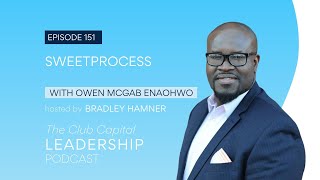
In this Club Capital Leadership Podcast episode, host Bradley Hamner interviews Owen McGab Enaohwo, co‑founder of SweetProcess, about the challenges small businesses face when trying to scale operations through clear documentation. Owen shares his personal journey from running an offshore staffing agency to creating SweetProcess after realizing existing tools were either too clunky or overly complex for SMEs. He explains how they built the software by first interviewing over 30 potential customers to uncover the root problems of documenting and continuously improving work. The conversation then dives deep into the distinctions between policies, processes, and procedures, using analogies (GPS directions vs speed‑limit signs) to clarify each type of document. Owen outlines a practical framework for getting started: identify recurring, non‑eliminable tasks; prioritize the biggest bottlenecks; create a Minimum Viable Procedure (title and step headings only); and iteratively flesh out details as the team uses the document, turning it into a continuous‑improvement loop. He discusses how to secure employee buy‑in through incentives, the role of process consultants, and the importance of a single source of truth—especially for remote teams. The episode also covers media choices, advocating for text, screenshots, and GIFs over video to reduce friction when updating documentation. Common mistakes such as over‑complicating procedures, stifling employee edits, and trying to perfect documents before launch are highlighted. Finally, Owen promotes an extended 28‑day SweetProcess trial for listeners and the episode includes sponsor messages for Club Capital, DirectClicks, Coach P Consulting, RockSolid Virtual Assistants, and Autopilot Recruiting.
Chapters
So the big question is this: how do small business owners like us grow our leadership, develop our teams, and scale our business in a way that allows us to get our products and services out to the world yet still remain profitable? That is the question, and this podcast will give you the answers. I'm Bradley Hamner, and this is the Club Capital Leadership Podcast. Hey, before we get into today's episode, did you know that Club Capital is the largest accounting advisory firm for insurance agency owners in the country, providing monthly accounting, CFO services, and tax preparation. Check them out at club.capital. Have you ever tried online marketing before and weren't sure if it was working? Maybe your rep talked about all the impressive features and stats and said things were going great, but you didn't know how all that tied into raw new policies written. Well, that's not the case with DirectClicks. DirectClicks is the premier Google Ads and SEO option exclusively for State Farm agents.
Why?
They're 100% results-oriented with an exclusivity guarantee. Every review call you have with your account manager focuses on what really matters to your business, and that's leads and call-ins received. Everything will get broken down to cost per lead received. By investing with DirectClicks, you're going to free up time and energy to focus on what's most important in your agency and doing what it is you do best. This will be the best investment you make for your team by spending confidently and scaling your agency today with exclusive online marketing partner DirectClicks. Visit us at directclicksinc.com. Ambition is the first step towards success. It's time to level up your agency, and Coach P Consulting will help you do just that by using the same strategies he used to sell over 700 life insurance policies in 2021 alone. Now, this is not your regular one-and-done type coaching. You'll get personalized coaching 2 days a week, every week of the month, and you'll get a live look behind the scenes of his team training and an office that's performing at the highest level. There's a reason Coach P Consulting is the fastest growing coaching company for insurance agency owners in the country. Coach P will train your team alongside his own and show you the exact steps they are taking to achieve Chairman's Circle, Exotic Travel, and Multi-Line Presidents Club and be one of the few agents to be selected to have a third office. So whether your goal is to be at the top of your local market or amongst the best in the country, this training will give you the strategies and the tactics to get there. For just $250 a month, you'll get high-level coaching each week from someone who is already getting it done at that level and his strategies work, and it's time to put them to work for you. Sign up at coachpeakconsulting.com and get your first full month for free when you mention the Club Capital Leadership Podcast.
Owen, welcome to the Club Capital Leadership Podcast.
Bradley, thanks for having me. I'm glad to be here.
We're excited to have you.
This—
I think this topic we're going to get into today is going to be really for our listening audience, and I personally am going to take a lot of nuggets. It's almost like a coaching session for me, so I'm really excited having you on. But before we get into any of those things, we always go— we always start with all of our guests on background and origin story, get to where they are today. Why don't you tell your story and your journey?
So before we started Sweet Process— Sweet Process started in the fourth quarter of 2013, and before that I used to run an agency where I would provide, uh, folks here, small business owners here in the U.S., with staff to do, uh, you know, back office operations type work. And my team was based in the Philippines. And, you know, back then, this was a time when a lot of people had read books like The 4-Hour Workweek and The World Is Flat. And then they realized that, hey, it's not only the, you know, the big multinationals that can actually go to these countries and hire, you know, hundreds of seats of people doing their customer support, this and all that, that even small business owners could do it. And so they, you know, they were open to this based on these books, you know, opening them to the ideas, and then they were looking for services like ours that were focused on small business owners. But the issue we're having is when these small business owners come to us, they had this preconceived notion that someone from a different country, a different time zone, different culture will be able to just come in, take over the work that they've been doing and just been doing it the way they have been doing and do it perfectly from day one because they were sold this bag of goods incorrectly. And so what we had to do when we bring on a new client was, hey, we had to make onboard them and make them understand that, hey, there are a bunch of tasks that are recurring that you wanna hand over to us, but the way, best way to hand it over to us is we have to go through training where for each task we would go on Skype. That was Skype back then. And we'll do a training session where they walk through how the work is done. So one of my team would then take the, the, uh, the recording and create a standard operating procedure or checklist procedure on how the work is done. But the issue that we were having back then was that the, the means for documenting these documents, these procedures, and the means for continuously improving them, it was an issue because we had a hacking together a bunch of free tools that were not built for that, or we were trying to use some enterprise-level tools that was built for a much larger company. And so I was like, you know what, In the back of my mind, I was like, there has to be a better way on how to do this whole documentation and continuous improvement thing in such a way that it's simple so that everyone in the team can do this. And so fast forward, I went on a podcast just similar to where I am right now. Uh, Andrew Warner is his name. His podcast, uh, it's called, uh, Mixergy. And he brought me on there to teach how entrepreneurs can, uh, systematize their operations. And so I, you know, did what I, I did on the call, but lo and behold, my co-founder all the way from Australia, Jervis, who is a programmer and also the co-founder with me at SweetProcess now, listened to the call and was like, he reached out to me by email. I was like, hey, I loved everything you were talking about and I have this idea of what I'm trying to build, a software, and I want to have a conversation with you on how, you know, uh, what I'm trying to do. And I was like open to it. And then we had a conversation and after the conversation I was like, dude, what you're trying to do is similar to the issues I'm actually having doing this stuff for people. And trying to, you know, help them outsource their work. And, you know, the tools available are not— does not— do not make sense. So since you're a programmer, let's just go ahead and, you know, build this together. But instead of just jumping in to build the software, let's spend some time having conversation with people potentially who might be customers so that we can understand the real root issues or problems or challenges they have when it comes to, you know, getting the employees to come together and build these documents and improve them. What is the blockers and things that they're having so that when we build our software, it's gonna be based on solving the root issues as opposed to having all these features in there being bloated and nobody can use it and we are back to square one again, but now it's our own software. And so he agreed, we went through that process of interviewing about 30+ potential customers. We did the interviews, took back the findings, and then we went ahead to build the software. So moving forward, now we have over 2,000 companies using our software. Each company is typically between 20 employees all the way to like even 1,000 employees. I mean, we have banks using our software, we have government agencies using our software, we have churches using our software, nonprofits. I mean, you can find all this stuff on the website because we even have videos and case studies and all that. But the reality is that across the board, this issue of being able to scale your operations, especially for tasks that you cannot automate, tasks that you depend on people to do, this issue costs across the board on in different industries. So that's what the problem we solve is making it easy for people to do through our software suite process.
What a great story. You know, I was actually talking— before I say that, I will say that Andrew Warner's podcast Mixergy is a fantastic podcast if nobody's listened to that. But I was talking to some people about this the other day, and that was the idea of going to the customers first. And then finding out what their pain points are and what they want before actually building something. And if you've read the book, uh, E-Myth from Michael Gerber, he talks about having an entrepreneurial seizure. And that's where you have this idea, I'm gonna— I have this thing I want to do, and you go and build it and do it and then go try to sell it, as opposed to what you guys did is actually You went to the clients first, found out what their needs were, and then came back and built the solution. Can you just speak to that specifically?
Yeah. So for us, it was critical that the, we do not make the mistake of the software being hard to use because, you know, what I realized was a lot of the people who build the software that were enterprise level, they built it primarily for people who are, uh, business process nerds or business process consultants. And so there's a lot of like technical jargons in there, in a lot of those software that have nothing to do with the day-to-day, you know, business owner, especially the small to medium-sized business owners have to deal with. So I said, to avoid that same issue, we need to actually speak to potential customers, not only because of that, but my own perspective at the time was based on running this out, you know, this agency where I was outsourcing work, right? And I felt like, you know, I wanted to get a perspective of others who are not even in my same industry, because if we are trying to solve this problem across the board, we need to a large extent to be able to see how this issue plays into different industries. And then you can be able to see what the root issue, the root problem across the board is. And you build to that knowing that, hey, even when you build a solution that solves the root issues that you identify, it cuts across different industries. So that's why we, you know, first we wanted to make sure the software was easy so we could avoid the issues that we, we face using the hard software. But by interviewing multiple people from different industries, you get to be able to see how that's— because the problem is a horizontal problem in terms of different industries have to deal with it. If it was a software where we are going to a specific vertical, let's say we're building a software for, let's say, a software for e-commerce or business owner, people that own e-commerce and whatever, then you know, okay, you're going to a specific industry. But we knew this problem was across the board. So we needed to spend more time drilling into the issues. That's why we this, uh, uh, the interviews, as I mentioned. Yeah.
Yeah, that makes sense. Well, let's kind of begin to come to terms or come to an understanding of terms, policies, procedures, systems, and processes. They oftentimes, and I'm certainly guilty of this myself, begin to get used somewhat interchangeably. How do you guys approach that and how do you define what each one is?
Process, you are able to document 3 types of documents, procedures, processes, policies. And at the very simplest form, procedure is kind of like a checklist and it has step 1. First of all, it has a title, which is a relevant title to anybody's, you know, company sees the title, they know what they can accomplish if they follow the step. And then title of the procedure and title of each of the steps. And within the steps, obviously you can put some details in there, screenshots, videos, whatever. Now process, on the other hand, is a situation where there are some tasks that using a single checklist to document would not be enough, or a single procedure to document would not be enough because the task itself, it's a single task, but it's a very large task. Especially like, I'll give you an example. If you are talking to a company that, you know, a larger company and they were trying to hire somebody, Right? The goal here, or the task here, is to hire somebody. But you couldn't use a single procedure to document that because first of all, there'll be a bunch of steps in its own procedure where the hiring manager has to prove to HR that, you know, this job is needed. That's one procedure in the process. Another procedure in the process will be the bunch of steps once the HR has approved the job that they have to follow to basically place the ads, the job in all the approved job boards or whatever. That's another procedure in the process. Now interviews, a candidate starts showing interest, that's— there's another procedure that they follow to do interviews. You keep going down through the whole thing until they finally shortlisted people they want to hire. There's another procedure in there for doing the whole background checking and all that to make sure this is the right, you know, do, do diligence on the candidate. And then all the way finally to the very last part of this single large task is onboarding and training that person they finally hired. You see, it was a single task, but the task itself was so big that one procedure couldn't document it. And because you needed to break it down to a bunch of different parts. Now in our app, you, for this kind of task, you would use a process and the process will contain multiple procedures in there with each, each procedure representing a specific part of that task. Now, based on the data we've collected that we, we, we see in, in terms of customers using the software, more than 80% of the documentation that most companies have will be about just single individual procedures. But then there will be that 20% or less that where they actually need to go advanced and use a process to document that specific task. But most of the documentation were procedures. Now, on the other hand, policies are not necessarily like steps because processes are still steps. But in, in, in, in this situation, they don't contain steps. They contain procedures, but policies don't contain steps, procedures, nothing. It's just like blanket information that you want to share with your employees. It could be vacation policies, work from home policy, or maybe some compliance thing your local government jurisdiction needs you to share with your employees. And you just share it with them. And lo and behold, in SuiteProcess, you can relate that policy to a procedure, or you can relate that policy to a process, or that policy can be standalone. But I want to make it clear using an analogy. So if I'm driving from Maryland, where I am now, to DC, and I have a GPS in my car telling me turn left, turn right on this street, that GPS is giving me details step by step of what I got to do. And that's like into a checklist or procedure in our app. But if I'm driving on that same road and I see a sign that says 30 miles per hour, that sign doesn't tell me how to stop my car and drive, you know, 30 miles per hour step by step. It's just literally telling me that this is the rule, the guideline. When I'm on this very stretch of the road, I need to be going, you know, at this speed. So that is like into a policy. I hope that's clear for the, for the listeners.
Yeah, I think that's helpful to be able to come to a place of just to having an understanding of the different terms and kind of where to use those as opposed to using them interchangeably. You know, I would think that this certainly been the case for me, that some of the hardest things to do is to begin to unpack the intellectual property out of the founder or the founder's head. I can think back when I was in school at Auburn, at a time that I had to get a paper finished, and I'm sure many of you have had a similar experience, and you're looking at the word processor and the cursor is just blinking and you know you need to do it. If I could just get the first paragraph started, then I could get rolling and I could get into the flow. Can you just speak to the fact of us getting started, of documenting our processes, our policies, etc., as opposed to kind of waiting?
So I'm glad you asked that question because first of all, I want to let the listener know that first of all, this doesn't have to be something you do by yourself, because it needs to be collaborative where everybody— excuse me— that is a part of the company, from managers to employees on the ground, are all involved in doing this. So the first thing we got to do before I go into the steps is that you need to encourage your employees that, you know, installing them this mindset that this is going to be a continuous improvement thing. Because once they have a continuous improvement installed in their mind, you, the managers, and everybody, then they understand that we're all starting from version 1.0 of this thing, and we're gonna keep— for every document we document with procedures, we're gonna keep improving it as we go. So the first thing, how do you identify what to document? I'll say, you know, just look through maybe the last 2 weeks or whatever of what you've done. If you were keeping track, look through the tasks that you were doing that are happening on a recurring basis. Because obviously if it's not a recurring thing that you do, then you don't really need to document a procedure for it. It might just be a one-time project and that's done. But Procedures are meant for those tasks that you keep doing on a recurring basis. So now you're left with those tasks that you do on a recurring basis. Now the next thing I want you to ask yourself is, do we do, do we necessarily need to document this or do we need to keep actually doing this work? Because there's this whole thing of tribal knowledge where, you know, especially in some companies, this is how we've always done stuff. But even though you've always done stuff, doesn't mean you should keep doing it that way, right? And so if you go through all the recurring tasks that you have gathered and then you ask yourself, do we need to keep, you know, doing this task? Then it might be that you don't, you just go ahead and eliminate it altogether. So what you'll be left with are those recurring tasks that you can't eliminate. Now let's break those tasks into two folds. The first one is, uh, there are those tasks that are the income generating tasks, the tasks that we all love to talk about, the sales, the marketing that entrepreneurs are usually excited about. Right? And then there are those production-based tasks where the things that you've promised your customer in order to achieve them, these, these tasks are the production tasks that tend to make them happen. So a lot of times people might want to jump and start documenting the revenue generation task because they assume that, okay, once they do that, they can bring in more people to take over the work from them, which brings in more customers. But I'll say pause on that because if you do that, you're going to end up having a situation where you're bringing more people As customers into a company that has a lot of bottlenecks so you can come and annoy them and make them unhappy. Let's focus on the production side of things, calm the chaos on there, document how work is done on there, and then we can start looking at the, you know, marketing, the marketing and sales, you know, income generating stuff. So if we're focusing on this production related stuff, how do you identify the first one to start with? Well, it's easy. The one that annoys you the most when it comes, it comes up when people asking you, how do you do it? The one that Whenever you wanna do the task, just to get the information, you gotta look at so many different places just to find the answers. You spend like 15, 30 minutes just trying to gather information. The one that is, it becomes like a bottleneck where if you're not even around, everything breaks down. So I'm just trying to paint a picture of being able to identify the biggest one that, you know, you need to focus on. Because if you get a win on that one, that whole momentum of, you know, you documented that task, you've worked with your employees to maybe improve the task. Now the next biggest bottleneck you look at, You do the next one and so on. That's the dance we wanna play. So you have identified the biggest bottleneck. How do you document that task? Well, I'll say the best time to document a task is when you actually want to do the task itself. And yeah, and people was like, oh, but oh, how can I do that? I have a lot of work to do and you tell me to document the task. I mean, do I have to document an encyclopedia with so much detail? I'll tell you again, remember the whole thing was we are putting this whole thing on a continuous improvement, right? So You've already given yourself permission that you're starting from version 0. So at the time you're doing the task, what you need to document is what I call a minimum viable procedure, which is just a procedure, a fancy way of saying a procedure that has the title of the procedure and title of each of the steps. Guess what? No details is filled in just yet. That's what you do under version 1.0, version 0, whatever you wanna call it. Now, once that is done, how do you get it from that to details fleshed in? You wanna make sure that your managers or your employees know that, hey, this project is started for this very, very task. And anytime they're about to work on that task themselves, they need to have that procedure right there in front of them so that as they're working on task, their goal is just to add in some more details. It's just, it could be a, a tiny blurb of text in the step 1 or a picture or screenshot in step 2 or whatever, or a short video in step 2, just something that adds more meat to that thing. And when they do that, you should be able to, uh, be notified of the changes that happen to the documents so that you go ahead to review what they've, uh, put in there and maybe approve it, right? And then now every time they're working on the task, the goal is to keep doing that. And over time they keep adding more and more details. And what happens is a lot of times when the work is being done is when the insight happens on how to improve stuff on the document they already have, because that's where a lot of the insight comes in. And so as they keep doing that, they keep improving it. Now you've done that for the first bottleneck task, you look to the next one and start doing the same thing over again. Now you move to the third one. Before you know, eventually to a large extent, you would have documented a lot of the production tasks that you have in your company, and you can now start looking at these income generating tasks and start doing the same thing. And remember, this is all about continuous improvement. So it doesn't have to be perfect. You just start doing the same, you know, the same dance and start documenting some of these income generating tasks. And then now, you know, they've been documented. You can even start bringing more employees to take over some of those tasks because you know they can follow the instructions, get the work done, knowing that on the production side, that's also handled because there's instructions on how to do all that stuff as well.
Are you an agency owner looking to grow your revenue, increase your bottom line, and better manage your taxes? Club Capital is here to help. Club Capital is the largest accounting and advisory firm for insurance agents in the country, providing monthly accounting, tax strategy, and CFO services. Way more than bookkeeping and your everyday run-of-the-mill tax prep, Club Capital is focused on providing financial and tax advisory services that help you plan and forecast your agency's performance. Their financial dashboards and agency forecasting tools help you better understand your agency's historical performance, create and measure future targets, and see how your agency compares to your peers around the country. Imagine what it would be like to understand the impact to your bottom line when deciding to hire a new employee, or forecast the impact rate changes or commission rates will have on your business. With over $200 million in tracked annual revenue and $140 million in tracked annual expenses, Club Capital has the data and the team to help you make better informed decisions for your agency. They will help you turn that back office stress into the backbone of your agency's success by giving you the tools to take your agency and your leadership to the next level. Visit club.capital today to book a solution overview with one of our business consultants. Club Capital, way more than a CPA firm.
Now, the next thing through might be saying, okay, I get this, uh, but maybe if I don't have, uh, how do I get my employees to be bought into this? So, uh, what I would suggest is you can also incentivize them. You know, I know they're— you hire them to do a specific task, and you are, you're paying them for that. But you can also incentivize them by paying them for actually contributing to improving the documents so they can take ownership of it. And a lot of times too, like, you know, if, if they're asking, how, how do I do this? How do I do that? How do I do that? The question should be like, if they were using a software like SuiteProcess, would be, okay, hey, have you checked SuiteProcess for it? So that they know in their mind subconsciously that, hey, I don't just go ask my manager how something is done. I go check Sweet Process. And over, you know, habits is like, after like a couple of weeks of something happening, it becomes a habit, right? So every time they want to get something done and they're looking for the instructions, they go into one single place, in this case Sweet Process, they find the answer and they do the work. And then as they are doing that, they see, you know, these procedures that have been built by, you know, their own colleagues, right? And so now they are inspired to say, hey, My colleagues made some changes to this document. The managers approved it. I can see that it was made by my colleague. Let me, because I'm doing work right now, I have some insight. Let me go ahead and make some changes, right? They make the changes to that document. So that is, these are ways you can encourage your employees to be part of the process. But if for some reason you don't have the opportunity for your employees to do it because they're so busy, and I'm very highly unlikely that that will be the case if you implement some of the strategies I'm sharing here, but I want to give all angles to this stuff. So if for some reason your managers, your employees can't do this, there are people who are called process consultants, who their whole job is to come into companies, look through the companies, figure out bottlenecks, help them eliminate parts of the company they shouldn't be doing anymore. And then they could use a software like SuiteProcess in most instances, document their work, their procedures for them. Right. And so, but in this case, if you're going with a process consultant, you understand that it's going to cost more money than if you were going directly with your employees, but that's an option that you can follow. Final thing is that, you know, you might even want to, so that every time someone documents a procedure, there is a format that you like. You might even document a procedure for documenting procedures. And it could just be as simple as, you know, when you create a procedure, here's how you should title it. When you have steps, yes, how the step should be. If you are adding text, yes, how much text we want to see because more than this amount of text, we feel it's a book. We don't, we don't want to give people a headache just looking at the procedure. So you can just craft out how you want people to see procedures. Even when they are inside it, they're inspired to create some document. They have something handy that guides them on how they will do it. So hopefully all these tips put together is how you who's listening can take the initiative and start doing this and encouraging your employees to, to be part of it.
So yeah, some people may be familiar with the Kaizen methodology, and there's even a book on that about continuous improvement, and then also just, you know, involving of the team, which is so critical in this process, not having to do it alone. But I'm actually curious around your thoughts around written text versus video, or maybe in addition with video?
So written text versus video?
Yes.
So personally, I prefer written text. And if you want to add some visual screenshots and if you really want to enhance the visuals, use GIF or GIFs or whatever they call it. The reason why I'm not so keen on videos is because Where this whole idea is you wanna, you know, continuously improve stuff. So rapid changes comes in. Now, if you have videos in there describing how step number 1 should be done, now you have to go ahead and create a new video because you wouldn't be able to even edit the specific point in the video that needs to be changed. So now you're adding unnecessary friction into this thing where, let's be frank, it's not the most sexy part of business, but it's one of the most important part especially if you're trying to grow and scale the business. So I'm always about reducing friction as much as possible. So I know that videos add a lot of friction. That's one of the reasons why with Sweet Process, if someone tries to upload a video to a specific step, we limit the file size so that your video has to be a certain length because we don't want you to go and upload a movie for step number 1. And now the person has to sit down there and watch an entire movie on how to accomplish step number 1 of this very thing. So we, if you're gonna, if you need to have a video, the video should be not more than a minute in terms of length and very concise and be specific to that very step. But again, I'd rather you go with text and screenshots. And if you need to enhance the screenshot, use a GIF, right? The GIF is, you know, it's a moving picture or whatever, but at least the reason why is whenever things need to be updated, it's just a click of, you know, the button and you copy and remove what you don't want to remove from the text, add the new text in there. There is a screenshot you need to replace, you know, copy and click it out and then add the new screenshot in there. But you see how that removes the friction compared if you were using videos for this stuff.
Yeah.
You all have worked with a lot of business owners and their teams. And across different industries, what are some of the biggest mistakes that you've seen some of the different people do whenever they begin to try to begin to start working through documenting their policies and procedures, et cetera?
I think a lot of times too is that they try to overcomplicate stuff, right? Because there's just this thing where they feel like it has to be perfect from day one, and then they try to go ahead and add so much information in there. I said, and my thing is, you know, uh, The people that get the most traction out of this or most value understand that, hey, it doesn't have to be too complicated. I mean, if you have a step that has just one paragraph in there and that's good enough to get the work done, that's all you're looking for. You know, getting work done where someone can actually follow your instruction and get the work as maybe 60%, 70% as good as you, the owner, that's what you're looking for so that From there, you can begin to improve. But trying to make the procedure perfect from day one, not only basically bogs you down and basically ends up being a procrastination thing because you probably won't move forward. The other thing that people I see happening is that I've actually seen one situation, especially in the much older and larger companies where they try to limit people from being able to make improvements to it because maybe they've hired somebody in the company who's supposed to be quote unquote the operations manager or, you know, the person who's creating the system. And that person feels like to exert their role, they want to be the one in control of everything, all the changes and all that. But what happens is that you're basically stifling innovation and you're basically— the person who's doing the work, if their input cannot come directly from them when they're doing the work to impact the actual document that is based on the task that they're doing. Now, you know, they're not able to help to improve their own work experience. So that's one of the reasons why, you know, people keep asking us, oh, we want to be able to limit people from— we say we refuse because we say we want everybody to be able to see a change and make the change so that while you're on the ground, you see any change that needs to be happening, you need to be empowered to either maybe passively leave comments for your manager to say, hey, while I was doing the work, this particular step was not accounted for. Go ahead and make some changes. Or you can be active in the sense that, yes, you were assigned a task based on a procedure that was documented in SuiteProcess, but then you saw a step that it wasn't accounted for. You go into the underlying document, the underlying procedure, click the edit button, make the change to it because right there on the ground, this is the issue that is happening. You made the changes to it. Now the manager, yes, they still have the management oversight that they are able to see the changes that you made. And if they approve and like what you made, they go ahead and approve the changes. And in real time, that changes gets populated in the actual task the employee is working on. That's how SweetProcess, uh, makes this whole continuous flow back and forth of the documentation side and the task management side. I didn't say this earlier, but like one of the things you can do in Sweet Process is that after you've documented how the work is done, you can actually assign tasks to people so they can actually carry out real work. But they will never say they don't know how to do the work because the underlying document, the underlying procedure, or the underlying process is right there in front of them so they can follow the instructions.
I totally get it. And, you know, I was thinking about like a 3-ring binder, Word document. It's different things sitting on different people's Desktops, and I guess I was just thinking about the idea of being able to tie the work to where the documentation is. Does that make sense? Like where the actual processes stay with where the work actually is. Can you speak to that?
Yeah. And that's an issue that is even more emphasized now because back in the days, uh, before, you know, people started working remotely. Right? What happens is, you know, you can always maybe kind of in a way rely on the fact that you could just walk down to the next cubicle or whatever, tap your, your colleague and interrupt them because you're literally interrupting them. And you say, how do we do this again? And the employee tries to remind you of how it's done. So you've wasted time trying to gather information, we couldn't find it. Then you went to interrupt your employee and now stopped them from being productive. They answer your question and you now come back. And so you have all these wasted mind cycles trying to do things. Now it's gotten worse because people are not working in the same place anymore. Most people are working remotely. And guess what? They're working remotely and their parents, they have kids, they have to do home chores and all that. So you can't even literally go and even tap them even virtually because when they're in front of the computer, they want to be working because the minutes maybe kids are around or whatever, they got to attend to other things. So now it's even more important for the listener to have these things, the single source of truth where the employees, whether they're working, uh, in the office or most likely working remotely, can just go and find the instructions and get it done. It's more important now.
Oh, and I know people are saying, okay, I get it. I need to begin to document my processes. And you guys have obviously built SweetProcess to be able to make this happen. And you have created a URL, a place for just our listening audience to be able to go. Can you tell them where to go to and where to point them to and what offer you guys have just for our listening audience today?
Okay, so by default, if you go to our website, by default you will get a 14-day trial. But because you've been listening to this interview and you've gotten all this insight, I want to give you a bonus. So if you go to sweepprocess.com/clubcapital, you will get access to a 28-day trial. So an extended trial of the software. And why do we encourage trials? Because we want you to get access to the entire software, see how it works. And if then you like it, then you go ahead and you sign up and become our customer. So again, the whole thing about removing friction, that's what we're trying to do. So the best place to do that, to get the extended trial, is to go to sweeprocess.com/club. Capital, and sweet is sweet like candy. Process obviously is like process, and then.com/clubcapital.
The best use of money is to buy back your time, and one of the best ways to do that is with a virtual assistant. Rock Solid Virtual Assistants brings together top business leaders with exceptional virtual assistants to build successful relationship-driven teams. The services they provide range from graphic design and marketing to executive admin assistance and everything in between. There are many virtual assistant companies on the market to choose from, but at RockSolid, their processes and passion for what they do place them at the very top of that list. Not only is their hiring process exceptional, which nets them the very best assistants, but they also provide superior support to their teams for the duration of your time with them. The matching process at RockSolid is unlike any other, and they have the track record to prove it. Their hands-on approach has proven to increase the success rate of their teams exponentially. So if you're looking to build a rock-solid team for your business, reach out to Tracy and the team for a no-pressure discovery call at rocksolidassistance.com. They value your success as if it were their own, because it is.
All right, so make sure you go to and check out the offer that SuiteProcess has for you. Go to suiteprocess.com/clubcapital. Couple key takeaways, you know, I was sharing with them in the episode talking about whenever I had a client that began to launch a digital course and they launched it and spent about $30,000 on launching, getting this digital course together. And ultimately it, it flopped. They thought they had product market fit. They really didn't because they had really kind of built it on what they thought the market needed as opposed to going to the market first and saying, hey, is this something that you guys want? So that was a big takeaway for me. And then I think that the biggest is making sure The two other ones would be just understanding when we say policies, what are we saying? If we say processes, what are we saying? If we say procedures, what are we saying? Like coming to terms, I think, is— that was a big takeaway for me out of this. And then I would say thirdly, it's just the fact of getting started, having it all in one place, wherever that is going to be. And if it's going to be a software like SuiteProcess. So enjoy having Owen on. I think he's a wealth of knowledge over at Allergate Story and awesome software that that they've built. As always, big shout out to our podcast sponsors. Our newest podcast sponsor, Autopilot Recruiting, who just came on board. Make sure you go to autopilotrecruiting.com and use the code CLUBCAPITAL to get started. Look, you know, it's so important to be able to find rockstar team members and you can't leave it up to chance. Autopilot Recruiting is a continuous recruiting service. You can be assigned a recruiter that's been trained to recruit on your behalf every single business day. They'll take over and revamp your career plug and do it the right way, send out assessments, pre-screening phone interviews, etc. So go to autopilotrecruiting.com. Of course, once you get those team members on board, you got to be able to train them, right? And that's where Coach P comes in. Go to coachpconsulting.com. Make sure you tell him that you heard about him on the Club Capital Leadership Podcast, and you'll get your entire very first month off. You got to get A-players, and then you got to develop those people. If you're in college football and you're in the SEC, you got to get 5-star talent, but then you got to be able to put them in a culture and in a program that's going to develop them. Same exact thing is true in your business. I really wasn't planning on this, but I mean, continuing that narrative is ultimately you got to be able to give them really great leads, right? And especially if you're hiring salespeople so that they have the best chance to be able to produce and get you a good positive return on your investment. Go to directclicksinc.com. They've been doing this for a really long time. And they are some of the best in the business, going to get to really know you and your situation. DirectClicksInc.com. You heard me say many times, I think it's my secret weapon to be able to have an executive assistant. And some of you may have a hangup of, I just don't know if I need an executive assistant or what would I have my executive assistant to be able to do. They really are your secret weapon. Go to RockSolidAssistance.com, book a, just a discovery call where somebody on Tracy's team, and they'll be able to help you kind of navigate through what that's going to look like. And if— listen, if I can help you, if you're curious about getting an executive assistant, email me. Go to bradley@club.capital, shoot me an email, and I'd be happy to, to send you a few things that have helped me over time to figure out exactly kind of what my executive assistant would be able to help me with and how that's benefited me across the different businesses that I have. And finally, thanks to our partners at Club Capital. Go to club.capital. They are the best and the biggest in the business focusing just on insurance agency owners. They know your business as well as anybody because they are focused on your agency, and they be able to help you grow and to be able to make more money, take more money home, and be able to invest more in your business and do it the right way. So go to club. Clubcapital.com. All right, everyone, till next episode, lead well.
So the big question is this: how do small business owners like us grow our leadership, develop our teams, and scale our business in a way that allows us to get our products and services out to the world yet still remain profitable? That is the question, and this podcast will give you the answers. I'm Bradley Hamner, and this is the Club Capital Leadership podcast. Hey, before we get into today's episode, did you know that Club Capital is the largest accounting advisory firm for insurance agency owners in the country, providing monthly accounting, CFO services, and tax preparation? Check them out at club.capital.










