Episode 169: Start 2023 Strong with the 5 Insurance Guys
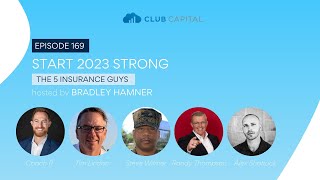
In this Club Capital Leadership Podcast episode, host Bradley Hamner convenes five top insurance agency owners—David Peterson, Alex Chatuch, Randy Thompson, Steve Wilmer, and Tim Linden—to share actionable strategies for launching 2023 with momentum. The conversation covers (1) the importance of a solid team and proactive recruiting, (2) reflective planning and goal‑setting based on the prior year’s performance, (3) building and executing a detailed 90‑day launch plan with checkpoints, (4) fostering a culture of accountability and consistent daily habits, (5) retaining clients through differentiated service, multi‑line advising, and “green” customer experiences, (6) leveraging metrics and daily/weekly performance targets, (7) the role of coaching, virtual assistants, and external services in scaling, and (8) mindset shifts for navigating market pressures such as rising rates and inflation. Throughout, the guests stress simplicity, focus, and the need to invest in people and processes rather than relying on short‑term tactics. The episode ends with each guest offering final thoughts and contact information for further coaching or recruiting support.
Chapters
So the big question is this: how do small business owners like us grow our leadership, develop our teams, and scale our business in a way that allows us to get our products and services out to the world yet still remain profitable? That is the question, and this podcast will give you the answers. I'm Bradley Hamner, and this is the Club Capital Leadership Podcast. Hey, before we get into today's episode, did you know that Club Capital is the largest accounting advisory firm for insurance agency owners in the country, providing monthly accounting, CFO services, and tax preparation. Check them out at club.capital.
Welcome to another episode of the Club Capital Leadership Podcast. My name is Bradley Hamner, your host, and we have a special episode for you today. I do say that often, but today truly is a special day. We're going to try different things with the podcast. We are not going to be afraid, uh, to try new things to be able to serve all of you, and today is definitely no exception to that. Most people I've ever interviewed on the podcast has been two others, but today we're going five. We've got the Five Insurance Guys on the podcast: David Peterson, Alex Chatuch, Randy Thompson, Steve Wilmer, and Tim Lended. I think you're going to get a ton out of this. We could have made this probably a 3-hour podcast into 3 different series, but I know that if you're wanting to get 2023 off to a great start or any time to be able to grow your insurance agency, this is the episode for you. Without further ado, here's my conversation with the Five Insurance Guys.
Have you ever tried online marketing before and weren't sure if it was working? Maybe your rep talked about all the impressive features and stats and said things were going great, but you didn't know how all that tied into raw new policies written. Well, that's not the case with DirectClicks. DirectClicks is the premier Google Ads and SEO option exclusively for State Farm agents. Why? They're 100% resource-oriented with an exclusivity guarantee. Every review call you have with your account manager focuses on what really matters to your business, and that's leads and call-ins received. Everything will get broken down to cost per lead received. By investing with DirectClix, you're going to free up time and energy to focus on what's most important in your agency and doing what it is you do best. This will be the best investment you make for your team by spending confidently and scaling your agency today with exclusive online marketing partner DirectClicks. Visit us at directclicksinc.com. Ambition is the first step towards success. It's time to level up your agency, and Coach P Consulting will help you do just that by using the same strategies he used to sell over 700 life insurance policies in 2021 alone. Now, this is not your regular one-and-done type coaching. You'll get personalized coaching 2 days a week, every week of the month, and you'll get a live look behind the scenes of his team training and an office that's performing at the highest level. There's a reason Coach P Consulting is the fastest growing coaching company for insurance agency owners in the country. Coach P will train your team alongside his own and show you the exact steps they are taking to achieve Chairman's Circle, Exotic Travel, and Multi-Line Presidents Club and be one of the few agents to be selected to have a third office. So whether your goal is to be at the top of your local market or amongst the best in the country, this training will give you the strategies and the tactics to get there. For just $250 a month, you'll get high-level coaching each week from someone who is already getting it done at that level and his strategies work, and it's time to put them to work for you. Sign up at coachpeakconsulting.com and get your first full month for free when you mention the Club Capital Leadership Podcast.
Five Guys, welcome to the Club Capital Leadership Podcast.
Thanks for having us.
Appreciate it.
Yeah, super excited to be here. Thank you.
I'm pumped. I think it's going to be a lot of fun today. I'm going to try to keep this all wrangled in as much as possible, but I know each one of you just provides so much value, and I know our listeners are going to get a ton. Out of this conversation. So at the time of recording and at the time that this podcast can be dropped, a lot of people are starting to turn their attention into 2023. And every business owner across the country and every business wants to get off to a quick start. They— nobody says, hey, I'm really looking forward to getting off to a slow start. You think about football, every team says, hey, we want to get off to a fast start. And so that's really where I want to start the conversation for today. And so, Alex, what are some of the things whenever you begin to start turning your attention to 2023 that you think are critical to not just saying you want to get off to a fast start, but actually getting off to a fast start?
Yeah, for me, everything starts with team. You know, I think that if I go into the new year with the right number of people in the seats and also the right people in the seats, I know I'm not leaving it to chance. And so that's where I started, is obviously recruiting what you know, focusing on my team. If either one of those two things are lacking or missing, I know we, we will struggle, and the goals and the things that I need and want to accomplish as an agent most likely will not happen. So I first make sure my team is straight. Um, once that's locked in and we know we're good there, then I'll actually take a step back a little bit and reflect on 2022. I think sometimes as agents, since we are looking forward to that, that Q1 fast start, if you will, where we sometimes don't slow down enough to recognize the success we had in '22. And so I'll do some things with my team, whether it be a planning conference, Christmas party, a combination of both of those things, just to acknowledge the success that we have had over the past year before we get geared up for '23. But I think most importantly though is, is we don't freak out, right? I used to do that as a new agent. January 2nd was my least favorite day of the year because everything is down to zero and it's like, okay, what now? Um, it's a new day, but I find that just being consistent over the years— so what we're doing this week in November is the same thing we were doing last January, it's the same thing we're going to do this January— and that consistency every single week, 52 weeks out of the year, yields results year after year after year. And I'd be curious to hear what Randy has to say about this topic, because no one's been more consistent year after year after year than Randy Thompson.
So I don't know if that's an invite for me to jump in, but absolutely, I have a very specific process that I use every single year. So, uh, the last 2 weeks of December, um, we are loading up all of our appointments in January, February, and March, and we run a list, uh, in December every year of all of our life clients. And, uh, if you've heard me speak before, I talk about the counsel Scott Foster gave me years ago, which was, if you want to sell Bibles, you got to talk to the Christians. And that's because they're the ones that are the believers that read that book. If you want to sell life insurance, you got to talk to the believers, the ones that already own it. And the best sales and the larger premium cases always come from our existing clients, not new clients. And so we start every single year by bringing in all of our existing life insurance clients and, uh, reviewing their coverage and adding to it and converting using Stairs and Buckets in the video as the kind of staple of the conversation. But in the first 3 months every year, our goal is $100,000 in life premium. We've done it 19 years in a row using this specific process. So in my opinion a strong start to the year is get that life insurance elephant off your back by getting that taken care of. And you ought to sell 50%, 60% of all your life insurance policies you sell in a given year to existing clients that already own it and just want more or different coverage. So that's my two cents worth.
Yeah, I think that's really good. A couple things that really stand out to me. Number one, they always say that a good day starts the night before, and that makes me think about which is— you were saying to have a process that before 2023 ever starts so that you don't have that feeling. Yeah, that Alex said on January 1st and says, man, everybody's back to zero. Isn't it interesting, Steve, that some people on January 1st are so excited about the new year? They're like, man, I can't wait. I can't wait to get back in the office. And then somebody else is looking at January 1st and saying, man, everything just reset back to zero. Here we go again. It feels like Groundhog Day. And so what are the things that we can do to be able to create genuine momentum, motivation into our team to be able to not only have the systems and processes, but actually carry some momentum from 2022 into 2023?
Yeah.
In order to get off to a fast start, I believe you got to have a strong finish. A lot of times people— want to get off to a fast start in January, but they really don't have a plan. Like Alex was talking about, they don't have a plan, they don't know what to do. And the mistake that they make is they don't find somebody to be able to help them. You know, like this, like January, think about it, everybody's going to be at the gym, right? I want to lose weight, I want to get in shape, I want to get stronger. But they go to the gym by themselves, they don't know what to do, they don't know how to work out, they don't know what they should be working on, they should— they don't know what they should not be working on. And what ends happening is they fizzle out. They had the right mindset of, I want to do something in January, but they didn't have the proper plan in place. So with a lot of agents, I see the exact same thing. If you ask them, what's going to be your plan for 2023? We're going to do this, we're going to do that, we're going to do this. And then I'll ask, great, how are you going to do that? Who's going to help you do that? Who's going to hold you accountable for doing that? And they don't have an answer. And they end up doing the exact same thing, which was nothing, in 2023 that they did in 2022. So gotta have a plan in place, gotta have somebody to coach you, somebody to push you, somebody to hold you accountable, tell you what you're doing right, tell you what you're doing wrong. Because if you don't, you're destined to repeat the past if you don't learn from it.
No, that's so true. And that actually really tees me up for I want to get, um, David and Tim's input on this topic because I think it's such an important topic. But he mentioned having a plan, David. There's one thing to have a plan— you've got to have a plan— but how do you ensure execution on the plan? So people, we begin to lay out the plan, but the best laid plans sometimes don't ever fill out if we don't execute on the plan. So when you think about all right, here's the plan of what we're going to do, not only in the first 90 days of this year, but even in 2023, but specifically in that first maybe 90 days. What are the things that you do to ensure that we actually get the ball in the end zone?
Sure. I, you know, my early years, I was the poster boy for, um, creating plans and then never following up on them, right? We can deliver stuff to our team all day long, but if we're not there to check their work and be behind them to hold them accountable, it's going to last for a couple weeks and fizzle away. So to make sure that the next year kicks off to a great start, you know, the first thing we're going to do is we've got a big planning meeting, you know, and I put a lot of work into that to get with my team. We usually take them to a destination where we're out of the office and we spend some time bonding as a group and getting closer, but there's business with it as well. And not just This is how we did, this is what we're gonna do next year, but here's how we're going to do it. And in order for you to have any chance of success, you have to go in and set your checkpoints to follow up. And for me, that's my calendar and being disciplined enough to not hit dismiss, but to do it. Hey, we're a week in. Have we started doing the things that we said we're gonna do? We're 2 weeks in. How are those appointments going? We're a month in, what kind of progress have we made on our goal? And continuing to keep it in front of the team. And if you don't do that, we all know that it's eventually going to fizzle away. And I'll tell you, kind of piggyback on what Al and Randy said, is learning from the people that have been doing it consistently, such as Randy. You know, I'm, I'm the one of the 5 guys that keeps telling everybody to go do business with these people. You know, when I, when I learned what Randy did, you know, he told me on our first exotic trip— my first exotic trip, it is like 15th— um, sell Bibles to Christians, right? Meet with people that have bought life insurance. And now part of my annual plan is stop making life insurance part of the annual goal. Let's nail it in Fast Start. Let's get those appointments set in December because we can always catch up on other products later. It is almost impossible to catch up on life insurance. So now we go into Fast Start and say, this is our goal. We are going to meet with this many clients and close this much premium. And we just followed Randy's play, sell $100,000 in the first quarter, do it enough and it starts to happen. And all of a sudden those other goals fall in line.
That's so good. Yeah. Tim, there's somebody listening to this. That I want that has not had the year that they want to have. Okay. They're coming out of 2022. They've not had the year that they want to have, but they want to get back on the bandwagon, right? They either want to get to a level that they've never been before. They want to have 2023 to be a different year. What is your suggestion to them and your best advice for them to be able to rebound?
Are you an agency owner looking to grow your revenue, increase your bottom line, and better manage your taxes? Club Capital is here to help. Club Capital is the largest accounting and advisory firm for insurance agents in the country, providing monthly accounting, tax strategy, and CFO services. Way more than bookkeeping and your everyday run-of-the-mill tax prep, Club Capital is focused on providing financial and tax advisory services that help you plan and forecast your agency's performance. Their financial dashboards and agency forecasting tools help you better understand your agency's historical performance, create and measure future targets, and see how your agency compares to your peers around the country. Imagine what it would be like to understand the impact to your bottom line when deciding to hire a new employee, or forecast the impact rate changes or commission rates will have on your business. With over $200 million in tracked annual revenue and $140 million in tracked annual expenses, Club Capital has the data and the team to help you make better informed decisions for your agency. They will help you turn that back office stress into the backbone of your agency's success by giving you the tools to take your agency and your leadership to the next level. Visit club.capital today to book a solution overview with one of our business consultants. Club Capital, way more than a CPA firm.
Great, great question. Can I, can I just say something? I want to say something about David Peterson, if I could.
Yeah, absolutely.
Because he just spoke and what I'm going to say about David, I think is true about Randy. And it's very true about Al as well. My observation of these three men and Steve— Steve knows where I'm coming from here because they are the agents. What makes them so incredible as an agent and so successful as an agent, but also as a business owner. Each one of them runs a different business, which is an incredible business, as successful as their agencies. Is their ability to focus. So David just spoke about, you know, create the plan and then it's up to you to stick to that plan and stay focused on it and to lead your team. This is what he was just saying to you. And, and what he was saying to you is kind of what Alex is sharing with you and Randy's sharing with you. It's up to the agent to stay focused on it. When I observe these 3 guys coming to different meetings, when I was speaking last week in Orlando, they weren't writing every note down that they could take and trying to take every note and say, oh my God, I'm going to go put it my plan right now and making all these constant changes. They're listening to observe, to learn, and then they're taking what they hear and they're putting it into almost like a parking lot and going to make a determination of, I'm going to add this at that time, because they stay true to what their plan is. That's what makes David Peterson number 9, I think number 9 in the company, um, and, and so successful running 1, 2, 3 offices and a coaching business. What makes Randy Thompson so Freaking consistent, 19 years in a row. And how Alex has been able to be President's Club, not one office, but in two offices, opening a third and running, which a business that we're all envious of. I mean, exponential growth. He's helping at 1,200 agents in just one year. So if I could just say that before I answer your question is, you know, get your plan, which is what they're saying to you, stick to your plan. Take all the other stuff that you're hearing and put it over here for another day. Know that it's there, but stick to your plan. For that agent that hasn't had the year that they've wanted to, it comes down to simple and focus. If you want to be— if you want to go from— you did 400 autos this year, but you really want to be doing 750. Let's not talk to your team about going from 400 to 750. Let's talk about the fact that right now you and your team are averaging 2 autos per day and, and next year you want to average 3. 3 is a much easier number for your team to put their arms around than, hey, let's go from 400 to 750. Break what it is that you want to do next year down into its simplest form. Daily P&C goals. Drive the daily P&C. Achieve your weekly financial services numbers. Get with somebody that can help you take these, these monumental goals and dreams and aspirations. The stuff that these guys are achieving every single week, every single year. Get with somebody who can take those numbers for you and break them down into the simplest. We like to say to an agent, you want to do 1,000 autos in a year, come to work each day and do 4. You want to do 500 fire apps in a year, come to work each day and do 2. And don't go home at 5 o'clock. You go home at 5 o'clock when you've done 4 autos and 2 fire. You don't work 12 months of the year and find out 2 months later that you're a Chairman Circle agent. You know that you're a Chairman Circle agent on January 3rd when you turn off the lights and you walk out and you say, wow, we did 4 autos and 2 fire, and let's go home and come back and do it again. So an agent that is not where they want to be, wants to get, they should get with somebody that can break their numbers down to the smallest, most controllable unit of time. Because today is all that we control. That's all that we control. Know what you've got to do each day, as simple as you can. Focus on it. And guys, for those listening, don't go home at 5. Go home at 5 because you got your 4 orders, your 2 fires. Don't go home on Friday at 5. Because it's 5 o'clock. Go home on Friday at 5 because you've got $180 of collected life premium for the week. So Bradley, that's, that's what it's always going to be about, breaking where you want to be down to the smallest, most controllable unit of time and making it simple for the team.
Okay, that's awesome. You know, it made me think about this idea of binders on bookshelves. How many people have come to all of your roadshows that you all have had and listen. They take notes diligently. They go back to their offices the next day and nothing changes. Nothing changes. And it really is frustrating, right?
Because you say like, Bradley, they all come and they— and every note they take, they put right into place, right, guys? It's 0%. We're different. We're different. Yeah.
I think the definition of understanding is the fact that you can learn something and then something changes. You actually implement something. Ideas are everywhere, but implementation is everything. I want to turn my attention— and before we do that, I'm going to take a pause real quick. Guys, really good job on that first one. That was awesome. That was really good. We're professionals, Bradley.
Come on.
What's that?
We're professionals here. This isn't amateur hour.
Yeah, you guys are pros.
All right.
I want to turn my attention now to a little bit of team development. Okay. Team development. David, you— we cannot do this alone. You have to be able to develop the people in your organization. And we just came off talking about effectively how do we create a business plan that we can actually execute on in 2023? Well, a big part of that is going to be realizing that we need to have a developmental plan in place for our team so that they can execute? Because you're not the only one that's executing, right? You're leading the team. You're not the one that's going to sell all of those policies in your business. David, somebody has not created a team development plan for their business. Where should they begin?
It starts off with your strengths and weaknesses as an agent. You've got to identify what you can do as a leader before you can go lead your team, right? For example, what I spoke about earlier, if you come up with the ideas and give them to your team, but you can't follow up and implement those ideas and help hold them accountable, you need a manager in place to do that for you, right? So figuring out what your limits are as the agent, and then secondly, looking at your team, looking at your individuals and figuring out what their skill set is Are they in the right seats? Right. You know, when we look at recruiting, we try and focus on bringing in the best people. Are they good, hardworking, trustworthy individuals? I have no idea what they're going to do in my office because I don't know their skillset yet. It takes me 2 months typically to figure out how someone is going to be a productive team member in my office, because I want the job to align with their skillset.
To go—
so going back to your question, you got to figure out what your makeup is and then your team's makeup, and only then can you truly hold someone accountable to what their goals are. So looking inside, figuring out what your limits are.
Randy, one of the things whenever people have commented on your consistency has to be not only in the fact that you have really good systems and processes, but, but through your ability to hold your team accountable to that. Can you speak about accountability on a consistent basis? Because again, great systems, great processes in place. This is what we're going to do with the last 2 weeks of December to lead us into it. But then there's the actual day-to-day accountability, week-to-week accountability that has to happen with our teams.
The best use of money is to buy back your time, and one of the best ways to do that is with a virtual assistant. Rock Solid Virtual Assistants brings together top business leaders with exceptional virtual assistants to build successful relationship-driven teams. The services they provide range from graphic design and marketing to executive admin assistance and everything in between. There are many virtual assistant companies on the market to choose from, but at Rock Solid, their processes and passion for what they do place them at the very top of Not only is their hiring process exceptional, which nets them the very best assistance, but they also provide superior support to their teams for the duration of your time with them. The matching process at Rock Solid is unlike any other, and they have the track record to prove it. Their hands-on approach has proven to increase the success rate of their teams exponentially. So if you're looking to build a rock-solid team for your business, reach out to Tracy and the team for a no-pressure discovery call at Rock Solid Assistance .com. They value your success as if it were their own, because it is.
So, um, I train on a daily basis with my team. Every single day we meet from 8 to 9, and so every day we're talking about what we're going to do and what we have done. So accountability is very, very transparent in the office because of that. Um, and we have a, a saying in our office: you eat what you kill. So if you touch it, you finish it. It's your job. It's not somebody else's job to do your job. It's your job to do your job. And, uh, so the, the culture is there that, you know, there's a minimum expectation. And as a coach and a trainer, like, to speak to what you're talking about regarding a plan, it's very critical that you're coaching your team, but do you also have include other coaches or other voices You know, I send my wrestlers to a summer wrestling camp. I sent all my, uh, team down to a Tim Linden event in Salt Lake City, 4 hours away, in September. You know, I've taken them out to see other coaches around the country, and we budget for that. But I always tell my team, listen, I'm spending my time and giving you my best effort. I need yours in return. We just talk about it on a daily basis, and then we keep the score in front of them. This is the other thing that's really important. So if you have goals, you need to remind your team of where they're at in regards to that. So every single Monday, we have a numbers day as part of our meeting. This is where our goals are at the end of the year, this is where we started, and this is where we're at right now. Now, what are you doing to get us there? And we, we talk about that. So You know, I'm not a hard-ass when it comes to accountability. Like, I'm going to beat you if you're not doing your job. But, but just the fact that they have to report and account by talking about it amongst their peers is half the battle. And so keep it scheduled and make it happen and stick to it.
Yeah, that's so good.
Hope that answers your question.
It does. Yeah, it's perfect. Steve, he mentioned something in there that I didn't know if I was going to get to talk about, but I mean, I'm glad he kind of teed me up for it. That's culture. Culture. And how important culture is and how do you create the culture that you want to be able to have success. Everybody here has a culture of success that they've been able to ingrain in their office.
How—
what is the value and the importance of culture in our organizations? And how do you, you know, if you've got to make a tweak and turn the ship, so to speak, how do you do that?
Absolutely. I'm gonna show you how serious this is. Love it.
Culture.
I don't just talk about it, right? So, Al-Anaya Marines, the culture of the Marine Corps is improvise, adapt, and overcome. And so culture is so important. You know, the, the quickest way— and for those of you that are watching this, listen to this, write this down, because I know that all these guys know exactly what I'm talking about— nothing will kill a good team member faster than tolerating a bad one, man. You want to talk about culture? You gotta have the right team in place. You gotta have the right leadership in place. You're at Coach P talking about that. You gotta have the right team. You gotta have the right leadership. I promise you. And so the culture that we teach, that we train on, is seriously improvise, adapt, and overcome. Improvise— things are not going to go always the way you expect them to go. Rate's going to go up, rate's going to go down, people are going to come, people are going to leave. You got to be able to improvise. You can't sit down, you can't whine about it, you can't cry, you can't complain, you can't have any excuses. You got to adapt to your surroundings. And of course, you got to be able to overcome. So a lot of times we're trying to write more auto, we're trying to write more life, we're trying to do this, we're trying to make Chairman Circle, we're trying to hit Ambassador, we're trying to do all these things that are extremely important. None of that is going to work if your culture is all jacked up. So leaders got to start working on themselves, right? You want to succeed, the best way to succeed is you work harder on yourself than you do in your business. You can't lead a team— that the speed of the pack is determined by the speed of the leader. So culture starts with the leader, starts with the agent, and then it trickles down to the team as well. So how important is culture, man? It is extremely important. It is the key, it is the foundation. And if you don't know how to establish the right culture in your agency, get with these leaders. You better be calling Coach P. You better be calling Randy. You better be asking Al, you know, man, you got 3 agents, how you do it? You better pick up the phone and call Tim Lendon. He coaches leaders. He coaches them. So if you don't know how to do it, get with these guys and they can absolutely show you how it's done.
You know, Alex, one of the things that made me think about, yeah, okay, that sounds good, that I need to not tolerate an underperforming team member, a toxic person in my office because it's hurting my culture. But I'm really worried about doing that because I don't have anybody on the bench. And so often that we're not willing to actually make the decision that we need to make because we've not actually built a bench and we don't have a process in place. Obviously, you've talked about this on the podcast before, but I just really wanted you to talk about specifically that if you have the recruiting process consistently in place that you're doing actually every day, not just saying it, but actually doing it, that whenever someone is messing with the culture, you're a lot more willing to be able to pull the trigger.
Thoughts?
Yeah, you're spot on. I think that if you're not consistently recruiting, if you're not building that bench, you're not in a position of strength, and you are going to be in a situation one day where you find yourself understaffed, or maybe even worse, having that bad culture fit that you just don't have the, the, uh, I guess the excuse me, the strength in place to actually pull the trigger on something when you know you need to do that. And that can be much more disastrous to your overall production and success as an agent in comparison to just not having the right capacity, right? Having the wrong butts in chairs is also a real problem. And I know it goes against what we're used to as agents and business owners when you say, hey, consistently recruit, consistently interview. And it's actually the interviewing piece that actually makes people squirm a little bit. Everyone, I believe, understands the importance of consistently recruiting, but then when it comes down to interviewing people consistently, even when you're fully staffed, that's where I oftentimes get a little pushback. I'll explain why. The first reason I believe is because they feel a little bit dirty, maybe for spending time with somebody that they believe that they are not going to hire. And I can appreciate that. But, uh, my first thought there is if you find someone that is a unicorn, A-player, the, the God's gift to insurance sales, like you, you figure that out, right? You don't pass on that top talent. You only find that individual typically if you're consistently recruiting, even when you don't have to recruit. So you give up your desk. My legacy office, my first office, I don't have a desk. I don't have a spot to go. I just go wander around. Slap some high fives when I'm there. I don't have a desk because I kept finding really good people and I filled my chair. And you need to do the same thing. You don't pass on top talent. But the second piece of that is you really don't know if you're hiring, right? We've all walked in and noticed that a chair is empty that shouldn't have been empty. We've all been ghosted before. We've had someone put in that 2-week notice that you had no clue was gonna come. And so you always need to interview as if you are going to hire. Um, let's see, the other reason why folks don't like to do this, why agents shy away from interviewing, I believe it comes down to how they want to spend their time. You know, they view it as a waste of time in some cases. And what I'll tell agents, and I'll tell everybody listening here today, it's that we're all just one hire away from taking our agencies from where we are today to the next level. And so knowing this, my challenge for you all is what on earth could you possibly be doing with your time? That's so important that you can't spend 15 to 30 minutes with potentially the next best thing that's gonna take you to the next level. And I sometimes will get, well, I could be coaching my team. Well, I would say, well, if you had a bigger and better team, they won't require as much coaching, training, and oversight. I could be meeting with customers. I would say if you had a bigger and better team, they could be meeting with your customers for you. And so I think we have to spend time interviewing regardless of the situation. Now, to actually build a bench, if I could just elaborate on how to do that. You get in front of somebody, you're maybe +1 in staff, they're pretty darn good but not that A-player unicorn that I'm talking about, and you say, you know what, I don't want to just send this person away forever because you never know. I want to put them on my bench. What I will do is let them know the licensing process that we have. Again, if I'm +1 and I have a bench, I'll send them away with detailed instructions on how to get licensed. I might even pay for licensing. And they'll just be very transparent. Don't put in your 2 weeks anywhere. If you get a better offer or an offer at all somewhere else, please take it because I don't have anything guaranteed. Get through licensing and come see me. There's a great chance that I will have a spot for you. And if I don't, I can almost guarantee you I could call 5 to 10 agents within driving distance that would love to hire somebody that I've pre-screened and gotten licensed. So here you go, right? If they never come back, you're still in a great spot. If they do, you're in a better spot.
Yeah.
So good. David, I know you had something you want to add to that.
Yeah. So in line with what Alex just said there, you know, he talked about making sure you're not desperate, not bringing people on the team that shouldn't be there. Um, before I jumped on the call today, we were in our Coach P session. And every month we have a trophy winner speaks, a top 10 agent in the company. And the same question almost always comes up is, hey, you know, agent that's doing it at the highest level right now, if you could go back in time, what would you do differently? And every agent has the same answer. And this just happened 30 minutes ago. We had Lad Drago in from Alabama, and The answer is always the same. Be more restrictive and specific on the team that I'm bringing into the office. Do not allow people that I'm not sure about, don't share my vision, don't enhance the culture. Make it a tight recruiting process. Look for high quality people and only bring the best into your team. And it may take some time.
Right?
It may slow down your growth a little bit, but it protects the agency and brings it to a higher level and where you want it to go much faster in the long run.
Oh, that's good. Um, Tim, I want to ping it over to you. I know you want to touch on, uh, culture and accountability. I don't know who maybe on the podcast said this, and maybe it wasn't— maybe it was Alex, maybe you might have said it— but if it's not a hell yes, it's a no. It's not a hell yes, it's a no.
So, Tim, the culture is— we're all chasing the next life app, and we're all chasing the next great idea to do this. When, as, when you're not an agent, you're a business owner, and the greatest thing that you could be providing for your team is a culture to which everybody can be, can be thriving That's why next year for our agents convention in Las Vegas, we're looking for Jay Wright to come speak because he talks about culture. Obviously, I'm a huge fan of Villanova basketball and what makes them successful is the culture. Everybody buys into that culture, which all starts from the recruiting piece, which David and Alex are just talking to you about and which their expertise is on, is recruiting the right people to come in and fit inside of that culture. That, that you're creating. And I'm, I'm so glad that Steve spoke on it and made such a— because these guys here, the 4 of them right here, what makes them so successful and what I like about them is, you know, when you bring up the word accountability, it's something that they're not good at. Okay, Alex Shattuck, his strength in life is not his ability to hold people accountable. Um, Randy Thompson hates being held accountable. And David Peterson sucks at it. Okay. Wilmer runs from it. When he was a team member in Florida, we all hate it. We hate holding people accountable because it's got this negative connotation of why didn't you do this? Or why did you fall short? Shit, guys, come on. We know what the results are. We know we fell short. Why does a 10-year-old quit baseball? A 10-year-old quits baseball because he's playing second base. A small little baseball comes to him and goes between his legs, and his coach starts screaming at him, "You should have kept your glove down. You should have kept your glove down. You should have kept your glove down." Screaming at a 10-year-old gets a 10-year-old wanting to quit. Pete's going to see this because his youngest ones start playing it. Al sees that with his kids who are involved in sports right now. Randy has seen it with his kids going through it already. Why do kids quit sports? Because we're yelling at 'em, we're screaming at 'em what you did wrong. What that 10-year-old is starving for and what a team member is starving for is leadership. I told you, P, Randy, Al, Steve hate accountability. I don't think they necessarily go out there and say, guys, you gotta hold your team of members accountable as much as they're telling you, Lead your team, create the plan, lead your team. Your teams are starving for leadership. Play forward, work forward, act forward. Talk about the next policyholder interaction and what we can do and less about what we did wrong yesterday. You want to kill an agency? Talk about what's wrong. Talk about what's not happening. Kill that culture and you're going to forever struggle. Forever struggle. So I thank you for letting me share that with you.
Yeah, absolutely. Good stuff. I think that there's really like 3 main ways to grow any business. You got to get customers, you got to get those customers to buy more, and you got to keep them longer. And the third piece is where I want to turn to next. The last couple of years have been pretty good, have been pretty good for a lot of people. Obviously, we've shared some people have not had the best years, but for a lot of people that have been good. There's a lot of pressure in the marketplace right now. Interest rates, possibly— I saw somebody tweet this morning that possibly rates could get to 10%. I mean, there's just— there's— it's going to be— 2023 is going to get challenging for sure. Um, there's some rate pressures that are coming, Randy. And so I want to talk about retention strategies, um, because I think it's on people's minds. I mean, we talked about 2023 business plan, and we've now talked about team development, culture, and accountability. But we do need to talk about what are the things that you can do to be able to keep the customers you've got. You worked really hard over the last several years, and just, you know, throwing our hands up and saying, well, you know, we're just, we're just going to churn a lot of customers for the next year, probably not the right mindset to have. What are some of the best practices?
So, uh, I think about a few of the things we do to really try to differentiate ourselves from the competition, uh, so that customers aren't focused just on price. Uh, there's a saying that we have in our office: we're good at, we're good at what we do and we care about you. We say that all the time when there's a problem, when there's conflict, when someone's upset. The very first thing we do is like, whoa, whoa, Brad, like, hey, we're good at what we do and we care about you. Like, give us some time, let's see if we can figure that out. That message alone provides a connection with the client and they see us as their advocate, their partner. Their agent, and they're not just a transaction. That's important. Uh, the other thing that stands out into my mind is I look for how do I retain customers. Um, I'm grateful for going through Shawn Morton speed training, and, uh, a number of years ago Shawn and I and a bunch of our agents in our zone went out to Disney and had a kind of a customer experience with Disney. Disney talks about giving a, giving red, yellow, and green experiences and customers. And Shawn's really made that part of his speed training platform. But really, the concept is, is when you exceed a customer's expectation, you've created a green deposit in the relationship bank account. If you've met their customer experience, Neutral, you did what ex— was expected, but not really anything more. That was a yellow deposit in their bank account. And a red is a negative experience. Well, the more green deposits we have in our customer bank account, the less likely they're going to leave us when they have a red one. And so we talk constantly in our office about making sure that we're leaving green experiences for our customers. And so the, we're good at what we do and we care about you and we're constantly focused on something more than just what the customer asked really helps us retain our clients. And we have, you know, an 8% lapse can ratio in fire and 11% in auto and the best lapse can rates in the state of Wyoming. We're pretty proud of that. In a very large agency, it's hard to do that. It's because my team is so good at making sure they care for the customer. Now, we're not a concierge service by any means. We're not trying to baby our customers along the way. We're professionals. We prescribe, we ask for skin in the game from them, but we really do care about them and they feel it. Yeah.
No, that's really good. Alex, you and I, before we actually hit record, we were talking about that very thing— experiences. How do you create a really world-class experience? What are some of the things you're doing? And then Steve, I want to ping it over to you to get your thoughts on retention strategies, and then we'll go to David and Tim as well. But you've built a really large business. What are the things that you're beginning to think about?
This podcast is brought to you by Autopilot Recruiting. Join over 1,200 State Farm agents in putting your recruiting on autopilot. Any successful insurance agent will tell you how important team is. Finding those rockstar team members doesn't happen when left to chance. It happens through consistent recruiting. You never know when you're going to lose a team member, and the key to an incredible team is constantly searching for the best talent. Autopilot Recruiting is a continuous recruiting service where you'll be assigned a recruiter that has been trained to recruit on your behalf every business day. This recruiter will take over and revamp your career plug, send out assessments, do prescreen phone interviews, and schedule your in-office interviews. All you need to do is to show up and give a thumbs up or a thumbs down. This ongoing service is extremely affordable and a no-brainer for taking your insurance agency to the next level. Listeners of the Club Capital Leadership Podcast, go to autopilotrecruiting.com and use the code Club Capital to get started. Again, autopilotrecruiting.com and use the code Club Capital to get started?
Yeah, as far as experience goes, I was, I was asked, uh, when I interviewed for my third location, you know, what are you going to do to differentiate yourself in that market, um, from all the competition within our carrier and beyond? And my response was simply, I'm gonna have the best team. I'm gonna have the best team in that market, period. And I know I keep coming back to that, but for me, if you have the right people in the right seats and enough of them All of that stuff takes care of itself. And so they will give your customers and future customers the experience that's gonna separate yourself from the competition. But it starts, and I've heard this word brought up a lot, leadership, right? Leadership starting at the agent and also those that you empower to be leaders within your agency. And so that would be my answer to that question. I want to come back to something you said, Bradley, just for a second, cuz I, I don't want to gloss over it. You had mentioned 2023, and I know there's a lot of A lot of, a lot of agents on this call right now are on this podcast listening and thinking about what, what the, what are those scary things you mentioned? 10% interest rate. You can throw in inflation, you can throw in gas prices, you can throw in elections, you can throw in Ukraine and World War III, right? There's so many things that we can get freaked out about as business owners and as agents, but I want us to look at all of this through a different lens because in our industry We don't necessarily go down when everybody else goes down. There's so many things we can point to and say, okay, that's a really great excuse to grow my business. That's a really great excuse to add team and offer something a little bit different. So if we're talking about differentiating ourselves, you can start by saying, okay, gas prices are high, inflation's high. What can I do from a competitiveness as an employer to attract better people, which is gonna yield better results for my agency. If everybody's experiencing crazy hyperinflation and high interest rates, is it not a better time to shop for insurance? Are there more people looking to save money? Could we staff up, make more calls, get more quotes, win more business? If rate pressure is something that our carrier is going to experience, is it fair to say, knowing that it's coming from the supply chain issues, the labor issues, inflation, all these other things, doesn't that impact every single carrier, not just the one that we represent? And if that's the case, Why are we freaking out about it? Let's keep doing what we're doing. If anything, invest back into your business when everybody else is pulling back and boarding up the windows. And maybe you wake up in 2024 in a phenomenal spot. And so I'm looking at 2023 as being, if not our best year, one of our best years ever. And I hope everybody listening does the same thing.
No, I love, I love the, I love the, I like taking that and having the right mindset going into it. I think that is awesome. Steve, love to get your thoughts on this.
Yeah, so I'm gonna give you 4 quick points. So everybody that's listening, write this down. Number 1, you got to know, you got to know that people pay for your differences, not your similarities. I'm telling you right now, guys, write that down. Every agent that's listening, every agent that's watching, people pay for your differences, not your similarities. That's number 1. Here's number 2. That means you got to position yourself as a risk advisor. You got to make that transition from your customers seeing you as a quoter to seeing you as an advisor. Is what you've been hearing Al, Randy, and Coach P, uh, talk about what they're doing in their agency, right? Um, I already stole what Randy says, you know, about caring for people. I already stole it. It's mine now. It's no longer yours, Randy. It's mine, right? But it's exactly what they're doing. They're made— they've made that transition from their customers seeing them as a quoter, quote me cheap insurance, to seeing them as an advisor. And once you make that transition, that's what's going to help with your retention. Multilining, I forget the numbers, and this was back in 2016, uh, the last year I was a team member, but I remember they ran the numbers If somebody only has auto insurance with you, uh, I think the retention rate, guys, of them remaining a customer, it was like literally less than 20%. If they had like 2 different things, it was still less than 50%. But if they had 3 different products, the retention jumped all the way up to over 90%. So multi-line is extremely important. And again, once you make that transition to being a risk advisor, that's going to happen. Then the last thing, uh, to kind of piggyback on what Randy said, this is a one of my favorite quotes from Zig Ziglar: people don't care how much you know until they know how much you care. For some reason, agents believe that the number one reason that people leave is because of rate increases. That's not true. It's not because of rate increases. They leave because they believe that you don't care anything about them. And the reason we know that's true is because every agent and every team member knows somebody who's doing business with them and they're paying more money to do business with them. So if it was all about the rates and all about being a quarter, it wouldn't work. So make sure your customer knows that you care about them. Make sure that you made that transition from being a quota to being an advisor. Make sure you're multi-lining, not just one, but two and even three products to be able to help your customer. And remember, people pay for your differences, not your similarities.
So good. That's great.
100%. Tim. Yeah. Timothy, the two most common causes of marital interruption are money and communication. And more often than not, it's communication about money. That's what a bishop told me on September 6, 1992, 3 months before I got married. In the Catholic Church, you go through something called pre-cana. You have to meet with the church, the priest or the bishop that's marrying you. And, and that's what he— I was scared, but that's what I remember him saying. And I thought he was talking to me about marrying Luanne, but he was talking to me about something much greater than that. He was talking to me about my relationships with my siblings, my relationships with my parents, my relationships with my business partners, my relationship with my clients. The two most common causes of separation between an agent and his policyholder is money and communication. It's what Steve is speaking on. It's what Randy and Alex is speaking on. I think the simplest way to overcome that and to insulate your business is very simple. We coach agents to make— to take their entire book of business, lay the book of business down onto their calendar based on original X date. If Alex Shattuck is a policyholder of the agency that I'm overseeing and he first came to the agency, first bought a State Farm product on May 5th of 2003, the Shattuck family will receive a phone call from us every single year on May 5th, without a doubt. If we have 5,000 households, you take 5,000 households, you divide it by 250 sale days in a year, that's 20 phone calls that the agency is making in a day. And with that size of an agency, 5,000 households, we have enough team members to make 20 proactive calls. And on that original X date, if he's got auto insurance, we'll call him twice during the course of the year. We are calling him for 4 reasons: to say hi, how are you, how have you been, thank you for choosing us. We know you have choices when it comes to your insurance, and we appreciate the fact that you choose— that you've chosen us. While I have you on the phone, is there anything we can be doing for you? And if they say, no, everything's good, we again say, well, thank you again. You've got our number and your caller ID. Please call us. If they say, you know, why is my auto bill so high? Or if they say, why is the sky blue? Whatever they say to us, when we say, is there anything we can be working on? Our response is, well, that sounds like a great idea for a cup of coffee. These simple phone calls to people, communication, particularly in times when there's rate increases, money. It's the simplest thing you can do. It starts every single sale day off on a positive note. Team members love making these phone calls. A majority of them hit the person's voicemail. We're leaving positive notes to say, hey, how are you? Just checking in to make sure you and your family are doing all right. I want to thank you for your loyalty to our company, to, to my agency. We appreciate you. If you need something, the number's in the caller ID. Please don't ever hesitate to call us. That's what differentiates you. Steve just talked about what differentiates you. Every other, every other iconic brand in the service industry— Hertz, all of them— are trying to get away from that personal one-on-one interaction and directing you over to chat boxes. Not you, the State Farm agent. Not you, the local independent agent. Not you, the farmer's agent.
If you—
my number's right there. Give us a call. If you— if an agent can make these simple phone calls every single day, your, your policyholder base, they will be less likely to leave you because they know, as Steve just said, you care. You care. So to me, that's the simplest thing you can do. Take your whole book of business, lay it down on the calendar based on the original X date, and make 20 proactive phone calls by your— if you've got 6 people, that's 3 phone calls each. And the agent should make those phone calls for the policyholders who have been with you for more than X number of years, whatever you think is important. Or who's paying you more than $10,000 or whatever amount of money each year. You, the agent, make those phone calls and you'll, you'll improve your lapscan, insulate your business for the long term for sure.
Uh, so good. David, what have you— what are you thinking about as you go into 2023 on retaining the customers that you've been able to build over the years?
So honestly, for us, the differentiator on why our office is having the success that it's having when it comes to writing new business, retaining business, keeping the customer happy. It all goes back to who are we bringing into the office as a team member and how are we developing them. So we have a, we have a very large team. We've got, um, over 30 people now, which is completely unnecessary. All right. Well, let me just put that out there. We do not need that many people. However, what it has allowed us to do is become extremely specialized in our roles, which creates this fire in our culture where people are passionate about what they do because they own their job. And when that happens, they become really damn good at it. And that, that creates this success in this winning culture where people stay, they have fun, they work late, they show up on the weekends. And it all goes back to I didn't hire you for sales or for service. I hired you because I believe in you. I think you are an asset. I don't know what in the world I'm going to do with you, but I know I want you on my team. And then taking my time to not throw numbers at you and say, all right, Bradley, it's month 3, and you're not at $25,000 $1,000 of premium. I don't think this is working out. Month 3 is saying, Bradley, I've really gotten to know you well. I can see that you're extremely detail-oriented, you're analytical. I think you're gonna fit in this role over here, and I'm gonna let you be in charge of that for the team. And you're saying, wow, I get ownership of something? I'm brand new to this team. And I say, absolutely, Bradley, you've got skills that are important to us. 'And I brought you in for a reason.' And all of a sudden, you feel empowered and you start taking real pride in what you do. And then you have passion for this job. And when you are like that as a team member, it comes through to the customer, right? They can hear it in your voice. They can see it in the way you carry yourself. And all of a sudden, everybody in the team is starting to elevate because now The other people aren't wearing as many hats. They don't have as much pressure on their back, stressed out. They're kicking butt on their P&C premium. They have to go hit their financial services. Well, not anymore, right? Maybe if they're great at P&C, they can keep on doing P&C and they don't have to worry about getting those 4 or 5 life apps on a monthly basis because this person over here is bringing in 20 of them, right? So for me, it goes back to The customer's not first. The team is first. The agency is first. And when we pour into our people and we put them in the right seats, everyone gets better. And the end result is that the customer has a much better experience and they stay with us longer.
Man, it's been like a masterclass, really. I mean, I can't believe we packed in as much as we have in an hour. Uh, there's so many different things I would love to, to talk about. We'll just have to have all 5 of you come back, uh, again in the future. This has been awesome. I want to end with giving you all the opportunity to just share some final thoughts, uh, as we close out, and then let people know how they can get in touch with each of you. Tim, I'll let you start.
Simple, simple and focused. If I could leave everybody with this is Um, we all want so much, and, and I started a coaching business 20-some-odd years ago, and it was the easiest thing in the world.
There was—
there wasn't anybody else out there. All they had to do was wake up, and, and there was a line at the door. And, um, I'm almost— I'm also— I'm famous more for my failure than I am success. And because I because I tried to do too much too quickly. Um, it's well documented that in 2007, 2008, I had a colossal fall from, from what I thought was a, you know, perch up here in, in the coaching world because I was trying to do too much too fast. Um, we're all young in this. We all want these, these agencies that, that you, that you have to provide a way of life through a level of income for the rest of your life and provide for your family, provide for your, your extended family, provide for your team members and their family. And the way to do that while enjoying agency without the stress is to simplify things and leverage as many people as you can. You're going to hear that from at least one more of us. Leverage as many people as you can so you can make it as simple as possible for yourself. And don't try to do everything. 'Cause if we've got time, as fast as time is going, slow it down. Work on slowing time down, focusing on what you control for the long term and make decisions for the long term. Make it that don't try to qualify for travel next year. Set yourself up to qualify for travel for the rest of your career. Break it down to as simple as you possibly can. I'm so— these guys here remind me of that all the time. And, uh, I, you know, if anybody wants to get in touch with me and talk more on that topic, come, come see us at a Five Insurance Guys event. We've got our 2023 set up where we're going to be visiting, uh, Texas, we're going to be visiting, uh, Omaha, Michigan, New York City, Nashville, and all these different— come to our agents convention next year in Las Vegas. Um, if you, if you need information on any of those events or what I'm working on, please, my email address is tim@timlinden.com. Uh, always best to text me. They can text me at 908-907-3857. Um, being an agent, you don't work 9 to 5. You, you think 24/7, 365. And if there's something on your mind or something on one of your listeners' mind that on a Saturday afternoon at 3 o'clock, shoot me a text. 908-907-3857. And let's work on what's most important by focusing on how we can make it simple for the long term.
Awesome.
Appreciate you, Tim. Steve, uh, final thoughts on how people can get in touch with you?
Final thoughts, write this down: knowledge is not power, applied knowledge is power. Stop messing with me, guys.
Hey, we always— whenever, whenever we're at a meeting and this guy says write it down, it's a dripping game We all sit in the back. He's making a point. Write it down. Write it down.
Knowledge is not power. Applied knowledge is power. You guys said it earlier, Bradley. You said it. You know, people come to these calls, all this information you've got from these guys here. What are you going to do with it? Are you going to apply it? I promise you right now, if you reach out to Al, he'll help you apply it. He'll help you get the right people in place. Reach out to Coach P, reach out to Tim, reach out to Randy. They're going to help you get your team in order. You can't just go into 2023 thinking that things are going to change if you don't change them. So you can reach out to me. My number is, uh, or my email address, steve@stevewilmer.com. Easy to say, easy to spell, easy to remember. steve@stevewilmer.com. If I can help you in any way, you want a free team training, reach out to me.
Uh, awesome. Appreciate you, Steve. Randy, final thoughts on how people can get in touch with you?
Yeah, so final thoughts. First of all, you're not alone. I'm one of the most rural agents in the nation. I'm 100 miles from the next closest State Farm agent, and, um, but I'm only a phone call away from this awesome brother of mine in South Florida, or this, this grumpy old man in New Jersey, right? Or, uh, this badass, you know, Marine from Michigan. You know, or this crazy redhead from Alabama that is now living in Texas. Like, you are not alone. So, ask for help and don't be afraid to fail forward. You know, what we really need to do is just focus. I like what Tim was saying about being simple. Just focus on trying to get 1% better today than you were yesterday. Don't compare yourself to everybody else. Just compare yourself to yourself. You can get ahold of me. My alias is SamSamKevin3SSK3. Uh, or if you'd like a little more information about what we do with stairs and buckets, you can go to insuranceagencytraining.org, uh, www.insuranceagencytraining.org. I'd be happy to host a free call with somebody if they'd like a little more help.
Awesome, appreciate you, Randy. Thank you. Alex, final thoughts?
Yeah, excuse me. Yeah, um, so Tim had said Someone else was going to use the word leverage, so I'll just go ahead and use the word leverage. And Coach P said that, you know, he has 30+ team members and it's probably not necessary. And I— and he may be right, but at the same time, I would also push back on that and say it might be necessary to look at adding capacity and maybe having— wanting to get there or near there at one point in your career. And the reason for that is exactly what Tim said, and that's leverage. You know, if you look at what, uh, we've done in our agencies, having multiple with a lot of employees, it's allowed us to, to step back a little bit. And I know as we get into 2023, we all want more money, but in a perfect world, we all want more money at the same time, more freedom, and being able to leverage other people's time allows us to do those additional things, uh, in other businesses or with their families. Or a combination of both. And so you're not going to go from 2 to 30, and, and Coach P did not go from 2 to 30. I didn't go from, from 2 to 30. You go 2 to 3 and then 4. And I think where agents get hung up on is looking at their gross revenue and saying, I need, I deserve to take this large percentage home, because they're comparing themselves to their peers who's driving this and living wherever and making whatever it is. And that, that mindset right there will cripple your ability to grow and scale. It's gonna have you plateau over time. It's gonna keep your revenue and income very, um, year over year the same. And you're gonna wake up in 5 or 10 years and be in a comparable spot where if you decide to take a healthy piece of that and invest it back into the business, you will be where Coach P is at one point, having multiple agencies and, uh, a big nice number when it comes to gross revenue. I've had agents say, you know, I want 50% of gross. And my question to them is, what's more, 50% of $500,000 or 25% of $2 million? And I think we can all do the math there. So keep investing back in your businesses, keep really relying on your resources, outsourcing, and wake up in a decade like myself and Coach Pete, and you're gonna be in a great spot when it comes to where you're at with team and scale. Um, but lastly, if you wanna get ahold of me, best way to do that is to check out Autopilot recruiting.com. Contact information is right there. So www.autopilotrecruiting.com. Thank you so much for having us.
It's been great having you. Appreciate you. All right, David, bring us home, buddy.
Well, with what Alex said, you don't deserve crap. And if that is in your head, you got to get it out because that is how you kill a business. You don't deserve Crap. Stop comparing yourself to other people, like Randy said. Have a passion for building up your business and focusing on growth. And when you do, those other things, they don't really matter as much, right? Tim said it earlier, and this is going to be my point to finish on, is for all the people listening, you know, the majority of them are insurance agents. There's a lot of small business business owners, but most small businesses out there die, right? And the reason is, is because we're thinking small business, right? We're thinking that we're an insurance agent.
You're not.
You're a business owner, and you need to start treating your agency or your small business like a true company. You need to invest in recruiting, you need to invest in marketing, you need to invest in coaching, and you sure as hell shouldn't try and do it by yourself. A lot of us probably got this opportunity because we were good at what we were doing, which for most of us was sales. That has nothing to do with running a business. So you need to start thinking differently and investing in yourself in a different way. You need to start scaling, right? Don't be that agent that says, you know what, I've got 3 people and everything's fine. Because it's fine until it's not. Right? What happens if tomorrow you're down to 2? You go into panic mode, right? I said that 30+ team members, I didn't need that many. That's true. I could lose 10 and be okay, but I want that many because I never want to be held victim to my circumstances. So continue investing in yourself, your business, your skills. And continue to level up. And someday, like Alex said, you will be amongst those people that you want to emulate, right? Don't compare yourself. Don't compare your step 1 to their 15th year, right? Build in that direction and hang out with better people, and you will see that the mentality at the top is different. If you want more information from us, you can go to our website which is coachpconsulting.com. And secondly, just like Tim said, guys, come see a Five Guys event. Be a part of the annual meeting in Vegas. I'll tell you, we just came back from it last week. It was my first one to be at in person. Y'all, it was incredible. I left Million Dollar Roundtable, which is my favorite event of the year, because I got so much more value out of the Agents Convention. And half the group came with us. So come check us out on the road. We'd love to shake your hand and see you in person.
That's awesome, guys. From the bottom of my heart, this has been amazing. I just have so much gratitude for all of you. You have decided and chose to live a life of contribution to others through your own growth and development. You have chosen to be able to give back and contribute to other people and other business owners. Thank you for coming on the Club Capital Leadership Podcast. Hope to have you guys back in the future.
Thank you.
Thanks, Bradley.
Appreciate it, brother.
Thank you, Bradley. Thank you.
What an amazing experience that was with the 5 guys. I mean, you took just 2, 3 pages of notes. I know that's one you're going to want to star and go back and listen to in the future. Hey, grateful for all of you. To be able to allow a podcast like that to be able to happen this year. Thank you for sharing. If this has been beneficial to you, I'm sure you found out about the podcast some way. Did somebody share it with you? Would you consider sharing this episode with someone else so we can get the— continue to get the word out and pour into the lives of small business owners throughout the country? Big shout out to our podcast sponsors. Obviously, Coach B and David have been partners of ours for quite some time. And if you want to start developing your team, go to coachpconsulting.com. David has a special offer that you'll get your entire first month off whenever you mention that you heard about him on the Club Capital Leadership Podcast. And obviously, kudos, uh, just big thanks to our newest podcast sponsor, Alex Chatuch. And as he mentioned on there, go to Autopilot Recruiting and use the code Club Capital to be able to get started. Finally, we couldn't be able to do it without our partners at Club Capital. Go to club.capital, book a no-obligation demo if you want to be able to get control of your financials so you can make decisions to make investments in marketing or in your team. Go to club.capital. Finally, you know, you want to invest in marketing. You think SEO, pay-per-click is something you want to do, but you don't know exactly kind of where to go with that. And you're starting to think about 2023, as we discussed. On this episode, go to directclicksinc.com. Alright everyone, what an episode. Till next time, lead well.
So the big question is this: how do small business owners like us grow our leadership, develop our teams, and scale our business in a way that allows us to get our products and services out to the world yet still remain profitable? That is the question, and this podcast will give you the answers. I'm Bradley Hamner, and this is the Club Capital Leadership Podcast. Hey, before we get into today's episode, did you know that Club Capital is the largest accounting advisory firm for insurance agency owners in the country, providing monthly accounting, CFO services, and tax preparation? Check them out at club.capital.










