Episode 178: The Coffee Bean with Damon West
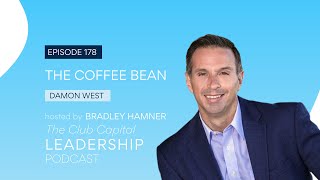
In this Club Capital Leadership Podcast episode, host Bradley Hamner interviews Damon West, a former meth‑addicted crime ring leader who spent over seven years in a Texas maximum‑security prison. While incarcerated, West learned the "coffee bean" metaphor from a fellow inmate—choosing to transform the boiling water of adversity into coffee rather than becoming a soft carrot or a hard egg. After parole in 2015, West became a bestselling author (co‑authoring The Coffee Bean with John Gordon) and a keynote speaker. He discusses his journey, the power of purpose, and how the coffee bean mindset can be applied to business, teams, and personal growth. West also explains the impetus behind his second book, The Locker Room, which tackles racism and cancel culture through the lens of humility and grace in team environments. The conversation covers leadership lessons drawn from elite college football coaches (Nick Saban, Dabo Swinney, Lincoln Riley), the importance of authentic vulnerability, maintaining a consistent personal brand, and the role of adversity as an opportunity. The episode includes sponsor messages, a rapid‑fire Q&A (favorite books, travel wishes, speaking aspirations), and actionable advice such as "growth follows belief" and the need to stick with one core message.
Chapters
So the big question is this: how do small business owners like us grow our leadership, develop our teams, and scale our business in a way that allows us to get our products and services out to the world yet still remain profitable? That is the question, and this podcast will give you the answers. I'm Bradley Hamner, and this is the Club Capital Leadership Podcast. Hey, before we get into today's episode, did you know that Club Capital is the largest accounting advisory firm for insurance agency owners in the country, providing monthly accounting, CFO services, and tax preparation. Check them out at club.capital.
Welcome to another episode of the Club Capital Leadership Podcast. My name is Bradley Hamner, your host. You know, every single time I have guests on, you know, I always ask background and origin story, and we've had some incredible stories. I love hearing about how people got to where they are. But maybe outside of Weldon Long, who, if you go back and listen to his podcast that we did about a year and a half ago or so, maybe 2 years ago. Nobody's had more of an unbelievable story than Damon West. He co-authored the book with the bestselling author John Gordon, The Coffee Bean: A Simple Lesson to Create Positive Change. And it's been listed in the top 20 books you need to read to crush 2020. And really, it's one of the most transformational books that I've ever read. It's a short read. You're going to want to share this episode with your friends, with your family, with your team, and certainly not because of me, but because of Damon. It's an honor to be able to have him on. Without further ado, here's my conversation with Damon West.
Have you ever tried online marketing before and weren't sure if it was working? Maybe your rep talked about all the impressive features and stats and said things were going great, but you didn't know how all that tied into raw new policies written. Well, that's not the case with DirectClicks. DirectClicks is the premier Google Ads and SEO option exclusively for State Farm agents.
Why?
They're 100% results-oriented with an exclusivity guarantee. Every review call you have with your account manager focuses on what really matters to your business, and that's leads and call-ins received. Everything will get broken down to cost per lead received. By investing with DirectClicks, you're going to free up time and energy to focus on what's most important in your agency and doing what it is you do best. This will be the best investment you make for your team by spending confidently and scaling your agency today with exclusive online marketing partner DirectClicks. Visit us at directclicksinc.com. Ambition is the first step towards success. It's time to level up your agency, and Coach P Consulting will help you do just that by using the same strategies he used to sell over 700 life insurance policies in 2021 alone. No, this is not your regular one-and-done type coaching. You'll get personalized coaching 2 days a week, every week of the month, and you'll get a live look behind the scenes of his team training and an office that's performing at the highest level. There's a reason Coach P Consulting is the fastest growing coaching company for insurance agency owners in the country. Coach P will train your team alongside his own and show you the exact steps they are taking to achieve Chairman Circle, Exotic Travel, and Multi-Line Presidents Club and be one of the few agents to be selected to have a third office. So whether your goal is to be at the top of your local market or amongst the best in the country, this training will give you the strategies and the tactics to get there. For just $250 a month, you'll get high-level coaching each week from someone who is already getting it done at that level, and his strategies work, and it's time to put them to work for you. Sign up at coachpeteconsulting.com and get your first full month for free when you mention the Club Capital Leadership Podcast.
Damon West, welcome to the Club Capital Leadership Podcast.
Brad, I appreciate it, man. Thanks for the opportunity to share the day with you, man.
Excited about it. So, uh, we always start with background and origin story with every one of the people that I interview every single week. And when I was recording the intro to this, nobody has really as much of an incredible background and story as you do. And so for those of us that don't, you know, know you, uh, can you just walk us through and begin to tell a little bit about your story.
Yeah, so I've, you know, I have a really wild story like you alluded to, man. It's— there's, uh, there's a lot of moving parts to it, but I think the best place to start this story out of my background is probably somewhere towards— well, let's say in the middle of it, towards, you know, towards the end where the big change happens. Um, you know, July 30th, 2008, It was a day I'll never forget. I was sitting on the couch of this rundown apartment in Dallas, and I was on the couch with my meth dealer, this guy named Tex. And, you know, when 14 years ago in 2008, I'm a full-blown meth addict, the head of an organized crime ring, and I have fallen so far to be at this place on this couch that day with that guy. I went from coming from a family that was just dynamic. My mom and my dad, they're still married to this day, Bradley. I mean, they've been married for 54 years. Tremendous athlete growing up, Division I college quarterback at University of North Texas, worked in Congress, worked on Wall Street, worked for a guy running for president. And now I'm sitting on the couch with this meth dealer and we're smoking meth. And, and I'm the head of an organized crime ring at this point. I'm the top criminal in this organization. This is my dope dealer. This is the guy that, that keeps the meth coming. But I'm the head burglar of a bunch of other burglars breaking into houses. And the cops have been after me. We've been playing the game of cat and mouse for about 3 years now in Dallas. And that day on the couch, sitting with my drug dealer, the flashbang grenade comes through the window, blows up in my face. The SWAT team's in there. They arrest me. They take me to Dallas County Jail where I wait for 10 months for a trial. And at the end of that 10 months, at the end of the 10 months, I finally went to my trial, had my day in court, and the jury in Dallas in 2009 sentenced me to 65 years, which is essentially a life sentence in prison in Texas. And with that life sentence, it took the wind out of me. I mean, I knew that something had to change and that something was me. I just didn't know how to change it. But some of those clues happen. I tell people all the time that God will put people in your life, and those people, they don't always look like you. They don't always come from the same background as you. One of those people I met in my life was an old Black Muslim man in Dallas County Jail named Mr. Jackson. And Mr. Jackson, a career criminal, been in and out of prison all of his life, he took a shine to me and he shared with me the story of the coffee bean. Because he's telling me that prison was like a pot of boiling water, and he said, you have 3 choices how you're gonna respond to this pot of boiling water. You like the carrot that turns soft, the egg which becomes hard, or a coffee bean which changes the pot of boiling water to a pot of coffee. And literally the last 4 words this man ever said to me were, "Be a coffee bean." And that was a message I could pick up, right? Because I could break that down and understand that. And as I go around now in the world speaking and sharing the story about how I became a coffee bean inside of a maximum security level 5 prison in Texas, it's a message that anybody that's 5 to 95 years old can understand the meaning of that because life is a pot of boiling water and we do, we have 3 choices. Of how we respond. But the coffee bean breaks it down. Like, hey, carrots turn soft. These are people that are sad. You're going to be sad sometimes. Being sad is a natural human emotion. Eggs turn hard. The inside of an egg becomes hard in a pot of warm water. That people's— that happens to people. Your heart becomes hard. And you know what? You know, you're going to have carrot days, you can have egg days. But we all have a third choice. The third choice to be a coffee bean. And, and that's what I chose to be inside that maximum security prison. And I spent 7 years and 3 months in one of the toughest prisons in Texas. But the transformation was so complete, got parole's attention that I didn't just change myself inside that prison, I changed the entire prison around me. And they let me go November 16th, 2015. Now, I'm on parole the rest of my life. I'm on parole to the year 2073. But I've been out for 7 years. I've had the opportunity to go out and share this message all over the place. I can point to a time in my life where my life completely changed out here in the free world. And it was, you know, January 12th, 2017, and I'm at the Bear Bryant Coach of the Year Award. They're going to name the best college football coach in America. The 8 best coaches are there, and, and I'm going around this room 14 months out of prison, not really comfortable in my own skin yet. And every coach I meet that night slams the door in my face. They all tell me no. But there's one coach that said yes from that entire room. Dabo Swinney. Dabo Swinney brought me in to talk to his team in August of 2017, and after the presentation was over, he came up to me. He's like, Damon, that's the most amazing story I've ever heard. He said, have you been to Alabama yet? And I was like, no, Dabo, I've been to Clemson, dude. I hadn't been anywhere, right? So he said, I'll just text Nick Saban from the back of the room. We'll see what happens. And literally the next day, Saban's football ops guy calls me up and he says, hey man, We'll see you in Tuscaloosa in 3 weeks. And then it was Kirby Smart, then it was Lincoln Riley, and all these coaches in America. And then Dabo introduced me to a guy named John Gordon, one of the biggest keynote speakers and authors in America. And John called me up one day just out of the blue and said, hey man, Dabo told me your story. This message is incredible. It's a fresh message that no one's ever heard before and the story behind it. And he said, would you write a book with me? We'll call it The Coffee Bean. And so we wrote the book, The Coffee Bean, the summer of 2019. In fact, it was 10 years exactly after I first heard the story of the coffee bean from Mr. Jackson in Dallas County Jail. The book, The Coffee Bean, came out, became a worldwide bestseller, and launched my career to where it is today as a keynote speaker and author all over the world.
Damon, what an incredible story. Thank you so much for sharing that. Thank you for getting out your message to the world and impacting people. I didn't tell you this before we hit record, But I picked up your book whenever it came out, maybe, maybe a couple months later. I, I followed John. I've picked up all of his books. We've read The Energy Bus, etc. So whenever this one came up, I picked this one up. I finished it within maybe a day or two, you know. I, I, and immediately read it to my son. It was that—
oh my God, man, that's the best compliment you can ever get when someone shares. Absolutely.
My son Cooper is just all into sports and he loves sports. And I said, Cooper, We're going to read this book and we finished it. So we— I read it twice within like 4 or 5 days. I've shared it with my team. And so it's just an honor to be able to have you on. So because you're right, it is a message we can all relate to. I have a— I have a question. I wasn't even going to ask you this, but as you were talking, it made me think. I just started a couple of weeks ago. I sadly did not know much of the story of Nelson Mandela. And his years in prison. Have you ever considered— have you ever read his story and thought about like some of the parallels? And granted, they're very different. I understand the reasons why he was in prison and yours, but what prison did to him and how he transformed and how he became a coffee bean. Truly, he was a coffee bean versus being hardened. And he was in prison 30-something years. My goodness, you know.
So he was in He was innocent, right?
He was innocent.
Yeah, I was guilty. At least I knew I was supposed to be there, you know, because I, I earned my, my bunk, you know. He didn't. Uh, yeah, no, I know a lot about Mandela's stories, and I mean, just what grace that he handled his, his, his life with. And, and, uh, it's a testament to, to what the human, a human experience is capable of, you know, when you have hope A man that has hope can bear— a man that knows his why can bear almost any how. And that's what Viktor Frankl said in the book Man's Search for Meaning. Man's Search for Meaning. Viktor Frankl was in a concentration camp and, um, you know, and he kind of borrowed that from Nietzsche. But a man that knows his why can almost— can stand almost any how to get there. And so that's a guy Mandela knew his why. I knew my why. And, and once you know your why, you can, you can go through almost anything. And that's true in life, man. You don't have to be in prison to understand that. That's the power of the message. Because when I go and speak to these audiences, I mean, you know, speak to insurance groups, sales corporations, corporate America, all over, you know, all over the place. But it's this message that life is tough, life's gonna be hard, life's gonna throw obstacles at you. And, and the workforce is tough right now. I mean, and, and And inside of a company, you're gonna have carrots. You're gonna have more eggs too, though. You're gonna have negative people, but you have to have coffee beans that change that pot of warm water into a pot of coffee. And the power of the story is that if I could do it in there, you can do it out here, you know? Yeah. But life is, pain is relative. If you say it's the worst pain in the world, it's the worst pain in the world. But I try to always get people to remember this thing called perspective because we all have perspective. We know what a bad day looks like. In my life, my perspective looks like this. I wake up, I think I'm having a bad day. I remind myself I didn't wake up inside of a prison today. So now my perspective shifted. I'm— now I'm having a great day. You know, my worst day out here is better than my best day in there. But we all have this in different ways. You don't have to go to prison to have that. You can have a death in the family, a divorce, a failed job, failed marriage, failed— I mean, these things happen in the course of a human life. These failures, these bad days that we can reflect upon and say, hey, you know what, this day may be a little bit uncomfortable, but it's not one of those days. It's like sitting in traffic. Some days you sit in traffic and the traffic makes you so mad and angry. Another day you sit in traffic and the traffic doesn't bother you. Is it the traffic or is it you? It's always you.
You know, uh, obviously you were a great athlete in high school that ultimately led you to be able to have being the starting quarterback in college. So you had a lot in front of you. I mean, you had the world by your, you know, by the teeth, so to speak. And, and then even after college, you had started— you had an injury, but then you went on to still do some things. I mean, you worked in for Congress, you worked for on Wall Street, etc. So can you just talk about those times? Because you really had some things going for you lost it all in order to be able to kind of get, get this message.
Yeah, you know, look, I, I have always done everything in life full speed. There's nothing I've done half speed, good or bad, by the way. I mean, so, um, when I got out of college, I found an opportunity to work in the United States Congress. You know, I wanted to work in politics, worked in Congress, worked for a guy running for president, and then I realized on the presidential campaign that I worked, worked in '04, I worked for a guy named Dick Gephardt, who was a— he was the minority leader in the House, and he was running for president in the Democratic Party. And I did Dick's fundraising all over America. And once Dick dropped out of the race in January of '04, I have this big list of all these donors that I've worked with— millionaires, billionaires all over America in the Democratic Party. And I went to go get a job at UBS, United Bank of Switzerland, to be a broker-dealer, be a stockbroker. Because I mean, what can you do with a list like that, a contact list like that, right? Yeah. And I've always had these opportunities in front of me because I— and I'll go out and try to create more opportunities. But then crystal meth happened. I got, you know, another stockbroker introduced me to meth one day at work in 2004 when I was sleeping. He saw me sleeping He's like, man, you can't sleep here. The markets are open. You're messing with people's money. Uh, he said they'll fire you if they catch you sleeping here. So that day in 2004, I went down to the parking garage, took my first hit of meth, and I was instantly hooked. It took about 18 months for me to lose everything and living on the streets of Dallas. Tell people all the time, I went from working on Wall Street to living on the streets, you know. So I've seen the world from the very top to the very bottom. Um, And that's why I think the story also appeals to pretty much everybody, depending on where you are. I mean, you're talking about a guy that has worked in the highest levels of, you know, highest level of government, highest levels of finance, uh, went to the lowest levels of life into a maximum security prison, uh, into the world of sports. And there's just a little bit in there for everybody.
Are you an agency owner looking to grow your revenue, increase your bottom line, and better manage your taxes? Club Capital is here to help. Club Capital is the largest accounting and advisory firm for insurance agents in the country, providing monthly accounting, tax strategy, and CFO services. Way more than bookkeeping and your everyday run-of-the-mill tax prep, Club Capital is focused on providing financial and tax advisory services that help you plan and forecast your agency's performance. Their financial dashboards and agency forecasting tools help you better understand your agency's historical performance, create, measure future targets, and see how your agency compares to your peers around the country. Imagine what it would be like to understand the impact to your bottom line when deciding to hire a new employee, or forecast the impact rate changes or commission rates will have on your business. With over $200 million in tracked annual revenue and $140 million in tracked annual expenses, Club Capital has the data and the team to help you make better informed decisions for your agency. They will help you turn that back office stress into the backbone of your agency's success by giving you the tools to take your agency and your leadership to the next level. Visit club.capital today to book a solution overview with one of our business consultants. Club Capital— way more than a CPA firm.
Yeah.
You know, at the time we're recording this, it's in December 2022. We're going into 2023, which they're predicting— who knows? Could be a challenging year. We've already had a challenging year with interest rates, inflation. Could be heading into some sort of a recession economically. Uh, you know, there's still COVID things out there. Uh, the reason I bring this up is around adversity. And this year you just came out with, uh, your newest book, the, the, that you co-authored, The Locker Room.
Yeah.
And you talk a lot about adversity and overcoming adversity. And as I shared with you before, a lot of our audience is business owners and and they have teams. And man, they deal with— in business, your business is hard and you're going to deal with adversity. Can you just talk about, first of all, the impetus to be able to write this book that you, that you just came out with, and how— what are some of the things that we can begin to kind of have perspective on as we're dealing with adversity in our businesses with our teams?
Yeah, you know, adversity is inevitable, and there's two kinds of adversity you can find yourself in, in life. There's kind of adversity that you get into because life is hard, life puts things on you, makes it difficult. Uh, but then there's the other kind of adversity that is around the choices that you make. You bring some adversity in your world by the choices you make. This is the kind that has consequences attached to it. But inside of every adverse situation, there's opportunities, and that's a fact. And it just depends on how deep you want to dig into the adversity to see what the opportunity is, because it doesn't always just present itself. A lot of people fold when they see the adversity But when I see adversity, I'm thinking to myself, what's the opportunity? Or if something difficult comes my way, I try to figure out what am I supposed to be learning here? What's the lesson I'm supposed to be learning from all this stuff? Um, and that was like the book The Locker Room. I wrote it with a guy named Stephen Mackey, and Stephen Mackey, uh, real big curriculum guy in the state of Texas, and he's biracial, half Black, half white. He reaches out to me, he works with a lot of sports teams, and He said, Damon, right now in America, we're not having— we're having broken locker rooms, what he called it. He said the locker room is broken, and the locker room is any place that people get together and they have a shared set of beliefs. So a locker room on a sports team, we understand what that is. The locker room on the sports team that wins games, you know, this is a sacred place where your success is my success, my success is yours. A mistake doesn't necessarily make you a mistake in the locker room. There's always a path to become whole because you're part of something bigger. Hard conversations can be endured, hard conversations can be had because we all have these shared goals and shared ideals. He said, right now America doesn't have a locker room. He said, would you write a book with me that deals with the most difficult topic there is in America, racism? And I was like, you know, Stephen, I think you're right. I think there does need to, there does need to be a— we do need to have a book about this, but we can't just talk about racism. We're going to talk about the cancel culture as well if we're going to talk about something. And now we're like, oh my God, you're going to talk about the cancel culture and racism in one book? But here's why you have to do both at the same time, because the cancel culture has gotten out of control, right? And when I say that, I mean that, you know, there's a difference between holding someone accountable and holding someone hostage. And right now in America, people are being held hostage. There's a lot of people that want to get involved in the conversation of race, but they're scared to death to do so because the cancel culture is so vicious. If you say or do the wrong thing, you could lose everything in the process. So we wrote the book The Locker Room about a team that's struggling with it because one of the players makes a racial comment. It gets put on social media. It's a high school football team, and they have to all kind of come in this locker room, sacred space, to become whole again. But they do it. They have two, two things in this, in this book that are so important. These, these two ingredients are so important, but it's really what's lacking right now in America. That's humility and grace. And humility is when you're willing to listen to a difficult truth and have it, endure a tough conversation and hear things that you may not even, you know, want to hear, but, but you need to hear the truth. And grace is when you get something you don't necessarily deserve. You know, grace is getting what you don't deserve. Justice is getting what you do deserve. Justice was like me going to prison. I deserved to go to prison. Grace is what I've gotten from so many people since I've gotten out of prison. You know, you don't deserve grace. And grace is hard because grace always costs the person giving it more than it costs the person who receives it. But I think, and Stephen thought, that if we could put a book and we could show people how humility and grace can work together, that we could have any difficult conversation and we can get past both racism and the cancel culture. So we did. We wrote a book about racism and cancel culture. Uh, not only did we not get canceled, but it became a Wall Street Journal bestseller. So we were pretty excited about that.
You know, I just— the last year or so, I started— and I don't know really where this came from, um, so I'm asking you to kind of expand upon that. I started to feel myself. I never, within the businesses, within my team, I was just, was not, we did not have discussions around things that were happening politically, globally, around racism, etc. I just avoided those conversations for maybe some of the reasons you said, is like, man, I'm uncomfortable. I don't, I don't want to say the wrong thing. I don't want to mess up, right? And I just started feeling compelled that God was saying, like, you, you get to know your team, have the conversation around some of these uncomfortable things. And we did. And the more that we've done it, it has brought us so much closer together because of willingness to actually— and I'm not patting myself on the back, I really feel like it was just something that I wanted to start doing. And can you just talk about if somebody says Man, I, I've been, I've been, that's, I, I might want to do that, but I'm kind of uncomfortable doing that. I've not been that kind of person. I've scooted around those issues. We're not going to talk about, you know, racism. We're not going to talk about religion. We're not going to talk about these kind of things. And some people openly do that, but that vulnerability, humility, the willingness to have those conversations.
Yeah, and I think this is, this the root of what you're talking about The reason why you're, you're getting closer with the people you work with, because everybody feels like they've been heard at this point. And here's what happens. One of the most fundamental concepts of communication is that everybody wants to feel like they've been heard. When we feel heard, we feel like we are a part of something bigger than us. We feel like we're a part of a team. And when we're part of a team, now we're really talking. Now when we're part of a team, we're part of something that we're willing to do things we wouldn't normally just do for anybody else. We're willing to sacrifice, we're willing to work harder, we're willing to give up a little bit here to get something better for the big team over there. But if you don't feel like you've been heard, if you feel like you— that you're a— you, you have no voice and you feel like you're just silent on the sidelines and no one hears you or sees you, You don't feel like you're part of a team, and you have to be vulnerable to create that team atmosphere, to create that love. Authentic vulnerability. I mean, it has to be authentic because otherwise people will see through it and work against you. But when you have authentic vulnerability, you have humility, you have grace, you have honesty, and you have a willingness to, to do what you say you're going to do, then you can create those better teams, have those conversations, those difficult conversations. Everybody wants to be able to feel like they've been hurt badly.
I mean, you have been around in athletics especially. I mean, you just named off obviously some of the top college football coaches. We, we were talking before about, about Hugh Freeze, which I'm super excited about at Auburn.
Me too. Me too.
What are some of the things that you have really noticed in interacting with those coaches, their organization, as to why— what is some of the kind of— if you could peel back the onion a little bit to kind of give us a peek behind, because we don't get to see that stuff. We see what happens on the field. But what are the things that you notice about their culture, their environment, that has led to such high levels of success and most importantly consistent success for such a long period of time?
Yeah, you know, you're sitting in the state of Alabama. You know, we can start with, uh, what Nick Saban's done at Alabama. Saban has created a culture of winning there and an expectation that when you, you know, when you sign with Alabama, you go play for there, that, uh, there's an expectation to win and work hard and do whatever is necessary. And when you create cultures like that, you, you create this atmosphere that people that aren't on board with that don't feel like they're in the right spot. And then that's, that's kind of what you want to do too. Not kind of, it is what you want to do. You want to create an atmosphere and a culture where if you're someone that goes against the culture, against the grain, you don't fit in. You want to leave. You know, no one has to ask you to go. You're going to feel like you don't fit in so much that you're going to take off. You're going to hop in the portal, so to speak. Um, Dabo— Dabo's done the same thing at Clemson. Dabo's, you know, Dabo goes at it a different way. It's more of a culture of family at Clemson. He's created this culture of belonging, of family, and Uh, you know, I've never seen another culture like Dabo's that he's got at Clemson. I mean, the culture at Clemson is one of the best cultures of any sports team or corporation or anything I've ever been around. It's, it's incredible what he's done there. He's— by elevating them like that, he, he has gotten them to believe that they're, they're over-believers at Clemson, not overachievers, they're over-believers. And that is, uh, that's not an easy thing to do at the level he does it at, you know. So, you know, this just two of the coaches we can talk about right there, two of the best coaches in America. They, they go at it a different way. Saban's a little bit more hardcore than, than Dabo is. Now, Dabo is not a pushover. I mean, you, you do— you don't want to cross Dabo. But, um, but they both have different styles and they get the same results. It's pretty neat to watch both of those guys go at it. And, and look, I've been to a lot of programs. I mean, there's, there's programs all over the country. Lincoln Riley. Lincoln Riley's a friend of mine. I just texted Lincoln Riley on Sunday, man, and I was saying, hey man, look, I'm proud of what you're doing. You've just defied everybody in America of what you're able to do. And I told him that, you know, coming from a guy that, that came from the background I came from, no one would give me the odds to be where I am right now, 7 years out of prison, you know, speaking on a global stage and and being able to write books that are bestsellers and all that. But it's like I told Lincoln, you defied the odds. It's like you're in on a secret that nobody knows, and the other people that have heard it don't want to believe. Yeah, but you were in on that secret the whole time, and your whole team is too. And he was texting me back, he said, that's exactly how it is. We believe in this locker room that we deserve to be playing for the national championship. And now they just showed America that they've earned the spot to be there. You know what I mean? I mean, this is like, you gotta have a lot of, and, and that's what I told him at the end of the conversation. That's culture. You've created a culture that allows you to do that. If you can pick up your culture from one place and take it to another, that's spectacular, man.
The best use of money is to buy back your time. And one of the best ways to do that is with a virtual assistant. Rock Solid Virtual Assistants brings together top business leaders with exceptional virtual assistants to build successful relationship-driven teams. The services they provide range from graphic design and marketing to executive admin assistants and everything in between. There are many virtual assistant companies on the market to choose from, but at RockSolid, their processes and passion for what they do place them at the very top of that list. Not only is their hiring process exceptional, which nets them the very best assistants, but they also provide superior support to their teams for the duration of your time with them. The matching process at RockSolid is unlike any other. and they have the track record to prove it. Their hands-on approach has proven to increase the success rate of their teams exponentially. So if you're looking to build a rock-solid team for your business, reach out to Tracy and the team for a no-pressure discovery call at rocksolidassistance.com. They value your success as if it were their own, because it is.
I'm gonna, I'm gonna try to ask this question the best that I can. So because I know what I'm trying to get across. And when you described all of those people, whether it's coaches but also organizations, you've worked with Southwest Airlines and Walmart and the Dallas Cowboys and Chick-fil-A. I had Mark Miller on from Chick-fil-A. His episode comes out actually next week from the time we're recording this. But all of those people are uniquely themselves. Nick Saban is Nick Saban. Hugh Freeze is not going to try to be Nick Saban. That's right. Dabo is not going to try to be Lincoln Riley, as an example. They are themselves. However, at the same time, they are continuously evolving, changing, improving. So can you just like talk about the idea of saying like be uniquely you, but still continuing to be the best version of yourself? Does that make sense what I'm trying to get at? Absolutely.
Let me give you a story about this because Dabo is the one I'm obviously closest with of all of them. So I try to dip into Clemson every year, go to a football game or two. We were at a game a couple years ago, it's probably before COVID but I stayed with Dabo, went to church with him on Sunday after the game. And what was really cool is like getting to see Dabo go to church. First of all, Dabo's there, Trevor Lawrence is at this church, all these football players from Clemson, these superstars are there. And after church is over, everybody just kind of walks around and says hi to them in passing. These are, you know, people at the biggest level of their game, and everybody around them is so used to seeing them because these guys are servant leaders in their community. That's not the only place where they're gonna see Dabo or Trevor, right? At church. But whenever I was getting back to being at church with Dabo, I'm watching Dabo as I'm, I'm in church because Dabo pulls out his phone. All the preachers talking, and Dabo's taking notes about what this guy's saying. Dabo is constantly taking notes. In fact, I tell people all the time that I've sent in friends of mine to go— Stephen Mackey went to go speak at Clemson, and I said, Dabo was gonna— that was gonna take all your stuff. That— and that's, that's what Dabo will tell you, man. That— after I got done talking to Dabo's team for the first time, he goes, man, I'm stealing the coffee bean, I'm stealing all of it. I said be taking because that's what good coaches do, right? Or good leaders do. It could be a corporation, it could be anybody. A good leader says, hey, that's a fresh new idea, that's something I need to be paying attention to. It doesn't have to be my idea to be a good idea, but I can incorporate that into my culture too. That'll enhance my culture. Let me have some of that. And that's what humility is. That's what humility is. Like, hey man, I don't have all the answers. Someone else may have a a better way of attacking this thing. One of the best companies I've ever worked with is AIG. AIG, um, they're massive, big multinational corporation, uh, their headquarters out of New York City. Um, but I've done a lot of work with them all over the world, and their culture is about giving back. They try to find ways that they can put back. That's that core value of servant leadership. Servant leadership It's helping other people reach their goals, helping to raise other people up to a different station of life. Because when we're helping other people, that's where we're at our best. That's how we grow too. So I've seen this from a lot of different people in the industry, but servant leadership is one of those big core values that some of the best have.
That's awesome. What a great story. All right. Hey, we're going to go into E9 rapid fire questions really quick. Before we do that, hey, Damian, people want to connect with you, find out more about what you do, how you serve them, obviously where they can pick up the books, et cetera. Where would you point them to?
Yeah, for speaking engagements, damonwest.org, D-A-M-O-N-W-E-S-T dot O-R-G, or just more information about me and what I do. Social media is @damonwest7 on Twitter and Instagram, and the books are available anywhere books are sold— Amazon, Barnes Noble, anywhere books are sold, uh, through major publishers. Awesome, awesome.
All right, you ready for E9 rapid-fire questions?
Let's do it.
All right, favorite book that you've ever read?
Favorite book that I've ever read? Other than yours? The Count of Monte Cristo. Oh, all right, great.
What's the last book that you read?
The last book that I've read, um, The Power of One More, Ed Mylett.
That's good, that just came out. Um, what is one travel destination that you've never been to but would love to go?
Uh, Australia. Never been to Australia, but would love to go, but it's going to take some help because I'm a felon. They don't let felons in their country, but I don't give up hope. There's, where there's a will, there's a way.
Your favorite travel destination that you have been to?
Oh, uh, London. My, my family and I, we got to go to— actually, AIG brought me into London this summer to speak to their offices there, and I got to speak to the House of Lords in Parliament. The UK is another one of those countries that doesn't allow felons in, but AIG AIG made it happen. I don't know what they did to get the government of the United Kingdom to let me in, but they allowed a felon in for the first time.
That's amazing. That's amazing. All right, you're on a 10-hour flight to London. You can sit next to anyone. They have to be alive. I used to say dead or alive, but have to be alive. Who would it be?
Sit next to anyone that's alive, who would it be?
Can't say family. We know family. We know that. That I've got to start giving disclaimers. Can't say family.
Yeah, I'm trying to think. Let me, let me come back to that one. Keep going.
Okay. All right. One place that you would love to speak, speak at that you haven't been able to yet.
Oh my God. I would love Chick-fil-A. I would love to do Chick-fil-A's big thing. They call it Next. It's a big, big conference they have every February. I was hoping I'd be involved with it this year, but I wasn't. But that's on— that's on God's time, not mine, man. So, yeah.
All right. Former athlete, athlete to athlete, I have some moments in high school and college that I wish I had back. I wish I could have made that layup in the county championship to win it, but I missed it. What's one sports athletic event that you look back on and, man, I wish I had that playback. I wish I had that throwback. What's one that you wish you could have back?
Man, we were playing against Arizona State in 1996, and this is the team that had, uh, Jake Plummer as a quarterback. Yeah, Pat Tillman's a linebacker. I mean, so it's, you know, it's— they're number 2 in the nation that year. I threw a touchdown against them, but in the second quarter, we're driving. I mean, what took them on a drive, went all the way down the field. We're on the 3-yard line, and I run the option, and I fumble, and they return it back 97 yards for a touchdown. And I mean, it was just— I mean, like, it was such a deflating moment. And we got our— we got our butts handed to us. We didn't belong in the field with Arizona State. We're North Texas. But that's one of those plays where I'm like, man, I cannot believe I fumbled. Uh, yeah, I've never forgotten that play.
Yeah. All right, best thing that happened— best thing about COVID the pandemic, for you personally.
This podcast is brought to you by Autopilot Recruiting. Join over 1,200 State Farm agents in putting your recruiting on autopilot. Any successful insurance agent will tell you how important team is. Finding those rockstar team members doesn't happen when left to chance. It happens through consistent recruiting. You never know when you're going to lose a team member, and the key to an incredible team is constantly searching for the best talent. Autopilot Recruiting is a continuous recruiting service where you'll be assigned a recruiter that has been trained to recruit on your behalf every business day. This recruiter will take over and revamp your career plug, send out assessments, do prescreen phone interviews, and schedule your in-office interviews. All you need to do is to show up and give a thumbs up or a thumbs down. This ongoing service is extremely affordable and a no-brainer for taking your insurance agency to the next level. Listeners of the Club Capital Leadership Podcast, go to autopilotrecruiting.com and use the code Club Capital to get started. Again, autopilotrecruiting.com. And use the code CLUBCAPITAL to get started.
Yeah, COVID was— let's give this disclaimer— COVID was terrible for a lot of people. It's very traumatic for a lot of people. People died. In my life, though, in March of 2020, every, every presentation I was given, I got emails from all over the country of cancellations. Everybody— nobody was touching their money anymore. Nobody knew what was going to happen next. And I sat around for about 2 weeks pissed off. I was so mad I was becoming the egg, right? Woke up one morning and I was like, you know what, I told my wife, that's it, I'm not going to be the egg anymore. So I get in touch with a friend of mine, she's got this big Zoom platform with a lot— she's a consultant. I said, listen, I'm going to get on social media and I'm going to tell the world I'm giving away the Coffee Bean message for anybody that needs it until this is over with. And probably did 120 free presentations on Zoom for the next 4 months, right? But now I've pulled myself out of this rut of negativity because I had a purpose. I got up every day and I have these Zoom calls. Now they're free. I mean, people are coming on and— but now I'm helping people. I'm serving other people. I'm giving them this message that they really need because the world became this giant pot of boiling water during COVID right? But as I was doing that, I was also getting in my reps. My trade was staying on top of its game. I didn't just take 4 months off because, well, you look, there's no presentations, I'm just going to go on the sideline and sit down. No, I'm getting in reps. I'm polishing. My presentation. And after COVID was over, people started getting in touch with me that worked in different groups, teams, organizations, and said, hey, I was, I was on a Zoom call during COVID that I just happened to stumble on. You were the speaker. My company is bringing, you know, we're bringing people back. We need somebody to pick our, our office up. Will you come out? And now they're paying me. My speaking career took off into another level. I mean, into the 7 figures after COVID because I was available. I put myself out there to help and serve other people. And I believe that's the secret sauce to life, Bradley, is that you have to be willing to serve other people. You have to be willing to give it away to keep it. And so the COVID was the biggest thing that's ever happened to me in the speaking world. And I always get the disclaimer, it was terrible for a lot of people. And, and for 2 weeks it was terrible for me because I was allowing the outside world to change me. I forgot that I changed the world from the inside out, not the outside in. But I had to apply the coffee bean all over again. It was one of those big moments like prison where I had to dig inside me to change the world around me.
Man, I'm so glad I asked you that question. That is great because, yeah, I mean, as you were saying, those 2 weeks, I can imagine every morning you would hate to open up your email. Hey, I don't want to open up my email.
Hey, I didn't want to. I mean, I just like, oh man, here's another one.
Here's another one. There's another one. I was looking forward to going to that one, right? I was looking forward to going there. Yeah, no, I, I, oh man, that's—
and I just hit my stride too, man. I mean, like in February of, you know, 2020, I'm speaking to Walmart, I'm speaking to all these major corporations, the, the NBA is bringing me in, you know, this is it, man. Damon West is taking off. And then, you know, March 14th or whatever it was, just nothing, nothing was happening. The movie deal I was working on, it was, it was dead. Everything was dead in the water. But you know what, it doesn't matter what's going on in the world. You don't control the world around you, you control the world within you. The The 6 inches between your ears, that's what you control. And I had to remind myself of that. And, you know, it was just one of those things where preparation meant opportunity.
I don't know why I was just thinking in my mind, I know this is E-9 Rapid Fire, but like, I was wondering if there was a moment that you woke up and you were like, man, I'm telling this message at the Coffee Bean, like, I actually need to eat my own cooking on this kind of thing, right? It's like, well, I got to change my— You know, so anyway, all right, last question. What is the best piece of leadership advice you've ever received?
Oh man, John Gordon is who I go to. John, in fact, John, John called when we were talking just now, so I'm gonna have to call him back. Um, John told me when we got together and we wrote The Coffee Bean, he said, Damon, he said, you are going to be the guy known as the Coffee Bean guy. And he said, this is going to be a good thing. He said, he, John's known as the Energy Bus guy. He said, that's a badge of honor for him. He said, but you're gonna be known as Coffee Bean Guy. He said, you were telling the coffee bean story before we got together, but when this book comes out, it's gonna change your life cuz it's gonna put you on a different level. He said, stick with your, be a coffee bean. He said, that's your mantra. That's your call to action. Don't you ever leave that. He said, because it's gonna take hold one day, but the only way it can take hold is for you to keep applying it and keep being that guy. He said, the problem is with a lot of speakers and a lot of people, is they don't see results fast enough and they change their messaging. So now you have a speaker that was this 'be a coffee bean' guy, and then, you know, it didn't take— it didn't take off for 2 years, let's say, or 3 years. And so he changed his message to being something else. And so now people are like, well, is this the coffee guy? Is it that guy? You know, you confuse people. But if you have one message, one brand, you stick with it. You know, it took Starbucks 12 years to open up a second store.
Yes.
Now you can't, you can't go anywhere without, you know, you can throw a rock, you can't throw a rock without hitting one.
Yes.
But you have to be willing to stick with your brand. You have to believe in yourself because growth follows belief. And no one is gonna, and this is what John's saying, people won't believe in you until you believe in yourself.
Mm-hmm.
So you have to believe in yourself and you have to put that foot forward every single day. Don't change what you're doing because you don't see the results fast enough. Keep with what— if you believe in it, stick with it.
Hey, you just dropped a— you just dropped a heck of a one-liner right there. Don't let anybody miss that. Growth follows belief. I love that. That was, that was great. All right, that's the end of rapid fire. Did you get an answer for your 10-hour flight? Who you sit next to?
Man, I just— there's so many different people are going through my mind. Um, I don't know the answer who I want to sit through it, because I mean, I was thinking about somebody in my family. Man, I don't— they have to be alive, you said?
Yeah, yeah, just, just about, just to apply pressure.
All right, I know who it is. Nelson DeMille. Nelson DeMille is an author. I don't know if you ever read his books. No, but I read every one of his books in prison. My favorite author. I want to meet Nelson DeMille so bad, so badly. Um, and I, and I told people, I have friends that know Nelson, so I'm like, hey man, just tell him I'm a big fan of his. I mean, I'd love to meet him sometime. But okay, he was such a great writer, such a witty writer, such a very knowledgeable guy. But Nelson DeMille, that's someone who I'd love, I'd love to meet. I'd love to just sit down and talk to him about the character, one of the characters, John Corey, from his books. Awesome, awesome.
Damn it, you've been great, man. I hope to have you back on in the future, dude.
Yeah, man, stay in touch, man.
What a great episode with Damon. You know, a few things that stood out to me is, you know, what his message at the very end, whenever he talked about, hey, I'm staying on, uh, the being the coffee bean guy, and just that consistency of messaging, that was a big takeaway for me. Number, number 2, whenever I actually said at the very end of that, growth Belief. Growth follows belief was a big one. And I think whenever he was talking about having the different coaches, whenever he talked about their being unique, but then he told the story about their being uniquely themselves, but they're constantly developing and learning and borrowing, or as that was stealing from other people, is just amazing. So go to damonwest.org and pick up his books if you have somewhere that he could be a great speaker for you. He would— he obviously is just fantastic, tons of energy. It was awesome to be able to have him come on the podcast. Big shout out to our podcast sponsors, Club Capital, Coach P Consulting, and Autopilot Recruiting. You know, you want to be able to develop your team in 2023 and get off to a really great start. Go to Coach P Consulting, let David know heard about him on the Club Capital Leadership Podcast. But you got to be able to have A players, and that's where Autopilot Recruiting comes in. Go to Autopilot Recruiting and use the code CLUBCAPITAL to get started. And depending on where you are with your financials, you're starting to think about your business financials for 2023, and you may not know exactly what your profitability was, what your cash flow was, what your balance sheet says, because maybe you're trying to do it on your own or you're behind in reconciling your transactions. Look, don't do that anymore. Your time is too valuable for you to be doing that or to have somebody that's not giving you accurate financials on a regular basis. Plus, being able to have the comparison— not comparison, but really the ability to know what other people are doing without knowing the names. The benchmarking process that Club Capital is able to provide you gives you such amazing insight. So go to club.capital and book a no-obligation demo. Guys, we've got some amazing guests scheduled for 2023. Can't wait to serve all of you. Hope you had a great New Year's. Until next episode, lead well.
So the big question is this: how do small business owners like us grow our leadership, develop our teams, and scale our business in a way that allows us to get our products and services out to the world yet still remain profitable?
Profitable?
That is the question, and this podcast will give you the answers. I'm Bradley Hamner, and this is the Club Capital Leadership Podcast. Hey, before we get into today's episode, did you know that Club Capital is the largest accounting advisory firm for insurance agency owners in the country, providing monthly accounting, CFO services, and tax preparation? Check them out at club.capital.










