Episode 191: Fireside Chat - Sales Mindset with Devin Day
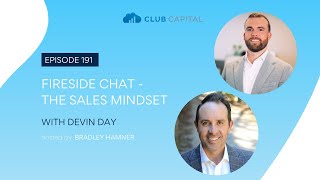
In this Club Capital Leadership Podcast episode, host Bradley Hamner interviews Devin Day, a sales business‑development leader at Club Capital. The conversation begins with Devin’s personal origin story – growing up in Delaware, studying sports management, and entering sales through the Aspire Group after struggling to break into the sports industry. Devin recounts his progression from a ticket‑consultant role with the New Mexico State Aggies to a position with the Washington Nationals, and ultimately to his current four‑year tenure at Club Capital, where the client base grew from ~100 to over 700 agencies. The dialogue explores how sports shaped Devin’s sales philosophy, emphasizing competitive resilience, relationship‑first selling, and the “sales mindset.” He defines a sales mindset as a consultative approach that prioritizes understanding client needs, winning relationships before closing deals, and balancing competitive drive with empathy. The episode delves into Devin’s transition from top‑producing salesperson to sales manager, highlighting challenges of delegating, building trust, creating repeatable talk tracks, pipelines, and onboarding processes, and the importance of hiring, training, and letting team members own their roles. Throughout, both speakers stress the value of referral pipelines, team‑oriented culture, and the entrepreneurial mindset of “owning the job” versus “working in the business.” The episode also includes sponsor plugs for Club Capital, Autopilot Recruiting, Coach P Consulting, and DirectClicks, and ends with light banter about the NFL Super Bowl.
Chapters
So the big question is this: how do small business owners like us grow our leadership, develop our teams, and scale our business in a way that allows us to get our products and services out to the world yet still remain profitable? That is the question, and this podcast will give you the answers. I'm Bradley Hamner, and this is the Club Capital Leadership Podcast. Hey, before we get into today's episode, did you know that Club Capital is the largest accounting advisory firm for insurance agency owners in the country, providing monthly accounting, CFO services, and tax preparation. Check them out at club.capital. This podcast is brought to you by Autopilot Recruiting. Join over 1,200 State Farm agents in putting your recruiting on autopilot. Any successful insurance agent will tell you how important team is. Finding those rockstar team members doesn't happen when left to chance. It happens through consistent recruiting. You never know when you're going to lose a team member. And the key to an incredible team is constantly searching for the best talent. Autopilot Recruiting is a continuous recruiting service where you'll be assigned a recruiter that has been trained to recruit on your behalf every business day. This recruiter will take over and revamp your CareerPlug, send out assessments, do pre-screen phone interviews, and schedule your in-office interviews. All you need to do is to show up and give a thumbs up or a thumbs down. This ongoing service is extremely affordable and a no-brainer for taking your insurance agency to the next level. Listeners of the Club Capital Leadership Podcast, go to autopilotrecruiting.com and use the code Club Capital to get started. Again, autopilotrecruiting.com and use the code Club Capital to get started.
Devin Day, welcome to the Club Capital Leadership Podcast.
Happy to be here, Bradley. It's good to see you again, my friend.
Good to see you. Why has it been this long since we've gotten you on the, the first time we've gotten you on the podcast?
You know, it's a great question. I think the, uh, the easy and obvious and cliché answer is that we're probably both really busy guys. Yeah, you know, that's true. Inside of work, outside of work, at home with the family, the holidays, all that kind of stuff. Yeah, reaching goals takes a lot of time, I've learned.
It does. Well, I'm really excited about this. I think our audience is going to get a lot out of it to learn a little bit about you. And we're going to talk about some sales and sales management. So I'm really excited about this and excited to get this out to our audience. Well, before we do that, you know, on our Monday interviews, we always kind of start with background and origin story. And I know a lot of people have got to know you and a lot of clients listen to the, to the pod and and, uh, I've gotten to— you've got to know their businesses, but they may maybe don't know, you know, kind of the man behind, uh, Devin. And so why don't you just take a few minutes and give a little bit about kind of your background and origin story and kind of like what led you to where you are with Club Capital?
Yeah, certainly. Let me try to make this sound interesting for everybody. Um, yeah, so I grew up in Wilmington, Delaware. Right. So just outside of Philadelphia, went to school in Delaware at the University of Delaware. And like a lot of, you know, 18-year-olds going through those formative years, I had no clue what I wanted to do. I just knew I was a sports nut, grew up playing sports, wanted to continue being around sports. And I remember on an orientation freshman year, the guy giving us a tour around campus was a cool guy. So I said, hey, what do you do? He was a junior or senior. And he told me he was in sports management. Now, had I been a, a better scholar back in the day, I probably would've done some better research in these kind of things. But that was an aha moment for me. I'm a sports guy. I'd love to be working in sports at some point. You know, growing up watching sports, I would only ever see what was on TV. It never really dawned on me, but man, there's so much going on behind the scenes there. And so that was it, sport management. And that's what I got my degree in. Um, and one of the biggest lessons I learned was, you know, if you're going to work in this industry, you got to be easily adaptable. So that's one of the biggest skill sets I, I kind of learned and studied through, because it's not a specific skill set as if I went to school to become a teacher or a doctor or you name it. Uh, it was a little bit of sport marketing here and sport law there. So you really can kind of just hone your knowledge of the entire industry, which was great. And then I graduated, and that's where kind of like the, the oh shoot moment happened. I gotta go find a job. And the sports industry is extremely aggressive and selective because so many other young folks like myself want to get into the industry. Who wouldn't want to work for their favorite sports team? Or be on the sidelines or be in the, you know, the locker room taping guys up or whatever the case may be. So I took this degree I had and I figured, okay, what am I going to do with it now? I'm definitely going to go work in sports. And I put in application after application after application for some of the sexier jobs I was seeing posted on the sports sports industry job boards, marketing this, sponsorship that, and no one was even giving me the courtesy of an email back. So where I saw a lot of the entry-level jobs that said no experience needed was sales. I said, well, I've never worked in sales before other than, you know, just some miscellaneous jobs at restaurants here or some retail there. I said, well, if I want this dream to come true, Bradley, I'm going to start putting my ring in the hat here. And again, I got turned down and didn't get responded back to until I found this company called the Aspire Group. They're actually based out of Georgia. And what they do in the collegiate and kind of like minor league areas is they come in as a third-party sales and service department to support programs that can't either hire for the position or train for the position. And so they brought me on board. My first position in sales was with the New Mexico State Aggies. So I know you're a college sports guy, so you probably know that when ESPN, I don't know, a couple years back did their college football program rankings, the Aggies were voted dead last program of all time. So I was, I was out in the desert, packed everything up, moved out to Las Cruces, which for those that haven't been to New Mexico, it's a beautiful underrated state. But I was down at the very southern, uh, point, probably about 40 minutes from El Paso, Texas. Bright-eyed, bushy-tailed, no true phone sales experience, just giving it a shot. Uh, I was fortunate to have a great sales mentor, Mike Boswell, who's still in the industry training young kids out of college to be the best that they can be in the role. Uh, but man, it was a learning curve. He used to call me yeah, yeah, again, going back to sports and, uh, the sandlot. He would call me yeah, yeah, because I would stutter on the phone all the time, whether it was a nervous tic or I was just filling that awkward void space that you come across in sales calls. Um, but that opportunity turned into a new opportunity, which turned into a new opportunity. Here I am now at Club Capital, but I had left the sports industry with my last position being at the Washington Nationals Baseball Club here in D.C. And I've been in the D.C. area for, I guess, gosh, over 10 years now. And I never thought I was going to leave sports. And it really came down to family and opportunity because it's still such a small group. That's so aggressively gone after by good candidates. And looking at some mentors and peers, I saw that if I really wanted to move up and get into management and have that career I wanted to, it would mean that we would be uprooting all over the place. Hmm. And jumping from this town to go work for that team to then go find a new opportunity. And my wife and I really— this might even have been before we were actually married— just kind of determined that that wasn't really the life that we wanted to live. We're big family people. We wanted to be close to family. I grew up in Delaware, so we're not too far from my folks. She's from South Jersey, so they're pretty close too. And long story short about how I got to Club Capital, I was working for the Nationals, living in one of those new condominiums. Our apartment complex is right across from the ballpark. She used to be a schoolteacher, so while I was logging long hours during the week over at home stands for the Nationals, she had summers off. And so she filled that time with going downstairs and working at the hottest raw bar in that area of the city that we were in. And she ended up meeting Mike Cannon, our founding partner and CEO. And so that friendship led to an opportunity where he came to me and said, you know, I know that we've only known each other for 7, 8 months now, but I like it. We get along really well. And I know you've got a sales background and I need someone with that mindset. So as I say, long story short, now I've been with Club Capital coming up on 4 years here in May, and it has been one of the best decisions I've, I've ever been able to make for my career and my development.
You know, I don't think I actually knew that story. I don't think— I mean, I knew your background, but I don't think I actually knew exactly how, uh, how it came about.
So yeah, let's add a little bit more to that. It's the fact that she, um, my wife was bartending at the outside bar, uh, and it was late in the year for baseball So early in the year for football, and Micah came down to the outside bar that she was bartending at with either his girlfriend or fiancée Catherine at the time, who was wearing an Eagles hat. And we're Eagles fans, so go Birds. And Rachel said, hey, I know you guys from the gym. I've seen you around. I just didn't know you're Eagles fans. So here's a couple drinks on me. And then they really hit it off. So really shout out to Rachel. And her just being outgoing and pouring some free drinks for Mike and Catherine. Otherwise, I might not be talking to you here today.
Yeah, man, it's crazy how things like that play out. I'm curious, how have— how has sports— yeah, I mean, we— you, you said it earlier, but you and I are just sports fanatics. Sports has had a huge impact in my life, and I don't mean from the entertainment aspect of it. I mean, from playing it from when I was young in high school and in college until now, I see it, you know, with my son. How has sports impacted you personally? And then I would even say, how— what are some of the elements that you feel like are very parallel between sports and specifically sales and, and even business?
Yeah, it's a great question. And sports, really sports, I mean, they, they really made a true impact on my life. I wasn't the best athlete growing up. I was a lot of times the kid, you know, in gym class or out on the recess ground, or once I started playing organized sports, that was kind of last picked. But there's lessons to be learned in that struggle. And I think that's a good parallel to sales because the sales guys, we know what, 90% of the time you're, you're gonna take a no on that phone call. So really what it, it taught me, and obviously I had some great coaches and mentors along the way, is battle through those challenges. If you put in the hard work and you persevere, you're gonna come out better with either a lesson learned and a new skill set that's starting to form. Or you're gonna come out with a W, right? And that's what really translates well to anybody in a sales position is that competitive attitude that, you know, I'm competing against other people, I'm competing to earn someone's business, but I'm also competing against myself. Because every time, you know, you, you lace 'em up at practice, and I grew up playing ice hockey where you lace 'em up for a game. Where you get to the office and you sit down and it's that time to pick up the phone call for the first time, there's going to be an outcome. It's likely going to be, you know, in sales, unfavorable to you. But it's about what you do with that opportunity. And I think there's, there's a lot to be learned in those sports lessons that, that can then come over and apply to anybody in the sales role.
This might be a difficult question for you to— maybe you've thought about this, maybe you haven't, I don't know. But earlier you talked about having a sales mindset. People hear that and they're like, yeah, that person has a sales mindset or doesn't have a sales mindset. But what are some specific things that you believe that that means? Like, what does it really look like? You mentioned one. Competitive attitude, right? They love to be able to compete. But what else? What are the other things that make a sales mindset? And I think this, this is valuable for a listening audience, both in the sense of the, the them recruiting, right? Recruiting and developing their, their, their A-players on their team that they want to be, that they need to have in a sales position.
Yeah, it has. It is something that I've, I've thought about before. Um, that first position I ever took with the Aspire Group going back to 2012, I wasn't a sales accountant or account executive. My position was ticket consultant. And so that's the mindset that I took on. I was trained to take on is my job is sales. But my opponent, if you wanna call 'em that, is the market. It's, it's sports fans. It's people that potentially have a need. So my job wasn't to sell them tickets, but to consult them to find something that they want. And it's okay if they didn't want or need what we were selling, but it was my job to understand what are some of the things that you're looking to do in sports. It was very— so, uh, you have discretionary funds. How are you spending your time and how are you spending your money? And can I work with you and consult you into a good fun opportunity for you and your family to go out and enjoy some basketball or some football or some baseball? And the same is true in, in the business world as well, where if you're constantly kind of seeking the end result that anybody in sales wants, which is a signature on the dotted line, you're going to fail more, in my opinion, than not. Because I, in my opinion, and what I've kind of always thought about and coached myself on and been coached on, what I coach my team on, is win the relationship and you've got a better opportunity of winning the deal. And what that really means is put their needs before yours. Understand from a consultation standpoint, is there even a need for this conversation? A lot of times there is, but then it's about the discovery phase, and that's the, the best part of any sales process, in my opinion. Even better than ringing the bell at the end of the sale once you've made it, because that's when you're building relationships.
Yeah.
So if you take that angle of I just want to develop a relationship here, I think that that is a huge potential ability to really kind of grow in that role.
Isn't it interesting? I was just— this just came to my mind. When I was thinking about sales in general is that we first were talking about my, like, competitiveness, like that competitive greatness, kind of a— I mean, I'm a basketball guy, you know, the Kobe Bryant mentality, like, you know, the, the Black Mamba type. I'm, you know, I'm going to just dominate, right? And then at the same time, this paradox between that and then saying, I'm gonna, I'm gonna nurture the relationship. I'm actually going to get to know these people, versus you are somebody to win over and to conquer to make the sale. Does this make sense? Like, you almost have to have both. You have to have the mindset of competitiveness, competing with yourself, but at the same time understanding that you're nurturing a relationship.
Well, you got to be able to turn it on and off. Well, you got to be able to nurture it to the point where you can turn on that Mamba Mentality. But if you nurture it on the front end and you go into Mamba Mentality, that potential client is going to be right in line with that. Yeah, I think that's the important thing, is that if, if you've done such a good analysis and job of saying Here's what I have to offer, but what's more important than that is what's going on in your world that we might be able to come together and create a partnership. And then once everybody agrees that there is one, yeah, go that mama mentality.
Yeah, right.
This makes sense for you. Let's get this deal done today and let us start helping you, because that's ultimately what any salesperson wants to do. And we work in a very niche environment at Club Capital. We work with insurance agents just like you, Bradley. And that's, that's really what your guys' whole product model is based upon, is helping the community, protecting them. And I think that that's still true in really any industry, or at least it should be, where the best salespeople are likely the ones that are able to develop relationships, and they're likely also the ones that have more fun at their job too.
Yeah, that's true.
I tell my team all the time, it's a numbers game. And do you want to be the rep that's gotta make 100 to 150 calls every day? Or do you want to be able to make 50 calls, connect with a couple people, have some really great conversations to the point where you guys have developed that relationship and now you've got a referral, uh, funnel that's been created. That's fun. And then you're getting to know people and you really kind of start to see the success build off of that.
Yeah.
Hopefully that answers the question. Sometimes it does.
No, it does. Um, before we, uh, one of the things that I know we want to talk about is kind of your transition from sales into sales management, because I mean, you know, before we hit record, we We talked about, man, just the number of people that you've, you've spoken to that have, have worked to make that transition is being an owner. Exactly. Anyway, we'll get to that in just a second. But before we move off of that, I just gotta say, I mean, you, you've been at Club Capital now for a long time. You have generated, you know, at this point, millions of dollars in, uh, top-line revenue for the company. Can you just kind of speak to some of the things? And I know you're not going to necessarily just pat yourself on the back, but I mean, you were you, you were the guy, you know, um, that was converting. And, and just some of the things, looking back on it, kind of to where the company has been able to grow today, um, and, and just kind of where things were when you first started to where things are today.
Yeah, it's been a pretty incredible journey. I think when they brought me on board, we had just over 100 clients, and here we are, first month of 2023, cruising at over 700. You know, you said I was the guy. Like you said, I'm not going to pat myself on the back. I had a lot of, you know, involvement in helping us grow our client base. But I always point the success back to the team. I think that's another thing that I learned through playing sports is that it's always a team goal. And so we don't grow our business in this market, which is the insurance industry, where everybody is sharing tips and tricks and best vendors out there if it wasn't for the back end of Club Capital or our service team, our tax team that do a wonderful job. But it's been an incredible journey. I mean, I came in with that sports background with so many talk tracks memorized and here I come. I know nothing about accounting or taxes or the insurance industry, and I kind of had to learn it from scratch. And it's been a really, really fun opportunity to do that, not only getting to know what we do and how impactful what we do is for our clients, but also learning about our clients and their businesses and how impactful what you guys do as insurance agents is for your clients. And, um, I think one of the The leading contributors to our growth is what we were just talking about, is building a relationship. I'm saying, great, you know, we just had a phenomenal conversation and you've made the decision to come on board. Who else do you know? Who else do you know that would love to sit down and just talk shop? Let's talk about the business. See how things are going, see what's not going well, what challenges are you having, and where might what we do as a firm over here at Club Capital help you, you know, sleep better at night or take some things off your plate to give you more time back or help you understand what the numbers are of your business behind the scenes, not just looking at top-line revenue and sales metrics. And it's, it's really grown pretty heavily over these last couple of years.
Yeah.
Through our referral pipeline. So, yeah, thanks to the team. Like I said, it's always a team goal, but thank you to our current customers as well, to whoever's listening that is a Club Capital member that's referred us to a friend or maybe 5 friends or 10 friends.
So you made the transition from being, uh, salesperson to sales manager. And man, that is one of the most difficult transitions there is. And, you know, you think about— you, you mentioned hockey, so I'll give a hockey example even though I'm not a hockey person at all.
Uh, a lot of hockey in Alabama growing up.
Uh, very little, very little. Yeah, absolutely zero. Okay, uh, not just growing up, but even now, uh, there's like none. So I do not know the sport at all, but I do know the greatest hockey player is Wayne Gretzky. And so let's actually use that as kind of a tee-off of this discussion. Gretzky was the— it was— is the greatest hockey player, and he failed as a coach. Now look, I don't know the specifics around why he failed and all of that stuff, so let's not get into that. But it's probably safe to say that as a coach, he probably got frustrated whenever his team was not doing the things that he wanted them to do. He probably would have been like, look, Can you just do this? Just do this on the ice. And they're like, well, we can't because we're not Wayne Gretzky. Right. And so he wasn't able to transfer his greatness to, to the team. And so I'm just using that as an example to say, man, it is really hard to go from being a producer. And there's a lot of people listening to this. You were the number one producer, and because of the success you had and your ability to make it rain. Somebody plucked you and said, hey, I think you'd be a great business owner. And now here it is, I'm a business owner. I gotta wear all these different hats. I gotta understand my financials. Now I also got to lead a sales team. And man, this is really difficult to transfer my knowledge, you know, because ultimately what I want you to do is just do what I do, but it's hard for me to get it into a system. So what's that journey been like for you, and what are your thoughts?
Yeah. So, you know, I came on as director of business development to oversee the team, and it took us a while to even get to that point to where we could hire a team. Right. To your point, like understanding the financials and the forecast of the business. And we talk to our clients about this all the time is— and we talked about it, you and I, Bradley, before as well, kind of just the mindset. Do you own the job? Do you own the business? Are you an entrepreneur? And there's skill sets that come along with that. You have to have certain tool sets But it's also a mindset standpoint. So coming on board, I was directing the department that was me, one of one, right? And what I was trying to do was build up the base to a certain point where we could be more flexible as a firm and bring on some additional people. And I got really good at that. I got really good at doing that job and creating some own processes and systems for myself that I didn't have to explain to anybody. And so we were humming along. And so it was a scary transition to be able to really transfer some of that responsibility to others, to say, I need to take my hands off the wheel and put trust in others. To replicate or even go beyond what I've been able to do. So I think one of the big challenges there is trusting yourself and the processes that you have to say, I know I can do it if I'm at the reins all the time, but that's a good way to stunt the growth of any company. And so you have to hire and you have to fire, hire at the right time. Um, and so that transition It takes a lot of training and patience from, you know, the person at LEAD, but also there has to be that trust in whoever's coming on board to do that job. And so I think that's been one of the biggest learning experiences for me is, you know, I can only do so much myself, and that's not the right mentality to have. And so let's bring on some additional team members, of which we have 2 additional salespeople right now on the team, and allow them to be their own person and treat— teach them some fundamentals. But to use your analogy with Wayne Gretzky, I think that's probably why he was expecting his team to do what he would do. Mm. And that I don't think is what a good coach would do or a good business leader would do, but more so teach the fundamentals, but then let your team evolve into the roles that they will have. And there's gotta be some tough love there, of course, and some hard coaching. Um, but I think the trust factor is a, is a really big thing that, uh, will allow for the entire team to continue to grow. Them to have the success that you intended them to have from the beginning when you brought them on board.
There's one thing I'm really curious about, how you like really tactically did this. And so when you mentioned, hey, it was one of one, but then you began to kind of unpack the intellectual, the IP that was in your head about what's the process I'm using, how do I follow up, what do I say, What's the email script follow-up to a conversation? How do I go through the pitch deck? All of those things. So there's people listening to this that say, okay, I need— that's the thing I want to know how to do because I get the concept that I need to take what I'm doing and realize that I'm following a system. If you don't have it on paper, you are following a system. You just don't necessarily consciously realize it. What was that for you? Like, how did you actually do that so that when the first person came on that you're leading the team, you were able to say, okay, like, here's kind of the fundamentals, here's the things that we will hit on. I want it to be you, you know, the way that you do things, but here are the things that I know that work.
Yeah, I think it was, um, first and foremost kind of like establishing our, our talk tracks and understanding going back to what we were talking about earlier, is how do we help someone find the need themselves? And so just through conversations and meeting with so many agents, I was able to really kind of start to understand how valuable and where the value from Club Capital can be provided to a small business owner in the insurance space. And so really that started to help me formulate questions that were thought-provoking and engaging and would help us understand if what we do is a good fit and vice versa. They'd understand that what we do could be a good fit. And then it had everything to do, to your point, of the processes on the back end. It'd be phenomenal to sell every single person that you talk to on the very first call, but we all know that that is very unlikely. And so then you had to Or I had to rather develop pipelines and within our own tools that we already had when I came on board and understand, okay, you know, how should we move potential customers through the pipeline and what are the good follow-up cadences? And so that is where on the backend, when you bring in the team where you, you kind of get that, that nervous feeling, right? I'm sure you had it growing some of the business you do is like, I've already got this down and it's working for me. Will this potential team member who, if they're having success, I am having success, are they gonna be able to do it? And so I think it really just comes with coaching and investing the time in that team member that's coming on board and having a positive attitude and identifying the challenges that they're having, but also letting them identify the challenges that they're having and bring that to you. And spin it in a positive light. I mean, every no, yeah, in sales is a learning opportunity. And a lot of times it has everything to do with the sales consultant, that they did a bad job. Because I think a lot of times the product and service that a company is selling, there's a need for it a lot of times. And it's, you know, you need to present yourself in a way and and understand the need and have that conversation and build that relationship. And then that will kind of come full circle and you'll be bringing on clients. But the process end of it, going back to, I guess, the original question was just having that established before you bring folks on and then also just putting the trust in them on the back end that when you get them on board and you go through a training regimen, which we normally have about like a 2 to 3 month ramp up period here. Because there's just so much to learn. Yeah. Even if you take, pluck a top salesperson off the streets, if you never try to sell an accounting service or tax services or CFO advisory services, there's a lot of nuances to that to learn. Um, and so I think the big thing is that you can't handhold the entire time. And that's true for any business, you know, have, have the established curriculum on the front end, go through the training modules, and then let, let this— the, the team member, whether it's sales or service, learn through their own experiences. And I think that's something that's helped me going back to sports growing up, going, going back to the Aspire Group. Where, where Mike, that first manager I had mentioned, you know, he gave me the playbook. He said, here is the playbook, here is the talk track, learn it, understand it, understand why it is the playbook, but then go and adapt yourself to it, right? Put your own spins on it and better it for yourself. I always leave the door open to say, If I'm telling you guys something that I think makes a lot of sense and it doesn't, challenge me. Let's all learn together.
Yeah, you know, it's almost like when you mentioned about going and getting a seasoned veteran salesperson and we expect, expect we're just going to grab them, throw them in there, and then they're just going to take off. Look, clearly at that point they don't have call reluctance, they're willing to ask for the sale, all of those things. Okay, get that. But if they don't have context, okay, wait a minute, where does the service product— where does this, you know, where does this fit in with what the customer is already doing or not doing? They don't understand the application of what it actually— okay, how does this actually apply to this person's situation? And then they don't have the belief that it's actually going to get people results. Like, it's like they don't have the context, the application, and the belief. They got to have all that too in the product and what they're doing, not just the raw sales skills of, okay, they're going to pick up the phone, they're going to send the email, they're going to keep following up, they don't get— they're not afraid of no. All of those things, it's got to be like all the stuff together. It's not just, oh, you're a good salesperson, here's a sales script, good luck to you, you should crush it. Let me know how many sales you made this month. It's like, no, it doesn't work that way.
Yeah. So it's good to have the process there that everybody is familiar with, in tune with. But just to avoid like a micromanagement scenario, again, it's good to have the foundation of the sales program at any organization, whether it's here at Club Capital or at a, you know, an agency. But to relinquish some of the, I guess, power of being in that number one salesperson role, because what it allows you to do, and this is something, and we just brought on these two new team members last year, and so I'm still learning in this transition. To use your word, of someone that can step away from being on the phones all day. Although I do miss having as many conversations I used to because it's really interesting to get to know people. But now what that allows you to do is to step back and start to plan like a general, plan the next moves. What can we do now that I'm not on the front lines to get more people on the front lines, but those front lines moving faster than they ever have before? You know, what are opportunities where we can bring in some, um, you know, maybe some, some outside sales coaches, or what are the new opportunities where we can get out in the marketplace? And that's kind of some of the stuff that I wasn't able to focus on when all of my attention was going to the phones. And I think that will resonate with some people that are agents if they are in that position and trying to get out of it. And there's got to be the trust in that process. But then that allows you to— and you used a phrase earlier that we like to use as well when we're on these agency consultations is, I don't own Club Capital, I just oversee this one little facet of the company. But as a small business owner in the insurance space, you have to wear all the hats. You're a professional hat wearer and you sell insurance. And so when you're in that role and the number one hat that you put on and you keep on every day is your sales hat, that means that the other hats start to collect dust when really the most important ones are those C-suite level hats. And by being able to take off the sales hat and put on the recruiting and the training hat and get some people good at, uh, that are good into positions and, and, and set them up for success. Now you can start to hang that sales hat up and put on some of those more important caps throughout your day and sit down and think about the, the scope of the company and, and where you want that business to go. Not this month in the sales numbers we need to hit this month or this quarter, but more so short-term, long-term, a year from now, 3 years from now, 5 years from now. And that's where some of what we do at Club Capital with the financial reporting and forecasting, uh, will allow someone to, to transition further and further into that role that you've been able to take on, is that entrepreneurial role where you, you've probably had that mentality of, I own the, I own the job, right? I'm the number one sales guy. And then you said, you know what, I can step back. I'm gonna hire a great team. And now I own my business, right? That— what's the cliché? I want to work on the business, not in the business, right? And then once you can even eclipse that and go beyond it, you can take a step back even further and say, what new opportunities through this business that I've been able to grow can I create outside of it? Yeah, but it all starts with setting up a process Bringing in good people, trusting that process and trusting the good people that you bring in to say, I don't have to be on the phones all day taking every single call, whether it's sales or customer service. Um, because that, I, I don't think that will allow for the growth that a lot of small business owners wanna see in their business.
You know, I think that, uh, first of all, we're not gonna— we're not gonna go 3 years. We're gonna have you— have you back on because I got a lot of things I want to— I want to, uh, peel back the onion on regarding sales. Because I— and the reason I say that is because I think that people can get a lot out of this whenever you're able to say, hey, this is what's worked for me, this is what's worked for our team, I hope it serves you is, is good versus you should do this, right? If I say, hey, I'm— I've started eating oatmeal every morning, it's been really healthy for me, that's, that's one kind of approach versus I'm eating it, I'm eating oatmeal, Devin, you should eat oatmeal every day. It's like, well, I'm not so sure about that. Maybe, maybe I don't know if I like oatmeal. That may not be good for my, you know, for, for my diet or whatever. And so I think that a lot of the things that you've shared today has been, hey, this is what my background has been. This is what's been really helpful for me. This is what I've tried to transfer over to our sales team. And I think a lot of our listening audience has been able to pick up some real nuggets from this. So, uh, well, I'm gonna have you back on, uh, in the future. We'll talk some more, some more sales. Yeah, I love the sales mindset. So, uh, anything else you want to leave? Like, hey, people connect with you, your team. If they've been listening to the podcast for a while and want to reach out and talk to someone, where would you point them to?
Yeah, certainly. I would point them right to our website, www.club.capital. Check out the page. I mean, we are very transparent. You can see what our services do. You can click on some of the blogs and the webinars that we've hosted. You can obviously tap into this podcast. If you're a listener but not a subscriber, do that. But there's a big old button in the top right-hand corner that says book a consultation. So myself or Jen or Jay, we'd love to be able to talk with you if you're not already a Club Capital member. Again, just to have that conversation, build a relationship. Even if you decide not to come on board, we'd love to chat with you and see if there might be a, you know, a void in the agency that we can fill there and Likely just kind of based on conversations we had in the past, or there should probably be a pretty good fit there, or at least something that you can take away from a knowledge standpoint.
All right, who are the Eagles playing in the Super Bowl? Because obviously I know you're going to predict the Eagles in the Super Bowl. Who they gonna play?
Hmm, that's a great question. I mean It's obviously going to be the Chiefs or the Bills, right? I mean, they're juggernauts over in the AFC.
Don't you think it's got to be the Bills, just given everything that would happen with Damar Hamlin? Don't you think it's like this fairy tale type thing?
Yeah, and then to see that they run a kickoff back for return on the opening, and you can go find the tweet or the ESPN stat, anyone listening, but Josh Allen's stat line was like everything in his stat line from that game had a 3 in it, which is the most crazy number. Yeah, it's like divine intervention. Uh, however, I, I do think it'd be really interesting to, to play old, uh, Big Red Andy Reid in the Super Bowl, being that he was such a, you know, a pillar of, um, my growing up being an Eagles fan, watching that big mustache on the sidelines. But At the end of the day, I'm just hoping to see another Super Bowl. Yeah, regardless.
I got you. I got you. All right, well, next time we have you back on, we'll see what happens. All right. Appreciate you, man.
Good.
Welcome to another episode of the Club Capital Leadership Podcast. My name is Bradley Hamner, your host. On today's episode, we have Devin Day. Devin is a sales business development leader at Club Capital. He's been with Club Capital for a number of years. I can't believe it's been this long since we've got him on the podcast. We talked about sales, his background, origin story, and then his transition from sales into sales management and leadership. I think for all of the business owners out there, you're going to get a ton out of this podcast and you're going to learn about not only maybe some things that will help you along your own transition in becoming a better sales manager, sales leader, but also in helping lead your sales teams. Without further ado, here's my conversation with Devin Day. Well, there are a few things that stood out to me in that conversation with Devin. Number one is when we were talking about how sports has impacted his life and in sales and in business. I think that is certainly for a lot of you listening to this podcast. I think you can apply those principles to your own life, and I'm sure you have similar examples. And then I think Number 2 is the sales mindset. And then whenever he talked about winning the relationship, and for many of you that talked to Devin and became clients of Club Capital, I know you experienced that yourself. But how do you— how can you have that with your teams and your sales teams to get them to understand that they got to win the relationship? Because many of you, no matter what you sell— policies, products, services— you got to be able to win the relationship. They're buying you. As much as they're buying the company or the product that, that it is that you're selling. And so winning the relationship really stands out to me as one of the big key takeaways. If you want to talk to Devin or somebody on his team, go to club.capital and book a no-obligation demo. A big shout out to our podcast sponsors: Coach P Consulting, DirectClicks, and Autopilot Recruiting. You know, you want to be able to bring A-players on your team in 2023 so that you can grow your business. You need to be able to do that with a, you know, a bench of people. Just as you got to want to have leads coming in on a regular basis for your sales team, you need to have candidates, quality candidates, A-players on a regular basis. And a lot of people aspirationally want to do this, but you're wearing so many different hats. You can outsource that part to somebody who works specifically with other insurance agency owners to help you do that. Go to Autopilot Recruiting and let them know that you heard about them on the Club Capital Leadership Podcast. You want to be able to have great people on your team, but you also need to train and develop them. It's not enough to just have A-players. If you get— we recruit great players, you recruit 5-star talent. Uh, at the time this recording, we're coming off of, you know, recruiting season in college football, and Georgia just won the national championship, and they are full of 4- and 5-star players. But you can bet that when they come on campus, they're going to be developed. And that's exactly what Coach P is able to do. Go to coachpconsulting.com. You'll find out why so many people have been with Coach P, because he gives you a behind-the-scenes look twice a week on Tuesdays and Thursdays for $250 a month. You'll get a peek behind the scenes of exactly the systems and the processes that they have in place, the word tracks that they use. To be able to grow their business. Make sure you let David know that you heard about him on the Club Capital Leadership Podcast, and he'll give you your entire first month off. I was just on the phone with Matt earlier today, and we were talking about, uh, Google pay-per-click for a client. And Matt, the founder of DirectClicks, I mean, they really know that business, and they really care about your success. They want to be able to give you the lowest cost per click so that you can get the highest return on investment. So whether you're working with someone else, have never ventured into that line of business, or you realize, you know what, I really do have a need to have a better online presence and I want to give my team quality leads on a regular, consistent basis so they can convert, go to directclicksinc.com. Directclicksinc.com. All right, everyone, till next episode, lead well.
So the big question is this: how do small business owners like us grow our leadership, develop our teams, and scale our business in a way that allows us to get our products and services out to the world yet still remain profitable? That is the question, and this podcast will give you the answers. I'm Bradley Hamner, and this is the Club Capital Leadership Podcast. Hey, before we get into today's episode, did you know that Club Capital is the largest accounting advisory firm for insurance agency owners in the country, providing monthly accounting, CFO services, and tax preparation? Check them out at club.capital.










