Episode 238: Fireside Chat - MARVIS creator, Ann Cohan
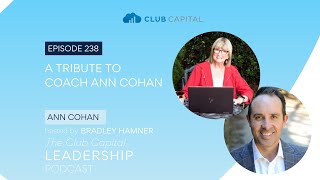
This Club Capital Leadership Podcast episode is a heartfelt tribute to the late Ann (Anne) Cohan, founder of the Marvis Center, recorded on the evening of her passing. Host Bradley Hamner honors her legacy with a $238 donation to the Leukemia & Lymphoma Society and shares Ann’s career journey—from a copier‑industry sales manager to a national training director at Sprint, then founding the Marvis Center in 1992, where she has spent nearly three decades coaching insurance agents. The conversation pivots to practical guidance for agency owners: the seven core traits to seek when hiring (coachability, ability to learn, integrity, self‑motivation, customer‑service sensitivity, remote‑work capability, sense of humor, plus resilience), common interview pitfalls, and concrete interview questions to gauge those traits. Ann emphasizes activity‑based metrics as the lead indicator of success—tracking daily family quotes, cold‑call dials, connects, and using a minimum of four‑to‑seven quotes per day to keep the sales funnel full. She advocates instant‑gratification rewards (small monetary or kudos incentives, nightly victory reports) to sustain motivation, especially in competitive or crisis environments like COVID‑19. Remote work is highlighted as a permanent shift, allowing agencies to recruit talent across geography while requiring self‑discipline. Leadership development is framed around regular training, role‑play, coach participation, and flexible leadership styles (Blanchard’s One‑Minute Manager). Ann also shares personal influences (her mother, mentor Bruce Fair), favorite books, cooking hobby, golf achievements, travel wishes, and her upcoming first book. Contact information for the Marvis Center and a call‑to‑action for listeners to join the new podcast community are provided.
Chapters
very successful agencies, they reward for instant gratification along with the end result. It's so hard. There's so much competition out there. Under this situation, people might be saying shutting your team members down because they might have just lost their jobs or they don't have money or your price might be too high, but you've got to look at instant gratification every day. Little, doesn't have to be monetary. Kudos, whatever the case may be. I think that's really important because you want to keep them motivated and confident and inspired to keep keep doing what they do every single day.
So the big question is this: how do small business owners like us grow our leadership, develop our teams, and scale our business in a way that allows us to get our products and services out to the world yet still remain profitable? That is the question, and this podcast will give you the answers. I'm Bradley Hamner, and this is the Club Capital Leadership Podcast.
Hey everyone, well, it is with a heavy heart that I come to you with this podcast. Many of you know and have known Coach Anne Cohen for a really long time, and the day that I'm recording this is actually the evening that Anne unfortunately passed away. I got to know Anne 10 to 12 years ago. I'm not really sure how long. It seems like yesterday, but she made such a profound impact on me, the way that she carried herself every single time that I was around her, even the podcast that we did together and leading up to that. And every single time that I would talk to her on the phone, which over the last, you know, 5 to 7 years or so, uh, was not as often as it was before, but The impact that she had on me will last forever. And so I know that the same thing is going to be for all of you. So this is episode 238, and we thought that we would just pay a tribute and recast the episode that we did with Anne as a— just again, a tribute to her life and what she stood for. She impacted so many people, gave of her time so selflessly. And I know that many of you have so many stories and so many funny times with Anne around the country. And so I'm gonna be making a donation since this is episode 238 of $238 to the Leukemia and Lymphoma Society. That's where she wanted in lieu of flowers for her service to be able to make a donation to. So I encourage you to be able to do. The same thing. I'll be doing that right after this episode or after I get done recording this intro and outro. So we haven't done something like this before, but I wanted to honor Anne and all that she meant to me personally, how she has helped me along my journey of becoming a coach myself. And there's so many little things that I can look back on and reflected on today that she impacted me with in ways, just the infectious energy that she brought all the time. It was almost impossible to not get a text message, a phone call, let alone be in her presence and not pick up on her vivacious energy. I think that that's one of the things that I'll remember about her the most. And so encourage you to be able to make a donation to the Leukemia Lymphoma Society. I know many of you have had family members, maybe even yourself, that have been affected by that disease. My mom has dealt with cancer for 12 or 13 years. And so I'm honored to be able to share this episode with all of you that maybe some of you may have not heard of Anne before, and so you can get an idea of who she was in this episode. All right everyone, without further ado, here's our recast and tribute to Coach Anne Cohen. We'll miss you, Coach.
This podcast is brought to you by Autopilot Recruiting. Join over 1,200 State Farm agents in putting your recruiting on autopilot. Any successful insurance agent will tell you how important team is. Finding those rockstar team members doesn't happen when left to chance. It happens through consistent recruiting. You never know when you're going to lose a team member, and the key to an incredible team is constantly searching for the best talent. Autopilot Recruiting is a continuous recruiting service where you'll be assigned a recruiter that has been trained to recruit on your behalf every business day. This recruiter will take over and revamp your career plug, send out assessments, do prescreen phone interviews, and schedule your in-office interviews. All you need to do is to show up and give a thumbs up or a thumbs down. This ongoing service is extremely affordable and a no-brainer for taking your insurance agency to the next level. Listeners of the Club Capital Leadership Podcast, go to autopilotrecruiting.com and use the code Club Capital to get started. Again, autopilotrecruiting.com and use the code Club Capital to get started.
Anne, welcome to the Club Capital Leadership Podcast. Glad to have you on.
Well, Bradley, it's great to be here. Thank you.
So, let's just start off as we always do. For those that don't know you, and I know there's very few people that don't, but for those that don't know you, talk to us a little bit about your background and lead us up to how you got involved in the insurance industry.
Well, I grew up in the copier industry 100 years ago, Bradley. Well, I was with Savin Corporation for just shy of 9 years. I started in sales and then I went into sales supervisor. Sales manager, then I ended up a national training manager, and then I ended up running the training department for the company. So I loved it, you know, developing people was my thing. And then a search firm was looking for someone to kind of reboot, if so to speak, their training department, and that was Sprint. And they made me an offer, guys, I just could not refuse. So I ended up going to work for Sprint as their training director for just shy of 4 years, and it was really Quite an experience, I really enjoyed that. And then in '91, I decided I'm gonna go do my own gig. So I did, and I started the Marvis Center in January of '92. So it's been 28 years, and I started when I was 10. So I just wanna make sure that that's really clear. And during that, I was so blessed. I mean, been to Moscow a couple of times, the West Indies several times, all over the United States, Canada, and I was working with Fortune 500, 100 customers all over the world. And then 9/11 hit, guys, and some of you in the audience experienced it. It was pretty tragic. And after 9/11, I needed to refocus and rebrand my business. I wasn't going to go out of business. I knew that I didn't want to do that. So I concentrated on what was hot at that point. And since companies were either cutting their training budgets down dramatically or eliminating training classes altogether, I started thinking, but they still have to sell their products. They still have to meet with clients. So I decided to put together a pilot in 2001 of making client meetings really work. And I invited a smorgasbord of industries. And one of the industries that I invited to kind of give me feedback on this pilot course was my insurance agent. And she didn't even realize, you know, what I did for a living at that point. And she thought, wow, this is pretty cool. And then she introduced me to her sales executive. He introduced introduced me to his agents and it just started snowballing like crazy and it was amazing how it evolved. And so, I really started working with the insurance industry in 2002 and then actually exclusively since 2008. And I keep saying, if I didn't do what I do right now, Bradley, I would do what all the insurance agents listening to this podcast would do. I think it's a noble profession. Maybe I have one agency, maybe I've had two, but I'm excited to support this industry, most definitely. So that's kind of my story and how it came about.
Awesome. Thank you for sharing your story. And I'm sorry that I didn't make an introduction earlier, but this is Chris Ferretti speaking. So, Anne, something that I find super interesting, it sounds like you started the business, realistically speaking, in a time of crisis. And what a coincidence we're speaking today, which is also a time of crisis, because at the time of this recording, we are going through COVID-19. And so I also work at Club Capital where we service agents who are just opening their businesses as well. Some agents, in fact, just opened their business on April 1st. And something that people across the board struggle with during regular times is finding talent. In regular times, finding talent. Nowadays, people cannot even meet in person or should not meet in person, I should say, to scout people and basically interview them and see who's going to be a good fit and who will not be a good fit. So in this environment, what would you say are the traits and characteristics of a good team member?
Okay, that's a great question, Christopher. Most definitely. And right now with our new normal, these characteristics and traits matter, but it also matters down the road as well. So it has a long shelf life and it really depends on the agency itself and what the agency and the company's goals are. That's going to determine what kind of talent and what type of traits and competencies you're you're looking for on the front end, but there are 7 tried-and-true traits and characteristics that team members should possess across the board. One is coachability. They need to be able to comfortably get feedback and input on what they're doing well and what they need to do better or differently, right? That's really number one. And this is in no specific order, guys. The other trait is ability to learn. In the insurance industry, there's so many nuances, whether it's the product knowledge or the systems, but they've got to be able to have the ability to learn quickly, to be able to adopt and adapt, to become as efficient and effective and productive as possible and practical. So that's a second key trait or competency. The other thing that's really important is— I think you all know this— is integrity. Being honest and having a really strong moral principle or principles. That's really key. The agents that I work with and that have been hiring are looking for people that have, you know, their self job motivation. I was taught a long time ago that you cannot motivate people. You can inspire their motivational needs, or you could help encourage them, but you can't, you know, personal motivation comes within the heart, but the agency and the agents have to kind of support it. And encourage it so they feel this is a pretty exciting environment to be in. The fifth trait or competency would be customer service sensitivity, and that's having heart. It's having a passion and belief thing in what you sell and what you do. And I know in the insurance industry, this is not a job, it's a career. And they're going to be customers that sometimes just don't get it. and you have to have the patience and the sensitivity to back down, back up, and explain things to them. There are other customers that want quick answers, quick and fast, I want it now. You adopt and adapt to those people too. So you have to be able to not only be sensitive to the needs of the customers, guys, but also to be able to be flexible based on what that customer is needing. And number 6, and this is really important right now with COVID-19. And, you know, there are some people that have been working remotely for a long time, and I know some agents have, and even on this, that's listening to this podcast. But you need to have the ability to work on your own without much direction and support— not none, but not a lot, if that makes sense. So I think that's huge. And being able to work remotely if you had to, and that's happening now, and you don't know what's going to happen down the road, but to have that flexibility to be able to work on your own, be really resourceful without having too much direction or support from your boss after you've been taught and learned the processes and the approaches. And the seventh one is really my favorite. You've got to have a sense of humor. I look for a sense of humor. First of all, when you are part of a team and there's some agencies that have maybe one other team member or 4 team members or 10 team members, it's really kind of cool to bring people together and make people laugh. Not that everybody is talking about jokes every minute, to have that sense of humor and take things lightly. You know, that book on Don't Sweat the Small Stuff— it's all small stuff— I think is really important. And especially now, you need to have a sense of humor. Even if you can't get the goals that you want today, say, well, it was not my good hair day. You know, tomorrow's another day. And I think that's really important. And also to have a sense of humor with customers. Sometimes when people are calling in, I say this in my training class all the time, they're calling in for an auto quote. If I were selling the stuff, if I was selling the stuff, I'd say to the customer, that's as much fun as watching paint dry. The whole object is to get the customer on the other end of the phone to smile and get engaged. And so that's part of the sense of humor that's important as well. I hope that helps.
Yeah, definitely. Like, number one, I actually think that the last part, a sense of humor, is super important, especially when dealing with clients. Because if you're dealing with a customer who is simply price shopping, I think giving yourself a personality is going to make you stand out because every other agency that they cold call asking for a quote is simply what I would call a clerk and just give them the quote and then just send them on their way without actually asking questions to really get to know the client and really service them in the way that they deserve to be treated.
You said something, Christopher, if I might. I don't mean to interrupt you, but I think there could be another characteristic that's pretty important. And that's resilience.
100% agree.
Now, I think that's so important as well. And I think when agents are interviewing people, these are— and I'd be happy to send questions to kind of support these different characteristics and traits. But it's really important that if these are important to your agency and to your culture, that that team member can fit within that climate and culture and that they can thrive within that climate and culture. And that's really important. Yeah, yeah.
So, and you've been around as many team members over your career, and especially since— I mean, you've been working with insurance agents since 2002, that's almost 20 years, and then exclusively with insurance agents since 2008. So you've been around so many different agents, so many different agency team members. I want you to share also, what are some of the common pitfalls that you see in the hiring process that you see with insurance agency owners that some mistakes that they make along the way so that they can also make sure that they avoid those as much as possible?
Well, one agent said to me one time when we worked together and I helped her with the whole interviewing project and hiring process, she said to me later on, and she had this wonderful little Southern accent and I can't mimic it too well. She said, "Anne, I'm never going to fall in love with the candidate anymore. I'm going to fall in love with their production." So I think what you have to— if that makes any sense— is that you've got to make sure that when you're interviewing people that you're not falling in love with just how lighthearted they are. I know you're not going to hire them how pretty they look or how handsome they look, but you've got to drill down to what core competencies you're expecting, what traits and characteristics you're expecting, and then ask questions to ensure that they can fit within those guidelines. And then do a lot of role-play. I don't I think, and, you know, I, as you said, Bradley, I've been working in the industry for a long time, and I've been supporting a lot of my clients in helping them hire people. I have people role-playing, you know, just say, okay, sell me a stapler that you have on your desk. Sell me this, not even in the industry-specific. Tell me, how would you encourage me to say yes? So I think part of the whole interviewing process is identify the role that they're going to play. The traits and competencies that you expect from them, the skills that they're needing even to start basic math, something like that, computer skills, and then drill down and have the interviewing process, not just quick and dirty.
Just to go back to the 7 competencies and characteristics that you mentioned earlier, what do you think would be a good way to gauge where they stand with those competencies?
So what behaviors are you seeing that you could feel that they could Shit.
Yeah. Like let's say that I were applying for a position to be like a sales member, for example, a sales team member. And the agent was asking me questions to gauge how coachable I am, to gauge how quickly I learn, to gauge how resilient I am, to gauge how good of a sense of humor I have. Like, what do you think is a good way for agents to simply gauge where I would stand?
That probably could be a whole podcast, right guys? You know, the coachability is if I I come to a team member and I'm giving them feedback on what I observed and make suggestions of what they could do maybe differently or better, and they get defensive, then they're not so coachable. I would let them know, you know, they're not that coachable. Or they say, oh, I knew that, I was going to do that. You know, they're not ready to listen to input and feedback. I know that a lot of people have team members that are working with them right now, and they're probably now the core valuable because of just everything that's going on right now. But when you're really looking at those traits, you've got to ask the right kinds of questions. And as I said, I can send out to your viewers if they want a list of questions that you could ask on the front end so they can understand a scale of 1 to 4, where are they? Because it's really important for your agency to be able to work on their own without much direction and support. I want to know, have you ever done that before? How did it work? What were your challenges? How were you successful? And when you're on your own and you want to be motivated, how do you motivate yourself? What do you do to keep it going when you get disappointed or in a day you don't sell anything or you've made 100 phone calls and you don't get anybody to answer? There's a lot of hangups. How do you handle that? What have you done? So we're really under one umbrella of one question. Is framing, you know, resilience, coachability, job motivation, ability to work on their own. So, you're kind of learning a lot about them because the agencies, most of them, you don't have huge organizations. They don't have hundreds of people. You have a small unit and your responsibility as an agent is to make sure that they thrive within your environment and that it is the right fit. And I've interviewed people for certain agencies and I say to them, agent, I said, "I don't think it's going to work for you. That's not the profile that you're looking for." Reason? They're a little more cautious. That's not bad. They're a little more detailed. That's not bad. But for your organization, it might be bad, if that makes sense. And there are a lot of different tools out there that a lot of you are using, the agencies are using to kind of gauge someone's adaptability to your organization, maybe their ability to sell or to service. So, you've got You've got to really use those tools as well. And one other thing that you did ask me is what are some of the shortfalls in interviewing process. Please get references. I don't care if the reference is their father. You call them up and say, "Look, your son or your daughter is looking to work for us. This is what the job entails. You reared them your whole life. Tell me, why do you think they'd fit and what might be some of the challenges?" And a lot of parents are very honest.
Yeah, I think that's important about don't skip steps in the interview process. And I think a lot of people will have that as part of their interview process to get reference checks, but then they just skip steps. They say, you know what, they lose a team member, oh my goodness, they're in panic mode, I've got to find somebody now, and they begin to skip steps in the process, which a common one is reference checks.
Right, and it's huge. And people are a little more available to respond because the people that you're calling, some of them are decision makers also that have maybe hired the wrong people and realize the fit's got to be the right fit.
Yeah, so I want to say a couple things. I mean, as Chris said earlier, we're in the middle of the COVID-19 virus and everybody's working from home. But to be honest with you, the part where you— number 6, can you work on your own? Have you done that before? And I think you would agree that this remote working is going to become more of a normal thing moving forward once we get outside of this virus. Don't you agree?
Mm-hmm. I do. I think it's a benefit for the insurance agents, to be honest with you. I mean, you might be— I'm going to use my town, Sandy Springs, but you've got talent all the way down in Peachtree City or down in Macon or Valdosta, and they're the right fit, but they can't commute for 2 hours. And so, the ability to work remotely and have job motivation and be focused and disciplined is going to be important.
Well, at some point, you're going to be back on the road conducting your training seminars across the country. I know you're a big fan of Delta Airlines flying out of Atlanta. And as you know, whenever you get on an airplane, they go through the safety briefings. They always say, if there were to have a loss of cabin pressure, put your oxygen mask on first. And it makes me think about the importance of self-care as a leader. And developing ourselves first. And so, whenever you talk about development, obviously we spend a lot of time talking about developing our team member, or really how to find talent, how to find A-players on our team. But what do agents need to be doing now to develop themselves, one, and also in developing their team members?
You know, it depends on the role they want to play in the agency, Bradley. Let's say if you want to be the CEO and you want to work on your business instead of in your business, you need to find— let's say it's an office manager, an operations manager, sales manager, or a service manager, or service lead, a sales lead to help you develop those people to work in your business. So your responsibility at that point is, I want to have my own appointments, I need to run the business, I need to keep things afloat, I need to do the marketing, I have a lot to do, but I've got some talent that I can build and groom to become a good leader and have my team follow them. So really what's happening is I am supervising my team through my sales lead, my service lead, or a manager, and I think that's really important. Now, if you want to be a coach and you love training and developing your people, then first of all, I suggest that the agent attend as many trainings as their team members attend is practical. So you understand the principles, the approaches that they're learning. Because for my classes, and I'm, you know, I hope so, I've been doing it for a long time, but they walk away and I call team members pumpkinheads in my classes. And, you know, people are, if they see me again a year or two later, they said, are you gonna call me a pumpkinhead? I said, I will. It's very endearing. But they come back so fired up, they're so excited. They just learned something. And then of course I always have justification. I have people calling in, whether it's virtual meetings, trainings I'm having now, or even the classroom. I said, tell them how it works. So they get so excited. So the agents, if they're coaching, have to participate in the training themselves. And you know what's really amazing is the agents have been fabulous. In some classes, I have more agents in there than team members. Now, if that's impossible to do, then the team members coming back from the training So the agent is aware, the manager, everybody's aware of what they learned. Then they make like a book report and they share with the group. Maybe it's every morning they share a key nugget that they learned from the training. And so now they almost become the trainer. You know, they're going to train somebody else. So it really depends on the role that you want to play. But I think it's really important right now that you guys have people on your team that could be mini yous that can coach and support the people and pump them up because there's a lot right now going on with agents as well in this situation.
Have you ever thought, wouldn't it be incredible if you had direct access to our expert podcast guests in real time and be able to ask a question specific to your business? Well, now you have the opportunity to do that. After 3 and a half years, we're finally launching a leadership podcast community, and we want you to be a part of it. We're launching this podcast community on June 1st. Go to club.capital/podcast and you'll get all the details.
Man, I think that that's super important. People are always talking about wishing that they had more time and that wishing that there were two of them. And well, when you are a leader, I think you do have the capability to multiply yourself by simply making sure that you're training your team according to the standards that basically you wish that you could multiply so that you can be twice as effective as you want to be. So that's great stuff. Now, quick question, just to kind of take a bird's eye view of everything over the years that you've worked, what would you say are some of the best practices that you've seen successful agency owners or business owners in general carry out?
First of all, they're developing their people regularly. Every week they could be having training sessions with their team members. Some of my agents have trained even now Zoom meetings every morning, 4 days a week, some with their sales team and then another with the service team. So, making sure that they are armed and dangerous and, you know, really feeling confident and comfortable. So, that's really important. They also, another thing that happens, very successful agencies, they reward for instant gratification along with the end result. It's so hard. There's so much competition out there. Under this situation, people might be saying, shutting your team members down because they might have just lost their jobs or they don't have money or your price might be too high. But you gotta look at instant gratification every day. Little, doesn't have to be monetary. Kudos, whatever the case may be. I think that's really important because you want to keep them motivated and confident and inspired to keep doing what they do. Every single day for you as the owner.
I want to comment on that because I think that's really important. So a question and a comment. What is something that you would recommend? Because I think that is incredibly important in this day and time to be connecting with the team, like you said, whether it's Zoom or text messages or just some phone calls to them or instant message on their computers. What's an example of something that they could do to be able to have a reward award for something a team member is doing throughout the day. Can you just throw out a few examples?
I would say certainly I'm going to get paid for writing policies, but I would pay them on activity. And again, it could be little, nothing huge, but every time they quote a family, they earn a dollar and you put it in the kitty. I'm making that up. Every time they get a referral, you put a dollar in the kitty. By the end of the month, maybe they have, I don't know, $1.20 in dollars, you know, where they can have $120 in dollars, doesn't really matter. But I think rewarding for activity, Bradley, is really huge, always. Then I also, I think every night, especially now, but even not now in the new normal, is your team members send you nightly reports of what they've accomplished. That's important. Plus 1 to 3 victories, something they did today they feel really good about. It could be nobody hung up on me today. I wrote a renter's policy. I got a referral. I quoted 8 families today. I am so fired up, or I sold something. Anything, you know, especially when they're new, it's really important because they're comparing themselves to veterans and they might feel really inadequate if they're not reaching the production goals. But I think every night, 1 to 3 victories also is key. And I have everybody in my sales class For a couple of weeks, send me every night, me and their manager, their victories, and I'll reply to it. You got to reply to it. You got to give them feedback because that's going to make them feel good about themselves when they're with you or not physically with you. And that's really important.
You know, protecting the confidence of the team and protecting your confidence as the leader is always important. It's more important than it's ever been right now because so many people are under stress. This is not normal for us working from home right now. So I think it's even more important than it's ever been.
Just a quick fun fact, but we actually kind of have that practice going on when every time that Bradley and I meet, we actually go over like professional bests and personal bests. And we find that really sets the tone for the rest of the meeting. So I couldn't agree more with you on that. But Bradley, I know that you wanted to talk about activity management and leading your agency. So you want to Elaborate more on that, Bradley.
And I've known you mentioned this earlier about how important activity is. You've been a big driver and talk about that a lot in your classes. So why don't you touch on that a little bit more about activity management? Why is it so important? And you touched on a few as far as giving instant gratification on a daily basis, but why is activity so important to be measured? What are some of the activities that you encourage the agency owners to have measured in their office with their team members.
Okay, and this is huge. I grew up in the copier industry, and every night we'd have to report how many cold calls we made, how many demonstrations we set, how many sales we had. That was our life. We had a little clipboard at the time, and we just come in and sit in our little huddle, and we go over that with our agent— with our general manager. I call it agent. Years ago, I was profiled. It was featured in one of the company's newsletters, and they called me the guru of growth. I'll take that as a compliment. But in that, I made a presentation to hundreds of agents in the room, and I talked about how tracking activity, the lead indicator, is going to get you the results to move you from a great agency to an awesome agency to an outrageous agency. It's all about activity, just like the ballplayers. They know what their batting averages are. They know how many times they have to go up to bat before they get on base or hit a home run. So One thing is we've got to start with the lead indicator, and that's the activities, the number of families that you quote every day. And a family could be a household, whatever you call it, whether it's adding to their portfolio, whether it's talking about other products, a new opportunity. It could be an internet lead, doesn't matter. But we want at the end of the day, right now, a minimum of 4 families quoted a day. Now, down the road, or before, in the beginning of March and February, it was 5 to 7 families quoted a day. Because what you want to do is keep the funnel really full because the activity will drive the activity, the production. And that's really key. You can keep track of if your people sell life insurance, how many families did they— in passion and belief— quote a life insurance policy or health insurance policy? Or it could be a renter's policy. It doesn't really matter. You know, you want to have a minimum of 4 families quoted a day right now. And when we get back to maybe our normal, 5 to 7 families quoted a day. And how to keep track of it. I even say during my class, I don't care if it's toilet tissue. I don't care. There's a lot of tracking tools out there. Use them because when agents will call me and they want to work with me or they want to put people in my class, they say, Ann, My team members are not productive. And I'll say to the agent, agent, how's their activity? And they'll say, what do you mean by that? I said, how many families are they quoting a day? Oh, I don't know. Okay, so you've got to get back to the basics of tracking. You could put it on a flip chart, you could put on a whiteboard like I have behind me, anything. You know, there's lots of tools out there tracking activity. That's what's really important. And then their funnel is full. 'Cause sometimes you're working in April for May's business or April for June's business. So, I want to make sure that I've got at least 84 families every month I'm quoting, ideally 105 to 120, and I know that my funnel's going to be full.
Do you believe in tracking calls? I mean, there's a lot of different ideas about that. So, quotes obviously being the main metric, but what is your opinion on tracking calls?
You mean cold calls?
Yeah, just dials.
Okay, the dials. Well, I've got a lot of people that I coach that do keep track of it because I want them to be motivated. If a lot of them are reaching out, they keep track of how many dials they've done, how many connects they had, and how many quotes they got from the connects. I think that's good because some of the team members are only making— I'm making these numbers up— 20 calls, outreaches a day. Well, that's not going to get them 4 families quoted if that's their project. I need to know what my number is in the long run, Bradley, as long as my team members are quoting a minimum of 5 families a day. I don't care where they're getting— how many outbound calls they're making, right? They're making only 4 families quoted a day, I do mind. Some of the best reps that I'm working with right now, they're quoting— and this is kind of good numbers for you guys right now, COVID-19— they're making 100 to 120 calls a day. They're connecting with new maybe 10 people, maybe 4 of those people, you know, and that's a good number, are letting them, you know, they're quoting their policies.
So I think those numbers are important because that's 100 to 120 calls and they're getting connections of 10 people. That's important to have those ratios. I mean, that's 90 to 100 people that they're not going to convert into an opportunity just to quote, right?
I mean, I need to know how many glasses of water I need to drink to start losing weight. I just know If I only drink one, that's not going to work.
Before we transition into E9, for somebody that hasn't themselves been to one of your classes or has sent a team member to one of your classes, can you just talk about that experience? What is that like? How many days is that? Just what's the overall experience of one of your classes with the Marvis Center look like?
Okay, well, I hope it's one of the best experiences they've ever had in their entire life. Well, the experience should be it's a safe environment. I mean, no matter what, I'm doing a lot of virtual trainings right now. It's pretty awesome. I think the experience is— there's a lot of practice, there's a lot of roleplay, because my job when the agents enroll in my classes is they paid for them and I want them to get an ROI sooner than later. And the only way you could do that is to practice the approaches that you're taught. So the environment is very interactive, there's a lot of roleplay. I don't put anybody on the spot. We do a lot of group roleplays. And we focus in on what's hot right now. I've modified a lot of my stuff from even a year ago. Outreaching to old leads now is different than it was even 2 months ago. So I'm constantly modifying stuff. Did that answer your question, Bradley?
Yeah, absolutely, 100%. All right, so you ready? I know you're a golfer. We always do the emergency 9 holes, so we're going to have 9 rapid-fire questions for you. You ready?
Try me. Okay, go ahead. Haha.
Last book you read?
Actually, it's really interesting and I have it right here. It's Don't Fire Them, Fire Them Up. And that's Frank Passetta. That's a great book. I mean, I don't know if any of you have read it. That's pretty cool. Another book that I've read because I've done book reports with some of my team members that are leaders is Leadership and the One Minute Manager by Ken Blanchard and Dreyer Cigarmi. So that's been kind of cool. And I'm reading a lot of YouTube podcasts myself to see how people are doing. I think that's really important that people get engaged in those as well to sharpen their saw. But yeah, those are just a couple.
What about the book that you recommend the most to others?
It depends on what your role is, right?
I'm a business owner, agency owner.
Oh, I would definitely get into Blanchard's Leadership in the One Minute Manager book. It's like so easy to read, and that's going to be really helpful. And it talks about really being flexible and adjusting your leadership style based on the development of your team members. And that's really important because I think leaders out there have to be really, really flexible because you can't treat good performers the same as you treat average performers— very differently. You know, you've got to make sure that you're not under-supervising people or over-supervising people. And I think the Blanchard model for me for decades has been amazing, and it's helped me as a manager and a leader years ago, and it's helped loads of managers and leaders now.
You know, I think finding that balance that you mentioned there, it just reminds me of the book Jocko Willink wrote of the dichotomy of leadership. You got to be able to manage the activity, but you don't want to to micromanage. And just that balance in leadership is interesting, is what made me think about that. And you're a leader. So many people follow you and you're inspirational to them. But who is somebody that you follow that motivates and inspires you?
Oh, wow. That's really interesting. I think it was my mother. She was like the best salesperson that I've ever met in my entire life. She was a fundraiser. I think I've got a lot of Natalie Cohen in my soul. So she helps indirectly because she's not alive right now, unfortunately. But, you know, I just listened to her on the phone talking to people, how she approached people. So she really helped mentor me a lot. She didn't even realize it. She would be on the phone talking to people, trying to get them to share some money for the funds that they were trying to raise. And my mom would just have approaches and I think I just, it just through osmosis I learned them. But I think she was my hero and my mentor. But I do have, there's another guy that taught me everything I needed to know in the copier industry, Bruce Fair. He was amazing. I thought he could sell anything to anybody and we're still friends and that was decades ago. So I respect him a lot as well.
Wow, that's awesome. Well, I mean, You've traveled the country to different speaking engagements and with your business. What's your favorite place and why?
You know, that really depends. You know, it's really interesting because I've been all over the place. I have friends everywhere, and a lot of the friends are my clients or part of the team. I love it. I mean, California, I've got lots of great people out there, down in Florida, Mississippi, Alabama. I mean, it really depends. I don't have a favorite place. It's the people that make it favorite for me.
Me.
That's my livelihood. I'm trying to pay it all forward. But every time I go somewhere, I know that I'm hooking up with somebody for dinner, or, you know, it's just a great experience playing a little bit of golf. It's kind of fun. So I, you know, it doesn't really matter. I like New Albany, Mississippi. I love going there. It's one of my favorite little towns.
All right, so what's one place in the world that you haven't been to that you would love to travel to?
I think Australia. Yeah, you know, right now I just like the the pleasure of going to Publix without a mask and without gloves and to be able to hug people that I bump into. That's on my bucket list.
For all of us.
Right.
It's on my bucket list for 2020.
Yeah, most definitely.
When you aren't coaching and teaching, what do you do in your free time?
What has happened is I'm not good, but I've become a cook. I'm cooking a lot of stuff right now. Kind of become my habit. And I'm trying to keep the weight off by drinking the water and walking and exercising. But that's been kind of interesting. I've even done some baking, which is like— I'm used to going to a hotel or restaurant out of town, serve me. But now, I mean, I'm grilling and I'm baking, and tonight is going to be eggplant Parmesan.
All right, so you know you and I connect on golf. I'm a big golfer. So what's the favorite golf— this is like a 3-part question. Your favorite golf course you've played, your best score, and the golf course you would love to play if you could.
Well, I'd love to play Pebble Beach. And my golf score, guys, I hadn't broken 100 in a really long time. Right before last summer, I actually broke 100, but I got to 92 was my score. And what I was so excited about on those 18 holes, Bradley, I had 2 snowmen. 2 8s. So I probably could have broken 90, which is really exciting. And the golf courses that I've played in it, really, you know, I don't care, you know, I have my high handicap, but as long as I'm around people, the golf courses, there's so many that are so pretty. I mean, I've been to Vegas, they had some golf courses out there that were phenomenal. Arizona. But I can't pinpoint, you know, one specific Wonderful. Again, I'd love to be in a cart right now with a friend playing golf at the Trophy Club in Alpharetta, which we can't do right now.
What would you say that has to happen in a day for you to call it a good day?
Oh, that's a great question. I mean, I think getting good feedback from the people that I've worked with on the successes that they've had, because every night I ask for victories. So I tell I'm not going to sleep until I get them. So it's kind of cool. I think that's good for me is that I get a bunch of victories from people that I'm supporting. That's a good day. And that I'm healthy, Ellen's healthy. No, that's good.
All right, last question. You're off the hot seat. What's the legacy that you really hope to leave behind?
Well, one is make lemonade out of lemons, OK? Be creative and take risks. And risk is not, you know, craziness. Just saying the legacy is use the skills that you've been taught, especially through me. That's my legacy to the world. You know, I want to pay it forward that whether you're in service, sales, management, that what I've taught you has helped you be a better salesperson, manager, service person, person in general. And I'm kind of excited. I'm coming out with my very first book. And I'm excited about that. So that's going to be part of my legacy.
Oh, that's super exciting. Well, you have to let us know that, and we'll promote it for you.
Appreciate that.
Anne, I've known you for, I think, 6 years, and you've had a profound impact on my life and on my career. So it's been a pleasure having you on the Club Capital Leadership Podcast. If somebody wants to be able to contact you, contact the Marvis Center, enroll in some of the courses, obviously you have the virtual courses going on right now. What's the best way for them to be able to get in touch with you?
Well, first of all, check our website, www.themarvacentre.com. You can email us at info@themarvacentre.com. You can call us at 404-252-4007. Like us on Facebook, on my Facebook business page, The Marvis Center, LinkedIn, and email me, acohen@themarviscenter.com. I'll be happy to answer any questions that you have and love to have you guys join the experiences that I've been sharing with lots of people over the years.
This has been great. Thank you so much for coming on.
Yes, thank you.
My pleasure, guys. My pleasure.
Bradley, what a podcast that was. I mean, the level of energy that Ann brings to the table is unparalleled. I was super happy and engaged the entire time, as I'm sure that our listeners will be. And there's just so much that she left us with regarding best practices, regarding what qualities to look for when you're interviewing a team member, and so much more. What's something that you walked away with?
So, you know, we spent a lot of time talking about what should you be looking for in team members, and especially right now. And whether you pick up exactly all the 7 traits that Ann talks about in her podcast, I think it's important that you actually have your own— what we would say at Club Coworker Coaching is an A-player profile. Exactly what are the characteristics that you're looking for in a team member in your office? Be clear about what those are and then go interview to those standards. I think that's something I picked up with, you know, Anna's conducting and her team are conducting a lot of virtual classes right now in April. I'm sure they'll be having some in May. Get in touch with them if they can help develop you and develop your team. There's never been a more important time to be able to do that, especially with so many people working remotely. And honestly, Chris, looking into the future, we don't know how long this is going to last, but working remotely is probably going to become a more common theme throughout the country for all the insurance agents that listen to this podcast. Chris, love this podcast. Glad to have Anne on. Until next time, lead well and stay classy.










