Episode 240: Beyond Rockets with Clark Dunn
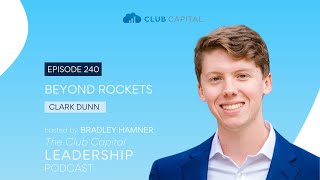
In this Club Capital Leadership Podcast episode, host Bradley Hamner interviews Clark Dunn, founder of Beyond Rockets, a podcast‑management and social‑media marketing agency based in Huntsville, Alabama. Clark recounts his journey from a computer‑science student at Calhoun Community College to launching the Beyond Rockets podcast in college, turning it into an LLC, and eventually going full‑time after graduation. He explains the hidden technical and logistical steps required to launch a podcast (hosting, distribution, music, SEO, backend setup) and why newcomers should seek mentorship to avoid costly mistakes. The conversation shifts to how the podcast grew into a service offering: helping small businesses create and manage their own podcasts, repurposing long‑form audio into short‑form video clips for Instagram, Facebook, TikTok, and LinkedIn, and leveraging podcasts for internal employee communication in larger firms. Clark discusses the balance between episode frequency, length, and burnout, noting that a 12‑month horizon is realistic for businesses with existing audiences, while solo podcasters may need 18‑24 months to see traction. They explore the emerging role of video in podcasts, Spotify’s Anchor integration, and the challenges small creators face when adding video. Clark shares practical social‑media advice—choosing the right platforms, treating each as a tool in a toolbox, and maintaining consistent posting to build subconscious brand awareness. The episode concludes with actionable resources: BeyondRockets.com for assessments, contact forms, and the @beyondrockets Instagram handle, plus sponsor messages from Autopilot Recruiting, Coach P Consulting, and Club Capital.
Chapters
All I know at the time is I need to make sure I'm on Spotify and Apple Music. That's the only thing that I know at the time, but that's not what Google gives you. They give you all these different things, ads, SEO stuff. It's like, I have no idea. So if you're listening and you wanna start a podcast, I would say reaching out to someone who already has one, cuz I promise you the things that I learned starting it, I do not make those mistakes launching a podcast for clients now.
Yeah.
There's things that you have to do on the backend. People just think, and I think I just thought, hey, all I gotta do is talk into a microphone and then it's on Spotify. People are gonna listen to me cuz I just seem so captivating, I guess. Yeah. But there's a lot more that happens on the back end to get that possible. And someone who has a podcast can definitely help you and direct you.
So the big question is this: how do small business owners like us grow our leadership, develop our teams, and scale our business in a way that allows us to get our products and services out to the world yet still remain profitable? That is the question, and this podcast will give you the answers. I'm Bradley Hamner, and this is the Club Capital Leadership Podcast. Hey, before we get into today's episode, did you know that Club Capital is the largest accounting advisory firm for insurance agency owners in the country, providing monthly accounting, CFO services, and tax preparation? Check them out at club.capital.
Welcome to another episode of the Club Capital Leadership Podcast. My name is Bradley Hammond, your host. On today's episode, we have Clark Dunn. He is the founder of Beyond Rockets podcast management and social media marketing agency here in Huntsville, Alabama. I'm actually recording this live in person with Clark. Most of the podcasts I record over Zoom, so I'm really excited to get to introduce all of you to Clark. Without further ado, here's my conversation with Clark Dunn.
Ambition is the first step towards success. It's time to level up your agency. And Coach P Consulting will help you do just that by using the same strategies he used to sell over 700 life insurance policies in 2021 alone. Now, this is not your regular one-and-done type coaching. You'll get personalized coaching 2 days a week, every week of the month, and you'll get a live look behind the scenes of his team training and an office that's performing at the highest level. There's a reason Coach P Consulting is the fastest growing coaching company for insurance agency owners in the country. Coach P will train your team alongside his own and show you the exact steps they are taking to achieve Chairman's Circle, Exotic Travel, and Multi-Line President's Club and be one of the few agents to be selected to have a third office. So whether your goal is to be at the top of your local market or amongst the best in the country, this training will give you the strategies and the tactics to get there. For just $250 a month, you'll get high-level coaching each week from someone who is already getting it done at that level, and his strategies work, and it's time to put them to work for you. Sign up at coachpeakconsulting.com and get your first full month for free when you mention the Club Capital Leadership Podcast.
Clark Dunn, welcome to the Club Capital Leadership Podcast.
Thank you so much for having me. I'm excited to be on the other side of the mic this time.
Yeah, exactly. You don't get many chances for people interviewing you.
I've maybe been on 3 where I'm on the other side of the mic. Typically I've done 120 episodes where I'm the focal point, so it's fun being on the other side.
Yeah, for sure. You get to sit back and just talk about yourself now.
Yeah, I guess so. This is weird.
So we always start with background and origin story. So why don't you take us back wherever you want to begin, and how did you kind of get to where you are today?
Yeah, so I guess I'll kind of take you back to probably, I guess, beginning of college. So I started doing— I went to a community college first here in Huntsville called Calhoun. At the time, I was a computer science major, thinking that was what you do in Huntsville. You go into engineering, you go computer science, work for a government contractor, and you retire when you're 60 or whatever it is. That's the typical life. So I jumped into doing that at Calhoun, worked throughout college at small jobs, and then in 20— let's think, 4 years in May, so 2019, I guess, or so, I started the Beyond Rockets podcast. And so I was in college at the time. I think I was still at Calhoun. I graduated high school in 2017, so I was in my sophomore year of college, started this podcast, and the whole idea for the podcast came about so organically and so it was very quick. I just jumped right in and it was kind of just like, hey, I sat down with my wife's grandfather and I asked him questions about his story. I was like, you're a very interesting, you're an interesting person. Came here from Ohio, worked at a small company here in Huntsville called Intergraph at the time, and then it became this huge, great thing. And so I was just pouring into him and asking him questions and asking all the ins and outs and then relaying it to my wife. And she goes, I didn't know that. I had no idea. I didn't know that whole story or anything like that. And I was like, how do you not know this? This is your grandfather. And I was like, I wonder if maybe there's conversations that people have with entrepreneurs or business owners that maybe we're just not asking the right questions. Maybe there's a different side to it, especially if you're not in it on a day-to-day basis. And then from that, I was like, what if I started a podcast? I had another name at one point for it besides Beyond Rockets, but I don't remember what it was, but it was taken on Instagram. I was like, well, if it's taken, like, I don't want to ask. And I was like, I was toying around with different ideas. And I was like, how about Beyond Rockets? My wife was like, that's a good idea. I like that. And then she's like, oh, she told her friend and her friend would listen. I was like, well, if two people are going to listen, I'll start this podcast. And so those conversations was probably a week, maybe a week and a half. And then I was like, okay, let's start a podcast. I listened to a lot of podcasts. How I Built This is a big podcast I listen to a lot. And so I was like, oh, let's just start a podcast. So you Google it, you start a podcast, and then you start with that. Now I need someone to actually be a guest on this podcast that I had just created and have an Instagram page with 10 followers that are all family. And so I asked a friend and then from there it just kind of grew. And then so throughout college, sophomore year on, I started doing this podcast. Fluctuated as far as content as I was going through school, transferred to UAH for my last 2 years, ended up switching majors. Computer science was not it for me. Had an internship, thought I had this dream job and realized that I couldn't do it. It was not my cup of tea. Dropped all my classes, switched majors, and pursued marketing and finished out at UAH May of '21 and then started Beyond Rockets actually as a company, the LLC formed in, I guess it would be 3 3 years in October. So October of 2020, started the Beyond Rockets LLC, actually formed the company. I was helping small businesses with social media marketing, people I had on the podcast thinking, hey, I think I could help you. I don't really know what I'm doing. First client ever was a coffee shop here in town called Offbeat. They were friends of mine and I was like, hey, you don't even have to pay me. I was like, oh, but we'll give you free coffee. I was like, even better. Cause I needed a place to study. I needed a place to buy coffee. And so they paid me in coffee and I just would help them with their social media.
Super cool.
And then from there, it just kind of word of mouth. They liked what I was doing for them. They recommended me to other small business owners and then they began to actually pay me. And then it was just kind of blossomed from that.
So, so why a podcast to begin with?
I don't know. I just, I liked interviewing people. I liked meeting people. I never had a problem meeting somebody new. It was never a, hey, we'd be out and I can't talk to somebody or I can't, hey, do you work here? Hey, I think I've seen you somewhere. It was never an issue for me to talk to a stranger. And so I was like, well, it is a little uncomfortable for some people to get in front of a mic and put on headphones and talk, but I feel like I could probably do it. Really, there was like a kind of the idea of like, hey, there's not really anyone at the time. There really wasn't anyone doing it in Huntsville. There was one of the podcasts called Know Huntsville, which was more for arts and entertainment than it was entrepreneurship and small businesses. And that's what I was interested in. I listened to How I Built This, listened to every single episode at the time. And so I was like, I feel like there's a market here. Huntsville was growing, Huntsville was blossoming. And I thought that maybe, hey, if I can kind of center myself as that knowledge expert in that field and kind of get to know these small business owners, these entrepreneurs, then maybe it could be something.
So you're in college, you start the podcast, which, okay, that makes sense. But at some point, whenever you graduate, did you ever think, you know what, I actually don't think I need to go down entrepreneurial path. I need to go take a W-2 job and make $50,000 a year salary, et cetera. So. I mean, look, I get it, but I didn't start my path that way. I mean, I was on your podcast, and I mean, I had a number of W-2 jobs, well, two, for a couple years before starting my journey. So for you to take that leap— now granted, you didn't have anything to lose, right? So it was like, well, if it works, it works. If it doesn't, it doesn't. But did you have discussions with yourself or with your wife and try to figure out what that was, or did it just kind of organically happen.
Yeah, I mean, I guess so, like my junior year, I guess, was starting doing, uh, marketing at UAH, and I was still— the company was growing, the company was starting to become more and more successful to the point that it was like, well, I should probably make this a legit thing. Like I talked about, I mean, I had other jobs while I was doing the company in college. I had the company Beyond Rockets was doing work for clients. I had a job on the side being a custodian or doing whatever it was, and I was also going to school. So I always had 3 jobs at the same time. Running a business and doing all of this.
And you had— you made it as a side hustle.
Yeah, so I was just doing it and doing it and doing it. And then my last semester at UAH, uh, so I guess the spring of '21, I graduated in May of '21, I had an internship at Holtz Leather here in Huntsville. I was a marketing intern. I had someone on the podcast that was working there. He was a friend of mine. He was like, hey, we would like to have an intern and we really want to see if you would be an intern for us. Sure. So I became an intern there. And really on that point, I learned a lot about what it was like to do marketing that I was doing for these clients, but in a company atmosphere. I mean, they were a pretty big company. They're very, very successful. So it was interesting just to see that dynamic and kind of people that maybe had more experience in it than me at Holtz that I could then pour into and ask questions and really kind of dive into what would then eventually help me within the business. But throughout that time, I was still looking for maybe like, hey, maybe I should get a typical 9 to 5 when I graduate, still do Beyond Rockets on the side, still try to grow this, but wait till it gets to a certain point. Didn't really know what that point was, but maybe I'll just wait till I get to that point. I thought Holtz was actually gonna hire me. There was conversations in that, so I was kind of like, okay, I'll just stay here. This is comfortable. This is nice. This is close to where we lived. That's convenient. It's a fun atmosphere. It's very much what I imagined a marketing company, casual wear, just fun, lots of creativity. And so I was kind of looking at that realm. And then I was also applied to a job at Hudson Alpha and I was actually interviewing for a job there. And I was applying, I was actually interviewing at a job at Davidson Technologies. I had 3 or 4 different job opportunities where I was interviewing with. My last semester and kind of getting to dive into— it'd be stupid of me not to take these opportunities and grow beyond Rockets on the side. And then things slowly didn't pan out. Holtz, hey, it's not going to be an opportunity, went off the spot. Davidson Technologies, who I thought I had, didn't— Hudson Alpha didn't really work out either. So I was like, okay, do I continue to look? I was still applying for stuff and I kind of sat down in probably April of '21 and it was— I sat down with my wife and I was like, hey, we're covering the bills, we're doing okay, we're able to still go out and do things we enjoy. What if I just gave this a try? What if I just went full in when I graduate in May? We were getting married in May too, so it was a lot was happening in a few weeks. And so I was like, what if I just go all in on this and just see how it goes? Maybe 6 months. If it works out, it works out. If it doesn't, I can always get a 9 to 5. 9 to 5s will always be there.
Yep.
And so I even sat down with Rob Murphy and with Affinity, and I sat down with him, basketball coach in high school. We sat down for lunch and I was laying out, I had this whole other business idea besides Beyond Rockets, and I was like, this is gonna be amazing. This is gonna be awesome. And he was like, wait a second, talk a little bit about Beyond Rockets. And I was like, yeah, we're paying the bills. Like we're doing fine. We're able to go out and do stuff. He's like, then why are you looking at getting a 9 to 5? This is already profitable. You're able to make a living, support your family, and still enjoy the things you want to do, fruits of your labors. And it was like, but this idea is just amazing. I don't even remember what the idea was at the time. I really don't. But I was so sold on this idea. And he was like, Clark, if you get a 9 to 5, and stop doing Beyond Rockets and stop going all in on that, that'd be the worst decision you can make. I think you can really grow this. And then I asked my wife and she was like, oh yeah, sure. I was ready to pitch. I was coming up with this pitch deck. Here's why I should do Beyond Rockets full-time. And she was just like, no, you're fine. Yeah, I think it's a great idea.
That's awesome.
She was honestly like, I think you would hate having a 9 to 5. It's just not your personality. And I was like, I just never even thought about it. So I dove full-time into it in May of '21 and haven't looked back. So.
Yeah, cool. I think it's awesome to hear people's entrepreneurial stories about how kind of things evolve and get to a place over time. So you obviously doing the podcast and then you really kind of started to begin to focus a little bit simultaneously also on social media marketing, which obviously you still do that as well. How did you begin to find the blend between social media marketing and getting some traction on helping people with the organic post, etc.? We'll obviously get into some tips that you may have for somebody that's wanting to be able to do that for their business. But kind of how did that come about and how was that integrating with the podcast?
Yeah, I mean, I guess the opportunities I got to meet, like as the podcast continued to grow and I got to have more and more people on and just the word of mouth about the podcast started to grow, I was able to meet a lot of great people with the podcast and these people were these small business owners and they got to kind of the word of mouth kind of got around the conversations on the podcast of, hey, I also do social media marketing. And at the time when I first jumped into it with that, First Coffee Shop Offbeat, I myself was not an influencer. If you looked at my personal Instagram, it was like, well, he doesn't really post very often. It wasn't like, oh, he's an influencer and then started doing this. In my head, it was just like, I see why these small businesses would be benefiting from this. Cause I knew just from all the things I've read and listened to that these small businesses didn't create their business because they were good at marketing. They created it because they were good at providing a service. And at the end of the day, that service was producing coffee or producing beer or Cooking food, whatever it might be, they didn't start it to be a marketing expert. And then we talked about even on mine is buying back their time. Their time is better used to grow the brewery, to grow the coffee shop, to work on the business instead of working in the business doing marketing. That's just not valuable for them. And I think I was able to kind of get that shift with these small businesses to say, I think that makes sense. And at the time I had no idea what pricing was. I just trying to carry the one and like, maybe this should be what we should pay me. And they would say, yeah. And I was like, oh yeah, this is great. It was a cool moment. And I remember the last sort of job I had prior to these internships at Holtz, the last job I had while I was also doing Beyond Rockets, I was a waiter at The Ledges golf course here in Huntsville. Had worked there in two different stints. I was a food runner. I was the main food runner. That was my job, like running out for banquets, all of that. You'd work long shifts. They'd have long weddings. And I remember the moment I think it was right around the time I turned 21. I think I was 20 at the time. It was like a month before I was turning 21. And I remember putting in my 2-week notice and them asking, well, I have this company on the side and it's doing well. And at that time it was doing more than I was making at The Ledges. So I was like, why would I come in to do a job? I enjoyed the people I worked with, but it was like, I can really grow this. And like at that moment it was kind of like a realization, this could probably be something bigger than I thought. And it was at that moment, it was like, okay, let's, And then I think that was kind of that tipping point of, it goes back and forth in small businesses where you see more clients and you see more growth, and then you have moments where you're like, I wish I would have more growth. I wish I would see more clients. It was a little scary at some points. I left this job that was consistently paying me to do the job that is consistently, but maybe could fall any moment. And so it was still a little uncertainty behind it, but it all seemed to work out.
Well, do you think there's people listening to this, Mike and, uh, went back a couple months ago and we were telling this a little bit of the story of the Club Capital Leadership Podcast. I mean, that was totally on a whim. I had really gotten into podcasts and I said, hey, I want to start a podcast. I had no idea what I was doing. And it's crazy, 3 and a half years later. For you, if somebody's listening to this, I mean, you help small businesses to be able to want to be able to amplify their message and get their message out there. Does every business need to have a podcast? What is your feelings around that? And so if somebody has kicked around the idea of starting a podcast, I mean, I didn't know what I didn't know. Yeah. I mean, there were so many unknown unknowns. I think Chris Voss calls that black swans. For me, it's like, I have no idea what I'm doing. I mean, sitting in a chair talking into a mic was fine. That was not—
I can do that.
Check.
Yeah.
I don't think I still do it very well, but I mean, I could do it, but I didn't know really kind of where to start. So for somebody that is thinking about that, How would they even need to begin to think whether or not they should do a podcast? Why a podcast could be a medium that's good for them? Because there's so many different mediums and channels out there. My goodness, there's TikTok now, there's Instagram. I mean, there's all the social media channels. Yeah, podcast is one of them. I could be really good at email. I mean, it kind of gets a little overwhelming as to 100% who should and who shouldn't begin to look at having a podcast.
So podcast management has become a big part of the company over the last probably year and a half or so. Being able to help businesses create their own and start their own. And I think there's two tiers to this. There's the tier of, hey, these bigger organizations that are looking to engage with their employees, the 500-person-plus companies that are looking to really find a different way to engage with their employees and on a different level than just, hey, this is email that's going out and you can read it, but you might not. And I think that causes conversations. The way I approach it too with those bigger organizations is this idea of, hey, You're looking for people my age to work for you. I mean, I'm 24. You're looking for people that are coming outta college to work for you, finishing their master's to work for you. People my age listen to podcasts. It's a lot easier to share a podcast than an internal email. Sometimes you can't send an email to someone else outside of the company.
No.
But the podcast gives you that opportunity to really broadcast yourself beyond just your employees and kind of keeping that culture there. Mm-hmm. It allows you to reach a whole different audience like my age that could be that employee that works for you for 30 years that provides so much value for your organization. And it's shareable. I mean, it's so many times I've even seen it with some of my clients recently with the podcast. Well, I'll run into somebody and they'll say, do you do a podcast for X, Y, or Z? And I'm like, yeah, I recognize your voice. I'm able to help them create that. And there's so much synergy between those things. But on the flip side, if you're a small business owner listening to this and you're like, I've thought about a podcast, but I'm just not sure if it's the right fit. I think showcasing yourself as an industry expert is huge. No matter what, if you're a small business owner or whatever, I think the network, especially in Huntsville, we see it all the time. There's a lot of different bakeries or breweries or whatever it might be. And I think really what becomes successful within your industry in the area that you live is when you're able to have conversations with other industry people in that same industry as you. These conversations are able to happen. And so what we're working on right now is putting together this package for small businesses where I'm able to help them virtually create their podcast, the onboarding of what it takes to get the backend. I know the knowledge it takes to get you listed, to get you, hey, here's some music ideas, here's your intro music, here's outro, here's a trailer, here's. All these things, these assets that you need to start a podcast that you as a small business owner might not know. But I can handle that.
Yeah.
And the ability to do it virtually is it doesn't matter where you are. I can get you on a call. We can record the video. And the big aspect of this is I think these small business owners is these 10 to 15 minute episodes are not crazy long. Maybe talking about a certain subject matter within your industry. You might be talking about a certain product, you might be talking about an event, you might be talking about whatever it might be. But being able to have the long-form 10-minute conversations on podcasts is huge. But what I've heard from these responses that I've talked to small business owners is they really don't want to push their audience away from Instagram or Facebook or wherever they've really— like, they've spent 8 years, they spent 10 years growing their following. Yeah, why push them to Spotify to listen to them when it's going to take you forever to get that? And so with this virtual ability to do podcasts for anybody, any small business anywhere, is that I can create these videos and these snippets, these 1-minute clips from these 10-minute episodes that you can then push internally on Instagram and Facebook and LinkedIn and Twitter and TikTok, wherever you want to do these short-form pieces of content that have the legs to run. And then we just reference back to the podcast on Spotify if they want to listen to the whole thing. And I think that's where the value is going to be. And that's where we've kind of transitioned the company is being able to provide that because there's so much value in a podcast. And I know from experience that it takes a long time when you have zero followers to grow a podcast. Yeah. I mean, it's taken 4 years to grow Beyond Rockets to where it is today. And these small business owners have a huge following already. So why push them to somewhere else when we can just create short-form content from these longer 10-minute, 15-minute episodes to engage with their Instagram followers or Facebook followers?
Yeah, that makes sense. I mean, at the end of the day too, the value of the podcast is that somebody's listening to this right now. They're cutting grass, they're working out, they're driving from the office to the office, something like that. They're running errands, they're going to the grocery store. I listen to podcasts when I work on the grocery store or something like that. They're pumping gas, hitting balls on the range, whatever that may be. And I think that there's also an intimacy too. And what's great about podcasts is that you can do other things while you're listening to a podcast too. But I do agree with you, that makes sense, is that you can almost leverage the audience that you've built on these other platforms to get them to kind of see some of the short-form content that you're doing. And I mean, you got a 15-minute episode you can create a lot of different short form content. 100%. One little thing that you've said gets now reposted into some other areas. And then it really is— thank goodness I didn't know how to look at download stats the first few months, right? Because I would have gotten discouraged.
And you just quit.
I would have just quit. And podcast fading is a real deal.
100%.
Which leads me to a question, is that what is the length of time? So somebody says, okay, I have been thinking about this. About doing something, and maybe it's not for the business, maybe it's for something that personally that they're interested in, whatever. What's the length of time that you genuinely need to give it some effort to say, don't do it for less than this many months or this many episodes? Because we're dropping usually 3 episodes a week. Probably don't start there.
That's a lot. No.
Okay.
Don't Joe Rogan style it or Tim Ferriss style it where it's 2 or 3 hour podcast or Andrew Huberman. I mean, those people are in a different stratosphere.
100%.
Jocko Willink, they have their audience, they have their people, they have those things. People want to do that. Those have great people. I have to be in the right frame to listen to a podcast that is that long.
100%.
And it has to be something I'm really interested in for me to spend 3 hours listening to a podcast. And really, I'll do it over the course of several weeks. But back to the question, what is the length of time that you feel like somebody should really Yeah, you gotta give it this much time or this many episodes.
You mentioned the idea of fade out for a podcast. I also think there's the whole other end of it too, is podcast burnout. And I think when you approach them saying, hey, I think for an organization that has a following or a company or a small business owner or whatever it might be, I think in a 12-month period you can see growth and you can see success for them. They already have a following. We're not starting at zero. I think for an individual looking just to start a podcast on like, hey, I wanna start a podcast interviewing X, Y, or Z. Or about whatever I'm passionate about, quilt making, whatever it is. I think that takes longer. I don't think Beyond Rockets was successful in 12 months from starting at zero. So I think that might be an 18-month or 2-year process to really see that success. But I think with the, with the opposite side that people say is like, well, I'll just put out more content more often so I can grow quicker. That's not always the case. I did 2 podcasts for a month for really 3 and a half years until August when I recently started doing weekly episodes. So we do anywhere between really 6 and 8 episodes a month, and that was just because of, hey, this is the right time. I think the timing is everything with a podcast, and I've seen countless local podcasts here in Huntsville jump in and burn out. I've seen them slowly just fade out, and I think everyone's perspective on the thing, even if we're talking about the same sort of industry or the same sort of idea for the podcast, everyone's perspective is different. There's many people that talk with people in Huntsville like I do on Beyond Rockets, but the way they approach the questions, the way they approach the conversations are completely different than the way I do. I think they both provide value and they both have a need and an audience that they reach. But just to go in and just, I'm just gonna put out 7 episodes a week and I'm just gonna do these crazy long things cuz I want to grow quicker, quicker, quicker, quicker is really just gonna tire you out and make the podcast die.
Are you an agency owner looking to grow your revenue, increase your bottom line, and better manage your taxes? Club Capital is here to help. Club Capital is the largest accounting and advisory firm for insurance agents in the country, providing monthly accounting, tax strategy, and CFO services. Way more than bookkeeping and your everyday run-of-the-mill tax prep, Club Capital is focused on providing financial and tax advisory services that help you plan and forecast your agency's performance. Their financial dashboards and agency forecasting tools help you better understand your agency's historical performance, create, measure future targets, and see how your agency compares to your peers around the country. Imagine what it would be like to understand the impact to your bottom line when deciding to hire a new employee or forecast the impact rate changes or commission rates will have on your business. With over $200 million in tracked annual revenue and $140 million in tracked annual expenses, Club Capital has the data and the team to help you make better informed decisions for your agency. They will help you turn that back office stress into the backbone of your agency's success by giving you the tools to take your agency and your leadership to the next level. Visit club.capital today to book a solution overview with one of our business consultants. Club Capital, way more than a CPA firm.
I've seen recently we post some of our episodes on YouTube, and I know you do as well. Spotify has recently been really putting more video content out there. Some of the podcasts I listen to, they started putting the videos on Spotify. Where do you think that's going?
I mean, I think video is a huge aspect of podcasting. I think really the transition, and that's why we kind of have that model for a small business with a video aspect being front and center, because people want to listen to those short-form content. I think those short 1-minute clips, the whole episode in video, whatever level of video you want to do, I think there's value in it. And I think what Spotify is doing with video, I mean, they partnered with Anchor and they bought Anchor. And so Anchor's kind of their podcast host that you then create your podcast within, and then it pushes your video. Some hosts don't give you the option to put video on Spotify. I think my host is Buzzsprout and I don't have an ability to do that at the moment. Yeah. But I think that's where it's transitioning to go. And so I think that's when I was having these conversations about podcast management with small business owners. I talked with a guy on Tuesday about it and he's like, oh, we actually did have a podcast before, but it just got too difficult for me to manage and do this and run this. And he has two different businesses. And I was like, well, that's exactly what we do with Beyond Rockets. We make that possible for you. He's like, yeah, but we just don't really want that long-form content. We see more value in these little clips.
Yeah.
And I was like, okay. And I was talking to more and more people. I talked with Rob in the office and he was like, oh, the amount of times I get a 1-minute clip of something that might be a podcast clip that he can then watch right now at the office versus getting a 45-minute podcast episode that he might never get to.
Yeah, I get that. There's a guy that I really love his stuff and listened to him for a while. I've seen where he's taking. Content that would be definitely optimized for YouTube.
Mm-hmm.
A lot of graphics, background music kind of in and out. When I listen to it on a podcast, it's kind of distracting. Now, if I was watching the YouTube video itself, it's fine. And I'll listen to it and the content's still pretty good, but it doesn't feel as like I'm listening to a podcast. I'm there for the audio.
Yeah.
And if there's some, the background, it feels like I'm almost watching a video listening to a movie without actually watching it. Does that make sense?
Yes.
So I don't know, what are your thoughts on that?
I think what's interesting is I see that same point because I'm like, if I want to listen to a podcast, I want to listen to it. I don't need to really watch it. But what's funny is, in the same context, is my wife loves podcasts, but she doesn't subscribe or listen to any of them on podcast players. She only listens to them on YouTube, doesn't watch the video, just has it playing and has the audio going. And I ask her, why would you do that? Well, like, occasionally I want to look and see what's going on.
Yeah, so it's not just that it's on YouTube, but I'm seeing the content would be primarily YouTube first.
Okay. And then they're making audio.
They're making it, they're putting it on a podcast, but it's got a bunch of background noise that you can tell was definitely a YouTube video. And when I'm listening to it on the podcast, it doesn't feel right.
Does it make sense?
It doesn't make sense to me. Maybe that's a personal preference.
I think for me personally, the ones that I like the most, and I think what works the best, is when it's a podcast that has video aspect and it's a video podcast that tries to make it audio in the sense that you like, hey, this, there's a huge production. I think there's these big huge organizations or these big huge companies or channels on YouTube that can make it work, but they have a team of 75 people that are making it happen. When it's a team of 1 or 2, or it's just the small business owner, it's too hard to do.
It's too much.
I mean, I didn't even add video to my podcast until the time I was doing Seasons, but it was probably 2-ish years, 2 and a half years into the podcast before I even touched a video. One, because I really didn't know what I was doing.
Yeah.
And two is I didn't want to do it just to do it.
Don't you agree that whether people listening to yours or mine, or certainly somebody like a Joe Rogan, et cetera, that we've mentioned, that it almost can be a little intimidating to say like, oh, if you're going to start one, you have to do it like that. Versus no, that's not it. You've got to get it going. You got to get it started and beginning to do it. You'll figure it out a little bit along the way. I mean, I've told you the first 2 or 3 were recorded on GarageBand.
Yeah.
Because I had no idea. I didn't know that you could do one over Zoom. And now we're transitioning it over to Riverside.
Yeah, there's a whole nother deal, another thing.
So I mean, but there's just these levels of things. Well, I mean, it was good enough for me to move forward with at the time.
Yeah, I think getting hung up on the technology that you're using or comparing yourself with the stats that you're seeing, I think, is a poor way of doing it. Yeah, because I mean, my very first episode, which was I think my most listened to episode up until maybe 6, 8 months ago was an episode I recorded. I had a mic connected to my computer, but I never selected the mic as an option. So it was recorded through my 10-year-old laptop and was the most listened to episode for years. And it's probably still top 3 most listened to episode.
How about that?
And it still gets listened to today. It's my very, very first episode. The quality wasn't there, but I did it. And I think if someone's listening and they just want to start a podcast, I think you have to get beyond what do you already have. I already have a cell phone. I already have AirPods. Okay, well you can start a podcast. Yeah. And what's even great is like Anchor has apps too where you can record it all on your phone. You can record in little snippets if you want to as well.
Mm-hmm.
So if you're like, hey, I wanna start a podcast about, I, I really love fly fishing. Okay, I'm gonna start a podcast about fly fishing. Well, you can just record snippets on your lunch break. Yeah. You can record snippets, you can piece them all together. They have music options, they have intro outros you can record. There's so much out there. But I think what is also very overwhelming and was glad I was able to get through it and not get hung up on it was when you Google how to start a podcast, you can get very overwhelmed. Yeah. So I think for anyone that's listening, I would highly suggest reaching out to someone who has started a podcast cuz they can tell you what is beneficial, what is useful, what's not useful, and they can direct you. Besides, I mean, I Googled it and you see hundreds. Okay. All I know at the time is I need to make sure I'm on Spotify and Apple Music. That's the only thing that I know at the time, but that's not what Google gives you. They give you all these different things, ads, SEO stuff that's like, I have no idea. So if you're listening and you wanna start a podcast, I would say reaching out to someone who already has one, cuz I promise you the things that I learned starting it, I do not make those mistakes launching a podcast for clients now. Yeah. There's things that you have to do on the backend. People just think, and I think I just thought, hey, all I gotta do is talk into a microphone and then it's on Spotify.
Mm-hmm.
People are gonna listen to me cuz I just am so captivating, I guess.
Yeah.
But there's a lot more that happens on the backend to get that possible. And someone then who has a podcast can definitely help you and direct you.
So real quick on social media, people have heard the basics of posting consistency, consistently, et cetera. What are a couple other things that you would recommend for somebody who has wanted to, by the time this drops, it's kind of mid-year, they wanted to have a bigger social media presence. They wanted to be more active on social media. They know that their social media has gone dormant. Admittedly, you know this, that social media is not my strength. It's not my thing. What's your recommendations?
I think there's a few things. I think figuring out what your platforms that you want to focus on are. Gary Vee says it's like you either be on every single platform, you have to be active on every single platform, creating high-quality content on every single platform. No, please don't do that. That's not the case because you're going to spread yourself thin very quickly and no one platform is going to be successful.
Yeah.
Figuring out what platforms are where your audience is at and where you're able to dive in the most. Typically for my clients, we do primarily Instagram and Facebook, and then I have some clients that we also add LinkedIn depending on the industry that they're in. Mm-hmm. But figuring out what those platforms are, those are— that's the first step you have to do. Once you figure out the platforms that are where you're gonna live and where you want to be engaged with, envisioning them all as tools in a tool bag, because each one tool can only be as successful as the other tools are. So when all each tool is able to be the very best it can be, then if Instagram is being very the best it can be, Facebook's also benefiting from it. They're all in synergy together. I think consistency is— I mean, we talked about it all the time. I think you hear it all the time. Consistency is key. You have to be posting. I think the one thing I always hear and one thing I'm always able to mention to small business owners and them able to really grasp onto like, oh, that's me, is when you're only posting when you think you haven't in a while or when something is going right. The biggest thing of social media is to continuously do it no matter if you think, like, have a consistent plan on what it is you want to post about. When it is you want to post, and just doing that consistently. Because the biggest benefit of social media is sometimes not what you see from how many likes you got or how many engagement you got. It's that you consistently been doing that to get there. Because there's so much subconscious marketing that social media does, where your people are scrolling through. People on Instagram are looking for those pictures that are captivating. Maybe not the information in the picture, but there's the pictures that are captivating. Someone might have seen your picture from 2 weeks ago for an event that's happening this week, but they not realize it until something comes up again that you've then posted, hey, we're only 1 week out. Oh, perfect. I remember seeing that a couple weeks ago. I need to add that to my calendar. But if you're only posting when it's 1 week out or when it's a day out, you're really missing the audience. You're really missing the point of social media.
Yeah, that makes sense. Yeah, that's good. Clark, it's been great. Somebody's listened to this, they want to talk to you about social media, they want to talk to you about obviously possibly starting their podcast for themselves or their business. Where would you point them to?
BeyondRockets.com is our website. If you're interested in social media, there's a social media assessment on the front pages. There's little buttons you can click. It's a little 12-questionnaire that kind of gets me to know what your social media level is right now. And then it gives you the point as well. Then I can then follow up with you, schedule a call, and we can get started that way. If you're interested in podcast management, starting a podcast for your company, your organization, or individually, there's a contact form on the website as well. You can just send me a contact. My email is Clark@BeyondRockets. And then as always, you can listen to the podcast wherever you get your podcast. And then Instagram is primarily where I'm the most active, and that's just @beyondrockets. Awesome.
Clark, appreciate you coming on.
Thanks for having me. It's fun being on the other side of the mic.
Yeah, for sure. You did awesome.
Thanks.
Well, that was a great conversation with Clark. I enjoyed having him on. It was fun being in person. Some of my key takeaways, I think that as he was saying with the podcast, Making the commitment and then reaching out to someone who has already made the mistakes and can help you avoid a lot of wasted time. I mean, at the end of the day, the skill acquisition in anything, but especially starting a podcast, allows you to pay down the dumb tax of what you don't know. There's just unknowns out there. So that's number one. I think also with social media, picking the platform that where your customers are and where do you want to focus on? It seems so easy whenever the people that you follow that have 100,000 subscribers on every single platform, they make it look easy, but you don't see the team behind them, and that's not how they started. So pick the platform and then commit to being consistent. I think that that actually plays in with social media and with podcasting. So reach out to Clark, go to beyondrockets.com. Hey, as always, big shout out to our podcast sponsors, Autopilot Recruiting. Coach P Consulting and Club Capital. You want to be able to bring on A players on your team, go to autopilotrecruiting.com. They truly are the experts in this space. I just reached out to them. I went through the entire onboarding process with them. They are absolutely first class in what they do. They ask amazing questions to get to know your situation and your business to make sure that they're going to be able to optimize your career plug in your platform. Platform for your pipeline of talent. And I think there really is a pipeline of talent, just like there's a pipeline for your sales as well. And they're going to be able to help make sure that you are working with a recruiter that knows your business and is doing it on a consistent basis. It actually becomes kind of the theme, like we talked about with Clark today. The consistency is key, whether it's posting on social media, whether it's recruiting, whether it's actually starting a podcast. If you're going to do something, make the commitment to it. Versus kind of dabbling, or worse yet, whenever you lose someone on your team and you start scrambling, that's when you'll start making mistakes, start skipping steps, etc. Let Alex and the team know you heard about them on the Club Capital Leadership Podcast. Autopilotrecruiting.com. Finally, you've got to be able to obviously develop those. We talk about, obviously, in the principles that I discuss is how do you attract, how do you develop, and how do you retain A-players. Well, Developing and retaining, the team wants to be able to know, is there a path? Is there a growth track for me in your organization? And how are you actually going to develop them? Well, that doesn't always mean that you have to be the best. Let's be honest. You are really good at the things that you do, but you may not be the best teacher or trainer. I was talking to somebody the other day. They used to be a former teacher, and you can tell it. It kind of exudes that teaching from them. I wish I had that ability. Ability to be a really great teacher. But I may be a decent coach, but not so much a teacher. Well, that's what David is so gifted at. He's able to unpack the things that they do on a consistent basis in their offices that's helped them to be able to scale across 3 locations and have so much success. So if you want a behind-the-scenes version and be able to put, not just for yourself, but especially for your team members, to hear from other team members getting it done at the highest level, go to coachpconsulting.com. Let David know, and he'll give you entire free month off coachpconsulting.com. Lastly, I was on Clark's podcast and we were talking about cash management and how I was a finance major in college, but that did not prepare me at all for learning how to read financial statements in the business, where Club Capital can help you do that and use your financials to be able to make better decisions in your business. I'm actually doing a webinar later on this afternoon with an absolute superstar, Chris, We're going to be talking about auto acquisition, but we're also going to be talking about how does he leverage his financial statements and how did he learn to be able to make better decisions based off his financials. And how did that skill— it is a skill that you can learn, but you can also need the tools, you need the reports, you need any people that know your business, they know your industry. And that's exactly where Club Capital comes in. Go to club.capital, book a no-obligation demo. All right, this was a great one. Till next episode, lead well.










