Episode 265: Fireside Chat Recast - The Discipline of Success with Tyler Bullington
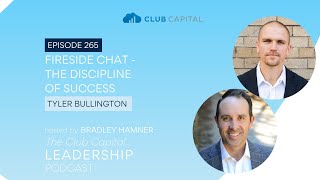
In this Club Capital Leadership Podcast episode, host Bradley Hamner interviews insurance agency owner Tyler Bullington about how small‑business leaders can grow, develop teams, and scale profitably. Tyler shares his personal back‑story—from a coal‑town upbringing and a criminal‑justice degree to entering insurance through a family connection and building his own agency in 2012. He attributes his ten‑year success to three core habits: personal discipline (consistent routines for fitness, nutrition, calls, and work even when unmotivated), lifelong learning (daily reading, podcasts, and mentors such as Jocko Willink, Grant Cardone, and Jordan Peterson), and surrounding himself with the right people while treating employees as human beings rather than production units. He describes concrete cultural practices—daily lunch together, surprise time‑off, personal check‑ins, and generous bonuses—that foster loyalty among his six‑person team. Tyler emphasizes the importance of outsourcing tasks that are not his strengths (marketing, bookkeeping) and reinvesting bonuses back into the business rather than “spending” money. He discusses mindset challenges like “fear porn,” the need to focus attention over time, and the principle of never falling behind on any task. The conversation ends with rapid‑fire personal questions covering books, travel, hobbies, COVID lessons, and his favorite leadership advice: always keep a small notebook and never get behind. Throughout, Tyler’s story illustrates that disciplined daily actions, purposeful learning, and a people‑first culture are the levers that push a small agency past the 10‑year survival hurdle.
Chapters
So the big question is this: how do small business owners like us grow our leadership, develop our teams, and scale our business in a way that allows us to get our products and services out to the world yet still remain profitable? That is the question, and this podcast will give you the answers. I'm Bradley Hamner, and this is the Club Capital Leadership Podcast. Hey, before we get into today's episode, did you know that Club Capital is the largest accounting and advisory firm for insurance agency owners in the country, providing monthly accounting, CFO services, and tax preparation. Check them out at club.capital. Welcome to another episode of the Club Capital Leadership Podcast. My name is Bradley Hamner, your host. On today's episode, we have Tyler Bullington. Tyler is an insurance agency owner in Huntington, West Virginia. You name an industry award, a company award, he has won it. Exotic, Chairman's Circle, MDRT, President's Club, on and on and on. We cover the gamut in this conversation. I really enjoyed getting to know Tyler and his accomplishments, but more importantly, just the way he approaches business. I think you're going to get a ton out of my conversation with Tyler Bullington. Tyler Bullington, welcome to the Club Capital Leadership Podcast, my friend.
Thanks for having me today, buddy.
We're excited to have you. So we always start with background and origin story, and so why don't you take people around your journey and just kind of how you got where you are and where I'm at.
Okay, yeah, man. So it's funny, I, uh, so I grew up— I mean, I, I'm in Huntington, West Virginia now, whereas— which is where Marshall University is. I'm about maybe a mile and a half from campus or so. Real cool small college town. Like, West Virginia doesn't have a city, you know, but if we did, I'm kind of in it. And, uh, it's a real, real neat place, real cool small college town. But anyway, I grew up, uh, down in southern West Virginia in a little place called Mullens, uh, little coal town. Our claim to fame is Mike D'Antoni, the head coach— well, he was the head coach of Houston Rockets, head coach of New York Knicks. Yeah, he grew up in Little Mullins too. But anyway, so I went to school at a small college called Bluefield State, and I studied criminal justice. And the only reason I did that was because it was easy to get a 2.0 and play sports. And total bum, hated school, always hated it. Just, you know, went through the motions to try to get through it. And once I turned— about 22 or so and you're getting ready to graduate college, I thought, oh my God, like, what am I going to do? I don't want to do anything. I don't want to do anything at all with what I have, with what my degree is going to do. And my mom started seeing this guy that she went to high school with, and my parents divorced when I was 19. So when I was 22, my mom started seeing this guy that she had went to high school with. His name's Dave, and, uh, we kind of met and introduced, and he was someone that was already in the insurance world and introduced me into that when I was 20. Well, I guess I was almost 22, I was 21, and I've been there ever since, man. So that, that's how it all started. That was in Princeton, West Virginia. We had to move to Huntington for my wife because she got a different job up here, and thank God I ended up coming up here and I maintained, stayed with insurance the entire time. I worked for a an agent, an insurance agent in Huntington, then ended up opening up my own branch in January 2012. Fast forward, you know, freaking 10 years later, and here we sit. People always, you know, talk about, oh, you know, must be nice or whatever, but a decade of consistent everyday single work, and all of a sudden it'll produce a couple of results.
Yeah, repeat successful actions, do the boring work, right? And we're going to dive into that, you know. So do you guys not claim Randy Moss in West Virginia?
Oh yeah, no, absolutely.
I love—
yeah, I'll take Randy, especially as a Hurd fan. Yeah, no, no, we— Chad, that's what I always say. I say, hey, you ever heard of Marshall University? And then you'll rattle off Chad Pennington, Byron Leftwich, Randy Moss, Ahmad Bradshaw, Chris Crocker, you know, uh, Vinny Curry. Right now we, we got all kinds of them, man. It's a little the little powerhouse there for a bit. Doug Legursky started center there for the Steelers, won a Super Bowl. Yeah, love this place.
Well, for those of you that are not college football fans and maybe not sports fans, just digress for us, allowing us to— college football fans—
to go down that path for a second.
So, um, 10 years. Um, 96% of small businesses never see their 10th birthday. Right? I mean, the stack— the odds are stacked heavily against small business owners. And in fact, this was— and I was trying to always, for every episode, have 3 or 4 main topics I'm going to talk to every guest about. And so as I was thinking about the success that you've had, I thought, you know what, I mean, success leaves clues. Um, and so when you think about that, in every business there is somebody who has made it, like really made it, made a lot of money. Um, and then there's somebody who has failed. Okay, right. Every business, an insurance agency, a restaurant, it doesn't really matter. What do you think are 2 or 3 of the main ingredients that you feel like has led to the level of success that you've had maybe compared to others?
Sure. So, well, let's start first, like, uh, because the very cliché answer is, uh, well, you gotta get the right people around you. And that is unbelievably true, okay? That's unbelievably true. But like, let's break that down into two different sections, okay? Let's break two of them. That's obviously a given of you have to have the best people around you. But that's the cliché answer. The answers that I've always been, that I've always enjoyed, or the things that I've always enjoyed trying to develop is about me personally. So let's do that. Like, what do I think sets me apart personally from others? Now, one of them is I am, I have learned this. I was not born like this. I was a sloppy, sleeping in, unorganized, laundry on the floor, gross young man, like so many young men. But I have learned to love discipline. I am disciplined. I am getting up when I say that I am getting up. I am going to the gym when I am saying that I am going to the gym. I am eating the foods that I know that I should be eating. I am making the calls that I know I should be making, even when I don't feel like it. Which is about half the time. Half the time I really feel like it, and the other half of the time I don't really feel like it. But I know at the end, I know that I'm going to enjoy so much more the end of knowing that I did those things. Like, I may not like making all the calls that I make, or I may not like making all the contacts that I like to make, or I may not want to go to that 8:00 AM workout class, or I may not want to clear out my emails, or I may not want to answer this text message on a Saturday. I may not want to do all that shit, but I know what it's going to make me feel like at the end. I think about that all, and I've learned to love discipline. And when 2 or 3 days that go by and I've fallen off of that routine, I've fallen off of what makes me, what has garnered me the most success, I can feel bad. And anybody else that's on here that's experienced that does the same. Like, I— it's kind of like, you know, have you ever been on a vacation that's 2 days too long? Like, I gotta get back at it, you know? And I've learned, I've learned to really love that. So that would be the first thing that I would say. Can I say something real quick? Yeah, no, please jump in.
Yeah, there's a Ronnie Coleman Mr. Olympia Netflix documentary. I may have mentioned this on one of the previous podcasts. But there's a line that he says, and it was going back, and this is showing him present day and just how much he, you know, the— his— I mean, he really struggles to walk because of the weight and all that stuff. But he goes back and shows videos of him working out, and in one of them—
very good idea. You probably know what I'm about to say.
Yeah, everybody wants to be Mr. Olympia. Ain't nobody want to lift all these heavyweights, you know.
That's right. Yeah, that is true, man. No, that's— I knew that. I love it. That is a great Ronnie Coleman reference. Yeah, I know. Probably a lot of people that listen to this podcast also listen to Jocko Willink, uh, that Discipline Equals Freedom. Yeah, that, that discipline, that, that, that is so true. And the Discipline Equals— and there's— that's a book reference if nobody's read it, the Discipline Equals Freedom Field Manual, so good, so good.
So good.
And then number 2, I'm a lifelong learner. And in today's world, not only like as a lifelong learner, but you can learn from the most exceptional people on the planet. Podcasts and books and YouTube, and even if you use social media correctly, even Instagram, Facebook, things like that. You can be around the greatest minds of our time, the greatest leaders of our time, the greatest businessmen and women of our time, the greatest— just you can surround yourself. You don't have to see them in person, but I have listened to Grant Cardone talk about real estate. I have listened to Jocko Willink talk about leadership in the most dire of circumstances. I have listened to Cameron Haynes talk about himself just being an average man and turning himself into what he is now. Like, I have got to listen and experience those things. And I read every day. You know, what does General Mattis say? If you don't read every day, you're functionally illiterate, I think is one of his quotes, which is very good. So I read every day. So those are the two things that I think have garnered me the most success in day to day, like the discipline of finding a routine, right? The discipline of finding your routine and sticking with that routine that you know that works even when you don't feel like it, which is going to be quite often. And then always surrounding myself with the right people and doing the right things. And then lastly, the cliché answer, the people around me. I have in my agency, I have 6 individual people that work for me that are all infinitely talented. They've all been with me for years. I try to pay them what they deserve. I try to bonus them what they deserve. I try to— so many people, so many business people look at team members as units of production. Team members or employees, they just look at them as a unit of production. I look at— so Nick, Jessica, Amanda, Becca, Laura, and Jennifer. They are mothers and they are sisters and they are fathers and they are— they have dreams and goals and aspirations and they're my best friends and they have great days and they have bad days and they have— they are not units of production. They are freaking human beings that have given me a life that I cannot— if I rewind 20 years ago, I don't even— I can't even have the dream of that I'm living now because I didn't even know how to dream that. And though— and the people that work for me, um, are a monster part of that. So, so now I want to— I try to return that to them and, and them know how much I care about them and how much, uh, they've been good to me. There's a book called Love Works by Joe Mansby, maybe. Might be wrong on the author, but definitely The name of the book is called Love Works, and it was a pivotal moment in how I lead my team and my leadership. So you can't send a duck to Eagle School. So get great people and then treat them like great people, not units of production. Those 3 things I think will get you past that 10-year mark and hopefully lo'oei later on into the future too.
You know, that's so good. That's so good. You know, I think that one thing I love that you just mentioned there is that you started with yourself. I mean, I love to say lead yourself first, because when you get better— I think Tony Robbins said work harder on yourself than anything else, because if you get better, you can give more to other people, your customers, your family, your kids, your team, so on and so forth. And so I think the fact that you actually started with like Listen, I realized that I needed to get better so that I can be better for all these other people. All right, here, here's my question, the follow-up question on that. Yeah, there's a lot of people that read a lot of books. Every book that you mentioned, they were like, I've read that book, I listened to that podcast, I know exactly who you're talking about. But they don't— uh, I wish I could attribute where I got this from, but ideas are everywhere, implementation is everything. The difference is, is something— and again, I know you mentioned around the discipline that you have. But there's something that's different from someone who listens to a book about culture and actually does something about their culture, listens to something around marketing and actually implements that strategy in their market for their agency or for their business. You see what I'm saying? Like, there's a big difference between learning and having the intellectual knowledge versus actually doing the thing in your business and then being able to iterate. Can you just speak to that?
Yeah, well, I've— yeah, luckily for me, I'm a complete dumbass. Like, intellectually, I'm an idiot. I'm a, I'm a full-blown idiot. You know, I, I did not like school. I'm terrible at Scrabble. I always lost the Monopoly. I, yeah, I'm an idiot. I'm a— an absolute idiot. So the only way that I was able to succeed, it was like a violence of action. Like a violence of action. Just so— I will, I will do things longer than you're willing to do them, and I'll do it over and over and over and over and over. And Andy Andrews, he's one of my favorite authors too. He wrote my all-time favorite book called The Traveler's Gift. Is this a freaking book podcast? Is this what we're going to talk about?
Listen, there's so many books that are mentioned on this podcast. That's a good one.
That's funny. Yeah. So The Traveler's Gift by Andy Andrews is my all-time favorite book. But a quote that he says, it's not in that book, but he says this often. He says, okay, Andy, talking to himself, I know that you don't know what to do right now, but if you did know what to do, what would you do next? That's such a weird question to ask yourself, but when you get paralysis by analysis or you're just sitting around twiddling your damn thumbs or you're wasting 30 minutes on Instagram looking at absolutely nothing, ask yourself, okay, I know that you don't know what to do right now, but if you did know what to do, what's the first thing that you would do? And just do it. Just do it right then. And so, so I think of just an absolute violent approach to action every day. There's something that feels so good at the end of the day when you know that you did the thing. right? You got up on time. You ate what you were supposed to eat. You got your workout in. You led your team. You worked hard. You made your calls. Some things worked, some things didn't. You overcame problems. You put out fires. You went home. You spent some time with the kids. You weren't looking at your phone. You know, maybe, and then you caught up on your favorite show. You had a healthy dinner. You go to bed on time. You get a full night's sleep. Like, you know, all those things that I just said is what you're supposed to do, uh, but we don't. But we don't do it. Now we sleep in late, we hit snooze, we, we skimp on the workout. Maybe we just do cardio instead of lifting, or maybe we said we were going to go to yoga but we just take a little easy walk. And then we get real hungry at lunch, and instead of eating the meal prep, the drive-through was open and we do that. We don't make the calls we were supposed to make, and one of the team members got on your nerves today, so you weren't a very good boss to them. And then your kids, as soon as you walk in the door, "Daddy, Daddy!" And you're just like, "I don't feel like dealing with it." And I'm guilty of this too. Don't get me— it's not like I'm— but I try to make myself do the things that I know will make me feel better at the end of the day. There's no bigger there's nothing that should scare you more in life than coming to the end of your life, and I hope that's many, many years from now, and like not have fulfilled your potential, like left some on the table. That's a scary thing to me, and I don't think that, that, that people really take that into granted. I think a lot of people that maybe have lost a loved one do. I lost my dad, uh, September will make 4 years, uh, that he's been, been gone. He had cancer. He was only 61. And, uh, whenever you go through something like that, I, I think often of like, okay, when I get to the end of my life, what's, what's a couple of things I can't let happen? And the number one for me is like knowing that I didn't reach my potential.
Oh, I think that's— I think that's— I honestly, I can't believe you said that because I was literally just talking to somebody about that this morning. I said those words. Keith Cunningham has been quoted to say, "Hell on earth would be to meet the person you could have become." Have you ever tried online marketing before and weren't sure if it was working? Maybe your rep talked about all the impressive features and stats and said things were going great, but you didn't know how all that tied into raw new policies written. Well, that's not the case with DirectClicks. DirectClicks is the premier Google Ads and SEO option exclusively for State Farm agents. Why? They're 100% results-oriented with an Exclusivity guarantee. Every review call you have with your account manager focuses on what really matters to your business, and that's leads and call-ins received. Everything will get broken down to cost per lead received. By investing with DirectClicks, you're going to free up time and energy to focus on what's most important in your agency and doing what it is you do best. This will be the best investment you make for your team by spending confidently and scaling your agency today with exclusive online marketing partner DirectClicks. Visit us at directclicksinc.com.
That's a good one too. No, that's a great one. So yeah, absolutely.
I didn't know if I was going to ask you this, but it's not a surprise that I am going to talk to you about culture. When you were talking about your team and how long your team has been with you, you know, there's just so much talk right now around how do you find good people and how do you onboard them and how do you train them. And there's— that's not say any of those things is not important. It is incredibly important. But I think it's often missed about how do you retain good people, right? Because it's one thing to get good people, it's another thing to be able to keep them as long as you have. And there's probably a lot with that— compensation plans, recognition, um, but ultimately culture, right? Because they stick, because they, they believe in the culture, they believe in the mission that you guys have. Can you just talk about culture what that means to you. And for someone listening, what are the things that they can do? So maybe take it from a high level to an eye level and say, all right, listen, these are the actual things we do to build and cultivate the culture in our business.
Sure. So, uh, yeah, well, a couple— first thing, let's just, let's talk about generalities and then I'll get into maybe some specifics. But, uh, generalities— now this works for me, you should find what works for you and do this for you. But what works for me is I don't like— yes, am I the boss? Yes. Would I— do I have most of the say in the final decisions? Sure. But I would— I want my people to work for me out of love and not enjoyment. That's not the right word, but out of commitment. Right. And love and passion for for trying to build this thing that we're building more than like, you know, oh, you got to hit your numbers this month. Yeah, I just— because I think that's— that doesn't let you have much retention. Those are going to be the people that you're turning over that come in inspired really hard for the first 90 to 120 days. But if you want to keep people for decades, if you want to keep people for 5, 6, 10, 15, 20, 25 years, they have to— they have to be committed and know that you appreciate and care for them. And I think that even as much as I get on my people's freaking nerves, and trust me, I do, they— I still think they all know how much I care about them. For me, I have some friends that are very successful people that run it more like a true, I guess you would say, like old school management style. You know, they have like monthly meetings and they have, you know, quarterly reviews. And I don't do any of that. I work with my friends. Now I'm here every day and we talk every day and I want to get a vibe of how the office is and how they're feeling and what they're doing. But I spend, you know, Monday through Friday, I spend as much— if you, if you count sleep, I spend more time with my team than I do my kids. Now, is that a great thing? No. Uh, yeah, you know, I try to spend as much time as possible with my kids too, but the fact is right now You know, when I'm here from— I like being in the office, I enjoy this culture, I enjoy the people that I'm with, I'm here a lot. So you got to make sure you find people that you want to freaking be around. I'm sure there are some days they don't want to be around the boss, and I get that. But that's a big thing for me, is, is how they view me. I've had a lot of shitty bosses, uh, and I've had a lot of— I had a couple of great ones. I had a lot of horrible coaches, I had a couple of great And so I want to be the person that they can depend on and be consistent with every day, that they can come to me with not only work problems, but like real problems, and know that I'm going to be there for them in either facet. Now, I think that may be super hard to do if you were running like a 120-person enterprise. But I only have, I only have 6 people. So for my particular— and a lot of small businesses have, you know, 15 or less employees. That's just a big family-ish kind of situation. That's not so much like a big leadership chart. So that's the first thing for me. I think I'm speaking to people that would have like, you know, 15 or less employees, 20 or less employees in that world. But secondly, so now taking it down to an eye level, okay, um, I talk to my team I try to intimately every day. And by what I say intimately is, I had a team member this morning that she is one of the happiest, funniest, consistently happy, funny, great attitude, smiling people that I've ever met. I mean, she like, if you're having a bad day, she'll make it better. And today This morning when I first came in, she was not. She was very off of her game. So just to shut the door and go, "Hey, is everything okay?" You know, I think that that goes such a long way. And to even say, sometimes I have said, "Hey," and they know that they could say this to me, but I could say, "I don't feel like you're, this is, that you personally feel the best today. Do you need the rest of the day?" Do you need some time? Come back, put a smile on your face. I'll see you tomorrow. Like, that goes such a long— because going back to what we talked about earlier, they're not units of production. They're human beings that have ups and downs and lefts and rights and family issues and personal issues. And that's how I try to teach them and look at them. So at an eye level, I try to do that every day. We try to have lunch together every single day. I provide lunch. Lunch for the team. And I try to do it in a healthy way. We provide meal prep. So we get like this meal prep company to make our meals and deliver them to the office every day. So every day at noon, we lock the doors, we stop the phones, and we try to have lunch together every day. That's a, that's a big deal. And that's a big deal. And my production people say, oh my God, you close down for an hour for lunch? Yeah. And when I did, our production went up, not down, because they're not just units of production. They need a second to breathe. Go take a walk. You know, if you're in an active insurance office, a lot of times when you turn on the phones at 9, they don't stop till 5. So to have an hour just to get your life together is a big deal. So that would be another eye-level thing. And then I can't remember who said it or the study, but I kind of like the— it's like the reward. So if I said, hey, Brad, you know, I'm— let's tomorrow at 5 PM, let's meet and have a beer after work. You know, that may be— that's like, all right, man, cool. But then if like— so let's say the same issue, the same thing. But tomorrow at 5 PM, I just go, hey, Brad, let's go grab a beer. That element of like not knowing it's coming is so much better. So, so I will surprise my team and go, hey, like on a Friday, before the July 4th weekend, I said, hey, 3 o'clock, everybody get out of here. You know, 2 hours of freedom. Weather was great. Everything was great. So I try to do that pretty often of like surprising, you know, maybe a little bit of a bonus for everybody. Or hey, let's all step out and do this for lunch. Or hey, let's, you know, take a— I think last weekend The girls here in my office bought me New Kids on the Block tickets for Christmas this past year. Yeah, man. And so we all went to the concert in Columbus, Ohio. It was great. It was great. We had the greatest time. So stuff like that will go a hell of a long way.
That's awesome. Yeah, I haven't heard New Kids on the Block in quite some time, so that was a good one. I think that there's, you know, I think anybody listening to this just in 30 minutes can get such an idea of what it is like to be in your, in your agency, to be in your office. And I think is, and as you were describing that, I was thinking to myself as somebody who was driving, you know, working out, whatever it is, listening to this podcast, that can, if If you were describing your culture to someone else, could you describe it in that level of detail about what it's like? And that's not to say that you're going to be Tyler. You're not. I mean, Tyler is Tyler, and his personality is how he does things. And there's some people that say, man, I just don't know. That's not the culture. That's not the organization we have. And other people listening to this saying, man, that's what I aspire to have. Go about building that. There's things that you have to do. You have to do the work to make that happen. I do want to ask you, Kind of along those lines about the way that you approach things. My goodness, there's so many hats to wear in business. You're CEO, COO, CMO, Chief Marketing Officer, Chief Sales Officer, Chief Financial Officer. I mean, it's just so many hats to wear. And whenever you're around a group of other owners, there's, there's this disposition that people have this philosophy about what they should be spending their time on, right? You speak to one person and they're meeting with clients on a pretty regular basis, and somebody else says, I haven't met with a client in 4 years. Okay. And everything in between. What is your thought process about how you do things in your business, how you came to that, and why you believe that that's a good fit for you?
Yeah. So what are you the best at? What are you the best at? So me, I know what I'm the best at. I am one of the best in the world at sitting down in front of a customer and getting them a full financial plan put together that is simple, but simple to where they can, where I can look at them and we can end. And really at the end of it, I want to go, hey, just trust me. Let's set a few guidelines here. You know, never go into credit card debt again. All right, let's automatically say— let's automatically pay yourself first. Let's, uh, let's make sure that your insurance is equal to what you're worth. Let's just make sure that the simple thing— let's make this simple and let's have a very good trust-based relationship. And I think— and I only work with customers that I like, that I don't work with customers that I can't stand. We all have quite a few of those. And you could have 999 customers that you love and one that you hate, and the only one that you ever think about is the one that you hate. So don't be afraid to fire them. So I only work with customers that I enjoy spending time with. And so I try to do it in that way. And so I'm really good at being a salesperson. I'm also pretty good at being a leader. Okay, so judging the vibe of my office— is it a good day? Is it a bad day? What day needs to change. Well, I think that that's a skill set of mine, to be able to take a step back, to be able to detach, to be able to look at it from a 10,000-foot view and making sure that I'm being the boss that I would want to work for. Am I the kind of leader? Am I the kind of boss that if I were a team member, would I want to work for? My team was in here with me last week and we were talking about a particular part of our bonus structure that we do. And my team member I'm so thankful that she had the— that she knows that she can talk to me like this. She was telling me that, "Hey, this is happening, and I don't think this is fair." I looked at her, the way that she explained it to me, and I said, "You are exactly right. That has never even crossed my mind one single time. But if I were sitting in your seat," It sure would be on my mind, and that is not fair. So I feel like those are my two best traits. My not best traits are marketing, so I outsource that to an amazing marketing firm. Organizational with money, you know, being the chief financial officer of this. Now I know where the money is and I don't waste it, and I make sure that we're running a profit. It. But as far as the day-to-day bookkeeping and things like that, no bueno. So I outsource that. Uh, so I would encourage you to— if you're a great recruiter but not a great salesperson, you should get great people in there to sell for you. If you're, if you're a great salesperson but not the best recruiter, you should look at a firm that's very good at recruiting to help you get great people in there so you can spend your time on sales. So people always say, oh, you got to work on your weaknesses and turn them into your strengths. And no, you need to double down on your strengths because there's a real good reason that— there's a good reason that you're good at it. It does not matter if I spent the rest of my waking hours, every single second for the rest of my life, to try to paint like Michelangelo did the Sistine Chapel. I can barely do a stickman. I can barely do a stick figure. Right. And I do not have any artistic talent whatsoever at all. Not musically, not— I can dance for a white guy pretty good, so that's okay. But not— I don't have any music talent. I don't have any artistic talent. I can't put anything on paper or canvas or anything. Why would I try to work on that as being a strength of mine? So same thing that I think in business is find out what you like, what you're passionate about, what you spend. I have some people that I know love digging into the literal pennies of the numbers to make sure that the percentage of exactly where they're wanting to spend it on their team or on the market is right to where it needs to be. I would rather jump into traffic than spend the day doing that. So, so outsource, uh, what you're not great at and just double down on your strengths. Now I'm not saying you can totally— like, I can't totally neglect my Yeah, I can't, I can't totally neglect my marketing. I have to at least be involved to know that we're moving in the right direction. But you, there are people out there that that's what they live for, and you should find them and hire them for that.
Ambition is the first step towards success. It's time to level up your agency, and Coach P Consulting will help you do just that by using the same strategies he used to sell over 700 life insurance policies in 2021 alone. No, this is not your regular one-and-done type coaching. You'll get personalized coaching 2 days a week, every week of the month, and you'll get a live look behind the scenes of his team training and an office that's performing at the highest level. There's a reason Coach P Consulting is the fastest growing coaching company for insurance agency owners in the country. Coach P will train your team alongside his own and show you the exact steps they are taking to achieve Chairman Circle, Exotic Travel, and Multi-Line Presence Club and be one of the few agents to be selected to have a third office. So whether your goal is to be at the top of your local market or amongst the best in the country, this training will give you the strategies and the tactics to get there. For just $250 a month, you'll get high-level coaching each week from someone who is already getting it done at that level, and his strategies work, and it's time to put them to work for you. Sign up at coachpconsulting.com and get your first full month for free when you mention the Club Capital Leadership Podcast. I think the biggest underlying thing that needs to be said about everything you just mentioned there is this ability to look in the mirror with humility and to say, like, these are not the things that I'm really good at. But then to be able to be honest with yourself, not in an arrogant— not in a, like, you know, tell yourself a story— but to be able to say, no, I actually think I'm pretty good at this, and I think I'm— I can really provide value to the organization here. Because as the founder, you still have a job to do, right? You have jobs to do in, in your business regardless of what business it is, agency or otherwise. And I think that as you were talking, there's such an honesty of looking in the mirror, having humility to say, this is where I'm good, this isn't where I'm not good, and let me go out and outsource and try to find some other people that can help me with that.
And you'll like your job more. I know a lot of people that hate their job because they won't make hard decisions. Like, they shouldn't hate their job, you know, they shouldn't hate it. You got a pretty damn good job. I know a lot of people like this, um, but they hate it. They hate every second of it because they hate the people they work with and they hate that— they hate the things that they're having to do in their office. Uh, well, you won't make the hard decision to get new people to work with. And then when you find great people, like, making sure that you're doing everything that you can to retain those people. Sometimes it doesn't work. Sometimes, you know, people leave. Sometimes seasons change. But at least I can feel— I feel pretty confident in looking myself in the mirror and going, I know that this person, whomever it is, and especially the 6 that I have in my office now, I know these 6 people are amazing. I want to try to keep them forever and ever and ever and ever. And I think that they know that I feel like that. But I know a lot of people that won't make that hard decision. I know a lot of people that also, they're, they're cheap. They're cheap. They won't, they won't If you have a business, if you, if you have a small business where— I don't care who's listening to this— if you're you, if you run a boutique, if you're a barber, if you're, you know, if you're starting a law firm, a restaurant, an insurance agency, what the hell ever you're doing, consulting business— if you have a small business, that is not— when you hire a brand new person, an excellent person, that's not spending money. That's investing capital. When you're, when you're doing great marketing tactics, you know, and you're trying to increase the revenue into your office, or, or maybe you decide that you want to lease your team members some vehicles because they deserve it, or maybe you're going to start picking up lunch, or maybe you're going to start doing this, you're going to— that is not— you're not spending money. It's— you didn't go buy, uh, you know, you didn't go buy the expensive handbag. That's just blowing money, which is fine too in some cases, but that's just spending money. Whenever I'm, whenever I'm doing things from, you know, I'm doing increase the revenue with this office or make this office better, whether it be making my office space look better or making me look better and making my team look better or feel better or do better, that is investing capital. So don't be cheap to— that, that will help you not hate your job. Invest that capital. Outsource those things. Get great people around you. If, if you're too cheap to take money and put it back into your business, that means you don't have the confidence in yourself to back it up. I know that if I have a $100,000 bonus and I say, okay, I'm going to take $70,000 of this and I'm going to invest that back into my agency or into my business, whatever it is that you have, I am, I am betting on myself that I can take that $70,000 to turn it into $2,000,000. Or whatever it is. So you don't have the— you don't have the, the confidence in your job and your business and yourself and your talent and your discipline and your work ethic and your people. You don't have the— you don't have the confidence in them to put that capital back in to, uh, to, to know that it's going to come out on the right edge.
Yeah. And, you know, I was thinking as you said that last part, the team can feel whenever you don't believe in them. I was talking to a business owner about a year ago. And I remember this conversation vividly. As I said, I said, Dave, you really don't believe in your team, do you? The team you have currently, you really truly don't believe in them. And you're saying all the right things, but they can, they can sense what's behind what you're saying, which is you really don't believe. And he, you know, he took a moment, he said, you know what, actually, you're right. You're right. I don't. And I said, thank they can sense that. They've known that for a while now. And so at the end of the day, it's really one of two options in that particular case, like either get a new team, or you need to change your beliefs about what they're capable of. And to his credit, he changed his beliefs. And it made all the difference in the world because of the way that he was filtering everything from his team. You know, I was thinking about And I think everything you mentioned about investing capital versus spending was so true, because whether, you know, you believe and you know, like, you know that you know that you know that if you invest $70,000, you're going to get $140,000 or whatever that is, or whatever, whatever, you're going to, whatever it is, you know. Um, and other people will start to begin to play it small, and we'll like— because I can think times in the past I've done this for sure. Years in the past, like, I don't know, I think, I think I'm gonna pull back because I'm afraid to make that investment. And I would maybe outwardly say that it was the team or the environment or whatever that is outside of me. The reality was it wasn't. It was me. It was me. It was my lack of confidence in my own ability to execute is why I played small. And guess what? I got small returns from it. Thoughts?
Yeah, yeah. I don't give into fear porn, and I feel like the whole world right now is just full— turn on anything, you know, turn on anything, man. Turn on— get on your Facebook, get on the news, get on— just hit the stock market button on your smartphone, hit your— look at the latest email of whether— I don't care if you're left, right, center, to the top, to the bottom. I don't care what you are, it's all fear. It's just fear, fear, fear. I don't give in to that, man. I, I still think that this is the greatest time and the greatest place to be alive. Do we have horrific issues? Absolutely. And I hope that we can, can come to some type of resolution and fix those. Uh, has there always been horrific issues and unbelievable division in this nation? Absolutely there has. It's just that now It's in front of you every second of every day. So I don't give in to all that fear. I just don't give it my time. You don't have to either. You really— if you're listening to this podcast, you're probably the type of person that is constantly trying to improve. Otherwise you wouldn't have spent 30, 45 minutes, whatever it is, listening to this. You're probably the type of person that's constantly trying to improve. I'm telling you right now, you don't have to give into it. My sweet mama, if she listens to this, she'll smack me when she hears it. My sweet mama and her husband, we call him Pops, my kids call him Pops, they watch the news, the 24-hour news cycle all the time. And whenever I go stay at their house, as soon as I wake up, I'm like, you have got to turn that off. I can't go about my day hearing that nonsense all day long. So a lot of times people, that may even subconsciously be in the back of your mind that the sky is falling, the world's coming to an end, the housing market's going to crash, the stock market's going to go down, the dollar's not going to be worth anything, etc., etc. You know, Russia, Ukraine, not that those things aren't real, right? But I'm saying all of those things are real, but truthfully In your day-to-day life, Brad, Tyler, everybody else that's listening to this, you know, in your day-to-day life, all of that shit almost means nothing. Almost. Now, the inflation's real, the market's real, all these things are real. I'm not saying that they're not real. I'm just saying you don't have to get into that. You don't have to do it. So whenever you're thinking about putting back into playing, like you said, I like how you say, call it playing small. I take calculated risk. I'm not stupid with it, but I have confidence that Patrick Bet-David says the best days are ahead of us. He says that on all of his posts, all of his podcasts. He lists real problems like I just list. I'm not saying that they're not real. And then God bless America. It's the greatest time to be alive. The best days are ahead of us. Us. And I truly believe that. And if you can take that mindset in your work every day, um, not only your work but your life, your personal health, your finances— if you like, my best days are— I'm 35 years old now, I'm in my mid-30s, I'm not a young chicken anymore, but I feel better than I've ever felt because I'm taking care of the things I know that I need to take care of. Like, at my best day, I'm still not to my best days, uh, and, and I hope, I hope that I can say those words when I'm 64. That, hey man, I'm kicking it, it's been great, I've been doing these things, but I'm still not— my— the best days are still ahead of me.
You know, you mentioned— you just said two things that— one, that's a perfect segue into my— what was going to be my final question. So it's just great that you just mentioned that. I think that whenever you were talking about like fear porn, like, I love that. Yeah, you said that. You know, I used to always say time is infinitely definitely more valuable than money. It is. But I've decided that I think attention is even more important than your time. Because, you know, if we're— if you're, if you're playing in the backyard with your kids, but you're fiddling around on Instagram while you're playing with your kids, that's what you're giving attention to, not your kids, or whatever. And listen, you and I both have been guilty of doing that. So like, I am not preaching at all to anybody who is at a restaurant. Like, I get it. Okay. My kids are 11, 7. So no, no judgment there. But what are you— what are you focusing? What are you giving your focus and your attention to? Not just your time, you know. And I think that sometimes we need to audit that. I certainly need to audit that myself. What am I allowing to get into my brain and start to, you know, allow myself to, to have fear and, you know, start to play defensively and start to play small because of all of the things that are going on, um, in the world? Secondly, I was going to ask you like you've had a ton of success. And one of the things, one of my favorite quotes is, success breeds complacency, complacency breeds failure, only the paranoid survive. And so sometimes a business owner will have success. And what happens is that they will eventually just go and start fires in order to put them out. Like they're good firefighters, but they're better arsonists. You know what I'm talking about? Like, they, they will start issues just so that they can go and solve them, because effectively they got bored with their success. Does this make sense? And so, like, yeah, you obviously just addressed that about how you go about saying, like, hey, this is not my best, this is not my best. But for someone listening, how would you, how would you approach that?
Uh, so I think that you have to— what you're doing right now, whoever's listening to this, this is something that you have to do. This is like listening to things like this, reading things like this, or things that you have to do. So I, I have Jordan Peterson. I enjoy him a lot. If none of you listen to Jordan Peterson, he's a, he's a great philosopher from Canada. Uh, I enjoy him quite— he's actually a clinical psychologist, I think, but they've kind of put him in the philosophy Steve handbag or whatnot. But he talked to me, so the line that he says is, I wake up each morning like there's a dragon to slay and I'm going to go slay it. That is such a better way of going through life than being like, oh yeah, you know, I'm gonna wake up, drink my coffee, brush my teeth, go to work, be miserable, come home, go to bed, and die. And there's— how many people live like that? 80%, I don't know, 70, 80%. And, and it like just to where there's just no— what's the word? It's not ambition. There's just like no— there's no purpose. There's no purpose to their days. And, um, you don't have to have like a single per— your, your single purpose doesn't— like my single purpose is not, uh, when I have 4 Lamborghinis. Like that's such a Stupid. Like my overall arching purpose is I want to be a great father. I want to be a great human. I want to be a great friend. I want to be a great leader. I want to be a great family man. I want to be a great— I want to be trustworthy. I want to be in shape. I want to feel good about myself. I want to be healthy. I want to be the strongest man at my dad's funeral. That is a great way of thinking. But when the world is crumbling around my children or my wife or my best friends, when the world is crumbling, my team members, when the world is crumbling down around them, and trust me, it will, it will. It has to me, it has to you, it has to essentially everybody listening to this podcast. I don't care if you were 16 and your girlfriend dumps you. Your world was crumbling around you. I don't care if you're 31 and you're watching the man that taught you how to throw a football and shoot a basketball and swing a golf club, who was, you know, He-Man to you— there's a 35-year-old reference, He-Man, how many parents know that? Uh, that was, that was, um, you know, the Superman to you, uh, crumble away from cancer, when you're like, you're still feeling those same feelings and your world is crumbling around you. My purpose is I want to be the man that those people can call and depend on. I want to be able to be consistent and strong and healthy and smart and be a leader and be compassionate but firm at the same time. Like those type of things to think about. And you can be that person. Now look, you and I are having like a professional conversation right now that I feel like we could have at dinner, uh, and, and, but, but the, the, the environment right now for you and I is very conducive to talk like we've got our shit together. I don't have my shit together, but I try every day really hard to do that. Like, um, I can't remember who says it, but It's just you fail over and over and over and over and over and over and over. And I just have this giant mountain of garbage underneath me, but I'm standing on top of it. Yeah. So I may be on top of the mountain, but it is just on a giant pile of steaming hot West Virginia garbage, you know, and that's the real worst kind. So when people are listening to this, I don't— I hate when people get the impression like, oh well, I'm just not built like that, or, you know, I don't have, I don't have that much inspiration. Like, I'm not like an inspired person. I just told you guys at the beginning of this, I don't want to do what I do half the time, um, but I also don't want to come to the end of my life and regret it.
Yeah, yeah, you, you fear missing out on on who you could become more than the pain, the sacrifice on a daily basis that it takes for you to become that person, you know. Very well, I love that so much. Yeah, man, He-Man reference and New Kids on the Block. Who would have—
get yourself—
we don't talk about those two things.
We might have to get us an Atari out and just go straight old school, man.
You know what, I, it's amazing how different podcasts take different turns. Every, every guest is so different. Uh, I think that ultimately, while this was maybe less tactical, at the end of the day, these are the underlying beliefs that we all have as business owners. This is the crap you have to work through in order to actually become the person that you want to be. Right? I mean, if you think this is the fluffy stuff, it is not fluffy stuff. Like, this is the thing that actually grows businesses, is the mindset and the discipline and the focus and the attention and doing repeating successful actions, etc. All right, man, you ready to go into E9 rapid fire?
Yeah, buddy, let's do it.
All right, last book that you read. Are you an agency owner looking to grow your revenue, increase your bottom line, and better manage your taxes? Club Capital is here to help. Club Capital is the largest accounting and advisory firm for insurance agents in the country, providing monthly accounting, tax strategy, and CFO services. Way more than bookkeeping and your everyday run-of-the-mill tax prep, Club Capital is focused on providing financial and tax advisory services that help you plan and forecast your agency's performance. Their financial dashboards and agency forecasting tools help you better understand your agency's historical performance, create, measure future targets, and see how your agency compares to your peers around the country. Imagine what it would be like to understand the impact to your bottom line when deciding to hire a new employee or forecast the impact rate changes or commission rates will have on your business. With over $200 million in tracked annual revenue and $140 million in tracked annual expenses, Club Capital has the data and the team to help you make better informed decisions for your agency. They will help you turn that back office stress into the backbone of your agency's success by giving you the tools to take your agency and your leadership to the next level. Visit club.capital today to book a solution overview with one of our business consultants. Club Capital, way more than a CPA firm.
Oh, last book I read, um, Tony Robbins's new book, uh, the, the— gosh, what's the name of it? It's a freaking— it's his health book. Yeah, that's it. Tony Robbins, Life Force. Money Mastering the Game was It's the greatest financial book I ever read, by the way. Tony Robbins, Steve Davis.
Yeah, I'm a big Tony Robbins fan. I love Tony.
Yes, love it, love it.
Yeah. Uh, book that you recommend the most to other small business owners?
Uh, Traveler's Gift. I know I'm repeating an answer, but definitely that. I'll go as close— I can't think— by Jay Shetty.
Think Like a Muck by Jay Shetty.
Yeah, yeah. I think, think like a month. Close, close second.
Favorite travel destination?
Bora Bora. Spent 7 days there back in 2016, '17, one of the, one of the two. Uh, well, my son is 4 now, so that would have been 5 years ago, 2017, because he was a Bora Bora baby. So it was 2017, that little Yeah, that, uh, that I was on board. St. Regis, the breathtaking, best 7 days, uh, that you could ever spend if you want to get away.
Favorite place you want to go but you've never been before?
Uh, I would love to see the Colosseum. I love, like, uh, Spartan and, uh, Rome, that era, Marcus Aurelius, things like that. I love that. I would love to see that. I haven't walked those steps It is.
I've been, uh, went on my honeymoon and it was breathtaking, so highly recommend for sure.
Yes, absolutely.
Uh, what do you love to do when you're not working?
I'm a golfer. Uh, I love to golf, played 3 days over July 4th weekend. I'm also an advocate of yoga, very, very disciplined yoga practitioner. Um, I'm— those that aren't seeing me, I am a 6-foot-4 redneck-sounding giant 220-pound bald white guy, and I hate everything that comes along with— I don't hunt, I don't fish, I don't ride a four-wheeler, I don't do any of it. I go to yoga and play golf. So my voice and looks are very different than the activities I like to do.
Well, you and I have a lot in common. I'm a big golfer. I'm playing our club championship this this coming weekend, uh, except I trade instead of yoga, Pilates. I'm a Pilates. Okay, I love Pilates. I tried to do yoga, I like Pilates better. It helps me. I'm 6'5", by the way, so okay, there we go.
Yeah, we'll be able to look each other in the eye.
That's right, that's right.
Um, what did you learn the most about yourself during COVID Oh, that I can that I can detach and make my own thoughts. I can think for myself. And because during COVID I think that so much— that you want to talk about fear porn, you want to talk about fear. Boy, I mean, and rightfully so for about 60 days. 60 days. Rightfully so. But I think that that was a real important time in my life to step back and think for myself. And, um, and I, I saw a lot of people— and I mean, statistics will prove, uh, you know, the alcohol sales through the roof, um, you know, suicides through the roof, mental health issues now through the roof. You're still You're— when you shut down a giant economy like us, you're still seeing the side effects of what truly are to come are not here yet. Uh, that ship is still turning. And I was able to step back and think for myself. And, and I even turned that discipline up a notch. I did not have one sip of alcohol through COVID. I worked out 2 days a week, or 2 times a day, every single day, because I also know myself. I love to have a drink and I love to sit at the bar and I love to have a good time. And I knew that if I opened that bottle one time, I was going to open it up 2,000 times. So, uh, I was— I was— I learned that I could really detach and think for myself.
Love that. 10 years ago, fill in the blank, 10 years ago, I had no idea this would be so hard. Kids.
Oh, kids. Kids, kids, kids, kids, kids. I love my children. My daughter is the most amazing thing on earth. My son is too. They're the reason that I breathe, and they are so hard. For anyone out there that doesn't have children, no one can prepare you for what's to come, but I don't think that life is you, you truly— it's, it's worth living without kids. That's not the right thing, but I don't think that you can fully become who you're supposed to be, uh, until somebody calls you mommy or daddy, for sure.
I love that. Uh, you can sit on a 10-hour flight to Bora Bora or wherever in the world. Would you sit next to Rogan?
Rogan. And, uh, yeah, I would sit in, in between Joe Rogan and probably Andrew Huberman. You ever listen to Andrew Huberman? Dr. Andrew Huberman? He's a neuroscientist in Stanford. He is one of the most interesting men on the face of the earth. Jocko Willink is very high up on that list too. I've actually got to meet Jocko 3 times and do jiu-jitsu with him once. Uh, he— yeah, he's a, he's a, a Everything that he— that you think that he is, he is that times 112. Yeah, he is. Yeah, he's an awesome man. But definitely Rogan and Andrew Huberman right in the middle.
Rogan would record one cast on that flight.
Yeah, that's right.
10-hour flight with Tyler Billington, he'd record a podcast. I love it.
Yeah, we get it.
Last, last question. It is the Clubcap Leadership Podcast after For all, what is the best piece of leadership advice you've ever received?
Don't ever get behind. Keep a little tiny piece of notebook paper in your pocket. Don't get behind on your money. Don't get behind on your organization. Don't get behind on making your bed. Don't get behind on your laundry. Don't get behind on your diet. Don't get behind on telling your team that you care about them. Don't, just don't get behind. Don't have that feeling that you're always having to play catch up. Um, that was a— that was— I'll remember that. That came in 2012 for— and I can't— I have no idea his name. I don't even know if he's alive now. Uh, he was a customer that I inherited. He was a much older man, very, um— you could tell that he had— he like— he was a— he was a true West Virginia man, probably lived out on a farm somewhere with 200 acres, came in and did overalls and a trucker hat and which just had the best look in his eye, just a twinkle, you know, just like a good human being, and just sat down and talked to me one day. And he said, I've kept this little note in my pocket for 50 years. And that's— oh, I remember that because we were talking about his financial situation and he had a lot of money and never really made a lot of money. And I said, how did you do this? And he said, I never got behind. And, um, I live there and I, I have thought about that quite often.
That's good. Tyler, uh, people listen to this, if they want to just connect with you, reach out to you, uh, yeah, man, would you point them to my man?
Yeah. So, uh, add me on Instagram. It's just Tyler, T-Y-L-E-R, Bullington, B-U-L-L-I-N-G-T-O-N, the number 2. Tyler Bullington, the number 2, not spelled out the number 2, just the number 2. And, uh, yeah, that'd probably be the easiest way. Just add me on there. Love to have you.
Awesome, Tyler. Cool. Uh, hope to have you back in the future, my man.
Yeah, man, we'll do it again. Thanks, brother.
And I really enjoyed that conversation with Tyler. There was a lot of things that really stood out to me in the things that we were talking about. And as I mentioned, you know, I don't really ever know exactly which way the podcast is going to go, and I try not to over-prepare in that way. But ultimately, I do believe, as we mentioned at the very end, these are the things that really move the needle forward in a business, your mindset, your beliefs, what are the things that you're actually listening to on a daily basis? He mentioned so many books and so many podcasts and so many people that he is pouring into developing himself. I like to say leading yourself first is the most selfless thing that you can do for you and your business and for your team and for your customers. You got to be able to lead yourself first. And it's like whenever you're on a plane, they say put your oxygen mask on first so that you can help other people. And I think that he is such a prime example of doing that. And you can see that he has really embraced this idea. I just said it, but he's embraced the idea and lives it out every day of discipline equals freedom. And if you've listened to the Jocko Willink podcast, you've read his books, you understand where he's getting that from. If you haven't, definitely, no matter even if you're not into military type things, etc., it has really, really had a profound impact on me. As well. And it's been one of the things I've really worked on myself this year is discipline and consistency. Uh, some of you may be familiar with the book Never Split the Difference by Chris Voss, which it would be amazing to be able to get him on the podcast at some point. And he talks about adopting these labels. And for myself, and I may talk about this on a solo episode at some point in the future, one of the Bottom Line episodes, is consistency was one of my dead last strengths, so to speak, in StrengthFinders. And so I kind of adopted that label that I wasn't consistent. And I would find ways to almost make, make an excuse that I wasn't consistent and laugh it off. And the reality was, no, I needed to be more disciplined. And I needed to work on that aspect of myself so that I could be better for the businesses. And obviously, you can see that that is why his discipline— I think it was I thought that was so important the way he started that out. His discipline has led him to where he is today. A few of the things that really stood out to me, the very end, he was talking about being, looking at himself honestly and saying, here's the areas I am really good at. And here are the things I'm not so good at, and I'm going to outsource for that. Also thought he talked about this mindset of investing capital versus spending money. And then the whole conversation around culture. Couldn't you just feel the culture that he has in his business? It really makes you think, like, how would you describe your culture in your business? Uh, maybe that isn't lunch together every day with your team, and that's totally, completely okay. That is unique to him. Whatever that is for you, you want to be able for people to opt out of that and say, that is not for me. Being a family, being tight-knit, going to work with my friends. That's just not the organization we have. There's nothing wrong with that. But it's clear about the organization and the culture that he has. And I think one last thing that really stood out to me is when I asked about when, you know, other people have read the books, and they've listened to podcasts, and they didn't really internalize that, those topics the way that you have. And I don't know if I've ever heard this before. But when he said, you know, I just like this violence of action that really stood out to me. Appreciate Tyler coming on. Hope to have him back on in the future. Make sure you connect with him on Instagram, Tyler Bullington 2. As always, big thanks to our podcast sponsors: Coach P Consulting, Rock Solid Assistance, DirectClicks, and Club Capital. You know, on the podcast, Tyler was talking about outsourcing things so that ultimately he can focus on the things that he is really good at. That's exactly, exactly what Rock Solid can help you to do, is to get things off of your plate so you can focus on the things that is unique. I think Dan Sullivan calls them your unique ability. What are the unique abilities that you have that only you could do in your business the way that you have it set up? That may be different than, than, say, Tyler's, but what are the unique gifts that you have And then how can you take things off your plate? And most of the time it's going to be some admin type work and executive work so that you can get back the thing that matters the most, and that is your time. Go to rocksolidassistance.com. You know, we didn't get into talking to Tyler. This is one of the things that we'll maybe have him back on in the future. He'll come back on is whenever we were talking about the team, but how important it is to not just have A players on your team, and to be able to keep them, but also the training and the development aspect of continuing to pour into those people. Like, how do you do that? And for many of you, you intellectually know that that's what I need to do. But, you know, having a training regimen on a regular basis, that's, that's tough. And I think that that's exactly what you'll get whenever you go to Coach P. Go to coachpconsulting.com. David is getting it done. At the highest level in the country. And if you want you and your team to be able to learn from the best, I think I mentioned it even this in this episode, success leaves clues. And David is giving away the secrets of exactly the things that they're doing in their, in their organization. That way you'll know. He pulls back the curtain so you can see directly what it takes to be able to run multiple agencies. If one of the few people that have a third office at this point. You'll be able to see behind the scenes of exactly the type of training that he's giving his team. Go to Coach P Consulting, make sure you let him know that you heard about it on the Co— uh, Club Capital podcast, and he'll give you an entire month off. I think I mentioned this in one of the other episodes, but I was having this conversation with Matt, and then he has sent me some of the results that he's been getting from some of the clients. And listen, they're blown away. They were working with another company and they came over to Direct Clix, you know, for years I've just talked about the family, the personal approach that they're going to take, not just the exclusivity, which that in and of itself is massive for you to know that you have your area locked down, they're not going to be able to work with anybody else, major difference from some of the other carriers. But also, not only in addition to that, but they're getting results. So they're not only going to give you exclusivity, and they're going to treat you like family, they're going to really dive into exactly your situation, but also they're going to get you better results than what you're getting from another carrier. And I think that, and that in and of itself is enough for you to at least reach out, have a conversation, go to directclicksinc.com. You know, Tyler obviously teed up the idea with Club Capital whenever he said, you know, I just don't know those things, I don't know how to do the bookkeeping, you know. But he ultimately knows he's got his finger enough on the pulse of his financials, he needs to be able to get those numbers so he can make better decisions. Even the example he was given about, hey, I get X amount of bonus and I want to reinvest that, it's because he's got the numbers to be able to look at them and say, okay, what am I going to do with this? And he makes decisions based off of that. If you want that level of transparency for your agency, go to Club Capital, go to club.capital. Make sure you mention that you did hear about them on the Club Capital Leadership Podcast and ask them about their CFO services. All right, everyone, it's a great episode. Hope to have Tyler back on in the future. We appreciate all of you. Till next week, lead well. So the big question is this: how do small business owners like us grow our leadership, develop our teams, and scale our business in a way that allows us to get our products and services out to the world yet still remain profitable? That is the question. In this podcast, we're will give you the answers. I'm Bradley Hamner, and this is the Club Capital Leadership Podcast. Hey, before we get into today's episode, did you know that Club Capital is the largest accounting advisory firm for insurance agency owners in the country, providing monthly accounting, CFO services, and tax preparation? Check them out at club.capital.










