Episode 365: Winning Begins At Home with Randy Gravitt
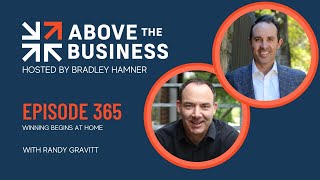
In this Above the Business podcast episode, host Bradley Hamner interviews leadership coach and author Randy Gravitt about his new book Winning Begins at Home: A Strategy to Win Beyond Work. The conversation explores how every business problem ultimately traces back to leadership, the distinction between ownership and shame, and the need for clear expectations and accountability. Gravitt emphasizes developing leaders—not just training task‑specific skills—by focusing on vision, people development, and a leader’s heart. They discuss practical frameworks such as delegating to 60%‑effective team members, building a leadership bench, and the importance of “controlling the controllables.” A recurring theme is the spill‑over between work and home life; Gravitt argues that success at work is hollow if one loses at home, and he offers a parable‑based activation guide to help leaders design healthier family dynamics. The episode also covers concrete tactics like setting measurable expectations, avoiding assumptions, fostering intimacy (connection) at home, and maintaining presence. Gravitt shares personal anecdotes from sports coaching and his own family, and promotes resources (website, book site, bonus course) for listeners to apply the concepts.
Chapters
Welcome to another episode of the Above the Business podcast. My name is Bradley Hamner, your host, founder, and CEO of Blueprint OS, and of course the host of the Above the Business podcast. On today's episode is Randy Gravett. He's an author, speaker, and executive coach who encourages leaders to reach their potential. In 2014, Randy founded Lead Every Day, where he currently serves as a CEO, Chief Encouragement Officer, leading a team of coaches and consultants who work with high-performance leaders, organizations, and teams around the world. Randy has also written two previous books, Finding Your Way and Unstuck, and he co-hosts a daily podcast, The Lead Every Day Show, with former Chick-fil-A VP of Leadership Development Mark Miller, who we've had on the podcast a couple times and has been one of our more popular episodes. I know you're going to get a ton out of this. We talked to Randy about his newest book, Winning Begins at Home: A Strategy to Win Beyond Work. Without further ado, here's my conversation with Randy Gravett. Randy, welcome to the Above the Business podcast.
Hey Bradley, glad to be here. I'm excited to hang out with you here for a few minutes.
Thanks for having me. I'm excited to have you for sure. We've already connected on our love for golf, but we'll leave that for off the podcast for sure. We always start with background and origin story. I love hearing people's journeys about how they got to where they are. Why don't you share yours?
Yeah, that's great. Well, I grew up in a little town northwest Georgia. I'm kind of a country boy at heart. My dad worked with Georgia Power for actually for 35 years, had a great career with them, and my mom in the school system. And so I just had a great, you know, upbringing. Got a brother and a sister, loved it up there. Ended up being exposed to sports very early, loved all that, and I think we'll talk about that here probably in a few minutes, but I just think there are so many lessons there that we learned and just, you know, a lot of good values and stuff. Grew up in a pretty stable home, not perfect by any stretch. Uh, actually, we're, we're probably as big a mess as anybody, but, uh, looking back, I mean, just that foundation of, of family and, and all that, you know, upbringing, uh, being a friend to your neighbor, all that kind of stuff, those values that I was taught, I mean, I think that really marked me a lot and, and put me on my my journey and ended up, uh, now I'm in leadership development. Been, been— I've had a company for the last decade trying to help serve leaders, all kind of organizations, uh, you know, different kinds of businesses, every sector, education, Fortune 500 sport, professional sports teams, you know, churches, schools. It's all over the place. And so stuff we talk about, we're trying to help people lead well. We think if people have a good leader, it makes it better for everybody. And I think if they don't have a good leader, we've all been in a situation we've not had such a great leader, and it makes it hard for us. So we're trying to— we love the idea of a world well led. I think we got a little bit of a mess going on these days, so we're out trying to make things better, and we're excited when we get a chance to hang out with leaders.
Well, first of all, I love world Well led. I love that little saying there. At the very end of my podcast, you may not know, actually, as my sign-off, I actually say, lead well. That's actually my little—
oh, that's great.
Um, you know, I, I wasn't going to ask this, but, uh, this is why I kind of play off of, uh, the, the guest. Just yesterday I was listening in on a mastermind call, and the person said And it's really, it's really made me think about this for the last 24 hours or so. So I'm actually anxious to ask you this question. He said, fundamentally in business, and our audience are small business owners, he said, fundamentally in business, every problem makes its way down to a leadership problem. You have a problem in marketing, it's a leadership problem.
Yeah.
You have a problem in sales, it's a leadership problem. If you have a problem within your team and culture, it's a leadership problem. If you have a team, if you have a problem with your product, your product's not doing well, it's a leadership problem. Do you believe that?
I actually do. I actually would, uh, say that resonates with me as well. I think it's what if we're in leadership, I think it, it goes with that real tightly that we're in ownership and whether we own a business or own a team or whatever, I think leadership and ownership are, you know, we've got to accept responsibility. And it's one thing to say that, but let's define that here for a second. Bradley, I think it's to accept responsibility for your actions and the actions of the people that you lead. And I think so many times when people, when things don't go right, we're wanting to blame somebody that we lead. And when things do go right, we're wanting to take credit and not give it to somebody. So I think the best leaders really do take ownership. And years ago, I mentioned sportsman, years ago I was fascinated. I won't say I was a fan, but I was fascinated. Uh, I think Eli Manning was a good example of this when he was quarterback for the, for the Giants back in the day and I think won a couple of Super Bowls. We— everybody knows his brother Peyton, but Eli was always— I've heard this before about him— he was always quick if they lost the game to be the first one to the podium to take responsibility for what happened. And if they won the game, he would be the last one to show up and make sure that his teammates got to go and and get the accolades to start with. I think that's a good mindset for a leader. But yeah, I think anytime we have a problem, if there's an opportunity out there or a problem to be solved, I think the best thing we can do is put a leader on it. And I think that's one of the things that we try to do is make sure that we're helping organizations build a leadership culture, because if you don't have enough leaders, you ultimately want to have a bench of talent. You want to have leaders at 2 or 3 layers deep, not— I mean, an emerging leader mindset, if I could say it that way, I just think it just gives us the opportunity to take on those challenges, you know, go for new opportunities, scale stuff, start new verticals, whatever the language would be for the listener. But all of us could probably use more leaders. So yeah, I definitely believe when you have a problem, it ultimately is a leadership problem. And a lot of times if those problems are there in my business, I need to look myself in the mirror. It actually starts with you because you're either coaching it or you're enabling it. And that's You know, it's, it's, yeah, it's a great, that's a great quote. I love that.
So let me ask you this. You know, when I, when you were talking about owning it, obviously my mind goes to Jocko's book Extreme Ownership, right? And I, and I don't want to say that I have an issue with this at all. I don't. What I'm saying is, is how do we go to a place to where we own it but we don't go into a place of shame and internalizing. Now we're a failure. Do you see that? You see what I'm saying?
Like, I do.
Oh, well, yeah, it's my fault. I'm just not a good leader. I don't know what I'm doing. You know, like, there's a big difference between owning it and saying that that's my responsibility. I'm going to fix that versus now I'm getting into a place of shame and down and Debbie Downer and I'm not good enough. I'm not cut out for this. Except not to say that we, we don't all genuinely have those thoughts at times. I'm sure you've had a crisis in time where it's like, man, I'm kind of out of my league a little bit here. But how do we balance the owning it of not going into that place?
Yeah, that's a great question. That's a really great question. We could probably spend the whole episode talking about that, but I'll say a couple of things here. I think, A, I got to be secure in the way I'm thinking about me. So let's start with self-leadership. I think that's the I'm the problem, right? I mean, at the end of the day, I am the— you got to look yourself in the mirror and ask yourself, what's it like to be led by me? And I would even say, what's it like to be loved by me? Because you got not just work, you got family stuff, and we'll probably talk about that a little bit. But I think so many times the answer to your question is I've got to make sure that I've created clear expectations. I've got to make sure I've created accountability for the person who maybe Maybe, you know, maybe it's not my fault per se. The person made the mistake. But truthfully, if I've not been clear on the expectations and then I'm frustrated with them, that actually is on me. And I don't need to feel shame about that. I just need to change my behavior and go back and say, I've got to do some training here and I've got to do some coaching here. I think there's so many leaders, they promote somebody, Bradley, and their idea of training is, if you need something, let me know. I mean, that's not training. That's just hoping they got it or, you know, and they're excited about a promotion. They're all fired up and I understand that. They're going to maybe get a little raise and a little more prestige in that position or whatever. But I've got to make sure they know what they're doing or that's where I have to accept responsibility. I've got to have a person who can, I won't say replicate what I can do or what you can do. I mean, the listener, but I think a way to sort of quantify it, if you start thinking from a And this is probably simplified, you know, not simple. This is probably simplistic. But if you can theoretically find somebody that's 60% as good as you at doing something, hand it off and you get a couple of people at 60% and now you got 120. And I don't care how good you are, you can't get past 100. So now you don't want to leave them at 60%. That's where the training and the coaching and you want to get them to a point where they're at 100%. Actually, you'd love to get to a point where you develop them where they could develop others. And so now it becomes exponential growth and now you can really move to some other things. So I think here your question, at the essence of it, it's, it's we've got to have some accountability for others, but ultimately you're responsible if you're the leader.
You said something there that I was like, wow, I wrote that down. That is so true. I'm actually going to chew on that myself. If you need something, let me know. They don't know what they don't know. They don't know what they don't know. They don't even know what questions to ask if they've been put in that position. And so we're defaulting, abdicating that responsibility to be able to say versus saying this now.
Clear expectations, defined, measurable, attainable, accountable. There's so much better than just let me know if you need something. I mean, that's, that's, yeah, that's, that's been my experience.
So yeah, for sure. Don't you think it comes down to just making assumptions about what they know?
For sure. I think for sure we can easily just say, I said that, you know, and when did you say it? Well, I said it when I hired you, you know. Well, when were they hired? 6 years ago maybe, and they've just got promoted to something. They heard it in orientation. Like, you got it. You got to say it over and over, you know. It's— we always heard vision leaks. Well, I think if we're not careful, skills can leak, and vision does leak, and But all kind of stuff, you know, it just begins to drain over time. And I think as you think about even the vision for the work, if the vision is fuzzy to you, and it does get fuzzy to you, you start leading something at high speed and it's going crazy, it's doing really well. It's like driving down the freeway, you're driving really fast. The faster you go, it's harder to read the signs and you can miss your exit, so to speak. I think in business, if the vision gets fuzzy to you, it'll always be blurry to the people who are following you. So you got to stay locked in on this. And, and not, you know, my friend Mark Miller— I think Mark's been on your podcast— Mark always says hope is not a strategy. We tell people that everywhere, you know. If you're, if your hope is maybe something will change, well, maybe it won't. We've got to get locked in as leaders. And if we don't know what's going on, we're— we can rest assured the people around us are not going to know either. They're going to actually, they're going to disengage.
Yeah, for sure. You know, um, so my son plays basketball on the travel basketball team and, and I coach this team and there's players coming from different schools. And one of the kids we were talking about, we were kind of running through some skills action, basically some 3-on-3 stuff. And I told the kid, I said, hey, he's a bigger kid, more physical. And I said, hey, you know, you need to pin that kid down and post him up. And then about 30 seconds later, he comes over, he goes, Coach, I don't know what a post-up is. Yeah, man, thank you so much for telling me that. Because, you know, I didn't know what he had been coached on, what he had. So I made an assumption. I knew how to be able to pin a kid down and post him up, but then him taking the ability to say, hey, I'm going to ask this question, whereas some other kids would be able to say, would just go like, I'm just going to go with this, I'm not going to ask him, you know, what a post-up is. So that gave me an opportunity, and it really was shining a light for me, not specifically in the context of basketball, to say, oh man, I can't assume. I can't assume that these kids know, you know, what some of these basic things are because they're basics to me or basics to some kids I've taught, But to him, it, it, it wasn't. And it really made me think a lot about, uh, a business too. Where have I assumed that this person actually knows this thing versus whenever they don't?
Yeah, I, I'll, I'll build on your thought there. I think sometimes these assump— these assumptions, uh, happen because we didn't accept responsibility for breaking it down and training them. And I'll say this, I actually coached basketball years ago as well for years, I was a girls' high school coach for about a decade, and I always would tell the girls, I would rather you do the wrong thing aggressively than the right thing passively. Now, I'd rather you do the right thing aggressively, but that's just a reminder. Let's start with the character side or the passion side or the energy side in the business case. You want your people, you want to hire for that. You want to train for the skills and the competencies. And so you can I mean, you literally can Google all that stuff, but you, you want to make sure you start with the right substance stuff, energy, all that stuff. If you've got that, then it's your responsibility as a leader to make sure they know what they're supposed to be doing, why it matters, all that stuff. I mean, you connect those dots, you get all that together, and it's magic when, when a person, you know, they'll achieve way more than you probably thought they could if you can get competency and character matched up. You got, you got some gold there.
I, I do have a question and maybe this is both strategic and tactical. And I think I asked Mark a version of this, I believe, or at least I've asked it to, to some people, especially around when we're talking around this idea of developing leaders. What are some specific things that are unique and different from whenever I see someone, I've trained them initially, maybe to be a great sales rep. Okay. And here's the scripts, here's the follow-up, here's the numbers we need to hit. Or you have a customer service person, you put somebody in customer service and they go through the training and this is how we do this, this is empathy, etc.
Okay, fine.
But really then when you're developing leaders, what is the— what are some of the things both strategy-wise, mindset, even tactically that you see? Because I, I think you have such a unique perspective that many of us just wouldn't have of developing other leaders as opposed to just developing our team, because we can think through some of those things of like, okay, here's the documents, here's the training, we do role play, et cetera. But like when you're training other leaders, it's, it, there's a, there's a difference there from when it is when we're training the rest of our team.
Yeah, I think that's true. I, I'll say a couple of things there. I think it's easy to, uh, fall back on the competencies of the job. That's sort of what you described there with the salesperson or the customer service person. And we think that's the training they need. And it is. They need to be competent at their job. But we actually have so many companies that we end up working with who call us and like, "We know how to do sales. We know how to do—" I'll give you an example. I had a guy call me up from Kroger who was the director of all their pharmacies. And I'm like, you know, what— when he called, I'm like, what do you— you know, but it turns out they've got 500-plus pharmacies around, and all their, all their grocery stores, they have a pharmacy. And what happens is you've got people who, who went to pharmacy school and they get out, and now all of a sudden— I mean, we want to make sure they count the pills and all that stuff needs to be right. We don't want to, you know, get the wrong prescription. But what happens is now all of a sudden they've got a team of 8, 10, 20 people that they're organizing and trying to lead. And you go to pharmacy school, just like if you go to, you know, any— pick any school you went to, there's a good chance that nobody ever taught you how to lead a meeting or solve problems or how to build a team or any of that stuff that you end up doing with a lot of your job. The competencies are good, but— and I think the same thing is true with your question. If we're not careful, we'll just teach them more of what they've already been taught. Now, can they do those things better? Yes, they ought to be leveling that up all that all the time. But when we think about leadership skills, I would go back to some of the fundamentals that we teach. I mean, it starts with vision. Can they cast vision? Can they develop people? What does that look like? Are they— how skilled are they at change and innovation? Some of those kind of things. Do they understand and value what we say results and relationships? There's We typically all have a bias. We lean one way or the other. We're not saying you need to be both, but you need to value both. If you forget that you're in business and there needs to be a profit, you'll be out of business pretty quick. But if you forget you're in the people business, you won't have any customers. So it's all that stuff. And then ultimately, I think maybe the biggest fundamental is to what we say is embody a leader's heart. It's like, do we have the character in place And these things, vision and being able to develop people and how we innovate and what do we value, results, relationships, and having the right heart, those are the fundamentals. They're like blocking and tackling on your basketball team. They're like dribbling and passing and shooting. I mean, you got to have some fundamentals in place before you can get to running sets and defensive schemes and those kind of things. Those fundamentals, just like a musician who A musician would not be very good without the scales. These are the baseline stuff. And I would start there. That's where we start when we work with companies trying to help them build a leadership culture. We would go in with their emerging leaders all the way up to their executives, and we would have a scope and sequence is what we call it. You don't— let me see, how would I say this? If you're not careful, you'll just grab at the latest greatest. I heard this book. Or this podcast, whatever, that stuff's good. I say listen to all that, but I want to have a process for developing leaders. And yeah, our process that we use is about becoming a better leader and improving a team's performance and then ultimately building a high-performance organization. So it's a fascinating question, but I think if we don't have a plan, we just Uh, we leave a lot on the table. It would be like if we, if we have— I know, I know the kids just got out of school a couple of weeks ago, and they'll get ready to go in the fall, and they'll be, they'll be— well, there'll be a new crop of kindergartners and first graders that'll go in the fall all over the country. They won't get a trigonometry book on day one. It's not going to happen. They're going to get a few numbers. They're going to learn how to count first, and they'll learn how to write their numbers, you know, and, and, and then they'll get the 1st or 2nd grade, and they'll start adding them up. And they'll, you know, I survived times tables with my kids back in the day and 3rd grade. And then they'll get to a little, what do they do? They'll start fractions and then they'll get some algebra and geometry. And there's, I never made it to trig, but people do, you know, but they don't make it on the first day. They make it toward the end. I think sometimes we put somebody in a leadership position and we expect that they know the trigonometry of leadership and they have a, you know, this master class in it. And we haven't even taught them how to lead a meeting. We haven't even taught them how to hold somebody accountable, how to care for their team members. Just those basics is where it starts. And so that's a long answer, but I hope it'll— I mean, there is a process to developing a leader. And if we don't have that, we just hope it happens. That's not likely.
That's so good. And I've got a kind of a story or anecdote that I'll share kind of after this question, but I'm going to ask this one. Pretty straightforward. Can leadership be taught?
I, I'd say absolutely. I mean, I think there are people that have a leadership giftedness. I heard somebody say one time that if you give somebody, a group of people, let's say give 100 people an idea, there's about— I'm not sure where they got the research, but there's about 7% of people who can take that idea and self-activate it. I would say those are the natural-born leaders. But we know there are a bunch of people that if you help them, coach them, train them, They, they can— they're remarkable what they can accomplish. So I would say yes, you can, you can definitely teach leadership.
I was talking to a business owner just this past week and we were exchanging some Voxer messages kind of asynchronously, and then I picked up on something and I said, I just called him and I called him and I said, I got a few questions for you. Tell me about your— when you graduated college, walk me through kind of your, your career, your professional journey. And then I said, would you ever— this is a business owner now, okay? He's been in business for about 8 years, if I'm not mistaken. And, uh, he— I said— so he, he walks me through, and I said, has— did anybody ever— did you ever take a leadership class training? Did you ever do anything other than maybe listen to a podcast or something like that where you actually learned what it was to be a leader? He said, no, not once. I said, okay, was it ever modeled for you? Like, tell me the— your previous bosses. And he said, oh no, not at all. They were checked out, didn't coach us, didn't train us. Literally the first time I ever heard about like running weekly team meetings and one-to-ones and these things was like honestly through listening to your podcast, which I appreciated that. And then some other things, which anyway, I'm not making it about me. I'm just simply saying like, Wow, okay, like he was thrown into the fire and he had not gotten any of those type of things, but he's leaning into it. He's leaning into it and he's like, okay, I want to learn. I realize that this is like a stumbling block on me. I don't know how to be a leader. I want to learn how to be a leader. And I just loved his— honestly, his, his vulnerability, um, his openness and his willingness to kind of lead into that. But it got me thinking, I think there's a lot of people out there that are kind of thrown into. And it goes back to your point, um, that you said at the very beginning, which was, um, that, you know, we're like in a leadership deficit right now. You know, the world is not well led, to say the least. I know that's not a specific question, uh, per se, that's a little open-ended, but I'd love to maybe for you just to give some thoughts.
Well, and I, and I'll say this, and I don't— this is not a political statement at all. I mean, I— but to me, it doesn't matter which way you vote. I don't think the government No matter what happens over the next few months, the government's not about to solve everything. Everybody's like, I wish somebody could— I wish the government could solve it. That's not going to happen. I got teacher friends of mine who are unbelievable educators, but they're telling me the school system's not going to solve all the problems. I mean, I'm crazy enough to believe that business owners, people on your show who are listening right now, if we will just decide that we're going to make things better in our— what we have control over, Like there's a lot we can't control, but what if we had this mindset to dominate the things that we can control? Years ago, I was speaking to a major league baseball team. I had a— I worked with a major league baseball coaching staff for a while. And the first time I was ever there, I was walking down the hallway at spring training and they had this sign on the wall that said one of their values. I mean, their values are kind of lined up down the hallway, and one of them said, control the controllables. And I walk into the meeting and said, hey, I think you might want to change your value, which was kind of crazy first thing to say. I thought they were going to kick me out of camp. But, uh, but I said, let me, let me tell you what I want to, I want to remind you of here. If you can control it, you should dominate that. You should dominate the controllables, not control. I think so many times we're just like, let's just kind of go along with the flow, and we can control it, let's take care of that. I think that's the place where we ought to try to run up the score where we can. And there's so many things that that the listener could do to make it better for their team, to make it better for their family, to make it better for their employees, all that stuff. And I love it when leaders get serious about saying, I'm going to take ownership for my— I don't have to own what everybody else should be doing, but I don't want to waste my energy blaming everybody for not doing what they should. I want to focus on what I can focus on and try to lean in there. And it's really hard. I mean, I'll tell you, this is hard to do because there's a lot of noise in the system, right? It's, it's a— there's, there's a lot of noise out there. So, um, I think we got to just remind ourselves to think at that level, and if we can, we've got a chance to make a tremendous difference.
I have a personal, um, log of lessons learned that I started a few years ago, and I— it might be another podcast I'm listening to, it might be something that I picked up from my small group, it might be something from a podcast guest. And that one, I— my little process is when I write down all my notes, if I circle it, it's going in my log of lessons learned. Dominate the things that we can control.
Dominate the control. I love it.
I love that. I mean, I'm telling you, you're making it to the 7th grade basketball practice tonight, Randy. Okay, that's what's going on.
That's good, that's good. I love it. Tell those kids to get after it.
You, you, uh, at the time of this recording, you're coming up on your book launch. We're launching this or dropping this podcast on June 10th. I think your, um, your book actually comes out tomorrow when this— tomorrow.
Yeah, yeah, we're excited. That's great.
Begins at Home: A Leadership Parable. Okay, first, before we get into some of the frameworks of the book, talk to me about like two things. One, what was the kind of the impetus? What was the thing that was inside of you that you felt like, hey, I want to get this message out? That's one. Two, why a parable or a fable?
Yeah. That's great. Okay. So great questions. The first one, let's start with why Winning Begins at Home and where did that come from? So I am around leaders everywhere. We work with all kinds of companies and all kinds of organizations. A lot of fun. It's awesome. But here's what bothers me is when I get with people and they're building something great at work and then they talk to me outside of the meeting we're training in or speaking in or doing a keynote, whatever. And they'll say, but I'm struggling outside of work. And I've had leaders tell me over and over again, and the little phrase that I use is, if you win at work and you lose at home, I think you still lose. And so I don't know anybody who's just trying to build a great company and blow up their family. And yet we see it all the time. We know if family doesn't work, it makes it really hard for the rest of our lives. And I think what happens— forget about family here for a second— what happens outside of work, the the proverbial 5 to 9, I think really affects who we are from 9 to 5. I mean, so I don't think anybody's talking about that enough. And I, you know, we're creating resources for culture and engagement and all this stuff for leadership. And I thought, why couldn't we have something that could help leaders outside of work? So that's sort of where the impetus was. I've got a heart for trying to help. I love the idea of everybody being well led, but I also love the idea of everybody having a chance to grow up in a in a great family. And so, uh, we benefit when that's the case. That really, that might make our culture better than anything if we just started at home. That would, that'd be really— and I think it begins at home. And so, um, I mean, it's, that's just, that's just kind of my heart. So the, the parable part of it, uh, I've written a couple of parables in the past, and, uh, those have been— I, I've liked doing that. The reason I would say is, um is I'm a storyteller at heart. I mean, I, you know, I love story. I think it helps us connect. And I think this story in this book, it's about a— you're talking about coaching your 7th grade kids. It's about a guy who gets roped into being a volunteer Little League baseball coach, and he learns some things from the guy who ends up— who's the head coach. And so he's kind of the guru in the book. And helps him work through some stuff. But this guy's a— he's a business owner, uh, a successful executive on the surface, but on the underneath the surface, he's got some— he's got some areas where he needs to grow a little bit. I think we all do. And so I thought this, this story would really resonate. It's not just a parable. The back half of it is, um, I say the back half, there's probably a 50, 60-page activation guide that'll walk people through how to create a blueprint for really winning where it matters most is the way we say it. I think you start with a— if you're going to build a home, you wouldn't just go to Home Depot or Lowe's and get some boards and start nailing them up. You're going to come up with a blueprint. You're going to have an architect that's going to help you design something knowing what it is you're trying to build. And I think that activation guide in the back will really help a person who reads this go, okay, How would I reset what's going on at home so that we could build a home that's going to be life-giving to everybody who lives here? And one of the ways I define it in the book, how do you know that this is working? I'd say when the people who know you the best love you the most, that's when you know you're kind of on the right road. So we've got some stuff in there to help people design that kind of life. I know so many people, the people who know them the best, probably respect them the least. And that's not what any of us want. We want the people who really know us. I think sometimes we feel like we can let our hair down at home, you know, and just be more direct or harsh or those kind of things. And that never works, you know. So we've got some stuff in there to help them create a strategy to do that. On that note, my wife always tells me saying it louder doesn't make me more right, you know. So there's some stuff in there that I I think will be helpful. It's a fun little story, easy read, but the activation part is probably way more important than the story. So I hope people will, will resonate with that.
Well, I love the, uh, well, there's a lot there that I love, but, um, one, one word I really like is the activation of it. I, I like to, in business side, I, I'll say ideas are everywhere, but implementation is everything. And it's more about like how I activate these kind of things to actually get the transformation that you're looking for. You know, I won't share too much, but I mean, there's definitely a time where, you know, I was telling myself— forget everybody else— I was telling myself a story. I was lying to myself that I was doing all of these long hours and these nights and weekends and all this kind of time. And even if I was physically present. I wasn't present, right? You know, I wasn't actually there in the moment being present. I was telling myself a story that I was doing this for the family, but in reality, I was like, no, you're doing— you're doing this for you. And you keep saying, one day, one day, one day, one day, one day, one— I'm doing this for down the road, down the road, down the road. And it's like No, no, you need— there needs to be a reality check with that. For me personally, I'm sure you've had many stories like that from other people.
Yeah. And well, even myself, I mean, I know, you know, just to what you said there, it's so easy back in the day. Our kids are grown up now. We got little grandkids running around, which is fun. But we— my wife and I have 4 daughters and I could find myself after a day at the office coming home and you could be there without being there. Exactly what you said. And Yeah, and, and we don't want to do that. We don't. I think that's where regret comes, is when we just go through the motions. That's not what we're supposed to do. We know that. And so, but sometimes it's because I'm not taking care of myself, and, and I don't have boundaries at work. I'm not able to say no to the things I should. Maybe sometimes I'm, I'm enabling the people around me to, to, um, to, to be dysfunctional, and I'm carrying that stress with me. Or sometimes It's, I'll come to work and I've given you, let's say I've given you a task and you're not doing it exactly the way I want to. And I really don't want to train you or coach you, or, you know, for some reason I think it's just easier to go ahead and do it myself. And so I stick my hands in that. And I got leaders everywhere I talk to that they're just, they're doing other people's jobs and it's not my job to do their job. It's my job to lead and make sure. But now I don't have capacity when I get home because I'm finishing up everybody else's task and all that stuff. And it becomes a vicious cycle if I'm not careful. And so that presence part you're talking about, yeah, that is a big challenge. But at the end of the day, it's the old nobody wish they spent more time at the office. I mean, you can't delegate your presence. You really can't. You can't. You're the only dad they have or you're the only mom they have or whatever. That part right there, you can't just hope. And we always say hope is not a strategy. I mentioned it earlier. I, but I think you have to, you have to, um, you behave your way to high performance. You behave your way at home to, to the kind of family you want too. So you got to show up and you gotta, you know, lean in. And I think if you do that, you got a chance to, you know, that, that can— I think home can be your favorite place if you get this right.
No, you just gave me another circle. That's just another circle. That's another one. I, I, I will have often said that I think in business there's really only one thing I believe that you can't delegate in business, and that's the vision and the direction of where—
that's good—
direction that the company is going. But I love the fact that you can't delegate your presence. And I wrote down, I can't delegate my presence as a dad.
No, that's it. I mean, there's only one.
Yeah, delegate that.
Yeah, I'm gonna build on that one, one other thought. It's, it's I think the goal at home is— I mean, this is true at work as well, and this will sound like a weird word to use. I want to use the word intimacy here. You want connection. I'm not talking about sexual intimacy. I'm talking about, are you connected? And there's a difference. Proximity does not guarantee intimacy. Let's use that phrase as well. So you can be really close to someone and not be connected to them. You can actually sleep with somebody. I mean, you can live in the same house, eat the same food, you know, share the same bathroom, whatever, and, and there not be connection. I mean, I know people that have been going through the motions for decades, and, and they're together but they're not together. And, and you can have kids that you live under the same roof, and, you know, you can be at the same table, but if you're texting your work stuff, checking emails, and they're texting their friends or scrolling, playing, whatever, like, that's not what we're talking about. So I think you got to be intentional to set aside, like, What kind of family do you want? And I think you can design toward that. And again, that Activation Guide will help people with all kind of ideas there to do that. But we have to do the work. We have to make a decision like, this is what I'm trying to build. And it's crazy when we think that way, you know, we— it's the house looks like what we designed if we've got that blueprint, you know, in place.
Yeah, no question about it. You know, I think You know, even your subtitle, A Strategy to Win Beyond Work, because at the end of the day, we all really want to win both, right? It's not, it's not one or the other. We want to be able to win, you know, both of them.
That's right. I, I would be the first in line to say the goal is not just to win at home. I mean, you know, but, but I would also say if you're going to win in one place, let's start there. I think it begins at home. That's why I say winning begins at home. I, yeah, I want you to win in the workplace. That's what we do. We, we serve leaders everywhere and try to help them win and create profits and build leaders and all that. That's, that's fantastic. But I don't want to do that at the expense of— or, or I don't want to do that without reminding them there's this other side to life that I think your, your joy is going to be found there. And, and, and, and really regret can be there too if we don't get this right. I love it.
I love it. Randy, where, um, people— where can people connect with you and where can they pick up, uh, the book and some more information?
Yeah. Well, we can put this in the show notes maybe, but we're at leadeveryday.com. We're trying to help people build leadership cultures everywhere. But as far as the book is concerned, it does release tomorrow. We're excited about that. And you can go to winningbeginsathome.com and you can find it there. But you can go to Amazon, Barnes Noble, wherever, get your books and find it online there as well. But winningbeginsathome.com, I mentioned that because we actually have a a special offer if a person orders the book this week. Uh, we've created— I think it's— I, I'll probably get this wrong— I think it's $150 worth of bonuses. I've created a course that walks people through this, and they'll get that for free. So we're giving all kind of free stuff away for anybody that buys the book this week. I hope you'll— I hope, I hope your audience will not only get one for themselves, but, you know, anybody you know who's— who will connect with this, this story and this message. I think it's a, it's a great little gift. Father's Day coming up in a couple weeks, be a great little Father's Day gift for somebody. Uh, but don't forget the moms either. They, you know, I think everybody needs the stuff that we talk about here. So I hope people will get a hold of it. Uh, love for your audience to appreciate them. I'd love for them to leave a review if they, if they like what they read. Uh, help us out, spread the message. But we're, you know, yeah, we're going to help leaders with all kind of other stuff, but let's don't forget maybe the most important stuff. So that's what I would say. I hope, I hope people will get it and not just enjoy it, but I hope they'll apply it and activate it like you said.
Awesome. Awesome. All right. Last question. Podcast name is Above the Business. What do you think Above the Business, how does that resonate? What, what do you think that that means to you?
And that's a, that's a fantastic name. I love, I love the name of your deal. And I know people are in the business, on the business kind of mindset. You hear that sometimes. Uh, I'll share with you a metaphor here I think will help us think about it. I heard somebody say one time, if you're standing on the beach, let's go to the beach here for a second and think about it. You stand on the beach and you look out over the ocean. Guy asked me, how far do you think you can see? And I'm like, well, it seems like if it's a clear day, you can see a long way. And he said, actually, it's— he said, they did the math and it's 2.9 miles because there's a, you know, you've heard that the earth is round, right? And I'm like, yeah, I've heard that. And he goes, Well, there's a horizon and it begins to curve off and you can see out into space, but you can't, I mean, you, you, you, you don't see the curvature. Like at that point it begins to fall off. And, and, you know, the, the, the math is if you go to 30,000 feet, I think you can see 231 miles. And I think there's this, I think there's this picture in that, that if we're not careful, we will just grind away on the ground. Working on the business is probably pulling up to 1,000 feet, which I think at 1,000 feet you can see 39 miles on it, you know, if you had a lens and it's clear until it curves off. I think that's in the business and on the business. Above the business is, is probably at their times we need to get to 30,000 feet and we need to have some thinking on our calendar and we need to have some, some vision times with ourselves and we need to have some times for our soul to be renewed and refreshed and make sure we've got enough to give when we get back into the fray, rather than just give, give, give all the time. We really don't have anything to give because we've not replenished. It just keeps leaking out. And I heard, uh, I just did an event, uh, last week at Chick-fil-A. We do a lot of events. Uh, I've done a lot of stuff with Chick-fil-A. Probably people have heard of Chick-fil-A and enjoy their chicken. It's great. And I was there and, uh, there was a there was a message. Dan Cathy was— they had a little video. Dan, who was the— who's his fan— the Cathy family owns the business. Dan made this statement on the video. He said, make sure— he's been asking himself, he said, lately, are my ears popping today? Meaning, am I moving? Am I moving up and down? Kind of like your name, you know? Am I— there's going to be times you're going to need to be on the front line, on the beach, right, with your people. You're going to need to be leaned in with them. And then there are times you need to be maybe on the balcony at 1,000 feet, or that's probably a high balcony, but you got to be pulled up a little bit and you got to have some meeting and some planning time. But I think to make sure my ears are popping, that's not enough. I've got to come back up to the above the business place that you talk about. And I just think it's such a value to keep reminding leaders like you're doing that we've got to live above the business. If you're not doing that as the leader of the team organization, company, whatever you got going on. Who is? And so I'd just say, I'll borrow it from Dan again, make sure your ears are popping today and that you're leading at all levels. That's your job as a leader. It's a heavy mantle, but people benefit when they have a good leader. Again, we're dreaming of a worldwide led. I think it starts with people just who are listening today.
What a phenomenal answer. Oh my goodness. I'm stealing all of that.
That's good. That's good. It's all yours.
That is now going to be our—
We'll give Dan credit.
If you ever hear my stuff and want I wonder where I got that. I'm totally giving credit to, to Randy on that one. That was amazing. Oh my goodness, that's awesome. I'm so glad I asked that question. Randy, appreciate you. Hope to have you back on in the future. That's good.
Thanks, Bradley, for all you do.
You know, I'm more cautious now than I ever have been about recommending books, and the reason is, is because I think a lot of times we can get into the place of just reading to read and reading to consume as opposed to reading to do. But this one I really do recommend. I was fortunate enough to get an advanced copy and I really do love this book. I love the question, does winning at work require losing at home? And I really love fables. You know, Patrick Lencioni writes a lot of his books in fables, which I really enjoy reading. They've become, you know, page-turners. And I think that you're going to get a lot out of reading this book. And it's really a parable of businessman John Williams, whose thriving business is overshadowed by a growing divide. Between him and his family. And then John meets a mentor who guides him through an action plan for getting his family back on track and finding hope in the process. I really encourage you to pick up his book. Obviously, I love chatting with Randy. As always, shout out to our podcast sponsors: Club Capital, Coach P Consulting, Autopilot Recruiting, and Today app. You want to work with a software that's going to be able to help you to solve a big problem in your business, which is where do we find things? The team know how to use this tool that we have in our arsenal. TodayApp Pro will solve that. Go to todayapppro.com. If you want to develop yourself and develop your team, none better than Coach P Consulting. If you've not given Coach P at least a shot, you can be on his calls for an entire month for free. Just let him know that you heard about him on the Above the Business podcast. There's— it's a no-risk guarantee that you can see exactly why so many people are working with him and his team. CoachPConsulting.com. At the end of the day, I don't believe in solopreneurship. I know there's a lot of people out there that do that. I believe business is a team sport, and if you're going to have a team, you've got to find the best people on your team. Work with someone that can be a part of your team to help you find more A-players. Autopilotrecruiting.com. Go to autopilotrecruiting.com. If you want to grow your revenue, if you want to manage your expenses so you can become more profitable and take more money home, Club Capital. Go to club.capital. If you like the work that I do here, want to learn more about what I do to help business owners design, build, and install an operating system for their business. People talk about systems and processes. Nobody tells you how to do that. That's what we do. Go to blueprintos.com, navigate to my asset library. I got a bunch of free downloads that can try to help you along your journey. blueprintos.com. All right, everyone, till next episode, lead well.










