Episode 491: How AI Revolutionizes Sales Training for Insurance Agents with Michael Weaver
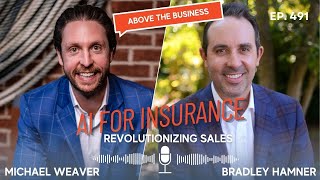
In this episode of the Above the Business Podcast, host Bradley Hamner interviews Michael Weaver, co‑founder of Weaver Sales Academy, about the intersection of AI, sales coaching, and lifestyle entrepreneurship for insurance agency owners. The conversation opens with Weaver’s recent three‑week African adventure, illustrating the importance of work‑life balance and the "Ambitious Hippie" mindset that prioritizes fun, freedom, flexibility, and financial success. They discuss the chronic challenges agency owners face—recruiting and retaining talent, declining production, and the need for better leadership during volatile market conditions. Weaver emphasizes the power of focused prioritization, urging leaders to distill overwhelming to‑do lists into three high‑impact actions for the next 30‑90 days. Personal development habits such as a structured morning routine (golf, meditation, stretching) and a curated reading list (Think and Grow Rich, The Secret, The Four Agreements, etc.) are highlighted as foundations for professional performance. The core of the episode centers on Agency Coach AI, a new AI‑driven platform launching August 21, 2025 that records, transcribes, grades, and coaches sales calls, offers over 180 role‑play scenarios, and provides real‑time accountability and compliance for insurance teams. Weaver shares his AI adoption journey, recommends everyday AI tools (ChatGPT, Claude, Fireflies), and argues that AI will be a disruptive force in the traditionally lagging insurance industry. The discussion wraps with practical resources—website, phone contact, social media—and sponsor shout‑outs, reinforcing the episode’s themes of leveraging technology, disciplined focus, and continuous learning to build a thriving, lifestyle‑oriented insurance business.
Chapters
Welcome to another episode of the Above the Business Podcast. My name is Bradley Hamner, your host. On today's episode, we have Michael Weaver of Weaver Sales Academy. We've had Michael on the podcast many times in the past. We'll definitely link below to his past episodes, which I encourage you to go and check out. I have a question. Have you really considered leaning into AI? Maybe that even includes starting a AI startup company, but also what are some of the best books that you've ever read that have had the biggest impact on you? We talk about AI, we talk about our favorite books, and we talk about the biggest problem that we see the small business owners still face today, all in this episode with Michael Weaver. Michael Weaver, welcome back to the Above the Business podcast.
Thanks, brother man. How have you been?
Man, I'm doing great. It's great to have you come on with us. So people have obviously— you've been on the podcast many times, we'll reference the past episodes. You were just telling me about a big trip that you got on. Give me— give us the 60-second highlight of that. And the reason I bring this up, I think, is because it becomes aspirational for a lot of people to be able to actually see what's possible. So, uh, tell people where you've been recently.
Yeah, man, so we just got back from a 3-week trip to Africa where we did, uh, a week with the gorillas in Rwanda and then 2 weeks in the Serengeti in Tanzania. Tania, and it was a trip of a lifetime. It was incredible, made us appreciate what we do so much. Um, and not only was the trip amazing, but the ability to step away for 3 weeks— no work, no email, no social media— just trust the team, trust the processes, come back to less of 45 minutes of work. So, um, it just allowed us to truly disconnect, which we're huge fans of. I mean, us as entrepreneurs and business owners, all of us, we work so dang hard, we have all these big goals, and the last thing I want to do is get to the end of my life and not have traveled, not have experienced the things that I've worked so hard for. So that's what Courtney and I are super passionate about, as you know. Um, and it was, uh, it was a trip of a lifetime. If you like wildlife, if you like adventure, I will tell you we also did it luxurious even though we were in tents in the middle of the Serengeti. It was dope. The service was better than most 5-star resorts we've been to. Um, highly recommend Africa.
It is—
we've been to 35 countries in the last, what, 7 years, uh, pretty much all over the United States, and this trip went to number one on the list very quickly.
You know, yesterday, um, so we, we talk a lot about a lifestyle business, and a lifestyle business defined as one that prioritizes fun, freedom, flexibility, and financial success. And if you summarize all of those things, whenever I actually was talking about this yesterday, um, to a group that if you just summarize all of those things, it really just comes down to what do you want? What do you want? And I think that what you're— what I hear you're saying is, is that you and your wife have sat down and said, what is it that we want? And then you went about actually building that. Now, as simplistic as that sounds, it tends to be that a lot of people, business owners, they just kind of go from the day to day. It's almost like so head down that they don't ever stop to kind of think, where am I actually going? What is it I'm actually trying to accomplish? What is it that I actually do want out of this business? Business is intended to be a conduit for all these things that I want, but we never actually stop to figure out what is it that we do want. Do you see that?
Oh yeah. So, and I used to be that. I mean, luckily I'm married to Courtney. Many of you guys know Courtney, they're listening to this. So, uh, we call ourselves Ambitious Hippies now, but if you would have met me 10 years ago— what am I, 27? So I'd have been— so I'm 37, would have been 27. Yeah, so that would have been right fresh into the agency. I mean, I was head down, like all I cared about was building a really successful business, becoming financially free. And honestly, Courtney is the one that about year 3 into the agency, uh, once we had a good team, processes established. We were at about that 3 mark, um, because we started a new market. So we, we grew over the 3 years to that 3 mark, and that was the first time we took a trip. And we took a— and not everyone likes to travel, right, Bradley? Like, like, trips are not for everyone. But we do set aside part of our investment allocation every single year is into traveling. Like, not only are we putting money into the market, crypto, real estate, things like that, part of our true investment allocation is into traveling because we feel like That's how powerful it is, and that's how it's— how much it's affected us in our life and what it's opened it up— us up to in our thought process, the people we've met along the way, the creativity. Like, we, we openly talk about some— two of the most powerful things we've ever done in our life is read and go on trips. Like, the books we've read and the trips we've taken. Um, but to get back to that story, uh, in 2017, we had a conversation with her aunt, which has been a very influential person in our lives, um, especially wife, and she was just having a conversation with us, and she's like, hey, if, if you could go anywhere before you die, where would you go? And both of our answers were New Zealand. And 2 months later, we had the New Zealand, Australia, Thailand trip booked. Uh, that was the first time ever in the agency career that we'd really been gone for an extended amount of time. So we left for 33 days, didn't take the work laptop as tough as it was. Courtney's like, nope, leave that thing at home. Um, and honestly, we came back to 3 hours of work. And that was actually— opened my eyes as a business owner to, wow, because I'm a control freak. I've been very open and transparent that I'm a control monster, recovering control addict. But that truly opened my eyes to, wow, if you have great people around you and you have the processes and systems in place, this business will run. Not that you can totally take off, like, your, your position, your leadership position changes, right, um, when you're no longer in the necessarily the day-to-day or producing the P&C. But just because you're the so-called CEO. Like, the CEO role is a leadership role. It just looks a little bit differently than being the customer liaison, being the manager, being the producer, being the everything that so many of us are those first 3, 4, 5 years in business to grow a business and to develop into that CEO role. But it did open my eyes, and ever since that trip, we've really— that's when we had the conversation around, okay, what do we want out of our lives? What do we want out of businesses? And how much are we going to invest into travel and trips every single year?
I think there's, there's like having the idea, there's then putting it down on paper, and then there's ultimately going about executing it. And I think also too, one of the things I fundamentally definitely believe in is that, um, it is both have a great team and great systems. I do not think it's one or the other. Like, you know, maybe we may get to a point to where you can have a one-person multimillion-dollar— you and AI, I get it. Like, but we're not, we're not there. Okay. We're not there. We're not going to go there. That's not the point. At the end of the day, I think you have really, really good systems. You have great people to be able to, to, to execute on the, on those systems. I got a question. Where, Like for you, what are some of the 2 to 3 things? I think it's been probably a little over a year since actually you came on. What are 2 of the 3 things that you've noticed as the items that are surfacing, coming to the surface of the biggest problems that agency owners are facing on a day-to-day basis over the last 12 months?
Yeah. Um, well, the number one thing I, I think all of us struggle with as business owners is Uh, finding good people, recruiting. Uh, I think recruiting is always going to be the toughest, leading people. So that's the, that's the one consistent I, I still hear, um, is where are the good people at, what do I need to be doing for recruiting, who should I be using for recruiting, right? So that's the one thing that I'm hearing. Uh, obviously the rate environment is still a really volatile environment, and so I think how to go about developing a culture, what does that leadership look like when times do get a little bit tougher. But in my opinion, that's that's testing your skill set, that's testing what happened during the easy times, and now it's the hard times. That's when all of these truths really come about. Like, is your team as good as you think they are when they face adversity? And that's when your processes and systems get tested. That's when your skill sets as sales professionals get tested. When you're no longer closing deals because you're saving people money and you're struggling to put production on the board, that means we have to change the way— the types of conversations that we're having with people. That means we have to have the ability to establish more human connection, build more rapport, find ways to drive value in the conversation and drive the conversation away from price into what's important to consumers. So that's one thing that I've definitely heard, because a lot of people are obviously working with us at Weaver Sales, and that's one— and one of their major pain points is, hey, production has decreased, my team is— their self-esteem, their confidence is an all-time low, I feel like we're getting beat up every single day. Um, I would tell you those are two major pain points. Obviously, I think all agents, all business owners want more freedom freedom in their business. And I have talked to a lot of agents here recently that feel like they're working more than ever and making less than ever. Um, they feel like retention, uh, retention has lowered. So the business that they were writing is now shopping more frequently. And so I think that's a major pain point. And then lastly, uh, you said AI earlier, and AI is on everybody's mind. Everybody's wondering, how can I use AI to make my life easier to buy more time back to make it a better experience for customers. And those are the 4 things that I'm hearing on a day-to-day, week-to-week basis from agents, from podcast guests, and everybody in between.
I look down at my list and I've got 27 things that I got to do. And it's— You haven't— you have an EA, you know, you got a team, but you're still just sitting here with all these things. And it's like, yeah, yeah, that's right, Michael. That's exactly what I'm dealing with, dealing with that, working my ass off and, uh, making, making less. It's not for lack of effort. Nope. I want to go to Africa. Heck, man. You know what? I want a week-long trip to go to the beach, let alone go to Africa for 2 or 3 weeks. Okay. This is like Maslow's hierarchy of needs in a way. Like, sure. That sounds, that's the aspirational piece, right? Give me a $3 million company throwing 30% net margins. I make a million dollars a year and I take a month-long trip to Africa. Sign me up. Yep. Yeah. But. Here's the thing, buddy. I got these people, I gotta call back, I got this list. You see what I'm saying, right? Yep. What— where— regardless of what's on that, how do I begin to actually line it up and take this like dream aspiration to then say, okay, I gotta hire these people, I gotta get them trained, I gotta do this, gotta do this? Like, where do I actually start?
That's a really great question, Bradley, and, um I can only speak from experience of myself and obviously those agents that— and customers and business owners that I've helped along the way, and also my mentors and things like that. So 27 things is a lot, right? And I know that you're just giving an example, um, but I like to narrow it down to what are the 3 most important things that you need to do right now to move the needle in the direction that you wanted to go over the next 30, 60, 90 days, right? And that's what we need to be hyper-focused on as business owners, as leaders, as entrepreneurs, and helping your team do the exact same thing. But, uh, when you, when you start to take little bites out of it and you start to, you start to stack those wins, that's when things really start to move the needle, in my opinion. Whereas when you have a list full of things, at least for me, that creates a feeling of being overwhelmed, it creates a feeling of anxiety. Uh, it makes me feel like, man, I'm never going to accomplish this. Let me just go dig in my hole, drink too much bourbon, and put this off till tomorrow, right? So, um, that, that's where I— that, that would be the very first thing I would do is really start to write down and map out, okay, what's actually important over the next 30, 60, 90 days? Like, super hyper-focused importance. Like, what is going to be of most importance that truly helps me get out of this hole I'm in, makes me feel more confident, makes me get to the place where I'm like, okay, Okay, now let's start to tackle 3 more things. And so that's where I'm going to be super hyper-focused. Um, the other thing, Bradley, that I don't think really gets talked about a lot, and this is going to be more for the new business owners, uh, that may be listening, uh, new agent, new agency owners. And I say new, I consider anyone that's 0 to 5 years pretty new. Um, and even you're always learning as a business owner, you're always learning as an entrepreneur. We've been, we've been at this now for almost 15 years and it's, uh, I'm always learning something new. But especially those 0 to 5 years, there's this push right now, and I have no problem with the push. I have no problem with becoming a CEO in your business. But please understand that being a CEO doesn't mean that you just relinquish all responsibilities, you just relinquish all duties, you just get to put your foot— feet up on the desk, or you don't get to come to work, right? Like, every successful business owner I've ever been around, it doesn't matter if it's agency owners, and this is the hard part because we live in such an instant gratification society. We see it on social media. We have agents that are crushing it 18, 20 years into the business. They're talking about how successful they are, how much money they make. But no one talks about those first 3 to 5 years when you are sacrificing, when you are working your tail in the ground, where you are everything from CEO to manager to community liaison to lead producer. Like, there is— you have to be able to get in the trenches and build the business to have the income, right, to hire the people. That's how this works. You have to have revenue. Sales cures all. You have to have revenue to grow a business. So unless you are just one of the, uh, I would say blessed individuals that has a pocket full of money, like a quarter million dollars that you can burn through over the next 3 years of just truly, uh, investing in people, spending a ton on marketing— if you don't have access to money like that, you're going to have to get access to money like that. And the only way to get access to money like that, if you don't have it and you can't get loans for it, is to produce it. And there's going to take sacrifice, it's going to take some discipline, it's going to take way longer than you think. But I can promise you that you will accomplish more in 5 years than you think, and you are going to accomplish less in 1 year than you think, period. Like, we are all like racehorses, most of us. Like, we're all racehorses. We're aiming, we got big goals. And what I found is, is big 1-year goals are great to have, um, But you're going to accomplish so much more in 5 years than you give yourself credit for and what you can even think is possible or imaginable.
You know, I want to dig into this one part, though, because I'm genuinely curious because this came up twice last week with people I was talking to is One of the hardest things I think is when you look at that list— and yes, I was just making up a number, 27 things, whatever— it might be on some people's list 45 things for sure. And the reality is, is that that's just what they wrote down. They may have in their head 67 things that they're juggling, from kids' dance, basketball practice, orthodontist appointments, all that stuff. Whatever is— what is your filter to look down and then be able to figure out what the 3 is? Because see, I think that part conceptually is easy for people. Okay, that makes sense. The hard part is looking at the list and then being able to see objectively these are the 3 things. It's kind of The One Thing by Gary Keller, that book. Right. What's the one thing?
What's one thing? Yeah.
Conceptually easy. Executable. Very hard to figure out. Like, what? I don't know. What is the one thing that trumps all the other things? You don't know. You know, that gets— that gets challenging. Now, that's a meta concept versus on a day-to-day basis. What is the filter that you have in your head that you've trained over the years, which I think is a skill, by the way.
You learn it through the way. Yep.
Yep. To then be able to say, Okay, look, if I— these are the things I need to get done. This is how I'm going to evaluate what, what 3 things I'm actually going to put my effort to. Does that make sense?
Yeah, it does. So I think a lot of this probably comes down to your own personal situation and your value system. So, um, obviously, uh, anyone that's ever been around me knows me, like, I'm a big proponent of how you're doing professionally is going to be a direct reflection of how you're doing personally. So you have to have also the— just because something's important the business, you're going to have things that are important in your life, kind of like what you said, like getting the kids from school, whatever. So the number one thing that I'm going to recommend is taking care of yourself personally, because if you can't take care of yourself, you're not going to take care of others. And quite frankly, if your home life's shitty, uh, business is not going to be good, right? It's going to create a lot of stress, anxiety. Um, divorces are extremely high percentage in business owners, uh, statistically speaking. And in my opinion, your partner is by far the most important, uh, person and decision you ever make in your life. So, um, you better be taking care of yourself personally is where I'm going to start with this, is, yeah, we can talk about business all day long, but what are you doing to be the best version of yourself? Um, so like me, I have a morning routine. My morning routine has changed up significantly throughout my life over the last decade. Uh, like right now I've fallen in love with golf, so every single morning I'm at the range at 6 o'clock hitting golf balls because it gets me outside. It kind of gets me into a meditative state. Before I hit the balls, I do stretching, I do a little meditation, I do a little breath works, and I get in, I hit balls for an hour, I go home. Right there, man, I've like— I'm already feeling so good and so accomplished that it's really hard for anything to happen that day that throws me off. Like, me, Courtney and I ask each other every day, like, what's the best— what was the best part about your day? It typically has something to do with that morning routine a lot of times, unless we go on a date or something like that, right? No matter how— if I close a big deal, doesn't matter. Like, uh, so that's where I'm gonna start, is prioritizing what's important in your personal life, um, is where I would start with the advice I just gave you. Like, What's important to you? What makes you feel good? What makes you feel confident? What's going to make you be the best version of yourself? On a per— on the professional side of things, it's funny you wrote, you brought up The One Thing because I wrote down read The One Thing. I wrote down read 12 Week Year. I wrote down Eat That Frog and I wrote down The 4 Ds of Execution. Like, read those books. Read those books.
Well, hold on a second. We got to— we're going to go back. We're going to go back. It's funny. I was going to ask you this. I was going to ask you this. I end up calling them goated books. Okay. I just, I just set it off one day and someone was like, oh, what's your goated book list? Okay. So what is, what I'll tell people, put your book on there too. But you know what, I know you won't, you won't do that, but what are, what are your goated books?
Um, so those aren't, those are really great books I recommend. So, but the books I read on an every year basis is Think and Grow Rich. By Napoleon Hill. I read The Secret by Rhonda Byrne. I read The Four Agreements. I don't know the author of that, but The Four Agreements, those are typically the three books I read every single year, typically a couple of times a year. Those are just my go-to books. Again, some of those are going to deal with more of the personal side of things, the mindset side of things, the manifestation side of things. But man, like, again, if you're rocking and rolling in your personal mindset, you're going to be crushing the professional life. Um, but those books I just referenced really pertain to the question you asked me because a lot of people— because what you said, like, you said it perfectly, like, you're just not good at this. Most people aren't. I know I wasn't. Like, through 15 years of entrepreneurship, business, making a lot of mistakes along the way, I've learned to understand, like, the things that you— that I used to think were wildly important, that we're going to make a significant difference. Like, and it's always easy to do, like, think about the bad things, like For example, agency has a claim go bad. My heart used to race. I would get high anxiety. I would probably turn red. I thought it was like the end of the world, where in all reality, that's not even going to affect you a week from now, more or less 5 years from now. So through learned experience, I've learned, okay, what is actually important and what can be delayed or postponed that really doesn't make that big or significant of a difference in my life. Um, I think the old saying, what is it like, if it's not going to affect you in 5 5 years, don't spend more than 5 seconds or 5 minutes worrying about it. Something like that. Obviously much easier said than done, but that's how I try to look at, okay, what's actually important in the business on a— sure, day-to-day, week-to-week, month-to-month, year-to-year. But I'm really trying to hyperfocus, and this is the 12-week year that helped me with this. Like, what do I need to be focused on over the next 90 days? Specifically 3 things that is going to help help my business, help our career, help just move the needle closer to the vision I have, if that makes sense.
Yep, yep, 100%. 100%. I totally agree with that.
What are you— out of curiosity, what are your go-to books?
Uh, well, I think E-Myth has got to be on there for sure. And then my goated of goated books is The Road Less Stupid.
I've never read that one. All right, all right.
So you probably know the guy, but you probably don't know who the guy is. So this name is Keith Cunningham. He wrote the book The Road Less Stupid. Okay. He is, uh, Tony Robbins, uh, main business mastery speaker, which should say a lot.
Yep.
So when Tony does all of his business mastery, Keith Cunningham has been always his.
Is he from Australia?
No, he's from Austin, Texas.
Austin, Texas.
Okay. I just did a Tony Robbins event, so yeah, man, I bet I did see Um, now, yeah, I don't know if he does every one of them, but I mean, he's always was the headliner for sure. And then did you read, uh, oh my gosh, uh, I almost said Think and Grow Rich. Rich Dad Poor Dad.
Rich Dad Poor Dad is a great one. Yeah, that's a great one.
Keith Cunningham is the real-life rich dad in that book.
I did not know that.
Okay. Yeah, okay. He is, he is, he is. Now, he didn't have a very good relationship with Robert Kiyosaki, by the way. I'll just tell you that. But now in the real life where that book was actually written off of, Keith Cunningham is The Rich Dad.
Okay. I'm gonna check that out.
Of all the books I've had that have had the greatest impact on me, that one has for sure. It's just, there's a lot of language kind of comes out of that. Um, and then I would also put, um, uh, Built to Sell, actually. Uh, I really like John Wierlo's books. Um, he's got one, The Art of Selling Your Business, too. That's only, that one's only really, I think, relevant if you're actually in that space of exiting. But Built to Sell has a different kind of mindset, so to speak, around that. So I really like Built to Sell, Red Less Stupid. And then I think you got to kind of put the E-Myth out there. I mean, hence the name of the podcast, this podcast Above the Business is a nod to Gerber, which is he told us work on it, not in it. I agree. I just think there's a third dimension, which is how do you get above it? So how do How do you get— how do you work on, in, and above?
Hmm, I like that, Bradley. Let's go, baby.
So there you go. So those are really mine. I've got other ones. Yeah, it's interesting. I used to— I used to like recommend a lot of books, you know. I was like, oh, you need to read, read this book. I try to now give more instead of just, just in case learning books, like, hey, read this one just in case this is relevant to you, versus just in time. Learning. So it's more like, uh, not for you, but if somebody is, uh, like, what books would you recommend? I think there's the go-to books, which is like, these, you got to read these books, okay? Then there's more of, well, what's the problem you're dealing with?
Yep.
Then go read that book, the best of, of that book. So if you're really struggling with marketing, okay, well then there's a handful of like marketing books that are best, right?
That's right.
That's my thoughts. I don't know, what do you think?
I Yeah, I, I agree too. I've actually— because I used to have a list of actually 20 books that anybody that asked me, I would just send, kind of like the go-to type of books that you're talking about. Um, now I've been much more specific. Same exact question, like, what are you trying to solve by, like, what reading are you trying to— what do you want to learn from this? And then I'll send the 3 or 4 recommendations based off of what their struggle, their pain point, what they're trying to— what their whole intention of reading is.
Yeah, yeah, yep, yep, yep, yeah, I totally agree with that. And, and then that way we don't end up with, you know, a bunch of books that, you know, sits on our Kindle or on our, you know, in our Amazon cart, or even we've ordered them and we haven't read them. Oh, I also got to give credit. I think Buy Back Your Time by Dan Martell is great too. So I would actually probably put that one in my go-to books list. But those are different. Those are different than to, you know, like, well, what's the problem you're dealing with? And so, like, okay, go read that book. So, um, I, I personally think that, like, I study more books now, so I'm a little bit more selective of what books versus— I mean, it's actually on this podcast that I was talking about, here's the 36 books, because I set this intention I was going to read 36 books. And then, Michael, you know what it ended up being? I ended up, like, checking the box of, like, how fast can I get through these books just so I can hit this goal. Versus like, I would have been better off to read like 6 and actually really understand them versus just barreling through this so I could sound good on a podcast.
I, I agree. So I think, I think that may have been a season, and maybe it's just early entrepreneurs. I used to do the same thing, like clarify at the beginning of the year, I'm gonna read 60 books this year, and I would just freaking power, and I did, like I powered through, like got them, and I learned a lot. Trust me, like anytime you're reading, you're gonna take something away from it, but It's funny, I'm actually really similar to you right now. I'm reading— so we have monthly reads as a team, and I'm actually reading the books now 2 to 3 times in a given month. So just the same book over and over. So like this month it was The Millionaire Mindset by T. Harv Eker, which is a fantastic book. If you've never read that book, by the way, uh, it's probably the best money book I've— one of the best money books I've ever read. Um, I've read that book, this is the third time now this month. Uh, like The Four Agreements we read last week— last month as a team. Now that's some— that's a book I already read at the beginning of the year, but I read that book 2 times last month. So It's just the repetition. Like, repetition is the mother of all learning. And so I've actually slowed down from reading so many books to now really trying to read one book maybe 2 or 3 times to get as much out of it as possible.
Yeah, I, I totally agree with that for sure. All right, well, we, uh, I'd be remiss if I didn't ask you, um, to tell me about Quote 3.
Quote 3 is good, man. So, uh, we got tremendous feedback on it. So Quote 3 was the second book I wrote. So the first book I wrote was Game Changer Taking Your Insurance Agency to the Next Level, which is just specifically for insurance agents, and it's processes and systems, it's sales conversations, how to have a team meeting. That book was fantastic. Quote 3 was more for the sales professional themselves, or salesperson trying to become a sales professional, and how do I simplify what I do every single day to be successful no matter what industry I'm in. And the feedback I received from Quote 3 was tremendous, exactly the intention I wrote for the book. Like, Michael, you really helped simplify what I do every single day because I go into the nitty-gritty of— so many times as salespeople, we think everyone is our, like, a prospect, when in all reality you waste a ton, ton of time chasing people that have no interest in doing business with you, or really no interest in you doing business with them, especially in the insurance space. So I break it all the way down from how to determine who your ideal market is to then— or your ideal customer— then how to get your advertisement, your marketing, in front of that ideal customer. And then once you get them, get them interested, how do you convert them into a paying customer? So I walk through the whole sales conversation How do you then generate referrals from that ideal customer so you can attract more ideal customers? And I go into some personal development type of things in there as well, like the importance of a morning routine. Uh, I end the book with like the mindset Courtney and I have of happy, healthy, wealthy. That's how we live our life. Um, so it's just a really good overall book where I share a lot of stories along the way. Uh, some pertain to sales, some pertain to like— one of the short stories I share with referrals was, uh, one of our Costa Rica trip. and we were going and we did, and we had been with different guides the whole time, but there was only one guide that actually asked us for a direct referral in which we gave him because we had friends going to Costa Rica 2 months later. So we did, got on the WhatsApp, connected them right away, and he got that referral like instantly. But he was the only one that asked out of all the guides. He was the only one that asked. So I share that story in that, but it's, it's just a, the feedback was great. Quote 3, um, if you haven't read it, you can go to Amazon, check it out. Just Quote 3, uh, How to Make Multiple Six Figures in Any Sales Organization. And, uh, it's— I think it's like $13. Uh, really quick read, but it will be beneficial and worth your time.
That's awesome. All right, um, before we go, it's come up a little bit, and, um, I know that there's— I mean, you're going to share maybe a little bit of kind of what you're doing, which was— which is certainly going to be, you know, at the higher end. But, um, AI, I mean, it's in some people's minds And, you know, gosh, it's, it's reaching a point to where we were like 4 years ago where it was like, okay, I cannot bring guests on and we talk about COVID anymore. Okay.
Yep.
It's like, all right, how's COVID disrupted?
Yeah.
Like how do you navigate through that? There was a period in time for that. Then it's like, all right, we're done. AI is similar, but a little bit different. And so I think that there are legitimately things where people Hey, if you're— if you don't have a paid $20 a month ChatGPT account, you probably need to do that. Okay, then there's— I mean, I've got Fireflies AI on my note-taker. I'm sure you use note-takers. I mean, there's these other things that we can get into, almost an AI tech stack in a way. There's like some tools for sure. So if you want to talk about that and then talk about maybe kind of how you've mentally approached it and then kind of what you guys doing?
Yeah, so I, I mean, personally, I've been using AI, uh, at Weaver Sales Academy now for 2 or 3 years. Um, Courtney was an early adopter to ChatGPT. Thank goodness I was not. I was actually one of those that pushed back. I was like, no way. Like, I tried to use it, wasn't using it the right way. It actually ended up being like less efficient than I was hoping, and I did away with it for like a year. And then obviously I've been an adopter since. Um, I think the simple, uh, AI things like you're talking about, um, ChatGPT, whether you want to use that, Claude, Gemini, like whatever, you should be using some type of AI every single day. I think chat is the most widely known. We use ChatGPT every single, every single day. I think if you're doing Zoom calls, any type of calls, they're automatically now just tracking and recording those calls for you. So this is all really simple AI that I believe everyone should be using. It's very— it doesn't really cost anything. It's going to help you be more efficient in both your personal and your professional life. Like, for example, we just had our labs run, and So we stuck all of our labs in ChatGPT and it came back with, okay, here are the markers that popped, here's what you should be considering, here is the— your meal plan that you should be focused on over the next 60, 90, 120 days. Let's rerun labs in 6 months and see where you're at, right? Um, the workouts and everything. So ChatGPT is incredible for everything. Uh, I would say in the business owner or space, um, you are going to have a lot of people starting to talk about AI, talk about how they're using it in their business. Um, just remember, we're not— we're not, uh, tech professionals. I, I call them tech bros. So you really have to understand that you're going to— AI is one of those things that if you want to use it, it's like anything else. You have to use it. You're going to learn from it. You're going to get better with it. And the best thing about AI is it teaches itself. Um, it is evolving at a super fast pace. I think AI is going to be a disruptor in all businesses. I believe it's going to be a disruptor in the United States. Um, but specifically like the insurance industry where I work work, uh, or where, where my clients are, I believe that it's going to be a huge disruptor just because the insurance history— the insurance industry has a history of being behind the times by about a decade. Hey, ever since COVID— funny you brought that up— they were forced to really start to incorporate more efficient processes, AI, uh, things that allow their agents to work remotely, things of that nature, um, be better from a customer experience standpoint. And, uh, one thing that we we're actually launching, we're super excited about because we've been working in the dark the last, almost the last year is we actually partnered with a tech company because we're not tech bros. If you're using really good AI tech, you have to have individuals that are great at writing code, are up to date on AI. And so we partnered and we're actually launching a company called Agency Coach AI and that we're super excited about. We believe this is going to give agents and companies everything that they've always wanted and more. So the one thing that I've always been asked is, Michael, hey, can you listen to my team's calls? Can you come in and practice with my team? Can you roleplay them? Can you just come on once or twice a week to my agency and just coach my team? The problem with that is, is that takes a lot of human capital. There's errors within, honestly, humans, and humans tend to be very expensive. If you were to have a sales manager or coach in your agency, you're looking at a six-figure price tag for most coaches or trainers in today's environment. So our goal was to create an AI software, true software program that now an agent can have that unique training software in their agencies that will train their team. It will coach their team. It will practice. And when I say practice, legitimately roleplay. So we have over 180 situations built out that they can, they roleplay testing. So everything from elevator pitch to a full-blown conversation. And then after that practice roleplay, it grades them and then it coaches them and actually recommends a training that they could watch. And then, hey, let's retry this again. And then for those individuals that work with companies that we can plug into their phone system, we actually have the ability to now record every single call. You have a coach at your team's fingertips literally while they're having conversations. After that conversation, it coaches them, it gives a complete transcription of what was said. So when you think about lowering your exposure to E&O claims, when you think about compliance, these These are all really great things that I believe all companies are going to want to have their agency force. And from a business owner standpoint, now you have the ability to buy back your time because you— because it reports to you or your sales manager directly every single day. Gives you a report of every single conversation that was had, every coaching, every grading, every training. And so now you have transparency and accountability regardless if you have one agency, you have four agencies, maybe you're in Costa Rica. All you have to do is log in, read the report, 30 seconds, you know exactly what was had said in your office. So there's no more wondering, are the pivots being done? There's no more wondering, wow, I wonder if they're actually having the conversations that I'm paying the trainer to train them to have. There's no more wondering, is price the true objection? Like, no more of that. Like, this is all now transparent, accountable, like at your fingertips. You read a 30-second summary, you know exactly what happened.
I tell you what, that, that if you, if you were coding that all, all that up yourself, I would be, I would be like unbelievably impressed to be able to do that. But kudos to you for creating that. That is going to be an absolutely amazing tool. When, when are you guys going? Obviously this podcast is launching, uh, late, late October, uh, August 2025. When you guys going live with that?
We're live, baby. So we are launching publicly August 21st. So Thursday, August 21st. We're pumped. Um, we've actually demonstrated the roleplay feature in some workshops, and the agents were so impressed because they said it was so much more realistic than peer-to-peer roleplays. Because we've— we have fed this thing hours and hours and hours of conversations, of training, of— I mean, niching it down to the insurance space. That's why it's so unique, is there's— there's a lot of AI so-called coaching software tools out there that are extremely high level. They basically transcribe the call, grade the call, and it's for every industry, right? But what we did is we took the insurance, uh, what we know in the insurance space with thousands of hours, teamed it up with a tech company that was really good. We partnered together. We have a ton of time and money invested in this thing, I can assure you. And we created something just for the insurance industry. So, and specifically agency owners. I mean, this is so cool, man. I can actually help a— I can actually create an agent avatar to where the coach or trainer looks and sounds just like agent.
That's crazy.
What agent doesn't want their own software training tool for their office? It's never been available before, ever. What come— and then thinking bigger, what company doesn't want their agency force having a trainer and coach at their team's fingertips 24/7? Their entire agency force. Think about the ability you have to have the most confident individuals that you've ever had having amazing conversations with your customers. That now you have the ability to record, track, and know exactly what's being said. So it lowers your E&O exposure, and you know nothing non-compliant is being said. It's incredible.
That's amazing. That's amazing.
So we're pumped, as you can tell. My enthusiasm is out the roof right now because I, I truly believe this is what's— everything I've ever done in the training space is for impact. How can I positively impact my peers? How can I positively impact agents and their teams like, how can we just help them be the best version of themselves so that they can help more people? And I believe this is going to help truly help them have a, a transparency and accountability on their agency and allow their teams to be as good as they can be. And I, I couldn't be more excited. We've owned 7 businesses and this is by far the one that I truly believe is going to make the biggest impact and really, really help people in ways that that no traditional training and coaching organization's ever been able to help people. And that lights me and fires me up, man.
That's awesome. Where can people find it? Where can people connect with you?
Yep. Great, great question. I appreciate that. So agents, so the AI is agencycoachai.com. So agencycoachai.com, very simple. You can book a call on that. You can also text me 816-727-7610 and just text me AI and I'll be in contact with you. But other than that. Um, for those that don't know, uh, I'm on pretty much all social media. So my, my favorites are LinkedIn, but I'm on LinkedIn, Facebook, Instagram, you name it. Uh, and we just found out that we actually were the number 2 insurance podcast in the country, uh, for 2025. At least that's what we've been rated. I don't even know how these rankings work. We have no idea. One of our, one of our listeners actually like sent us the link. We're like, what is this? We looked, we're like, holy smokes. If you've never checked out the Insurance Buzz, it's specifically for insurance agents. So, um, if you're not in the insurance industry, probably not for you, but if you're an insurance agent, that's a really great podcast to listen to, free content. Um, other than that, YouTube. But yeah, man, I, Bradley, I always enjoy these conversations. You do us, you do an amazing job of facilitating conversations and, uh, you also do a great job of helping business owners with their businesses with processes and systems. And, um, I just always enjoy our conversations, brother. So thank you, thank you for the platform.
Appreciate you, my man. Yeah. You, and this podcast was goated. Not just goated, but—
I'll take that. I'll receive that.
Appreciate you, man. Well, I really enjoyed that episode as always with Michael. I think we have touched on it a few times. I haven't done a complete deep dive into AI, but for him to be building an AI company, I think says a tremendous amount. And if— look, if you have not just been utilizing AI. Begin to expose yourself to different tools. I was telling some people the other day simply about NotebookLM as an example and why that's different than ChatGPT. And then I was kind of comparing ChatGPT to Claude. I personally love, especially if I'm writing something and I want to get something kind of proofread, I'm going to put it through Claude. So there's AI that has different use cases, but the bottom line is you're going to start with really what is almost like the Jell-O version of AI, and that is ChatGPT. So certainly lean into that. Number 2, I think one of the other biggest things that I picked up from my conversation with Michael is, uh, is around books. And, you know, we kind of got off on that topic from a, you know, side conversation, but I do think it is incredibly important. Books have impacted certainly both of us and I know many of you out there. And what I think is absolutely key is that there's this idea of taking in new books for sure, but also looking at the books that are going to have the greatest impact for you, but then studying a few and not trying to hit some arbitrary number in a year. I mean, look, the more books that you read is great, but what is the book that you need that's going to help you solve the biggest constraint or problem that you're faced in the business today. So definitely check out Weaver Sales Academy, check out his agency coach, ai.com. Of course, big shout out and thank you to our podcast and brand sponsors, DirectClicks, Coach P Consulting, Auto— Autopilot Recruiting, and Club Capital. If you want to get ahead of your financial and begin to kind of look at, hey, it's half— over halfway through the year, how are your financials looking compared to what you thought that they were going to be looking at? If you've not considered the Club Capital CFO services, I highly recommend you do, do so. Go to club.capital. Michael mentioned the importance of talent when it comes to your team. And if you look at the— one of the biggest problems in the areas that people people struggle with the most is around team. And one of the companies that can help you to always be recruiting, that is Autopilot. Go to autopilotrecruiting.com, autopilotrecruiting.com, and let them know you heard about them on the Above the Business podcast. If you're an insurance agency owner, you want to get behind the scenes of exactly what is happening with David and his team, what are they doing to have so much success, but also the unique offer and the fact that you, your team gets access and you get access as well to some monthly coaching calls for agency, insurance agency owners, go to coachpconsulting.com. You know, marketing, just like AI, but marketing is changing so fast. You need a marketing partner that is going to be able to understand the basic business best practices and principles that have made Google PPC, SEO, social media successful in the past, while at the same time being on the bleeding edge of AI, of tech, of buying behaviors, etc. DirectClicks can do that. Go to directclicksinc.com, directclicksinc.com. Let them help you with your Google SEO, your Google PPC, and even your social media presence. DirectClicksInc.com. All right, everyone, that was a great episode. Thanks so much for tuning in. We appreciate your time and attention as always. Until next episode, lead well and go be great.










