Episode 507: Be Yourself at Work with Claude Silver, Chief Heart Office of VaynerX
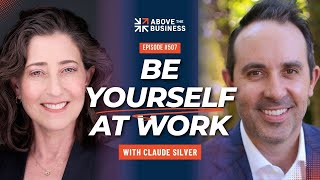
Claude Silver, Chief Heart Officer at VaynerX, argues that modern workplaces have stripped away humanity. She shares how leaders can build trust by modeling vulnerability, asking open-ended interview questions that reveal accountability, and creating psychological safety so people stop wearing masks at work.
Chapters
Welcome to another episode of the Above the Business podcast. My name is Bradley Hamner, your host. On the Above the Business podcast, we help you get above the business, not just work on it or in it, but get above it. Start thinking like the architect of your business and design the blueprint. On today's episode, we have Claude Silver. She's the world's first Chief Heart Officer. She's the number 2 executive at VaynerX to Gary Vaynerchuk, author of the forthcoming book, Be Yourself at Work. The Groundbreaking Power of Showing Up, Standing Out, and Leading from the Heart. In it, she debunks the myth that authenticity is a weakness or a luxury. We talk about that in so many other different topics. So you're talking about somebody who has experience, broad experience, and a robust toolkit that can help you as a leader, business owner, entrepreneur in growing and developing your team. This episode is for you. Without further ado, here's my conversation with Claude Silver. Claude, welcome to the Above the Business podcast.
Thank you. It's great to be here, Bradley.
Excited to have you. Well, we'd love to start with background and your origin story. I love hearing kind of how people got where they are today and their experiences in the past. So why don't you take people back around your background and origin story?
Yeah, sure. I was, um, I was born and raised, uh, for a little bit of time in New York, New York, big city of dreams. And then my father being an entrepreneur and my mom being a psychotherapist, so they both worked for themselves, we moved to Santa Fe, New Mexico. And so we went from the big city melting pot to a very different world, adobe houses, definitely not a melting pot of different cultures, really mostly Native Americans, Mexican folks, and then us. Also being Jewish, we were probably one of 3 Jews in the town. In the city for quite some time. It was wild. I'm so glad that we moved though out of the city and I have an incredible appreciation for both nature, being outdoors, but also I would say entrepreneurship because that's what my dad does, right? That's what he does. And so, you know, my first early jobs were working in his office, learning how to put memorandums together and stuff. You know, this is in the '80s. And I will say I was a very poor student, highly dyslexic person. And so academics were very, very tough for me. I made it through high school by the hair of my chinny chin chin because I was a good athlete and, you know, a good person. I just struggled quite a bit with school. And so I didn't give myself options. Coming out of high school, if I went back in time, I would say, Claude, you need to take at least 2 years off and just like figure your stuff out, figure out who you are. I didn't. I went straight into university and then I left after my sophomore year. So the typical way that, you know, education is structured isn't my way. I'm not a linear thinker either. And so I say that because my path hasn't been linear. I've done so many different things, which has been incredible because I have a really awesome toolkit when it comes to leadership, when it comes to being with people, when it comes to knowing how to get the best out of people and promote high performers and all of that stuff. So I will say, after I left school, after my sophomore year, I went on a 93-day wilderness Outward Bound. In Colorado. For those of you that don't know anything about Outward Bound, that's like roughing it, roughing it. It teaches you servant leadership, all of the principles and effective team building. No toilet paper, a shower, hot shower every 18 days. Wow. You know, this is snail mail every 18 days when you got resupplied. And I was the only girl. There was 9 young men with me, and we all carried about 80 pounds on our back for 93 days. It was hell. And then it— and then it was the best thing. It was the first best thing I ever did for myself. Um, and I found myself in San Francisco, um, during the dot-com boom, the first one. So when we were still using dial-up modems, wasn't any, you know, no Facebook, no Google. And found my way into this wide world of digital, whatever digital, with different startups that were starting up and needed like a manager, I mean, needed a project manager. And so I really started to cut my teeth that way, learning what it was like to work in a professional setting and learning what it was like to work with people, coach people, who's on first, why are you on second, that kind of stuff, being able to both be in the work but also be above the work so I could drive. And, um, I will say, after, uh, 9/11, when many of us were laid off, I started an outdoor adventure company, a surfing company in the cold Pacific Ocean. So I had a great tan from neck up and wrist down, um, because I was wearing a thick wetsuit. And I mentioned that because Coaching is who I am, you know, being that mentor, being that giver that I would say that, you know, that heart leader is really, really who I am. And so cheering people on and having belief in people and possibility, seeing possibility is what motivates me a lot. And then we'll get to now, we'll get to present. I am, after we sold the company, which was great, and then I went back into what I knew and that happened to be in advertising agencies. And I was a strategist for a very long time. I was the one that, you know, would create digital strategies that then a creative would put together to, you know, get this into your hands in a clever way on— this is back in the day on Facebook. So I ended up in London, got transferred to London, which was awesome. Another huge, huge moment in my life and another pivot. Leaving all my friends behind in San Francisco. And London, we speak the same language, but it's very different. It opened me up to the rest of the world because I wasn't doing any marketing in the US anymore. I was all over the rest of the world, which was awesome for me. Again, remember coming from New York City to Santa Fe, New Mexico. I like other cultures. I like seeing how they operate, how they shop, how they live. And, um, in 2013, I met Gary Vaynerchuk, who's my boss and CEO. And we were like, I don't know what you call it, two sides of the same coin, both in our belief in people, our optimism. And I started with him. I started with VaynerMedia in New York, May of 2014. And I am still there.
Wow. Wow. What a great, unbelievable, you know, the, your experience. I mean, quite literally, not even just in different industries, industries, but just living in so many different places around the world, from London to New York to the middle of the country in Santa Fe, and then all the way over in, into San Francisco. We'll get into your book that is just about— at the time of this recording, we're just about less than a month away, uh, from it being released. But I'm curious, what did you feel like you learned, broadly speaking, about people? Number one, which I understand is a big question, but number one, uh, people. Number two, What do you think is one of the biggest things you've learned in business in all of the different places you've lived and the experiences you've had?
Great question. The main thing I learned about people, I will say, is that we are all very, very similar with different lived experiences. We have very similar emotions. That's what I would say. And our experiences are what shapes us. And that being said, When you get into the workplace, just because I, Bradley and I, there's not a whole lot of difference in terms of how we both express kindness or compassion, but because there's a difference in how we grew up, we are going to have different triggers. We are going to have different aches and pains within a workplace environment. We are going to either be wildly happy to receive feedback from our boss or not. Because maybe we don't do well with authority, that kind of stuff. So really understanding the cultural nuances, I would say, with people from different countries, of course, and there are many, many, many, but also understanding how that comes to play in a workplace.
Yeah.
And that, I will say, is different. Coming from San Francisco all the way to London and sitting on a, you know, sitting on a big desk with 7 other people and the chatter that you hear there is very different than the chatter I heard in San Francisco, for example. And so that's what I'll say. I loved, I mean, I loved going to these other countries and seeing how they operated. So for example, I worked on a lot of P&G brands. So I worked on toothpaste and dental floss and toothbrushes and all that stuff. And so going into Turkey or going into Croatia, going into Russia and seeing how people buy and shop for a toothbrush, let's just say that, or toothpaste, and the emphasis they put on hygiene, on oral hygiene, very different from America. So what it was, what I was able to do is put America over here because we're so big and loud and we know about ourselves. And, you know, reframe my focus to have, I would say, a lot of empathy on how other people live. And for example, in such places as Turkey— and this is a generalization— but spending that money on an electric toothbrush is not something they're going to do. Yeah, they're going to spend it on something else. And thus there's a lot of dental problems there, you know, that kind of stuff. So again, a strategist, that's how I think the behaviors. I would go shopping with people and see how they gravitated towards certain brands and was their brand loyalty. And that, wow, because in America, for the most part, yeah, we all like Tide. We know that, right? That kind of stuff. And so seeing how people shopped and then seeing how, quite frankly, shelf placement, you know, how if, if you're P&G and you're spending a lot of money in Peru, well, they're going to give you top shelf placement. But if you're Colgate and you're not, you're going to be on the bottom. Those types of things really interest me. And I got to see and really touch that.
I'm curious around, and as I was preparing for this podcast, I knew I wanted to bring up and ask you about hybrid or remote work, but I'm going to frame it in a slightly different way. Fundamentally, I believe that everything for a small business owner, an entrepreneur with a team, everything is downhill from the vision that you have for where do you want to go. Okay, and so you're a $2 million company and you really have the vision of building a $10 million company, and here's all the reasons why. And you're bringing in people from different backgrounds, experiences, culture. And then you add in the fact that remote hybrid work— people, you could be in North Alabama where I am, and I could hire someone fractionally on my team or full-time on my team in New York City. I could hire somebody in London. I could hire somebody and bring them in from Santa Fe and San Francisco, all these different places. And now my challenge is not necessarily just articulating the vision that I have, But it's getting people bought into that vision.
Yeah.
How do we do that effectively?
Well, first thing first is you have to have that vision. You have to have a North Star. So when people say, where are we going? You need to be able to say consistently, we are going here. We are building the XXX, right? Some of it might be aspirational. From $2 to $10 million, that's not gonna take, that's gonna take more than a year, most likely, unless you really, really bring in the big kahuna. So you have to have credibility and be very transparent in that vision. We are building this. Okay, great. That's already in the water then. People don't have to ask. They know that. And so I wanna do that. That sounds aspirational. What a great challenge. I think, you know, put me in, coach. I wanna do that. So That's the thing that you're doing as a leader, which is quite frankly setting the culture. Now, the culture is then co-cultivated from the sides, from the bottom. But you're setting the culture here. So we are a kind culture and we are building the single greatest auto insurance company in the country of India. Let's just say that, right? I mean, and so, okay, I know my vision. I already said I'm kind. We're a kind culture. So then I want to bring in people who can adapt to being kind and understand that that is a huge value and a huge principle of the company, right? So we want that common denominator. But we want people who think very differently than me. You don't want apples and apples and apples and apples. We need all different kinds of thinkers and people from different cultures, different backgrounds, religions, all of that stuff. Who not only are pushing us forward, challenging us to think differently, it opens up our mind to curiosity and to a growth mindset. And when you have that in your culture, a growth mindset, I really feel like anything is possible. And how do you get that growth mindset? Well, you can't just wake up one day and say, we have a growth mindset. That's something that is built. That's something that your leadership team is putting into the water every day in terms of, you know, saying things like, yes, and. Rather than no. Yes, that might be possible. Or reframing things in a way that still have positivity and positive intent but are, you know, maybe a little bit more realistic. Like, again, $2 to $10 million, not going to happen in one year.
Yeah.
So the transparent communication is extremely important, especially when you're dealing with different cultures. But you need a common denominator of we hire this type of person in terms of behaviors. Skills, we want different skills, right? But behaviors, we, this is, these are our values. These are how we behave. How do we know? Because it's become a habit here. We all know that we don't have to have a sign on the wall that says we're empathetic. We are.
Hmm. What is one way that you have yourself been able to identify to see that there's a match with the behaviors whenever somebody is coming into the company.
Yeah. So you ask open-ended questions. Tell me a time when you failed. Now, what I'm listening for there is if Bradley failed or did he blame it on his team? I'm listening for how you talk about that. Tell me a time in which you succeeded. Are you telling me it's all about you or is it about the we? I'm asking you open-ended questions and it's all basically like, tell me a time, or what would you do in this scenario, right? You have two people, they are both high performers and you need to let one of them go. Talk me through the rationale of why you would pick one over the other. So I'm listening to hear how you behave. How you conduct yourself. And I'm really listening to hear if you are embracing the whole, or are you pointing fingers at everyone.
You know, it's almost understated, but it's such a big deal that you just said, I'm listening. I remember really early on, whenever I was recruiting early in my career, somebody had told me that somebody came in, sat on one of my interviews because I was having a lot of turnover, and the person walked out. I turned over and I said, hey, what do you think about this They said, I don't know about the person. I said, what do you mean you don't know about the person? They just sat here for an hour. You talked 90% of the time. All I heard was you selling them on the job. I didn't get to find anything out about that person. It was so groundbreaking for me to have that person who was a mentor to sit in on that interview and say, I don't know anything about them, but I just know about you.
That's huge.
Yeah, it was huge.
You know, and we listen obviously with our ears, but we listen with more than our ears. We're looking We're looking at body language all day.
Yes.
We're looking at, you know, is someone leaning forward and looking at us, or are they sitting here like this, you know, or do they have to look at their phone? Or we're looking at people all day long, and guess what? They're looking at us too.
Sure, sure. That's exactly right. Tell me about your book that I'm really excited about. It's going to be coming out on October 28th. Whenever this podcast drops, it's going to be really soon. Be Yourself at Work: The Groundbreaking Power of Showing Up, Standing Out and Leading from the Heart. Where did this, where did it come from? Where did it, where was the impetus initially, maybe from you to, to begin to put this into a book?
Yeah. You know, I've been in the workplace for a very long time at this point, and I have seen and felt, uh, what it's like to not belong, to feel like you don't fit in. I have seen and felt what it's like to have terrible, terrible managers and the detriment that that causes to a person and at scale. I have seen what great leadership does. But fundamentally, my belief is that somewhere, somehow, we forgot to be human at work. Not quite sure how, not quite sure if it was back in the industrial age. I have my speculations. But in not being human at work, then we're asking everyone to be robots and we're pretty much asking everyone to be very similar. And in doing that, then there's no there there. I'm just looking at, again, John and John and John and John and John, where I want people to come into work and feel like they can take off their mask. How can they take off their mask? They have to be in a culture where the other, where leaders do take off their mask also. Right? So we are all, all of us go into work and feel like, "Oh, I'm going to put up a wall because don't come close to me. You don't know me. You have no idea about my life, my background, whatever. No, no, no, no, no." So I would like to change that. And how do you change that? Well, you change it from the top for sure. But you make sure that basically there are consistent behaviors in the workplace from all of your leaders that people know that it is safe here. Psychological safety. What is psychological safety? Do that training over and over and over. You need consistency. Why is it so important to make someone feel safe? Well, because we want them to share their ideas, right? If we don't have a safe place, people are not gonna raise their hand and say, oh, I think we should make something like X, right? The other thing is, if you don't have that psychological safety, you're not gonna create a place where people feel like they belong. Belonging is so important. You know, Maslow's Pyramid of Hierarchy of Needs, on the bottom it is safety, shelter, security. The next rung up is belonging. It's that important to a human being to feel like they have a place, that they matter. They are— we are supposed to be in community. That's really important. And once you have that belonging, you can start to create connection, which builds trust. When you have trust, sky's the limit. When you have trust, that's when you're going to build resiliency.
What is Five Dysfunctions of a Team from Lencioni? He talks about, I think the very first one is lack of trust in an organization. I reflect back and I certainly don't want to suggest that I have this nailed down perfectly, but there was a period of time that was really very difficult in one of my companies. Culture was toxic. I pointed the fingers at, you know, the team members, and come to find out, I was the one that was the most— I was the one that was there for all of those team members that they had turnover. And, um, I remember the more that culture wasn't where it wanted to be, where it needed to be, and the, the business just wasn't growing like I wanted it to, and I was stressed out all the time, the less and less I as a leader was vulnerable and open. In fact, that was the probably the last thing that I was going to be willing to do until finally it all kind of come to a head. And then coming out of that I've tried to learn to be able to lead with, from a place of vulnerability and openness, even as the leader, so that I can create that within the organization. But here's my question: that can be very scary, and sometimes it can be very difficult for a business owner, the leader, to know where is that line of openness and vulnerability, but at the same time discretion. What are your thoughts on that?
Yeah, so that all comes— it's, it's, that's perfect. It all comes down to self-awareness. What works for you? What works for you? Who are you? How willing are you to put yourself out there? How willing are you as a leader to take accountability? Those are things that only you can figure out for you. Even if the, the culture says we expect people to be vulnerable, you have to figure out where your your measuring tape is on that.
Sure.
However, if you don't show that you are human and you expect others to show up and be themselves, well, that's just not going to work. Because what you're telling me is it's not okay to be me because you don't feel like being you. You know what I'm saying? So if you don't feel like being you and it's your company and you feel like you have to come in and be like, I'm in an ivory tower and I'll tell you what to do, well then people are going to take that as a very like a scarcity mentality. And oh, we have to be all buttoned up here. We can't talk about anything we did on the weekend. That's half living. Yeah, yeah, that's half living. And, you know, I think in many times, if you think about it, bad leaders leave a mess. They just leave a mess. It's really messy. No one knows which way is up. Good leaders leave a mark. Yeah, that was a good leader. But great leaders leave a map. And in fact, they actually help you walk the map because they're walking with you. They— the thing about leadership and the thing about being at the top that I think is semi-dangerous is we expect leaders to have all the answers and there's just no way. That's why we need others. I'm not any smarter than you.
Yeah.
And you're not any smarter than me.
Yeah.
Right. We need one another to contribute to this minestrone soup we're putting together so it tastes right, so it's got everything.
Yeah.
So that, you know, that's, that's really what I would say. If, if you as a leader feel comfortable putting your toe in the water, okay, a little another toe and the knee, and I'm going to say, you know what, Guys, gals, today's a tough day for me. I don't know, I woke up on the wrong side of the bed or something at home is happening or we lost a client. It's a tough day for me. And I know that we can get through this together. Bum, bum, bum. So that didn't hurt you when you said that? It's no big deal.
Yeah. Yeah. You know, I just recorded and tell me your thoughts on this. I just recorded a little Friday solo podcast. Previously, several weeks ago, had done a podcast about, you know, all the different hats that we wear as business owners. And then off the back of that, I had gotten some feedback and I realized there was one that I feel like there's a hat you absolutely should not wear. And it's the hat of chief problem solver. And I heard this and I won't say where it came from, but there was somebody else that was promoting this idea that you need to be the chief problem solver. Right. And it was, and I thought to myself, I don't, I don't think I agree with that. At all, because then it goes back to what you just said, which is you don't have to have all the answers. And if you position yourself as the chief problem solver, then everybody's going to try to come to you with all the answers and you're going to be trying to answer things you don't know.
Yeah, you're a bottleneck. You slow the entire engine down, the entire engine. And what every company wants— doesn't matter to me if it's you have a chain of pizza shops or you have a chain of laundromats. Every, every, every company wants momentum, wants progress.
Yes.
So we have to figure out where is growth being stunted? And is that because of toxicity, cynicism, bad management? What is it? Me? You know, am I in the way? And you have to be willing to have a really honest look at that. And that, by the way, is going to happen with usually an outsider coming in. Yeah, or sure, if you want to do, you know, employee surveys, great. You can do that as long as people are honest.
Yeah. I'm curious. I'm curious. You mentioned this earlier, but where do you find that a leader, business owner can talk about and utilize empathy and yet at the same time feel like that they have a performance-driven culture. And so sometimes those things can feel in opposition of one another. Is that— I remember I told somebody, I feel like it was almost like a gauge. I was either— I would either go too far to be too soft, and then I would go too far and I was too— I was too difficult and too hard and too driving and these sort of things. Then I would just kind of toggle back and forth, and I could never find the right place to be in the middle ground of like, I'm showing empathy and at the same time I have high expectations for what, you know, for each person in the company and honestly for myself too.
Yeah, well, that is called executive presence. I mean, right there, that is literally, again, what kind of leader and what kind of culture do you want to build? Right? How are you going to go about doing this? Because it's your company. And so for me, empathy is an emotion. Emotion. How we act on empathy is kindness and compassion. That I think is a real motivator for people to work in a place where their boss is kind and compassionate and understanding and the culture is. If that is your soil, if we already know, okay, I'm going to go to ACME Industries and I know I've read about them, I've heard about them, I got a friend that works there. That they're just— that's a kind culture. It's a friendly and warm culture. If you have that, you can ask for candor. You can ask for high performance. You can say, listen, I'm kind and I'm respectful. And I believe in all of you and I trust all of you. And we are a 7 out of 10 right now. And we need to be an 11. So I expect all of you to figure out how to get there in the next 60 days. That kind of stuff. So the kindness and compassion, like, we learn that at 1, 2, 3, 4, 5 years old. It's who we are. Just forget. And so whether or not it's our fear that ends up showing up and being like, you need to do this, or our insecurity, which is fear anyway, control, right? You just need to check yourself. You need to check yourself. What is it that I— how do I want to feel when I go to work every day? Do I want to feel like someone's on my throat? Well, that's not going to work and I'm not going to stay there. I want to feel like you trust me, I have autonomy, I know what I'm supposed to be doing, and I'll check in with you, but you've given me a big runway. Thank you. Because with a big runway, anything's possible.
Last question: how do I— how do we show up as being ourself at work and at the same time want to continue to become the best version of ourselves that somebody down the road, 3 years from now, 5 years from now says, yeah, I mean, he's still Bradley, but at the same time, he's, he's, he's a better version of himself. I can tell that he's, he's evolved and changed and improved. What does that actually look like?
Yeah. This is where it starts. How do you show up every day when you walk into that meeting room or that Zoom with your team? Are you distracted? Are you taking phone calls? Are you walking in and looking at your phone while people are talking? How do you show up every day? Be honest. And how do you know that? Just because you're a leader and you're leading the call doesn't mean that you're showing up as a as with empathy or with any emotional intelligence, right? How do you know? Ask people, how do I show up? Well, you're pretty distracted. That's how you show up, right? If you have that trust with someone and, or again, anonymous survey, whatever it is, 'cause you need to be shown a reflection, right? And so if you see that there's a place in which you need to grow, you want to grow, then I would, think you would get the coaching and the help that you need to be your best self. So a lot of times I say, you know, be someone that other people want in the room. Be someone that other people want in the room. Okay, great. How do you know then you are? I mean, I want to be inspirational when I walk into a room. I want people to feel held and safe and that I got their back. Okay. Is that how I am showing up? I don't know. I'm just one of one. Someone needs to tell me. So that's what I would say. There's always room for improvement. And because again, let's go back to motivation, progress, growth. Like we all want to grow. None of us are done at 45, 55. None of us are done. It's, it's, you know, so this self, this idea of self-awareness is extremely important. It's not an idea. It's a, it's an exercise. And with that comes what we call emotional regulation. I know how to not have my emotions spill out onto the floor. I'm not gonna yell, I'm not gonna cry, I'm not gonna throw a tantrum, cuz I, I know how to take care of myself. When I need a timeout, Claude knows how to get a timeout. Yeah. Yeah.
There was a meeting I had 2 days ago. That I was internally, I was internally, I said, I need to regulate my emotions right now on this. I need to be very aware of how I'm coming across on this Zoom meeting. A little frustrated by something, and I was trying to balance honesty, transparency, and at the same time, you know, right, not going too far with that. And so, you know, there was an internal dialogue that was going along with that for sure. So hopefully I've started to have a little bit more self-awareness myself.
You caught that is awesome.
Yeah, I hope I caught it enough on the Zoom, right, to not come across. But I really have tried to be able to do that. So that very much resonates with me. I'm so excited about the book that's coming out. If people want to connect with you personally and then obviously find out about the book, where would you point them to, Claude?
Yeah, yeah. Please write me anytime at claude@claudesilver.com. Go to my website, Claude at claudesilver.com. And the book has a website and it's called beyourselfbook.com, beyourselfbook.com. And you can preorder, you can order in bulk for your companies or teams and you get tons of bonuses. Like you get more time with me, you get like, you know, a big toolkit that I've created. You get special guests. If I can pull Gary onto something, I sure will. So that's what I would say. You know, I wrote this, I didn't write this book for me. I wrote this book for we. I wrote this book because I feel like we need it and people need to be encouraged to be themselves. And if they can't be at that culture, there's another culture that will embrace you. Love that.
Two last quick questions. What do you feel like working above the business means to you?
Just letting it run, putting the right people in place. And letting it go. I have tons of other things that I could use my time for, but I trust these leaders and these people to do the job, and they're going to tell me when they need me.
Love that. Last question. What is one— what is the biggest lesson that you've learned working with Gary?
Oh, patience. Really. So Gary is macro patience, micro speed. Speed is incredibly important to him. Patience is a whole nother exercise. It's a whole nother learning. Things will— he is, he is the most patient person I have met, actually. And I mean, this is a, you know, a disruptor, a businessman, like, but he teaches you, you know, Rome wasn't built in one day. Have patience, have empathy, have, you know, understand why certain things are going to take a little bit longer than you wanted. You know, whether or not we say it's a marathon, not a sprint, or, you know, things will happen, but sometimes you need to build a couple bricks in order for things to happen.
Oh boy, that's great. And that is definitely not maybe the one of the words that I thought you were going to share with that. So Claude, it's been fantastic having you on the podcast. I love that. I'm really excited about the book. I'm gonna get it for my from my team. Thank you so much for coming on the podcast.
Thank you. Thank you.
Well, I really enjoyed that episode with Claude. Go pick up her book, Be Yourself at Work, Amazon. Obviously go to her website there, claude-silver.com or beyourselfbook.com. You know, several of the things that really stood out to me, one of the things that I circled and highlighted was be someone other people want in the room. Great reminder around emotional regulation as well. And, you know, she, she talked about executive presence. She talked about the, the importance of momentum and progress and with business owners. And then the other thing that really stood out to me: bad leaders just leave a mess, good leaders leave a mark, great leaders leave a map. Love that. And then also just some of the little things when she was talking, walking through some of those open-ended questions. Tell me about a time, um, whenever you, uh, had this happen, and just giving people the opportunity to be able to speak. I really love that episode with her and learned a ton. I want to give a shout out to our podcast sponsors. If you want to help build a team that you can develop and grow your organization, Autopilot Recruiting can help you to do just that. Autopilot autopilotrecruiting.com. Autopilotrecruiting.com. When we think about having, building a culture, our teams want to be developed. They want to grow. Coach P can help you to do that. Go to coachpconsulting.com. They can help develop you and get yourself around a group of other insurance agency owners as well as your team. And that's very unique that you get a peek behind the scenes. What are the things that they are doing that's working today? Coachpconsulting.com. As we wind down into the latter part of 2025, how have your financials been? Do you know your monthly recurring revenue number? What's your average monthly recurring revenue number? What's your profitability percentage year to date? If some of those questions leave you not with having the answer, then Club Capital can help you with that. Go to club.capital and go ahead and start getting ahead. Clean up your 2025 financials and start getting ahead of 2026. 6club.capital. Claude obviously knows a ton about marketing, but if you don't feel like you have a good understanding of marketing, it's okay. You don't have to, but DirectClicks can help you. Go to directclicksinc.com/above-the-business. DirectClicksinc.com/above-the-business. They're going to do a free marketing audit. They're going to look at everything you're doing from a marketing perspective and help you to have a plan to be able to grow your business later this year, but also into 2026. This is a fantastic time to start relooking at your marketing strategies for this year, but also going into next year. DirectClicksInc.com/above-the-business. All right, everyone, that was a fantastic episode with Claude. Until next time, lead well and go big girl. If you like this report, like and subscribe so we can begin to grow this channel. We have big plans going into 2026 to do more things specifically for our audience on YouTube. Love you. If you would like, subscribe, and please share this video with other people who are interested in










