Episode 517: Anthony Iannarino on Sales Excellence in the AI Era
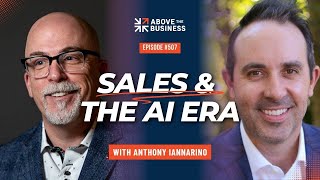
In this Above the Business podcast episode, host Bradley Hamner interviews sales thought‑leader Anthony Iannarino. Iannarino describes his massive Sales Accelerator library (93 courses for reps, 37 for managers) and stresses the need for disciplined, bite‑size learning. He warns that AI tools like GPT are eroding original thinking, arguing that reliance on AI‑generated content makes writers and salespeople dumber and that AI‑generated text cannot be copyrighted. The conversation shifts to how people consume knowledge: Iannarino prefers reading first, then listening, and uses a Zettelkasten‑style note system to retain insights. They discuss diagnosing under‑performing salespeople, concluding that the problem lies with the manager’s methodology, not the rep, and outline a framework that starts with evaluating sales conversations, coaching through live call observation, and building a repeatable, consultative dialogue rather than a canned script. Iannarino shares the character traits he looks for when hiring – extreme self‑discipline, genuine caring, comfort with conflict – and provides sample interview questions (wake‑up time, handling loss, responsibility, conflict). He explains how to spot call‑reluctance and coach it by role‑playing calls and delaying the pitch until the end of a consultative conversation. The duo also talks about “just‑in‑time” learning, recommending topical books that broaden perspective beyond sales. Finally, Iannarino defines “working above the business” as focusing on impact beyond revenue, helping people elevate, and points listeners to his LinkedIn profile and thesalesblog.com for more content.
Chapters
Welcome to another episode of the Above the Business podcast. My name is Bradley Hamner, your host. At Above the Business, what do we help business owners to do? Well, we help you to get above the business. We help you begin to think like an architect and we help you to design the blueprint. And when you think about designing a blueprint for your business, you're obviously, it's gonna involve some sort of sales and hopefully some of those sales don't involve you, the business owner. You actually have built a salesperson or a sales team depending on where you are and how big you want to get to where somebody else is doing the sales, but it can, it can be hard building a sales team. Well, one of the biggest influences on me personally, some of the books that, that he wrote early on that I remember taking in content was Anthony Iannarino. The last time we had me on the podcast, we actually talk about this, but was December of 2020. I actually had COVID. I was in quarantine whenever I was interviewing Anthony. Uh, so that was a number of years ago, but We have Anthony back on to talk all things sales. What has changed? What has stayed the same since the last time we had him on the podcast? We talk about the difference of character traits between sales reps and sales managers, and we even get into what are some of the best questions to ask when you're interviewing for a sales rep or sales manager job. That and much more. Without further ado, here's my conversation with Anthony Inorino. Anthony Inorino, it's great to have you back on the Above the Business podcast.
It's good to be here. I haven't seen you in— you just told me 5 years ago, right?
5 years. Yes, absolutely. Yes. We had just had the podcast a year when you first came on the podcast. And actually, I was— for those of you, I had actually had COVID at the time. I was quarantined whenever I actually interviewed you. So, much more of a memory for me than it was for you. But, Anthony, why don't you catch us up? Like, last 5 years, I've always been a fan. Of your work, but tell me what you've personally worked on the last 5 years since we last spoke.
I started building out training for salespeople, and I started with a number of things at the beginning, and then at the end of it, I have 93 courses for salespeople and 37 for sales managers. And sales leaders. So now I've got this giant thing called Sales Accelerator, and I put a lot of love into this thing, but there's so much content in there. It's sometimes overwhelmed people. When I first put it out, I said, just do one course at a time. And people were like, we want to do 5 in a week. Like, you're not going to do 5 in a week. Just do one thing and learn that, and then do the next thing. And I still have to tell people, just take your time. You, when you sign up for it, you get it for a whole year. And we only, the courses are like 25 minutes. So it works pretty well for people. And they can go back to doing their everyday job while once they do the 25 minutes. And it's been very good for me. It's been good for a lot of people. And I'm still always writing because I'm a writer mostly, and then I'm mostly a speaker after that. But I am still writing constantly. I have always have new content, and I'm, I'm always happy. I had this conversation with Malcolm Gladwell a couple days ago about just like I said, the— if I'm not writing. I wish I was writing. I mean, that's— I like it that much. I'm always happy when I'm writing.
Well, your writing has had a tremendous influence on myself, and I know many of the business owners that I work with. I want to ask— I try to not ask too broad, broad questions, but I am going to ask this one to you because I'm curious. What is— what has changed post-COVID from a sales perspective and what has stayed the same that you've, that you've seen? And then we'll get into some more, more granular, specific questions. But broadly speaking, what's changed? What's stayed the same?
I still think that the best thing for us to do if we want to do the best things that we can do is to get really good at the sales conversation. So that is the thing that I think most about if you have a very good, uh, conversation with somebody, a sales conversation, you're probably going to win that deal. If you don't have a good, uh, conversation, you probably won't win that deal, and you'll get somebody say like, just, hey, call us back in 2 weeks, and then you'll never hear from them again. And that, that will normally happen. But what's the thing that we are I mean, we have to do something about this and we have to talk about it.
AI.
I mean, AI is everything right now. If you go to a grocery store and you get oranges, it comes with AI. I mean, everything comes with AI now. You can't get away from it. And I try to stay away from it because I don't want, I used to do GPT to do the editing for my writing. But I don't even like it that, so I started doing everything myself. So now I'm just saying everything goes from this brain and these hands and that's it. So I'm not going to use anything outside of that because I want it to be mine. And you might not know this, if all these people who are now just going out to AI, putting a prompt in, and they think that that's their writing. It's not. You can't copyright anything from AI. It doesn't— only humans can have copyright. So these people think they have content, but they don't. It belongs to everyone. So anybody can use that now. And if you see it and you like it and you know it was AI, you could steal it from them because there's nothing they can do about it because they don't own it.
Sure.
That's it. And I think it's making us dumber, and I think we're going to get dumber a lot faster than we have been. When people go and they go to the oracle that we call GPT, they'll take the first thing that, that says, they will believe it, and they will think that's the right thing to do. And I don't think that's right anymore. I think we have to do more than this. I think people are not I'm already this— I'm sorry, I'm going to get a little— I have to do a little bit about this. They don't read anymore. People don't like to read. I don't know why they don't like to read, but reading is very good, important, important for people. So to do that, you want to get new information. It comes in from a book or a course, but mostly, uh, for me, just books. And I think that when people don't do this and they're just trying to do the short work rather than the long work, I think they're making a mistake. And I think it's going to be difficult for people in the future. And I also think if you have kids and your kids are using GPT and just finding the first answer, I don't think that's going to be helpful for them either. You got to go deeper than this. And I think deep is way better than speed. I'm not interested in speed. I'm worried that we're not getting deep enough and understanding of all these things that are going on in the world right now.
Yeah, I totally agree. Now, tangent to that, but I am curious of your thoughts on this. When it comes to reading or consuming information such as a book What is your thoughts on the modality of doing that? What I mean is listening to a book, uh, uh, uh, like on Audible versus reading it, et cetera. Do, do you have any thoughts on, on that?
Big thoughts on this one. I tend to read the book first. Uh, I, so it's like a 500-page book. I'll read that and then I will listen to it. And what I've noticed over the last maybe 2 years, my retention on listening is better than my retention on reading. So I've started to do, read the book and then I'm gonna go and listen to it so that I can get more retrieval of what I listen to. And for some reason it's easier for me as a listener than it is a reader.
Yeah. Now, do you also have then an opinion of Kindle versus a physical book?
I tend to like physical books, and I'll tell you, if you're a nerd enough to be able to go through this conversation with me, uh, I like to read a chapter and then I want to write down everything that I thought I learned after that first chapter. And then I have my notes, and I sometimes are just annotating, and sometimes I'm just putting it on a legal pad like that. So that's, that's how I do it. And then I'll go to the next chapter, and then I'll try to consume the whole thing, put my notes out so I don't have to go and read it over and over again, because I just have the notes that I thought were most important. So there's a thing called a Zettelkasten. I don't know if you know what that is. It was by Germany, a guy in Germany. He decided to take these big, uh, index, uh, cards like this, and he would write everything on them. And he ended up with like 9— 9— uh, 90,000 of these cards. And that was everything that he had. And he had them put together, and he would link them together, and it was amazing. So I have sort of a Zettelkasten. You dropped.
I'm still here. We'll cut this out. It's my video. I've had some tricky things with my little card thing that takes my camera. And anyway, whatever. We're good. We're good. We'll cut all that out.
No worries.
So the Zettelkasten.
Yes. So I use that so that I can put everything into categories. So if I know I'm writing something and I know that I've got something in there, I can just go find it. I just would search and then I can pull that out, which is nice to have a lot of other things other than my own ideas. So I like my ideas, but it also helps when you have other people who have the same sort of ideas. So, I think that makes for good writing.
Yeah. No, I do find this super interesting. So, last question on this. I can't imagine, I mean, in the business circles, books get thrown around left and right. I can be guilty of this too. Somebody I follow recommends a book and is like, this is one of my favorite business books. I can immediately like want to screenshot that and go to Amazon and put it in my cart, et cetera. But there's, there's two schools of thought with that, which is like, hey, if somebody recommends Peter Thiel's Zero to One, you're like, oh, you really need to read that. I'm like, okay, well, maybe I should, maybe I should read that. But my question is, how do you go about just-in-time learning? Meaning this is a problem I'm trying to solve or some research, and then you go find the book and research the book. For that, or somebody like I may recommend The Road Less Stupid. It's my favorite business book. And you're like, oh, I haven't read that book. And so you go like, I guess I'll go read that one. How are you going about, and I think this is a question around books, but honestly, it's more of a question around content consumption. Let's be real, right? It's more of a, not just books. I mean, it could be applied to YouTube or podcast, et cetera. What are your thoughts around that?
I tend to like to read books, but the books that I tend to go, you know, there's a lot of stuff that I've already read. I spent, I don't know how many years. As soon as I came into Tom Peters and I started to read his stuff, then I started reading a whole bunch of other people. I probably have 3,000 books in my house. Uh, a lot of those are business books, but right now I'm more interested in the world and what it's gonna look like in the future and what it's like turning into right now. Yeah. So I'm doing a lot of work around that. So there's a great book called Against the Machine, uh, and it's by Paul Kingsnorth. Uh, he's a guy from London and it's really about how this world is changing and what we're turning into now. So that's the kind of books that I look for. I look for something that, that I can see something that I haven't seen before. So, oh, that makes sense. That's what I look for. I know what— now I need to know what I don't know. And so I look for people who are really smart and who went deep, like this guy in his book So many, so many things that were good in there. And there's just the back of it is just full of all of his citations on everything. It's very nice. Good book.
My guess is, is that you going to these other topical books, etc., has probably helped you with your sales books in ways that maybe you wouldn't even, even had considered. Is that fair to say?
That's right. I tried very, very hard. I not to read any books on sales. I don't like Jeb Blount, great friend of mine, best friends. I don't wanna read his book because then I'm gonna take some part of that with me and I don't wanna do that. I want it mine and not his. Sure. That's the way I think about this is it's, I have to find what I'm looking for. And I'm looking for something that, you're right, it won't be the same thing that somebody else would have written.
Yeah. Yeah. No doubt.
Okay.
So, I'm going to present a scenario that I think is very common to pretty much any business owner. So, I just an hour ago got off of a session with a handful of some of my small business owners. And one of the business owners, um, presented kind of as one of the things that he needs to kind of begin to put together a plan for going into the— going into 2026. But he wants it as something he's got to address, and that is an underperforming sales team member. And when I said underperforming, I asked him what some of those numbers were. So we roughly went back over the last 30 months, and this team member has achieved like 30% to quota. Okay, 30% quota. Now my question is, let's say you presented that, you're, you're doing a talk and you do a Q&A, and there's a— that business owner presents this and says, I got an underperforming sales team member. What's the, what's the, the framework, like the, the way that you would then approach to try to get to like how to help this sales team member either, you know, get up to speed to get to quota or not, potentially. How would you work through that mentally? What's your mental framework of helping?
First, it's not the salesperson's problem. It's not the problem. It's the manager's problem and/or the owner's problem. It's their problem. If you're not giving them what they need to be able to succeed, then that is on the leader. That's not on that person. That is not— that is the leader who has to do that. That's what they're there for is to lead. And I will say it would start for me. I would just say, explain to me what your methodologies look like and tell me about your strategies and your tactics. Probably won't get any good answers from either the leader or that person. And then I'll know that they have to do some work to get the right methodology for what they sell because it's different from different places, like in different industries that you're in. Sure. And then I need them to understand, like when I say creating value, what that means is that I have a very good sales conversation with that person that they feel like they learned something. That would help them with the decision that they're making. And that's what they're doing. They're trying to make a decision. So all clients are trying to make a decision. And I would say they're— what they're really trying to do is to make a good decision on a rare decision, and they're trying to get it right on the very first time. So that's the problem that we have with the indecision of buyers right now is because they're afraid they're going to make a decision that's wrong. And so a lot of what we do and what I do in my methodologies is to make sure that that person gets the education that they need to be able to say yes to a decision and it would be the right decision. So that's, I think, most important to have that kind of conversation. That person probably needs a training. They probably need methodologies. They probably need some frameworks, and they probably need somebody to sit next to them and listen to that person go through their sales conversation because that's the fastest way for them to understand it. If I did my conversation and somebody was sitting with me taking all the notes, they would be able to take those notes and do what I was doing with them because that's just how I've trained All of my team, that's how I do it. You sit with me, you can listen to me. I want you to write down every question, every answer from me, from them, from you. And we'll sit down and we'll talk it over and we'll ask this person, why do you think I asked that question? And then I'm going to have that conversation. And then it just goes way faster this way. Way, way faster to do it that way. If they don't see it or hear the conversation, very hard for them to understand it.
It's interesting. Where do you believe essentially you start with methodology, the training that the person has, the, the, the, what is, does their sales conversation actually look like? And by the way, in this particular situation, you were absolutely spot on. Does this business owner, does this manager, sales manager have a sales methodology? No. Do they have a structured sales conversation? No. And yet 90, I mean, honestly, 95% of the time. I mean, I'll just tell you, this person is in property and casualty, auto and homeowner sales. They do with the same conversation 5 to 6 times a day. Right. So you would think that that would be a packaged conversation that is almost a rinse and repeat. But I'm curious around how you then model through with someone that part of it with metrics. So, so what tends to happen is the business owner or the manager only goes to metrics and they don't latch on. And it seems like it's got to be both. What are your thoughts?
You, you can't just go to KPIs or metrics. I mean, those are nice to have. I think you should have a number of them, but not as many as I see on these people who have these giant TVs with all the things up. It doesn't do anything. You have to sit down with somebody, then you have to have a conversation with them. If they're not doing what they're supposed to be doing, the manager should go and do something about that immediately. Metrics are good, but the metrics only get good when you've got the right things in the right places and you've got the right people in the right place doing the right thing. Then you're in good shape. That's a, that's a much better way of thinking about this. This is, I'm gonna, I'm gonna tell you something and it's gonna shock you. All we do in sales is talk. That's the only thing we do. We don't do anything else. Do we do anything else? No. Which is— all we do is talk. That's why I like it. It's easier. It's, uh, I used to put stucco on houses. Not very good. Difficult. Not fun. Uh, talking is a lot better.
No question about that, for sure. Um, I was meeting with a, a business owner $2.5 million company, exterior remodeling.
Okay.
That's the, and, uh, conversations are coming up about expanding the sales team 2026. Currently the founder, business owner, and that business still, still involved in sales. He is very much, I don't want to be a, I don't want to come across salesy. I don't like salesy people. I don't want to come across salesy. And so you can see that this idea is going to perpetuate into, like, we don't want to be scripted. So I'm giving this as an example because I believe somebody else is listening to this, that they're misinterpreting sales conversations, methodologies with sounded canned, like you're calling the Comcast 1-800 number and they're reading off a script.
Right, I did this the very first day, uh, in my, my mom and her partners, uh, they, they started a, a staffing firm and they brought me in and they gave me 3 index cards and it had my opening and it had my ask and I read it directly out of this, like I'm, I've got it and I'm reading it As soon as I was done, the person that I called, he said, uh, I'm going to hang up on you. And I said, why is that? And he said, call me back when you don't need this, the scripts. And I, I don't need the scripts. I called him right back immediately and I did it without the script because it's, it's only like a couple index cards. And then they gave me my offer. So then I got a meeting with that person. And that was the first thing, like, you're reading off a script. Call me back when you don't need a script.
Yeah, yeah.
See that too. I was 17 years old and yeah, wow, level deals at that age. And I learned, I learned a lot from a lot of people who told me a whole bunch of things. I went to The Limited. There was a guy named Dallas Mulder there. He was probably 60-something. I was like 17. And I said, I really want to understand how business works. And he said, you want to come in every Friday? Uh, you can sit with our managers. Uh, we'll show you all our data. We'll show you where your data shows up here and why it's important to us. And I just got a world-class, I mean, this is, this is limited at the, the biggest time for them. and I'm learning from these people. And it was just like a great, uh, I mean, it's like college. Like they're teaching me how to use their, their stuff. And I'm looking at Excel sheets and all kinds of stuff. And it, it was very helpful for me. But people, if you don't do that, you're just leaving your kids or your people that, uh, that you're supposed to be taking care of. They're not going to get better or faster. They're just, I want them to get faster.
Yeah.
I want them to be able to do the whole job as early as they can. And I think that's what we're supposed to be doing here as leaders. Yeah.
So it's learning, it's taking and having a structure of the script. Well, I'll tell you what, I'm similarly the When I was growing up, my dad put me in—
Why would you grow up? That's not a good decision to grow up, is it?
Fair. When I was younger in age, my dad had me in 4-H public speaking. And the very first speech I gave was on Louisville Slugger baseball bats. And it was something I knew, something I loved. And then the next year there was a small engines presentation, and there was only one other kid signed up. And my dad said, you're going to do the small engines presentation. If you knew my father, then that would, it would make sense. And I didn't know anything about small engines and I wasn't interested in small engines. And I went up there and completely, the year before I'd done great. I made it to state. The next year, failed. Lost, went second place against one other person. And I was terrible 'cause I was reading off of it. I didn't actually understand it. All right. I didn't know what I was talking about. How does a sales manager, a business owner that is leading a sales team of 2, 3, 4, 10, 20, whatever that may look like, how do they take and say, here's our script, and then get them to be able to internalize it in a way that they're following it, but yet it's still uniquely that person?
Yes, that is where people get stuck. They think, I have to do it exactly as it's, it's written right here. No, you don't. You have room in there to play with people, ask questions, answer their questions. There's a whole lot of room for things like that. But I don't see that people think that if they have a script, then you have to go off the script. You don't need the script until you, you do it first a couple of times. And then you start making it your own. And that's what people should do. And it would be better if you watched 4 or 5 other people using the same type, type of common conversation that helps them to see that there's other— there's a lot of ways that you can talk about things.
One of the questions I wrote down that I was really excited to, to ask you you mentioned at the beginning, you know, 90+ courses, content for sales representatives, and then, you know, 30-something for sales managers. Here's my question. Whatever you want to call it, some sort of a, you know, A-player profile for a sales rep. I'm curious about how that differs from a sales manager. I, I can't imagine how many examples you have of a leader, business owner, taking the top sales rep, putting them in a sales manager role, and that person completely failing.
Oh, it happens all the time.
How do we then look for, out of our sales reps, not just the higher, highest performing, But what are the characteristics? What are the things that Anthony would be coming in and saying, this person has what it takes to be a sales manager, not just a rep?
Yeah, you, you can always identify those people who have the character traits. That's what I'm looking for. Uh, first I'm looking for very high self-discipline. If you don't have that, I'm already done with you. Just, I'll be done. I ask a lot of questions like, Bradley, what time did you get up this morning? What time?
Oh, 5:00 AM. Perfect.
Me too. What'd you do first thing in the day?
Went and drank water and then went on a run.
Then I would hire you. Yeah. If people say I got up at 7:30, I'm like, You're not going to have a good day. You didn't start your day right. You didn't do anything with your body. You didn't— first thing in the morning, water for sure, right? You haven't had any in a while. I would hire you. I ask very difficult questions like, tell me about the last deal you lost and how you lost it. And if they say anything other than I really botched it up. I, I thought I was going to get there, but I messed it up and I didn't do it good. I'll keep going. I'll do that. But if they say something like, uh, they didn't really understand this— nope, it's not— that's not their problem. That's your problem. They have to understand because you're the one that's helping them with the understanding, right? So that's how it works. And I don't know that people talk like this, but this is how I talk about it. I think it's important. I like the things, the discipline, caring about other people. I had a, when I read, when I wrote the first book, The Only Sales Guide, I had an editor and he said, why would you ever put self-discipline in a book about sales. And I said, we have this autonomy, like we can do anything we want at any time. We can go out and see a client, we can do this other thing, we can do what we want most of the time. So if I give you this autonomy, then I have to have the discipline to make sure that that person is going to succeed, right? So that's, that's how I thought about it. And then the second thing this guy said was Why would you put caring in a book about sales? And I said, well, I now understand that you don't have any clients, but if you did, they would hope that you were, you're going to be very helpful for them and you're going to be very good at helping them get what they want to do. So that's it. And I thought at the end of that, I said, I don't really think you should be my editor.
Good news to you. Well, you actually brought up something I was not going to ask you, but I have to ask. Would you be willing to share maybe 2 or 3 of your favorite, uh, favorite interview questions?
Yeah, let me see if I can do that. Let me— I haven't thought about that for a while. First, first question for me is, what time do you get up from bed? I mean, when you get out of bed, if it's outside of 6:30, I don't know. What do you think?
I, I mean, I, I would agree, agree with you outside of extenuating circumstances for some reason that would— that, that could, you know, cause someone to need to, to, to get their sleep. But yes, generally speaking, I agree.
They should go to bed early.
What time do I go to bed? Yeah, 9 to 9:30.
Why so late?
I think it's pretty good. Well, typically young kids.
Yeah. You got young kids?
Yeah. Teenage boy and an 11-year-old little girl.
A little girl, 13. Oh, they're so tough.
Yeah, yeah, yeah.
You are. I promise you, she will be.
Yeah, for sure.
Like 18, and then they come back and they're beautiful after that. They go through that period and then, wow, they're so tough. I got two of them at the same time. Twins.
Wow. Wow. Yeah. Double trouble.
I would also ask, what do you think your responsibility is for this conversation and what are you concerned about? I want them to know what they're concerned about. If they have a concern, we should do something then to make sure that they are able to have the conversation. And that's my job. So if I'm a manager, I'm a leader, I'm a trainer, if I don't think they have what they need, it's my job to do that. I have a whole list of character traits that I care about. I think discipline's first for me because it always is. You're disciplined. You're getting up early, that early, that's good. Going to bed at a decent time, probably 8.
8's really good. That might— that one might be hard for sure. But, uh, but, but yeah, I mean, I, I do agree with discipline for sure. And then do you take your, your character traits and as you go through the interview, you're almost in a checklist of like, I'm trying to see if I, if I observe these certain character traits.
I ask them, uh, how comfortable you are with conflict. Some people don't like conflict. I do like it. I like conflict quite a bit. I'm bored if I don't have something in front of me. If I don't have a problem, or if I don't have something that I can do and I'm bored, it's not good for me. I always have to have something in front of me. That's why I'm always writing. I'm always doing something because I always have ideas. And I don't want to find myself bored and not doing something that I could do something better with my time.
So, so I don't think this, this would be— and we'll wrap up after this. I don't know if this would be a character trait, but how would you go about evaluating like call reluctance, whether or not somebody is going to, especially let's say it's an entry-level sales job. It's a, it's a $55,000 to $75,000 entry-level sales job. And I'm not talking about a $200,000 solar sales that you've done the thing. I'm talking about entry-level sales job. What, how would you go about being able to evaluate whether or not somebody's going to have call reluctance or not?
You can almost always see it on them. You can almost always see that they are nervous about making a call. So what I normally do is I'm going to say, uh, with a new rep, uh, you sit with me, I'm going to make calls. And when I make calls, I'm making calls. So I'm making calls. So I'm going to make a call and it's going to say, uh, this is Anthony in Reno and I'm calling you, Bradley, today to ask you for a 20-minute a executive briefing on the 4 trends in your industry and what we're seeing, and the problems that people are having. Can you give me 20 minutes? And even if there's not a next step for me, I'll make sure that you get this insights that we're gonna share with you and you can share with your team so you know what the insights that you should be using right now. If you want to get more clients. So I'm going to give that away. I do that all the time. I'm always willing to do that to help people get more clients. And I see people who say, well, I'm coming from this company and we have these clients and this is our solution. Way too early. Way too early. That goes at the end. That's the whole end. If you're going to pitch, I'm not afraid to tell you you should pitch. But do it at the end. They try to do it at the beginning. Don't do it there. Do it at the end. Then you're— it feels like it was where it should be.
Yeah.
Yeah.
Yet people pitch too soon and then that's when people start feeling that, that sales pressure that they're being sold to.
You said salesy. I don't think you have to be salesy at all. I think you should be consultative. That's what you should be. If you want to be good in sales, you're gonna be consultative. You're gonna know everything and you're gonna be able to tell people, this is my best advice for you based on what you said to me in this conversation. That's how I do it. I just want to give them something that they can do and get better results. But that's my job, right? I have to consult.
Yeah, for sure. Well, speaking of, where, uh, where would you point people to? So if people want to know more about some of your work and some of the content that you have, where's the best place for people to go?
I have so much content, you have no idea. I have 5,600 blogs. I've got so much. 50 YouTubes. Uh, I've got— I, I don't know how much content I have. It's so much. I keep writing every day. It keeps packing up. I've got all these books behind me. Yeah, I— so, say the question again.
Where should people go if they want to connect with you and learn more about your work?
Okay, first I would say go to LinkedIn. Okay, that's a good place to find me. Uh, the second place to go would be thesalesblog.com, where that's All those 5,600 blogs are right in there. And basically, it's basically like a, like a Google for sales. Like if you wanted to talk about objections or prospecting, you can go there and you'll probably find dozens and dozens of each one of these things that I just said, because I write it and then I remember like I should write more about that. And then I do that. Yes, that's it. Uh, LinkedIn's good. And then if you go to, um, the Sales Blog, you can sign up for my newsletter. That's probably the best thing to do. And then if you do have, uh, any problems like that in, in sales, uh, you can just always send me a note and I'm happy to give you some, uh, way to look at whatever you're struggling with.
Awesome. LinkedIn and thesalesblog.com. We'll list those in the show notes. Last question. What do you believe for you working above the business? What do you think working above the business means to you?
I'm gonna tell you what my idea about this is. So you said above the business. That means that we have to have something that's more than business. Something more than revenue. It has to be something where people are being, let's say, getting better, going better, helping more like that. And I think that's what I would say. And I think they always try to do that. That's my— I always try to get people to elevate as much as I can.
Oh, I love that. I love your takes. I've had a tremendous impact personally and my sales teams on the work that you've put out. Anthony, thank you so much for coming back on the Above the Business podcast.
Don't wait 5 years.
Definitely won't. When I was really first studying sales, his work was some of— and I really don't know where I came across it. It was probably from a book, I believe. But he really did have some of the most profound impact on me from my, like, how do you actually approach sales? If you've not read some of his books, go to Amazon. You can figure out which one is going to be kind of the best one for you to be able to pick up. Definitely had, you know, sales trainers, mentors over the years. He's probably top 3 for sure that's impacted me. But go and check him out. Follow him on LinkedIn. Check him out at thesalesblog.com, thesalesblog.com. Big thanks to our podcast and brand sponsors, Club Capital, Autopilot Recruiting, Coach B Consulting, and DirectClicks. We're coming up at the end of the year. People are starting to do fall and 2026 annual planning, which by the way, we'd love to have you come to our annual planning workshop. Go to blueprintos.com/assets. You'll see the annual planning workshop registration page there. Go to blueprintos.com/assets. You can register for the annual planning workshop there. But, you know, coming up on the annual planning workshop, there's a couple of things that to think about for annual planning. One is going to be your marketing. How did your marketing perform this year? What are some of the KPIs? What do you want your marketing? How do you want your marketing to perform in 2026? If you go to directclicksinc.com/above-the-business, directclicksinc.com/above-the-business. Above the Business. Get in contact with somebody on the DirectClicks team. DirectClicksinc.com/above-the-business. DirectClicksinc.com/above-the-business. Also, for 2026 planning, it's important to get an understanding of your financials. What was your average monthly revenue, your average monthly expenses, and your average monthly profit? How do you want that to improve?
Do change?
How do you want your growth rate to be in '26 compared to '25? What about your profitability targets for '26 compared to '25? Club Capital can help you. Go to club.capital. You know, part— when they— part of your planning for your marketing, planning for, you know, your sales targets also comes into play with your team. Who are you going to hire? How are you going to expand? How are you actually going to, you know, bring more people on? I've had so much great feedback from the team at Autopilot. Go to autopilotrecruiting.com. Autopilotrecruiting.com. Autopilotrecruiting.com. You will get a dedicated account manager recruiter that's going to be recruiting on your behalf all the time so you can actually execute on this idea of always be recruiting. Well, they can help you to do that. Autopilotrecruiting.com. It is so critical when you are, you know, thinking about developing your team, training your team, coaching your team. It doesn't mean you always have to be the one that's personally doing that. Yes, it's important for you to be able to lead and structure it, but sometimes it's great to put your team in the environment of other people who are getting it done. And that's exactly what you get when David Peterson, go to coachpconsulting.com, coachpconsulting.com. Alright everyone, hope you enjoyed this episode. Till next time, lead well and go be great. And by the way, I'll see you at the annual planning workshop. See you then. Hey, if you like videos like this, click below. We'd love to have your support, like and subscribe so we can begin to grow this channel. We have big plans going into 2026. To do more things specifically for our audience on YouTube. Would love if you would like and subscribe and maybe even share this with one other person.










