Episode 529: Growing a Business with a Blueprint - Club Capital's 10-Year Journey
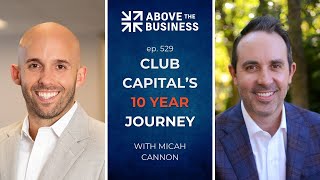
In this Above the Business podcast episode, host Bradley Hamner sits down with repeat guest Micah Cannon to unpack the repeatable blueprint that Club Capital used to grow from a fledgling insurance‑focused startup in 2015 to a diversified, technology‑enabled professional services firm celebrating its 10‑year anniversary. The conversation covers the pivotal hire that allowed Micah to step out of the sales role, the disciplined meeting cadence (weekly partner huddles, monthly financial reviews, quarterly in‑person strategy sessions) that keeps the leadership team aligned, and the importance of having business partners or mastermind groups for accountability without surrendering equity. They discuss how Club Capital embeds financial data into every decision, differentiating static budgeting from a dynamic forecasting process that is updated monthly and quarterly. Micah shares the value of time‑audit practices inspired by Drucker’s The Effective Executive to ensure the founder’s time is spent on growth levers, and they reference the Rule of 40 as a framework for balancing growth and profitability. The episode also highlights key inflection points such as moving from operator to overseer, expanding into new verticals like sports and U‑Sports, and the upcoming development of an AI‑driven “CFO agent” that will provide real‑time financial insights via a chatbot. Throughout, practical advice is offered for solo‑owner businesses seeking to replicate these systems, with calls to action directing listeners to Club Capital’s website and partner resources.
Chapters
Welcome to another episode of the Above the Business podcast. My name is Bradley Hamner, your host. On today's episode, we have a very common repeat guest, Mr. Micah Cannon, but we bring Micah on to talk about what is the blueprint that they followed with Club Capital to grow and scale their own company. A few things we talk about. One, what was the key hire that Micah made to remove himself, begin to replace himself in the business. Number 2, what is the cadence that he and the leadership team meet? And that has really been one of the keys to their success over the years. We talked about those 2 things and a lot more. I think you're going to get a lot out of this episode and what was the blueprint that they followed and maybe some— learn some things that can help you in creating a blueprint to be able to grow your business as well. Without further ado, here's my conversation with Micah.
Canon.
All right, thanks, team.
See you.
Bye. Micah, welcome back to the Above the Business podcast.
Thank you. Thank you. Excited to be here. Thanks for having me.
You're welcome. Great to have you. So we're not going to do background and origin story. You've come on the podcast many times with, with that. As we kind of begin to wrap up, uh, 2025, you know, which is crazy to think, uh, the podcast has been around 6 years. One of the things we've not, um, brought on to talk about is, you know, Club Capital's had tremendous success over the last 6, 7, 8 years or so in growing its own, own business. And, you know, one of the things we are really like to now portray is real deal business owners, founders that have been able to use a blueprint to scale their business. As you look back over the last few years in the growth and, and scale of Club Capital, what were some of the things that you reflect back on that really led to the success that you guys have had in growing your own business?
Um, yeah, you know, it's crazy. It's, uh, so we're entering 2026. It's December 2025. It's, uh, so we're actually hitting the 10-year mark that we, uh, formed Club Capital, um, which is wild. Now, um, there's— I feel like there's a couple, uh, a couple of times that there's a couple of years in a row that I feel like we quote unquote started because we were very much a startup from the sense of, all right, we've got an idea. Let's like, first step is let's like form the company, I guess. Let's like actually put it on paper, which is what we did in, in 2015. Like end of 2015 is when we formed the company. But 2016 ended up being the, hey, we're still working side jobs and, uh, and we're trying to get this off the ground. Like, are we really gonna do this? Are we really gonna kind of start a company? Um, and we did. And then 2017 was actually when I like left my other company, um, that I was at and started. So it was like kind of, it, it, it was a slow, like, and I just say that from a sense of You know, a lot of times, you know, people will look at where you are today and think, you know, oh man, look at what they've done. It's been easy, right? And you look back and you're like, man, it's been 10 years since we kind of like thought about this. It took a couple of years just to even like actually make it our full-time gig, let alone all the things that you learn along the way. Mistakes you make along the way, things that go well, things that go down. I mean, it's definitely not that like linear from here to there, right up and to the right as you want it to be. But yeah, I can't believe it's— we're going to be ultimately closing in on, on 10 years soon. In terms of blueprint, I will say there's definitely been some models that we've used along the way. It's not been a, by any means, a just shoot from the hip. And I say that especially because, you know, one of the things that I've definitely learned to cherish is the fact that I have business partners. And so, you know, what I've learned in this business too is that, you know, a lot of people don't. And I really look at that as something that's really helped us along the way because you have that, you know, those other people that are really keeping you in check, because it's really easy, as you know, what you start off as owner-operator, right? It's really easy to get kind of sidetracked in just every single day-to-day thing, um, and not to zoom out, right? As we've always talked, not to zoom out and actually talk about the business, uh, and really make sure that you're tracking KPIs. I think everybody has that intention when they start, I think everybody builds a version of their own blueprint or their own business plan initially, whether that's super complex or not. Like, I think generally everybody starts with something, but a lot of times it, it's not something you come back to, right? You initially in your business plan, you build out a model, you build out general thoughts of like, of KPIs that would be helpful to track, and then you don't. Right? Don't track them. You don't kind of, you don't kind of learn from them. You don't understand, you know, why is this? No one's really asking you either, like, hey, you're not hitting this, why not? And like having to respond, um, or at least having that dialogue together. Um, and so I will say, I think just having some business partners is helpful. But, you know, which I also think where a lot of other business owners can get help there is just what I, what has really done well, what you have done well in setting up too, is like mastermind groups for, uh, for owners, for entrepreneurs, because it helps act like that for a lot of business owners that, you know, are like sole business owners, uh, no business partners, is that ability to like be able to talk about the business, to have other people check you from an accountability perspective. So I think that's been super helpful for us and allowed us to actually stay a little bit more to our plan and to make changes along the way when we need them based upon, you know, different metrics not being hit. Or obviously, if profitability, for example, is not there, it's one thing for an owner to swallow that. It's another for their business partners to say, hey, what the hell? Right. Yeah. You know, and, and for you to be like, all right, you know, instead of a back, you know, things that sometimes become back burner items, or I'll think about that next quarter, or I'll think about that when I get to it, become, hey, I need to think about this stuff now. And we need to make decisions that like lead to better results now instead of later.
That's so true. You know, just to pull on a couple threads there that you, that you mentioned, and it's not a surprise that you mentioned this because you and I have had, plenty of just side personal conversations about this being a very strategic advantage. And yet here's the interesting thing. You guys at Club Kev have worked with thousands now of business owners, and the vast majority of them are sole owners, right? And what I mean by that, not solopreneurs, but they're the only one that has the equity in the business. You have the strategic advantage of having other people that have equity and are holding you accountable, but you're also holding them accountable for what they need to do. Okay, here's the question. Somebody may be listening to this and say, well, I'm an insurance agency owner. I'm not going to go out and just bring in another equity partner per se. What is the thing that somebody can do, even if they don't have a you know, say a third, a third, a third share, right, with other people, that they can get the advantage that you have been able to have in their business without necessarily having to give up the equity. Does that make sense? Like, how do I get that without doing— actually having other equity partners?
I mean, the first thing I would say, definitely don't give away that equity. I mean, that is, uh, you know, um, Uh, I, you know, obviously to it, to a degree, um, uh, definitely not my stance on business, but I would say especially in the insurance business, just in terms of what the like cap is on revenue and also what, what the strategic advantage of giving away equity would be. Um, but in terms of what you can, like what it gives you, you can mirror in some other things, or at least some practices. Um, And, you know, one of them is just the way in which you look at your business and your, and your financials too. And one of the reasons why Club Capital was created was kind of around this, is to bring your financials to the decision-making table. A lot of times people don't, right? And what we find is, is a lot of the decisions that are being made are being made because of personal reasons instead of business reasons, right? Where especially like in a situation where you have partners, it's, it's much easier to separate business and personal, right? Because from the business side, when you're talking with partners, you're looking at metrics, you're looking at financials, you need to make decisions. What I need to do or what somebody else needs to do that's going on in their personal life. I mean, yes, we all like and respect each other, but like, hey, that doesn't matter, right? It's like, what does the business need and what's good for the business? I think we need to do that versus what I need to do personally, you know, or hey, I need, you know, an extra $10K this month or I need an extra $20K this month. A lot of times what can happen with small businesses that don't have partners that, you know, are just in control of that, they won't make the right business decision that needs to be made because they'd rather take out, you know, and make a decision personally for something, too, which I totally understand. But I just think it's— that's an area that people can get caught in, right? Instead of— example that would happen with partners, you say, you know, the immediate thought would be like, hey, we've got a $100,000 line of credit for a reason. If we need, you know, let's use that for the business, then, you know, if we need to, instead of just putting a decision off. So I did say the first thing is just around the importance that you bring to, uh, to your financials. Allow them to like be a seat around the table, um, to help you make decisions. Uh, that's like the thing we always say is bring your financials to the decision-making table, um, so that you're literally consulting them, right? And so that, uh, especially firms like ours, what we try and do, we're not trying to just be like some bookkeeper, we're trying to be like that partner that is going to help you, like, answer those questions. Um, like, hey, should I be doing this? Like, hey, we're not your partner, you know, which is a benefit to you, right? We're not taking equity, right? But we're one of the ones that can help answer that when a lot of other people in that are sitting around you typically aren't the ones that are helping to be that resource for you.
That makes sense. I love that. What, um, before we move, um, to some of the other things you mentioned, and I kind of want to move into KPIs tracking and how you guys have been able to kind of keep score in the, in your own business. What does that look like? Maybe the cadence around tracking and the communication around some of those metrics. Let me ask you, what has been the cadence for you, you all to get together? As you mentioned, you said zoom out. We would obviously say get above it, right? You've zoomed out to be able to get above the business. What's the cadence that has worked for you guys? Um, is that, is that a, is that a monthly thing? Is that a quarterly thing? What has worked, um, for you guys to be able to kind of zoom out and be able to, to, to come together and even bring the financials to the table?
Um, so we have a couple like different cadences. So we do, as partners for the last, you know, almost 10 years now, uh, we have met, uh, once a week. I would say generally speaking, without fail, obviously holidays and yada yada, but like every week we meet to discuss the business, discuss where we are. Now, some of them, when you meet weekly, I mean, you're not getting into absolutely everything, right? But with the pace that we've tried to grow as well as, you know, different verticals we're getting into, different key personnel we're trying to get to over the years, yada yada. There's always something to talk about. So it's not necessarily like we always have the exact same agenda every week, right? But like, hey, what are the pressing items that we need to, you know, either discuss or inform people about of what's going on? Monthly financial reviews and then quarterly strategic planning sessions. Um, and, uh, the only one that generally is that we always make sure is in person is quarterly. Um, so we always get together for like a true like day, um, in person and, um, go out to dinner and, and things like that, right? You know, just like really be able to, to take the time away, uh, to review the business, think much more strategically, you know, it's not a lot of like financial review because we're already doing that every month, right? It's not— you're not like as much in the minutia, um, as you are trying to identify like, you know, are we on track for like what these— this year's goals were, and are we thinking about and being able to position ourselves for what we want to do 2 to 3 years down the line? Yeah, those are really the quarterly planning sessions where we're trying to even spitball bigger ideas as well. And obviously if things are bad, we're off— you know, we're really trying to dive in together to understand how do we, how do we solve those. Um, and then yeah, financial review stuff is, is everyone, as you can imagine, a firm like ours, but we're very much, you know, into that and diving into the numbers and looking at very specifically like our models, right? So like what are— so getting a little bit into the KPI stuff, but like What are our financials? Are they, you know, do we feel they're healthy? But also, are our percentages in certain areas where we want them to be?
So, you know, we're recording this at the end of '25. So, I mean, we just ran the annual planning workshop, and, you know, it's this time of the year in the next few weeks that every business owner is starting to do some level of reflection, but more importantly, beginning to project into the next year. Now, having 10 years of experience with this, What are the things that you all have learned in going in and setting projections into the next year to both balance optimism, not being Excel multimillionaires only, but also being able to match that with the resources and the resources being both dollars, but then also people capacity, to hit that? Because I'm sure that there has been years that you've gone into a year and said, here's our projections, and woefully underperformed. And then there's been— I bet there's been years you can look at and say, wow, we went into this with this forecast and these projections, and we exceeded it way more than we ever thought. But along the time, you start to kind of augment things down into some level of being able to predict a little bit better. You get a little bit better at predictions. Like weather, right? Well, maybe weather's a bad example, but I was going to say they get a little bit better with predictions of the weather. You get what I'm saying? So, but what have you guys learned so that you just don't go in there, you know, guns a-blazing, hey, we're going to grow 42% this year, you know, with absolutely no plan on how we're going to do that. But that's just our optimism, right? I mean, how have you guys thought through that?
You know, admittedly, we've obviously gotten better at it over time. Which, which is good, but a lot of it is. So I would say for annual planning too, I think one of the things that's been helpful for us is, is not just worrying about annual planning. It's you're doing this a lot throughout the year. So if you're really on top of your financials and really just the business model, I think the way you should when you're doing financials on a, on a monthly or even quarterly basis, you know, some of that financial review should, should already be looking at and adjusting some of your forecast, um, for, for what's ahead, right? So that you're not always comparing to what might be, you know, a— because what happens a lot of times, you set an initial budget, you get a month, 2 months, 3 months in, you realize, okay, like, some of my assumptions were wrong, because budgets are made on assumptions, right? Um, and so as you're, as you're going through, things are changing, right? And so you don't— you want to be able to reflect back to the original budget. But that's the difference between a budget and a forecast. A budget is, is kind of something that you initially set for, say, 12 months, right, at a time, 12 months, 24 months at a time. But then what you're doing monthly and quarterly is you're adjusting like that forecast because all of a sudden you start to have a different forecast than your budget. It's very rare that it's just like, yep, we hit every single thing and every single thing that we thought would happen would happen, and etc., etc., from the revenue side and the expense side. It's like, no way, you know, there's no chance that happens.
Yep.
So the forecast is like always changing, right? And so there comes a time where you might want to say, look, I, I, there's enough change in the forecast that I need to change my, my budget. Right? I need to set my forecast as my new budget, right? Like there's no sense in comparing to something that's totally changed now, right? And so for us, we're not that we're constantly changing, you know, the targets, right? But we're adapting to the reality that's in front of us and making sure that we understand that so that we're making better decisions. We're not making decisions based upon an old, maybe outdated budget. We're making decisions based on the data that we know and what we can see as our roadmap. Um, and so in terms of like planning ahead, it's like, you know, it's, it's not, you know, there is one, you know, kind of a time of year that you're more heavily focused on like what does next year or next 2 years look like. But for us, we also want to make sure that we're reviewing the reality of that on a monthly and quarterly basis so we can make adjustments. Um, and we don't— because what can happen a lot of times, say, no, well, this was in my budget. It's like, yeah, but things change. So like, you should probably do things so that you don't like run off a cliff. Yeah. Yeah.
I totally agree with that. I mean, I think annual planning, you know, while we do it and heck, we'll do it next year as one of our workshops. I mean, arguably, I think, I personally think setting a 3-year vision is really important, but I think more importantly is the quarterly rhythm, the quarterly world that you live in, because it allows you to set those adjustments. And obviously with you guys having, you know, the quarterly strategic planning embedded into like, this is just the cadence that we're going to review some of these things. And even the monthly financial reviews, you start to kind of course correct. No different than a plane taking off from, from New York. And once it gets into altitude, I mean, it doesn't just set its coordinates to LA and say, okay, well, we're just about to fly in a just dead straight line to get there. No, I mean, it's going around weather and all these other kind of things. And the same thing is going to be true in the business. I'm curious around kind of reflecting, what were some of the maybe inflection points that you look back over the years that really kind of began to kind of set things into motion, whether that's a marketing channel strategy, you know, connections made along the way? I mean, things like that, that you feel like, hey, this was maybe intentionally or in some cases unintentionally, part of our blueprint, uh, to be able to get there. But boy, reflecting, that was a, that was a, that was a big moment for us.
I mean, I, I think the first one is, is one of the, uh, one of the ones that's a little bit more, I would say, I guess, typical or cliché, um, is when you, the owners, me gets out of being the direct operator, right? So which was 8 years ago, right? But, you know, I think from our side, we always wanted to do, you know, more of a bootstrap business. And, you know, when you do that, you do it not just to say you're doing a bootstrap business, but you're also doing it typically because you don't want to give up equity, right? So you're not like, trying to give up equity for a windfall of cash or investment that allows you to like staff up immediately, right? Yeah. And so we didn't, right? So we, you know, I was doing everything right. I mean, I joke that, you know, I'd get a phone call and, you know, I'd be support, I'd be sales, I'd be support. They want to talk to payroll. I'd put them on hold and spin around the chair and talk in a different accent. Right. And it was, you know, very much just like all hands on deck. Like, you— I was doing like everything, you know, obviously for like the first 20 clients, and then it was, um, you starting to scale, right? Starting to replace myself in areas. Um, and so especially the, the, the one for me that, that was the best, obviously from an operations perspective, bringing in people that are, you know, being the accountants, being the advisors, right, is, is obviously huge. But I would say the biggest one there in terms of replacing myself is bringing in an credible salesperson, uh, so that I am very much not, not even responsible— or I'm still responsible, but for the day-to-day on sales, right? And which I see especially obviously in insurance, which is like a, you know, the, the, the, these sales powerhouses, right? Um, when that owner is still like the primary contributor of sales, um, that's hard, right? Because if that's the case and you haven't replaced yourself with someone like good enough to be able to like hold that, you go through this trade-off in your head of like, well, I can't spend time on the business because now there's a void in the business. Yeah. And revenue starts to drop, right? So being able to do that and understanding the impact possibly to profitability you know, in the short term, because that's where people get stuck in scaling is like, well, if I bring someone in, I'm not profitable or very much less. Yeah, right now. Yep. So you need to build that out and know what that looks like, you know, over time to say, yeah, I'm going to be less profitable for X period, you know, but as long as they're hitting these metrics, then, you know, by whatever month, like things should be on the up and you got to be able to trust that. And commit to it, but also track those metrics. Because if, if they're not hitting those metrics and you don't hold them accountable to them and you just keep them on and, you know, you're just stuck in a bad cycle too. So you got to be able to just know the math behind it, see the vision, see the forecast and be able to do it. So I mean, the first one is obviously just replace it. For me, it was very much replacing myself from the sales side that allowed me to definitely be more of the overseer of all of the operations.
Yeah, I mean, that is so true. That's why we talk so much about, whether it's on the podcast or overall, I mean, we really just love the concept of the Rule of 40 because it, it's the balancing of the growth that you want to have in the business and, and profitability. And to your very— to your point, hey, if you want to be able to grow, you have to make investments typically in two areas: marketing and people. And so when you make that investment in that salesperson or the customer service person, whatever that may be, these are investments you have to be able to make. And I think actually profitability is a prerequisite for that growth because, hey, I'm now making a conscious decision to give up some of this profitability in the short term to be able to make the investments in the growth. And you've been able to do that quite a bit. I think one of the things, Micah, that I you know, and knowing you for as— gosh, I don't know how long we've known each other now, but like just over the years, watching you personally operate, you've never really held on to something like with a— where you've white-knuckled, you know, a specific role or responsibility. You've been able— you've been willing to kind of freely give that up. I know that, um, there may be other things that have been harder for you to give up than, than some, but you've always been really open to, you know, shifting that and, and hiring someone else to do that thing so you could continue to level up. I mean, I think you're one of the best examples that I personally know that, you know, got a few hundred thousand dollar company, you get to a million and go on go on. But you personally, and I know your other partners have done this as well, but I just have gotten to know you more over the years. You leveled up and then the company followed, and then you leveled up again and the company followed. I mean, I don't think it's that outlandish to say 10 years ago you were not the CEO business owner that you are today. Okay. And you've leveled up every step of the way. What is your thoughts around that as you reflect? As my son would say, here I am glazing you a little bit. I don't intend to do that. Okay. When we end up hitting record, then I'll, then I'll bust you a little bit on some stuff. But no, but seriously, what has been— what does that look like for you in continuing to develop yourself and let go of certain things so you could continue to level up over time?
First off, very generous. And, uh, yeah, I mean, definitely I would say for me it doesn't feel like that all the time, but I appreciate it. Um, you know, just, just those words, kind words of what I guess you've seen. But I don't know, for me, I, I've, I'm, I can definitely agree and say, admit, you know, that I am not the CEO, um, you know, that I was 10 years ago. And I hope 10 years from now I'm a I'm a very different person as well. I very much know that I have a lot to learn, and business teaches you that very quickly. You know, you're always learning something. And in terms of being able to give things up, I just very much follow the school of thought that I want to hire people that are way better at me. you know, at the things that we need in the company. And, you know, we need specialists in areas, and I think I'm generally good at some things, but I would consider myself a generalist, right? And I'm very happy in that role, to be able to, like, I can focus in and, like, on a certain subject and be able to understand it pretty well and can even execute a bit there. But I know that's not my whole focus. Like, I need to be able to understand it, know it really well, maybe to help stand up some processes, and then I need to bring somebody in that's ultimately probably better at it than I am, um, to lead that so that I can pull out and then go focus somewhere else. I mean, for me, I— it's definitely something where, you know, maybe some leaders can do this. Like, I can't give, you know, so much attention on every single aspect of the business all the time, right? And so all of the business gets some of me And there are times where I give some parts of the business, you know, a lot of me or all of me, right? The ones that, right? But ultimately, depending on where my time is, that's the number one area that I know I need someone else, right? Uh, or either someone that maybe there's a person today that, that, you know, either needs to develop or something, or we need someone else because wherever most of my focus is, is the immediate identifier of I need someone else stronger in this area. Hmm. Hmm. Right. And now we can't maybe always afford that, but it's a, okay, great. That now I know that's the area because if I'm spending whatever, like any majority of my time somewhere, I probably need someone else doing that because like I, a majority of my time shouldn't be in one area.
Yeah.
I need to be able to help support the entire business. So if more than 50% of my time or whatever that number is, right? But like, if you know, and you'll know, right? If you say, like, you do a time audit of your week, you know, like, I am constantly here, that's where you need help. And that's where there needs to be some clear change in the business because you shouldn't have that much of your time in one specific area.
Hey, I think doing a time audit, I mean, we've talked about it before. I mean, it's one of those things. It's like, it's like some of these books that we all, you know, have on our shelves, but we haven't read yet. Doing it, actually doing a time audit, I mean, is one of the things that's in the book from Drucker, The Effective Executive. I mean, one of the best books that you can read. He talks about— I don't think he calls it a time audit, but he basically says doing a time study because you got to figure out where's your time actually going and is it going to the things that actually grow the business? And most of the time it is going to anything but the things that actually grow the business. And so we have to align those, those efforts to do that. Michael, we've obviously had you on to talk about a lot of different things, but it's— and look, clearly you guys are going to continue to go on. This is not the end of the journey, you know, by no means. But it's— I appreciate you reflecting just a little bit with us. Hey, people want to know more about Club Capital, what you guys do. Where would you point them to?
I would say just, just direct to our website, club.capital. Follow us definitely on social media on Facebook and Instagram. We, you know, it's interesting the evolution of kind of what we're doing. It's interesting now getting into some new verticals. You know, we're staying very true to just kind of a couple of niche verticals here. We, you know, excelled in insurance for the past 10 years, but even for the past year and a half, we've launched into sports, which has been Really fun. And also, I don't know, it's been a— it seems very random, but, but also just really nice. Like, you know, insurance agencies are very community-based and, you know, really build themselves up within their community. And then we, we happen to jump into U Sports, which is like an amazing, like, tie-in to community as well. And being able to like kind of double down on helping to just helping like communities around, around the country like have a better footing, grow, impact the kids in a different area. And then now some of the fun stuff that especially we'll be getting into this year is starting to build some of our own, some of our own technology. So we've never been that before. You know, we're a professional services company at heart, right? We use a lot of really cool technology that allows us to do things you know, I think differently than others. Um, but now we're going to start to build some of our own, especially in the realm of, of AI. And, you know, I think it just goes a lot towards what I think a lot of business owners need today, um, in terms of that, that ability to check themselves, that ability to like ask their financials questions. Um, you know, it's very much in line with, you know, where AI technology is and like AI chatbots are today is is how can we build something in that is, you know, directly tapped into the financials for the business owner. Yeah, um, especially because, I mean, not to replace us by any means, right? I don't think, you know, we'd have a larger discussion about AI and the accounting and CFO space, but not to replace us, but to add more value to accurate financials, right? And so accurate financials has to come first. And but especially from the business owner, you can relate a lot. You know, you have meetings with, you know, with your team on, you know, your financials and building forecasts and things like that. But when as a business owner do most of your questions have like the thoughts happen? One, they happen off the call with your accountant. Mm-hmm. Two, they happen at like either 5 a.m. or in the shower at 10 p.m. right? And a lot of times that's when you have the questions of like, I wonder how much I'm spending on this, or I'm, what's my, what was my, what was my profitability last month, or how did it compare to last year? And if we can put that into your hand as a chatbot that just goes directly into your financials, right? And it can just like talk with like Xero, which is what we use as the accounting software, and it can just pull all of that, right? Because it's tapped there's just so much more value in terms of giving you access to the data and that you want, like more real time, that you can then bring a lot of that, may help you make decisions more in real time. Like, yeah, sure, financials, and just make it even that much more valuable when you get on the phone with us or your accountants or whoever it is you're working for, so, or working with. So, um, that's some stuff that we're looking forward to this year. It's called like our CFO agent is like what we're So that's awesome.
Yeah, I mean, I agree with you. I mean, you know, some people really get up early in the morning. Some people are night owls. I mean, if you get up at 5:15 and you're doing some sort of, uh, planning and looking at certain things and it's on your mind, well, you know, you're not going to reach out to your—
you're not going to reach out to somebody at 5 o'clock in the morning.
But if you had that in your hands to be able to get some of that information, to be able to make better decisions into the business this month, this quarter, this year, Yeah, real time.
We were so used to real-time data now. I mean, I, you know, I mean, everyone's expecting answers quickly, um, and this needs to be an area that has answers quickly, right? You shouldn't always need to wait on, um, you know, on an email response or phone call, which is— which sounds silly, right? But, uh, you know, but we expect it. And so I think financials haven't been there yet, right, in terms of just like immediate access, immediate understanding, question and response, you know, stuff like that. And I think we can build that.
Man, that's awesome. That's exciting. Well, whenever that, uh, as that gets, gets released, uh, we'll have you back on. We're doing a, we're doing a cash flow and profit planning workshop and, uh, scheduled for late 2026 at the time of this, uh, recording. And so it'd be, uh, cool to kind of see where things are, um, at that point. Micah, appreciate you coming on. Awesome.
Thanks so much, Bradley.
Well, it's the first time that we've actually had Micah to come on the podcast and talk about the things that they've done over time with Club Capital to be able to— what was the blueprint they followed to be able to actually grow, you know, their business? They've had a tremendous amount of success. And obviously, you don't have a lot of success and continued success unless the things that you're doing for small business owners are actually working and getting traction. But there were a few things. Obviously, I think the cadence that his leadership team meets, the commitment to meet weekly, having the monthly financial reviews and the quarterly strategic planning. And just for me to add my own flavor to that, like many of you listening to this are not going to have other business partners that you're meeting with in that cadence. However, whether it's in a group of other business owners in a mastermind format that you're getting together weekly or ever so often, to be able to be in a room with other people that you're actually sharing some of these things and then just having the discipline to get out yourself to you know, plan on a quarterly basis, having the monthly financial reviews. If you're working with, say you're working with Club Capital to get your monthly financials, you know, by the 15th or 20th of every month, and then review that with your financial, you know, advisor, not your investment advisor, but your bookkeeping advisor, I think is a discipline and a cadence that makes a lot of sense. The second thing that he really mentioned a lot was whenever he was talking about himself getting out of being, you know, not just being the operator of doing all of the things, but really sitting and replacing himself in some of the roles. And he said obviously one of the key roles was being a salesperson. Now, for some people listening to this, that is easier said than, uh, than to actually do it. Some of you really love sales and enjoy sales, and so getting it back in yourself, replacing yourself with a salesperson, is challenging. With Mike, it was a little bit easier. That's not something that was really in his skill set, so it was easier to do. But there are other areas that has been harder for him and harder for other business owners. So whatever that is, the thing that you're holding on to the most, whether that's sales or the marketing aspect of it, or, um, maybe even the functional— in Club Capital's case, the functional accounting aspect of it— I think doing that time audit, if you've not read The Effective Executive from Peter Drucker, he actually talks about doing a time study and having an awareness of where the time is going. So I think those are two of my biggest takeaways with, uh, Micah. Go to club.capital, book a no-obligation demo with somebody on the team, and they'll reach out to you and help you to get the right cadence. I think his line, whenever he talked about bringing financials to the decision-making table, was excellent. I want to give a shout out to our podcast partners, Autopilot Recruiting, Coach P Consulting, and DirectClicks. Go to directclicksinc.com/above-the-business. DirectClicksinc.com/above-the-business. Going into this 2026, making the investments in both people but also in marketing is key to being able to grow the business. But In the world of Google, and especially now with AI, it is challenging to know. I mean, I was actually on the phone yesterday with a business owner that was just kind of overwhelmed with like, you know, all the Google stuff is challenging. And he was doing a lot of things with his website, whether that's blog posts, etc. Send them over to DirectClicks. They talk to them. Those are the areas that they specifically know. So go to directclicksinc.com/ above the business. Similarly to your marketing, one of the other big investments that you'll have to make this year is going to be with people. And we always talk to business owners that always be recruiting. Well, it sounds good in theory, but it's difficult to actually execute on that. But if you work with Autopilot Recruiting, you'll get a dedicated recruiter that's going to help you to always be recruiting, somebody that's always going to be looking for that next right person to bring on your team. So go to autopilotrecruiting.com, autopilotrecruiting.com. You know, we talked a lot about like personal and professional development. It's difficult to find a place where you can develop yourself, but, and also give your team members the development that they need. But you get both with Coach P. So go to coachpconsulting.com, coachpconsulting.com. You will be in a group of other insurance agency owners trying to do the same thing that you've done. And then they're going to give you a behind the behind the scenes look about what David has done with his insurance agency to grow and scale it to 3 locations at a level that is really some of the top in the country, but also a place for your team members to be able to learn from other people as well. So go to coachpconsulting.com, coachpconsulting.com. All right, everyone, enjoy this episode. Until next time, lead well and go be great.










