From Doing the Work to Leading the Business with Michael Zipursky
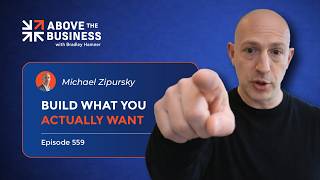
Michael Zipursky explains how consultants move from doing the work to leading strategically. Document every process in detail, hire senior talent that accelerates growth rather than just relieving your workload, and use AI to turn those recordings into checklists and daily briefs. Define whether you want growth or scaling before you choose your path.
Chapters
If you're the founder and you're doing everything right now, and let's say you want to bring in somebody to help with business development, then you need to begin by documenting what is your process. How do you actually go about delivering exceptionally?
On today's episode, we have Michael Zaborski.
I think the biggest thing when it comes to training, the results that you achieve as a founder, a lot of the exceptional results or your standard of what excellence looks like is in the nuances.
Now, the reason we're having him on is because The threads in business are the same.
Create a map, right? So what are the chapters of the book that you want to— and I'm not saying an actual book, but let's just say you want to get down delivery. So start with one function. So from in delivery, what are the different areas that we touch right now from start to finish? What does that look like? You write those out high level. And the next is just record yourself talking through each one of them like, this is what we do and this is why I do it.
Marco Zaborski, welcome to the Above the Business podcast. Great to be with you.
Hey, brother, thanks for having me.
Excited to have you. I'd love to start with background and origin story. Take our listeners back and bring us to present day. Tell us a little bit about your journey.
So, I mean, I've been an entrepreneur since high school or end of high school. Built a few companies, sold a couple companies, but for the last almost 18 years now, I've led Consulting Success, with my cousin and now a team of about 20 of us where we help consultants to really build great businesses. And it's all doing work that gives you fulfillment, right? Really being able to feel proud of the work that you're doing, the impact you're having, but also creating a lifestyle. And so, you know, I think the name of your podcast Above the Business is an interesting one because Very often people spend a lot of time inside of their businesses and they're just so focused on doing the work, especially those that we work with in terms of the consultants that it becomes more and more important to make sure that you're, you're also thinking strategically about how do you set yourself up to, to benefit from, from greater leverage in the work that you're doing. So you're not just doing work, but you're actually having the right systems in place and the right strategy to ensure that you're, you're going to feel really good about what you're building.
Yeah, I think it's uniform for whether it's a consultant or a small business owner. I just left a weekly team meeting an hour ago, as a matter of fact, um, for a, a business, and that founder business owner very much in the weeds and in his own words has kind of bumped up against this idea of resistance. And I think that in this, you know, typically the business owners we work with are in this $300,000 to $3 million range, something like that. Well, naturally there's these patterns that come up, and I'm sure you see very common patterns, but I want to, I want to dive deeper into this idea of working in the business, okay, in the thing, the day-to-day. And like, how do you begin from your perspective to gain perspective and then actually start changing actions and behaviors to kind of get above it? At least not all the time. I mean, we don't even think you should be above the business 100% of the time.
Sure.
But like, how do you actually, in your world, work with people to do that? Because I think it becomes a good example whether or not it's a consultant or even if it's a, you know, a pool construction company. Yeah.
I mean, the first thing is just what you're getting at, which is being conscious that there's a choice. Very often in our world of consulting business owners, they didn't study how to grow a consulting business, right? They left the corporate world at some point or they kind of accumulated this expertise and experience over time. And so they're very good at doing the work, but they haven't had many at-bats and practice in how do you actually grow your own, you know, your own business that you're fully in control of. So just knowing what the potential is, what the options are, is something that very often people don't spend enough time thinking about just because all their time is spent actually working, you know, inside of the business and delivering great work for their clients. I think the second part of it then comes down to understanding that, you know, you can't read the label from inside the jars, as they say, right? So getting that perspective, whether that is making time to really be thoughtful and getting like stepping out of the business and allowing yourself time to think and to see the bigger picture, or what most people do, and this is why they reach out to us at Consulting Success, is that they want to surround themselves with people who have been where they want to go. So if you're right now doing half a million dollars in your consulting business or you're doing $2 million or whatever the number is, but you want to grow to that next level, generally the fastest way to get there is to, to learn from people who have already been there and done that before so they can help you to avoid the mistakes that you might make, but also to gain the perspective and the ideas and the actual steps to, to get there much, much faster. So in our world, it's very much, you know, looking at what do you want. And I think this is probably the most important part of it, Bradley, is for people to actually— there's no right or wrong, right? It, it's, it comes down to what do you truly want to create? And for, for some people, that's gonna be working inside of the business, like doing the majority of the actual delivery, or they want to be very much tied to that. For others, they want to get off of the delivery as quickly as possible, and they, they know that where they shine the most is in, in business development and, you know, closing deals or creating content, writing books. There, there's no right or wrong. That's the beautiful thing in my mind about business is that you can truly create whatever you, you enjoy doing, whatever you want to be doing. But the challenge I think for many is they haven't actually spent the time really thinking about what they want and what is possible. And if you're not clear on that, it's really hard to engineer or to build a plan, a strategy, and to take intentional action towards it if you haven't actually identified what's meaningful for you, right? What do you want to have? We have some clients that are solo consultants. They're doing anywhere from $500,000 to $800,000 per year, uh, and they love it. They don't want a team. We have others that, you know, have teams of, of 10, 15, 20 people, and they want to build for a future exit. So knowing first what you want will then help you to figure out what is the best path for you to take. But there's no one or best.
Yeah, yeah, I totally, totally agree with you that at the end of the day, we we have a tool called the Clarity Organizer where we basically believe, like, you've got to get clarity on the vision that you have. And what does a dream outcome, you know, look like for you? Because at the end of the day— and by the way, you're, uh, I, I think you would agree with this— like, you can change your mind. You can change your mind.
It's your business.
Like, if you say, I'm never gonna sell, or the opposite, maybe somebody says, you know, eventually I would love to have an exit, and then they get, get down the road, they could— you know what, I don't want to have an exit. That's not what I don't necessarily do. Okay, that's fine, you can change it, but you just gotta have one. I mean, at the end of the day, we gotta point this thing somewhere, right, into, into the, into the future. And where is that point that you want, that you want to put it? So I totally agree with you, you know. What, what are your thoughts on— because I think one of the more difficult things, especially if you're wanting, if you're trying to build a team— now look, what I'm about to say does not apply if you're wanting to be a solopreneur. It just doesn't. Okay, this does not apply. That said, philosophically, not speaking to just consultants, but in business, I think business is a team sport. And so therefore, the bigger you want to go, the more you want to grow, the more success that you want to have, the more important it is that you have to build and develop a team. However, it gets really difficult, Michael, in learning how to hire the right people, but more importantly, train and develop them. Like, when you're training and developing that first sales rep, even like as a consultant, etc., it's difficult. How do you help some of those people that you work with that say, this is the vision I want? Okay, so we get to that point and they go, this is what I want. I want an XYZ company with 8 team members, something like that. Okay, great. Well, they're gonna have to start training people. How do they actually go about doing that well?
Yeah, well, the first part is making sure that you have some documentation or understanding of what, you know, um, working well or performing well, like to create an outcome, right? What are the actual right steps to, to do that? So you need to— if you're the founder and you're doing everything right now, and let's say you're using your example, you're gonna— you want to bring in somebody to help with business development, because you don't want the full reliance on you to bring in all the business, then you need to begin by documenting what is your process, how do you actually go about delivering, you know, exceptionally on business development. I think the, the biggest thing when it comes to training, Bradley, that a lot of people miss is that your, you know, the, the results that you achieve as a founder, a lot of the, the exceptional results or, or to, you know, your standard of, of what excellence looks like, is in the nuances, right? Very often people talk about like, this is how we do things. And then the founder looks and says, well, okay, I brought this person on, but they're not delivering or they're not performing to the, to the level or to the standard that I think we really should be having here. Something's wrong with that person, right? And you start kind of wondering what's, what's going, going off kind of track. What's gone off track is that you haven't actually distilled down and captured the nuances of why you do things the way that you do them. And what makes that little, you know, that one little side, one little, you know, step that you take that maybe you didn't have in your training, you didn't teach somebody, but you do it because you're used to doing it. Those little things add up, they compound. And that's what really, I think, creates, you know, much greater results. So step number 1 is making sure that you've documented that very, very clearly. And then, of course, yeah, you got to train people to do that. But I'll add one more thing because I think this is important if you're talking about building a team. And that is that most business owners are afraid to hire the people that can really get them where they want to go to faster, right? So the, the status quo is you bring somebody on who's a bit more junior and 'cause it costs you less, and then you spend the time to train them and work with them to get them up to a place where you hope that they can be. If you look at some of the most successful companies though, they don't take that approach. They are more comfortable investing more money upfront to get somebody who's exceptional from day one. Who actually already has the experience of, you know, taking a business or working in an environment of where you want to get to. So they're not hiring for releasing or relieving the pressure you have today in your business. They're hiring for where you want the business to be in the future.
Mm-hmm. Mm-hmm.
Right. And so that I think is, not everyone can do that, right? Not, not everyone. If you're running a small business, you may not have the financial ability right now to make that investment for the future person. You actually want. But I think when we talk about team building, what a lot of people do is they're hiring just to release pressure in their business for something that's going on today, but they're not actually intentionally designing and strategically thinking about building the team for the business that they want to have in the future.
That's interesting. That's a good— I've never thought about it from the perspective of releasing pressure, but I think you're right about that. I think it's another angle, then help me square up the idea of then Dan Martell's concept of buying back your time, right? So, so I am wanting to buy back my time, so therefore I'm gonna go hire— I don't know, it's just, let's just start off with a— I'm gonna go hire a VA to help me with my scheduling in my inbox. That's releasing some level of pressure. So help me square those two concepts up about kind of where I am today. I'm in a lot of pain, I'm in a lot of frustration, I'm in the weeds, I'm doing a lot of stuff I don't want to be doing with this idea of like hiring. Okay, I'm at a million, I want to get to 3, but I'm in a quagmire, so I'm buying back my time, but I don't— yep, how do I square these two things up?
Yeah, I mean, the VA example may not be as easy just to kind of to wrap your head around because I think that in some cases You don't necessarily hire a VA to get you from $1 million to $3 million, right? You hire a VA to take lower value tasks or things that you're spending your time on, right? To free yourself up. But let's use your example. If you're at $1 million right now and you want to get the business to $3 million. So what a lot of people do is they start feeling the pressure of being at $1 million because they're getting close to capacity or something, right? It's just that they're not— yeah, so they might be at capacity right now. Or they might feel, you know what, I need to go out and do a lot more business development, but I can't right now because I'm so busy delivering inside of projects. You could look at that and go, okay, well, I'm gonna hire somebody to just release this pressure so that I can remove myself from delivery and I'm gonna get a junior-level person or a mid-level person to help me with this. And then now I can shift over and start working more on business development. Well, if you wanna get to $1 million, you know, from $1 to $3 million, the other approach might be to think about, Who's already gone from 1 to 3 million? Who has that experience?
Okay.
And who knows what it's like to deliver, not at a, you know, for a business that's at a million, but for a business that's at 3 million or 5 million, they have the experience of actually running delivery and they can come in and set up the systems that we need to manage the capacity better. That's on the delivery side. But you could do this, you could say the same thing for the business development side, which is I can try and figure things out as a founder of how to get us from 1 to 3 million. But what if there's somebody who's already done that and multiple times and they, they know today what we need to do to go from $1 to $3 million, it's gonna cost me more. But if I want to do that, again, this is all a choice, it's not a right or wrong, but if I want to get to $3 million faster, would it make sense for me instead of, you know, paying $100,000 for somebody, what if I pay $250,000? But that per, you know, plus some performance bonuses, but that person can come in and right away, you know, make significantly or make strides and help us to get from the 1 to 3 in 18 months as opposed to spending the next 36 months trying to figure things out ourselves.
Yeah. Which leads me to, and I think in the consulting business, this would be difficult in particular. Okay. And so I think it becomes, again, another example that I think we can apply from consultants over to business in general is how do you help And how do you, what do you fundamentally believe about helping somebody get the business out of their head? Okay. Like I'm a consultant. I've been doing this 30 years. I have not been. I'm just saying, like, as an example, I have built in a lot of nuance. It's very difficult for me to transfer over. Very difficult. I have done on this podcast 300 interviews. I have read, I don't know how many books. It is really difficult for me to kind of transfer over years of experience to, to someone. Not saying it's impossible, I'm just saying, I mean, clearly Tony Robbins has done it, you know.
Yeah. Your question is, how do you do it, or what's, what's one way to do it? Is that the question?
Yeah, yeah, yeah.
I mean, I think today it's actually easier than it's ever been before. So here's what I would suggest. Uh, the first thing is just to high level Right? Like bullet point, here's the things that I want to cover. So don't start and just say, oh, I have a lot of stuff in my, in my head. I need to get it out. Like create a map, right? So what are the chapters of the book that you want to, and I'm not saying an actual book, but let's just say you want to get down delivery. So start with one function. So from in delivery, what are the different areas that, that we touch right now from start to finish? What does that look like? Okay. You write those out high level. Then the next is. Just record yourself talking through each one of them. Like, this is what we do and this is why I do it. And these are the things I look out for. This, you know, in a situation like this, here's how I'd handle it. With AI, it's never been easier than it is today to get all that out, right? Put it down, whether it's in a transcript form or just an audio form. Then you have this base of knowledge that you can do a lot with. Right now you can start to actually interact with that AI. You can start to ask, you know, build me a summary on this, create some action points, give me a checklist, anything you want. You can pretty much pull from it. But I think that the big thing is people often don't even take the step. Like they'll write things out and say, this is what we do, you know, this is how kind of how we do it. But they're always going to miss some nuances. Whereas if you're going to start talking to it, you can just get it off your mind. I think you'll, you will be able to capture a lot more. What people have done prior to this is, is Loom videos, and that's kind of historically what we've, what we've shared or, or encouraged our clients to do is, again, think about what's the area that you want to document and you're gonna work through your business. You can, you might start with whether it's marketing or delivery or operations, right? Decide the function that needs kind of the, the support and then record a Loom video of you doing it. Or if you have team members, get your team members to do it. And that now becomes, kind of, you, you have this inventory of, of knowledge that when you hire somebody you can go through. But the other part of it is that just by going through this, you'll often be able to identify, especially this, if you do this like kind of in a team environment, you'll be able to identify inefficiencies, right? Things that you're doing today that is likely baggage that's been accumulating over years cuz it's always the way that you've been doing it, but you may not actually need to be doing it any longer. So that processing is very, very powerful. But to make this very tactical, Loom videos work great. But what we're seeing work even better right now is actually doing this in voice, getting it down, having somebody talk through it. And it can be a combination of, you know, Loom videos that you record and then upload it into an AI. But once you have it there, it's— I find it does a much better job of actually capturing all the nuances of why you do things. And so I've had clients, Bradley, that I've said, here, I want you to talk through when you are reviewing the proposal before you send out to, you know, before you review it with a client, like talk through why did you structure this this way? Why did you, you know, what are the things that you're very careful of putting here? Why are you using this specific language or these words? So you're actually getting all that down. It captures it. And now that becomes a really powerful body of work and kind of, you know, IP for you to use with your team going forward.
What do you think people are getting right about usage with AI and having it as leverage? And what do you think people are getting wrong?
I think far too many people are still using it for a very surface level, like little productivity things. You know, let's use it for content creation. And there's— if you approach AI strategically and you look at How are you using it? So I'll give you an example. One thing I've done with AI recently is I have it actually provide me a morning brief. So every day I get a Slack notification that tells me everything that I need to pay attention to that day. It looks at my calendar, it looks at my email, it looks at our Asana, it looks at Slack. And otherwise I would be checking a whole bunch of different places, but now I get one message. and now I can decide and it'll tell me, you know, follow up on this, this personal time, your daughter has a piano lesson, like whatever it is, I can bring in personal, I can bring in the business and it's all there for me. So that it's a, it's a personalized, you know, strategic function where, and that's, I think the opportunity for everybody, but very often people are using AI where they're just like chatting with ChatGPT or, and so they're getting, they're getting an output, but the output is not personalized to them. It's missing the context window, if you will. And when you bring the context into AI, that I think is where the magic starts to happen. And so I see that as a huge opportunity. I think there's a lot of things we all need to be careful of when it comes to AI and agents and all this stuff because of security stuff that, you know, people haven't really fully— they're just jumping on the trend, the latest stuff. And I think that's exciting, but I think there, there'll be a lot of people just spinning their wheels, just trying stuff because it's, you know, again, it's like the shiny new thing. But to me, the opportunity is really making it personal to, to you, to your business, to your workflow, and having it make everything you do more, just more efficient, more effective.
I call 'em hills I'm willing to die on. The more that I've been in business, there are very few hills now that I'm willing to die on because some of the ones that I was used to say, um, for years now— now I've, you know, you, you being in business for a period of time, those become debunked, so to speak.
Sure.
Um, never sharing equity as an example. Well, that one got debunked pretty quickly, uh, if you're wanting to really scale, as an example. What are some of yours?
Yeah, it's a good question. So I'll take you back to— this is now going several years back, but for a very long time, I was not interested in building on our current business with, with the team. So a lot of the delivery lived with myself. And I remember wondering, you know, should we expand this? Because we, how are we gonna manage the, the quality control? We wanna make sure our clients get great results. And so that was something that we had really thought we want to, you know, keep this as a lifestyle business, a business that's much easier for us to manage because there's fewer moving parts and that adding more people would create more complexity.
Mm-hmm.
And part of that's true, but part of that is true. Yeah.
Part of it is true. It is true.
But what you also find is that when you bring in more systems, more people, so now fast forward many years since that time, there's, there is certainly more complexity, but complexity has also created in some ways a better quality of life because I can now focus on the things that I really wanna be focused on. So we, we can still have it, we can have a greater impact in many cases, right? We can, we can grow revenue, grow profit, we can work with more people, we can help more people. And I don't need to be the one touching as many buttons anymore because we have now the people to do that, right? And that there's infrastructure there. So the business is not reliant on me. If I'm away, the business is still moving. It's, it's still, It's a, you know, it's living, it's breathing. So that's one that I think for many years I held onto and in previous businesses as well. I think another is that scaling and growing. So this is kind of like the opposite of what I just said, but it's something I've been thinking about and seeing this with a lot of clients. Really asking yourself like, why do you want to grow and scale? Like, you know, people have this idea, well, I want to get from 1 million to 3 million, or I want to get to 1 million, or I want to get to 5 million, I want to get to 10 million. Well, like, why do you really want to do that? And I think when people really start looking into that, the answers tend to appear, tend to be more often than not that they don't have a good answer for that. It's like, well, everyone around me is talking about 10 million or 5 million, or, and how, you know, amazing life is going to be at that point. But we've been really seeing a larger and larger group of clients who are saying, yeah, no, I actually don't want to just grow for the sake of growth. Like, I really want to be intentional about what I want to build here. And that to me is, I think, actually the most important thing. There's no right or wrong, I think, as we, you know, we all know. But getting really clear on what's meaningful for you Right? What can you feel good about? What can you feel proud about? And then designing what supports, what supports that. So yeah, I don't know. I don't know if it's really Bradley connected to your question in terms of like dying on, on the hill for something, but my beliefs have definitely changed over the years. My focus has changed, you know, over the years. What I focus on today and the way that I operate today is very different from how I did when I was, you know, younger, my first few, few businesses. Where the focus was, you know, tended to be more on financials and just, you know, putting in whatever amount of work was necessary to grow the business. Yeah, I have a family, I have two daughters, I, I have a team. So each of these things over time has shifted where, where I focus and kind of how I spend my time.
Yeah, that's good. You mentioned something, last question, um, is growth and scale. How do you see those two things to be similar or different? Because sometimes they'll kind of get used interchangeably and maybe you do feel like that they're interchangeable. What are your thoughts on those two?
Yeah, no, I think they're different. So I mean, to me, growth is something that everybody should always be going after. And growth is not about more money or about a bigger team or about a bigger house or whatever. Growth to me is, is just the process of growing. It's a process of, of learning. It's a process of, of challenge, challenging yourself. So it's, it's the opposite of being complacent, right? And, and I think that's something that, that everybody in business should always be thinking about, which is how do I grow? Again, it doesn't have to be bottom line or profits. It's deciding what is meaningful and important to you. but you should always be thinking about how do you grow, uh, scaling on the other, on the other side, what I think most people, um, associate scaling with is growing revenue, growing your team, you know, becoming bigger, uh, and ideally doing it in a way that is more, more efficient, more streamlined, right? More, more effective. Uh, and so I think that term is used a lot more these days where people used to feel like in order to be something, in order to really mean something, I need to scale. And if I don't wanna scale, there's something wrong with me. And I don't think that's the case. I think that scaling is important if you want to build something much bigger than yourself. If you want to have, you know, a larger team, if you wanna grow revenue significantly, then the idea of scaling is critical because you need to find a way to do all those things, but do them with a foundation that allows you to still enjoy life and to have a, you know, quality of life. But for a lot of people, they don't want that, right? They want to earn a great income, to have a lot of freedom and flexibility and do work that they enjoy, and that's sufficient. So I think it all comes back to how we started this conversation, which is getting clear on what does success mean for you and look like for you. And once you know that, then you can design the optimal path to get you there. And that might mean adding team members or having fewer team members. It might be, you know, more systems, less systems. But I think growth is required for anyone in business because if you're, if you're not growing anymore as an individual or as a leader or as a business owner, then you probably shouldn't be in business.
Yeah. Well, it really is. I, you know, people say you're either growing or you're dying. I think you're either moving forward or you're moving backwards. The thing does not— like, it, it grows and then it gets to the top and it pauses for just a second, then that thing immediately starts coming back. I totally agree with that. It's very hard to— for, for the thing to just be flatlined, you know, uh, uh, in perpetuity. Michael, this has been great. People want to connect with you, learn more about your work. Where would you point them to?
Yeah, consultingsuccess.com, home to everything that we, we do. Uh, or feel free to reach out on LinkedIn, you'll find me there.
What is working above the business mean to you?
Uh, it means creating time and space to, to really think about the past, the present, and the future. It means that progress is being made in the business even when I'm not involved in it in a direct way.
You know, time to think and space to be able to breathe and actually reflect I like the past, present, and future. Where have we been? Where are we today? And where we're going, which led into one of the biggest takeaways, uh, kind of a reminder again for me and for our listening audience. It is so important for you to have clarity on where you want the thing to go. You want a $500,000 business, then go, go do that. Okay, you want a $3 million company, then go do that. You just got to have a blueprint. to based on, uh, taking you from where you are to where you want to go. You just got to have both coordinates. Google Maps is really good at helping you where you are to where you want to go, and if you get off course, it'll redirect you pretty, pretty quickly. But it's got to have two coordinates, and I think you do as well. Michael, this has been a great conversation. Thanks for coming on.
Thanks for having me.
Want to give a big shout out to our podcast and brand sponsors, DirectClicks. Go to directclicksinc.com/above-the-business. Look, marketing There's a lot with marketing. There's a lot to learn. There's a lot of numbers to learn. And understanding that at the beginning can be a little overwhelming unless you have somebody that's kind of being a guide. And when you work with DirectClicks, they will help you to understand it. They'll give you the mindset, skill set, and then certainly the tools to be able to help you get on top of your marketing, make sure that you're putting the money where you actually should to get the biggest return on investment. DirectClicksinc.com/ above the business. You know, when I think about growth, I think about you're going to invest in two main things. You're going to invest in people and you're going to invest in marketing. Well, we just talked about the marketing side. What about the people side? Two things with people. You got to hire the right people. But if you're going to hire the right people, you have to have a flow, a candidate flow, just like deal flow in business. You got to have candidate flow of A-players to help you to be able to select the right people. Well, that's easy to say. That's much harder to execute on. But unless you work with Autopilot Recruiting, then it's not that difficult. Autopilotrecruiting.com. Autopilotrecruiting.com. Look, they're going to do almost everything other than hire the person for you. Autopilotrecruiting.com. Let them know you heard about them. On the Above the Business podcast. And finally, with people, you know how important it is as a small business owner to get yourself around other like-minded individuals who are trying to do the exact same thing that you are, which is to grow. Well, what about your team? Have you put your team in the environment with peers that are trying to do the same thing? If you haven't, go to coachpconsulting.com, coachpconsulting.com. Let them know you heard about him on the Above the Business podcast, give you one— well, you and your team— one free entire month so you can test drive it, see what it's like for you. Only when you mention Above the Business. Really enjoyed that episode with Michael. Hopefully picked up some, some, some things. Look, whether it's consultants or small business owners, a lot of threads apply to all small business owners in that conversation. Hope that served you well. Till next time, lead well and go be great.










