Moving the Goalpost
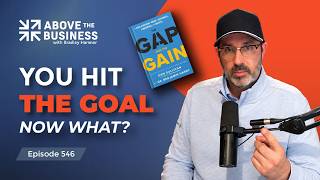
Bradley Hamner explains how to stop chasing moving targets by building reflection into your routine. Use a Sunday review for wins, a 13-week quarterly check-in, and an annual review to see what you've actually gained instead of fixating on what's next.
Chapters
One of the things I want to share with you that I think is important, which is it talks about in the book, is this idea of like stopping and turning around and looking backwards at the success and the progress you've made. Look how far you've actually come. We read this book, but how do we actually realize the book? Hey everyone. Well, if you listened last week to last Friday's episode, I did the GOATED books, my top 25 books. They're actually on this shelf behind me. And I— but on the episode, I actually went through the top 10, and then you can get a list of my top 25 books that have had the biggest personal impact on me. Now, the gap and the gain. This book was in the top 10, but here's where I want to talk about this book in particular. The idea of this book is relatively simple. It is this idea that as you set a target and you move closer to it, it seems like that it's like the horizon line. It continues to move with you. And there's this idea that no matter what success that we achieve, It's going to continue to move out. You sell your company for $10 million. There's someone with a bigger jet and you begin to say, you know what, I wish I'd have sold it for $50 million, so on and so forth. Actually, this becomes fairly common when I listen to one of my favorite podcasts, Built to Sell. But this also becomes true whenever you're just achieving goals within your business on an annual basis, even if you don't have some grand exit of $100 million or whatever it may be. And so this idea of the gap and the gain, I think is great, is that, you know, as you move, get closer to things, you begin to kind of— it moves with you, move, moving like the horizon line. But one of the things I want to share with you that I think is important, which is it talks about in the book, is this idea of like stopping and turning around and looking backwards at the success and the progress you've made. Look how far you've actually come. And so there's two things I want to talk about with this is in practice, in reality, how do you actually do that? What does it look like for small business owners? We read this book, but how do we actually realize the book? And I did a podcast on that too. So you read it, but how do you realize it? Well, there's a couple ways to do that. I think number one is to stop turn around, look back on a weekly basis. We call that Sunday night planning. And that's just for a handful of minutes that you look back on the week and you reflect on what are all the wins that I had from this past week. That's number 1. Number 2, I think that it happens on a quarterly basis. So you do it throughout the quarter. In fact, maybe hopefully, ideally, in a perfect world, you would do it 12 weeks. And then that 13th week, you would be doing your quarterly planning. So now we're looking back on all of the things that we've done for the quarter. But one of the things that begins to get difficult is that, especially if you're a solo business owner, is that things can kind of— that the week 13 of March going into April, the quarter, if your team doesn't know it, they're not into that cadence, so to speak, that rhythm, then it can just kind of go from one month to the next. And so what we like to do is actually help business owners in that week 13 to actually stop, turn around, look backwards, see how far you've actually come. That's actually why we run the quarterly. And if you would like to come and do this very thing with us, I'd love to invite you to, to do that. Go to blueprintos.com/assets and you can register for the quarterly. Blueprintos.com/assets. And we do it at the, towards the end of March. So you got plenty of time to be able to register for it. So number 1, I think you do it weekly during your Sunday night planning. And then number 2, I think you do it quarterly during your quarterly planning. And it's this idea that you stop, turn around and see what all progress that you've actually made. And even if you've had a really tough week, the wins are there, the lessons that you're learning, the progress that you're making is there if you're willing to actually go out and seek it. And then I think number 3, it happens on an annual basis, on an annual basis where you kind of look back over the entirety of the year to see all the wins that you've had and the progress that you've made this year. So monthly, quarterly, and annually is the best way I think that I know to actually realize the gap and the gain. The other thing that I want to talk about is not just the cadence of looking backwards to see the gain, but I also want to talk about this idea of not moving the goalpost. In fact, I almost called this the horizon line, and so I ended up deciding, you know, to call it, you know, moving the goalpost. Because one of the things that's different in business specifically, if you go about it the right way, is that it actually maybe doesn't— the horizon doesn't necessarily have to move. What if you could actually take the exact concept that they talk about in this book? And this is in my top 10. So if you've not read this book, highly recommend getting it. But how do you take the concept of this book? We talked about the game, but what about the gap? What if there was a way to not have the horizon move? And I think one of the ways to do that is by setting quarterly priorities and annual objectives. If you set annual objectives for the company and you set quarterly priorities that help you to move closer to that, by definition, you have planted a flag or you have planted the goalpost of exactly what you want to accomplish. And so as you get closer to them and as the timeline— let's just say a quarterly, kind of, you go in from January January into February into March, it gets closer. We've not moved the goalposts. We've said, this is what we're trying to achieve. These are our priorities this quarter. I think that you can actually get the entirety of the benefit of this book, the gain, without the feeling like it's a moving target. And oftentimes, in fact, I was just on a game plan call with somebody. And I asked them the question of, what is it you want? And they said, you know, honestly, it feels like it's a moving target. And that's a small business owner gets to decide. But it doesn't always have to be that way. You can actually plant a flag. You can put the goalposts in concrete for that quarter and say, this is what we want to achieve. And then as you get closer to it, and at the end of the quarter, you can also do this exercise with the gain. You can look back weekly, quarterly, annually on the progress that you've made. I would encourage you to actually document and write down that progress that you make. Because it becomes almost in some sense an artifact for you that you can look back on in your journal one day to see all of the progress that you've made as you reflect back on your life. I hope this served you well. Love to see you at our upcoming quarterly, blueprintos.com/assets. Love to have you there, totally free. blueprintos.com/assets. Register for the quarterly. We'll see you there. If you've not picked up The Gap in the Game, I encourage you to do so. All right, everyone, till next time, lead well and go be great.










