The Core Principles Behind Authentic Leadership with Dr. Matt Paden
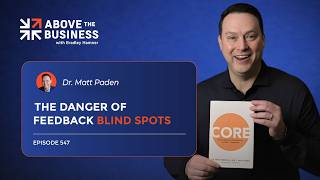
Dr. Matt Paden explains authentic leadership through practical tools: deputized truth-tellers who give blunt feedback, leading with your ears by listening more than speaking, and the Idea-Activate-Implement workflow. He also introduces the Working Genius assessment to match people's natural work styles to tasks.
Chapters
Welcome to another episode of the Above the Business podcast. My name is Bradley Hamner, your host. On today's episode, we have Dr. Matt Payden. Did you know that this podcast, Above the Business, used to be called the Leadership Podcast? Well, we talked about leadership a ton. But how do you actually have the desire to want to be a better leader, but actually do it? From idea to actual implementation? What do you actually do? In this episode, it's one of the best episodes on leadership that I can remember. We've talked about culture development, individual personal leadership, and all of those are incredibly important. But, and we've all heard the same sayings and quips about leadership is influence. Yes. But how do I actually go about doing that? I have a number of things circled on my page that are key takeaways from what meeting turbulence looks like, the difference between why models in your life is better and more important than information. Why wisdom is important, more important than knowledge, and what does it mean to actually have a deputized truth teller in your life and in business. We cover that and a whole lot more. I think you're going to love this episode. Without further ado, here's my conversation with Dr. Matt Payton. Matt Payton, welcome to the Above the Business podcast.
Hey Bradley, appreciate you having me on today. I look forward to being a part of the show.
Excited to have you. Love to start background and origin story. How did people get to kind of where they are today? Take our listeners back. A little bit about your journey.
Yeah, I appreciate that. It's been a wild ride in some ways, but it all started in higher education. I was a higher education administrator for 2+ decades, most recently serving as an executive vice president at a Christian university here in Nashville. I loved education. I loved working with young people. I loved leading teams and large teams and managing budgets and all the things that go with life as an administrator. One of my favorite things to do was teach. And I do have a doctorate in organizational leadership. And so I was credentialed to teach from time to time, given the opportunity, primarily in an MBA program and primarily teaching executive leaders, mid-career folks and early career folks, you know, just the, the ins and outs of everything related to strategic planning, organizational change, leadership development, and, and some other courses as well. And so about a year and a half ago, jumped out of the higher ed industry and into doing something full-time, what I had done on the side, which was consult, speak, train, and launched a consulting company called Great Days Leadership. And we serve a variety of different types of organizations. Our primary audience is small to mid-sized business leaders, and we say we work with leaders, teams, and full organizations to help them move from where they are to where they need to be. And we're having a great time. And in the last year and a half, it's just been eye-opening how many different opportunities we've been able to jump into and help with. And it's just been a great blessing. And in the meantime, over the last year and a half, I've also written a book. I think we'll talk about that maybe here in a little bit, but got a book coming out in April, a leadership book that I'm excited to get out into the world. And so we're doing all kinds of things, Bradley. It's been fun. It's been a whirlwind, especially the last couple of years, dreaming up a new company and getting it started and becoming an entrepreneur. Entrepreneur full-time for the first time. But yeah, it's just been awesome. It's been awesome.
Welcome to the world of small business and entrepreneurship. You'll never go back the other way. That's one thing. Once you become an entrepreneur, you'll never go back. That's for sure.
It is exciting. I was talking to another entrepreneur early this morning who had just launched a company and boy, he was just on fire. And I said, just stick with it, man. There's going to be some great days. There's going to be some hard days, but there's going to be some days where you do not look back. And so no doubt about that. I love helping people see.
I'm going to start with an easy one, but also a harder one. What is leadership in your mind?
Oh, man, I love the topic. Leadership to me is the ability to— well, let me give you a definition and a picture real quick if I can. The definition I love to utilize as I think about leadership comes from a book. I don't know, maybe 2+ decades ago, a guy by the name of Kevin Cashman wrote a book, Leadership from the Inside Out. And his definition of leadership just stuck with me for all these years. He said that leadership is authentic influence that creates value. The idea that I have to be authentic to myself, understand my strengths, talents, gifts, and abilities, and then utilize influence— not power, but influence— in order to create value. And then one of the things that we talk about is in our work is a picture of leadership, which is that leaders are called to work for the good of the people they serve. And so we use that picture. There's a biblical context to that statement from the book of Esther, the last verse of the book of Esther. We're talking about Mordecai, who's second in command in a kingdom, and he's held in high regard, which is credibility, and it says that he worked for the good of those people and he spoke up for their welfare. And so the definition of leadership and the picture of leadership is— those are the two kind of ways I look to define and describe what leadership really is.
I had a question from one of our members a couple of months ago. He's been a small business owner for probably 6 years. And I love the authenticity since you use that word, but I used his authenticity. I loved his authenticity and his vulnerability in answering this question. We were doing an annual planning, basically talking about his 2026 objectives, what he wanted to do. And it started out as it rightfully said, from the business, talking about his revenue, his profitability, his growth rate that he wanted to hit this year, how he wanted to move to a new location, expand his team, et cetera. But one of the things he said was, I don't know how to even kind of begin to approach this, but honestly, I want to learn how to be a better leader. Now, obviously, you don't know his specific situation, but just for a listener that's that are small business owners and they say, yeah, I do want to be a better leader, but they don't know how. What does that look like? How do I approach it? Where do I begin? Matt?
Yeah. So that's a wonderful question, Bradley. I think a couple of places I would probably point people or just some ideas I would point people towards. One, there's a lot of information out there in the world about leadership. There's no shortage of information. What there is a shortage of are models of what it means to be a good leader. And so I would find some people in your life, you know, depending on where you are situated, you know, it could be a mentor type. It could just be a colleague that you see as somebody who is actually leading people, not just in a title, not by title, but just actually doing it and just and try to learn from what they do. Ask them questions. Talk about why did you do it that way? Why do you act like this? Why do you How do you show up for those people? Whatever the questions need to be, I would look for models as much as there is good information. And like I said, we've got a book coming out. There's no shortage of books and podcasts and other information you can gain. But I think people learn better by not just hearing words or reading words, but by seeing models of leadership. So that'd be the first thing. The second thing I would suggest is there are leadership skills and there are leadership attributes. And skills include things like communication, conflict management, negotiation, public speaking, whatever it may be. Those things are really important leadership skills, but I would suggest that what you really need to focus in on is who you are as a leader. And that starts with this essence from inside. It's like this understanding of who I am. My sense of purpose, if you will. Also understanding who I am in terms of my strengths, talents, gifts, natural abilities. I would say we need to start there. Self-awareness is the crux of leadership. It's understanding how I am and how it intersects with others. And, you know, there's tools out there to help you learn some of those things. Obviously coaches and and consultants can help and all the information, as I mentioned before. But really it's a focus point. It's an intentionality and a posture. It's like, I want to learn. Yeah, because leaders are lifelong learners. I want to learn. I want to be coachable. I want to take who I am and be the best version of myself and then bring others into that as well. And so I don't know, just without knowing the context necessarily of your colleague that you mentioned, I would say it starts with understanding who you are and then seeking out models and then looking for information to fill in the gaps.
Yeah. And you kind of got to the crux of where I wanted to then go with that is, and I used him as an example just because he becomes a proxy for other people that are listening to it. I can go back and listen, I'm still on my own journey around leadership. Okay. I am.
Yeah.
I mean, the last 7 days or so, I've had some challenging conversations that needed to be had. And maybe we can go there in just a second after I ask this next question, which is leadership is also about being willing to have some tough conversations for the betterment of your customers, your future customers, and the rest of the team too. Okay. Even if that means it's not necessarily going to be a positive conversation for that person, at least initially. But here's where I wanted to go with this.
Okay.
So I read your book that's coming out. We'll get to that. I go to a leadership conference. I learn frameworks and concepts and tools. I take up an assessment. I just interviewed somebody from the Radical Candor company, right? And people read that book and like, I want to learn how to care personally and challenge directly. That sounds good. I want to do that. And I take some self-assessments. I do a StrengthsFinder. I do a Kolbe. I do a Myers-Briggs. I do Enneagram. Heck, maybe you do all of them, Matt. I don't know. All right. So I do all of them and I do all this stuff. Here's where I'm trying to get to. I know that because I've done all of that too. But what happens is I fly back from your workshop conference or even get off of a call with you and I go back into my office and I'm going to try to practice emotional regulation. I'm going to try to, uh, uh, uh, you know, ask better questions. I want to be aware of my body language and I go right back in my office, lead my team, and then I do the thing. But I'm like, I don't know, did I do good? Did I not do good? There's nobody watching me. So I watched so-and-so model it. See, that's one of the challenges is because I'm wanting to have self-awareness, but I don't have a feedback mechanism to go, I don't know, did I do a good job or not? No, actually you didn't do a good job. You were a complete asshole if I'm behind, you know, so whatever it may be. So how do we as small business owners get that feedback loop about how we're actually doing.
So a couple of things come to mind, Bradley, and I appreciate the example because you're exactly right. So when we started this company, some people are like, aren't there already leadership development companies? I said, yeah, it's a $100 billion industry. And then I would tell people pretty quickly, but I don't know anybody who says we have enough effective leaders because it's a $100 billion industry in terms of the information we share. Similar to what I was saying just a minute ago, there's plenty of information. But it's the difference between knowledge and wisdom. Wisdom is the ability to put it into practice. So we got to pursue wisdom, and that's by surrounding ourselves with wise counsel, by finding ways to just grow in wisdom. But more directly to your prompting there, I would say that one of the things that we have to do as leaders is embrace the truth. Right? And so when you're presented with feedback, it's what do you do with it? Do you fight it? Do you get defensive? Do you take it? Is your posture one of learning? Is it one of, no, let me tell you what you did wrong in that meeting. You tell me I did that. I acted poorly or whatever. You have to be coachable. And there's this posture thing, and it's a heart posture as much as it is anything else. It's a willingness to learn. It's a willingness to grow. But it's also this idea of embracing truth. And when I say embracing truth, it's not just being presented data or information. It's about taking this information and really doing something with it. And so it's going to the seminar, it's coming to one of our workshops to talk about communicating as a leader or how to lead change or one of these workshops we do, similar to your example, but it's also taking that back and saying, okay, where do I really stand on this? Am I falling short? But then having deputized truth tellers in your organization, you talk about feedback loops. One of the best things you can do is have somebody you trust to say, your job is to tell me the truth, not to make me feel good, not to blow smoke up my backside, to make me aware of what the truth is. And you know, you've deputized them. You've given them permission to tell you the truth.
That's good language. I like that language of "defectized." I've never heard that before. That's pretty good.
Even when it hurts, because level 1 truth may be data and facts and information, but level 2 truth, as we teach, that's truth about me. That's where I'm falling short, or that's where— and it may not have to be negative, doesn't have to all be negative. That may be where, hey, Matt, you're really gifted in this, or Bradley, you're really gifted in this. You need to lean into that a little more.
Yeah.
You know, I mean, you got to hear these things and you got to absorb it and then that wisdom piece is what allows us to learn from that and move forward and continue to try to apply the information that we know. So I don't know, you got to deputize truth tellers in your life. If you don't have some around you, if you're a small business owner who does not have a deputized truth teller in your circle, you might be in trouble. If everybody's afraid to tell you the truth, if you have not given them permission, you may be in trouble. If you want to look around and see why my company is not doing what I thought it should do by now, you need to dig in on that. And the truth may be it may not be the market, it may not be the different factors that are out there. It could be internal. And by internal, it could be right here. And that's tricky and it's tough, but you got to seek the truth and be willing to embrace it.
Yeah. A couple of things that are already standing out. I love that when you mentioned about models are greater than information, knowledge is wisdom is greater than than knowledge and having deputized truth tellers in your life. You know, I was thinking back on as you were talking around like models. And so I hopped on a call a few weeks ago with a mentor, somebody that I look up to. And he started off the conversation and I think context has to make the most sense for this. But he started off the conversation. He said, let me ask you a question, Bradley. What would make a great outcome for this call with you and I today? I'm like, wow, what a question. I don't know. Let me think about that. So I said, you know, I'd really— here's some of my outcomes. I'd really love to be able to cover these kind of things. And so I started to implement that in some of the conversations that I've had. I just went on a walk and talk with my director of operations. And I said, Chelsea, what would be a great outcome in this call that we have today? She says, well, I'm glad you asked. I'd really want to cover these things. And then at the end, I wanted to be able to kind of close the loop and say, are you actually, you know, did Did you get the outcome that you were looking for from this conversation? Now, again, I make a lot of mistakes, but my point is more so like I tried to learn and implement something I picked up from somebody else. And then, okay, hey, I picked that up. I want to try to implement that into some of my conversations. And I think that those— you start stacking enough of those type of habits, then you can get better. What are some other, like, very— for somebody, let's kind of go high level and let's go what I call eye level. What are some other best practices, some things that somebody could, if they're listening to this on their way into the office today, they're about to run a team meeting, run some one-to-ones, Matt, what are some other things that they can do tactically to be able to help them just move an inch towards being a better leader?
Yeah, that's a good question, Bradley. I think a couple of different things come to mind. One, I would suggest we talk about embracing the truth. The other I would say is we use this phrase, lead with your ears. You know, I see, I meet a lot of leaders who feel like in every meeting they've got to be the voice. They've got to drive whatever is next. They've got to be the idea and the strategist and the implementer and the— especially in small to mid-sized businesses, because they may look around and say, who else is going to do this? And I get that. I understand that. I'm running one myself, right? I do think, though, that we need to find ways to be intentional about how much we're listening, listening to our team members, listening to those people on the front lines, listening to people and not just listening so we can get ready to respond. Right. But listening and really taking it in. And so we talk about embracing the truth. We talk about leading with your ears. And a good way to check that is when you are in that next meeting with your team, your leadership team, your ops team, whoever it may be, I mean, just think about how much time did I actually spend listening? Or like to your example just a moment ago, did I ask good questions that led people to conversations or to express things that I needed to hear? That was good for me. I think good leaders, good effective leaders, are often very smart and very talented, gifted. They see things differently, but they also have this sense of savvy. If you will. That's a— it's an old school word, right? It's like this ability to see and read the room and kind of understand what's going on. But if you're the center of the attention as the leader, that can create challenge. You know, what does everybody else— how am I as a leader listening and empowering these other people, these other people and their talents? You know, I didn't hire them just to be yes people. I didn't hire them just to do stuff. I asked them to come and be a part of this mission, this organization, this thing we're chasing and bring all that they have with them. But am I showing up to these conversations and just dictating where we go next, or am I leading with my ears? Am I listening? And some people can be really reflective in that, and some people struggle because they're like, well, I don't know, if I don't say stuff, who else is going to? Well, oftentimes we've created those results, right? We've trained the people on our teams to not be prepared for a meeting, to not be able to contribute because they're expecting to show up and just hear from us what our marching orders for the week, for the month, for the quarter may be. And the reality is we've created those results, and so we got to step back a little bit. I'd say embrace the truth, lead with your ears, and then a secondary thing I would say as you think about big picture, what somebody can do practically speaking We talked about delegating a truth teller. I would also really encourage people to participate in some kind of small group leadership development program where they get in a room with other people who are doing similar type work or playing a similar type of role, and they get in a room and they just get real candid and say, hey, I'm pretending to know what I'm doing, but How do you deal with this?
Yeah.
You know, I just don't think enough people take the time because they don't think they have the time.
Yeah.
To slow down and just gain advice from others who are doing similar work around them.
How do I learn to ask better questions?
Hmm. That's a great question. I think, one, you have to be genuine in your curiosity. I think curiosity is something that you have to work on. And develop. And some people are natural questioners. We use a tool, maybe you and your audience know this tool. You mentioned all those assessments earlier. Everyone who works here at Great Days is Working Genius certified. We do a lot of Working Genius.
Is that Lencioni's?
It is. It's the best tool I've ever seen. I was an assessment skeptic, and the reason it is is because it's not a personality assessment, it's a productivity It's about how am I wired to work.
Interesting.
And we know that all work goes from ideation to activation to implementation. Well, there's people who are wired to be questioners, you know, those wanderers. They naturally see what's going on in an organization and they say, why do we do this? But those of us who are not wired like myself, I'm not wired to be a questioner. I'm wired to be a discerner. I can see your ideas and say, that's a good one, or don't ever bring that up again. I can see that naturally in a lot of cases. Is. But for those who are not wired to be questioners, I think you gotta be intentional about, okay, how do I show up for this person or in this meeting prepared, thinking through what could be? And so it could be take the 10 minutes before that next meeting and think about what's going on in the world related to this topic and come with 3 or 4 questions, right? I mean, some people can naturally think on the fly. Hosts of podcasts are good at that, right? Because you're taking in information and you're jumping into the next question. Other people have to come prepared. So there's a preparation piece to asking good questions that I would suggest is really, really important. Sometimes you got to slow down so you can speed up. So you may need to take the 20 minutes and get prepared for this meeting differently, not just to show up with your information and your deck and your data and your analytical presentation, whatever it may be, is to show up with, you know what, this group needs to make sure we're heading in the right direction. And so how do we do that? We ask really good questions. So I got to come up with some really good questions. I need to be really intentional before we walk in there and bring 3 or 4 or 5 of my best questions. So I think there's an intentionality. I think there's a preparedness. I think there's just being aware of what's going on in the world around you in the context of what you're talking about. And just being curious and saying, you know what, there are things to learn. I don't know if that helps everybody quickly, but it is— there's that intentionality piece I think is so important.
Yeah. You know, this podcast has really helped me. I would have never thought— I mean, it's helped me tremendously in being better at asking questions, but I don't want to give off any type of impression to think that I have that licked because there are times I'll jump on a call and I'll ask a couple of questions because those are— I don't know, I don't necessarily say softball, but they're the kind of the initial ones. And then what's happened is I can kind of— I don't say bulldoze, but I mean, I can kind of like take the bull by the horn, if that makes sense. And like, okay, here's all of my ideas about this thing. One of the things I'm curious on your thoughts on this One of the things— so we call them jam sessions. So if we have a jam session that's outside of a team weekly team meeting or a monthly business review that's scheduled, everybody on the team is on that. But if we're jamming on a specific topic, right, about some event that's coming up, a workshop that we're about to do, that whole, that whole meeting is just about that. We just happen to call that a jam session. Anyway, we're going to jam on this basically. Well, there's— I can, I can, I do better in those settings. But in the weekly team meetings, I used to just completely— I mean, you know, one thing happens and it's like, here's this whole agenda. We're on bullet point 3 of 10 and then I'm off, right? And I'm just like, no, no, this is not how we're going to do it. We're going to do this way. Before you know it, our 90 minutes is, is, is gone. So I couldn't help myself. I mean, I literally couldn't help myself. I kept trying, Matt. This was not, this was not, this wasn't a self-awareness.
I was aware.
I was like, here I go doing it And I've got a question in this though. And so I, I kept trying, but I was just like, I can't sit on my hands on this. Like, I can't go. I have to, to do this. And so my only answer was I started creating a weekly CEO memo. So I was like, get it out of my head. And so then I produce this on Sunday night when I do weekly planning and it's got, you know, of course I'm using some AI to be able to do it, but like, 2 or 3 pages long of like, here, here's everything that's on my mind. And so then the team has got time to be able to review it and we can kind of get into some of that stuff. And that has helped tremendously. That being said, I'm not asking you to evaluate that strategy per se, but what are other ideas for a business owner who wants, really has the same intentionality I have, doesn't want to just take over meetings, wants to be able to be a better question asking, or any other things that you can keep you think of to be able to help me to do that?
Yeah, I love the topic of meetings, and I think one thing that definitely comes to mind is often there are leaders, and by leaders, I don't mean just— I mean, like, positional leaders, right? The owner, the CEO, the boss, the president, whoever it may be, the director of a team who think, because I'm the one who has the title, I have to run the meeting. I think sometimes what's really interesting is when you, again, I'll use that word. I don't use that word all that often, but deputize, but I've used it twice today. Sometimes you can deputize who leads the meetings and then you can be there as a participant. And while you may still have the insight, you may have worked with the meeting leader to understand the agenda and make sure everything gets covered that needs to get covered. I think what happens is we often make meetings about the things that matter most to us, right? And so when we're dictating or we're leading a meeting, we tend to take it right where we would say as Working Genius facilitators, we would say that most people make their meetings about their own geniuses. So if I'm a big picture thinker, I'm going to have the most fun in this meeting talking about the big picture things. Well, the task-oriented things may be Yeah, we got to get to those, but let's keep talking about this. Yeah, right. And so you can try to do all kinds of things. We talk about it in terms of meeting turbulence because—
Oh, that's great language.
Well, you can go from the big picture stuff and then your next agenda item is, it could be, hey, 6 months from now, we need to have— we need to hit these overall goals. And then the next agenda item is like, well, tomorrow we have this that we need to get to. And then, hey, by the way, a year from now, we're going to have a planning retreat. And we need to talk through all these things. And oh, by the way, next week we have this huge customer coming into town to check out some things, and we gotta knock out these 23 things, and I gotta get the slide deck ready or whatever. And so what you do is you kind of move up and down in terms of the altitude of where those meetings need to be, and you create turbulence.
Man, that's so true. That is really— wow, that is a great— that is a great analogy. That's exactly it, is that, that the balance between The, you know, I don't even necessarily, a lot of times, you familiar with Visionary Integrator stuff, right? You know, people read that book, they read Traction, then they go read Rocket Fuel and they're like, that's what I'm gonna do. I'm gonna be the visionary. I'm just gonna go visionate all over the place.
That's right.
I don't get involved in any of this stuff. That's what I do. I just visionate, you know? Well, Fine, but you got to set the strategy. But at some point, we have to put stuff tactically— this call has to be made, this email has to be sent, this thing, we have to contact these people to be able to do that. And you're right, we go from like tactical things that need to be on the checklist of things to, to whatever that the initiative is, all the way to like the higher-end strategy, and we end up floating in between all of that. So then what is the— how do we do that? How do we avoid meeting turbulence? I'm serious. I'm stealing that. I will give you credit for it, but I'm taking that one.
Well, like I said, it all ties back to some of our work in different companies and organizations utilizing the Working Genius as a tool. That wasn't probably what I came on here to talk about today, but it's a great tool. And part of what it teaches us is when you go from ideation to activation to implementation, what often happens, like somebody comes in, say a boss, a CEO, an owner comes in on a Monday morning, hey, I had a great idea this weekend. Well, everybody jumps to it, right? A lot of times what you've done is you've skipped that step in the middle. And what you're really doing is you're not just skipping steps, you're skipping people and you're creating chaos and complexity where it doesn't have to be. If you follow the way this should work and the flow of work, you can make sure that you're checking all the steps. You're making sure that you're including all the giftedness in the room as it needs to be included. You can make sure that the flow is going in an effective and a productive way, as opposed to hitting— what happens often in organizations is we have these ideas, then we jump to them, right? And we hit maybe like invisible walls. We're like, well, why didn't that work right? That seemed like the best idea we've had all year. Well, you may have skipped a step. You may have skipped the discernment to say, well, it's a pretty good idea, but if you tweak it— but sometimes you skip those things. And so in order to maintain how we teach to keep meeting turbulence from dominating a company and an organizational culture, really, is we teach you gotta follow the flow of work. And that goes in terms with our geniuses, but it also just goes with naturally how work should flow from ideation to activation. Let's make sure it's the right plan. Let's get everybody on board. Then let's go to implementation because the ultimate goal is not just to have the idea or the strategy. The goal is to implement it to where it is making a difference in our company, to get it across the finish line in a way that is impactful and effective. You got to kind of follow that flow of work. And it's so hard. Meetings, you just throw everything into meetings because you're here. We're all together in one spot. This is when we do our hourly check-in. Then we talk about everything and it's kind of just this mishmash of things.
Yeah, sure.
And then we walk out and everybody's like, what do we do?
Yeah, right, right. That's, yeah. I mean, should that thing have even made it on the agenda for that meeting potentially? Right.
We encourage people to have meetings that are what we call ideation meetings. All you people who are wired to want to implement, that's not what we're doing right here. We're talking big picture for the next 30 minutes. We're just going to talk big picture. We're going to get on the whiteboard. Some of you may not like it as much, but this is what we're doing here. We're not going to write 2 or 3 things on the whiteboard and then somebody's going to say, but yeah, how do we implement that? No, no, we're going to do that next. We'll do that tomorrow. We'll take the best ideas and we'll discern which ones are which, and then we'll get everybody, what is it going to take to do this?
That's good.
And then we go towards the implementation stuff.
So there's a way to structure that differently. It's also why people, business owners, whenever they go to a workshop or go to a conference, the team is like, oh gosh, here he comes. Here he comes with another one. You know, here we go. Just buckle up. Buckle up on Monday because it's about to be shotgun. You know, one of my One of my, you know, just worst moments for sure. Not even the worst moments were kind of worst periods of time. I ended up getting feedback later on on this, but somebody had worked for me. This was, I don't know, probably a decade ago, probably over a decade ago. They said, yeah, you know, to be honest with you, Bradley, whenever you would go to a conference, go to a meeting, we all talked on that Friday and would be like, okay, Y'all, he's going to come back with a bunch of ideas and let's just say what he wants us to want us to say. Like, these are great ideas. And he said, whatever you would implement, we would implement. We'd say, don't worry about it. It's not that big of a deal. It's going to change anyway. And like, that was such an indictment on my leadership. But that's where it was. Like, I mean, and to have to go through that and to accept that honestly and say like, okay, like, I need to look inward and I need to be better about this. That that was a hard period of time. But I also am grateful for it because that's where I learned the majority of the things to be like, okay, what do I need to do? How do I need to change from the inside out to be able to be a better leader and actually look in the mirror? Tell us about your book. Tell us about your book that's going to be coming out.
Well, I appreciate that. It is. It has been a— it's been a fun, fun journey. So this book, it's called The Core. 8 Principles for Building Strong, Authentic Leadership. We love the idea that leadership is about a lot of things, but it starts from the inside. It starts with who a leader is, as I mentioned before. And so we take a look at these 8 principles. The first half of the book is a story. It's a story of a hospitable-xylophone CEO who takes on a young professional as a mentee, teaches them a bunch of lessons, and it's just a fun little story. And then the second half of the book is what we refer to more as a field guide, where we take the 8 principles that are brought up in the story and we dissect those a little bit. I have a co-author, his name is Dr. Ken Jones. He is currently the president of Oklahoma Christian University in Oklahoma, uh, Edmond, Oklahoma. He was the president of the university I attended as a student, and also in my early days working in higher education, he was I was a young professional working for him, and we did— this is not our story, but it is a story we've worked on together in a book we've worked on together over the last year or so, uh, forward by a good friend of mine, Dr. John Delony, who works with Ramsey Solutions, uh, and is the host of the John Delony Show. And John and I have been friends since college, and we both share Dr. Jones as a mentor. And so this has been a fun project. Uh, the book is available for pre-order now. It will be out everywhere books are sold, and people can get in their hands April 21st. But we would love it if people would go in and preorder and help us achieve some of our goals with this book. We think there is something really special about leaders. Not to overdramatize it, but everything rises and falls with leadership, and we think leadership starts from the inside out. And so it is The Core. It's available right now for preorder everywhere books are sold online, and hopefully April 21st it'll be available available in bookstores.
That's fantastic, Matt. This has been great. I've got a lot of things on my list as takeaways and things that I'm going to remember, certainly meeting turbulence being one of them. But I also really love idea activate, implement, leading with your ears, models over information, wisdom over knowledge, and have Deputized truth tellers. I love that. People want to connect with you personally. Obviously they can go and preorder the book, but where else would you point them to?
Yeah, I'd love for people to reach out on social media. We're on LinkedIn, Instagram, Facebook, wherever you may be there. And then our website for our company is greatdaysleadership.com. And we've got a newsletter that goes out every couple of weeks. You can sign up to receive that. Follow along for kind of what's going on with us as we continue to try to bring programs and products to the table, to the market in terms of coaching and training, but also as we work with companies primarily serving as their fractional organizational development partner. It's our model where we kind of embed ourselves into your company. We bring in all the training and all the coaching and all the stuff, but we get to know your people and we get to know your company. And we try to help you get to where you want to be by helping develop your people and especially the next generation of leaders for your companies.
That's great. Matt, how do you work above the business?
Bradley, that has been, as I told you before, last year and a half or so as an entrepreneur, that's been probably one of the hardest challenges. Here's my year and a half in answer to your question. Okay. And we'll talk again in another year and a half and maybe I may have something different, but I think you have to find some time. I think especially as business owners, we are so busy chasing everything and feeling the weight of the world, trying to make payroll, trying to make the next sale, make the next contact, make the next networking connection, whatever it may be. I do think we have to find some time to get by ourselves, and be still. So a couple different times in the last year and a half I have gone. I have a friend who has a tiny cabin right next to a lake, and it is not big enough for anybody to join me, really, but it has been a wonderful opportunity for me just to sit in the quiet for a couple days. My wife, you know, she appreciates when I come back because I've steadied myself a little bit. I'm thoughtful to some different things. I've had time to just pause. I think leaders have to find time to pace themselves. We say this in the book, actually, to pace yourself and extend the game. I'm an old basketball coach. And so you think about those basketball games where you're watching, there's a minute left and the other team's down by 7 and they keep fouling, right? They keep fouling, trying to extend the game. As a leader, you have to find ways to extend the game because burnout is real and it's happening. Everywhere. And so finding some ways to refill your tanks, get away, get by yourself, do some things that matter to you that are not work related, but where you can just think and spend some time in the quiet. I would say that's how I have experienced getting above the business, and I encourage others to do the same.
Love it. What a great answer. Matt, it's great having you on the podcast.
Appreciate it, Bradley. Appreciate what you're doing and appreciate you having me on.
Wow, I absolutely love that. You know, the podcast used to be called The Leadership Podcast, and so we, we came at leadership a lot in those early years. And so obviously we start— we talk about leadership, you know, quite a bit throughout the year too. But that is one of the more— both kind of finding the high level, but then also the eye level of like, what can I actually do? I have— you all know I take notes and I kind of circle some of my biggest takeaways, and I already shared some of those. I really love the last part too, where you said, hey, you got to be able pace yourself, be able to extend the game. As a basketball person myself, I really loved that analogy. That was fantastic. If you love that episode, definitely going to want to go ahead and preorder his book, The Core. You can go and pick that up wherever books are sold and go and connect with Matt personally on social media. Hey, shout out to our brand sponsors, DirectClicks. Go to directclicksinc.com/above-the-business. Marketing as a small business owner seemingly is getting harder than ever. Unless you work with a partner that absolutely knows what they're doing, whether it's social media, Google pay-per-click, DirectClicks knows. DirectClicksinc.com/above-the-business. You know, if you listen to this, you're probably not a solopreneur, you have a team. Business is a team sport. How do you go and find A-players to help you develop and grow your team? Autopilotrecruiting.com. Look, I know a lot of recruiting companies. One of— somebody I know actually owns another recruiting company really for high-end executives, and what they charge is in the tens of thousands of dollars, and they get tremendous value for the companies that they have. But as a small business owner, you can't afford a $20,000 placement fee. But what about a few hundred dollars a month to have a consistent pipeline of candidates that you and your team can take it? One of the hardest parts is getting things posted going through the resumes. But unless you have a somebody on your team dedicated to do this, it's hard to execute. Unless you work with Autopilot— autopilotrecruiting.com. Autopilotrecruiting.com. Matt mentioned on there that is so important to get yourself around a small group leadership development program. I completely agree. I talk a lot with Coach B. If you're an insurance agency owner I talk a lot about how, you know, putting your team around other peers to be able to do and develop themselves is important. And I completely agree. But there's also an element with the calls that you have to be around other insurance agency owners. And that's what you get with Coach Pete. Go to coachpeteconsulting.com. Coach Pete consulting.com. Wow. What a great episode. If you love this, I'd love for you to leave a 5-star review. On Apple or Spotify podcast. And if you're not, please like and subscribe to our YouTube channel. We've got some big plans that we're going to be rolling out this year. I've been talking about that, brought some people on the team to be able to helping us execute on that. Really fired up about it. Check us out on YouTube, Above the Business. All right everyone, till next time, lead well and go be great.










