Adam Zimmerman interview by Randy and Craig of B2B!
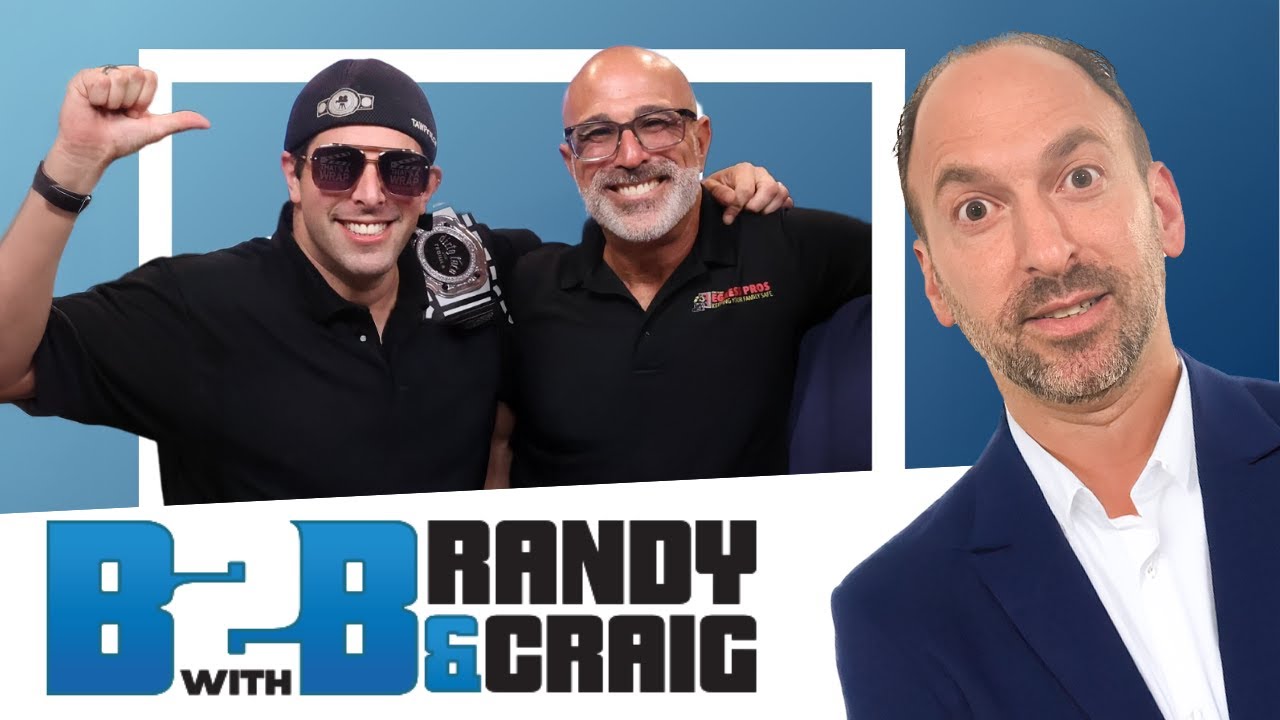
In this episode of B2B with Randy and Craig, antique dealer Adam Zimmerman of Silly Antiques discusses his family‑rooted entry into the antiques world, his "trash or treasure" appraisal philosophy, and how he evaluates items quickly using criteria like material, motif, and market supply. He explains the difference between generalist and specialist appraisers, the role of formal training, and his reliance on a network of experts for niche items. Adam describes how he modernized the family business after taking over 15 years ago—building five websites, opening two Manhattan brick‑and‑mortar stores (Upper East Modern on East 91st St and a downtown location run by his sister), and expanding services from Long Island to Manhattan. He promotes his book Antique Help and the accompanying website/YouTube channel that aim to educate collectors. The conversation covers client interaction, especially delivering disappointing news with a "bedside manner," and the decision‑making around repairing versus selling items. Adam shares memorable anecdotes, including high‑value finds up to $200,000, a brain in formaldehyde, and a malachite box, illustrating the range of items he encounters. He offers advice for next‑generation entrepreneurs transitioning a family business, emphasizing clear communication and leveraging technology. Finally, he provides contact information (212‑366‑9466, www.syfx.com) and explains how remote photo appraisals work, stressing that purchase price does not guarantee resale value, using a Lalique piece as an example.
Chapters
Welcome to B2B with Randy and Craig, where we speak to local entrepreneurs and learn about their journey. Welcome to B2B, where we discuss the rise, the fall, and the cake. No, we're not going there. We're not going there. Hey, I'm Randy and I'm with Craig from That's a Wrap Productions. And today's guest, Adam Zimmerman from Silly Antiques.
You gotta name one.
Welcome, welcome. I got it, I got it. We got our first question for you. Why antiques?
Well, I grew up in this business, so antiques kind of is in my blood. My father did it before me, and here I am.
And there you go. Is your father an antique?
Uh, if he was still alive, yeah.
So being in the antique world, what is your slogan? What's your catchphrase?
So basically, I'm the guy that could tell you if what you have is trash or treasure.
Trash or treasures. You know who was just in here? I'm gonna bring back in Ted, College Hunks, hauling junk and moving. Come in.
Get in here, Ted.
So you tutored me. Adam, Ted. All right, here's a good— so you go into a house.
Yep.
People think it's gold. You have to give them the bad news. The next call would be Ted, right? When it's junk.
That's pretty much it. I'll go into the house quickly and do a walkthrough, or sometimes it takes a while. I'll find out a few items that might be good, but usually majority of items are not. So after I do my walkthrough, then, uh, the next obvious call would be—
All right, there you go.
Ted from College Hunks.
So Ted, I'm gonna put you guys together. I just wanted to give you one more shot on screen 'cause you're so handsome and everything. Thanks for stopping by again. We're gonna talk to Adam, but College Hunks, what a connection right here.
Great to meet you. Good idea, you too.
All right, thanks, brother. Thank you.
Thank you.
All right, so how long you been doing it then?
Uh, my whole life basically, but I took over about 15 years ago.
15 years ago, full-time?
100%.
So what gives you the biggest sense of accomplishment?
Well, I would say that obviously when I could help someone and find something really valuable in their house and they got some extra money to play with that they didn't expect, of course, is the best scenario. However, oftentimes, even when I'm giving them not so good news, the fact that they could have closure is great. You know, when I get people hugging me, even if I'm—
He calls it closure, I call it disappointment.
Yeah, but of course, once that's done, you know, they could put that house on the market and get the big money, you know, but they just want a little bit of peace of mind, make sure they're doing good by their family.
How many people are in denial when and you tell them, I'm sorry, that is trash?
A lot, but now it's less and less because people kind of get the gist. They watch TV, they know that the kids don't want it, and they hear it a lot. So, it's not as a surprise as it used to be.
So, I gotta know, like, so you obviously, you built— you grew up in the industry, but is there like, uh, a school or college for learning antiques, or—
That's a, that's a pretty good question. I mean, a lot—
Not a very good question, that's a pretty good question.
Just pretty good. I'll get a good one.
You got a lot of ways to go. Yeah, there's work to do.
Well, it's a, it's a tricky one.
because, um, if you try to study to be an appraiser, there's classes to take if you want to get specifics. There's also classes—
But you'd have to be an appraiser in a particular field. Like, you can't just be— go to appraiser school and appraise everything.
Correct, kind of. But there is something called the generalist appraiser, and then you have to know a little bit about everything. And then if you want to be, like, very specific about something, yeah, that's a little bit, uh, more difficult.
So, so, like, if you were going to be specific about This.
Mm-hmm.
Which, for those on the radio, this is a— I don't know, what is this?
So this is—
Oh, it's salt and pepper.
It's a 19th century piece. It's, uh, silver, low-grade silver. So it's not like sterling that you'd have here or in England, 925. This is under that. This is about 80% silver.
So if I had this in my house— so this is about, I don't know, 6 inches high. It's an old-fashioned woman baker, and it looks like it's a salt pepper— salt shaker.
She's happy.
Is it trash or is it a treasure?
Well, it's definitely not trash. Now, this is something— and the silver value on something like this is only about $50, $75, but because of the motif, because it has the look and it's just kind of cool, you know, this is a piece that's probably $300 to $500.
That's not trash. No, it's not trash.
So how long does it, uh, on average— I mean, there, I'm sure there are a variety of things that you look at, but how on average, how long does it take you To say this is garbage, or this is something really bad.
It took him two seconds.
No, I'm saying is that is that your average? What question is that? Is that your average?
He went from a fairly good to crappy.
Can't all be winners.
Basically, some items I see literally. I'll see in one house. I'll go to another house. I'll see the same item. So I notice a lot of things right right away immediately. But there's certain things. Yeah, like this is a piece I have. 100 times. I grew up with these kind of pieces.
Hummels, you know, everybody's grandmother had those.
Yeah, this was something World War II, a lot of people started gifting them back in the day when they were in the military, and then it just kept going. They would say any present for grandma was always an easy Hummel.
So is this trash or treasure?
This is something that in its prime, that piece right there was maybe $150 to $200. Today, it is, I hate to say trash, but this is closer to $10 to $30.
Trash, this is trash.
These are trash.
This is trash.
Stop giving these out.
No! It's over. The Hummel train has passed on.
Is there a telltale when, when identifying a, uh, a price piece? Is there something obvious you're looking for?
Well, I could tell you certain things, like mass production. This is a piece that there's hundreds of them out there, thousands of them out there. So because of that, you know, it's supply and demand. If there's a lot of them out there, it's easy to get, it's going to be a lower price, and it's very common. So something like that is an easy way to figure something out.
And what's great This is something you didn't know. Adam—
Tell me.
Has written a book.
What?
Antique Help. Because of the reason—
People don't know. Antiquing for Dummies, right?
Similar, yeah.
So then here.
I have some reading material later tonight.
Well, I can imagine what a great help this is to people. You, you're, you're cleaning out your grandparents' house or whatever, you're going through attic, you're looking at all your stuff.
Yeah.
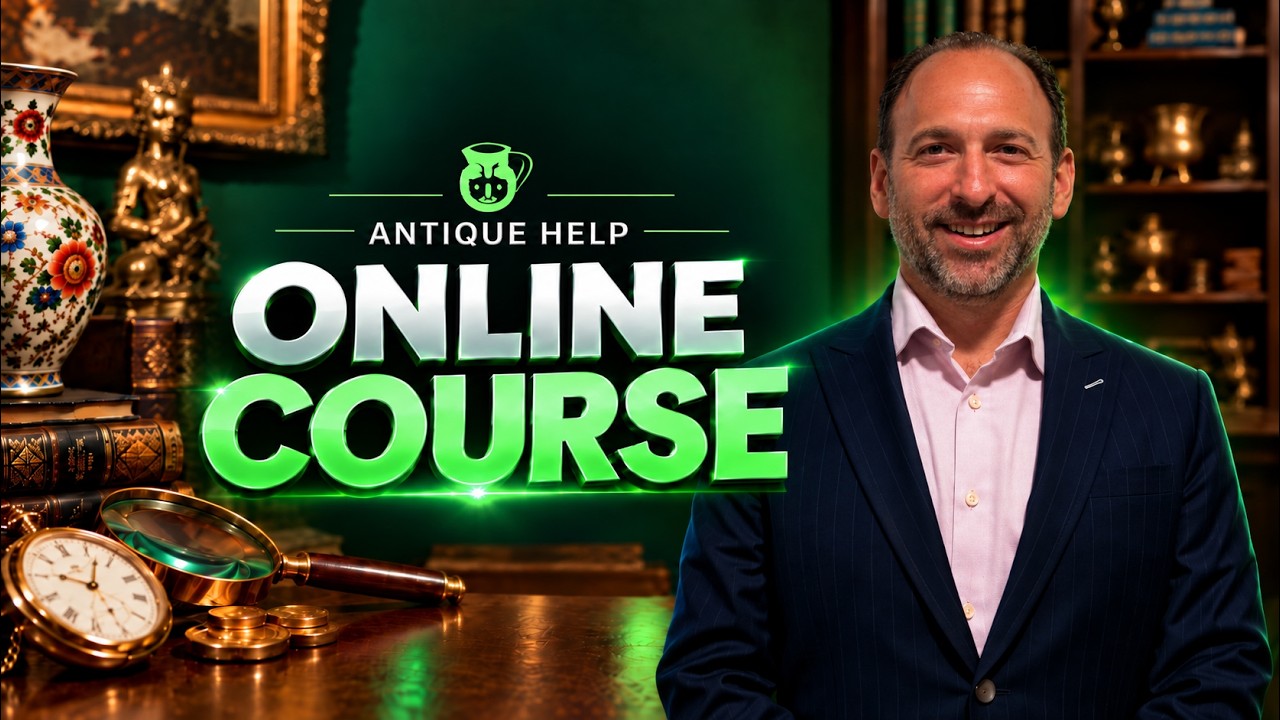
So basically, exactly that. Sometimes there's a lot of stuff you do need a professional and you do need experts to come in, but I get calls from people in California I can't help, literally, and sometimes it's a matter of this book, and I have a website, real simple, antiquehelp.com, a YouTube channel, antiquehelp.com. That's great, love it. And that's what the subtitle of the book is, Making Sense So You Can Make Some Sense.
Interesting.
So if you have a piece like this Hummel, you could call 10 experts in, you could do a lot of things, but this is something you could look up in 5 minutes and figure out.
What about something like this cockamamie thing? Yeah, so I actually—
This is Craig's genie in a bottle.
Yeah, we think this is produced in India, most likely.
Most likely brass.
So it's vintage.
It's crap.
50 to 70. Yes, it's crap.
It's not even joking. And it's the most scary thing to hold.
I have a bedside manner, so I try not to put him down.
But I don't.
I don't.
I don't. So, so delivering that news.
Yeah.
Bedside manner.
Yes.
Your father taught you that?
Um, a little bit, yes. My father was a little bit more abrasive. It was a different time, but he's—
Sounds like my kind of guy.
Very, very good at what he does. I was in the hospitality industry for half my life, so—
Oh, really?
Helping people in difficult situations, correcting things that are, you know, mistaken and things like that. People losing their car because the valet gave the wrong car to people. I've dealt with every crazy situation you can imagine.
I bet you never dealt with my grandmother when she came into the restaurant. My grandmother would order soup and say, it's so hot, put ice in it and send it back 'cause it's too cold.
Too cold. Yeah.
So that's the kind of stuff you have to deal with. Tells you a lot about the family, right?
I deal with a lot of that.
A lot of my clients are either the children of those people or those people themselves. They're moving from a big, uh, you know, mansion over here in Old Westbury, or like just a regular 5-bedroom house, whatever it is, but they're going to a condo in Florida with a lot less space, right? So when the kids are trying to help them move, I have to break grandma— break the bad news to grandma in the nicest way possible.
And then call Ted. Right, right.
And then call Ted. That's the last call. So let's just say you had something that was of value. and it got chipped.
Yeah.
Is there a repair? Is there any repairing it to restore the style?
What's the item? What's the item?
Uh, a ceramic, uh, cat.
No, it's garbage.
It's garbage in most cases. Yeah, because like if you take this piece, which I do like, and it probably is worth $30, $40.
Let's talk about this piece.
So, okay, so this is— McCoy.
What is this, ceramic? What is this?
This is pottery. So this is a piece that was very, you know, Roseville, McCoy, Hull are all companies that were very popular in the '80s, '90s when all the grandma-type people were collecting them, right? And, uh, it used to be great, but unfortunately the kids don't want to dust these things like we spoke about.
Yeah, that's what he says.
So something like this in its time was probably— and you shouldn't grab it by the handle because sometimes it'll come right off— but this used to be worth $150, $250, even $350 on a good day. Today, without looking it up, $25, $40.
Trash.
Trash, correct.
Yeah. So, so you can say, so if you had something that was at one point a priceless item, right? And it got chipped.
Yeah.
Can, can you repair it?
You can repair it, and you could do it like an easy way and, and don't spend too much money. You could spend a lot of money. Like, if you have a $10,000 piece, you want to fix it, maybe you want to put some money into doing it the right way, and you could pay for it. However, it will always be a repaired piece, and you will never get, um, the money for a piece that's lived 50, 100 years and maintained its, um, you know, its condition.
How did you go from hospitality Your dad's building this business. Tell me how that gap was bridged.
So basically, um, I was in Miami. I was a single guy in Miami, which was awesome, but I wasn't getting—
that's for a different show. I love that. Sounds like the name of a book, A Single Guy from Miami.
But the problem was, um, '08 happened. So I was doing a lot of jobs. I did every job in the hotel. So, um, it was great, had a lot of experience. But '08 happened and it wasn't the best time for the hotel industry. Business clientele was a good portion of our income. And at the same time, my father got ill, and he said, I know you're not a big fan of the business, but you could help us out. And at that point, I said, okay, I'll do it because I have to do it. I'll do it and help him out and just kind of figure it out once I get back home. And, um, when I got there, I'll tell you, he had a good repu— great reputation, but it was when the business started to change. So when I first took over, he had no website.
Mm-hmm.
He had no brick and mortar. And we did no business in Manhattan. So the first thing that I did was, uh, we got to do some websites. Now we have 5 websites. Wow. Doing multiple things. I have 2 stores in the city, which, you know, no one trusts you unless you have a store.
You have to have an address.
So I have 2 stores in the city, and I would say 80% of our business is now Manhattan. So I started that back then, and now it's, it's, uh, it keeps growing.
Let's talk about the stores, because there's different— I know some antique stores are consignment shops.
Yeah.
That's not what you have. You have full brick and mortar that are your stores.
So I have a couple different things.
One is downtown, and my sister runs that store, and it's more for like the smaller items and the costume jewelry. Again, it's, it's silly antiques. It's just downtown. I have another place uptown. This is more for decorators and designers, which is basically so, uh, 1950s mid-century modern furniture design and artwork. And, um, and it's beautiful. Like, it's exactly what you see on all the Instagram.
What's the address of both stores?
Um, so Upper East Modern is the uptown store, and that's, uh, 315 East 91st Street. Beautiful. And, uh, and that's great if you want to walk through a designer decorator and kind of pick out some beautiful items. You know, we have it.
You have delivery service and everything, right?
Yeah, we could work all that out anywhere. And when we, um, you know, it's artwork if for investment purposes, or if you want something beautiful on your wall, we'd have both. And then again, the furniture is really hot, right?
I would like something beautiful on my wall, right?
Well, yeah, we don't talk about that though. So if you're just tuning in to WBAB or iHeartRadio, Spotify, or Apple, wherever you're getting your podcasts. We are sitting here with the very well-known, the infamous Adam Zimmerman from Silly Antiques.
The, uh, not only infamous, he is a writer.
He's a—
he has a book.
I don't have a book. I wish I had a book. No one would— no one would buy it though. Uh, they did buy it, right?
Cliff Notes.
So, so, um, Randy likes to say that, you know, um, judge me not by my mistakes but how I correct them, right? Has there ever— have you ever Me mistakenly valued something, uh, in, you know, wrong and found out? Or—
That's a pretty scary question.
No, he's always been 100% right.
No, listen, um, in this business you're not going to know everything. So in order to protect myself for the most part from those situations is if it's something that I'm not sure of, I have experts in every field. Like if you have something that's, let's say, Russian Cyrillic, I can't read Cyrillic. Okay, I have an expert. Well, listen, maybe I should add you, but I have experts in that. Chinese experts. I can't read Mandarin. I kind of know what I'm looking at, but if it's something high enough, high-end enough, and it has potential to be a lot, you know, I have experts to make sure I don't make a mistake when I'm evaluating something.
It's like when I watched that, uh, on that TV show where, uh, um, down in Vegas. Yeah, at the pawn shop, right? So he always has expert, he comes in.
Yeah.
Not porn.
No. That's what I said. Get your mind out the gutter. Correct.
Yeah. I mean, that's pretty much a story of my life. Like, if I'm in a house, oftentimes, like, I was in a house yesterday, Five Towns, and it was, uh, I took 100 pictures and I sent them to 8 different experts within 30 minutes.
Was anything trash or treasure?
It was a lot of trash. And then one of the pieces I actually have here. Um, but they did have some treasure. They had some art glass that was pretty good, and they had some other things mixed in.
But all— Show us which one here was from that house.
So this box right over here.
Yes.
Yeah, and it is, uh, 2 hands in, Randy. I don't want you to—
yeah, yeah, yeah.
So this piece, uh, is actually one of the only pieces in the house that was not antique. This is probably from the '80s. It's just a real cool looking box. It's malachite with inlay. I'm probably going to keep this one myself, but this was in the house and, um, majority of stuff was old. This is good. Yeah, this is actually malachite. So, uh—
What's malachite? Type of stone?
It's a type of stone and the inlaid is, um, Inlaid stones are gonna be like tiger's eye, amethyst, lapis lazuli. There's a ton in there.
Did they tell you a story where it came from, how they got it, or do you have no idea?
So my uncle collected boxes, so we had over 300 boxes, most of which were wood, not worth a ton. But this one, like I said, because it has the look that I could put in a decorator-designer type house, you know, they could throw this in on a table and it would look great in just about any house right now.
That's terrific.
So I gotta ask my million-dollar question of the day, right? Uh, my family is known to ask me to come out and, you know, shoot things on my family time, right?
I got nervous. I didn't know where he was going with this for a second.
Uh-oh. Yeah. When you go to family events, how, uh, do people like, hey, man, what's this worth?
What's this worth? Yeah. I mean, a little bit, you know, at this point the family's probably done it already multiple times. Sometimes they'll ask me a question like, uh, my cousin asked me, he's like, I have this bronze piece, you know, can I clean it? And then they'll ask me questions like that, how to maintain it, what's worth some money in general. But, uh, yeah, I am the guy who answers those, uh, quirky questions.
Do you live in Manhattan? Do you live on Long Island?
So I live in Long Island on the South Shore in Merrick.
Nice.
And I grew up there as well. Did take a break in Miami, but I ended up back where I started.
A lot of people have done that. They go to Miami, realize, and they come back. And then you'll end up back there again.
Yeah, who knows?
All right, let's ask about this antique. Growing up, I was a big Planet of the Apes fan.
Oh Lord.
This is a movie advertisement from, uh, Wednesday, June 26th. I don't know what year, but it wasn't even in color. Is it worth it? Is it trash or junk?
Uh, again, I would never trash it, but this is probably gonna be in the lower end of things. I will tell you—
Sorry, Randy.
Scrapola.
That collectibles are really hot right now. It's one of the things that came back. Specifically though, they want like graded baseball cards, graded comic books, investment stuff. Something that you could buy today for let's say $10 grand, $15 grand. In $10 grand— 10 years, excuse me, you will double your money. Collectible stuff is hot. Movie memorabilia, sports a little bit, but it's gotta be the best of the best with provenance.
What was the weirdest thing anyone's ever given you? Don't say my piece.
And I'll tell you something, and I didn't buy it 'cause I figured my wife would kill me, but I was in a house once and they had a brain in formaldehyde in a box sitting on the mantle that he got from his father. The whole house was filled with quirky, cool, weird stuff like that.
And that's like the young Frankenstein.
Yeah, he had gorillas. He had gorilla skulls, monkey skulls within that same house. He had weapons. He had that brain in formaldehyde. And I'm just thinking in my head, I got a 5-year-old. If that thing breaks in my car and goes all over, I gotta get a new car.
Yeah, that's true. There's no way. That's true, that's true. You're talking about losing your mind. Yeah, there you go.
That was probably one of the weirdest ones.
Okay.
And then I've had, I had one piece that I was in someone's house and this piece ended up being, she had Asian stuff everywhere and it was a lot of reproduction. But one piece sitting behind the couch, she had an idea. that it was worth some money. It went for $180 grand.
Wow, wow. And it was just lying behind the couch?
She knew what it was, but she said her kids, her grandkids kept knocking it over.
So she's like, I don't want this in the house, uh, anymore.
I need to turn it over. So I connected her with one of my auction friends who sold it, and he got a good money for it.
What was the most expensive thing you've ever found?
I had a couple pieces around that $200,000 mark. $180,000, $200,000.
Imagine just sitting at home and not knowing that you had something that valuable in the house.
Like, tell my wife that about me. Yeah, that's like, can she imagine?
Yeah, I don't think so.
Yeah.
So, so you have— there's all kinds of different entrepreneurial journeys.
Yeah.
Some people are founders, some people are next generation, and many other journeys, but each one's unique. So if someone's out there and they're debating, hey, I am doing X, but I may go into the family business, Yeah. I don't know what to do. Is there any advice that you wish you had— someone had told you when you came aboard to work with your father?
Well, I will say, in the transition period, it is very difficult. So as hard as it was, the most difficult part was telling my, you know, father he had to kind of step back.
Right.
But I think in the end, if you got to make it clear with your family that whatever you're doing, it's the best for everybody, it's best for the family to kind of make the business expand and do better, and then And you even added something you didn't mention.
Your sister's involved.
Both my sisters.
Oh, you have 2 sisters?
Yes.
So both your sisters involved. And you said when you first got into the business with your dad, there was no technology. So that was intimidating for him, I'm sure. It's intimidating for me. Yeah.
You know, my father— the way it used to work, just to give you an idea of timing, um, back in the day, my father would be in a house, he would take a Polaroid, he would run it to his expert in the city an hour away.
And then And he would come back and he would look at it.
then bring the Polaroid back and say, okay, I'm interested in the piece. And then he would figure out and then go back to the city. Now I could send things— I've sent— my experts are out of state, some of them. So I'm sending things to California or Maine for an expert, and I'm getting answers like that.
So technology has really advanced your profession.
Yeah. And then to answer Randy's question, 100%, I think tech is the big part of it because, you know, I'm not a tech genius, but I know how to, you know—
You know enough to be dangerous.
And I know how to hire the right people, which is very important. So I knew that that was needed. And some of the old-school people are saying, oh, what do I need Google for? I don't care if someone If someone gives me a bad review, I mean, I pride myself. If I do have a bad situation, like you said, which doesn't usually happen, I'll right the wrong to the best that I can because I care about my reputation. I want everyone to be happy, similar to the hospitality business.
And you really do. I mean, I know you now for a few years, and you really do care about the people. I mean, I've heard you over the years talk about a situation where somebody's in financial duress and you were able to find a product that really helped them get on their feet. So that, that's a— that's, that's—
And that's, and that's the best feeling.
And you're not taking advantage of them.
No, I mean, listen, I, I have to sleep at night, so I treat families as if they were my own family.
That's awesome.
I have to run a business, so I have to make a profit, but in the end, I try to— a lot of my business is brokering things. So I'll say, this is the perfect person to sell your piece, this is where it belongs, rather than me buy it for this and sell it for this. If they are not, you know, in immediate cash right now, sometimes I say, you can get more money, do it this way.
Oh, that's that. And, and And that's what the right thing to do is when you're passionate. When you're passionate about your industry and helping people, that's the kind of thing you do.
Correct.
Yeah, definitely.
Adam, we really appreciate you coming in today.
It was— Oh, we're wrapping up already?
Yeah.
Oh, those racks at WBEW. Let's hold that up.
Yeah, just the last piece, just because this is in one of my ads that you might see around town. So this is pretty heavy. Let's hope I don't drop it. So this is a Lalique piece that you might see in a lot of people's homes, and it's a beautiful piece.
You have 2 of those.
A photographer might steal that before the end of the day. Yeah.
Oh, but this is a piece Kelly, you're not allowed to take it.
To make people understand a little bit about the market, a lot of times when you purchase things, especially in the past 30, 40 years, you know it's not gonna maintain its value. It's similar to a car back in the day where, you know, you buy something, once it's out of the lot, it's worth a lot less money. So this is an example where it's $5,500 if you buy this in the store.
Wow.
And then within a week or two, once you try to resell it, this is only about $1,000. So it still maintains some of its value.
It devalues that quickly.
It's not trash, it's a bad investment.
Correct.
So if you get it for a present, this is great. But just to let everyone know that just because you bought it for X does not mean you're gonna get X once you sell it.
Wow. That's good to know. And I wish on the radio you can't see it, but if you go to the WBAB— oh no, go to B2B with Randy and Craig, you can see the video and everybody can see your wonderful treasures. Not all your treasures. No, no, no. It's a family show, for God's sake. But we could have went on for a long time. Once again, how does somebody get ahold of you?
So the best thing to do is you can call our number, 212-366-9466, or of course you could visit the website, www.syfx.com. Love it.
And you will come out to a house on Long Island from Montauk to Manhattan.
And I will say, because I don't want to, you know, have to drive a million miles every day, I can do a lot from pictures. So if you send me some pictures, it'll save both of us some time. I could say, yes, you know, this piece is worth pursuing, worth some money. Or just from a quick phone call, I could say, you know what, you could donate that piece and not feel bad about it.
Awesome.
And you can call Ted. No, seriously. Adam, thank you so much for coming on. Such an interesting story. I love antiques. I love that Craig's antique is worthless.
And most importantly, from B2B with Randy and Craig, that's a wrap.
There we go. Thank you for tuning in to B2B with Randy and Craig. Looking forward to hanging with you next week.
Please subscribe so you don't miss any future videos.