Adam Zimmerman of Syl-Lee Antiques Gets Featured on Realty Check
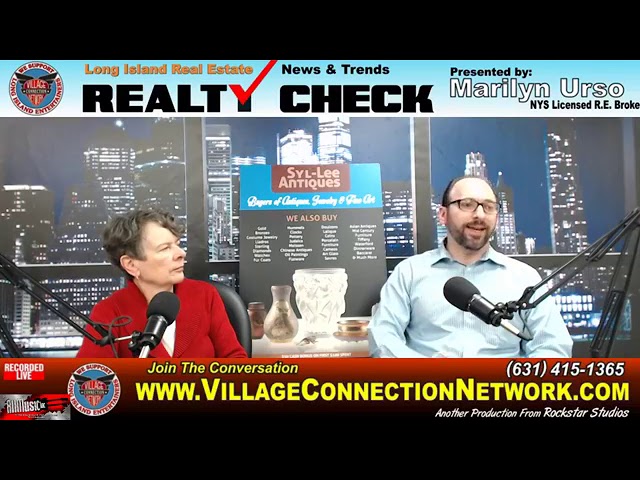
In this Realty Check interview, host Marilyn Urso talks with Adam Zimmerman, owner of Silly Antiques (named after his grandparents Sylvia and Lee), about his unique house‑call appraisal service for homeowners in the New York area. Adam explains how his business works – free in‑home evaluations, recommendations on whether items should be sold, donated, or discarded, and connections to auctions, eBay, and overseas buyers. He outlines the current market demand for various categories: mid‑century modern furniture, Danish modern, Russian and Chinese antiques, fine and costume jewelry, coins, silver, porcelain, and collectible figurines (Hummels, Yadros, Copenhagen). He discusses how taste has shifted (e.g., less demand for mahogany, more for Lucite, chrome, white gold, and round diamonds) and the importance of brand names and provenance. Adam also shares practical advice on appraisals, certification, and avoiding costly unnecessary appraisals, as well as tips for downsizing, inheritance, and cleaning out long‑held household items. The conversation ends with contact information and a recommendation for related services (clean‑out professionals).
Chapters
You created a real world while I'm searching for words. Wanna meet you under California skies. On an island far away. Where the world doesn't seem to matter. Everything fades away. Hey, hey, hey. Only two under California skies, holding our hip away. Where the world doesn't seem to matter, everything fades away. Only two, only two California skies. I wanna meet you, wanna meet you, wanna meet you under California skies. Wanna meet you, wanna meet you, wanna meet you under California skies. Wanna meet you, wanna meet you, wanna meet you under California skies. Wanna meet you, wanna meet you, wanna meet you. Good evening, everyone.
It's Marilyn Erso back with another Realty Check. Happy to be here again. We missed last week, and next week we're going to be out trick-or-treating. But we always want to thank our sponsors when we start: David Steinberg of Summit Funding and Blazing Gracino from InspectaCore Home Inspections. Blaze was just recently on, and David will be on again next month, I hope. Today's guest is very interesting. I'll tell you, real estate has brought me to meet so many interesting businesses over the years, and today I have with me Adam Zimmerman, who's from Sile Antiques.
Sile Antiques.
They buy antique jewelry, fine art, and Tons of other stuff. So I recently met Adam because, as you— as I mentioned last time, I am selling my home. And Adam came in and went through some of the old stuff that I have and, you know, told me what was of value and what isn't. And it's really helpful in our industry, especially on the North Shore here with our large homes, to have people like this, resources that we can bring in that will help you get an idea of what value is it, can we sell it, should we sell it. Should we hang on to it? So Adam, tell me, you have a store in New York City, but you do house calls. Explain that whole concept.
Of course, absolutely. We have a store in Manhattan. The name of the business is Silly Antiques, which basically is a play on words. Sylvia and Lee are my grandparents. 40 years in the business between my father and myself. And yeah, we have a small gallery in Manhattan, and often what we do is we go to people's homes In Manhattan, Long Island, Queens, sometimes out of state when needed. And free of charge, even if we buy nothing, it's absolutely free. We come in the home, we take a look, and as you mentioned, what we do is we will let you know if something is valuable and maybe you should sell it, or if it's good for auction. I recommend auctions that I work with. And sometimes on the opposite end is I will tell you that maybe it's an item that needs to be discarded or donated. Or given away.
I had a lot of those.
It happens to the best of us. Certain things that were valuable back then, 10, 20, 30 years ago, has significantly decreased because of the generation's taste. And but what I will do is I'll let you know the good, the bad, and whatever it is so you can move on to the next step, whether it be downsizing, moving to another place, helping out for a relative who passed, or whatever it may be.
I will do my best So, I mean, you look at furniture pieces.
Absolutely.
I know I had some old jewelry stuff that you looked at. I brought some more things that we're gonna play with perhaps, just to give people an idea of what has value and what doesn't. Furs. Now, you, you don't do furs, but you have— you recommended me to someone who does buy furs.
Absolutely. We are very resourceful. We do our best to buy as much as we can, and if not, we recommend someone who does or recommend another option. So Kathy is someone I worked with for a long time, and what she does is she buys furs. Most people, what they do is they give you a credit or, or something like that when you go to the stores, but this day and age, people are not using furs, or they're going to Florida where furs are, you know, not used much.
Right.
So yeah, so Kathy is one of the people that I recommend along with other people. for other things. So absolutely. And as you mentioned, for furniture, we look at furniture. It's one of the more difficult things today.
What are the buyers looking for today in furniture?
It's all— it's what they call mid-century modern. MCM for short is what you will see. Now that's basically stuff from the '50s and '60s. Some of the popular names with mid-century modern include Herman Miller, George Nelson, Knoll, Paul Evans, La Verne. Those are the big popular names that you want. Some other Danish modern Furniture is also hot, '50s and '60s, but it all goes all the way up to '70s and '80s if the look is right.
Okay.
So some of the older stuff from like the 1880s to 1920s, even up to Deco, is not doing as well as it used to be. So the mahogany and oak stuff that was grandma's is really not in favor like it used to be. People are going Lucite and chrome and less is more mentality.
Yeah.
Are we going back to pink and blue bathrooms? So that I can't deal with.
I think the pastels are a little bit '80s. I don't think that's coming back.
Seen a few of those houses lately, so. Yeah, yeah, it always does date a property when you have the old bathrooms. I, like I said, I remember them. And even the avocado kitchen— I have an avocado when I harvest gold. We went through all that in Housing, but in looking at the pieces that we're dealing with now, who's, who's your market basically? Who's coming in and buying like all these jewelry pieces or the knickknacks and things?
It's different than it used to be. A lot of selling, like everything else including with Amazon, is going online. So a lot of the stuff that we sell, we sell on eBay. We do have the store where we have people coming in over there, and that is for designers and decorators coming a lot. Looking for that mid-century stuff, so we deal directly with them. In addition to that, we do use many different auctions from Sotheby's, Christie's, Bonhams& Doyle in Manhattan to some local auctions around here that we like to use, and we sell different items different places. A lot of stuff does end up being sold overseas. We deal a lot with Chinese antiques, and the Chinese antiques, majority of it ends up back in China. You know, the Chinese are buying a lot of that stuff.
Yeah, and you have— you said you have experts that handle the Russian and the Chinese and the different—
Yes, absolutely.
Because you're not 100%—
you want to make sure you get the best for everybody. Of course, and I'm what they call a generalist, so I know a little bit about just about everything. I'm not an expert in one thing, but I do have experts who are very good specialists, some of which who are on the roadshow, good people who who can tell you exactly what you have in every situation. So I do have a Russian specialist for Russian. I have a Chinese specialist for Chinese because it's not Asia is everything. Asia is many different countries. So there's Japanese is totally different than Chinese. India, Tibet, and Nepal is a whole other category. So you definitely need specialists in many different categories.
What's the most interesting foreign piece that you might— or the largest or the smallest or whatever? What kind of Most expensive?
I brokered a piece recently, and I don't want to— I never give too much details about private, but I will say it was a Russian piece that I connected the seller here. Piece was in Florida, and I connected her to someone I work with, and long story short, the piece sold for $200,000.
Wow.
And she was very happy.
Did she have any clue that it was worth that much?
She knew it was worth something, but I think if she put it in the wrong place, it would have went for a lot less. So if you put it in a general auction that deals with many different types of art, it wouldn't get the specific clientele needed for this piece. So she was happy. And a similar situation happened with a Southeast Asian piece. It was Nepalese, Tibet, they weren't sure, but it's— the countries are so close that sometimes you could say both. And that piece sold for, I think, $1,000. I think again $160,000 at auction, and again I connected her with the specialist for that. And that was a piece that was behind a couch, so, you know, she had an idea but it definitely wasn't being used. So, you know, those are the good stories.
Right, yeah, definitely good stories. In terms of when you came, like I said, when you came to my house, you look at coins and things also. You have a knowledge in values of whether it's these Money we think is still made of silver, the old coins, or?
Yes, coins is— I could talk about a whole hour about coins, but just to get the general part out of it, when you're talking about American coins, for the most part, you want 1964 or before quarters, dimes, half dollars, and silver dollars. Those are all 90% silver. It gets a little bit confusing, but a little bit, just so you know, if you have Half dollars, '65 to '69, it's 40% silver. So it's still silver, not as much, but it's not worth 50 cents as it says on the coin. So those are definitely things that you want to make sure that you're not spending a quarter that's actually silver. So once I come to your home or see, I will let you know the difference.
Okay.
And then there are some rare coins in that group that could be worth a lot more than the silver value if there are certain rare dates. So, so definitely you don't want to throw away grandma's change.
No.
Because it could end up being a lot of money.
Very good. Good to know, folks. Keep— count those pennies. Look for the money that's before 1964, you said.
Before '64. And again, even if it's not, at least you'll know now you have all this change you could bring to the bank, roll it up, get the money, rather than it just taking up a lot of space. And it does get heavy. I have bought many pounds of that where it does get heavy. So it's good to get the money for what you can and, you know, liquidate the rest.
Right. And in the jewelry categories, I know you'd looked at— like, we had a diamond ring that was my mother-in-law's that we passed on. But just regular costume jewelry, you said, has some value to it.
Yes, definitely. My older sister, who's in business with us, she loves the costume jewelry. So I can't tell you how often I'll walk into a house and they'll say, oh, we donated the costume jewelry. Costume jewelry is worth some money. Now, it's not all costume jewelry. Sometimes it's in bulk, but it's definitely stuff that we can sell. So I always tell people, before you throw it away, let me see it because you might have some valuable.
I just happened to find some really funny stuff that was my mother's. I don't know where she got this or why.
Old pieces.
Very old pieces, yes.
And the thing about some of the older antique costume jewelry, it was handset. So it's not stuff like you see now where everything is machine-made. These are older handset pieces, even though it's not real. Even the real stuff today ends up—
Any value to any of this, or not really?
These are like— a piece like this, for example, it's a nice-looking piece. It's older. I have collectors for this. It will always be helpful if these pieces are signed. Some of the major names back in the day are Monet, Trefari, Carreau, Haskell. Some of the newer ones are—
I tend to doubt that. They were so expensive. Yeah, and this was always my favorite growing up, a little plastic piece.
It might actually be Bakelite, but yeah, I mean, it's always fun pieces. Big and flashier the better. And names are important, as I mentioned. Older the better, like KJL, who passed away recently. Some of his pieces are in demand, but again, big, flashy, older the better. The other jewelry. '70s, '80s stuff are going to be more valuable than the newer stuff. But yeah, it's a nice collection. You know, this is all costume jewelry, and again, this is—
A car even.
Stuff that we purchased.
Yeah, it looks like a car to me.
Yeah, and it's all cute items, handset. You see how a lot of these stones are missing over time, but that's all things that, that we deal with. And you never know, sometimes—
So you can see what we're showing them.
Yeah.
So yeah, so stuff like this you would look at.
Yeah, absolutely. And even if it's, you know, a bunch of stuff that I can't really use, with costume jewelry, I will usually buy it no matter what. My sister always needs more merchandise, so sometimes it could add up to more. Usually big bangles, big necklaces, you know.
I might have some of those at home yet.
Absolutely.
Didn't get to that drawer. I look forward to seeing it.
But yeah, flashier the better, and people don't like wearing flashy gold anymore. So they do like wearing flashy costume. They don't have to worry about it, losing it or something else. So costume is in.
Now these are more modern costume, like earring things mostly that I brought. Yes, I've been doing a lot of cleaning, folks. Different kinds of crazy earrings.
Yeah, most of the time these things are in the drawer forever and just sitting there.
Yeah, haven't been used since the '80s or '90s probably.
Usually, I always tell people, if you haven't used it in about a year, it's time to probably—
It's probably time to get rid of it.
Yeah, absolutely.
Yeah, all different of those style. I was big into big earrings back then, I guess.
Yeah, the, uh, the earrings are nice, and you definitely— it adds up. They're not the easiest thing to sell. Earrings and pins are a little bit more difficult than bangles and necklaces for some reason these days. But again, every day I see new trends. You know, pearls used to be in. Now I see a little bit more jade.
I did find some pearls, but my daughter might want them too.
Yeah, you definitely want to make sure you make the girls happy before you end up selling it.
Don't give it away, Mom. And what about this lovely Poconos box? Is it worth anything?
No, but it's a nice-looking piece. I mean, cameos is what this is supposed to be. This is probably a copy, but cameos used to be great. Nowadays, they really want the cameos with the diamond earrings or the emerald necklace that they have on them, or a unique subject with cameos, which would be like a military one or a child. I've seen a child with dogs, or if the material was a cameo, but it was something like a coral cameo or what they call a lava cameo. Those things are in demand because you don't see them so often.
Okay. I'll have to keep looking, see what we have. You cover a lot of other things when I looked at the back of your card. Oil paintings. What about paintings?
What do you got? Oil paintings. It's different than it used to be because people used to come in and they used to buy because they liked an item. It looked pretty, I like it, I buy it. People don't have as much expendable income, so when they buy paintings in today's market, they want to say, you know, it's a nice painting, but how much can I sell it for in 10, 20 years when I give it to the kids?
Right.
So the bottom line is the artist is more important than the art in many cases. So if you have an oil painting that's beautiful but not a listed artist, I might be able to buy it for decorative purposes. You know, I just bought a painting yesterday of a rabbi which wasn't even old, but I have so many clients who like Judaica that I can sell that, even though it was no listing. But usually I want to see a listing of the artist, which means these days with technology, I could look up an artist and any auction he sold at in the past 20 years, and I could get a picture of the signature and everything.
True.
So once I look up the artist of that painting, I could tell you a ballpark figure of what you can get for the item. So I will look at every piece of art you have and, you know, let you know what's going on.
I don't know if my sister Anne is watching, but she's an artist and getting bigger and bigger, doing a lot of stuff at the Samogedi Club in the city and other places. She does auctions, and I do have some of her original pieces. I'll have to hang on to them.
Absolutely.
Get that figured out.
Yeah, artwork.
I'm not selling the man, I promise. Not yet.
Artwork is one of the few subjects where you can actually hit a home run, so to speak. You know, you could have a piece of art that's been in the attic for a while, you take it out and you find out, you know, it could really be worth something.
Yeah, I remember we had a listing once and the woman had this huge— it was in a stairwell and it was a huge 3, 4-foot-high type painting. And we had someone come in and look at it and it was worth a whole lot more than she ever realized. So it was one of those Wow, this is a home run.
Yeah, and sometimes when it comes to the old master paintings, they're not always signed. You know, you might have some information on the back, and we have experts that specialize in that because, uh, sometimes back in the day it's hard to make out a signature, or you can't find a signature, and you have to go with a little bit of provenance. Where did it come from? Who lived in the house before? But these are all things that can be done, you know, and you could find— I have seen multiple paintings where, uh, you know, we were pleasantly Cool.
Cool. What other— you brought some stuff too. What is this?
Yeah, I'm not sure if they can get picked up by the camera. There's just a couple things, not super valuable things, but things that we could always use because people always like cute things. They like pretty-looking things. This over here is— this is 800 silver. It's most likely a German piece, and it's just a cute little piece, probably late 19th century, maybe 1870s, '80s. In Germany, they used 800 silver instead of sterling. So basically, it's 80% instead of 92.5% silver, and it's not that big of a difference. This is a piece that is more interesting because of the subject than the actual material, but it's just a nice-looking piece.
Cool.
Next over here, this is a Japanese cloisonné enamel piece. Even though the Japanese market is soft, so to speak, as compared to the Chinese, these things, because they're just pretty, you know, I still have clients for these items. And in the '80s and '90s, this was it. You know, everyone loved these things. They would buy multiples of them. They would buy sets because Japanese was hot. And again, it's a very attractive piece. So as I said, this is—
Yeah, I'm that person. I have to have 2.
Yeah, exactly. And not to get off subject, but pairs are so important. So when you have candelabras or you have statues, if you have a single Rather than a pair, it's almost useless. Lamps as well.
Gotcha.
You know, so that's something to think about. Over here is just another cute piece. This is gilt bronze, and this is like a perfume scent. And you got a little monkey, you know, just a cute subject. People always like animals, so I have customers who like monkeys, people who like dogs, cats. You know, my mother loves cats.
She said both.
So yeah, it's got the dog and the monkey. So it's just a cute piece. And again, this is probably late 19th century. The detail is, is great. And, you know, I just keep these pieces around because, you know, you don't see them every day. And certain pieces you keep. Usually I end up selling them eventually, but for now we have them.
I've gone into recently a couple of the— because of the, that dinnerware set that I showed you that was my mom's lovely piece. and as you said, might have some value but not really gonna resell a lot. So there were a couple of other local antique places that I said, well, before I give it away as a donation, let me, let me check it out. And I'm just amazed by all the stuff that they have in there. And again, who's coming in and buying? The younger generation, you're telling me, is buying them, or is it more—
You mean who's buying the antiques?
Who's buying the antique stuff and coming into the little shops? It's a very tricky thing.
Like I said, a lot of my business, I sell to people Midwest in the United States. Sometimes California and Florida buys different things than Manhattan do, so we sell everywhere. But I just spoke to a colleague of mine who's in the business a long time, and he's buying like crazy because the market is soft for certain things that might come back later.
Gotcha.
So sometimes people are buying now, like the stuff that—
Maybe he wants my dishes.
You never know. You know, it used to be something, something that could have been $2,000 15 years ago that's now worth $200. Some people say that's horrible. Other people say, you know, maybe I should buy that because Because it's valuable and it's good things. You know, one of the biggest problems, as you mentioned, with dishes is, you know, the generation now is— I don't want to say lazy, but they're not in the mood to clean dishes by hand.
That's why I never used it.
Yeah, and listen, I don't blame you. You know, in my own home as well, we have a dishwasher and, you know, it's a lot easier to use. So the stuff that used to be—
With the gold along the edges, you can't put it in the dishwasher.
Exactly, the Guild Gold, the Waterford, you're not supposed to put in the dishwasher.
And I never thought about it. But when I went to one of these places, the woman said to me, and you definitely don't want to ever put it in a microwave.
Oh yeah, you'll—
Never thought of that part.
You'll create sparks and you don't want to do that.
Yeah, that would not be fun.
No, and it's the same thing with silver and dishes. You know, the generation now, they don't want to shine dishes. They don't want to— they don't— excuse me, they don't want to shine the silverware and clean the dishes by hand because it takes a lot of time. You know, it's better paper and plastic, and it's the less is more mentality as well.
True.
Breakfronts, same thing.
True, true.
People don't have stuff in breakfronts anymore.
Speaking of silver.
Uh-oh.
I brought a silver plate set and a sterling set that I have.
Okay.
So, just so that we could see if there's any value in these things, if you've got them laying around the house. This was mom's.
Okay.
And, um—
Okay, again, there's so much to talk about with silver. There's so many exceptions. There's so many different ways to call something sterling and silver. So I'll just go into a little bit of detail. This is silver plate, as you mentioned. Now, some people— and I get this possibly once a day, you know, multiple times during the week— this says 1847 Rogers Bros. IS.
Right.
Most of the time when you see that mark, that is silver plate, as you know. So IS stands for International Silver, and these are definitely silver plate. Silver plate is Very difficult to sell. The only exception is Christofle from France. Those sets can still sell if you have a full set in pretty good shape. But most of the other sterling is good. Silver plate is just very difficult to sell. Very few exceptions with that. Now, on to the good stuff. When you're talking about sterling, and this is sterling, which is absolutely correct.
Yeah, I had the card from that one.
Now, this is Westmoreland sterling.
Great.
What's good about it is the fact that it's sterling, so the backup, if you can't sell it as a set, you always have the sterling, which you put it on a scale, which, you know, I always have with me. You figure out the weight and the current market value, and you figure it out. The times when you can get a little bit more than the silver value, first of all, has to be serviced for 12 minimum. Used to be 6 or 8, but now they want 12, 18, or 24.
Might have 12.
12 would be a little bit easier to sell, and then you might get a premium. Now, the other thing is names are very important with sterling. The big things, the top few names, of course, Tiffany, you can't go wrong, you know. The other thing is Buccellati, amazing. You know, I don't see that too often. Buccellati is a company that does gold, and they do sterling as well. Buccellati sets, George Jensen from Denmark. You know, that stuff is, is amazing, you know, and because especially the Denmark set is a little bit sleeker than some of the really ornate stuff, that stuff is hot. Other than that, sets that people will hear about more often— Francis I, Grand Baroque— these are names that a lot of people had, especially on the North Shore of Long Island. A lot of people had multiple sets of that, and those sets you still will get a premium for.
Okay, this is from The '40s, '50s? Was Westmoreland, was that one of the typical brands that the average person would get?
Westmoreland, I think. Lunt was another one that was very popular. And these names are, they're nice. You know, a lot of people in that time period, you know, it was just kind of the way it was. Everybody had to have a set or multiple sets.
And you had to have good dishes.
Absolutely. You had to have multiple sets of china and You also had to have— a lot of people have tea sets, you know, those things were very popular back then.
Teapots I have, but I don't have any tea sets.
Yeah, so all those things back in the day when people used to entertain a lot more than they do now, it was great. You don't see it as much. Sometimes I still see people who entertain, but it's again few and far between. People, as real estate, you know, everyone's getting rid of that, that wall from the kitchen to the living room, making it one big space, and often that island is your table.
Often, yes, very much. The open floor plan is what's the biggest deal in a house. Into the dining area, into the living area, family room. Everybody's using their living room as a family room now.
Absolutely.
For the most part. I don't want furniture that I can't sit on. I don't want furniture I can't sit on. In the house we're in now, we use the living room.
Absolutely.
Dining room is set up as an office because that's what we needed, a home office.
They do say the coffee table is the new dining room table.
Yeah, you know, could be.
Which is, again, it goes with the trends right now, you know, less is more, you know, break fronts, curio cabinets, all those things that used to be great, you know, people are really saying, if I'm not going to use it, why do I have it? You know, people don't have too much stuff to decorate, with few exceptions. And again, you never know, things might change.
What about things like decorative mirrors? Do they have to be older for them to have great value?
In general, again, it's that mid-century modern deco Deco still works. If you're talking about an accent piece, deco still works, because I work with designers and decorators and they still use deco. But the stuff that got killed with deco is a bedroom set. You know, I could see them a mile away because they used to be great. 1930s bedroom sets, cabinets, the little trunks, the cedar chest, I should say. All that stuff, you could see a deco a mile away.
I love cedar chests.
But nobody buys them anymore. You know, we used to get a lot of money for them. My father was dealing with that. You know, the mahogany, the oak. It's just very Hard to sell. So a deco accent piece, like you mentioned, the mirror still works, you know, a little cabinet still works, but in general, it's, it's got to be '50s, '60s, you know, or later.
Okay, like I said, you're coming back again.
Yeah.
When I'm really ready to get rid of everything.
Absolutely.
It's been, it's difficult when you've lived in a home for, you know, I'm there 17 years, And I brought stuff with me, obviously, from previous houses.
Yeah.
But it's mostly the, the things that we inherit from, from mom or from our in-laws that, you know, it's in a box somewhere. You're not opening it. You're not using it for whatever reason. And that's what a lot of people, you know, need to start looking at. If you're planning ahead, you know, definitely call Adam in. He'll walk around the house with you and look at the different pieces.
Absolutely.
And say, yeah, this is worth it, no, that's not.
And no matter what happens, I am— even if I buy nothing, I'm gonna point you in the right direction, as I mentioned before. And, and I understand that this process is not easy. You know, I do this on a daily basis. I deal with people, majority of which are dealing with either a death in the family or they're downsizing from somewhere that they've been a long time, where, like you have, you know, sometimes when you have a large home, you get Stuff from the kids, the nieces, the nephews. You end up with everything.
Right.
And then you got to kind of figure out, what should I do and what's the next step? So when I come in, I will tell you the good, bad, and the ugly. I will tell you in the nicest way possible if something is not valuable. I'll say, listen, there was a time. It's not now. You could either donate it, keep it in the family, whatever you want to do, but it doesn't have significant value at this time. And at least you know.
The lead crystal, you said, is like that too.
Yeah, and it's for that reason, you know, the cut glass, which is also known as lead. heavy like lead. It just— it shifts.
Depression glass, they used to refer to it as.
Depression glass. When I was younger, I used to have to study every single pattern for depression glass. I had a book, and it was my job to learn everything. And now, it doesn't even matter what pattern you have. It just doesn't move. Like carnival glass, depression glass. And I'm sure a lot of people are upset hearing this because, you know, sometimes Grandma said this was the most valuable thing. When Grandma told you that, it might have been the most valuable thing.
You know, I have— it was from my grandmother, and when I think about it, it's this huge— and I think that she used it for sugar. It was a sugar bowl, but it's huge. And there's a pitcher that goes— that matches it, that goes with it. That was a big pitcher. I, I don't— I can't fathom why they had such a big sugar bowl, but my grandfather did like to use sugar in his coffee a lot.
Well, listen, also back then it was— they used a lot of things that they don't use anymore. They had finger bowls. You know, they had bowls to put your tea. They had just so many different pieces that just nobody even thinks about anymore. You know, so, you know, it was a time where people were entertaining a lot more and they were doing a lot more at the table, you know.
What about things like the Hummels and those, that whole knickknacky bric-a-brac?
It's, back in the day we used to have to study, you know, with Hummels you had to know if it was a TMK 1, 2, 3, 4, which basically dictates the year. It was a Full B, you know, the crown mark. These are all things that I used to have to study. But now with Hummels, it's few and far between. We still buy them, but what used to be going for $100 apiece or more in certain instances is pennies, you know, because of eBay. You know, eBay killed that market a lot.
And the Yadros and all too, I guess.
Same thing. Yadros, it's very important, and a lot of people don't keep them, but the boxes, you know. If you keep the boxes, it's easier to resell, easier to regift, easier to ship. So without the boxes, it's very hard to move them.
I would never even think to keep the boxes.
If you see the yajos with all those decorative flowers, I went to the factory in Spain and they have like a whole table for people who just do the flowers, and they're very detailed, but it's very delicate. So you got to be so careful. If you don't have the original boxes, there's not a good chance that it will end up in the its destination if you ship it. So Hummels, Doultons, Yajos, even Copenhagen figures, for the most part, these are things that are, you know, they're decorative, they're not needed. So when the kids get it from their parents or their grandparents, they throw it on eBay, they donate it, they get it out. So...
Yeah.
It lowers the value across the board for everything. So again, we still buy certain of those items, but it's difficult because an item that I may have offered you or my father offered you 10, 15 years ago, Now it's borderline donation. You know, it's tchotchkes.
It goes by who's buying, who wants it, and where can we get rid of it.
Absolutely. And again, I just want to say that it's not all the kids. You know, I say it's most of the kids, but you might have a kid— and when I say kid, you know, could be in their 30s— who actually still likes this stuff or has an appreciation for it because they're artistic or because they're sentimental, for whatever reason. It's not all, you know, it's just most, you know, and it's the same thing with jewelry. It used to be flashy gold was in. Now it's more white gold.
It's—
they don't want to have a flashy rose gold piece. White gold is in. It's kind of simple. No one wants to be too flashy like it used to be in the '80s and '90s with the gaudy big gold earrings. There's a time and a place, but it's not as much as it used to be.
What about diamonds? Diamonds are okay? They'll still go with any size diamond?
Any size diamond is good, but bigger the better. Of course, over a carat is kind of the staple. I had a 10-carat that I got lucky enough to see the other day, but it was off-color. So, it was definitely worth a lot of money, but had it been white, it would have been more. And of course, the cut is very important now. Some of these famous movie stars, they do have the pear or the cushion cut, but in general, round is the most important, best cut. The cut that got kind of hurt the most in the past few years, I would say, the pear, the marquise, are very difficult to sell.
Mm-hmm.
Round is the easiest. Some of the cushion cuts, as I mentioned, emerald cut, those are still okay. But the marquise and the pear, which was very big, again, in the '80s and '90s, even '70s, is difficult to sell. And they did change the cutting style. Now, they have a new cut. Rather than the old cut. So, it's again, it's a whole other hour speech, but basically, the older cut had—
You need a show.
Yeah, maybe. I just— there's just so much information. There's so much to cover.
Absolutely.
But the old cut with diamonds had a cut culet. It almost looks like there's like a small hole at the bottom. That's the older cut. The newer cut has a little bit more on it. It is a little bit more heavier and weighted, and some of the people these days, they want the modern cut, so it doesn't look like there's a teeny tiny hole in the middle. of the stone. But it's also a matter of taste, you know. You might have a wife or a daughter or someone who loves pear cut. It's just a matter of taste.
Sure.
I met someone the other day who got married with a piece of jade, you know. So whatever—
Everybody's doing what they want to do today.
Yeah, you want to make her happy with everything.
There's no standard, right?
Absolutely.
Your cufflinks that you brought, we didn't look at those.
Oh yeah, these are a couple cufflinks that, again, are just beautifully detailed. I don't know how much you could see on the camera because it's smaller, but But these are Tiffany cufflinks.
Tigers?
Yeah, I guess they're tigers, and they're beautiful. The detail is great. Now, even though cufflinks are not used as much as they used to be, if there's a good name on it— people get married, people go to special occasions— and we could still sell cufflinks, you know?
Interesting.
So, names are very important with all jewelry. So, when you're talking about fine jewelry, You want to have, of course, Tiffany, Cartier, the big ones— Van Cleef, David Webb. Buccellati is a great example as well. All those names are great. Anything with a name is going to be good, but it goes back to the saying, people are very name-conscious, as with the artists.
Mm-hmm.
So, it can't be a beautiful piece with no name. You're gonna get some money for it, but the name is a big, big help when it comes to jewelry. And you also have to think of the— You know, the car scenario. You buy a car for a lot of money, $50,000 car, you take it out of the shop, maybe it cuts in half, you know, $25,000 the next day. So, it is similar when you're going to these big places, and I deal with people who shop in Manhattan at Barney's and Saks and Sotheby's and Christie's, and when you're shopping at these places, it's great, and you know that the items are real.
Right.
But when you go to resell it after, you know, you're gonna get some money for it, of course, But it really depends, you know, and certain items, like, you know, with costume, Chanel is a big one. You could have bought some Chanel or Hermès bags from the '80s and '90s, and you could have actually made money on it. And it's the same thing with certain jewelry brands, as well, from the '80s and '90s. But if you bought it recently, you know, it's a different story. But the older stuff from Grandma, you can get very lucky with some of the jewelry if it's signed.
Interesting.
Absolutely.
I'll have to see if I can find any more. I know my mother had some, but I don't really know what we did with it. If my sister took it or— Yeah, you know, it's one of those where we— and sometimes when you ask for something, it's like, no, I don't want that, you can have it. Yeah, you know, when you reach that point.
Of course. And when you get closer to the move, as I mentioned, you, uh, you're gonna find more and more stuff. Oh sure, you know, when you have a home that you lived in for that long, you know, stuff turns up.
There's a lot of boxes in the basement that have never been opened.
Yeah, and there's certain things you might have lost that you can end up finding once you move and things like that. So, so yeah, you never know what you're gonna find when you move.
You do not.
Absolutely.
So in terms of jewelry, one other thought I had. Diamonds obviously always have value.
Of course.
What about the other gemstones like birthstones, aquamarine or emeralds? Is there anything that's—
Again, I don't want to say—
Still popular or not popular?
When it comes to gemstones, What's very popular now, because of the Chinese, jade, you know, but it has to be fine jade. Again, stuff that you bought in China in the past 20 years might be difficult. But jade, coral, red coral, especially like the color of your shirt, that's the coral color that you want.
Oh, wow.
Amber is also big, you know, again, because the Asian market. And the amber that they like is yellow, not necessarily the brown with the bugs in it. Those are nice and we buy it, but the money is more for the yellow color. Other than that, rubies, of course, emeralds. But you want to have these things— oftentimes, they need to be certified. They need to be— make sure that— you have to make sure of the quality and everything. Now, that's not necessarily an appraisal. You need to get them sometimes GIA certified, which means you bring them to a lab in the city, and they will tell you if If it's real, the color, the clarity— they do it especially with diamonds, but they also do it with rubies, emeralds, and jade. Once you have that information, you could be sure, because oftentimes things are glass that you think are rubies, or things are treated. You know, jade is the big one. There's grade A jade, and there's grade B jade. Sometimes you could have a piece of jade that was artificially colored.
Oh my.
And then it goes from valuable to nothing. So sometimes, when it comes to the real stuff, the certification is needed. When it comes to certification and appraisals, it's often a good idea, but sometimes before you end up spending a lot of money on appraisals, it's a good idea to have myself or someone like myself just get a quick look. Yeah, I was gonna say, do you do that? I usually recommend— I work with many different appraisers. The only thing that— it's a good idea to just get me through there, even if I buy nothing. You do not want to spend sometimes $5,000 or $10,000 on appraisal to find out the appraisal costs more than the item.
Wow.
And I could tell you it's happened often.
Interesting.
And when you do get an appraisal, you have to make sure you're getting it appraised for which purpose. There's replacement value, which is the insurance value. There's current market value, which is kind of what you're going to get at auction. And then there's other values. So when you get an appraisal, you need to make sure you know what you're doing, what kind of appraisal you need, and then what it means for cash in your pocket, which is a whole other story.
Excellent. Excellent. You can call me or you can call Adam if you need any information on any of this stuff. It's Silly Antiques, located in New York City. You have a website, I'm assuming?
Absolutely. It's, uh, it's— if you could close, zoom in on it, if that's possible. I will spell it as well, don't worry. It's www.sillyantiques.com. And my name is Adam Zimmerman again, so if you look up Adam Zimmerman Antiques, you'll probably come up with the website also.
Just Google him.
Absolutely. And I'm happy to help. You could email me, mention where you saw me, if you saw me here, and I'll make sure to make it a priority. We do get a lot of emails, calls every day, so anyone who mentions the show, I'll make sure to get back to you as soon as I can. So mention my name. Any email from— to the company goes directly to me first, so I will see it. So just make sure to mention there.
Realty Check, Marilyn Urso.
Definitely.
It's always, like I said, a pleasure to help people because moving is such a task for all of us. Again, this is 5th house. There's not a lot of sentiment here. My kids were in Graduating high school and in college already and moving out when we moved into this home. They stayed with us for a bit, but— and come back every summer to swim in the pool. But it's still— there's a lot to think about and there's a lot to do when you're making that move after you've been in a home for a while. So we try to help you and make it as easy as possible with people like Adam. And We can mention you. We have somebody that we have worked with that does cleanouts also.
Absolutely. James Pisani with Juliana's Cleanout works in the Long Island area, and he's very good at helping people out, whether it's one room or the entire house for the next buyers or to do the showing of the house. So James Pisani, Juliana's Cleanout, is a great guy to know, right? And he's in the neighborhood, right?
So just contact either one of us and we'll get you his information. There are a lot of services like that that we've used over the years because again, you become overwhelmed with all the boxes and where do I put them and what am I going to do with this?
Absolutely.
And no, the kids don't want it, unfortunately, even though it's their stuff that you've saved for all these years. So always, always fun. Anything else? Any other items that we didn't cover that you do deal in?
A couple items that I do have in this picture here is the large piece of Lalique Lalique in the middle. For some reason, a lot of the stuff didn't go with the decor, but Lalique still seems to work. So large pieces of Lalique is always a good thing to have.
I like that vase.
Yeah, that's a small vase. I like the piece, so I used it in the photograph. That's a Tiffany piece. That's M4. This is a piece of costume jewelry, a Raj Mornay. It's a little bug, so, you know, it's just a cool little accent piece you put on your shoulder. But the last thing that I just want to mention to make sure you're aware of, before you throw it away, just for peace of mind, whatever it is, it's a good idea to let me just run through the house, take a quick look. Even if I buy nothing, it's sometimes good just for peace of mind.
Absolutely.
Before you throw it away, before you give it away, before you have a clean-out.
That's why I brought all that silly jewelry with me. Yeah, listen, it's always good because, you know, I can't tell you how often I found some valuables and things that people And I have to say, he is a very honest person because my mother-in-law's diamond ring was mixed in with a lot of junk costume jewelry, and he pulled that out first and said, you know, this is a real diamond. And my husband and I had no clue. You know, we thought that had been taken care of or given to somebody else years ago, and it wasn't. So honest man, I can, I can vouch for him.
Yeah, I appreciate it. And yeah, we do the best. And sometimes when things are inherited, you don't know what you have.
No. No, you sometimes don't. And especially like with artwork and things that are of another vintage, no clue.
Yeah. And I was in a house in Roslyn the other day, and again, I'm not gonna get specific, but she had a couple small paintings. And, you know, she wanted it to the kids, wanted to give it to the kids, and to this day she's still going to give it to the kids. But when I told her it was, I think, around $50,000 for the 3, she was happy. She still is gonna give the kids the option. But at least then she knows, and I'm not going to charge for that. I just get looked up some quick things, let her know, and that's it. So it's just good to know what you have and what the next step should be or can be and give you some options.
Right. Well, I thank you again for coming out.
Yeah, my pleasure.
We'll talk him into doing a show or coming on our show more frequently so that we can cover all these gems and tidbits that we have laying around the house. So once again, Marilyn Urso, Realty Check. I want to thank David Steinberg. Summit Funding, Blaise Ingrisano from Inspectacore Home Inspections. And we're gonna wrap it up for tonight. Hope you all have fun trick-or-treating. I'm going out with the grandkids, I hope, so I'll be out there. And I know Jimmy's going out trick-or-treating. Oh, and if you need a good costume, I'm gonna give my daughter a plug— Amazon BuzzFeed sales on Amazon, and she's got the best Halloween costumes ever. I'm gonna be a plant. So talk to you again. See you in 2 weeks.
Thank you.