In this interview Adam Zimmerman, founder of Silly Antiques, explains how his family‑named business provides one‑on‑one, in‑home antique appraisal services for homeowners in Long Island and Manhattan. He describes the origin of the quirky brand name, the consulting workflow (photographing items, collaborating with specialists, and determining authenticity), and shares memorable discoveries such as a Southeast Asian piece that fetched $180,000 at auction. Zimmerman details how material characteristics drive value—using coral carvings as an example where deeper red color and slow growth translate to higher prices—and highlights current market hot spots like 1960s Murano glass and mid‑century modern pieces, noting price ranges from a few hundred dollars to several thousand. He emphasizes the importance of contacting a professional before discarding or donating items, citing personal anecdotes of buying donated objects for thousands. The conversation also touches on his artistic family background, the unpredictable nature of antique hunting (from $20 million homes to teardown houses), and evolving trends (hand‑made versus machine‑made items). Finally, Zimmerman invites listeners to send photos or schedule appointments for valuation services.
Chapters
With us now is Adam Zimmerman, and he is with Silly Antiques. Welcome to the show. How are you?
Thank you for having me.
So that name isn't silly at all. Tell our audience how you came up with that name.
Actually, my father named the business after my grandparents, Sylvia and Lee, so the play on words, Silly. So that's kind of how it came upon us.
You do something a little different than most antique people that I know, and it's not that you just have like a brick-and-mortar where there's a whole bunch of things that are Maybe treasured and cherished items from yesteryear. But what you really specialize in is one-on-one consultation with homeowners that have perhaps antiques or things that they don't even know are valuable.
That's correct. So most of what we do is we visit our clients in their homes in Long Island and Manhattan, especially right now when everyone seems to be moving. They call me, I let them know what items to kind of protect, what items to donate, And what items they could give to the kids, but at least they have an idea of the value of those items.
What is the most valuable thing that you've ever discovered that somebody had, like a hidden Rembrandt or something wild?
I had one client who had a Southeast Asian piece, and it ended up selling at auction for $180,000. Really?
Now, how did you determine its authenticity? How did you help them say, hey, you know what, this might be something?
Actually, it was a little bit tricky because a lot of the things in the house didn't have value, and it was kind of a mishmash. But I worked with a few specialists. I took pictures of the items, consulted with my specialists, and they helped me out, and we figured it out.
And what's the threshold for knowing, you know, when to hold them and when to fold them, when to keep something and when not to? Should they always just call you first? Because who knows, like—
Yes, I mean, it's, it's always a good idea to consult someone like myself, some professional, so that you don't make a mistake. I mean, there's a lot of things that my friends and I, we buy at donation places. So, these things are donated for next to nothing or a small tax write-off, and we buy them for thousands. So, you just don't want to miss out. So, definitely consult someone before you throw things out.
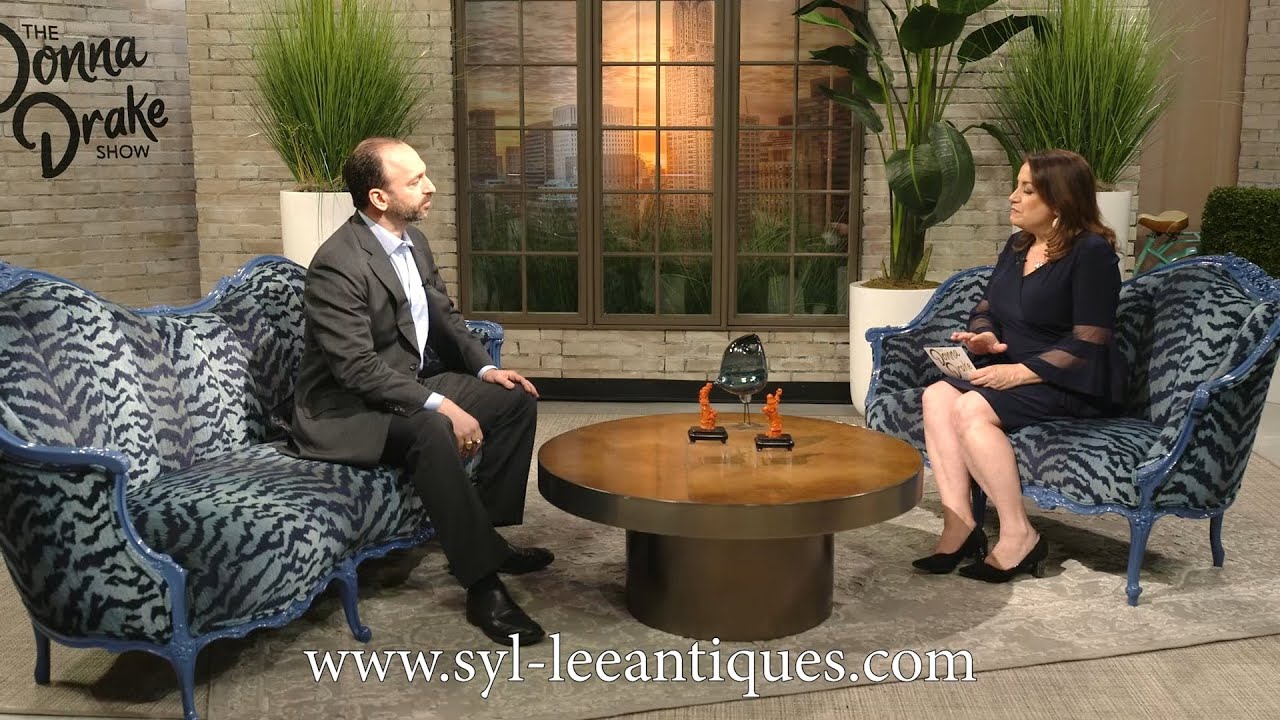
Okay. And what are these items here? They're very interesting. I'm going to just take a random guess, okay? I have no idea. The one for— now looking at this, it looks Asian, but originally I thought it was like a Statue of Liberty from the— from behind here, right? So, tell me about these items.
Okay. These figures here are Chinese, and the material is coral. So these are carved coral items over 100 years old. And when it comes to coral, these items are— the color is important. So the redder it is, the more valuable. The whiter, the more common. So it actually takes over a year to grow 1 millimeter in this particular color.
Really?
So that's why the value is decent. Now, these particular figures are in the hundreds, probably $300 to $500 each. But the larger ones can go into many thousands.
Good to know. And what about— this looks like a hand-blown glass piece.
Pretty good.
Okay.
This is a Murano piece from the 1960s.
Oh, I love Murano glass.
And that time period is very hot right now. '50s, '60s, mid-century modern is hot. So this is a piece that has a couple little chips on the tail, but my client just got it inherited to her, had no idea, there's no signature on it. In perfect condition, this is a $5,000 piece.
Lovely. I'm going to let you sit closer to that piece.
Yes.
But I have always enjoyed, because I grew up as an artist, I'm still an artist, my grandfather was an artist, my great-grandmother was an artist, come from a long line of artisans. And a lot of times there is value in art, you know, even because we all start somewhere. So like when Picasso grew up to be Picasso, he wasn't Picasso when he was 10, and if somebody found a sketch sketch that he did when he was little, that would be tremendous, correct?
Of course.
It's always important to save— that's why I still save my kids' doodles, because you just never know.
Yeah, you never know. And my father was actually— he has a Bachelor of Fine Arts, and he painted a bit too. So that's kind of how— one of the reasons he started the business.
Was because of the art?
Correct.
Haha, what medium did he paint mostly in?
He used to use a lot of oil. He did charcoal, things like that. Pastels he liked.
And what do you love best about having this company that you have?
It's unpredictable. I never know what I'm walking into. I've walked into $20 million houses and found nothing, and I've walked into, you know, teardown houses and found some good items.
Bricks too, I found, are, you know, also valuable, like the old-school house brick. For some reason, people are wanting to— what's old is new, again, as I said. And sometimes even a brick, you know, if it was a handmade brick, is also something of value. You just never know.
Yeah, and a lot of the older things were made a bit better than they are now. So it's a tricky market because some of the antique furniture is not doing as well, but you have the Lucite and chrome doing well. So it really depends. But the older time, it was definitely a lot more faceted, a lot more handmade things than machine-made things across the board.
And you saw the whole collection that we have. So what we literally— how we really decorated is people just gathered around and were like, what do you have? What do you have? I've got an old camera. I've got an old this. I've got an old that. And we just put it together. So as eclectic and as wild as it is, I'm glad that you were able to see Yeah, and it looks, you know, pretty correct in the design.
A lot of mid-century stuff mixed in. I'll try to help add to your collection as well.
I thank you so much. Thank you, Adam.
My pleasure.
And so if somebody maybe wants to send you a picture of something or do a consultation, you're there to kind of set an appointment with them?
Absolutely.
Thank you so much.
My pleasure.
There you go. You just don't know. So somebody, if you inherited something and it's a box, it's wrapped in like old lace or something, Check it out. There may be a treasure.