In this instructional YouTube video, Adam Zimmerman of Antique Help guides homeowners who are downsizing and facing the challenge of deciding what to keep, sell, donate, or discard before moving. He explains the common mismatch between parents’ expectations that their adult children will want to inherit family heirlooms and the reality that many children lack space or desire for large or numerous items. Adam shares a client story illustrating how children often select only a few sentimental pieces, prompting a shift from planning an inheritance to planning a move. He outlines market trends showing reduced demand for bulky antique furniture and certain collectibles, and he emphasizes that memories are not tied to objects. The core of the video is a practical, step‑by‑step process: separate sentimental from resale items, ask each child for a concrete list of five items they truly want, identify items with financial value, and decide which items to donate, sell, or discard. He concludes with an emotional reassurance that letting go of objects does not erase family memories, and he gives viewers a clear 24‑hour action step to start the conversation with their children.
Chapters
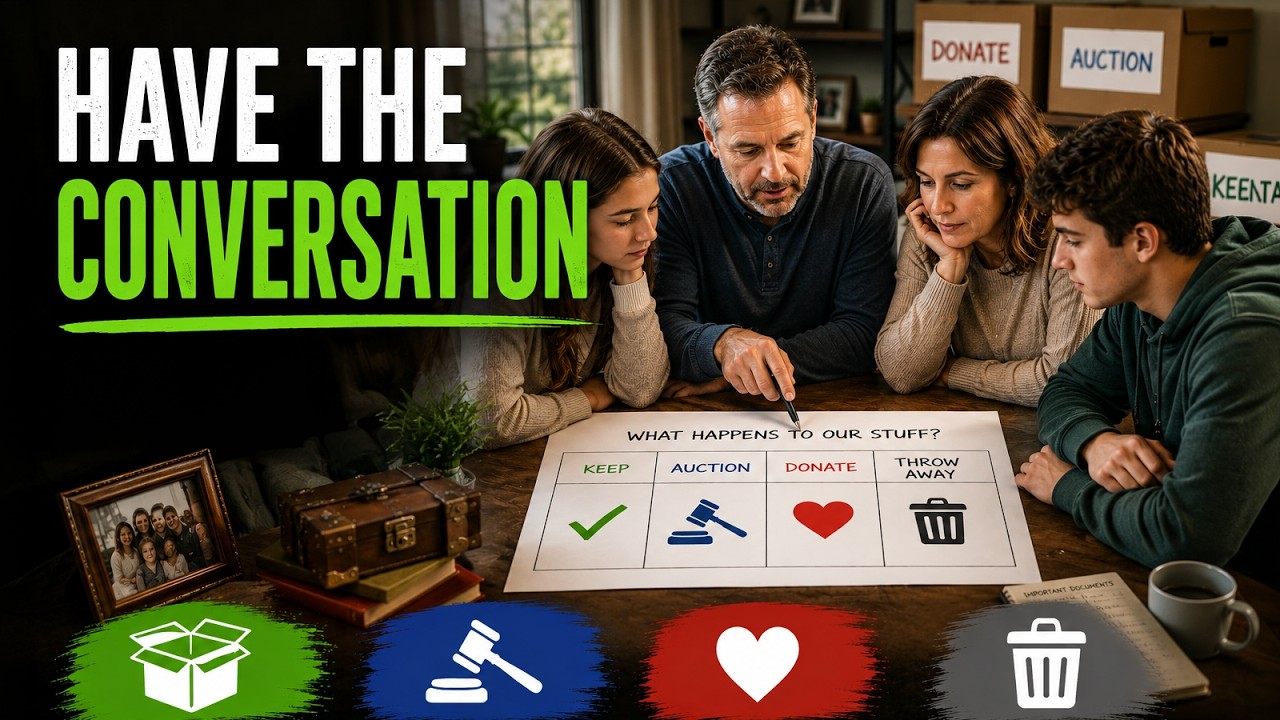
You're trying to downsize and the solution is simpler than most people realize. Stop planning around what your children might want and start planning around what they have actually agreed to take. I see this situation all the time. A husband and a wife call me to look at their house. They're moving from a large Long Island home to a condo in Florida. The move is exciting. The sorting process is definitely not. I'm Adam with Antique Help. I help people make informed decisions about antiques, jewelry, art, collectibles, and family possessions so they can move forward with clarity, confidence, and peace of mind. If you've spent decades filling a home and now need to decide what stays, what goes, and what really has value, this video is for you. Here's the problem. The basement is full. The attic is full. The garage is full. 3 children moved out years ago and left plenty behind. There are boxes nobody has opened in a decade. There are holiday decorations, old furniture, college belongings, sports equipment. Then there are things Mom and Dad carefully saved because they assumed one day they would stay in the family. Things like the sterling flatware, The breakfront, the china, the Waterford crystal, the Hummels, the Royal Doulton figures, the extra dining set, and so much more. The problem arrives when the children are finally asked a simple question. Do you want this? The answer is often much smaller than expected. Here's the common misunderstanding. One of the biggest assumptions I encounter is that the children will eventually want what their parents valued. That made sense in many families for many generations. Today's reality is different. Many adult children live in apartments. Many live in cities. Many move frequently. Many already have homes furnished in a style they prefer. Even when they love the family history, they may just not have room for the objects themselves. That can be painful to hear. It is also important information. Here's a client story. Recently, I worked with a family preparing for exactly this kind of move. Beautiful suburban home, decades of accumulation, wonderful people, good memories attached to nearly every room. They expected their children would take a meaningful portion of the contents. Instead, the children selected a handful of personal keepsakes. Family photographs, a few pieces of jewelry, several sentimental items. Everything else remained. The parents weren't necessarily angry. They were surprised. They suddenly realized they weren't organizing an inheritance. They were organizing a move. That changed every decision. Let's do a quick what the market actually says. The assumption: My children will eventually want these things. The resale reality: Many children want the memories more than the objects. The practical implication: Before making plans around inheritance, ask specific questions and get specific answers. The market has also changed. Many categories that were once highly desirable are now difficult to sell. Things like large formal furniture, breakfronts, big china cabinets, all these collectible figurines, all these dish sets from multiple family members from multiple generations. That doesn't mean that they have no meaning. It means demand is different than it was years ago. I want to give you permission to stop guessing. You do not need to become an antiques expert overnight. You do not need to predict what your children might want 10 years from now. You do not need to keep everything until the last possible moment. Thoughtful decisions create more peace of mind than delayed decisions. Here's a peace of mind check. I'm afraid I'll get rid of something my children will later wish they had. That concern is understandable. It comes from love and good intentions. Here's the next step. Have the conversation now, not later. Not through assumptions, not through estate documents. Ask directly. Give family members time to decide. Then move forward using the information they give you. Here's a practical breakdown. This is how I would recommend approaching a house like this. First, separate sentimental items from resale items. Those are different categories. Second, ask each child to make a list, not a general statement, a specific list. Third, identify the items with meaningful financial value. Jewelry, precious metal, coins, quality artwork, and certain collectibles, certain types of furniture. Fourth, accept that some categories may be donated, some may be sold, some may be discarded. This is not failure. It's simply the final chapter of ownership. Lastly, remember that every item doesn't need the same outcome. One object may belong to the family. Another may belong at auction. Another may belong with a local charity. Now here's making sense so you can make some sense. One belief that creates a tremendous amount of stress is this: if I let go of the object, I am letting go of the memory. Those are not the same thing. The memory remains. The family story remains. The photographs remain. And the meanings remain. Understanding that distinction helps people make decisions with much less guilt. That's what Antique Help is all about— making sense so you can make some sense. Here's your action step for the next 24 hours. Ask each child to identify 5 items they genuinely want and are willing to take possession of within this Next year. 5. Not 50. 5. You'll learn more from that conversation than from months of guessing. I'd love to hear from you. Have you had this conversation with your children? What surprised you the most? Leave a comment below. And if you're dealing with downsizing, estate decisions, antiques, collectibles, or family heirlooms, subscribe to Antique Help. Then watch my next video about what categories still sell and which one often disappoints families. Please subscribe so you don't miss any future videos.