Alex Adamo: The Billion-Dollar Negotiator Making Deals Worldwide
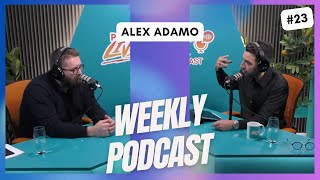
Alex Adamo moved to London at 17 and built a negotiation business handling billion-dollar deals. He credits transcendental meditation and recovery from burnout with shaping his approach, and now wants to teach negotiation skills to everyone as part of a broader push toward what he calls conscious humanity.
Chapters
Welcome to another episode of the Powerful Eyes podcast. Today we've got our good friend Alex Adamo, serial entrepreneur. I know you don't like being called out, but I've seen what you've done and I'm impressed.
One massive thing that I recommend, and I've published other videos in our series in the past on this, is understanding what sort of personality type you are. You can either do a Myers Briggs assessment, you can do a 16 personality test, which is very similar. You can do the Ray Dalio principlesu.comtest. it helps you understand what sort of working professional you are.
And chief negotiator at the Commercializer. Very interesting business. I really want to get your story. Been reading up a lot on your last sort of week and loving what you've done, loving where you've. Where you've lived, where you've been. It seems like you've done more in the last, I know, five, 10 years than most people have in their whole lifetime. So take us back to beginning, if you don't mind, where you began and. And let's try and bring it all the way forward.
Thank you, Brett. Thank you so much for having me and really look forward to talking about my story. But most importantly, I think what. What I really like to focus on as well today is the future. So where are we going and where is the world going as well, and how can we support it? So I'm really interested in that as well because I think the story so far is merely the beginning. We're still on day one. So in terms of starting both geographically and professionally, but actually only from a personal perspective. My life started in Italy, where I was born, and then I moved to London when I was 17 years old. I came here to sell paintings door to door. I had a dream which was to be the best salesman in the world at the time.
Now that's a brave move as well. At 17.
Yeah, it was. And I think it's very connected, maybe in some of the threads that were booked, look at later, some of the conversation that we had earlier. But I had this will when I was 13, 14 years old or so that I wanted to experience a challenge that was bigger than myself. Something that could have killed me almost. I wasn't looking for harm or anything, but I was looking for something that would completely absorb my interest.
Something crazy.
Yes. You know, and you know, my head, you know, going to a country where you don't even speak the language. And I couldn't speak English very well when I came to. Yeah. When I was 17 I just had like normal school English that was not that great when you learn it in Europe. The basics. I couldn't even watch a movie in English to like to give an understanding. I came when I was year 17 and I went to, I was staying in Stratford in an. I was shed with 12 people and you know, I only had like 3, 400 pounds in my pocket that my parents had given me, you know, to survive the first couple of weeks. And I did a one way ticket during the summer holidays as called. So in Italy you have this three months of time, you know, between June and September, October, where, between the fourth and fifth year of high school where you just don't go to school for three months. So I was like, all right, let's do a one way ticket. I think it was the 2nd or 3rd of June or maybe 1st of June when I was 17 and I arrived here and I was like, now the only challenge I have is, is I need to survive. And you know, there was something that attracted me at the time because I had, as I have now, an hyperactive brain. And there was some sort of solace that I would find into the challenge of, you know, the primal element of survival, 100%. And I was like, you either survive or die and there's no other way. There's no gray area. You know, there's not, you know, this is your market school, but you could have done a bit better. There is not. Is this the right career decision or not? No, there is survival and survival gives me, or used to give me, now don't anymore because I'm not looking for survival anymore. Was a great motivator when I'm early in my career, but it gave me clarity into a world of chaos to be able to go at it and survive.
Yeah. And I do think when you put yourself in that sort of hardcore situation, you really is fight or flight, you push forward quickly off or go the other way obviously. But you know, I think it's. I love being dropped into situations like that where you, you have to, you have to find a way.
Yes.
No safety net.
Yeah, there's no safety net. You're forced to be your very best and give the very best outcome. It's a great place to be. And I remember the reason why I saw a lot of value there and it's great that. Thank you for the question because now I'm reliving that experience. I remember when I was 17 and again later I started selling paintings because I couldn't even speak English anyway. So I remember That I was applying for jobs as a waiter when I arrived, and I was quite self conscious, so I wasn't. I wasn't sure about, you know, what if people reject me when I walk into a, you know, a restaurant and they reject me. And I was afraid of approaching people, you know, of getting rejection and these kind of things. But then I remember that I sat down, it was somewhere around London Bridge, you know, I sat down with. With my. My head in my hands, like, really scared after a couple of days of applying for jobs and there was no success. I couldn't even understand what people are saying. So I was applying in East London and people were like talking to me and I could only see their body language and I could see their. Their lips moving. As in, I couldn't make, you know, I could understand that they were not making it, you know, they wouldn't work when I was like, you know, here, I need to go back. You know, I left Italy as this guy, you know, was going to make it, you know, was going to survive. And instead now I'm returning, like, I need to go back because I'm finishing my money. But then I remember that very moment where I put my head into my hands and I was like, this is it. This is where I die. I mean, probably over, you know, over. You know, I was making a point over what was actually happen. But that's how I felt at the time.
Yeah.
And I said, right now you're at the very bottom of the ocean. Nothing can go worse than that. Great, now we can only go up.
Yeah.
And I remember me telling me that, and I went, now with my cv, and I said, all right, now we're gonna get the job. And I wait. I walked in, into the next restaurant with so much more confidence because I was like, here, I don't make it or I die. And people were responding now more nicely to me. They were smiling.
And that body language just is mad. But the body language is so important.
It opened up because I was like, this guy's not gonna get no for an answer. And then finally, funnily enough, by the end of that day, I find like an ad in Stratford where I was living, and I get the job. So I get asked to go into, you know, the next day and get into the restaurant to do a trial. And I remember the day before, like, before going into the afternoon, they've asked me to go into the afternoon. I was studying all the words about, how do you say spoon, how do you say fork, how do you say cutlery? How do you say water and those kind of things? And then it worked. They gave me a job and they fired me after a week, by the way.
I really.
They fired me because I couldn't understand anything. So people were ordering their breakfast and were like, can I have a full English breakfast, please? You know, can I have a cup tea, please? You know, did you find.
Because I find a lot of people. I've got. I've got quite a deep. Quite a deep voice and a fairly sort of East London accent, even though I'm not from East London. And I'll go in now and wait as a matrices. Well, I'll say, I'll ask for something and they'll look at me. And my misses Then translates.
Oh, well, your. Your accent is so clean anyway, so, I mean, there are levels of. Of much more. Much more, let's say peculiar or specific or.
But there's also so many different English accents.
Yeah.
You know, so it must be a scary place at 17 years old to come in. I wouldn't know where to start, if I'm honest. So if I went to Italy at 17 years old, wouldn't know where to start.
Yeah. I mean, either, to be fair. And I just had a CV in my hands. And I remember my housemates were also trying to do the same endeavor. They taught me what I should say when I walk in. They said, could I leave my CV to the manager, please? You know, that was my way of doing it. And I was like, right, I need to survive. But I love that because then after I got the job, I lost the job after a week. But I've learned very quickly, you know, I have to do coffees. They've taught me how to do coffees, have to do cappuccino. I have to do, you know, latte and have to wash plates, you know, in the back. In the back room and all these kind of things. I was doing all this. I have to do the dishwasher.
Yeah.
So now I had learned a set of skills and I had gotten paid for a week. That means my one week of existence is survival. So, yes, I was a failure. But at the same time, I was like, all right, I got one more week to go.
Yeah.
Now I need to go into the next place.
And I think that you grow from failure.
Yeah, you do. And the best way you grow is you put yourself into those challenges. And what matters is that now, you know, fast forward 15 years or so, I'm in a place where there is no such a thing as failure. There's only you trying things and not succeeding in them. But there is more learning to be had. But there isn't a part of my ego that is attached, you know, or, or connected to that notion of failure. Because you've tried it so many times. But obviously the waiter example is just an example of my attitude. But you learn that every day in business. You can give yourself the word failure. You just, I think, you know, some people say, hey, I don't want to fail. And I think there isn't such a thing like failure. What there is is only misplaced expectations.
Yeah, very true.
Because, you know, in business, you need to try things, and sometimes they're not going to work. But if you learn something out of it and you can capitalize on the learning, then you've built a process, and that process can give you a bit more than what done before. So you need to have that kind of attitude.
Yeah, I always describe the CEO as the firefighter. You're constantly putting out fires. And I think that's the. That's why you're at the helm, is because you can make decisions fast. And again, when you make a fast decision, sometimes it might be wrong. Yes, but you have to make a decision.
Yes, exactly. And I just weighed the possibilities. You know, I'm like, I have, you know, just the other day, actually, we were deciding. We've just opened an office in the US In New York, and we were to decide the merits of a decision and the risks with a certain legal decision that we needed to make. And there was a percentage of about 20 to 30%, according to my assessment in ChatGPT support, that we would fail into making that assessment. And if we would fail, that would cost about 30 to 40 thousand dollars to the business. In the worst case scenario, could have cost us about $250,000, but that was only 5% chance. But I decided to decide that that's negligible. And then I had to decide, do I go with this decision where I got 30% chance of failure, or do I pay a lawyer $15,000 to decrease the percentage that that would fail and therefore be stronger in case we make it? I decided to go without the lawyer. I mean, I found halfway, but I decided to spend just a couple of thousand dollars with the lawyer to then give me a bit more confidence on my percentages and decrease them a little bit more. And then you just need to take an amount of risk anyway, because if you want everything to be perfect or your perfectionism, or you never stop, you never do anything. Like literally when I started the business, in 2018, I just knew I needed to start it because I was feeling. I'm sorry, if I'm fast forwarding a little bit, then we can go back to it, obviously. But when I started the business in 2018, I was having the same feeling of suffocation that I had when I was 16 or 17, when I decided to leave the country and come to the uk. And again, now this is what I call home. And that feeling of suffocation has guided me in my most important choices because I knew that if I stayed in my corporate job, I would have died emotionally, I would have. I might have even developed an illness. You know, if emotions are connected to illnesses, I would have developed some sort of, like, I thought at the time I would have developed cancer or something like that. If I didn't actually leave. I lost a job, but I knew I needed complexity and it was the best job in the world. Like, if I ever have to have a job again, I would do the last job that I had for a corporation where, you know, I was just. They were telling me what to do and being the great negotiation consultant and these kind of things. I'm just doing it.
Switching off at 5 o', clock, sadly.
Switching over 5 or 7 o'.
Clock.
Best job I've ever had, you know, But I love the job. But then at the same time, I knew that I needed to do more.
I know you said about the adhd.
Yes.
Again, massive traits where you can't. Yes, you can't sit still. And I think it's. It's fear of existing, you know, like no one wants to exist. You know, you want to, you want to. You want to be, you know, you want to push boundaries.
Absolutely. I think our job in life, if there is a message that I want to give through the. This endeavors that I do and through this opportunity as well that I have, is for people to embrace life fully. Because we are all. We're all going to die. Most importantly, you know, I've started looking at life differently recently, Brett, and that is, we're already dead. I believe I'm already dead.
Really?
Yes.
In which way?
I'll tell you how. And then it's, you know, it's a bold statement to make, but I'll tell you how. So I believe that. And it's not my belief, by the way. This is physics, right? So we are matter, just like, you know, matter and energy and these kind of things, like from a physical perspective, quantum energy, just like this table is, or this iPad or this microphone. We just organized In a different manner, with a lovely brain with, you know, electronic systems in it that makes us look like we're living beings, but we just matter. Right. Just like the sun, the earth and the DNA inside us and those kind of things. And I'm evolutionary anthropologist by training, so I have a very mechanical way of looking at life. So we pretty much happen to be this bag of matter ourselves. But then we. I also believe we are antennas for consciousness. So we happen to be a bit more animated and a better antenna than a stone or a table. So we've consciousness inside us. And I'm wondering, you know, what happens after we die? What happens to that consciousness? Well, just the antenna dies, but we just is not we. So there will be no Alex Adamo in the consciousness field. Yeah, but you just part of the consciousness flow, which is one of the elements of nature. So I'm already part of that consciousness. But I have the gift of experiencing life through my body. Yeah, through, you know, a very healthy body. Through my hands, from my eyes, I can look at the universe, but there's no differentiation. The only thing that then makes you dead is when your body doesn't work anymore. So, yeah, at some point it's not going to work. But you're really, you and I and everyone else, we really are the universe. We really are unlimited consciousness that now we have the privilege of living into this body. And when you look at it through the. This perspective, then you're really going to look at life as a gift. You know, you're not going to be like, what do I got to lose? There's nothing to lose. You already have everything.
Yeah, see, I don't fear death, and I'm very conscious of death, But I think purely because I look at. I look at it where 85, if not more people never actually, you know, everyone. Everyone dies. But 85% of people never live. Yeah, they exist.
Absolutely.
And they're lemmings.
I'll tell you why as well, is because from an evolutionary perspective, so we are, I suggest a great book from Richard Dawkins, the Selfie Gene. So we're pretty much machines at the body level, controlled by our DNA. So our DNA decides how we feel, decides, you know, has been built to give us a certain brain, a certain body, certain thoughts, certain feelings and so on and so forth. And all the DNA wants is to pass itself onto the next generation to just keep spreading. And we are their machines as humans. So we've been built with excellent brains that allow us to survive very well. So we're Wired for survival. We're not wired for thriving in our lives because survival is connected to an important part of the brain which we look at in life. But also we. Me as an expert, we know how business we look at in negotiation, which is the amygdala. And the amygdala is the part of the brain that makes you look at threats in the environment and develops fear, develops anger, so that then you're afraid of a lot of things and you're not too stupid, so you don't get killed. You know, you do very simple things. You know, you just exist in a way. But if you learn how to disable that amygdala and activate what makes us uniquely human, which is a prefrontal cortex, then you're going to be in a position where you can experience life at its fullest because you're going to decrease the level of fears that the world gives you and you're going to increase your understanding of the wonderful opportunity that we have, which is to be alive.
Yes. That's deep. He's deep.
That's how I look at it. This is both my. Me coming here to this stage in my life and all of this is coming up because, yes, I love reading books and I love learning how it works, you know, the instruction minor manual of our brain and our mechanism. And that's what I do for a living. I share this with other and make sure that others, more importantly, take control of their nervous systems. Because I haven't done so in a conscious way. Yeah. Before I was part of the, you know, the flow of unconscious people just seeing what comes in front of you, and let's see what happens. But if you don't do it consciously, if you don't live consciously, as in, you don't figure out very simply, you don't decide what you want in life, and you do not develop a plan on how you're going to achieve that, then you're living a suboptimal life. But an optimal life is available to everybody. And I come to these conclusions through pain. Pain plus reflection. This is something I really value. That you might know is the founder of the largest hedge fund in the world, Bridgewater. I'm a great fan of him. I learned so much from him. And he says when you put pain plus reflection equals progress. So these things that I'm telling you is the pinnacle of my pain that I've experienced and I keep experiencing on a very regular basis that then help me create my understanding of life and then share it with others, you know, so that then we can help people alleviate that pain. I'm not suggesting to remove it. Pain is fun.
Makes, you know, I always, always come back to the caterpillar.
Yes.
And every time when, when the caterpillar thinks it's about to die, that's when it grows wings and oh, is that what it happens becomes, you know, is.
That when it happens when, when that, when, when they think, yeah, he thinks.
He'S dying and then it actually, actually evolves. And I found personally, every time I've hit the bottom, I've grown.
That's beautiful.
Every time.
Me too.
Yeah. And that's why. And I think that's where. Through trying again. The first isn't the first time. It's like if you, if you ever take up boxing, the first time you get hit in the face, it's like, oh yeah. But the fear of being hit in the face is worse than being hit in the face.
Yes, absolutely.
So once you've been hit in the face a thousand times is what it is, you know, you're not worried about it. But the, the pre, you know, walk into the ring is worse than being in the ring.
That's very profound. That's very profound. And this is what I experienced in my, my entire life, you know, like before going into a very important negotiation or before leading a very important.
That's when the nerves are the pain level.
1 out of 10, 12.
Yeah.
Then you start the event, you start the negotiation. I'm actually just enjoying it.
Yeah.
I'm so excited. Now. The important thing, however, one thing that I've so my mechanism and this is I think something important as well to share with, with people. My standard mechanism was exactly that, Brian. The mechanism of I put myself so much out of my comfort zone on such a regular basis that that switches on my brain and I'm enjoying it. And it puts the very best of me. And I've been doing that for the first 10 to 12 years of my career. That's great. And I think this is what we should share with people to do because this is what I would call jump starting something and it really helps. You know, it would wake a lot of people up if they're like, put yourself out of your comfort zone, make it happen.
Yeah. Face your fears.
However, I found, I found that, that I've experienced so much pain and I've done that so often because that was my only way of existing. I thought, you know, things are going well. No, that's not fine. I need to feel more pain. Shake it out. I was Actually creating self destruction in my business because I needed the stimulation.
It's like torture.
Yeah.
You see self torture, self harm. Almost like where you through a business stress level.
Yes. Actually, I remember making this very neat thought when I was 15 or 16 and I said to succeed you need to be a masochist. Yeah. However, I think that's great to jump start and to make something, you know, to get the wins in life. If you're. Whatever age you are. No. Whenever you're in the place where obviously younger people will benefit from this even more. Whatever plays you are in your life, you want to start something. Put yourself out there, out of your comfort zone. But then very important thing, what we're working on now and what I'm working with my cell phone and actually I'm having massive amounts of success that I wouldn't even imagined three years ago before I started engaging into this journey is how do you sustainably achieve that success? How do you fuel yourself with the positive emotions, with joy, gratitude, enjoyment for life, rather than fear and anger? Because I was fueled for the first 12 years of my life by fear and anger. Which again really served my purpose of building a really strong career really fast.
Yeah.
And they really serve the purpose of the first two to three years of my business. When it's like you said, a lot of firefighting and a lot of fight or flight. But then I've overdone it. You know, when they say there is too much of a good thing, I've overdone it. And that broke my nervous system. I started developing anxiety and panic attacks to the point that I couldn't operate anymore. I couldn't even take a video call. You know, I was like. Had to push myself to take that video call. And this is what. I was at the deep end because I was like, fuck, you know. You know, I broke my mind. And at the time. Now I'm making this reflection with you, Brad. You know, looking back three years ago or so and you know, came out of the tunnel and we're reflecting on it in a nice way. But when you're in it, you know, it's like. Is the equivalent that a boxer goes his legs broken pressure is that, you.
Know, if sometimes you feel like you're being crushed.
Yes.
You know, and I think that is. I think that is stress. It is stress called whether that stress caused by anxiety. But you see, you know, that fear, that feeling where you're under so much pressure.
But I love that that that activated this is.
But then this is the trouble. But that's almost sadistic. It's like. And I think that's a. Yeah, you know, that's how a lot of people are. They kind of, they, they talk about not wanting that, but the minute they've not got it. Yeah, they crave it.
I was addicted to it. I was completely addicted to it. And, and I needed it. And I, like you said, I craved it. But then I realized that so it really worked because he made me do a lot of things that most people wouldn't do in terms of putting themselves out of comfort zone, starting a business, finding big clients, expanding the business, going abroad. Like doing all these things that you would tell risk averse people wouldn't really achieve. Right. Wouldn't really even try to do. So I love that. But then I must also say that. And I've identified a few things into the book that I'm writing which is called the pillars of the negotiators mindset that I identified that went against my actually best long term interest. And one of them that I've learned that is very significant in the context of this conversation is my value system. I've learned that about. I didn't even know what a value system was. 2021.
Yeah.
But I'll tell you what I've learned and I've learned that my value system, you know, for me to experience great emotions, so emotions like achievement, power and dominance, success maximization. If you someone ask me what is it that you want to experience when you feel good? These are the things, you know, some people, they say family, joy, happiness. My wife would say these kind of things. Yeah, I would say power. No, power that I need the power like from people. Like as in the ability to make things happen.
Yeah.
You know, not feel powerless. When someone says, hey, you can grow a business now. You don't have enough money to do it now. I want the technology to be able to do it. I want the tools to be able to do. The money is one of them.
Yeah.
So I wanted all these emotions and I was experiencing that them. But then you make a little bit more of a analysis and you're like when do you activate those emotions, the triggers that trigger those emotions? And I would write only when and if I achieve all of our business goals and I go very well beyond them, at least by 100% and I'm surprised by even me achieving them.
Yeah.
So that was one thing. When are you maximizing when you feel the emotion of maximization? Only if and only if I have booked at least 12 calls a day and there is a maximum of 12 war rooms as negotiation. War room is one of the service that we sell where I support large enterprises on their negotiations. Only if and only when I have 12 war rooms in a day with a maximum five minutes of breaks in between. And then my calendar is perfectly booked in the next three weeks and it never changes, and so on and so forth. So you can already see that there is a trend there. That is the emotions that I want to experience. They were, oh, and then let me get you on the other one. And then I'll make the conclusion the other one is instead, what are the emotions you don't want to experience? And these were fear. Fear of failure, fear of rejection, fear of the other ones. I can't remember. Yeah, I think fear was the main. Or anxiety. You know, I didn't want to experience anxiety. I was experiencing it because was an overdrive and I was doing too many things at the same time. I didn't want to experience that. But when you experience them, you check the triggers. You know, just go deep down with yourself. You kind of hypnotize yourself a little bit. So you go into the deep levels. I've done this with experts that have helped me do that. And then you're like, oh, the triggers, when do I feel them? Every time I receive an email, Every time I have a workshop. Every week.
Yeah.
Every time I have a war room the minute before the boardroom, Every time I'm before about to talk to someone, Every time I don't receive a response to a proposal within the next three hours. Never happen like that. People respond after three weeks, you know, you know, big client proposal. Right. So then you easily realize a trend, which is, I had a value system which by the way, most people have, which is it makes it impossible for you to feel the emotions that you want to feel really hard. You know, I was being happy and achieving and maximizing maybe twice a year when I was looking at the company results for two days. Then I would get drunk, you know, in the nine. And the day after I was thinking about next year. Right?
Yeah.
So that was when I was feeling the great emotions. And then I was feeling instead the negative emotions every day about 100 times a day. Now you realize how this unconscious emotional mechanism is going to break your nervous system. If you live in fear and anger, like 99% of your day, actually 99.9. And you experience joy and success and these kind of things twice a year, then that's a problem. So my advice to people is a lot of us, we've been built, we've been given unconsciously by society and unconscious value system or emotional value system. I'm not talking about right or wrong about emotional system. And a lot of us, especially the high achievers within us like you and I and many others that are watching, we make our happiness and our satisfaction and our sense of relaxation conditional to our goals. One of the big things that I've learned instead is that. And I'm using is that you can be happy anyway. You can have the best emotional feelings, and in fact, you've been able to make them very achievable every day. Those emotions will then give you the emotional fuel to still achieve very big objectives. So now you end up waking up every day feeling like you're achieving and you're maximizing. And in that mindset, you're just going to deactivate your amygdala, you're going to activate your prefrontal cortex, and you're in the very best position for you to achieve the 10x goal for your business, for example. I hope that makes sense. And it's not.
You know, it actually makes too much sense, if that makes sense.
Yeah.
Because it resonates, you know, And I found the last. The last six months have been crazy busy for us and. And I felt like for me personally, it's been quite a dark time. You know, I am angry with time, partially tired, you know, like, I don't feel like I'm. I don't think I'm the best version of me. But we're making money. That's good, you know, it's great.
Yeah.
But you're. You are. I think you start desensitizing, you know, the angrier you live because you're always. You're always dealing everyone. People only phone you up with problems. You don't get the nice stuff.
And you know, Brett, anger gives you certainty. I. I've been existing on anger for the first 12 years of my career.
Yeah.
Because anger, like anger, was making things happen for me. You know, I messes things up. I call you the out and I shout at you. And you make this happen.
Yeah.
Because otherwise I know that my business gonna go down. I'm not gonna let you down. I was living like that. I was waking up. You know, I would make the metaphor of a man or a wolf, even with blood over my mouth, you know, figuratively, of course. And wanting to go out and kill. Yeah, that was my. My primary emotion, of which, again, I served me very well. And I still use it when necessary, but now I Activate it only on demand.
I think it's Jordan Peterson says about having to be dangerous, going out, killing every day.
Yes.
You have to have that element of, of danger there that you don't get walked over.
I listen to that as well.
Business, I think it is, it's people take you, people have to take you serious. Yeah. You know, to do good business.
Absolutely, I think so. Like he says, you know, potential, potential danger is very important.
Yeah.
Because you don't, you're like, like he says, you know, like you're not a nice person when you're unable to hurt someone. I'm not saying, you know, physically, I'm talking business wise. Yeah. You're not a nice person when you're unable to create problems and create danger. You're a nice person when you can create danger and when you can destroy but you decide not to do it.
Yeah.
Because it's within your decision, you know, if you're powerless.
Yeah.
Not being a nice person, you just playing your submissive game in life as it just become more powerful and you can be, can mean anything, you know, whether with your business, what are we? The decisions you make. You can live a very empowered life without having to make hundreds of millions with a business.
Have you found business over the years as made you a totally different person from the 17 year old who come over with, you know, a few hundred pounds and a hope and a dream.
So I don't think business itself made me a different person because in my head I always, I realized and this is when I was in the corporate job, you know, a couple of corporate jobs that I had, I realized that I was always an entrepreneur in terms of attitude. I didn't even know what the word meant though. You know, when I was 17 I even had, I was the president of the enterprise Society at university and when they made me president, I still didn't know the word entrepreneur meant. I actually, I had difficulty spelling. Probably still do in terms of, you know, vocalizing it, pronouncing it properly. But like I didn't know because my parents come from a background where my, my dad used to be a civil servant and you know, make about €1,100amonth and still does now in expansion. My mom is a housewife so neither of them, nor did I in my upgrade knew even what business was. You know, he would tell me about a PNL revenue minus cost, equal profits or anything within the economy. I just thought it happened. You know, there was no understanding for me what entrepreneurship meant. So I think business as such is not business. That changed, that made me evolve, if you will. I kept the same attitude and the same mindset. A very important thing. The naivete that I had when I was 17, you know, just trying to think and say, hey, let's try and do it, you know, let's try. Let's see how it works. I lost it when I've developed a lot of anxiety at the beginning of my business career. But then that journey, that pain of. That journey of pain that I've experienced for about 24 months before solving me, before finding a great solution that I'll share with others. The journey of pain made me then engineer and make it conscious. How did I get back the 90 day and now? I kept the drive, I kept the ambition and the naivety of a child, which I'm enjoying so much. So, yeah, the business journey has been both working for others and building my own businesses as gifted me with so much joy and learning on, on a daily basis.
How do you feel that you still stay so hungry for business? Because a lot of people get very comfortable, you know, start making the money and then they, they go into the comfort zone. You're still driving.
Over the last few years, indeed, I've reached the level that it was. No, it wasn't beyond what I thought I was going to reach. I'm still day one anyway on that. So there was a lot that high level of ambition. But you're right, once all of your needs are met and you know that the next step, you know, the only next step that now I can make, you need like hundreds of millions for me to get into a point where I'm like, all right, next level, you know, when's all you need a met where you can go on holidays wherever you like, you can eat wherever you like, whenever you like, you got the house that you like, you can provide for your family and all these things are met, then you're like, what's my motivation now? So at that point I experienced a little bit of. Of a hole, you know, when that. Then I reached a level of wealth or earnings that I was like, right, so now I don't have the survival.
It's the second album, you know, the second album Bombs.
Yes.
Because they've not got the hunger.
Yes, yes. And they stop. And now the important thing is that people like you and I, that we put ourselves on that kind of platform and that kind of life journey, you can't really stop because it was built on hunger and drive and determination. My business is built on hunger, drive and determination. I I start chilling, it dies. It dies within months for sure. You know, you need to keep growing. Every business needs keep growing anyway. Otherwise it will just be can become complacent and you know, subside to economic change or innovation of others. So you need to keep that anger. What is my anger now? Which by the way is a billion times more than satisfying my own ego for significance and wealth. My mission. Why am I here? Why am I here? What can I do in this empowered body, very healthy body, in the next 60 to 70 years before I die? And now that's what gives me hunger now and my mission. Now that might sound very lofty, but I'm happy.
No, no, no, let's, let's hear it.
I want to make my contribution to avoid humanity's self destruction. I'll tell you the thesis. The thesis is the following. I see. And again, I see that as an anthropologist, right? I see a world where there are two main threats. One is pollution, you know, and sustainability and the way that capitalism has evolved into what we would call unconscious capitalism. Now actually, let's start from the fact that we're almost sapiens sapiens and I think we're a great species designed to exist in a smaller amount of people or in a bigger world because when you were tribes it was fine if we were killing each other or nothing could happen. Up to about 200 years ago that would have affected the environment in such a way that it would have destroyed humanity. Instead, capitalism and technology and the great human inventions and creativity have created a point where our industries, our factories, they pollute the world to a point that is becoming toxic for ourselves. And within, you know, a few decades, they say we're going to die because of that or there's going to be an irreversible process. So that's the first problem. The second problem is we've invented weapons like nuclear weapons that if someone, you know, their amygdala is a bit overactive, hyperactive, and someone decides to take a bit of an ego game. And there's a lot of egotistic people nowadays running the world they pushed about. And we're all dead equally. So the problem with Homo sapiens sapiens is that we've grown to a point that we affect too much our existence in our environment. And Homo sapien sapiens is not designed to exist or live in those conditions because we're going to destroy our own world. So what we need now is an evolution from Homo sapiens sapiens into Homo consciousness. What's a Homo conscious is someone whose Amygdala works a bit less. Who doesn't, you know, make decisions based on fear or the fact that we are afraid of the next government or we are afraid of people that are different from us, or we are afraid from foreigners or all these kind of things. Is someone that makes a decision based on their prefrontal cortex reasoning, understanding what actually works best for me, for the environment and everything else. How do we develop that? By allowing people to be a bit more conscious, to give them even more joy, to give people a better existence. Because I think a lot of us, we got all of, like a lot of people, they have enough in terms of health and earnings to be able to say, you know what? I deserve a bit of joy. Of course things can be improved. So what can be my role within that in terms of the mission? Allowing, helping people to become more conscious?
I have, I find the world at the minute an extremely depressing place. The world of the world in general? Yes, like the world at the minute. You talk about joy and happiness and I know obviously we spoke off camera about like London and London's become, thank goodness. When was the last time you walked past someone smiling in London? You know, it's like. And there's a, there's a, there's a huge thing, you know, is this, is this part of a bigger plan to control everyone? And quite possibly it is, but I.
Think it's happening on its own. I mean, I don't know if there is someone behind the scenes making it happen. But yes, it's like a self destruct. Yes, that's what's happening. Because also, you know, the problem is that more, more than ever, we're influenced by social media, we're influenced by the news. So we are created, we exist in a world where, where amygdala is the number one one thing. Fear is the first thing you think about every single day whenever you open the news. And you know what I did? I'm a business person running businesses with the largest, working on the largest deals with the largest companies in the world. But you know what I did? I removed the news from my phone completely. The only two papers that I read is the Wall Street Journal and the Financial Times that I read every day. But these papers, they're reporting about the state of the economy, whether Biden is going to stay as Democrat or not, whether there is a war going on. These are the general things report rather than the business report. Not the thing about, hey, a person has been stabbed next door or a person, three people have been stopped in in, in the UK this week, for example. Now I read that thing first thing in the morning is going to make me a fearful individual. But the problem is that in terms of our brains, we're plagued as we have lots of those great book from Daniel Kahneman, Nobel Prize thinking fast and slow. We're plagued by heuristic biases. So if you're, if you read on the newspaper that someone has been stabbed, you're going to feel fear as if someone was tab next door. Whereas if you think about three people being stabbed in a 65 million population or 70 million population, it's actually a good number. Yeah, it's not too bad. Now, obviously it's best if it wasn't happening, but it doesn't grant me to live on fear for the rest of the day.
Mommy says we spoke about going Germany for a Christmas market and she went, too dangerous. Something always happens at Christmas. You live in London.
Yes.
You work in London.
That's right. And the Christmas market. The first thing that comes to mind is the terrorist attacks of seven years ago or so. Yeah, but we're designed to remember these things because they aid our survival. But then equally, if you surround yourself with all these news reports, all these.
Things that are happening, where would you ever go?
Exactly.
Yes.
And we will, we are. But anyway, we are surrounded by these things. You know, we are. You know, we exist in this world and this is where all these negative unconscious negativity, unconscious pain and suffering is created from. And then you worry why people make decisions that divide us as people. Because all you're looking for is security and survival. Instead, if you can create a system that makes people more joyful, then you'll create a more united world. And this is the first time that in all countries, instead of fighting each other, will start working together against pollution. And they will say, you know, let's demilitarize the nuclear weapons and all these kind of things. But that can only happen when the people that vote are elected officials are in a good place in their head. They're joyful, they're grateful. And obviously, yes, you need to work on the economic side, but the emotional side is not even being looked at.
There's obviously what you've said there about people voting. A lot of these countries, the votes don't matter.
No, they don't.
That person's already in.
Yeah.
There's what? Vote. Vote Putin.
Yeah.
What's going to happen if you don't vote Putin?
Absolutely.
You know, he's self elected.
Yes. I mean, some of them, some of them you don't even have the democracy that allows it. So there is a system that needs to be developed. I mean, ultimately on my side, I don't even know what a democracy as the state of the world is the best way to run countries. Because the problem with democracy is that you get, first of all, you give a vote to people that have no idea what was going on. So I don't think, you know, I think you should give more points to people, more votes to people that they take an interest, basic interest, like who's your prime minister, what year are we in, you know, this kind of small things. But what are the three main issues going on in the world today? Like if people take an interest, I think they should have more of a say because they're more specialist than people that have never taken an interest before. And a lot of people, you know, they get a boat, whereas they don't have the ability to actually express an informed opinion. So I think I would give more votes to people who are more informed, one thing. But then most importantly, it would be about paying people well to be prime ministers and presidents. Like you pay prime ministers and President 150k a year. Yeah, I wouldn't do this job in a millionaire 450k. I would only do it for charity.
They do it for the spin offs.
And that's a problem.
It's a problem because Tony Blair was getting 150 grand an appearance as soon as he left.
Yes. But then again you, you get, you end up getting the wrong people in the job. Like running a country is an extremely complex job. So you get people that are skilled at diplomacy and that are skilled at self promotion and that are skilled at, you know, understanding politics and winning votes across the little circle and that they can smile well on camera. Right. So that's the wrong system.
Yes.
Puppies. You don't want a guy like that running the country. A guy or a girl or a man or a woman running like that. What I want is the best CEO or the footsie hundred to go and run the country.
What did you think of Trump?
So Trump. So I used to like him more in the beginning, you know, before the first round of elections. So I think, I think he's got, I like the approach where he's able, he was able to understand Americans power in terms of foreign relations and being able to assert it when necessary, even though it created a lot of things about China, economic wars and all these other things. Instead, at this round, at this stage, I'm actually scared. If Trump gets elected Because I think he might go to such extents that the third World War might happen.
Interesting.
So I'm a bit scared at this stage. I'm also scared by Biden because clearly is not. His mental acuity has gone to a level that is so low that it's, it's, it's embarrassing to see.
Yeah, it's cringe.
Yes. I'm sorry for him. You know, it's a very nice guy, I'm sure, you know, and he's got the best interest at heart. But if you can't remember the name of your own vice president or you know, like you introduced the Landski as Putin. This is done this morning. I'm so. It's bad to watch. I mean like you're running years a very. It's a 30 trillion dollar economy and you can remember the names between. You can distinguish between fool and friend. You know, be an advisor.
But he's the puppet.
Yes, yes.
He's pulling the strings. He's a face.
And which by the way makes me a bit more reassured because I think he's not pulling the strings. So he's got a, I think a team. The other day I read of 512 people that cost $61 million to the U.S. taxpayer. And these are the people making the decisions. Which is, by the way, is not too bad in itself.
Yeah.
But then equally at the helm, you want a spokesperson, even if the president is the spokesperson. Let's say you want someone at the helm that is coherent.
The big trouble with this always comes down to money because power can obviously bring a lot of opportunity. Miss. Or misplaced power.
Yes.
And again, I think this is where it always comes down. Trust. Trust in your government. We see it across the world. You know how much money's been raised for Comic Relief. And there's, there's towns and towns who still haven't even got running water.
Yes.
Like, because. But the government are living in absolutely 10 million pound houses.
Absolutely. That's, you know, that's unacceptable.
And the trust, the trust. This is a big problem. We've seen it with our own government over here where they misuse, you know, they're, they're giving their friends contracts, you know, these big backhanders.
Yes. Yeah.
It's disgusting. But it's that greed that powers the average human being.
Yeah. But I think if you, if you, if you had elected a actual executive that makes at least $20 million of base pay and then makes, gets also GDP a percentage of GDP growth of another like 50 million salary. Let's say you would get some sort of CEO x CEO of Goldman Sachs to run the country. And these people don't give a shit about giving their friends a contract because they're making enough money anyway. Yeah, they're getting the, you know, the opportunity to improve their country and they're not going to mess up their career because they need to give their country their friends instead. At the moment the selection system of those elected officials is based on friendships and exchange favors because maybe they don't give the favors, they lose the support that they given to the council or to their, you know, to their local.
The system, 3 million pound investment coming in from someone for their campaign, otherwise.
You lose support, you know. So it's created on, on, on this made promises and counter made promises which I believe is highly non optimal for the country. Instead you want to get best people that want to get the job done. If money is that motivated you pay them well. I mean what is it, 100 million in a 2 to 3 trillion dollars economy for your chief, you know, commander in chief and then also the ministers, I would pay them 10 million minimum with bonuses if there are, you know, the target goes well, never getting the best people on earth. And if you get the best people on earth, you only get them in private sectors because they make more money there. Yes, it's basics, you know, selection. But I wouldn't invest 20 years of my career to become a politician. I would do it part time. If someone really called me, you know, not now in 20 years time and you know, I'm the business has gone to the maximum they can ever go and I can support the country to make the very best decisions then I might take it. But out of wanting to help because it's my career decision and there is a very few people that you know, become billionaires and then they're like, yes, I want to try and do this. Trump is one of them. But it's not going to necessarily those intentions. Yeah, he's going there to protect himself from the mess he has created in his previous presidency and probably all the messes created through his businesses to get more immunity.
I feel like it was probably 80% of Trump that you could take out and push into the potential, you know, best. There was so much of what he'd done and he and for the economy was fantastic.
Yes. You remove the egotistic drive, you remove the ignorance, you know, you remove the wanting to lead people based on their fears and the vision. You get a businessman.
Yeah.
Who's running the country, who's giving away their salary. If you remove all these things and you get my idea of over of a good presidential candidate, which is a sound business. I mean, I don't know how Sandy is business was, but I would love a sound business person that doesn't require the power, doesn't require the attention, wants to do the best and wants to solve complex problems, to increase the general welfare of their citizens and ideally of the rest of the world. When you're running something like America.
Yeah.
And, you know, there was a very similar example, if we stay into politics, that Mario Draghi was one of them. In Italy, for example, he was the head of the Central bank of Europe and he didn't have anything else to do, was retired, and the president of the country called him to become prime minister to fix the political deadlock that was there because voters couldn't weigh more on one side or the other. So he could form the government and was putting his best intellectual, you know, for the service of the country, best.
Man for the job, for example.
You know, some people might agree or disagree with them, but I had a guy who was highly qualified, who's running his business career and his institutional career, who was actually retired. He didn't even want the job. But the president said, please do it, because we need someone to run it. And we're like, all right, I'll do it. And the moment that people started playing games, he resigned. He said, sorry, guys, you know, like this, if you don't give me the power, I'll leave here.
And he left.
Yeah, you know, I think this is the kind of people that we want, public people. I want to give public service that they've already demonstrated their skills. Like Mario Drag is the guy who managed the 2008, 2012 financial crisis where he said, we'll do whatever it takes to save the Europe, you know, to save the euro and everything else. So these are people that already dealt with very complex problems. These are kind of people you want, not someone who's just spend their entire lives campaigning, you know, for votes.
This is a trouble. Yeah. People. People who probably don't even run their social media. And everyone in the country, it's not. It's never going to work. You know, there is.
There is a misalignment between the skills you get to be elected, the skills you need to be elected, and the skills you need to run the country. It's a very different job.
Tell me more about your business.
So the business called the Commercializer, and we do 80 of my time, me and my associates is focused on advisory and direct executions of negotiations that are between 5 million and $5 billion in size. So to make it simpler, more exciting as well, my job is to go to CEOs of large companies and tell them how to breathe at the negotiation table, what to say, how to say, how to create a long term strategy as well, you know, for those more complex negotiations that go between sometimes three and six months or 500 million or a billion dollar in size and how to use all the levers at your disposal in order to maximize the outcome for your business. It's, it's, it's a lot of, it's very exciting because it puts together my passion, which is human behavior and my evolutionary anthropology training. We go into as deep as into a tone of voice, micro facial expressions, verbal and non verbal communication, what you wear, how fast you respond to an email, what you write on your emails, what do you say, how you say it. So it's very specific, very, very niche work that we develop. And we also include obviously all the most advanced methodologies for negotiation, planning and execution. And then I also do about 20% of my time trainings which are under two or four days long. Where people come to those trainings tends to be executives. So we do not offer it to consumers, but executives that want to then go beyond their current skill set of negotiation where we share everything that we do at the advisory level or the execution level and then we share with them so that they learn it. But the most exciting thing I've been doing recently is to inject into that what we call the negotiators mindset, which is part of that experience. I told you about going through anxiety. Everyone that I find now in companies is stressed and is somehow there is a high element of fear that governs their life. And I think that's a suboptimal life when that happens because I experienced it and I was living that for 12 years.
Yeah.
And once you and I worked on all Those pillars, about 20 things that you can do like sleep, exercise, ice bath, transcendental meditation, cognitive behavioral therapy, blue light management, focus management, setting emotional goals, and all these kind of things that can put you in a place where not only you become a better negotiator because negotiation is stress and it's always uncomfortable, especially the important negotiation to you. And we only work on negotiations that are important to our, to our clients. But it also then pervades into a lot of aspects of your personal life and it gives you a better life. And if a lot of people can then live better that way I see a better world.
What's the biggest negotiation you've been involved in?
One where there were. There was a large business, obviously I can. Can say names, but it's been a. I wouldn't say there is one big more than others, but we're talking about $1.5 or $2 billion negotiations. And then combined there were even more. When we're supporting all the negotiations of the clients and always the negotiations over the last three to four years where we've been supporting suppliers with their counterparties, with retailers, as you know, there's been an important inflationary boutique and we were between a rock and a hard place. When you look at suppliers that were. All the supply chain bottlenecks were coming there and costs were increasing on their side. And there was this warfare like negotiation execution, where you had to help retailers understand why they needed to absorb that price increase. And that was a significant amount of work and a significant amount of tension for everyone involved and all the companies that we were supporting, but extremely rewarding because we, all companies achieve their targets, go beyond their targets. So that's something that we've seen a.
Lot of that in, in the last sort of year or so, especially where they can't pass all costs on.
Yes.
You know, it's, again, it must be frustrating to watch your margins, especially, you know, big numbers.
It's not only frustrating if you're in the business is unacceptable.
Yeah.
So you must protect the business. So we were protecting and we're protecting on the other side in terms of the supplies, we're still supporting now, still on the, on the client side, but also on the, on the supply side. You know, how do you supply your raw material? How do you provide, how you get. How do you procure. Chief Procurement Officer. Do you procure your raw materials? And how do you maximize the efficiency and the effectiveness that we're doing? We're now doing that with private equity companies and their portfolio businesses, where we go to them and we're like, let us help you renegotiate your deals. Because there isn't. In businesses, there isn't a culture of renegotiation or even negotiation itself. You know, you and I are CEOs and CEOs and entrepreneurs. They love, you know, breaking the status quo and, you know, making sure that they protect the interests of their business. But if you have a, you know, 2,000 or 3,000 employees, companies which are, by the way, at the smallest end of the company that we work with, believe me, the other two. Tao to 2995 people are not going to have that mindset because they're going to have in their goals, but they're not going to be there and fight until the end. Right. So we instill that we are this SWAT team that goes into those negotiations, look at, looks at the existing contracts that we have and we're like, there's one 20 million negotiation, we need to renegotiate it. There is a million to be made, for example.
Yeah, yeah.
And that's something hygienic that must be done for companies and there isn't this culture. So this is why we see massive opportunity for growth there.
Do you find as well people, companies that are making large amounts of money are almost a little bit blase about saving money, you know, because it's running so well that they are a little bit, you know, they might be losing or not even losing, but there might be a potential a percent or 2% that they could make. But they almost don't look at it because they're. Sometimes you're making so much money that you, you know, you're not looking at the.
I think it depends what sort of business we're talking about. So if you see high growth tech startups, for example, or mid market enterprises, between 100 million and 900 million in terms of revenues and you've got the fierce entrepreneur at the helm, then I would agree with that. So they're going to focus on the top line revenue and you know, general profitability and is wrapped in the world. That's what I care about. But then when you instead look at multibillion dollar enterprises, like 30, 50, $100 billion enterprises, then they will have entire procurement teams whose only job is to make sure that every pretty much run.
By accountants rather than CEOs.
Yes, yes. You know, every pound is accounted for and they have very strong, you know, we still train those companies by the way, and we still work with them because they're not the highest level that it could be. So we work with the very best of the very best procurements and commercials. The. But larger companies that tend to have much more attention for cost because they tend to realize that for every dollar that you save, that's an additional dollar into your ebitda, you know, your profits instead, you know, strong entrepreneurs that want to make more and achieve more, they tend to focus more on the top line. And also the tech startups that we've seen over the last 10 to 12 years, they didn't even care about profitability. They've been focusing on just top line growth and in unsustainable levels of cash burn and everything else now that has the. Has been depleted, obviously, as you know, over the last two to three years. But this is where we come in, to be fair. We go to those entrepreneurs and we say, you know what, you run like a 500 million operation and you have 450 million of cost. How about we save you five and you give us one? Yeah, like, yeah, sure, you know, I can use four more million.
Yeah.
So for us, it's a good deal. You know, we're helping the company win. What for us win for them. It makes sense. So I think it's something that CEOs should be careful about. And for me, I get probably professional deformation that I have. But it's an absolute essential to make sure that you're getting good value for the money you're spending as a business.
I know you said you travel a lot. Best place, worst place.
Oh, like we were saying earlier, I don't have any necessary preferences about what we like. What's your style?
I mean, traveling. Not necessarily just traveling to live, traveling to relax. Do you find it certain places?
If we categorize it within certain areas of my life, then yes. So I love Ibiza. I like it. I tend to relax a lot there, you know, into the more. I don't do parties or these kind of things or much. I do them like twice a year or something like that. But. But I like to go into the relaxing part of the island, which is very nice, very spiritual. You got people to do meditation and all these kind of things and just very chilled. And speaking of London, that takes you away of the cynic London mentality, where you walk in the tube and everyone is stressed, you know, but you are in that mindset or not. You absorb it. You know, your nervous system, if you see stressed people is gonna be like amygdala, migdal, you know, you're gonna get stressed anyway, so I love to kind of decompress in those areas. Another place that I recently come to like is Miami. Miami beach as well. It's quite relaxed, similar to Ibiza, but in the States. So it's a good place to go to when I'm in New York. Milan as well, I started to like, because it's a kind of a. You got the business, you got a lot of business. Not as much as London, but you've got good business machine and is becoming a very important pool in Europe as well. Because London's gone, you know, because of Brexit. So a lot of companies are going There. And it offers a nice quality of life as well. So. And also a nice mix of business and quality of life. So to relax. I love these places. Probably more on my list.
I'm forgetting she's busy on a fault. For someone who's got such a busy life, like, for me, I want nothing. I want a week on a. On an island in the Maldives.
Nice.
And switch off. I don't. I want to see as little people as possible and just turn my brain off.
I love that. I think my way to turn my brain off is I, I tried to make that as accessible as possible because the week on your own in the Maldives is, first of all, is expensive, obviously. But then secondly, it's time expensive, which is much more expensive for me in terms of like, as in my head, like, I value time as I sell my time for a living. Highly. So if I need to take a week, you know, like two days to get there or one day to get there, then I need to stay a week there. I need to be on a very different time zone and then get a week back. Then that, that's, that's a cost in a way.
Yeah.
So. But I try to make that element of peace in my garden or when I meditate twice a day, 20 minutes a day, 20 minutes per time. It's a lot of time, by the way. You know, it's a big time investment.
Yeah.
And I, you know, like you do, you're very busy and I'm very busy and I sell my time for a living. But I take two sessions of 20 minutes a day because this is where I find complete peace. And since I started doing in transcendental meditation, that started in. I started in December. It's like I go on holidays every day.
How did you get into it?
By accident. But Ray Dalio, actually, you know Ray Dalio, founder of Bridgewater. I read his book that was about 2015. And you know when you read things and they stay somewhere in your head, but you don't take action on anything that makes sense. And this guy says you need to do two things. One, you need to have principles. As in, you know, you build principles for your organization in terms of how you operate. So you upgrade your brain instead of making emotional decisions and recreating your decisions every time. So that's really strong. And then the second thing he says, he says you need to do Transcendental meditation. And then I'm like, what the hell is Transcendental meditation? You know, I cannot even meditate myself. Like, you know, I'm I proactive in my brain. I spend five minutes and I'm like, no, I need to talk, I need to work more. Because that will give me peace in the past, right? So I need to work more. That's what I want. But then I'm like, you know, this guy makes 18, you know, his net worth is $18.4 billion, right? And he finds two sessions, he's fund manager and he finds two sessions a day for 20 minutes each where he decides to do transcendental meditation. And then I look at one of his videos and he tells you, you know what, when you do this, you become like a ninja. You know, things that come at you start slowing down. You're able to assess them rather than take immediate action. You know, you're able to realize what's going on. How do you move? So you see, you have more clarity, you make better decisions. And at the stage I was in, the stage I'm in now, which is the quality of my decisions is so much more important than the amount of hours that I work. Even though amount of hours is still important because I'm a consultant, but. And I'm still the product of my business. But it's less proportional in terms of you work one less, one more hour. If you work 10 hours a year, you work on with 10% more. No, it's not like that anymore. Now I need to make very good decisions in terms of how do we scale the business model? Still hard. You know, you work hard, but working harder to the point of extortion, exhaustion. Am I saying that correct? Exhaustion, exhaustion. Working harder to that point. It's not going to get us to the next level. You know, I can't break any more. Like hours is not going to turn into 10x for our revenues. And yeah, it's about how you build the business, right? I was like, you know, if I get that level of, of, of if I get this new skill, then maybe that's a good time investment for me. So I went into this. Training is actually something that they, they train you on. So it's a four days training, two hours a day. And you know, just try it. You know, it's one of the things, you know, every, every three to six months I try and learn a new skill because I'm like, let's see how we use it. You know, I go to the best workshops or things in the world so that I'm like, I can learn it. Maybe I can share with my clients. And that's good for everyone. So I went and learned it and prayed. You know, like from day one, I've experienced this place of peace and joy and gratitude that I wasn't experiencing. I was experiencing very rarely. So the best way for me to describe it, the effect that tm, they call it TM as add on on my performance, is that, you know, when you wake up in the morning during the month, you know, and then in a month you would have those four or five days that are really good, you know, you know, everything is aligned, everything is working. And then you have the other like 20 days that are like core performance. You're good, but not the very best. You know, you're just doing your best, but you're not when you're nailing it. So doing TM has increased those level of five. Everything is going really well days into 25, 26. Yeah, I still have four days, like a shit day or something. It's normal, but it has maximized becoming.
The best version of you.
Right. You know, and it's probably as increased as well my, my intelligence or something by like 5 to 10%. Which, you know, at our level, when you're running a business, it's a lot. It means less stupid decisions, you know, it means less, you know, like I remember without tm and that's the amygdala functioning less and the prefrontal cortex functioning more. No more, no less. So I think when you want to disrupt your own business, you need to disrupt yourself as well. If you're the entrepreneur at the helm, you always need to learn new things and you need to look at, you know, one thing that I say to executives, and I tell myself as well, it really helps me that I help like those big executives because it makes me reflect about me as well. I learned so much. And there is a lot of executives, I get to a point in their career, but they're like, alex, how do I get to the next level? This is not working anymore. These are people that like make millions of salaries and you know, CEOs and everyone else, you know, these large companies and they're like, I want to get to the next level. And one big thing that we realize when with our clients is that, and I tell them is what got you so far is not what going to going to get you to the next level. So there is a lot of people that accumulate a number of habits and attitudes and approaches to life that give them this massive dopamine spike and massive series of success, which is great, but you always need to question that as well. Once if you want increasingly 10x and 10x yourself because otherwise you're going to work on a, on a, on an operation that is only good at giving you the results that you achieved so far. If you want it, that's fine. If that's what you want, that's fine. If you want stability or stability of results that have achieved, that's okay. That's what you want. But if you're looking for 10x or more and more and more, you must disrupt yourself. You must find a new way. So going back to the. To tm, I think it was on the. We were. What was the last point I said about it?
You was just basically saying it's grown. Like you've gone from four good days to 25 good days.
Yes. And then after that. So I said it was four days, 25 good days. And the level of clarity that he gives, there was something specific that I wanted to say about it. I find it, I find it's a great, it's a great time investment and I find that I feel.
That's what I miss. That's what I feel I'm missing.
Yes.
And, and I'm listening to you now and I'm seeing myself three years behind you. That's where I'm. That's where I'm looking. I'm thinking that's what, that's what I need. I need to invest more in me. I'm a, I'm a whore. I'm a work.
I used to be that too.
Yeah.
I used to be a prostitute. My own business. I was like, you know, more. And that was giving me gratification, actually, you know what was my best indicator for top performance? Burnout.
Yeah.
I had to burn out at least four to five times a year for me to feel I'm doing my best. I was sleeping about three hours a night. Three, four hours a night. And you know what? If I was sleeping more than four hours, I was feeling guilt.
Yeah.
Sleeping more than four hours.
This is the weird thing I've had this, this guilt thing. I'll speak about this a lot to other people where it's. I think it's just the environment I grew up in, work wise, where you're always working and if you're not working, why not. Whereas if I never have a day off, if I had a day off, I'd feel so guilty about not.
Yeah.
Doing something productive. You know, it's only in the last year or so we're really starting to try and get away from the phone even, you know, like telling someone that I'm Having a day off without the guilt of, you know, and sometimes you're working 24 hours a day and you still, you know, I could work 36 hours straight and then taking four hours off. I'm sitting there like I should be working. It's mad. It's. It's like an addiction.
Yeah, it is. And. And that's also. You remember when discussing the value system earlier.
Yeah.
Your value system is of a very, very hard worker. You know, probably came from your parents or from your gringane or from your early days in business that hard work meant other gratification or. Or success or anything else. And not working admin to create it probably pain, derision.
I think sometimes, you know, like you watch an animal hunt and kill, then eats everything. Eats everything because it doesn't know when next meal is coming. And I think there's some weird way it kind of resonates with that where it's almost like, you got to get. Now you got to get everything. You know, actually you're in a position you shouldn't. You don't need to do that. But it's almost that.
Yes.
Fear of. No, it's the lack of safety net. Like when you come over at 17 years old.
Yes.
You know, you don't eat if you don't work.
Agreed. The only thing is that I think it really works because it makes you on the top, top performer that you are thinking like that makes you the topics like a top executor. But I think when you're building a business, and I'm learning that myself, but I'm at the beginning of that journey, you know. But when you're building a business, you're building a machine. And to build a machine, you need to be relaxed. You don't need to see everything. Like, I need to jump here and there. You still keep the fierceness, still keep the hunger. And when I see a prey to go, I put the executor on and I jump, you know, my feet in it completely. I become an opportunist in that case, and I put it back and I'm like, go. But in the other case, your job is to. Our job as entrepreneurs is to build the very best machine that we can. And by the way, I've learned this from people that have built companies that went from like CEOs of people. CEOs. And now there are some of my best friends that build companies that they went in, the company was making 20 million, and after three to four years, the company was making a billion.
Yeah.
And these Are people that they said, alex, I said, how many hours do you sleep? And he said, and he said, this is a friend of mine, Stefano. And he said, I sleep nine hours. Nine hours. Like you know, if someone came to me with kind of things and I was like, are you fucking crazy? Nine hours, you're lazy. You know, I was thinking at the beginning and he was like, that's how I work, you know. And then you see the results that they achieve, you know, and you're like, maybe works. And then you start sending about. I started studying about the signs of sleep and I started learning that if you don't actually sleep at least eight hours, then your amygdala is 30% or 40% more active. So it kind of destroys your life and it puts you into this fight or flight mode which, which satisfies our need for dopamine with our ADHD brains. But it doesn't cater to the company builder that we should be.
I think there's different. Yeah. Did you listen to Stephen Bartlett's podcast with Simon Cowell?
No.
Simon Cowell?
No, no, I didn't. I listened to some of them but I didn't listen to this one specifically.
And he was saying where similar sort of things. What we're saying there where he went from, I know three, four hours a night's sleep. Now he's sleeping, you know, eight, nine hours every night. Only does four days a week, has a three day weekend. But you can only do that once you've made it.
I don't think so.
The company builder is very hard to do a three day weekend. I don't think so in the company.
I mean I'm active like I tend to be active seven days a week. So. But I think you there speaking that is your value system, not actual the business solution. Now I'm not saying to people take four days off. You know, working in your business is hard work. You know, building a business is hard work. But then equally you need like I think the very best people and that's what I'm. What I'm trying to work on. I must say I've been quite successful the last couple of years, especially from the business perspective. But that was, you know, I really probably we would have found a way to grow anyway but with a lot more pain then how I'm in a place where I'm actually enjoying what I do and I don't have that guilt anymore. I don't have the guilt piece because I'm like this is the life that I want to run and I Want now what? You know, what I did, I made it an objective of mine just as high as the financial objectives. I put the emotional objective. What is the emotional quality that I want to experience every day? Because ultimately that's such an important piece of wealth. You know, there is a lot of billionaires that are angry, pissed off all the time or they're in fight or flight mode all the time. And then, you know, you die when you're 90 and you have billions in the bank and you look back and you're like, I've lived a miserable life. You know, I've been miserable with my partner, I've been miserable with my children because I had to make them guilty about not working or whatever it is that the value system that we've been given, we give them, right? You look back, you die. Yes, you have billions, but they're all going to go anyway or to someone else or. Yeah, who cares if you made them or not? Instead, what I want to do the moment I die, whether I get given a death sentence today for the next two years or next two weeks, or whether I live another 90 years, yes, I want to be in a place where I look back and I say, you know, I've actually enjoyed every moment. I've enjoyed every second. I've had the emotional quality that I want. You know, when I was living and I had everything that worked in me. I could breathe well, my hands worked, my legs worked, I could go for a walk, I can go to Barry's classes and run, I can lift weights, I can achieve the things, I can travel the world like I, in that moment, I want to experience joy. I don't want to experience. What if I don't pick up the phone and I don't close that deal? Because that is guilt, that is fear, that is anger. And now I'm counting the number of seconds, number of days, the number of minutes that I'm experiencing joy. And if the number of seconds and minutes and days that you experience joyful days is I by the time I die or tomorrow, and the, the, the financial impact and the world impact that I've had is I, then I've achieved what I wanted to. So. But this is something you can achieve every day. The emotional quality is a decision, I think, you know, I have three things. For me to have that base emotional level of satisfaction, which is if you eat once a day, you have a shelter under which to live. Not a, you know, mansion, a shelter, you know, something dignified that you can live under, whether you rent it or Or. Or you buy. It doesn't matter. And health. You're healthy. You got these three things. I think we have all the elements that you need to be emotionally fulfilled. Everything else is the game of life, which I play really hard anyway. But it's important, I think, to focus on that. And it's great, Brett, that you. You know, if I. If you had asked me if you find someone that seen the things that I'm telling you three years ago, four years ago, I would have looked at him and said, this guy's in another world, you know?
Yeah.
Something wrong? It's great that instead, in your place, you're recognizing already. Because I wasn't even at the recognition. I was in the delusional state.
Yeah.
I was in the rejection state of these kind of things. I was like, these are things for, you know, people that they're not brave enough. Instead, you're recognizing. It's great that you recognize, and that's something that could work for you, because this is where the journey begins. My journey began when I recognize that maybe there's more to this experience of guilt and fear in life that we've been put in as entrepreneurs.
I think this is the thing I think he's realizing is trying to find the pursuit of happiness. What is the goal?
Yeah.
What is life actually all about?
Yes.
I spend. I spend a lot of time on my own. Can be a lonely place.
Yes.
You know, like, business can be lonely. You know, this is. Am I happy all the time? Of course I'm not. You know, we stress. We spend a lot of time stressed.
And. And by the way, Brett, I'm not depicting here a perfect world, because last night I couldn't sleep. I was dreaming about work.
Yeah.
Just to be clear, I woke up three times.
Yes.
And I was like. I forced myself, because I'm thinking about the next thing that we got on, you know, and the investments we're making in the US and 25 things I need to go together. So actually, you know, sometimes I actually don't sleep at night, and I still experience anxiety. But let me tell you one other thing that came to mind. And I sat down on the sofa this morning to do my meditation, you know, and I was like, yes, today I'm experiencing anxiety. You know what? Now I experience it once every 23 days. You know, once every 35 days.
Yeah.
I still experience it.
Yeah.
And then I know how to handle it and have to remove it if necessary. Before, I was living, like, probably 250 days with anxiety.
Yeah.
With fear, with stress. With the occasional Friday night when I was getting like hammered and drinking, you know, and all these kind of things a lot. And I was trying to forget it. You know, I was using junk food and alcohol to forget, to unplug a very brief moment. Escapism. Yeah, all these kind of things. I was trying to remove it. And those were the only moments that I was like, I'm not anxious. But then I was going back in on, on. Because I connected anxiety and stress as a key performance indicator instead. You realize actually that's not what necessarily needs to belong in your life. And there are ways to remove it.
Is the self harm?
Yeah, yeah, I think so. Because then that creates, by the way, then that creates lack of productivity and what some people would identify as. I don't believe there is any self sabotage, but you would identify it on the, on the outside as self sabotage. Why? Because with your actions, yes, you, we're driven and fueled by willpower. But when your actions are fueled by willpower and you keep pushing yourself into things like, you know, I don't really want to do this today, but I'll do it anyway. Right. What you're doing is you're submitting your subconscious to your higher, you know, your conscious mind and you're saying, you must do this, you piece of shit. That's how you talk to me, by the way. That was my internal conversation. Yeah, that's why I put as the pills on negotiation mindset, cognitive behavioral therapy, how you talk to yourself. I wouldn't, I was, I wouldn't talk the way I talk to myself to my worst enemy in the world. But I did, you piece of shit. You just did this. This was the things that I was telling myself. So you're in a position that when I forgot the train of thought, talking.
About guilt and sort of, sort of basically talking to yourself. Yes.
So you're in a position where you're conscious and your conscious brain tells your subconscious, hey, this is how you need to behave. You will power your subconscious in. But then the way you exist, and this is how we call it in the negotiators mindset, you call it a master and servant relationship. So the master is telling the servant this is what you should do. But you know what, your subconscious is going to make you pay for it at some point. Yeah, and it used to make me pay every day. You know, it used to be like, no, now you don't concentrate. No, now you're going to not going to focus on this. Oh, you're going to postpone this email you're going to do this, you know, you don't want exercise today, exercise tomorrow. So it was a constant struggle where I had to force my willpower on me with TM and all these other things that I do for the negotiators mindset. Like now there is no more struggle. Like actually I use. And I used to be one again running just on willpower. Now I don't have any more. I don't use willpower. I just do what I'm aligned with. I feel that working is the right thing to do.
Yeah.
And if some days. You know what happens now? Sometimes a 5am My brain is dead. 5pm My brain is dead after working all day and now I can walk out of the office. The other day I caught myself walking out of the office and at 5pm and feeling that that was the right thing to do. Now that five years ago, three years ago would have never happened.
You have taken off a day and a day off.
It would have been like you, Alex, you are, you're making your business go bankrupt. You do that. But now I'm not walking around because I can, by the way. It's not at the business obviously is more solid and if I walk out at 5pm it's not going to go bankrupt. But. So it wouldn't have on year one.
Exactly.
It wouldn't have even on year one if I did that. And I'm not working out every day at 5pm Some days I have to finish at 11pm and it's fine anyway. But sometimes you just align with yourself. You just know you need that time off. And if you're aligning, you give your subconscious what it needs or you extend your level of conscious. You're one, you're aligned. So what you do just happens and it flows and some people call it the power. Letting go, surrendering to yourself gives you the very best.
Yeah.
Of yourself.
Yeah. Yeah. I feel the way, the way I'm running sometimes is probably like trying to run a Ferrari on red diesel.
That's right.
You know, it's like it's never going to be.
And by the way, you know, like running the Ferrari on red deals or even with no fuel will get made me excited. You know, it puts you on adrenaline. I said I go, I look how good I am.
Yeah.
I've got a Ferrari and I don't even have fuel. And I create fuel.
That's the weird thing, you know, sometimes you do. Like I get turned on if I'm still working at 2 o' clock in the morning. I know mentally obviously, like, but it's like it's the buzz of doing, doing more than everyone else.
Yes, but. And that's now that's ego driven.
Yeah.
Significance driven. I used to get the buzz as well. I used to get the buzz when I used to wake up at 4am and I used to go for a run and then the gym at 4am you winning? Yeah. And I used to look at the lights of people turning on at like 5:30am in the morning and I'd already come back from the gym and I radiate worked on like how you send emails at 3:30 as well, you know, to CEOs, potential clients and things. Because I was like I'm working harder than everyone else. And. And I used to feel good about, you know, me waking up earlier than others looking at the lives of people on. And again that was great way of building my, let's say work ethic. But again, long term it broke me.
Yeah.
Because I've experienced so much pain and I know that I was, I lost my mind literally doing it. I was. Even if I was going to be able to do a conference anymore, I can run conferences with 300 people. I couldn't even talk to two people at the same time.
What happened when you burn out?
So that wasn't the burnout. And I would call, I'll tell you what happened usually when I burn out because it was a regular thing, you know, for me to do. But when that happened, I developed. So the bad thing that happened is a very good thing, one of the biggest gifts that life gave me because the pain allows me now to talk to you about all this great journey that I had. But what happened during the when that happened is I developed anxiety and panic attacks. But instead the general burnouts for me, I realized that I had them because it was inability to make decisions. So I was in a place where I became like a functioning kind of functioning machine of my business. So I was employed by my business in a way.
Yeah.
And I could only function on adrenaline. I could only function on very little sleep because that was the only moments that I had that allowed me not to think. So it gave me peace to be just in the battlefield in a way.
Yeah.
So the burnout for me however, was very clear. When you had moments in the business, which is natural in our environment, where you don't deliver for two weeks, you don't have anything for a week or so during like slow season, like holiday seasons and these kind of things. And now you need to think about how do you strategically grow the business? And now you're pretty much a useless person sitting on your desk, looking at a laptop, staring, staring. And you cannot do anything because you're not motivated from the external thing. Now negotiation, big thing, take a flight, jump there because you don't have that external motivation. And then I realized, right. So I realized that I was burning on. I was operating as a great executive within the business, like as in a great individual contributor within the business. But I couldn't operate and build a machine because if you operate and build a machine, you're in front of your laptop, you make great decisions, you know, you're clear in your head. So I realized that that wasn't suited anymore for my business growth. And then again, the call came when I was like anxious and I couldn't even talk anymore. And that, that brought it to a point that I was like, right now we need to do something. So it made it very urgent. I kind of knew already that it wasn't sustainable. But then this made it very urgent because it became a business problem. I called my doctor and said, doctor, I'm having anxiety and panic attacks in every zoom call that I'm having, in every teams call with clients. Is this normal? I said, no, it's not normal. And I was like, right. I said, doctor, my business is going to go bankrupt. We need to do something because I can't talk to people. I was scared at the time because everything got built here. It depends on me talking to people. Yeah, it's not going to work anymore. So I was like, what do we need to do? What's going to happen? And the, the person actually gave me, prescribed me antidepressants. He said, take them to the present, see how it goes. Then. I've done my research and again, this is not medical advice. I'm sure that a lot of people need to take them and need to use them. Absolutely. But I thought it wasn't the best solution for me because he would have changed. I've learned that it pretty much changes on how you perceive stimuli around you. And I was like, I don't need to change environment here around me. I need to change the way I perceive the environment. But I need to find ways which work for me and that are sustainable. So I started this journey of looking for the pillars of the negotiators mindset. And I started reading like three books a day on anxiety because it was my main project now it was like, stay alive, you know, in the business. And by the way, I also want to share the level of discomfort that I've experienced, because again, Brett, now you and I are talking about the optimal mindset. And, you know, you enjoy life and you have emotional fuel and that brings business results and personal results and all these kind of things. But at the time I was experiencing the tunnel with no light. I was like, it's like, you know, if someone. You lose the ability to walk and you have no doctor that tells you maybe you're going to walk, maybe not, because the mental health is not. Is not as clear on that, you know, like, you're going to live with anxiety. Actually, many people that you're going to live with that for the rest of your life, you know, and you're going to have panic attacks for this, you know, fuck that, you know. Yeah, this is a death sentence.
We. We spoke a few times on this podcast about emotional health rather than mental health. And. And I think that's. That's where a lot of us are, you know, we're emotionally drained. Yes.
And now the wrong word is. I mean, I don't know why they call it mental health. They call it mental health because they only take care of people already broken mentally. So you try and get. Get my health again, but I call it emotional fitness or mental fitness. So, you know, like you said, you exercise, you run marathons and things, right? So did you go to the gym?
I actually own a gym.
So what happens if you exercise three times a day, four times a day, and then you do that every week, you know, for three months, and then one week you stop exercising for three weeks? What happens to your muscles?
It does.
They die, right? They're much, you know, weaker. They didn't lose them. So you have immediate effects that you can see when that's your physical fitness. Now, mental fitness is the same. You don't do mental exit. That's what I tell. The other day I was doing a.
Conference to 300 because you can't see the bicep. Because you can't see it.
I mean, I know, I see I've created a KPI that I see the joy that I experience. I actually counted now. But it isn't well known, like, you know, that you need to go to the gym to be healthy physically. By the way, it also helps mentally.
As you know, of course.
So we know we need to do physical exercise to be physically. It helps mentally. You know, it's a big part of that as well, to have. To have. But to have that physical health. But we live in a. In a world where we don't Know that you need to do mental exercises, as in mental fitness exercises, to be mentally fit as much as you can. And people like you and I, or business owners or negotiators, we are Olympic athletes of mental performance. You have a million decisions thrown at you every day. Now you're telling me I don't need to do any mental exercises. It's like the equivalent of someone turning up to the Olympics and saying, let me wing it with Bolt. No, I'm gonna do mental exercises. And I learned these things from people that make hundreds of millions or billions. These are people that have their executive coaches. I also have one that they tell you how to think. You know, how do you create the right mindset, how do you create the right emotions and all these kind of things. So I think society's conversation should move into a place of recognizing that emotional fitness is as important, if not more important, than physical fitness. Because once your emotions are in the right place and your mental fitness is in the right place. And you can see me exchanging that word, mental emotions, big parties. The emotions.
Yeah.
Once these emotions and mental fitness is in the right place, you will want to exercise more. Of course, you know, before exercise for.
Me was I was going to say, it's impossible to exercise if your brain's gone.
Exactly. For me, exercising was another chore, another list of expectations that I was giving myself. You know, I want to build a multimillion dollar business. I want to look like this. I want to know more things, more listed to give to my subconscious to do, you know, do more, do more. Instead, now I've changed the dynamic from not I have to exercise, I get to exercise. And now when I do my runs and my gym session, I look in the mirror and that's my gratitude hour. I'm like, look what a great healthy body I have. And it's not egotism, is me being grateful to nature that in life you.
Can do it, we can do it.
So now, you know, like, sometimes I make this example in my workshops or the conferences. That is, how would you feel if, imagine that you didn't have the use of your legs, you lost use of like dashboard, you know, I mean, really, it's not going to happen. I mean, it's not gonna affect what I say it or not, Right? But that's with anyway, that you lost the use of your legs. And if you didn't, you couldn't use them for like 10 years. And you got used to this kind of life, right? And then one day you wake up from bed and you put Your legs on the floor and they work. You can stand up, you can do a few steps. They work perfectly. How would you feel?
Incredible.
Yes. What emotions would you get in that moment?
Joy. Yeah. It's like. Yeah.
Joy.
Feel like you've got your life back.
Yes. Joy. Gratitude. You would feel you've been gifted the best gift that you could ever been given. I would cry. You know I would cry.
Yeah.
In that moment, I was like, I got my legs back.
Yeah.
How beautiful. So now your legs work. My legs work. I wake up every morning and these legs work. Why shouldn't I cry? Happiness. Anyway.
Yeah.
Why do I need to get life to make me ill for me to be grateful about what I already have?
It's so true.
The money game we're gonna play.
Yeah.
But if I wake up in the morning and I'm already grateful and I'm already joyful, do you think I'm a better CEO if I'm joyful and grateful or if I'm a better CEO if I'm pissed off and angry with everything? Yes. I mean, there's a lot of these movies that fictionalize and say, yeah, you know, you actually. To be angry. This is the way of the CEO. But actually, I think this is just what we believe it is because movies don't actually depict reality.
And no one. No one responds well to anger.
Exactly. And you see, Move, by the way, I still have a lot of it. I'm not saying I don't have it, and I'm not saying. But I'm aiming to ensure that that's not my primary emotional fuel anymore in a conscious way, because otherwise I know that I'm not putting myself, my business, and my people in the best possible position to try and to actually achieve our goals, which is the mission and everything else. Obviously, we need the business goals and we need to achieve as much money as we can because it's going to give us more power in the world to make things happen. And he's going to support the mission. I'm uncompromising about it. And equally, I'm not saying, but. And we need to get the best emotional experience. I can because I'm not getting out of here having lived nine years of miserable life just to help others. I want to help others and I want to get the better a great journey. You know, I want to.
What we said off camera, there's this always this big stigma about whether you want to be rich or happy. Be both.
Yeah.
Strive for both. At least.
At least you should try the moment you like I think 90% of the game, like for me, changed a lot in end of 20, 21 or so when I started in this journey. And I've learned those things when I just put as an object people like driven, you know, people that are driven, business people and entrepreneurs. I just decided to put my objective as important as my financial and business objective. My emotional health. Not health, my emotional fitness. I want to be extremely fit emotionally. I wanted to be the guy I wanted to take back. And you asked me, you know, how did my journey change from 17 to where I am now? Well, one thing that I lost during that journey was the naivety, the innocence that I had as a child. As a child, I wanted to try things and I didn't have emotional baggage. I didn't have, you know, what are people going to think of me baggage. I didn't have a reputation. So I was like more innocent. And I lost that because I started thinking what people would think if I make a mistake. I started becoming much more rigid in my decisions because. Oh, yes, that was an important part. Because I was. I was afraid of experiencing, of others experiencing my witness in me failing because I was like, now they think, Alex, is this and I've achieved the love because now they see I'm successful or anything.
Yeah.
Now I couldn't care less. I'm like, it's my journey, it's my life.
But that innocence, once you let go, I think is a powerful piece.
Absolutely. It's a great book. I've just read. I've just finished the audiobook yesterday. I do remarkably. And it's called the Power of Let Go. I think John Pink, is this the author?
I'll have a look. Yeah.
Great book. And we discuss some of those things. Discuss about transcendental meditation, about the completion technique, which I'm starting to learn about, which is really interesting. Apparently removes like emotional blockages. And again, all these things that I learned in Brett. I literally. I'm the biggest capitalist. Like, I don't come from a spiritual background.
No.
I'm learning these things because they make sense in business.
We say this all the time on this pod. Three, four years ago, I dismissed everything. Yeah. Everything spiritual.
Yeah. And I'm.
It's not. I'm non religious. You know, we kind of. We literally. I don't even know I got into it. I've done some. I've done something I got invited to a marathon with. It was based around gratitude. And then we started. We started sort of dipping our toe in, pardon the pun, to cold water therapy, meditation. Breathing yoga. And I said, I've done yoga twice. Yeah. But you know, like, you started seeing it, you go, this is actually really, really good. And I would have just dismissed it. You know, somebody too.
I was like, wait a minute, I'm going back. You know, I go and work a bit harder. There's people, I got nothing to do.
You know, I don't do enough. This is a trouble. I'm not. I'm not practicing what I'm preaching.
I think. Well, I think you're at the stage, like you said, that you realize. And this is important.
Yeah.
The next step is. Is use, I think, studying, using some of this. But you'll only embrace it, like I have. When you see the results of it, when you see the results that improve your life, like, they get you more of what you want. This is when you'll be like, yeah, I'll do it. Because, you know, the 40 minutes a day of meditation, it's a massive investment. It's a massive time investment. And I'm very time poor. So I need to decide when to do them. The eight hours of sleep every day. It's a massive part of your day. And it's easier to operate on five because I get three more hours and I need them desperately. But then I become more rude, as with the time I go left, you know, with the nine hours. I don't let people. I say, how are you? Obviously, when I'm in a meeting and how are you doing? But then he's like, what's the agenda? Right. What are the six things you need to tell me?
Yeah.
And then people are like, well, I wanted to. All right, I'm canceling the meeting. Come back to me next week or not tomorrow with an agenda and then we can discuss it. Thank you, bye. Boom. I removed. Now 20 minutes. I'm ruthless. Ruthless. Not with people. My own time. Yeah, we might. 9 hours, 10 hours, 12 hours of time that I have, I'm losing because the rest of the time is gone. And I always start when I plan my week with the, what I call non negotiables, with the base of the negotiators. Minds, which is the mindset.
Yeah.
And the mental and physical health. What do I start with? I plan my calendar, even when I sleep is planned. I plan eight hours of sleep. So I say I go to sleep at 10 o'. Clock. Now we got between five and six, if it's seven hours or a good nine, and I try and stay until five or so, then I plan my exercise, my three or four bars, classes and then maybe one gym session or two or two gym sessions or so then I plan my meditation, my two meditation sections and then everything else is.
What fits in around that.
Everything else fits. And these are non negotiable. I mean the meditation sessions I move sometimes the one in the afternoon, you know, you got a meeting, you got.
To do the meeting in the evening.
I'm not religious about it obviously, but these are the things that are the pillars of the foundation of my success. As in my, the success that I want to achieve for that week.
Yeah.
If I don't have the pillars and before I used to burn the candle of both hands, you know, okay, let's fit this in, let's sleep, let's laugh. And you just like you don't have a foundation and if you don't have a foundation you don't function well. And if you don't function, whether you're going to be someone else's on someone, you know you're going to be, your life is going to be detected by someone else's agenda. If you have, if you're an entrepreneur, we have the duty to be comprising control and these kind of things, they just give us a better brain.
Yeah, yeah. We get to wrap this up shortly because yes, I'm thinking, I feel like I'm going to go meditate this after. Me too, me too.
And I think I've got my pregnant wife waiting downstairs. I told her she was coming at 1:30.
Oh my God.
I was feeling this. That's what I lost my three. I was like, what time is it? You know, my wife is waiting because there's going to be emotionally painful later.
She's, she's the real CEO, you know.
But before we finish, I'm so sorry, by the way, before we wrap it.
Up, what's, what's the future? What's the next, what's the next five years?
So next five years we got a really exciting challenge which is to 10x the business and to do that in New York, well, the rest of the United States. So I'm really excited about that. So growing a business which does much more revenue than now and much more 10x profits that we do now. So I'm really excited about that and because as we build that in the next 12 to 18 months we achieve that, then that can keep growing 50% year on year. But I'm not interested in growing the commercializer to scalable numbers at the moment. So I'm happy on double digit earnings on that or double digit growth. And Then with the profits that will generate. I'm interested in building truly scalable businesses through our investment company at AM Enterprises and use a more, let's say, sectorial amount of time for the commercializer. But I always think I'll stay on as chief negotiator until I die. Something I love doing. So I'll keep doing it always, you know, probably in 10 to 15 years when we won't need the funds from private companies, you know, to work on big negotiations maybe will help precedents and these kind of things, you know, to avoid wars and this kind of thing. So I always, that will always stay. But I'm really excited now we're getting a journey of building truly scalable companies with our own money. Because I like to be owned by others. So I really look forward to do that. Yes. And in terms of vision, I don't know whether that will happen that clearly. But one thing that I really want to do, well, two areas. One, I love to build enterprises that are in line with what I call it the human consciousness lab. Again, this is an ambition and that is can we build companies that help people reduce amygdal activation and increase prefrontal cortex activation so they can allow people experience more joy in life? That can allow people to experience life on their terms a bit more. So if we can build company with that mission, I'm not being too, you know, like structured on that. If we get a company that just, you know, does goodies products and we make money with it anyway. But that's the division. And then the second point, one thing that we're really pushing on, and this is more of a, let's call it a charity project, so an inspirational project. But I think it's a duty that I have towards the world of this great gifts that I've received in terms of learnings, you know, the learnings that I'm sharing today is what we call negotiation democracy, which is to give the power of negotiation to consumers, to people like my mom and dad, people that have never experienced wealth that, you know, they feel shy in. Even you and I are not like that. You know, we're business people, but they feel shy. And even negotiating the rent or they, you know, they can't say no to people or, or you know, if we can give, that's the negotiation democracy project which is making the universe more conscious. If we can give the great tools of negotiation or this mental awareness and mental fitness piece as well to the day to day people. And that allows people to save, you know, £50 on the rent or £1,000 on the car that they buy or renegotiate their mortgage with 1% less and so on and so forth. And we do that for 2 to 500 million people, then that's a massive impact. So I want to democratize the power negotiation because I know, I feel only the big executives that can make sense, that can afford our trainings or come into our trainings or that we advise them on, they get to experience the power negotiation. But if we can give it to everyone, we can spend a little bit of money on that, you know, as a, let's say B2C or charity project, then I think that's, that's a big win. I'm not giving myself a hard target for now because we'll drive it more later on. But for now we're interested in spreading that a lot.
Nice. Nice. So I love this chat.
Thank you. Thank you, Brad. Thank you. Enjoy it.
It's been inspirational. If I'm on honest, like I've sort of sat here like a school day, you know, I've sort of sat again.
Me too. I love it. This is how I learn as well. And I hope this is the first of many, you know, that we catch up regularly, you know, to help our followers, to help people that are watching and, and we grow together. Let's enjoy, let's experience the journey before we go.
Where do people find you?
The Commercialize.com or AlexDamo.com or my hashtag, Alex Underscore. Adama underscore. And I share a lot of those things, actually, the things that I just shared with you. Little. That's part of the negotiation democracy project. Little sound bites. Not sound bites. Little snippets of those kind of videos, 20 seconds a minute that we're sharing with them both on negotiation and mental fitness. So they can find me there and they can go to our channels if they want to contact us. We're happy as well sometimes to do what we call negotiation war rooms. You're starting a project. So if anyone feels that they need some help on those elements other on a negotiation or those points of mental fitness, and any of your followers or anyone who's viewing might want a conversation with me for like 15 to 20 minutes. We love to record that so that then we can share their learnings with everyone else. Because I think there's a lot of people that can identify with those points. But you and I do tend to be entrepreneurs and we cater to a smaller amount of the population. But if we can get people that, you know, experience on those things, and I can share some of those elements, and they. We can help them, then we can help so many people.
Love it. Yeah. Love it. Right.
Thank you. Thank you.
Thank you very much.
So much. Thank you for having me.
Cheers.
Thank you.
More from Alex

Ignite Psychology: How to Win High-Stakes Negotiations and Close Better Deals with Alex Adamo |Ep292
The Art of Negotiation | with The Commercialiser Chief Negotiator Alex Adamo | My Story s7
The Art of Negotiation | with The Commercialiser Chief Negotiator Alex Adamo | My Story s7