Unspoken Security Ep 54: The Future is Human

Galia Wessler, CEO of HumanBeam Technologies, discusses 3D holographic avatars for remote work and training. The company uses blockchain-backed identity and AI to create immersive interactions for use cases like medical simulations and emergency drills, while tackling security risks around deepfake voices and likeness cloning through encryption and licensing controls.
Chapters
I never gave my real voice. And even if you give a real voice, we have to distort it or make it a little bit slightly different because people use their voice for banking. People use their voice for— and we can talk about the whole, like, abduction of voice and abduction of likeness, which is also very, very dangerous, right? And that's why we always do security first.
Welcome to Unspoken Security, the raw and gritty podcast for security professionals who are looking to understand the most important issues related to making the world a safer place. Including intelligence-driven security, risks and threats in the digital and physical world, and discussions related to corporate culture, leadership, and how world events impact all of us on and off our keyboards. In each episode, host AJ Nash engages with a range of industry experts to dissect current trends, share practical insights, and address the blunt truths surrounding all aspects of the security industry.
Hello and welcome to another episode of Unspoken Security. I'm your host, AJ Nash. I spent 19 years in the intelligence community, mostly at NSA. I've been building and maturing intelligence programs in the private sector for about 10 years now. I'm passionate about intelligence, security, public speaking, mentoring, and teaching. I also have a master's degree in organizational leadership from Gonzaga University. Go Zags! So I continue to be deeply committed to servant leadership. Now, this podcast brings all these elements together with some incredible guests to have authentic, unfiltered conversations on a wide range of challenging topics. It's not going to be your typical polished podcast. My dogs, they make occasional appearances. I don't think we'll see them today, but you never know. People argue and debate here. We can even swear. I sure as hell do. And that's all okay. So I want you to think of this podcast as a conversation you'd overhear at a bar after a long day at one of the larger cybersecurity conferences that we all go to. These are the conversations we usually have when nobody's listening. Now today I'm joined by Galia Wessler. She's co-founder and CEO of Human Beam Technologies. It's a company with unique AI tech that I'm really excited to explore, but that's just part of her story. Galia is also a serial entrepreneur. I mean, she wears many hats. She's a co-founder and CEO of Go Health Technologies, co-founder and CEO of Plasmas Technologies. Her entire career has been about smarter, safer, faster, more efficient tools. And she's done a lot of podcasts and webinars and public speaking over the years, including TED. So, I'm honored to have her on Unspoken Security today. Is there anything you want to add to that bio, Galia?
Oh my God, this is amazing. This is well, well above everything that— it's the best bio. I've never been introduced so well. It's amazing. And the fact that you came up with this by yourself without me sending it to you is even more amazing.
I did, and full transparency, I did it without AI.
Which, without AI? That's amazing.
That's 100% me. And I now realize as I say that I'm proud but also kind of embarrassed. I was in a hurry. I probably should have had AI just write it. Instead, I went through your LinkedIn and like stitched it together because, you know, it's old habits still. But AI is, you know, becoming a more useful tool. I use it. A lot of people do, obviously. And there's so many different, you know, AI tools out there right now. So with that, you know, the topic for today is actually that the future is human, which I find a really interesting topic which you came up with. But it's a really interesting topic coming from somebody who's, who's got this technology that's, that's very much not human. It's very AI, right? Although I shouldn't say that because we're going to get into it. It's a little bit of both. So I don't want to take away from it. Let's, let's just jump in. So Human Beam, right? Human Beam Technologies. So why Human Beam? Like, what are you, what are you doing? What's different about this? Let's— I don't normally open up with like products, but in this case, I think you have to because it's just really interesting stuff.
Sounds good. Well, thank you very much, AJ, for inviting me for this podcast. It's a pleasure to be here today. Like you said, I co-founded a few companies. It's been now a journey of 16 years. This particular company, HumanBeam, has been around for 1 year, but it comes as a permutation from another company that we have where we develop different health, health-type technology solutions for different governments around the world. And it actually started by us beaming doctors into rural areas. So we started by, before this, developing a telehealth solution for different health organizations and hospitals and clinics around the world. And essentially, it actually started well before that when we were able to collaborate with different governments to try and eradicate HIV, which is, you know, a pandemic, uh, quite similar to the COVID pandemic, which the only way for to eradicate this pandemic is to connect people to testing and then to care. So we did this like a few years ago. That's how we started. Because we come from a world where Plazas Technologies is actually implementing enterprise-level type software solutions. We also do cybersecurity. We do penetration testing. We're going to talk about responsible AI. So we also implement the backend of the Azure AI and any kinds of AI tools that are available for the organization. So we come from the world of enterprise and custom software development. And when we did these different software development projects, we actually started with connecting people to testing in order to be able to identify whether or not they have a certain disease. And together with different partners, they were actually distributing self-tests all around. They started in Canada as a nationwide project initiated by the Health Authority of Canada. And while they're distributing the tests, you might ask, okay, how is this related to AI? And I'll tell you the journey. It's got nothing to do with AI a few years ago. In fact, it has to do with democratization It has to do with blockchain, which is our background. And it has to do with a thing called self-sovereign identity, where you're able to verify credential of a person, particularly a patient. And if you remember the world during COVID the world was very scary because we, we were, we had to give away our personal information just for being able to pass a certain test, to pass a certain border. And if you remember, there's been a lot of security leaks back then. They've known like everything, where the person lives, their status, their name, their information, everything was leaking and everybody was okay with it. So we were not okay with it because, because we come from the world of blockchain and we believe in democratization. We believe in protecting and, and also monetizing by ourselves our own data and our own information. And so we actually started like a few years ago with GoHealth, where we called it Project Go. We wanted to get the economy going. At the early start of 2020 when the pandemic just started, and we actually developed this for COVID. You were able to do verification of your ID, and then we connected you to testing, very early testing of COVID And essentially you go from zone A to zone B totally anonymously because the only thing that they need to know about you, am I infected or am I not? And if you're not infected with the disease, you can go to the zone where you can hang out with people. So our vision was to get the economy going and to be able to open up the economy. Of course, it didn't work. Nevertheless, there comes the permutation. We ended up winning a project with different parties from the Canadian government, and they wanted to distribute tests for HIV, which is very similar. So they distributed the test, and then using our technology, we're able to anonymize bringing this test. So almost like picking it up at a pharmacy or even like an Uber, kind of like an anonymous Uber where you can grab the test, test yourself totally by yourself independently. And then they're able to access the test results to be able to run the analysis. How is the pandemic spreading? And how do you stop the pandemic? You connect them to care. And then comes the telehealth solution where you're able to get on a call and essentially have the consultation that you need to treat the disease or treat the condition that you're at. And then connecting with different things such as PrEP, if people are aware of this Then what we did is we started to give this solution to different doctors in rural areas, and we decided to integrate this with 3D holographic display. So when you go to humanbeam.io, and that's where HumanBeam was built, we wanted to beam in humans. And that, that was the first use case, right? When you're able to give this to remote areas. And doctors and different healthcare providers really loved it because we had our scheduling system that we're able to create this immersive experience. And break the doctor with any 4K phone that everybody has. You don't need any sophisticated 4K expensive camera. You just need to have a white background studio. And then just like that, you're streaming in 4K totally live in very, very high quality. Then came the request and they said, what about the mundane tasks that's happening with the front desk? And that's where we're getting into the world of agentic AI. But it's not just agentic AI, right? You can see this a lot also in hospitality, right? A lot of them are implementing different conversational AI that has like an audio. But before we go into conversational AI, the question is, why not just implement OpenAI? Well, we started using OpenAI at the beginning, the first permutation of the project. And OpenAI, it's a wonderful LLM solution, but unfortunately it's not enough. And you can even see it as an end user that it's not enough, which means that if you're using a ChatGPT, for example, to write my biography, and you tell it, take it from LinkedIn, and then it's going to write the thing for you, right? But is it going to be a companion or is it going to be a chatbot? What do you think?
Oh, it's definitely not a companion at that point. No, it's very much input/output.
Exactly. Which means that it's the first form, and a lot of people, they're using it like this. The way to use it as— and also not even conversation. The way to get into conversation is if you're able to enable the audio on your phone, and then you're able to hear back what the, the ChatGPT or the different AI solution is talking back to you. But still, it's a chatbot, which means that it tells you really, really amazing information that it gathers from all around the internet, but then you have to go and do the job. And then comes the point of an agentic. So we don't just do agentic, we do it in an AI companion approach, and we give it a body, and we put it in 3D. And it's like, oh my gosh, but why should people use it? Why should people use it? Well, why do you need an engagement for the mundane task? People use it, right, in order to be able to automate things like front desk in a clinic, in order to automate things such as a concierge at a resort, in order for, in order for you to even capture. So for example, you sent me a form, right? You wanted me to provide some information. Oh my God, who has information to fill out a form? No one has information. So it's, so non-information. Who has time to fill up forms?
Right. Yeah.
No one has time. Nobody. So if you talk to the AI and it looks maybe like myself or like you, you're able to capture all the information simply by having a conversation, which means that you can move people to action much faster. And as a business, to be fast when you provide these input and output, it's crucial for the business to do their job. It is crucial for the business to have this like back and forth really, really fast, capture all the data. And it's something that I say all the time when I meet with clients. Right now we are having a conversation online and it's being recorded. Easy, right? Transcribe, put whatever, put the Zoom, put the Riverside, whatever it is, the AI tools that they have, that's great. But what happens when you meet people in person? Usually you don't record them, right? They're gonna think it's pretty odd, right?
Yeah.
But that's because these are people, right? Unless you're having maybe a business meeting and then you still, for you to put a recorder, it's a little bit odd. It's a little bit weird, right? But what if you can have an AI that looks like you or looks like some of your representative? And when you speak to the AI, when you speak to our AIs, you can download our app and try it out. Not only do they look real, they look really exactly like the likeness of the person that gave us their likeness. Not only do they look real, they feel real and they talk real and it really feels like you're having a real conversation. Which means that you're able to, if you want, record this information. The AI can understand how you look, how you feel, and record everything. And based on that, tune the way it responds. Or maybe later on, this can become the analytics that are very, very valuable for the organization that's using it.
All right. So that, listen, this is fascinating. As I said, I mean, we had, we had a prep call and talked about it and I was like, man, I gotta, I gotta have, Gallia on the show. This is amazing stuff. And, and it's, it's very interesting. You've said a lot, so I wanna unpack a few things. I wanna back up just for a sec, cuz there were some pieces I actually had missed all along, all along that you started. It was healthcare and it was anonymization, which I'm, that's where the blockchain comes in if I understand correctly. So it's an interesting migration from anonymization, you know, using blockchain so that people could, you know, get their results and figure out where they needed to go if they could move up into the next stage of, of socialization without having to give away too much information, which is, which is a very interesting and very important security a technology, right? And then from there you said, you know, okay, we also got into the healthcare space and it was most health concierge piece, which is a separate use case, sort of a related use case, but actually a bit of a separate use case. But that got you into, as you said, beaming, right? So I want to dig a little bit into that. When we say beaming, what do we mean? Because in my head I go beam, I'm thinking like Star Trek, and that's obviously not what we're doing. So when you say, you know, I assume it's not— I shouldn't say obviously, but I assume you're not teleporting people. That'd be very cool. That's a whole nother show.
So we are actually teleporting people, if you think about it, because there's two features. There's the live call. With the live call, a person, you can be sitting in a studio. And on the other hand, or maybe the other way around, there is a hologram, right? Let's imagine you're invited to a talk show. Let's imagine you're invited to some sort of an event and you can't make it, right? You can teleport yourself using the hologram. So of course you don't go boop boop boop boop boop.
Right, right. Your whole body actually isn't there, but a digital version of you.
A digital version of you that is in 3D is actually there, which means that you are kind of teleporting someone. And because it's 4K streaming, like there's no lag. There would be a lag at the beginning as it's like buffering. But if you had a good, if you've got a good internet, you can beam in the humans right away. And that's where the name is Human Beam. But actually, because our tagline, because the future is human, even when we add the AI to compensate for the human, the human compensates for the AI because the AI can have certain guardrails that say, okay, you're done talking to me, or you want to speak to a manager, or you have something that's unclear. I can beam in the person instead of me. This is the AI speaking. And then you're going to be beamed in so that your staff is able to give that support that is more, more like an immersive experience. And if the person is not available, and that's the problem, right? Shortage of staff. You want to automate it with the AI so that the AI— and actually the AI is beamed in as well because the AI is not flat. The AI is in 3D as well. We can still make them, we are making them in web format, in app format, like in streaming format, because it's cross-device. It's not really, it's device agnostic.
I mean, that's fascinating. So you have the ability to really expand your capacity, right? So it's probably a terrible example. I'm not a doctor, but I'll go ahead and say I am for the sake of this discussion. So I'm a doctor and I've got 6 patients and you gotta triage, right? And they're virtual. We're obviously gonna be virtual meetings in this case. So I could send AI into 5 patients and triage them while I'm working with the first patient on my list, right? And I could send either AIs that look and sound like me, which I assume I would tell them it's not really me. Or I could send other versions, you know, AI nurses, AI, whatever it is, right? Intakes. So they can all be getting, you know, all the intake things taken care of in an interactive way, not just fill out a form and wait, you know, interactive way. And then those, I am a, I don't want to speak for you. I'm going to guess and then have you answer, I guess. But I assume we're able to develop these AI personalities, right? So that they have a body of knowledge. Well, however limited or wide you want it to be.
They have a body and they have knowledge.
Exactly, right. But however limited or wide you want it to be, right? So, I mean, I wouldn't want, if I'm this doctor in this scenario, I wouldn't want my intern person or my intake person to suddenly start answering medical questions probably because that's not their job, right? So you put those guardrails on. But, but they could answer things that are beyond just whatever forms filled out, right? You know, could—
That's right. Absolutely. And also symptoms, right? Another thing that they do is they capture the symptoms. They also capture some information with the intake form. And then it comes a point where, you know, PHI comes into play if, if they don't wish to have PHI, or it's just up to the point where it's, it's like a front desk person that's able to answer different questions. But actually it could even amplify that a little bit more because you can make the AI almost like have a certain authority in a certain area. I'll, I'll give you another example to try and like complement this. Yeah. We are also working with universities and also, also coaches. So anybody that does like, for example, leadership coach, we've got one example of Dr. Joe that's in the app. He actually wrote a book about different leadership, different styles that he had. He also wrote a book about different things of how do you communicate. And he's a communication and a leadership coach. So when you speak to his AI, he's gonna give you advice as a coaching advice. Which allows him to have residual income. Because instead of seeing the different students that he has, he's able to give his AI, and then the AI is able to give the material to them in terms of leadership. With regards to his book, he's now creating a course. So what's an AI-led course? AI-led courses is basically, instead of you watching a video of the instructor explaining different things, even if it's an interactive video, right? What's an interactive video? With some elements and some whatever videos and and other like pictures and whatever overlays that they can do. That is not interactive video. The only way to do interactive video is if he himself, somebody hires him, you know, for some sort of an event, or maybe it's a Zoom, maybe it's a workshop. It still requires the person to be there. So it's a one-on-one, right?
Sure.
But if you can amplify that person, you could create a replica of their AI, and then the AI is able to teach the course in an interactive way. So what he does now with the launch of his book, he actually trains like the first chapter and he actually used it in order to lure the people into the course. And it's kind of like when you write a book and you let somebody read the first chapter, a few people, oh my God, what about the rest? And then, and then it's not just you reading the book or listening to the course, you're interacting with the instructor about the course in the AI way.
Which is— Yeah, I mean, you're, you're creating scalability on the individual level, really. Like, I mean, obviously it becomes organizational if you do a lot of these, but individually. So for solopreneurs, you know, now you could, you can act as a, as a large your organization, you can get more accomplished, you can be more efficient, right? So I, some questions that, that I, I come to mind on this and, and do for all AIs, but especially for this, I think for some of these, you know, you talked about having to upload your image, for instance, or having to upload your, your voice. So I'm sure a lot of people are gonna ask questions about, you know, the security of that, right? There's a lot of concerns. I have concerns. I see ads regularly now on LinkedIn, among other places, for voice actors, right? And if you look and you dig in, voice actors are, they have ads for all sorts of different skills. You know, if you're, good at this, good at that, know this, know that for a few hundred bucks an hour. And you realize when you look at the ad, it's, it's to train AI, right? And so the idea is great for a couple hundred bucks an hour, I can do some voice acting, but now you have my voice and now I don't have my voice anymore. And that's it. I've given away my voice forever. So, you know, how do you address that and make sure that, you know, hey, if I decide to work with HumanBeam and I, and I, you know, set it up and I get, get my voice and I get my face and my body and all these different pictures so you can create this perfect doppelganger of me, how do I make sure I don't lose myself now?
So, so that, that's a really good question and that's actually a valid concern that we get from different customers. So the one thing that people have to know is that we do not do anything with their likeness or their voice without their consent. So legally we have to cover ourselves and we have to get consent, number one. Number two is we do not share the likeness unless of course they are, they're joining us as like our actors or our representative. And then, and then they, they have a deal going on with HumanBeam and of course it's like licensing costs and so on and so forth. But actually, if we do this for your business, we train the AI on your particular voice, on your particular image, on your particular motion, and on your particular knowledge base. We don't share, so we don't do a crossover. We don't do this, right? The second thing that I was, and then it, and then it gets stored and everything is encrypted, all is good, right? But you asked about usage, you asked about license, and you asked about the way it's been actually been implemented. So it's only been implemented for the organization. So what we do is also from a technical perspective, we're able to do, it's not really a multi-channel, but it's kind of like the way Slack works, right? You go into the Humanly platform and we also, we're adding this also to the app because we want people to have access to the app. Or if it's, if it's a physical place, then they add it per hologram. So it's a physical place or they can add it to the website. We're not working on a container option. Container option is, if I'm using the right, uh, I don't want to say the wrong term here. I forgot the name of the container, but anyways, we're building a container where it's essentially like a zip file that you're able to install it as an app running on your Linux, on your Mac, and on your Windows. And essentially that launches very similar to the way Slack works and Zoom works. Oh yeah. So you can have web access, you can have app access, you can have hologram access. And the way we do this is we separate this based on organization. So every organization's got their own channel. So you can imagine that if you are, for example, an author, university, you've got different characters. The characters, the avatars belong to your organization. And that's the way we work because we do it, we do it as a B2B. When you think about the model of B2B to C is a little bit different. So with Dr. Joe, for example, as because he's a coach, he's a very good example of how do you do B2B. So he has a B2B deal with us and then he sells it to the C. So we're also wanting to create a marketplace. Because a lot of these solopreneurs, they don't have the resources to build a marketplace website or to— that's where they use a Udemy. That's where they use a Coursera, right? And we want to be able to provide them this marketplace where either, either we can put it in a marketplace of a bunch of different coaches, or it can be his own or her own marketplace. So there's different ways to do it. But the point is that it is a B2B solution, which means that If you gave us your likeness and your voice, then we're able to create avatars with your likeness. And it can be different characters, right? It can be you in different outfits. And another thing that I would say, I would not recommend to use the exact voice ever because, and that's, for example, with my AI, right? I lend my AI to different conferences because they ask me to do presentations and I don't always have time and I'm lazy. And because I'm lazy, I'm laughing, right? Because I'm the least lazy person in this planet.
Yeah, I don't think the 3-time at the same time simultaneously 3 CEO person is lazy if I had to guess, but all right.
But, but you know, I do, I do have a bad hair day or like there's no filters on this Riverside. What the hell? All of my like, thank God I colored my hair, but not a lot, not just a little bit of roots, right? I am an aging person, but you know, as, as an aging person, but your AI probably is not an aging person. My AI is an Amazonian woman. You should see her on the hologram. My goodness. People, people came to our booth and I was like, and they're like, who is this? It's me. They're like, oh, okay.
Oh, okay.
Okay. Okay. And I was like, okay, she's a little bit taller than me, but come on. She could be me. We, we made her like, we made her 2 meters tall and I'm like a me— I'm a meter and a half basically. So. So the point is that I never gave my, my real voice. And even if you give a real voice, we have to distort it or make it a little bit slightly different because, you know, people use their voice for banking. People use their voice for— and we can talk about the whole, like, abduction of voice and abduction of likeness, which is also very, very dangerous, right? And that's why we always do security first because we come from the security world. We always do security first, which means that if people want to use their own voice, then we use like a slight version of that. And that's what's being used particularly for their organization.
Yeah, that's good to know because that's a big concern for everybody, I'm sure. I mean, I'm not gonna lie, obviously I'm thinking of myself because I'm selfish. You know, I'm sitting here right now on mic and on camera. It's a big chunk of my job and I'm thinking, well, if somebody can copy me, then I don't exist anymore. And the very limited value I provide to the world suddenly disappears entirely.
I'll tell you something, anybody can copy you. Anybody can copy me, right? Because it's online.
Yeah, I don't need to—
so you just, you, you synthesize the voice and you've got the voice.
Yeah, that's very cool.
And then there's tools out there that you can just replicate it. But then you go into the legal problem that if that platform did not, you didn't give consent to this platform, then of course you can sue them, right?
So. Sure. Yeah. Yeah. I'm thinking more along the lines of criminals outright and what they can do with it as opposed to, to somebody just violating my copyright.
But, but, but also in the film industry, right? The whole like OpenAI and Scarlett Johansson.
Right? Yep, exactly. Yeah, it's a, it's a big concern. So one of the other big concerns I have, again, and I, we talked about this a little bit, you know, when we prepped for all this, when we talk about the future is human, right? So I want to come back to what I will say is probably my largest concern across the board with AI, and I suspect it is for a lot of people, jobs, right? You know, there's all this talk about, you know, AI is going to take jobs, it's going to replace people, it's going to get rid of people, etc. And I've, I've seen experts on both sides of this discussion. I've seen experts that say, no, no, no, it's definitely not going to take jobs. It's, it's the human and the AI together is going to be superhuman. That's the solution. And others others have said, oh yeah, it's absolutely going to take jobs. There's plenty of experts to say millions of jobs will be lost. And I, I tend to fall in the middle because I think it can be either, right? And so I'm curious about your thoughts on the corporate prioritization of volume versus efficiency. And, and I'll give you an example. There's— you have a company with 10 people in a small company, right? So I know that company could say, hey, let's, let's bring in AI, let's, let's, you know, multiply ourselves, and we could be a 10-person company that now does 100 people's worth of work. And we could really punch above our weight and, and work against the big boys. And that's great. The alternate version is to say, I'm a 10-person company. Let me bring AIs in. I like the volume of work we have now. I just wanna do it with 1 person instead of 10. So instead of trying to raise my productivity and to increase my revenue, I'm just gonna lower my costs, make my margins huge, and I'll have the same revenue but a lot more margin. And then of course you can apply that at very large scale to companies like Amazon, et cetera. What are your thoughts on where this is and, and which makes more sense and what are we really gonna see in this area?
Okay. So I, I would like to approach it from, from the different companies. Okay. I don't wanna talk about the conglomerates because the conglomerates are making their buck on top of our backs.
Yes.
Regardless of what you do, whether it's AI, whether it's robots, whatever it is, right? They are quite shady, right? These are shady companies despite the fact that they're trading in the stock market, total public companies. They're extremely shady. They're taking advantage. This is me putting the blockchain hat. Telling you that the entire democratization, it's not something that they do. It's not something that they care about, right?
Mm-hmm.
We care about the solopreneurs. We care about the small businesses. We care even about the, the medium-sized businesses. And if this is an automation that's going to help the business owner still have a roof on top of his head and his employees' head, then this is the way to go, right? And you can refer to this in customer support and everything that they're doing right now with conversational AI. With audio that could be beneficial when you're doing different phone calls. And for that, they're mimicking the whole customer service approach quite well. But there are situations where conversational AI with the body makes more sense. And this is where you talk about the amplification, which means that if we have a shortage of staff— and shortage of staff, it's not always the business fault. Shortage of staff actually started in COVID. It accelerated in COVID. Why? Because the markets and the economy shut down, right? People stayed at home. People went into mini jobs or half-time jobs. And so they had no choice but to become on EI. And when they were on unemployment insurance, they realized that they better stay on unemployment insurance than to get the job because they're actually going to earn the same thing. They're going to have more free time. So when you think about the future, and lots of people that wrote articles about this, right? In an utopian world, I forgot which, a few really well-known people talked about this. In an utopian world, you are able to replace the humans with the mundane task, which if you think about it makes sense. Why would you want, nobody wants to do a mundane task. Like when we talk about this in hospitals and clinics, we talk about the sad nurse and the sad nurse, man or female, they're so overworked and they don't wanna do this job, right? So they don't wanna do this job. They don't wanna show up. They do a lousy job where actually, they need to go back to what they do very well, which is care. And how do you give care? Only with a human, which means that the way we see it is the AI is the front-facing. Give you another example. In different areas where we've got the problems with the homeless population, a lot of the time we actually have a homeless guy, we call him Michael in our app. And we do, we do, we use him for simulation. He has a very, very unique personality. But his personality was actually trained on real personalities of folks that are coming to the ER. They're flooding the ER. And a lot of the time it's very dangerous for the, for the, for the real person, for the real life. And that's why you can see a lot of, ever since COVID right? A lot of security staff that are there to make sure that they don't, they don't become violent, right? Why do they become violent? Speak to Michael, Ari, he'll tell you. If you're able to show him a doctor, so that's where the simulation comes to play. And we do it for like universities. Michael, the homeless guy in the ER, he has a respiration disease. He can't breathe. And if you tell him, I'm not going to— you're not going to see a doctor, he's going to become really annoyed.
He's going to freak out.
Yeah. He literally freaks out. And he literally— he will not get off your back until you show him a doctor. And if you think about this, right, we do this for simulation. This is the reality. So in some cases, you want to protect people from having to— they are having too much stress in their job, doing the job that they don't need to do, doing a job that they really should focus on their core skills. And now I'm going to come into the perspective of the person, right? Every single person that would like to be part of the job force, the first thing that we say, and I've been saying this for years, right? As a person who studied software engineering, I started my job as being a project manager, a product manager. I was even QA, like I was I was a security guard when I was working to pay for my tuition when I was in university. Like, I've done all— I was a tutor as well, right? And I am always saying to people that they need to get the education to become experts, right? 10,000 hours. How do you become an expert? The AI is not going to replace you as an expert because guess what? When you use LavaBall, which is a tool, Claude, which is a tool for you to code, if you look at the way it is with somebody that's not an expert that's trying to code with this, It's, it's a disaster. And never mind coding, right? Try, try to use the no-code. Try to use other no-code AI tools. Hey, try to use tools that are gonna create you an image or an avatar or a video. You tell them to do this and then it does this. Like, it's totally, this is why, you know, when we do the whole automation of taking a picture of someone, converting it into a motion, converting it into a video, then training it into becoming the AI, it looks so real. If you look at the models, the way they look in the real life, and you look at them as our AI models, it's almost exactly the same. Of course, I didn't make mine the same because, you know, why not make me an Amazonian woman?
Sure, why not?
Yeah. But, but, but it is real. And why, how come the quality is so high? Because we do what I call a handcraft AI. Handcraft AI, it means that we pay attention to every single pixel Every single jumping, right? Every single— so we have to do upscale. And many things that tools out there tell you that they do upscale, but they don't, right? And if you are a business and you care about quality, because the way they look, the way they act, the way the platform is, it has to be extremely high. And think about it, right? We aim for hologram 4K screens in 3D. Needs to be very, very high quality. That's why when you translate it to the app, translate it to the web, into the container that we're that we're building, it looks so good. And because it looks so good, people are so excited. And in fact, people think that it's real, that they, they have this like back and forth conversation as if it's a real person. So I, I don't know if I answered your question. I think that the revolution is coming, not, not because it's taking people's jobs, but it, because it makes people ask themselves, is this the job I wanna do? Can I become an expert? And actually, for people themselves as experts, they should use AI to become, you know, super, superhumans. That's essentially what it is.
Well, and you make a good point about AI. I've not— I'm not an expert on AI. I don't claim to be. I've got hundreds of hours of, you know, prompt engineering at this point accidentally, sort of. I just started playing with it, and I've learned a fair amount at least. And one of the things I did learn is Yeah, AI needs a lot of help. So it is very cool and it can do a lot of things.
And the current version— it's still very infant stage.
It is. Yeah, the current versions are much better than the originals, but AI needs a fair amount of help still. You know, you mentioned you got to be an expert to really get expert results. And as an Intel guy, I can say that. I can, I can talk to people and I've seen people say, I'm going to have AI do my Intel reports. And what they come out with is complete garbage that shouldn't be trusted, shouldn't be sent to anybody, should just never be used. If you know how to build intel reports and you know how to work with the AI, you can get a lot further down the road. I still would never have anybody plug things into AI and say, that's your intel report, but you can get a lot closer because you can teach a lot of things that you can't teach the AI until you know them yourselves. So there is something to be said for the AI. Like every computer, it's, it's only as smart as the inputs it's given, right? And so there's something there, which I do find interesting. I think as far as the corporate journey, I, I think we're gonna still run into, you know, as you said, like the economists are gonna do what they're gonna do. I think it's interesting that this does give the smaller companies, you know, people in smaller companies a fighting chance to punch above their weight, to do more with less. I think it's great to be able to get rid of mundane, you know, the medical example you gave with nursing is fantastic. Yeah, let's get rid of the stuff you hate doing so you can really focus on patient care because AI is not taking that job. No, nobody's going to get their medical advice from a robot and be comfortable about it anytime in the near future or their nursing care. Like AI isn't changing IVs. Hell, doctors don't even do that. So it's, that's nurses all the way. So there's something to be said for that, I think. And the teamwork, you know, that you talked about, about how this, these things can work together is interesting. I think there's some, some very, very cool use cases or that training use case you mentioned, I think is fantastic actually. The opportunity to simulate, like, as you mentioned this, this AI of a, of a homeless person coming in an ER. I mean, I can see a whole lot of opportunities to train medical personnel, emergency services.
Absolutely.
And that, that's a huge—
on traumatic scenarios.
Yeah, and that's fantastic without having to have the traumatic scenario, not having to be in a room and roll.
Exactly. So, so the use case is that this is where they save money because they hire actors and actresses and they have to pay for them time for to be able to, as you know, they have to practice, uh, and then, and then they don't always get into the character correctly because they don't come from the medical space. And so they end up, so they end up having another person there that is kind of like the director. So actually they might pay them $30, $40 an hour, but it's not because with all of the all of the staff around them, it's actually $200 an hour.
Sure.
Why would you pay $200 an hour when you can have, you know, a simulation AI, and then he looks at Phil, and, and that's how he reacts? And not only that, the AI has perception. The AI can examine. The AI can take notes. The AI is able to say, oh, you know what, you, you should really work on this angle, and, you know, you should be a bit more compassionate because it's a person without a home. And, you know what I mean? So it's— there's so many possibilities. Another thing I wanted to touch upon, which you said, the future is human. We saw a big dissonance. We just came back from CES, the big CES 2026 that happened in Las Vegas. It was insane. We got invited there and our booth, and also we did like different tricks. I was just talking about this with another podcast. We did like different tricks. I can send you some videos if you somehow can add it into the podcast.
Sure, sure.
It was amazing. So we had like the large 86-inch Beambox. We call it Beambox. It's a hologram display. And then we had a 21-inch one. And then we also had an app because the internet there is terrible. You pay extra for The internet doesn't work. Who's doing like a live demo in a big conference?
Oh, it's never easy. No. Oh, you tried to though.
Nobody did live. Nobody except us. Like totally, oh my God, it was crazy. Like we had huge, huge, huge companies come there, right? Like you really had to. And then media comes and then I have a video in there that the guy, Jesus Christ, was like filming my nostrils because I didn't realize I was so busy and he had like a camera here and I'm trying to talk to him. So you see me in the video like. So embarrassing. I'm like, okay, fine, take it for the team. That's fine. You have to learn anyway. So people get to know my nostrils. Yeah, thank God it was clean at the time. So, but the dissonance was that behind us, we were like in the robotic AI, enterprise AI area at the, at the big convention center behind us, which was very popular. If you type CES 2026, all the videos there are all about the robots. Oh yeah, the creepy robots, like the dog robots. Oh my God, people like, like ping pong with them, and it was all about the robots, right? And we were all about the human, and then we made AI look and act like human because the future is human. And when people came to our booth, they were like, this is amazing. And we did a little trick, we wanted to get people in, so So we did like a massive like SEO campaign. We got the press in advance, right? We wanted to get a lot of attention. We got attention before that. But then when people started to come, all the bypasses, because it's like almost 200,000 people, people came because we did two things. We rented a studio and we wanted to take the models. I was also one of the models, you know, to lead by example. And I was like, did some tan, tan spray tanning. Oh my God, I really look like an African woman. It was, it was really hilarious. Like when you look at the videos, you're like, why is she so dark? Anyways, scary, right? Scary moment online. Okay. So we did like, we hired the studio because actually when you want to make it really fast, you take a full body picture with a white background to create the shadow effect. And that's how you're able to render it into the 3D effect. That's the fastest way because we didn't have a lot of time to prepare. CS happened at the beginning of January. We had to do everything during Christmas. Insanity. Who works? Nobody works during Christmas except for us. And Apple and Google store to also try to push for the app was insane. Like, they rejected like 5, 6, 7 times. Last minute, they, they approved it. And we needed the app as a backup to show our work. Anyway, so we hired a studio. We had the models come in and we did different, different dancing videos. So real people dancing. In and out. I'll show, I'll show you the video. You see like, you see the 3D effect phenomenally. And then we made from this model, including for myself, the AI version. So when you come to the booth and also we put like popular music, right? Remix, not original, remix, remix music.
Oh yeah.
Yeah.
You gotta avoid the copyright issues. Yeah.
Yeah. No, no, it, no, it's so, we're good people. So then they came into the booth and they saw like, the AI dancing like this, right? And then pop up the music, pop-up, pop-pop. And I'm just there with my team like dancing for your business. People loved it. And then they came in, they tapped on it, boop-boop-boop. The AI starts to talk. They click on live demo when the internet gods were helping us.
Sure.
And all of a sudden the AI spoke back and forth in 28 languages. Wow! You should have seen the Korean and the Japanese— Oh yeah, so they were excited. Insane.
I mean, that's, that's very cool. It's very interactive, right? And that's just, you know, people want— like I said, with all the robots, I'm sure you did stand out because, you know, robotics is, is very, very cool and it's doing a lot of things. And I, I have great fear for the future when you plug AI into robots and make them look like people. And I don't know where we're going to be in, you know, decades.
They don't look like people, but some of them try to make them look like people. It was—
yeah, it's creepier. It's even creepier when they do that, but they'll figure it out. But I am curious, so the underpinnings of this, right? You, you mentioned way back a while ago when we started, you were talking about how you started with ChatGPT, but you know, ChatGPT needs help, right? And, and it's not to pick on OpenAI, you pick any of the platforms, they all need some help. They're all waver on who's where. I've gone through several. ChatGPT does not maybe be my number one choice today, but you know, things can change. But where do you see, this is a, a frustration I have about all the AI platforms essentially, and, and where they've been sent out into the world is the responsible AI journey.
Right?
So AI is massively interesting and potentially very, very powerful. It's also been released to the world with no training, no guidance, you know, it's— and so, and frankly, a lot of it came with no security. Uh, people were happily pouring stuff into, into these AI platforms without really considering where's my content going? What— when I've asked this question, where's my personal information going? Because it's just so interactive, it's so intuitive that people lose track of the fact that it's not a person. It's a machine and it's collecting whatever you give it. So, you know, what are your thoughts on this? What I would say so far has been kind of an irresponsible AI journey and that this massively powerful technology is put out. And thankfully, most people are still kind of in this infancy of they really just treat AI the same way they treated Google. Like they just ask, you know, it's a smarter search engine to a lot of people. Most people, I think, don't.
You know, you know what they say, right? If you're not paying for it, then you are the product.
Then you're the product. Exactly. And a lot of these—
you might want to pay for things.
Yeah, it's, it's very true. Whenever you're not paying, you're the product, right? I mean, social media, even when you do pay, you're still the product, right? You're still— that's, yeah, that's the next phase is they've been smart enough now to charge us and still make us the product.
Well, I mean, you do, you do go into the whole model of advertisement, which I can talk about advertisement as well. And then if you don't, you don't usually don't pay if there's advertisement involved, unless of course they have a double dip on you, which means that they serve you with the ads. And you end up getting— they get monetization from the ads and they grab your data.
Sure, exactly. Well, then you got subscription services become the next thing you pay to get the ads going.
Exactly, exactly.
Well, the revenue anyway, right? They're selling your data and, and they've got the revenue coming other places. But these technologies have been, you know, let loose and we've seen some negative results. We've seen— I'm starting with the easy things of, hey, you know, people are writing research papers that aren't real and, you know, people have submitted, you know, to courts of law, lawyers have submitted documents that turn out to be based on totally fake References, you know, they've been chastised by judges, but then all the way to the deeper aspects of like AI psychosis and, and some of the mental health issues we've seen.
Yes, yes, absolutely.
You know, put us in this position. So how do you see that journey as a whole? How does it affect what your business is? Because there's obviously underpinnings to your businesses. How, how are you being a responsible producer of AI-based technologies to ensure that people don't end up in a position where I'm talking to this avatar that looks like a human.
So I'll explain. I think the entire architecture, so there's two ways. I'm going to answer as HumanBeam Technologies, and I'm going to answer as Plazas, right? So when we do this at HumanBeam, like I said, we do partitioning of the avatars and the information and the likeness and the guardrails and the way it sounds, the way the personality is based on the organization. We also have a way to partition the PHI when you talk about PHI, which is, you know, the highest level of personal information. We also able to containerize it and then have them run it on their servers, which means that it's enterprise-first, security-first solution, which means that if you are conversing with an agentic AI that has been approved to be implemented with the organization knowledge base, whether it's a form of conversational AI or something else, then you know that it is safe because you signed a contract with that clinic, with that hospital, with that, with that, even with that, with that resort. With that university, right? With that coach, right? You have usually a contract with them and you are interacting B2C. We do B2B and the way you do B2B, you absolutely have to do it secure, right? We welcome people to do penetration testing to evaluate the architecture. This is what we do when we deal with businesses. So that's, this is how we deal with businesses. And also the integrity of the information needs to be handpicked by the organization, which means that their eyes are going to be responsible for whatever the organization means, which means that we don't do general knowledge base unless they ask us to provide general knowledge base. But even then, that comes with guardrails. For example, Vegas AI, Vegas Coach AI, she was Demi, a real person, a real model. And when you look at Demi, she's the one with the orange suit. She was trained to tell you all the different events that's happening in Vegas, right? And this is something that we wanted to do. CES AI that we also had there as Danny, She was trained on like 3,000 exhibitors, different sessions, and she was trained to help people with the CES fatigue. And she was able to have the conversation to tell you what. So everything is trained based on the organization, right? When we do different implementation of AI as pluses, we actually take the OpenAI APIs, also known as Azure AI, if you're an Azure organization, as an example. And we do— and this has got nothing to do with Human Beam— we're going to connect this to the document space, which usually is SharePoint when you deal with Azure. We connect Azure AI to their SharePoint and we're able to gather the information for just a regular chatbot experience that is plugged into their environment in their enterprise. And in addition to that, we add the security layers to that, which means that even if you had a private AI, a private ChatGPT or a private Gemini in your organization that is fed from the particular knowledge base also Salesforce and other, other programs that you have, so software tools that you have, you are able to add security layers to it because whatever the HR person is gonna use it for, she or he should not access anything that has to do with finance and finance people should not deal with HR and developers shouldn't deal with high corporate stuff, right?
Mm-hmm.
And when you do this, the only way to do this is if you hire a company that is able to implement it from the API and security perspective, and then you run the penetration testing to make sure that you haven't been poisoned with documentation. Now, this is what you do for businesses, right? What do we do as individuals, right? We have to trust the companies. We see ChatGPT, which is Gemini, right? You should not trust them. Which means that, that you should never ever upload personal information there. And when you ask the question, ask it in a way, always think about it in your head, They're using my data. They're gonna use it. And you know what else? I should be really careful by different documentation that have been injected, right? The different things that you can inject behind.
Sure. Absolutely.
They can inject without, behind documents. And so people have to be very careful because when they use, for example, the research mode, research mode, because it brings a lot of different things, it could actually contain false information. Another thing that I would tell you, do you know what is Geo? I think it's called Geo.
GEO.
GEO is the SEO of ChatGPT.
Oh yeah. Okay.
Yeah.
I know what you're talking about now.
I didn't, I didn't know that we, that, you know, we had such good results. I only heard about the good results because companies are coming to us totally online. Turns out that we're number one in the search results when you, when you're searching for, I think it's like 3D or conversational AI or visual conversational AI or conversational AI with the body, which is kind of like a term that we've introduced. Turns out that when you ask ChatGPT and Gemini, and by the way, they give you different results, we're number one in the search results along with the other competitors, right? And that has to do with the SEO work that you do. But if you think about poisoning, if you think about manipulation of data, which is happening now when the elections are coming, right? We're not going to talk about the two countries that we're from, right? Which I do not support these kind of, the way they run their administration. Absolutely ridiculous. And you know what they do? They use tools to be able to poison all of this. Poison is not the right word. The word, it's not the right word. The right word is— it's manipulation. And actually, it's false information they feed. So up until now, they used to feed the social media with false information.
Sure. Misinformation is a huge problem.
Well, the AI is now learning from social media, from Google, from all the different search results. And if you have like a website that is trending and another website is linking to it, This is how Jia works. So all of a sudden you can't even trust what the chat, which means that OpenAI and the other companies, they now need to be responsible to make sure that they give us an authentication of approval, right? Do you remember HTTPS?
Sure.
Do you remember how it started, right? This is exactly the same point in time. It is now 1990, right? It's the beginning, it's the beginning of the internet era, right? And the fact that we are creating like, private AI implementation. It's us telling people you can have your own website. You can have your own AI presence in this amazing internet, internet world. Right? And, and this is the beginning of the internet world. And some people, they don't know how to build websites. That's why another joke is you can see when someone crafted something with a really, really lame AI. Oh yeah. Even, even like the post on LinkedIn, right?
Even when you see like the different icons, oh, Oh yeah, you know right away. Yeah, you can spot, you can spot the AI posts on there.
Exactly.
Very, very clearly.
But you should say, but you should say created by AI. Just like this is not me, it's created by AI, right? You have to disclose that. And the companies, also the ones that are providing the AI tools, they need to always, and actually they start to do this, right? So when you create pictures, for example, with Gemini, it has the watermark.
The little diamond in it, yeah, which you can of course edit out very easily. I've done it several times. But one of the challenges, you know, you point out like the poisoning of the well, so to speak, right? It's the misdis and malinformation. And so I've written about and talked about MDM for years. I've talked about, you know, I don't know, 4 or 5 years ago, I want to say I coined the term. I'm sure somebody else did, but I post-truth world was something I started talking about years ago as something I thought was coming, which I think is here at this point. And it was because of this mass effort to poison social media, which is the largest megaphone, global megaphone in the history of humanity. So that now it's not just, hey, I'm going to whisper, you know, a few people, or now it's not just, you know, crazy Aunt, you know, Martha in the attic, it's millions and millions of people. And whether they're, they're, they believe in conspiracy theories because they just believe in them or because they've been told to believe in them, whatever it is.
And so they've been fed, they've been fed with this information.
Absolutely.
And so nefarious people, it's almost like, it's almost like it's not even their fault, right?
They're just exploited. Yeah, I mean, we don't teach critical thinking at young ages and we don't teach people about sources, you know. As an intel person, it's frustrating because, you know, we go through all those trainings, so, you know, a lot of discussions about, you know, digging back on sources. But that's been a huge problem. That's changed perceptions. We have a lot of people believe a lot of things that just simply aren't true, and it's very hard to convince them otherwise. I'm really concerned about it because as you said, AIs are trained on this stuff. Like one of the things AI, you know, the people that may not know about these LLMs, a lot of them are just built on just hoovering in all this information from the internet, from, from social media. And whether it's real or fake doesn't matter. You know, it hoovers it all in. It doesn't know the difference. Theoretically, the companies are supposed to help teach it the difference. But I don't know if there's any accountability on it. They just put a little disclaimer that says, hey, you know, the AI could be wrong.
They're going to have to certify it. There's going to have to be some certification. Maybe.
I mean, the flip side is they currently don't have to because just like social media platforms aren't responsible for what the content is on their platform, I suspect, you know, LLMs are going to try, or the AI companies are going to try to make the same argument, maybe a little different because it's not actually user-injected data, it's, it's their injected data.
But you're going to, you're going to have another AI tool that's going to be able to certify. So it's some kind of like a plugin that you're going to be able to install, and then based on that, the users are going to be able to antivirus, whatever, the content that they're getting. So maybe that's—
Yeah, we're going to have to have some arbiter of truth, which is going to create a whole new set of political problems. Who creates that arbiter of truth? And whichever, you know, politics that company has is going to be the new thing. And so we're going to have this, this endless— well, maybe not endless, but hopefully not. But this spiral and this cycle of, you know, what is truth, right? Which is why I said we're going to get to this post-truth world. And then truth ceases to exist and it's whatever people tell you it is and whatever you choose to believe. And we have a lot of significant problems that are going to come along with that. I'm very concerned about. But we'll see, right? Is— I hate to put it that way and kind of dumb it down to we'll see, but we will. You know, I think people, most people inherently want to know the truth. I think we see when post-truth goes too far, we see people that tell you specifically not to believe what you just watched, and people have pushed back against that and said, no, that's real.
Now, as a video gets better, regulations, right, you will have the— so the same thing that happened in the blockchain space, right, when they regulated all the different plays places that you can buy and, and exchange different tokens and different coins. They had to regulate this, right? And they really like, they really like, they, they went right into, uh, the different companies. And, you know, a lot of these companies didn't survive, unfortunately. The scams were happening quite a lot, and people got hurt. And I think you'll see the same thing happening with AIs. So if, if OpenAI don't provide this service to the public, then the regulation bodies are going to make them, you know, uh, be regulated and give this to the public.
Yeah, I, I mean, I hope so. There's a lot of platforms out there right now. They won't all— won't survive, you know.
Competition's good, but I mean, it depends. It depends, right? I think, I think that the social networks are being more regulated in Europe, for example, more than they are, uh, in the States and other parts of the world, right? There's a whole discussion around TikTok and how TikTok is being used in the US and who's going to buy it and this and that. So I mean, if it— unfortunately, it kind of weaves into the political landscape that we're at, which is by itself very corrupted. So, you know, expectations are— need to be a little bit more, you know, maybe a little bit lower than that. And at the end of the day, people need to be educated. They need to get the education to know and understand that they have to be very careful from the information that they're feeding it and the information that it gives back. And always kind of become the expert, right? Because when you're the expert, you know that it's not correct. And be able, be able to refine it and make it something that will be very, very useful for for you and for your company.
Yeah. And I think that's— I think that really is the key point is become the expert. If you just think you're going to become an expert on everything because you have AI sitting next to you, you're not. And frankly, when you run into real experts, you're going to look really stupid and not know why, because you just trusted this box, gave you a whole bunch of, you know, garbage that looked and smelled good. You know, I tell people all the time, oh, it reads really well. It sounds great, but it's all fiction.
It's all fiction.
It's nothing. You check the sources and they go no place. And if you choose to interrogate the AI, it will tell you, by the way, but down this path where if it gives you a bunch of fake things, it is not hallucinating, by the way. People call it AI hallucination. It's AI fabrication. But if you talk to it, it will actually tell you why it did it. It's not trying. It's, it's just, oh, I didn't have that, so I just filled in the blank. It's just not, you know, very transparent about it unless you talk to 'em for a while. And you'll find out it, it doesn't know how to say no. So it will give you answers that are garbage. And if you don't know how to check those answers and you don't actually know the, have the knowledge, you know, there's some working knowledge of the topic you're on, you're gonna produce a lot of very bad things. And people are gonna figure that out and you're gonna lose jobs and, and bad things will happen. So listen, we could talk about this forever. I also could do another hour on this, but I don't know if anybody will listen for 2 hours straight. So I do find it fascinating. I think, I think where we are in AI is fascinating, where we're going. I think the tool and technology that you guys have at HumanBeam is remarkable. I've seen it. Add some links to this so people can check it out. Um, you know, you can download the app. I've downloaded the app, uh, to play with it a little bit because I was curious, just put it on the stack with the 72 other AI tools I'm playing with right now. But, but it is different and it is interesting, and the interaction is there and the concept is fascinating. I think some of the applications you're talking about for this could be very, very— I hate using the word unique because unique, it's unique to me. I haven't seen anything else like it. Let's go with that.
I don't know if it's unique. We call it handcraft, which means that we do AI by hand.
Yeah. And to make sure that it's high quality.
Yeah.
And as a result, it's very good. And I think the use cases are good. I'll be interested to see where, you know, where this goes going forward, where you guys go.
I'm looking forward to it. We have a few surprises coming up really soon. So.
Well, I'm, I'm very excited about it. But as we're getting near the end of the show, I have one question I ask every guest. You know this 'cause I do give guests a heads up at this point for anybody wondering. So they're not gotcha questions at least. But the question, you know, the name of the show is Unspoken Security. So with that in mind, I ask every guest to tell me something they've never told anybody before, something that to now has been unspoken. So what do you got?
Yes, I knew you were gonna ask me this one. And it's, it's got, it's kinda like a job interview when they're like, you have to tell like something that's not good about you. And I'll be like, I'm a perfectionist.
Not necessarily not good. That would be not good. It would be a great thing that you've kept these notes.
I have to tell you something that I don't tell until somebody describes it. I think I told you this, right? I am really, really am a pain in the ass person. Like, I will not let go until I understand exactly from beginning to end why a person said a certain thing or did different things. And that's because I really, I try, I really try to do, I really am trying to be a perfectionist, which is kind of funny because a lot of the times I don't go into the details too much, but To be a perfectionist in my eyes is to try and do 80% really, really good and not try to do it 100%. So I'm gonna give you, I'm gonna give you an example. And that's a little secret. When I give my speeches, even when I did my TED, which was really big, like at Queen Elizabeth in Victoria, they, they trained us for like 9 months and we had to stick to a script. And I never stick to a script because as a perfectionist, I don't see perfection in the absolutely amazing, perfect, polish scripts or words, right? Because as you see even today, the way I'm able to be perfect on stage is because I allow myself the room to do improvisation. And the only way to do improvisation is if you give yourself the breath and the ability to not hold on, to not be chained to a certain script. I mean, this is part of my ethos, why I'm an entrepreneur, because I can't be chained to a specific company, to a specific you know, somebody that's going to tell me how to run and how to do because I'm a very creative person. I'm a free spirit, blah, blah, blah, blah, blah. And everybody that is like that, they need to be free. And how do you become free? You unchain yourself from the different boxes, right? And the boxes, they told me in my TED, they said, practice your script, never go beyond 12 minutes, this, all this. They approved every single word. And then when I did, as a trick, I arrived to the general rehearsal. A lot of people know this. And I changed everything. They didn't even pay attention because they were so, they were so like, you know, so busy. But I came with general rehearsal with my hair and my makeup and my clothes. And I changed the script because I realized it wasn't good enough. And to be honest, I didn't want them to, you know, to keep on telling me how to, which word I should, I should use. And in the end, I didn't even memorize the entire thing, even though I had to memorize. And it was kind of like, it wasn't really a teleprompter because they didn't allow for that, but they allowed to have like a screen with just a few points. So I had like 9 points.
Sure.
And I have to tell you, if I had to do the speech all over again, it will not be the same because I improvised in between to make it look so natural the way it was on stage. So this is my secret.
I love that. And I can relate to it. When I started doing the podcast, I worked for a different company at the time originally. And, you know, the original thought they wanted it scripted and You know, you know, cuz we, you've been on the show now, you know, for everybody who hasn't, the prep in the show is pretty minor. There's a little bit, you don't come in with nothing, but it's very, very minor prep. I don't like scripting. I don't believe in it. I think it just comes across as stilted. And originally I, that was the original, you know, request mandate, however you wanna look at it from the company. I was like, no, I'm not gonna do it. We just won't do the podcast. I'm go, you know, find somebody else cuz I don't wanna do that. And, and, you know, we worked through a good conversation and solved it, but I said it just doesn't work for me. And, and part of the reason scripting doesn't work for for me is, uh, is the same thing. It's, it's stiff. You're forced to stick to it, and if you misalign, then it's not perfect anymore, right? And so when I work— and I work almost exclusively without scripting of any kind— it's what I would call imperfectly perfect. You're natural and you're authentic, which people really appreciate. You'll get to all the points, or most of them, at least the important ones show up. And, and I don't walk away feeling like, oh, I wish I'd said this differently, or I wish— because there was nothing to begin with. I didn't have expectations coming in. So I totally agree with what you're talking about. I can relate to it. I think it would help a lot of people, you know, public speaking. People talk about, oh, be very prepared and have your script and all that. And I feel like you get people very stressed sometimes. You know, I always tell people when they've asked me, here's what you need to do. Know your stuff. It's as simple as that. If you're gonna get on stage and speak, know your stuff. That's, then it doesn't matter. It's because, you know, things will happen. Slides won't work that day, or they'll get out of order, or, you know, there's always something, right? As long as you know your stuff, Exactly. That's all that matters. And you'll get it out there. Like you talked about being that expert, right? So it's great to find out from somebody who's spoken at TED, because I certainly am not, that this actually works. That I'm not the only one who thinks this way.
Another trick that people can take and they can exercise to allow themselves this breath of ability to really like get your free spirit to shine. Don't let people tell you how to wear and how to act and how to be, but you still need to be professional. You need to respect yourself, right? Whether it's wearing a cleavage and whether it's not, whether it's wearing your hair up or down with stripes or whatever and being like a she or he or they. It doesn't matter, right? Because if you respect yourself, people will respect you. And if you want people to respect you on stage, then you can have a certain framework. And the framework is something that I do because I used to do more mentorship. Now my AI does the mentorship for me. But when I did mentorship, I used to tell to people that you pick your topic, Right? Let's imagine it's topic of an icebreaker that you need to, you know, say it at a, at a, at a wedding or at a, at a corporate event or whichever speech that you want to do, or a TED speech as well. You create, you have the topic, right? And you always will have a very good beginning. And at the beginning, as you know, one of our mentors from Toastmasters, Toastmasters International, Roger, would say, you need to have the what's in it for me at the beginning, which means that you don't talk about yourself at the beginning. You talk about the audience. Why should they? Why should the audience have the hook to explain what you, what you can do for them right at the beginning? So that is the beginning. Then you have the body of the speech and needs to have usually 3 points. Usually it's 3 points. Around the 3 points, you should have some sort of a revolving, some sort of a, so not revolved, weaved in story, a personal story to, so you start with, with facts, you add in the personal stories to get the people hooked. In, right, and to listen to you. And then at the end, you're going to have a call to action and a reason why people— why do they have to sit and listen for you? Because you gave them something that they can take it further, right? Which is actually, on, you know, on one leg, this is kind of the training of TED. This is how you do this for TED, right?
Yeah, I think it's great.
Remember, right?
It is. And, and you just gave people a lot of great information, frankly, here at the end. I hope they stuck around for it, because for those who've been wondering— yeah, for those who've been wondering how to do fantastic, uh, you know, public speaking, that's That's a great way to look at it. And as you said, it's about being comfortable with who you are, you know, and I, like you, I don't want to be told, you know, what to wear or how to act or what to say. I've been told, uh, you should know, no, if you go to any speech class or any, they'll tell you don't swear. I curse. I curse a fair amount and it depends on the environment. Yeah. I've had people, you know, for years I have suits and ties and I could wear them. I don't anymore. But at some point I got to a point where I was like, you know what? I know my stuff. I'm good at what I do. I'm here for that. And I'm going to be me. And I remember having conversations with people who were panicked about it. And we show up for an event and they're like, everybody's in a suit. I'm like, well, I'm not. And then it turned out it was fine.
Really from a female perspective, right? The grueling that female, that people, especially, I would say, especially women, right? Like when you look at the different comments on my TED because I was wearing a certain dress, it is too tight. It is too sexy. It is too, I'm like, really? I should have made it even more sexy, right? I wish I wore like even higher stilettos that, you know, I wish it would have shown my, the curves of my body because I'm so proud of my body, right? And I think that, you know, like again, going back to the, the respectfully, and I don't think they would, talking about women, right? I don't think they would criticize as much if there was a guy wearing very tight pants versus a woman that's wearing like a tighter dress or whatever it is, right? I mean, you think about Sheryl Sandberg and her book Lean in. How is she dressed?
Like this.
Yeah. Can you breathe, woman? Maybe you want to— can you breathe? Like, maybe you will breathe as you lean in.
Right.
This is totally hypocrisy, right? You need to stand behind your own values. And if we talk about women, I do support women. I do support women to celebrate their sexuality, and also for men as well, right? Of course, you don't have to totally go beyond that because if you are in the professional world, you can still be professional and still be sexy.
Yes. Well, and it all comes back to where we started. It's about the future is human. It's about being human. That's what it comes down to is—
We act like robots actually, right? In the corporate world.
A lot of people do. Yeah. Corporate world, you know, trains some people to do that. It's like, be human. You know what? Wear what you want to wear. Be who you want to be. Be authentic. People care about that. And know your stuff, right? Again, if you know what you're doing. If you're a clown and you don't know anything, then— then you better conform.
Get your education, you know, work for companies maybe before you become an entrepreneur, experiment, try stuff, be bold, like become an entrepreneur. That's another really, really strong message, right? Become— you don't need that boss, right? You are very, very creative. Some people, they really come from a different species. They cannot be a follower. They have to be the leader. And if you have this inside you, then there are a lot of AI tools out there now that can, can make this a reality for you.
Yeah, 100%. All right. Well, listen, this has been fantastic. I really appreciate it. Galia Wessler from HumanBeam, co-founder and CEO. For anybody who hasn't seen HumanBeam, I do recommend checking it out. If you don't know Galia, you should definitely look her up on LinkedIn. I'll have links and everything in all the notes and all that good stuff. As far as for the show, thanks everybody for taking the time again to listen, to watch, wherever you're catching us. You know, please subscribe, tell other people. If you like the show. If you don't like the show, don't tell anybody, just shut up and go away. But if you like the show, please tell other people. You know, I can use some more subscribers. We all could. We want to be able to continue to bring great content and amazing people like Galia to tell their story and to talk about, you know, whatever's going on in technology or life in general, right? So again, thank you to everybody. Please, uh, you know, share and like and all those good things. And, uh, and give me feedback, right? If you want to— if you like the show, if you don't, I actually do want to know that. If there's ways to improve it, if you have ideas on guests, You can reach out to Gali and say, hey, was it fun? Feel free to do that if it's a show you want to be on. Yeah.
And so— It was such a pleasure. Thank you so much, AJ. Thank you very much for everybody that's listening and watching.
Well, thank you. I'm honored you were able to be here today. And so with that, I will close it out. This has been another episode of Unspoken Security.
That's a wrap for this episode of Unspoken Security. If you enjoyed this episode, episode, follow us wherever you listen to your favorite podcasts. See you next time.
Legends are made.
More from AJ



Unspoken Security Ep 61: Should We Be Afraid of Artificial Intelligence (AI)?



Unspoken Security Ep 58: Stolen Credentials, Fake Hires, and the New Insider Threat




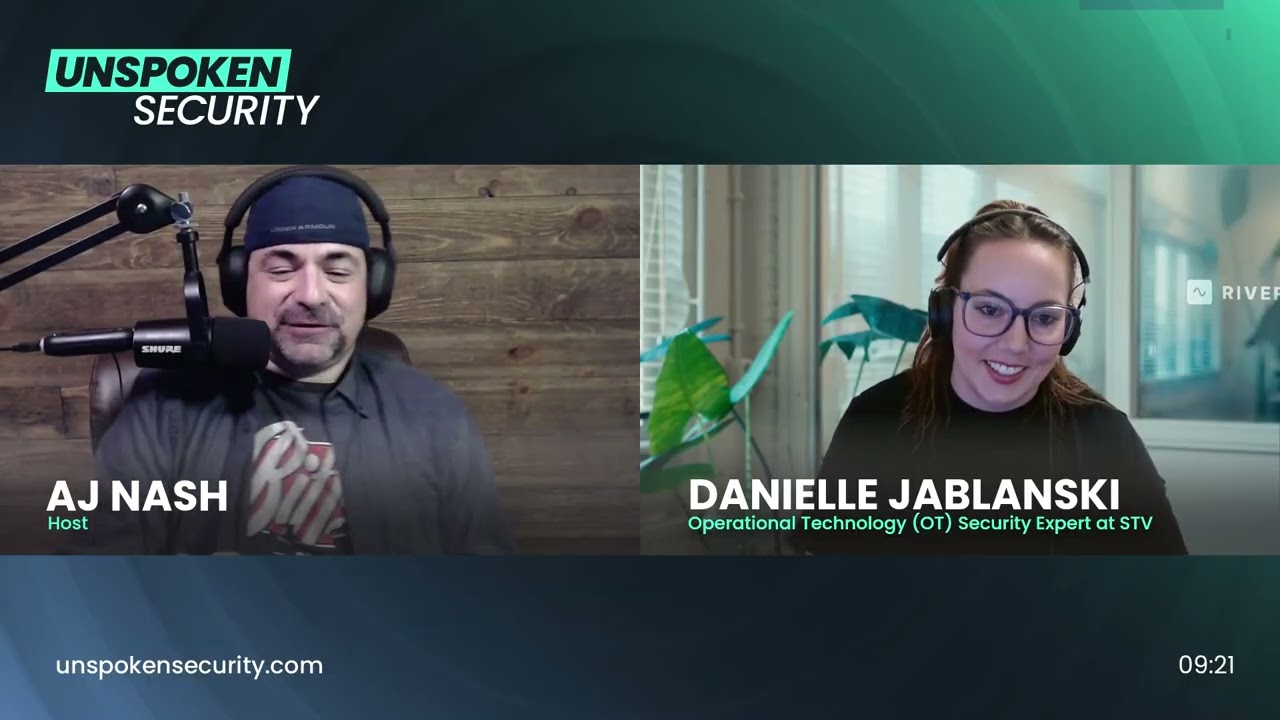
Unspoken Security Ep 52: Do We Even Need Operational Technology-Specific Threat Intelligence?