Ep. 1 - You Should Have Been An Astronaut (Pilot) | Devs:After Dark
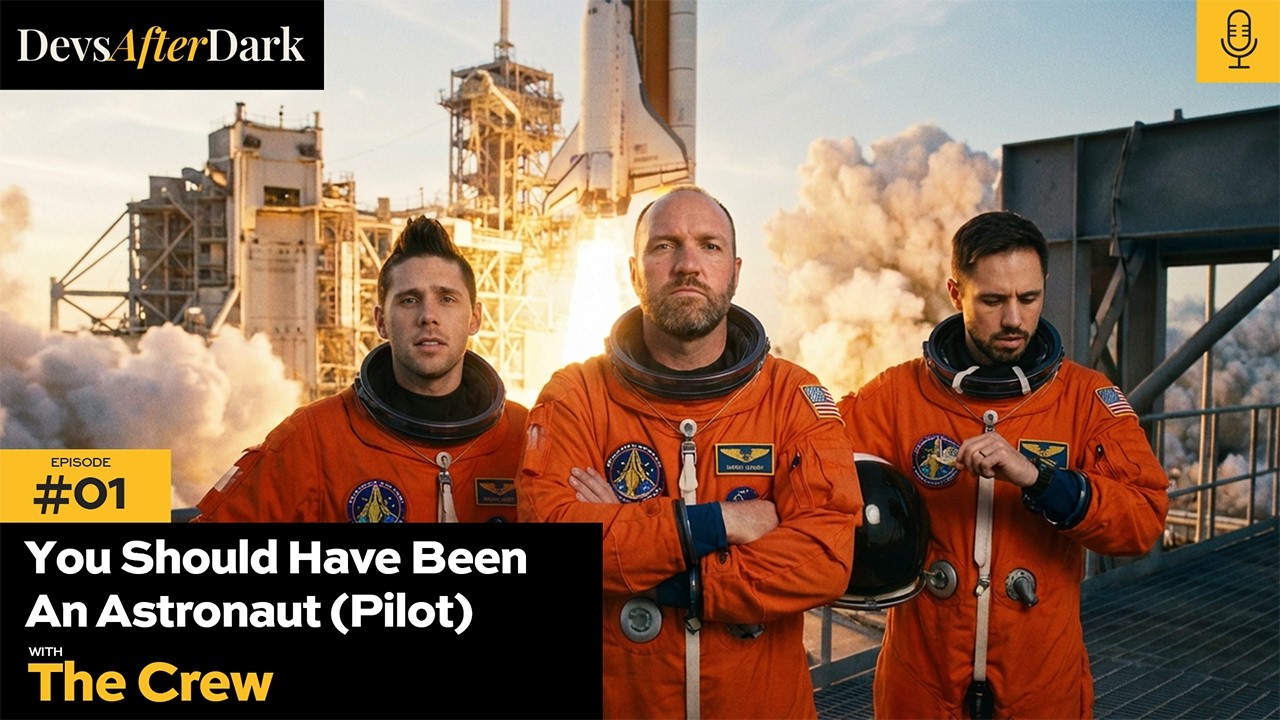
Nick LaPorte and Dennis Edson kick off Devs:After Dark with riffs on vacation culture, glucose monitors, and Home Assistant. They worry about Meta's face-capturing glasses enabling real-time doxxing, quiz each other on Windows 95 and TMNT, and announce new HubSpot SDK releases.
Chapters
How the hell are we starting this?
We're gonna, we're gonna start it with me describing what exactly it is. So that's probably gonna be the big thing. So what we have is we have Developers After Dark. We have people who are gonna talk and we have people who are gonna listen and we're gonna have conversations. Now, the question, right, that everybody is going to ask, if they haven't asked already, that knows about this is what exactly is Developers After Dark? Now, for me personally, ever since I was a kid, I've loved comedy, right? And I've loved watching people who have the ability to Have conversations that are very fluid, right? And that can be interviews, it could be podcasts as time went on. Whatever it was, there was a real admiration on my end for that type of discussion. And when you can marry the two together and it could be something that's fun and it could be informational and there could be a conversation, to me that was the pinnacle, right? And even to this day, there are things that I still listen to where it's, whether it's like some Tony in Philadelphia podcast, right? Whether it's Bad Friends or, uh, you know, watching people like Lex Fridman, uh, do interviews or whatever it is, uh, there's those elements there that, that kind of personify that. And that in particular is what I really wanted to try to create. Um, not mimic, but I wanted to try to create something that had those really, really positive aspects to it, but revolve it around technology. Not getting too in the weeds with like ones and zeros and coding, but like Technology, life, careers, right? For example, like, how did you get to the job that you were at, right? That's one of the things that I would ask anybody that would be a part of this. And not just the careers aspect too, but also like being able to, you know, have a conversation about how technology is impacting your life, less career, but more personal, you know, and not to the extent where people are uncomfortable, but having a conversation. 'Cause that's always been what it's been about. And nothing personified that more than when me and Dennis did the talk at Inbound, where it was like, it wasn't reading from a card. Sure, we read a couple things off of, you know, the slides, but it felt like a conversation. And I think the audience too took from that and kind of like felt like they were having, even though it was us, you know, for the most part until the Q&A, but it felt like a conversation. What I wanted to do was I wanted to try to take those finer points that I always had admired over time and bring it into something like this where we could then pull in also the things like HubSpot careers technology and things like that. And this is something we all 3 of us have talked about for, I don't know, the longest time now, but it was just trying to like pull in what aspects would make this a really, really great thing to do. And I think those for me, at least personally, Are those things. And I couldn't think of any other way to kick something off like this than to talk to both the 2 people who are instrumental in making this a reality. So with that—
Well, yeah, just because—
Rich software.
I mean, my instrumental part is like, I have the stuff to do it. So if they—
But it also does, I'm just looking at if you're ready, the 2 people are. I don't know who's talking. But I mean, give yourself credit. It does take a certain type of individual to like, do this and participate in this. And that's why, like, even going forward, like, the people that we choose, right, it's not just gonna be random people. Like, I, I foresee it as not just HubSpotters, but like, you know, potentially template providers, app creators, you know.
Mm-hmm.
It could also be just be developers, could be entrepreneurs. Like, I didn't think of people that I've run into throughout my career and throughout my life that I admired, not just because of the fact that they were good speakers, but they were their take on things, right? Like there was one of the ones I would love to do at some point is my manager that was at the real estate place, this guy Mark, fantastic person, right? Just like when talking to him, like when it came to like managerial stuff and like big picture stuff, he just, he had everything kind of tied up nicely in a way that was just, I was in awe of it, you know? And then that's the kind of thing that kind of led me to this where it was like, I would hear people speak in a certain way or about certain things that were comfortable, but I was in awe of the way they did it because it was entertaining. It wasn't boring, right? It, it was something where it's like, I, I could get in that conversation. I wanna have that conversation with that person. Um, so I wanted this to, at some point, and of course, and then maybe, you know, I might have to leave you guys behind like Timberlake this, like in sync. Whoa, whoa, whoa, whoa. Ryan Reynolds wants to do one on Bond. I mean, like, I remember.
That was— where were you at?
I went 5 minutes through, so I thought you'd already be left behind. I remember both of you, like, in the greatest light. Yeah, honestly. Good to know what family means to you. Seriously, dude.
So, so are we going to be able to, uh, interview the, the carpet lady from TikTok? Is that, is that part of— is that considered technology? And how—
yeah, I could reach out. I don't know, I just found out about her today, so it would be They use ground penetrating radar like they do in like, um, what is it, Fearsome Oak Island and things like that. I mean, there is a technology angle there that you could really do. So that's where I left off, is that there she was doing virtual digging. She said she was going to do virtual—
Wait, wait, wait. Okay, wait, okay, hold up, AJ. Quick, quick summary of where we have so far and then bring us back.
Yes. No, I'm gonna just— so, so this morning I took the dog for a walk and I did what everybody does, which is jumped on TikTok and like, you know, anything I could do. And somebody, it Well, first I was on Facebook. He's like, hey, have you seen like, you know, the, the, the TikTok body, uh, carpet thing? And I went, what? So sure enough, go to search TikTok, first result. And literally a woman is talking about her house being haunted. And then she's saying that they were doing some digging and they found a carpet buried like 2 feet underground. And then like everybody was like, call the police, do this, do that. So she called the police, the police went there, saw the carpet, and they're like, yeah, we can't waste resources unless we know for sure. So she's doing what TikTok wanted. She's digging it up.
She's literally—
But before she's doing major digging, She said like, and this is where I left off. So like, I'm, after this, I'm gonna jump back in naturally. 'Cause I, I can't, I need to know what's happening at this point.
Naturally.
Is she's saying that, um, she was doing virtual digging. So I don't know if that's like related to like the technology where it's like you just kind of like, so in our head or whatever. But I feel like that's gonna be way more expensive than just picking up a shovel.
But—
Let's do, if you, if you find some more under your floor, like usually that's a good thing. Like if I found hardwood under my carpet, I would be ecstatic. I would be asking, Well, yeah, but this is like finding a rolled up carpet in your garden underground. Like, it's not like she pulled up, you know, carpeting, was like, oh look, beautiful hardwood floors.
She literally was digging.
She doesn't— she could be unearthing something historic, so she has to be careful as well, right?
Like, that's a good point. It's a very good point.
I mean, what if it's a time capsule and inside of there are like cell phones from the '60s, right? Like, where, where's that?
In the '60s, they put their time capsules wrapped up in carpet. That's No, we have all this shag carpet around. We're gonna just like wrap it up.
It sounds plausible, right? Why don't we, for, why not, uh, just for people that have no idea who we are and maybe stumble across this one day at 3 in the morning when they're just, they have nothing else to watch and they've gone through every YouTube video humanly possible. Why don't you both tell everyone who you are and what you do? Sure. I'll start this. Google AJ LaPorte and I am not the musician from Kalamazoo. So I am the other one. I am the like random result in the middle of all of the music results. Do you give that— do you have the scars with that on there? I'm not the Calvin Klein agent.
You should.
Yeah, like I should. I should have the scar. So it's been interesting though, because like for the longest time when like Stronghold was taking off and like, you know, handles and vanities and all that stuff, I made sure to try and grab AJ LaPorte on everything. So like chances are you go to /ajlaporte on any social media, it's me with the minus of like, I think Pinterest, somebody beat me to that one, which wasn't really jumping on the Pinterest bandwagon anyways. But, um, you know, I basically like, I was looking for the ajlaporte.com domain for like 4 years. I was hounding whoever owned it because it was some like handyman service and never got correspondence from them, offered to buy it from them, did everything, whatever. So I just kept following the expires year and every year it was coming up for expiration.
Or stuck. Stuck, I think is the correct word.
Yeah, every year I was, I was pretty much, yeah. I was like, I was like, I had it on a calendar, like, 'cause I was like, every year it was, you know, renewal. So you knew the date. So every year I would reach out at the same time and offer to buy the domain from 'em 'cause the renewal was coming up and every year they just renewed. So eventually I just put it on monitoring. It got available and I bought it. So I was really excited 'cause I was like, finally, I have ajlaporte.com, which is what I wanted. So I started doing all this stuff. You know, making AJ LaPorte be like Serge and then musician comes along and then everything gets blown away thanks to like Apple and Spotify and all is so like. So you're the Michael Space or the Office Space Michael Bolton. It's not quite real life. This is real life. This is what happens.
Yeah.
Yeah.
Yeah.
But to his credit, he does like, he's a great musician. Like he actually— Do you celebrate his little catalog? Uh, I, I have not listened to it. I've listened to a couple of songs. And, uh, I have to say, like, he is a musician, so that's awesome. He's playing gigs all over Wisconsin area. I'm sure John may run into him at that point, but— How old is he? He was big.
Your children? Do what? Your children, have your children listened to this music?
They have not. They have not.
No.
Because some of that, some of the titles of the songs made it seem as if language in the songs were not being used. That's, well, that's a shame.
I, I, I would pay you $10 to say that's actually your music and just sell them. Thinking that this other person is you for the rest of their lives.
Oh, they know it's not by now because like when it happened, I was like, I'm not like, man, my Google, like everything I've been doing to try and keep like number one on Google. So yeah, they already— He's on the border with bootleg CDs, just kind of passing them out. What is it that you actually do aside from not being the musician in California? Oh, good point. I totally went on a tangent. I go on tangents a lot, but no, so I work at HubSpot with The wonderful people here. I'm a developer advocate or operation advocate type thing. But yeah, mainly I just, I'm focusing a lot now on our processes and like streamlining things, reporting, seeing where like basically where I'm the kind of person where if I have to do something more than once, like automate it. If it's something, you know, minimal, like you don't need to keep going and you don't need to keep like repeating the same test every week. 5 times a week, just automate it. And then just keep checking on the automation, making sure that it's running smooth. And when there's hiccups come up, then you fix it, you know, so that's kind of what I do. I really have a passion for a lot of the automation and especially reporting and data, as Dennis will tell you that I love data, anything data, I can get my hands on it, manipulate it, look at it, find trends.
I love it. Yeah, that's, that's why stalking the AJ LaPorte with the owner of the domain for the longest time.
Yeah. Apologies to— I think he was in New Jersey, actually.
No joke. Oh my God.
I think he might have put it on you, Dennis.
So, so if I go say hi to this person, he's probably gonna cry and like run away because if I mention your name, he's like, this guy has been stopping me for weeks.
Probably.
He's gonna be like, that guy stole my business domain. I let it expire for one day.
Hi, I'm Dennis.
Dennis Edson. If you Google me, I am number one on it. However, a long time ago, there was a guy whose name was Dennis Edson Simile, and I thought it was just someone trying to mess with me because who the hell has the Dennis Edson Simile name? They no longer exist on the Google, so I finally overtook them. I hang out with these people here, and I am a developer advocate who is responsible for— well, the only reason I'm on this show, to be quite honest, is because I have access to YouTube, and Nick is totally exploiting me for this. I'm like, You know, I'll be out of here after the show. This is the one, you know, so bye. It was nice. Well, Corey and Nick were both—
the nice thing is this could either be the start of or the end of something really great.
Or the end of it.
It's just as you're looking at it. So, and what about you? What do you do? Me, I do a lot of things. I, you know, I could juggle chainsaws. I'm really good at landscaping, long walks on the beach. There's quite a few things that really personify who I am. If you Google me, I think there's a lot. Oddly enough, like, there's a lot of Nick LaPortes. There's actually— Do you remember, AJ, growing up, there was actually one in the town over from us, like, literally same name, Nick LaPorte, like, spelled the same. Like, I went to a party once and they were talking about this other Nick LaPorte, and I'm sitting here with my friends and they're like, it wasn't very good, uh, you know, it wasn't in a positive light. And I'm looking and I'm like, that's not me. I'm like, I don't know these people. I don't know what they're talking about. I've never been there. I don't know. It was the weirdest thing. And then like, uh, going to doctor's offices as a kid growing up, they'd be like, oh wait, this is a different Michael Porte. And I'm like, what do you mean? And so yeah, there's, if you Google, there's, there's a couple of us out there. Um, but no, I am a, uh, technical program manager here at HubSpot. I am also in the same, uh, department as Dennis and AJ. I am just on a different team. Um, basically we handle, um, quality of the things inside of the marketplace, a couple of other things outside of that, but in a nutshell, right? Like the, um, the quality of the ecosystem is basically what our team handles.
So they can blame you for bad things on the market?
Oh yeah, like 110%, especially on the template side of things. Yeah, there's, I mean, there's probably even a template marketplace provider that hasn't even, or hasn't not run into me yet, at least once or twice. Because at the very beginning, I was the first person who started reviewing everything for that. So, you know, my heart goes out to those people 3 and a half years ago that submitted things. So, you know, but it's like anything else, it's a learning curve. But yeah, I love to do it. Yeah, that's kind of who I'm— I've always been a person too who just kind of loves like the technical side of things. Like AJ said, with his love for analytics and things like that. Um, also kind of had that same kind of drive.
Yeah, same, same. I think it's probably why I'm in tech at all, right? I mean, just like the idea of you have the data, you have the automation possibilities, how can you make it easier in your life, right?
Actually, I wanted to kind of pull on that thread. Actually, I'm glad you brought that up. Like, let's start with you, Dennis. Like, how did you— like, your journey to HubSpot, like, was it a traditional journey as far as No, no, no, no, no, no.
My, my, I had the probably least traditional journey to this point in my life. I would say in the top 10% of people. I, I grew up in Kansas on a farm, uh, with, you know, dairy farm. So I did that for a while. I went to college for English. And then after that, um, also, is that also in— Fort Hays, Kansas. Fort Hays State University in western Kansas. No joke. Uh, buffalo behind my dorm type of place. Uh, you both probably be happy to hear there's a Taco Bell in my, uh, my dorm. So that's nice. You're welcome.
That's good.
Um, after I went to Florida because I had friends down there in Orlando, uh, and I became a photographer with the PGA Tour, um, which was an awful job really. Yeah, it sounds cool, but it was pretty awful. A lot of travel, a lot of just, um, I had to work at Disney's a lot. I know you're going to Disney soon, AJ, so I don't want to ruin it for you, but I had to shave. I'd be like this, like pristine person, which is not me at all. Especially when I was in my 20s. And then after that, I became a park ranger in Jacksonville, Florida, Fort Talbot State Park, or Talbot Island State Park, sorry. Park ranger there, moved to New York, became a photographer type person. Oh no, at first I was a gardener in New York, and then eventually a photographer at a lingerie and sleepwear company. While I was there, I also did like IT work and all kinds of stuff. Um, wife and I decided to have this baby thing. So we moved out of the city, north of the city, and I looked for a job here and I found an agency that built websites. I had been building websites, you know, like on the side for a long time, as well as like my old company's website, not in like an official capacity, but like I just did it because I was that guy, you know, the guy that you can always say like, ask AJ to do that. He'll figure it out. Yeah.
I was that guy. It's one of the first, like, pieces of technology, if you will, like from a coding perspective? Was that one of the first things that you kind of like—
No, my first thing, if you want to get into the weeds, Commodore 64 when I was a kid, that was my first, I messed around with that, tried building things. So it was all like, you know, command line at that point. So I was, I got to coding there, followed by a little bit I guess I got into, I mean, I'm old, so, you know, like I was like the websites didn't exist like when I was in high school, right? Or like maybe just starting to, you know, like we had something called Gopher, I believe. I'm not sure if you all remember this. This is like an old way of searching, like back in the early '90s, late '80s, something like that. It was like telnet type stuff. Now I remember. That you could search with. I was in— I used that kind of stuff back in the day. And then I built my first GeoCities site.
I think anybody that's ever done a web has built their first GeoCities site.
Can I say that confidently?
Yeah.
Yeah. So I did that. And then, you know, of course, MySpace, like, was where you could start really playing with— I wish I'd be on Facebook now if I could do, like, the front-end stuff like you do on MySpace, because I would see I mean, I was shitty at it, right? Like I, I, I do like awful things. It was not pretty by any means. It was like this tiled background of like, you know, WordPress.
Blink tags, everything.
Yeah.
Yeah.
But I, you know, it got me into it and it made me realize this is kind of fun. And so I just kind of kept up with it throughout the years and I'd have people ask me to do a website here and there. And then I started doing WordPress stuff and PHP. And then as I got to this agency, I had the WordPress stuff down pretty pat. Um, and my soon-to-be boss said HubSpot, never heard of it. And I thought, yeah, why not? You know, I can code, whatever, I'll do it. And then, to be quite honest, I hated coding in HubSpot because it was like, wasn't even, what was it called back then? It wasn't even the design manager at that point, right? The COS or something like that?
They called it the COS for, um, the web portion of it was called the COS, but I think it was always Design Manager.
Was it? Was it? Yeah. All I know is like, it was like a drag and drop template thing. And if you wanted to do anything, you had to like put a code, uh, component into somewhere, right? It was like a, yeah. And I hated it, but I learned it and then I got to start loving it. And, uh, I became active on the community forums because I didn't know what the hell I was doing with HubSpot. So I answered questions, which allowed me to learn more about it. Became a community champion. And, um, was poached by HubSpot because of my, my work on the community.
That's a pretty, that's a pretty common thing, isn't it?
Right.
From going from the community to—
Oh, I was gonna say, I don't know. I'd love to meet the other person that has a similar—
No, no, no, not like that. I just meant like from like being like, whether it's in the dev Slack or the community.
And there is a high propensity of a community champion to be, uh, taken by HubSpot. If you, if you listen to this, become a community champion because, you know, people start paying more attention.
I was trying to get a plug into that and I didn't have Yeah, yeah, yeah. Okay, that's fair enough.
I mean, there's how many people?
It's like 4, 5, 6 former creators. There's a lot that have come over that they get really active in the community. And yeah, I think it's just the knowledge that they gain from it. It's almost as if they do work at HubSpot already, you know, they get, they get to learn a lot and help a lot of people. And that definitely, well, people notice that and people recognize that. Even I know For me, when opportunity came up, it was like I got a link shot to me and saying like, hey, we're doing this, are you interested? And I was like, absolutely.
So. Yeah, I mean, like the relationship between HubSpot and the community is pretty symbiotic, right? Like, it's like a give and take both ways quite a bit.
Now, the individual to my upper right on my screen, kind of familiar, kind of familiar with that journey, uh, a little bit. Um, you know, Lived inside of it for a little while. Uh, so why don't you— so why don't you tell us, um, how you got— which, which, which is nice because then it blends into the real important part, which is then how I got it. But which is you. Yeah.
Wait, you know, y'all are related? You don't even spell your name the same way. I didn't, I didn't know that.
We do totes that our names are the same. I mean, there's, there's a right way to do it and a wrong way to do it. We all know that. That's why there's 2 ways here. But, um, but no, tell us. AJ, how are you? Your journey got to HubSpot. Yeah, I mean, I, a lot of it was actually following in Nick's footsteps, you know, like especially like, you know, when you have—
You're not gonna get on this show again just by like—
I know, right? Like, it's just get the air pump out for his ego and let's just start hitting it now. I got a whiteboard over here where I'm making tallies of like all the nice things people said. Yeah. But so, I mean, I, I, I wanna say like, we both have always been very artistic. Like art has always been something that we always enjoyed doing growing up, like drawing, doing all of that. And I think basically when high school rolled around, um, we always, we had the same art teacher, uh, Mr. Moss, Steven Moss, who, yeah. Who he actually, he's retired from teaching and he, he's in Indiana. He does paintings and he's in galleries and all sorts of stuff.
So.
It's really cool. His work is fantastic. Very like impressionistic kind of stuff. It's just great. I'm sure impressionist probably wasn't even the right word, but it's probably— But, uh, he kind of kicked off a lot in my brain of like art and design and really getting into like the graphics side of things. And, you know, from there I started doing graphic work really. So more in high school, it was just like, You know, doing my friend's band designs, things like that, smaller things here and there. And then once I got into college, it was where, um, you know, they're like, what do you want to do? You know, what is it you want to be? All that stuff. And I, I thought at first I wanted to do marketing. You know, I really liked the idea of making people buy things they didn't need. I thought that was an interesting thing. Like, you know, the way that you sell a product and how you can, like the psychology of it was interesting to me. Interesting.
Would you say selling people things they don't need?
Yeah, like that's what I thought marketing-wise.
Like, really paying people for like what you wanna do.
Yeah, yeah, you know, literally. And it was like, it was because like you got to craft a story around something. You got to take something and really present it to people in a way that they may not have thought. So was it fair, is it fair to say then probably one of your first like experiences into like the technology realm or the, and I say coding, but like Photoshop. You know, you did digital artwork. Because it's funny because I think like what you started doing originally is probably one of the things that most likely suffer the most over time. And not just because of any one particular thing in particular, but like CD art, right? That used to be a thing where like people would buy the CD sometimes for, yeah, maybe a song, but that artwork on there was just impactful. And that's just like one of those things that went away. It 100%, 100% was. And you know, like I really, really, sorry, I'm trying to turn off the notifications from the other Slack that I realized I didn't do. But yeah, like it was huge for me. It was eye-opening, right? Like, 'cause it was a friend's band. I made a CD cover and like insert and, you know, back in the day when like lyrics were actually in the insert and like you could open it up and fan it out. It's like I made this really big, like, CD insert for him. It was really cool. And I kind of just like kept going with the graphic stuff even when I got into college. And it was great because, um, Philip Agee was his name. He is no longer alive, unfortunately. He was a wonderful teacher. But he kind of really supported me in college, um, because there was the TAGA, it was the Technical Arts Graphics Association at Eastern. So like, I got in really well with that teacher. He was very supportive and really like Made you push the envelope of your skills. Like, oh, that's cool. You can do graphics. Try doing this. Try making this. And it was one of those things where like, you know, it was me and, uh, 2 other people that got to know him really well. And we joined TADA and we were doing graphics. So people would come and say like, I need a design for a bar crawl that a fraternity is doing. Okay, here's what we do. Here's how we do it. Here's how it breaks out. So it got really interesting there. And then it got to be like, okay, well, let's create a magazine for TADA to showcase to people what it is we can do. So it started like slowly morphing more towards web. And I remember there was one class and Nick, I think at the time you had graduated already. You were doing web design at the, at the time. Um, forgot what it was. It was in, uh, I want to say Bolingbrook or Oak Brook is where you were at at the time. It was like the dental websites and things. Oh, when I first did, yeah, there was a quick, It was less than a year because then I moved over, but yeah, they were looking at that. So like Nick was doing websites at that time and like, I was like, I'm gonna take a web design course here.
What year was this?
Oh, Jesus. Right after graduating. It was, it was, it had to have been what, early 2004?
Yeah.
2004, maybe 2005. Yeah. And yeah, right around that time.
I actually remember only a web design course was offered in my college when I was—
You know what they offered? There was graphics. It wasn't really a web design course, but what they offered was, uh, I remember at Eastern they did have like a, uh, a web basics, but like, it just, this shows you how this ages things a little bit, but, uh, they didn't, towards the end of the course, right? They were going to start to cover CSS, but they didn't yet because it hadn't really caught on yet.
Really?
That should tell you all you need to know about that.
Yeah.
Because in that course, it was actually really fun. Um, we started building websites and I was talking with Nikola and I was like, oh, hey, I learned how to do websites and tables. Right.
You know?
And he looked at me and he goes, tables aren't a thing anymore. Like it's divs and CSS and like, and I was like, what do you mean? I'm not learning the right things. So really Nick was teaching me what he was learning. And then I was bringing that back to my class in what I was building. The rate that things got so viral. It was, it was like, I mean, it's like that now too, but it was, you know, you look at that and you think like, well, that's even crazier because it's like, that's not really that big of a thing to go from table, like nowadays, right? To go from a tables website, switch to a CSS website. It's work, but yeah, it's just a different scale, uh, you know, then compared to now. Yeah, it really is. And it, and I remember, I remember that was my first real introduction other than like MySpace and, you know, like playing with code there. But that was kind of like my first real big introduction into web was that class. And like talking with Nick when he was teaching me what he was learning, it was really interesting. And I remember bringing back a, like a project at the end and my teacher going, can you explain to me how you did this? Because it was CSS, it was all of those other things. So that was my jumping off point. Yeah. Yeah. We had to, we had to make Done?
No, no, no. I was just gonna be, I'm sorry. I didn't think you heard me. Yeah.
But no, wait, it was like you had to make a website for like a business or for something. And I, again, my friends, my friend's band, I made a website for them. And it was like, you know, everybody else is making like fake businesses or whatever, but like, I really, and Dennis, you know this about me. I'm a little extra when it comes to doing things. I like the bells and whistles occasionally. So it's like, you know, let's I'd make a little fancy fold. Never heard this. Never heard of this.
Yeah, I know. I was shocked about it.
I ended up like incorporating a video into that, right? And like, that was huge. Like, oh my God, they can watch a video on their, on their website of like them singing and all this stuff. So like, that kind of was my jumping off point. And then after college, I basically, my first job was sales in a school supply kit company. And it was because I had worked there all summer long. You know, in the warehousing, doing all that. Uh, Nick actually worked with me too. That was, that was a warehouse job we had for a summer or two. Yeah, that was, that was interesting. Yeah, it was, it was good. It was a lot of interesting stories from that. Uh, won't get into that probably for legal reasons, but it was a good time. It's a warehouse. You work in a warehouse, you do warehouse stuff. That's— Yeah. But then, uh, after that, when I, I started working in their office in sales and their website wasn't the best, you know, it was table-based, it was You know, but when you look at that industry at the time, everybody's was table-based. It was, it was just the basics you could get. So I told him, I said, hey, let me, let me do the website. You know, I'll still do sales, but let me do the website on the side. So I started doing both. And then, you know, we eventually got to that crossroads where, hey, the website needs to be updated. Hey, you need to make your quota. Okay. Which one am I doing? Because one outweighs another and like helped me prioritize. And then I ended up going into like, um, IT. Did you find that? So I did a lot of— did you find at that time, AJ, like at that, like, 'cause right, the, at, at that time, like, you know, being on the web was, it wasn't unheard of, was it? Like, you know, but did you find that the company, um, embraced the ideas? 'Cause like, you know what I mean? Like you come from, depending on the company and depending on like the, the knowledge of the other people there, right? You, you may come into a company and have, have these things where it's like, hey, you know, we could do this or we could do that. And based on the, um, You know, it's the analogy of the, like, you either do things or you become the dinosaur on the side of the, you know, internet highway. Did you find that there was any kind of like pushback with that? You know, like trying to apply some of these more, I guess you'd call them at the time, modern things? You know, at the time, no. They were actually very open to like, yeah, we do need a little bit more like refresh of things and we do need a little bit more Like, um, style to some of this stuff, right? And it was—
Do they care?
You know, like, that was one of the great things. They didn't care.
They honestly didn't. That's what I was thinking, because like, I've done the same thing for my old company. And it was like, yeah, we do need to have something on the internet. But it's such a low priority. Like, you know, you do whatever the hell you want with it, because who gives a shit about this internet thing?
That's literally what it was. They were like, yeah, we have a website because that's what people do to get to us. But like, the main avenue of sales was cold calling.
Emails. Yes, exactly.
You know, it, it was one of those things. And it, it was a very interesting sales process in school supplies because you would get those emails from people saying, how did you get my information? And it's like, hey, I'd hate to break it to you. Your PTO site has your email listed on it.
Right.
You're kind of opening that up. It's public information, you know? And it was, it was interesting to do a lot of that, but like, that's also where I started embracing technology. Because I remember cold emailing, like getting these people, like we would, we would spend literally, there was probably like a 2-week period where we would, we would have our states assigned and we would scour just school listings, PTO websites, grabbing this information, populating spreadsheets to then put into, at the time, which was like a makeshift CRM of SharePoint.
Right.
So we spent all this time doing all this stuff, but then it's like, okay, well now I need to email these people. And everywhere I looked, people were just copying and pasting, changing out the information, doing whatever. I'm like, no, this, this is— you, you sent maybe 30 emails a day. It was painfully slow. And that's where I was like, we can automate. And that was like my first introduction to automation. And it was like, mail merge was the thing. There was a, there was a toolkit called Mail Merge Toolkit. You hooked it to a Word doc and you sent it through your email. I approached the company and I was like, hey, I want to use this. You know, and this was one of those things where like, again, they were really open to trying new things. And he goes, you go ahead and pilot it. I'm not going to release it to everybody, but test it and let me know how it works. Suddenly I'm getting double, triple the quotes in that other people are getting on a daily basis. And then next thing you know, it was rolled out. And that was kind of my introduction into going into IT with that company. And then from there, after doing IT for a couple, couple of years, actually there, I was there for a while. I jumped to the agency. That I was at last. And that was, you know, they had an opening for a front-end developer. I had by then done WordPress websites. I had done some Magento, which was fun to do.
Mm-hmm.
Uh, a little bit of e-commerce. Uh, like I did multiple different things. And it was interesting going into the agency. And when I got hired into the agency, Dennis, much like you, it was, I knew JavaScript. I knew some like front-end stuff. I could work on some websites here and there, but they were like, hey, HubSpot's coming out with a CMS and we need somebody who can dedicate to it. Can you learn it? And I said, sure, where are the docs? And then that was kind of my journey into HubSpot. And then I think a couple years later, like I said, um, you know, I was talking, I think it was Zach Wolfson actually who messaged me and said, hey, we're starting a developer relations team. We're hiring advocates. Are you interested? And I was like, send me a link, man. I'm there. Sign me up. So, and it, and it was interesting cuz I actually had reached out to like Luke Summerfield and them inquiring about positions within HubSpot because being in the community, being in the dev Slack, helping people, I really enjoyed it and I really Like, believe in the brand.
I do.
And so I wanted to be a part of it. And that was my introduction there. And it was really funny because, and this is a story that John and I always tell, for those who know John McLaren, the day of my interview, I'm in the lobby, um, you know, night before, just get in, fly in. I'm in the lobby sitting there. I had just eaten dinner and I'm walking back and I hear somebody laugh and I go, I know that laugh. You know?
Yes. Yeah.
And I look over and John is sitting in the lobby. And I was like, I know why you're here. And he goes, I know why you're here. And it was, it was probably like one of the coolest things ever to like run into somebody else from the community who, you know, John and I talked so many times, you know, we all talked in the community at that point.
Right.
And it was just so cool because after the interview, we met at a, I think it was Friday's at the time that was in the mall there. And we were just sitting there talking and we literally got to a point where, and this is when you know you're in a good community. is we looked at each other and said, I don't care if you get the job or if I get the job, because either way, the developer community is going to move forward based on like what's happening, right? And it was like one of those things where like usually people, when they going for the same job, it's a lot of competition.
Yeah.
But it's that even right there showed me like what this community was about because we're talking about the same job we're going for. And either of us are like, if you get it, it's gonna be great because then a lot of the things we've been talking about in the community will finally move forward. And then, you know, luck had to be, we both got hired on.
So that's so cool. So cool. I love that story, man. Do you think that, um, the I can figure it out philosophy of like getting a job is possible these days? Like, I, I do. I don't know if I could actually have the same job I have, like, if I started now, you know what I mean? Does that, does that make sense?
Yeah, honestly, because you know what, there's a, a lot of times, especially if you're like kind of browsing through LinkedIn or whatever, um, you'll find that a lot of the questions people ask are, what do I need to know? Like for this, this, or this, right? And like, what's, tech stack or what. And I think because of the fact, honestly, because there's so much more as far as like, well, what framework, what, you know, what programming language, right? It's, if you make it like generic and broad, it's hard. I couldn't imagine, you know what I mean? 'Cause it's, it's, it's almost like you're picking, um, you know, like your superhero stats to compete against other superheroes.
Yeah. Yeah.
It's like, okay, what do I want? Do I want Superman's laser eyes or do I want to be able to be, you know, super fast like Flash? And it's, and you can't have them all, right? Or you could, you can only excel in certain ones, but it's like, especially in a playing field now with so many people, you know, trying to vie for the spots. Yeah. It feels to me like, I don't think I could get where I'm at right now unless all the stars aligned perfectly.
Yeah. Yeah. The alignment and a lot of like trust somewhere, right? Because like when AJ always said, Show me the docs when you were trying to figure out HubSpot. I don't, I don't think I would have gotten the job now. I did then because, you know, because I think it was just a different time. But if I said that now in a job interview, show me the docs, I'll figure it out. I don't know. I don't know if I'd get the job. I think they'd find someone else who already has experience in it.
When I were— yeah, it's, well, I think imposter syndrome has a lot to do with it too. Cause like, even like, and we've, we've all talked about this to great lengths, like in the past, just in general chatter, like If you can pull that note out of my, uh, my notes. No, perfect. Perfect tie-in. Yeah. But, uh, so for those listening, we don't know his notes. He doesn't share anything with us. You know, he's gonna leave us behind. But no, yeah, no, I think that, that, that's got a lot to do with it, to be honest. Because like, I mean, that still hits me to this day, imposter syndrome every now and then, you know, depending on what you're doing. And it's a tough hurdle to get over. And I think once you actually Just ignore it and start moving forward and like you can actually feel comfortable enough to be thrown into something unknown. It is going to be something that will stop some people, but it really shouldn't.
I would challenge you, AJ. I would challenge you a little bit on your, on your word choice. I don't know if ignore is the right word. I would say accept it and then be able to move on past it.
Yeah, I think accepting is a way better word. I'm terrible at that sometimes.
It's okay. No, no, no.
I mean, at the end of the day, you're not going to— there's certain things you're not going to know. Like I couldn't imagine right now. Um, the way I got into SEO was basically just, uh, the owner of the real estate company said, you know SEO? Nope. Like, we're gonna know. And that was it. And there was like, you figured it out with resources. There were a couple of people that worked at sister companies or companies that we were friends with and had relationships that, you know, could help me out if I had a question. They weren't going to do my job, but, you know, they would help me out. And, you know, it's like, I often, like you mentioned this, I often wonder if that's even something possible today where it's like, you don't know anything about this. Well, we're going to, we're going to build you up so you do. Where a lot of times it's now, it's like, you know, you see the meme where it's like, you know, entry level, 5 years, 10 years experience.
Yeah. Right, right, right, right, right. That, that couple that with like the work from home. Like, I don't know if like also I would've been able to build up the trust with people in areas to be able to like Go ahead and work on that website. I know it's not a big deal, but like, do it. You know, I trust you. I'm not sure if that's a thing these days.
I don't think I would've been able to learn what I know now without being like completely in office. I mean, I hated it. I had to travel, God, it was like an hour and change each way. But I wouldn't change it for the world because like the things that I learned from like some of the smartest individuals who work within real estate, We'll cut all this out, right?
Because I don't want HubSpot to be thinking now that like, we should all go to the office. Let's just cut this section.
Let's cut that section. I mean, but it's a different time too, because like, in our defense to this, that this is a bad idea. Um, there is, there, there, like before there was, I mean, there were, there were pockets of like these things to be able to learn. Um, whether it's the, what is it, the Lynda.coms or the, you know, other ones where, yeah. Uh, or, um, Codecademy. But, um, those weren't as prevalent before. And plus too, I think because the way things rapidly change, um, I don't, I don't think those scenarios would even work now because like you learn one thing, right? And it's like React, React, React. It's like, no, no, I'm more of a Vue.js guy. It's like, really? Really? Even if I was in an office, it wouldn't have mattered. You know what I mean? It's the things that got changed. I would literally have—
yeah, that's great.
I would've, I would've been doing, and, and again, real estate's kind of like a 24/7 job. It felt like a 24/7 job with like when things happened. I would've been home more even if I was still having to go to the office. I would've been home more learning other things when things changed so rapidly or because there was so much of it that it wouldn't have mattered. Mm-hmm. I probably would've burned out a lot quicker than I did working, you know, a decade or so in that industry.
So. Um, you know, would you say that AI agents is in its infancy would be comparable to running code? I don't think so, right? It's way more complex.
Um, you mean like AI agents as in like the way they're being described now as far as like building them out as like separate?
Um, right.
Yeah, I don't think— no, I don't think so. I mean, like what I think about, uh, and actually I had this conversation with a buddy of mine that used to work at Real Estate Like, which is funny because it's like the way it looks now, like, like for example, the real estate, like agents you would create would be like a mortgage calculator. It could be an agent.
Works.
Um, if you wanted to have this sort of like, you know, digital sales agent, an agent would be one that reads, I don't know, like, uh, like a Word doc. And then that would be like your FAQs from your company. And that would be an agent that then answered these questions inside of like a Or something like that. Whereas I've never seen any of them to an extent where that takes the place of like front-end coding. Although I've seen like, I remember somebody tried to do like, build me a, uh, what was it? Build me a theme, build me a HubSpot theme for the marketplace.
Yeah.
And it was like, yeah. Oh, I, that was, that was when AI was first, like when ChatGPT was first putting code out and stuff. Yeah. It was, it was not— That's why I think like, that's why like, I love AI, but I don't think it's ever going to replace developers fully. And like, I don't think it's ever going to replace a job to the fullest extent because like the one thing everybody knows is AI cannot show emotions. So there goes any type of like thing with that. But the fact of like the code that does get generated, sometimes it works and sometimes it's so off the mark, like it's making up APIs. Because I remember there was somebody that had an issue with one of our APIs and I'm like, this isn't an API. Like, I mean, this, and then it came out like, hey, it's ChatGPT just making things up on the fly to supplement what it's missing.
So, sure, you could say the same about certain human beings, like, I think as well.
Uh, there's one on this call, and I don't know, we don't have to name names. It's okay. Maybe John, we don't have to name names. That's fine. Well, let's— I think you skipped over your journey though. I did. I did. Um, You did. Was that intentional? No, it was reinvention. Mine, I, I, I could say it's not like Dennis's, but mine is unique in the sense, like how Dennis's, where, where it was a journey that, um, can't say many people take. Um, I didn't go to Eastern and, uh, for any technology. Actually, I got my bachelor's degree in psychology because I thought at one time in my life I was going to be a psychologist. Um, I just didn't really like to listen to people at all. Like, I talk a lot, but I don't, you know, you could have, did you not think about going into it? No, I thought I could going into it. I, I, I wasn't completely oblivious to that, knowing that that is probably one of the prerequisites of it. But I did, but I did, uh, and my wife will attest too, I, I talk a lot, but there's sometimes where I don't listen as much. Maybe. I'm not gonna, I'm not gonna say that's 100% true. I don't wanna give her credit for that, but she might be right. Um, but at the end of the day, you know, I went to Eastern for that. I mean, AJ, we were at Eastern for a good year overlap, maybe, uh, a little bit more. I mean, we took, what did we take? What class did we take together? Oh my God. Um, oh, it was the music. It was like history or something. Yeah, it was like the history of music or something like that. Like a certain like year to year. It was like, I had to fill in some like things for student aid. So there was oceanography, there was a couple things in that I was just like, yes. Uh, but, uh, you know, but no, I did, I, I, I did graduate with that. And right out of, you know, once I started getting towards the end of it and I got into that attrition where I'm like, I don't know if this is what I want to do technically. Um, I also did have a minor in, um, it was business. And I think at that time what they call programming or like computer programming, but it wasn't anything. You know, like you took an Oracle class, you took then like a basic HTML class. You didn't, it wasn't anything like groundbreaking. So from there, um, I was kind of stuck. I was like, ah, you know, do I go on and get my master's and just try to do this psychology thing?
What I'm—
Or should I try to go on and maybe, because our dad, like growing up in full transparency, was a programmer and Um, that kind of swayed me towards moving to one end of the spectrum versus the psychology end. So what I did was, you know, I just started applying to jobs and basically the first one that said yes, that was of some sort of—
Was it on Craigslist? Just out of curiosity.
It was like $5 to type up, type up this HTML in Notepad. Like, what is wrong? Um, but, um, one sec. Yeah, no, it, um, it was a place, it was, it was like dental websites and stuff. Um, It didn't last very long because I had actually then found the real estate place, which ever since that, it was like a couple months at this one place. The owners knew each other too, which was ironic. So, and then I went over to the real estate place and forever, for almost my entire career, I worked at that real estate place. I'm not going to say the name. It's a great place. I just, I won't, I won't say the name, but I'm sure the owner would be like, any publicity is good publicity. Why did you just say it? But he's one of those people that are too, that are like an entrepreneur that I would love to talk to and just like fire questions at because of their perspective and things like that. But long story short, the real estate place is where I worked for a majority of the time. I took a year or two off and worked here locally because me and my wife were getting married and then we were talking about having kids. And again, that commute was killer. It was killer. I learned so much, but the commute definitely Pushed me, like mentally. But yeah, so all throughout that, and charts had been working there for.
Please, please wait, wait, wait, wait. No, no. We need a logo on that to.
Nope. Let me know because I knew what was going to happen.
Can you do that?
Is is it not a fake motion?
Or yeah.
Just to let you know.
This is my sole protein.
It's zero sugar. It is zero sugar. It's very good. For the longest time, I worked in real estate in the city, and we're just, transparency, outside of Chicago, and the North Side is where the place was. But I would say probably into my second, I call it my second leg of working there because I took that time off in between. That's when AJ started saying like, hey, you know, I started working for this place. You should, you know, check it out, check out the things. And I'm like, you just started there. I'm sure everything sounds great. You know what I mean? Like you get that, like, that's one of those things too that you get, not just imposter syndrome, but you get that kind of like, I'm gonna go in there and I'm gonna turn this place on its ear and let me show you, like, I'm gonna fix everything. It doesn't work like that. But in your mind, no matter how old you get, that first couple weeks, you think that's the case. Just like, oh, he's probably just, you know, he's just probably really excited and it sounds great and all this other stuff. But, you know, after a couple, you know, a year or so went by, that's when he sent me the position for, uh, there was a particular position that I applied for that I wanted. It sounded really good. I got it. And, you know, and that's kind of how I got in here. And then, you know, after, um, you know, some things got shifted around, uh, that's where I'm at, where I'm at currently. But yeah, without, without that original push by AJ, I don't I honestly don't think I would've like proactively went out. I'm, I'm gonna go scour the HubSpot jobs again. Let me go see. You gotta go see. I gotta do this.
Gotta do this. Makes sense.
'Cause you don't do it. It, it, you know, the way they treat employees here was, um, I didn't believe it, honestly. I mean, you work in real estate, like I said, it's a, it's a, it's a bit cutthroat, you know, into a certain aspect. The boundaries of hours kind of get blurred sometimes, right? Like I would take a train. I'd take the train home and it'd be, it'd take an hour and a half to get home sometimes. If, you know, the metro here is not like sometimes always the greatest, but, you know, then the minute you'd get home, there'd be an email that something had to get fixed immediately because there was an emergency. It's just like, yeah, like it's been, we're going on 10 hours now. I'm like, okay, okay, let's get this one done then. So, you know, hearing anything outside of that was, I'm like, yeah, no, that ain't real. Nah, nah, can't be. Can't be. You know, then later, you know, you come to find out you have to tell AJ, right? And, uh, it is.
So, well, you know, you really knew what happened.
I mean, but it's, it's, I mean, right, it's obvious. I love hearing— yeah, I've been here 3 and a half years, so it's obvious, like, something was right. I can't, you know, just kind of shrug it off as a coincidence. But, um, but yeah, no, and that's where I kind of— and really it was, uh, I'll be honest, like, we're talking about, like, you know, learning things and was it possible then It was a real eye-opener, like, coming here just because of the fact, like, just the way to— and it's not just because it's HubSpot, but like HubSpot-esque companies, bigger companies, essentially. It's like night and day. Like, the real estate place I worked for was big, big as in like one of the biggest in the city. But the company size, I mean, you have realtors, you have brokers, 500, 600.
Oh yeah.
Those aren't real employees. They're 1099s. I mean, they're not real. Like, don't get me wrong, I have worked with a bunch of people in that.
Wow.
They have to look at that so we can cut that in post. But, um, but they're, they're, they're not, they're not core, like they're under 1099, so they're not actually like, you know, salary employees. So going from that to here, it was like a huge, and any, any little job I had in between, same thing. Huge, huge. Just the way things are structured, the way things work.
Okay.
You'd be like, you know, you have goals and you have like what we call, you know, OGP and things like that. And it was just like, That stuff was, yeah, we used Jira, but that's the rest of this was like never heard of. And I know the acronyms are overwhelming, you know, sometimes, but compare that to never using an acronym yourself, unless it was like a real estate acronym, right? Like an HVA for home value analysis. There was nothing when it came to like structurally, like it was just, yeah, it was mind-blowing, the complete difference, right? Almost to the point where it was like huge imposter syndrome.
Yeah.
That's why it's like when I, I first, I never thought that. I was like, I guess that sounds like a real thing. It was evidently clear that it was a real thing when I went from that level of, um, company to something like this. So, but, you know, ever since then, this is where I've been and I don't regret a day of it because I think I've, I've absorbed a lot more than you normally would if you just went to some other place where you were just kind of like, Put in the spot, don't move from that spot. Don't, you know, head down, punch out at 5. Yeah. There's just a tremendous difference there that I personally, and I think like the growth, this journey would've never happened any other way. And I owe a lot to the real estate company as well. But like between that, learning those kind of like ways of doing things and then here, It was a really, really good kind of one-two punch, essentially. So.
Do you get a, do you get a discount on houses when you work for a real estate company?
I don't know if I should say this out loud. Oh, whoa, whoa. I don't think you get a discount on houses. You can't just be like, no, but there, I mean, like you do pay closing costs that you do pay, like there are commissions to the realtors and like depending on who you use. So like there's things where, you know, that they may not be as, as expensive.
Just tell me, it's a simple yes/no answer.
No, it's not a simple yes or no answer. That's specifically telling you it's not as simple as that. But no, you heard it here, discounts on real estate. Got it. It's not like that at all. But like, but there are benefits to knowing the people who are actually like advocating for you. I'm sure. You know, what is probably one of the biggest investments, if not the biggest investment of your entire life, you know, especially if you're doing like a house or any condo in the city close to the lake. But yeah, it's— it was one of those things where that experience and then this experience here is— yeah, I don't think you could replicate that again if you tried.
Yeah. You know, I think the reason you both work here is like your parents in the will have obligations. You'd have to work at the same place if you were to inherit anything.
They have always— our mother has always been like, you guys should open up your own thing. And I'm like, you want me to work with who? Like, imagine if there were more than 2 of us. Uh, like the dev rel would just— oh man, it would be, it would be 2 people just talking all the time. Like, it's LaPorte, whatever, just talking. It was just like people dropping outta meetings like crazy being like, oh, I'm— Yeah. It's always interesting when, when people have asked me like, oh, you work with your brother, you know, you're not supposed to ever work with family. And I'm like, you guys just like, it, it's one of these things where people just don't get it sometimes because like the way that we work when we work together is like business is business.
Right.
And then anything that is like a personal thing, like we'll talk about that afterward.
Right.
But like, we, like our work ethic has always been like, we're here to work during work hours.
Right.
Like, sure, we may be like on clock here, there. We're not doing like, in certain circumstances I could see where that rings a lot more true. Like if we both, you know, if we were both co-owners of like a t-shirt, you know, company or something like that where we're making like financial decisions, you know what I mean? Like the decisions we're making aren't, Yeah, they have different consequences around them, right? It would probably be harder in the previous than the latter here where it's like we're on the same department, we're not necessarily on the same team. Yeah, we work real closely together, but some of the things, even the decisions we make aren't even ours to make, either one of us. But there's— yes, I think.
We also like each other. That's kind of— I discovered a while back, maybe just dawned upon me that Because I have a sister and I have a great relationship with my sister, so I just kind of assume everyone has that. And apparently that's not true.
Yeah, surprisingly.
Yeah, yeah.
I thought that too. I kind of thought that too. But yeah, it's just a roll of the dice, I guess, in some circumstances. But yeah, it does help. I mean, obviously, if you don't hate the person you're talking to. Which is why I must say, I don't know how we get along so well, Dennis. It's just crazy. But I was gonna ask both of you too, because like, you know, we've talked about, you know, quite a bit about like our history coming to here. And a lot of that's been techie to a certain aspect. There was like a job you could take, or if it was one that you created, or if it was a business or whatever that you could do that was not, that could take you away from tech as much. I mean, grit, you can never, you know what I mean? Unless you're on a deserted island, like, Rearranging rocks. You're never going to get away from technology, right? So to speak. But if there were a job where that could take you away from it as much as possible that you would do, what do you think that would be? Because I often think about that. Oh, easy.
No, I don't. I know I would be a park ranger. I mean, if it wasn't for the fact that you're paid not a lot, you know, I could not support a family on my salary as a park ranger when I was in Florida. Maybe now, I don't know. Uh, that would easily— that or farmer. I would be a farmer. But I don't know if I could ever get away from tech because I always like want to involve, like I want to automate things. I want to make things easier. So even if I was, you know, hoeing a field, I would be trying to figure out a way to automate the thing.
No, that's fair. I just meant like with respect to like getting away from it as much as you could. I mean, there's going to be things where, you know, like doing something, doing X versus like Being and you know programmer or things like you know what I mean where like armor armor like hearts armor. I don't know. I honestly don't know. The reason I brought this question up is I think me and Dennis can answer this, but I don't think you can. That's right. I don't think I can. Like I don't think you can. You go you go heavy on things that you do, and I don't think I don't think you could separate the two. Even if there was like even if I told you like okay. Your job right now is going to be painting, just painting walls. That's it. Like with a brush, not like you would find a way. I would, I would find, I would find a way to get like a rope from the wall. I would, I over, I over-technical engineer everything. And like my wife even constantly is like, I don't need a solution. I'm just trying to explain something to you. 'Cause like my mind is always solution-based. Like, Well, we can automate. Yeah, we can do that.
Like, lots of therapy to deal with that, my friend. That's, uh, you're supposed to acknowledge, right?
Come on. Yeah, full transparency. Like, it is really hard for me sometimes to separate, like, you know, like the work-life balance. Like, my mind is always going. I feel like you're reading my notes because everything you mentioned is like literally the next thing. I'm not even kidding. It's a little weird. We're all getting super related somehow. It's weird.
It is weird. It is weird.
But it, it is, it's just like, I don't know if I could do it because like, I, I am kind of like, like the work-life balance has probably been the hardest thing for me. Um, especially since going remote. Like when I worked in an office, like it was much easier. The drive home was my decompression period, right? Here it's a little bit harder because it's like, okay, hey, the, you know, it's getting to 4:30. Oh, I gotta go pick the kids up from school.
Yeah.
Or, hey, I gotta go do this. And it's like, I walk out of the office, but like, I haven't really left the thing. So like, I am like going on walks now, like after work, like I'll take the dog for a walk, you know, like do things to kind of try and clear my head more. But like, I don't know if I could ever give up technology.
You can't.
What about art?
What about art? Could you do art as a—
I used to. So my favorite thing when I was younger is I used to draw, but I would do it in ballpoint pen. No, he would do it for an AI. He would do some sort of AI drawing.
You know he would. You know he would.
I would.
I would.
Like now I would probably, I would probably just draw completely. He'd be running art competitions for AI bots or something.
You know it.
You know it. You probably would. Like I do, I just, I just love technology a lot. But honestly, if I had to, mainly because like thinking about it a little bit more, it does involve technology, but this also wasn't a, like a thing when we were younger and I really wish it would've been, but like esports, like I probably would be very heavily involved in like video game tournaments and stuff like that. True. I'm, I guess I would push back on that just a little bit is that I'm actually, Weren't terrible at them, but it, it actually— I'd say it destroyed. Well, I'm actually kind of glad we kind of grew up in a— and, uh, and I can't remember who I was just talking with this, or talking to somebody about this, but we grew— maybe it was you, Dennis, when I was chilling on a bus with you. Uh, we grew up in an era where we didn't have, and now we have, right? And with a lot of aspects. And I think like, yeah, I think that makes it easier for me to be able to pick something and say, Well, if I could, like, we, me and my son, we drive by this, um, like commercial lot of buildings, right? That don't have anything in them yet. They're smaller, right? So they're like smaller shirt kind of buildings. But every time I drive by it, I tell them, I'm like, I'm gonna open up a coffee shop right there. I wanna open up a coffee shop. Now, granted, you, you're gonna have technology with respect to, you know, how you brew stuff or, you know, but, but, but like in its most like basic form, I just wanna like make coffee. Serve coffee, have a coffee place where people can sit down, you know, like the whole like piped bar stool. You manage it. The whole thing.
Do the whole thing.
Do the whole thing. Do the, you know, and even if, even if there was some marketing to it, like, hey, build me a, or make me a logo. I don't, I don't wanna do it. You know what I mean? Or build me a website. Someone else do it. I'll look at it and be like, yeah, it looks good, but just do it. I don't even wanna do it. I could, so, so could you do that?
If you, you delegate, like let's say like your, your favorite thing, but you delegate these, these tech tasks to other people, would you be able to?
I could probably do that. I know, I know growing up I always wanted to do, um, animation for Walt Disney. I always thought that, like, and, and this is gonna sound super cheesy and it always does, but like when I was younger, my, my reasoning when people would ask me is I was like, put a little kid in front of a TV and show them Mickey Mouse and tell me that that expression isn't priceless.
Mm-hmm.
Like the, it's not to me, like it wasn't so much about The characters or the things that you were drawing. It was the joy that you brought to people through a story. And I think that's what made me fall in love with marketing is like the joy that you can bring people just by simply telling a story in the right way. And so thinking about it, like if I had to go back, it probably would still be animator for Walt Disney now. 'Cause like, as we've been talking, like I was thinking about like, what did I wanna do when I grew up? And like, so I think it would be that because like, I, it always interested me, like seeing those drawing sessions of them, like bringing the lions in and like drawing the lions.
Right.
And like, and doing stuff like that, I always felt like that was such a powerful thing to be able to create such emotion with a pen or like a, you know, a pencil. So I think if I had to, it might be doing like animation stuff, which still to today's is technology-based. 'Cause like my kids love the show Bluey. And the first thing I did is rather than look everything up, I was like, what do they use to make Bluey? And like, I found the software that they use and I was like, hmm. How much is it? Could I do this? And I think it's— I'm not over-techie on that at all. No, fucker.
No, not at all. No, no.
I don't think I could ever stray away from tech, but I would probably do like animation and stuff like that.
That's fair.
I mean, to be fair, it's honest.
You can't get away from tech. It's always gonna be there. Exactly. Yeah. It's a necessity, right? Just how much it like takes over your mind.
It's how much you're in that separation too. Like, 'cause you can do, like I said, like I would be like, yeah, go ahead, make me a website and I'll just let you know if I like it or not. And then, you know, I could do that.
Can I ask both of you a question? Like, as— because you're a little younger, right, AJ? How many years?
3 years. Still. All right, all right, all right. We're hours into this. I thought this was a—
So on that walk you take with your dog, AJ, you say you were looking at what the TikTok, right?
Right.
Both of you, if you were to walk, do you require looking at some sort of device to—
No, not, not, not. Okay.
No.
For me, this is something that just piqued my interest 'cause I was like, aren't you a detective? Put me in. Right? You know? So I would fight him for that. But yeah, usually when I'm walking, it's more just like nothing on, like no technology, nothing, just walking the dog and taking in what's around me. Because for me, I need, like, there's a lot of people that can be like, oh, Hecticness is happening.
Cool.
I'm just gonna go over here to— I need quiet. Like, for me, pure quiet, dark room. Like, uh, Nick, you and I were talking yesterday and you brought up, uh, that episode of Sherlock where the guy has like the goggles, right? And he's got— and it's really— it's just his brain doing it. Right? So like, there's this scene in there, right, where he goes into his vault and they're trying to figure out how to get in a vault. What is the vault? What is vault? So spoiler alert, if you haven't watched the episode, Don't listen in the next 5 seconds. There is a good one. We open up the door and it's a, it's a blank room with a chair and that's it. To me, that is like zen. Like, put me in a room with a chair, no windows, close the doors, and just let me think it out real quick. And then that's where I can write best. People call that solitary confinement, but I mean, yeah, that's, I mean, the premise, I get it.
Yeah.
Yeah. It was like, for me, like the quiet lets my brain just keep Like rapid firing, and then eventually it will run out of steam and I will have formulated what I need to do and now I'm ready to move.
So—
That's a good segue because that actually, work-life balance was going to be the next thing, which obviously you read somehow. But, but yeah, that's, I could appreciate that. Dennis, do you find yourself doing like similar things like that? I mean, like there's, There's people who can operate, you know, in chaos. Like sometimes chaos is like home, you know, as far as like things going on all around you. And then, you know, there's, there's the other end of the spectrum too, where it's like, I need everything. Like, and with technology too, with the work-life balance as well.
But yeah, yeah.
I even have a rule where it's like no phones at the table or reading dinner or—
Yeah, good for you.
Yeah, I can't always— I don't always follow it, but like Do you find yourself, do you need, can you do it in the chaos like that or do you need sort of—
Yeah. So, so I, I'm, I'm kind of similar to AJ. Like if you get AJ and me in a room or in a, like in a Slack DM or anything like that, we can go crazy, like off, like into weird places that does not help the situation at all. Like, you know, I, I can happily live in chaos. I love living in chaos, but it's terrible for me. Right. You know, like I, I, I have to pull myself away from it. And I'll be as cheesy as possible now. Now that I have a kid, honestly, like, that has been kind of like the anchor that has allowed me to, you know, decouple from the chaos. And like, when she gets home, my mind kind of like changes and I become more like a family-first type person. But I don't know what I'd be if she wasn't around. Like, you know, I love my wife and all that, but I would still be in the chaos, I think, if— The agency life was really, I mean, that was like, that was it, you know, like it was as fast as furious. It was crazy. It was 24/7. You just don't know. You're launching a website at 3 AM, you know, just for someone in Germany. It was, I don't know why there, but, uh, um, yeah, I loved it, but it was awful. I mean, it just didn't stop and it was, it's just not good. So yeah, I am a huge fan of the work-life balance and I don't know why we're plugging HubSpot so much. It's, you know, I guess to stay fluid, but ever since I've worked here, it's, it's been easier, right? I mean, like, I, I can actually leave when I need to go pick up the kid or if she has an event, it's like, I'm not going to be here for a few hours or I need to take a mental health day. Those types of things are like actual real things.
Yeah. And I think it helps too, because like they hold you to that through clock. I'm glad that got in. I'm glad that got in. I'm still going. I try my hardest to move when it comes to the hour, but it just got away from me. Anyone who listens to this now, that, that needs to be like a staple in like any—
Yeah, I seriously want to make coffee cups or shirts with your expression.
I would 100% rock that. Anybody didn't hear that, he has a thing on his computer that talks to him. Yeah, it's very— the express priority settings, I have it read out the time on the hour. And honestly, it's part of work-life balance, right? Because Yeah. Like it's, it's not— oh, you did park while I was out. Oh, you did this.
No, it was, it was all personal.
No, I did. I did. Because the biggest thing, right? So one time, this is the only time it's ever happened, and I still don't hear the end of it every now and then. I forgot to pick up my kids from school. Okay. Yeah. And it was because I lost track of time and I was like, oh my God. And it was like, you know, like it was one of those days where like the wife and I, we, we flip-flop who's gonna pick up kids this day, who's gonna pick 'em up this day. And it was, she had something at work. I need to pick them up today. Got it.
Cool.
She said it to me in the morning. As my wife will attest, she'll tell me things and it is in one ear, out the other half the time. If I am on my phone or on my computer, I cannot multitask and have a conversation. But like, if it's, if it's like random Slack, I can do that. But if it's physically talking to somebody and typing, I can't. And so I forgot to— We'll cut this if DCFS calls. So we'll just— Yeah, that's fine. But basically, I start at 11. And when it tells me 3 o'clock, I'm like, gotta go get the kids. So like, it's one of those things where we can work, no. So like, to me, that, that, that is part of like the work-life balance thing is that. And like, I, I think, and, and how you said like, we're promoting HubSpot a lot, but like, there literally has been times where like, it's been like, hey, you haven't taken days off.
Right.
Go take some days off. Or like, hey, yo, are you okay? Like, you seem like that you, you've got a lot of work on your plate. You seem like you might be stressed. Is there anything bothering you? Well, yeah, you know, like this, Bob. Okay, what?
Why don't you go?
Like, go, go take a, like, a longer lunch, you know, just like breathe a little bit. Yeah, yeah, yeah. They don't just like make you work. They like hold you to a standard of a healthy work-life balance. Pretty fair. I say that it doesn't exist, like a work-life balance. I mean, it exists, but like, for me, like, it wouldn't have existed like previously. And again, it's not a knock on the real estate business or the place I work. They treated me very, very well, but the work-life balance was not, it couldn't be established with like the things I was trying to do there and they wanted me to do versus here where it's like even things they obviously wants me to do. I, that, that first year I was here, uh, um, Chris, my, my, the Chris that, that I knew, um, would be like, it's 5 o'clock, get out of here. What are you doing? Like, why are you still? And I was like, I gotta get this done.
I gotta get this.
He's like, no, you're fine. You're fine. Like, That showed its face a little bit in real estate sometimes, but like here it was almost like a staple. Like it was always, you could find it, which was just mind-blowing to me.
Yeah.
Yeah.
I'm curious if the thing that's actually missing on our team is, when I was in the support side on the community, the community forums, there's a lot of people from Europe who work there who would take 2 weeks off instead of one. And it's like a European thing, right? Like they are cool. And 2 weeks off is actually where you actually disconnect from work. Like that first week, you're kind of still thinking about it. The second week, you actually melt away and you enjoy it. It's so American of us. Like, I don't know if anyone on our team's actually taken a 2-week vacation, uh, since—
I don't know. No, I don't. I'll take a day off and I'm still like at 2 o'clock, be like, oh, I gotta review this thing. And that, like, I don't.
Yeah.
Don't get me wrong, I get told like, don't do that. Why are you doing that? It's not like I'm that, but like doing it for like 12 years, you know, in another—
It's hurtful actually.
I know it's, it's hard.
Why this weird guilt?
I know our internal Slack is very interesting for the fact that, have you guys ever messaged people on your day off when you've, when you've marked it as a day off?
Oh, 1,000%.
And it's, they're getting yelled at. They're yelling at you. Hey, it's your day off.
Firing you, right?
I love them. That was when I, when I saw that, I was like, this is just another reason as to why, like, even like, they're literally telling you, you took a day off, take a day off. And like, I just think it's fantastic to be able to do that.
It's hard to do that though, isn't it? Oh, it's super hard.
It's super hard. It's, it's, yeah. Why don't we jump to, let's talk a little bit about, we're talking about work-life balances, um, and then getting away from technology. But let's talk about things that are more like things in tech we're excited to see. And it doesn't have to be, it could be like a product, it could be like a thing. Um, it doesn't even have to be related to HubSpot or anything like that. I mean, I know, and granted we work there, so we should mention, right? We just had a conference in which we talked about quite a few things that are brand new, right? From a technology perspective.
Right.
But, um, like for, for example, for me, and, and I'll steal this one because I don't think anybody really knows, uh, of its existence. 'Cause it's not something normally people look up. But for me, continuous glucose monitor. I'm used to— They just pushed one, or I think it just got FDA approved, that's a year long, which I still have to read. Like, I'm just reading the headline and to me, I was like, 'cause one's, the one I use is like 14 days, right? To monitor blood sugar. And I think the competing brand, and I won't mention the brand unless they want to promote us, Um, always think like a marketer. No. Um, but no, like it only lasts 10 days, but this one that they said is for a year, which I thought was quite interesting due to the fact like you have to replace these things for infection reasons and like other things like that. So for me, it was just like seeing it come this far, just the way it is now where it's like, oh, I can continuously check my blood sugar for 14 days straight with my phone. Right. There's some inaccuracies. You should always, I'm not a doctor, always, you know, consult your doctor, but you should check it, you know, the finger sticks as well. But just this alone and now going from 14 and now they're talking about a year for me and from a technology standpoint is like awesome. I love to see it. I'll follow it all day long. And for me, that's one of the things where it's like, I'm excited to see that where it can go. That's great.
You know, the problem with you starting and maybe saying anything at all right now is that What you were talking about is actually useful and not superficial. Like my, my, my thought was something new and cool was who cares if it actually exists? Yours actually has like life-altering features to it. Mine is like, you know, whatever. I, I, I, I'm a huge fan of Home Assistant, which is like, you know, home automation. Uh, like instead of using Google Home or Amazon, whatever, uh, you can build your own Raspberry Pi and do all kinds of fun things with home automations. I love that. It does nothing Like, maybe we can tie in your modded—
I mean, it just has to be interesting. It doesn't have to be like, that was interesting. I had other ones too, but I took that one because that was the one that was related to me. I was like, I mean, I'm sure he read my notes already. He probably has the other ones. But no, I want to make this stuff. I'm interested in the automation stuff too. I love, like, that's another interesting thing to, you know, to— Yeah, yeah.
The fact that you don't have to, like, have, like, When you do with Google Home or anything, you always have to have an internet connection, right? And with Home Assistant, you can do things totally locally. So also, your data's not stored. Well, I mean, at this point, my data's already all stored there anyways. I don't know why—
That's their language. It's everywhere. Like, I've gone through only like, like data breach leak, mail had things happen. Do you—
are those of value? I mean, like, everyone's like, yep, I know. What am I going to do about it? Well, yeah.
More. I'm sure we'll get sued. But thanks, Home Depot. Thanks, everybody else. Like, I've already got the 3 other ones that have told me the same thing from 3 other big companies. I'm like, at this point, I might as well just put it on a website and say, this is my information that I'm willing to part with. Like, it's on my credit card.
I—
there's nothing I can do about it at this point. Yeah. And my take on the information is that even if you don't give any information away, Your purchasing patterns, your habits, everything can still identify you. Everything can still do. And I, and Dennis, I think I've told you this before, and Nick, I know you've probably heard me talk about the story of, um, way back, way back in the day. And I say way back in the day, knowing clearly that I'm 40 and I sound like I'm 90. Um, there was an article that came out of how Target knows you're pregnant. Now, you guys ever, do you guys remember that? Yeah.
Yeah, yeah, I do.
And the whole thing was that a dad got really mad because Target was sending offers to his daughter that revolved around like baby stuff. And he's like, this isn't right. And it turns out the daughter was pregnant. She just had her baby.
How many years ago was that?
Oh God, it has to be way over, way over 10, 10 to 15.
Imagine how much has changed by now.
That's what I'm saying. And Like, it's one of those things where like, this has always been a thing. It's just because of the advancement of technology, we know more about it, right? It's the same as like, like nowadays, you know, safety is safety first when it comes to kids and things like that, right? All of the things that are happening in the world today were still happening back when we were younger and stuff. It's just, it wasn't mainstream. It wasn't real time. There was no TikTok and Facebook and things to get that information right away. Or at morgues. These things have always existed.
Or at morgues.
Did you all read this?
Did you all— I'm sorry, I interrupted you. Did you all just read the story on, I don't know what it was on, The Verge or something like that, about the Meta glasses?
Yes.
Like people were on a train and like were able to dox people like real time. So like it takes pictures, it goes to Instagram, like does a facial search, and then it goes and gets databases and brings up all the information.
They were taking the glasses and sending the feed to an Instagram Live, and then they were using another computer to monitor Instagram Live. Instagram Live and use AI to recognize the faces and do public searches on databases real time.
They're talking to strangers like they knew them.
That's, that's like, and that's what the, uh, I can't remember, is it the Reichenbach theory or whatever? I think that's the, the episode of Sherlock where it's like that literally when that, when that episode was made, this wasn't even a thing possible, you know what I mean? They did like Oh, this guy just knows everything. 'Cause they, they show like, again, not to spoil it, but they show like through the eyes of this individual that's Sherlock's nemesis at the time. And he's like, information, you know what I mean? It looks like little information's being printed and you assume it's his like reading glasses that are doing this. It's some crazy technology that's now live. It wasn't, it didn't end up being just, you know, his brain knew this stuff. But now it's, that's kind of real and is possible because it's like the glass and.
Yeah.
I'm sure that's not the intent. I don't want Meta being like, you know, I'll get a letter of cease and desist. But it makes the reality that much more closer than humanly possible.
So.
It's terrible. It is one of those things. And again, like, not to like go backwards, but to kind of tie that in with like, with technology and kids, it's like, you know what I mean? Like digital photos, all of this stuff. It's just one more thing to have to worry about is like, now what can they do with this? And it's, You know, that, that I have to say is the hardest thing. Like that, that is like, we are, we are in that era of raising kids on this modern technology. Like looking back to like when we were growing up, it was like, oh, hey, we have a computer. Yeah, it's command line to start Windows. Like we're not really gonna be getting into crazy stuff here. Whereas now it's like all the rage and like it's, it's hard to keep up with sometimes, you know, like even working in tech.
Sure.
It's hard to keep up with all of this stuff. Like, my kids are talking about wanting to play, and I'm not going to say the name of the platform, but they want to play an online video game, and I won't let them. And it's because I've read things, you know, and I've seen things. And it's those types of things where like, it's hard to protect our kids all the time from technology. So like, we do embrace technology in the house, but at a strict level of like, hey, like, you're not going to be playing video games all day long.
Yeah.
You know, like, for sure, kids come home from school, you can tell if they're stressed or if they've had a bad day. Go release the stress. Like, players have it for a little bit, but then we're gonna do homework or, you know, we're gonna go, like, I make the kids go on a walk with me sometimes at night because I'm like, no, we just need to clear our heads. It's been a crazy day. You know, so it's things like that. But like, yeah, technology is moving fast. And like, I can only imagine what, like, if my children decide to have kids, which is totally their choice, but like, it My great kids in the future, what is that going to be like? Right.
Wow.
Because it hasn't really been that many years since all these advancements in technology. Yeah. We're on like, like I worry about it, I embrace it, but it's that weird battle and that line you're trying to draw where it's like on one end you don't want your kids to be like cave people banging rocks and drawing on the wall. And at the same time too, it's like, I don't want to be one of those. And I feel bad for them sometimes. But like you're at a, you're at a restaurant and you're, you know, Even if you don't have kids, right? Even if it's a nephew or even if it's like, you know, uh, you know, somebody that you know and it, but you, you know, you look over, you know, I mean, I'm not one of those people that I'm not gonna assume something, but like you stare at this other family at the table next to you and it's all, all 4 of 'em are just like this, right? Like at the table.
Mm-hmm.
And I'm just like, somebody throw a pie, like something, you know what I mean? Like, do you have, like, have a conversation. Like, that's why I'm kind of— I try, like, as much as I humanly can, it's just like, no, no fault of the CEO, you know. Like, my son will love to play video games as well at his age, you know. And, you know, right the minute he comes in the door, can I play? And it's like, no, read a book, go run around, go do something else, then maybe later. But then you're going to work more.
It's a strict no. Like, we played video games when we were kids, right? I mean, it was— we did do it. It was just like Not all-encompassing.
Because they weren't nearly as good as they are now too. That's like, they were, I mean, they were great for like when there was nothing to compare it to. Sure, they were awesome. But like it wasn't, do you know what I mean? Like if they had the games they had now, I sound like an old, I know I sound like I'm like a million years old, but like just—
We should probably retitle this podcast to something like, you know, old video game developers.
But no, the quality of it, the online presence of it and all that, I would have never, you know what I mean? Like they had stuff like that before, like Ultima Online and things like that where it was like, or the, it was, you know, Massive Multiplayer 1. I mean, it was like 2D stuff. You weren't sitting there, nothing like now where it's like, it's, you could see where people just get immersed kind of like Ready Player One, essentially. That movie.
Yeah.
I could see that being a reality at some point in the future.
And, uh, oh yeah, definitely.
Cool. Because of the technology factor, but it's terrifying because of the, like, what it does to our humanity in general, you know? So, but yeah, no, that, that's one of those things too.
Yeah.
Where's hard to, like, where do you draw that line? That's a, that's a, it's a really hard one to do for sure. Yeah. It, it's something about, 'cause I mean, if you think about it, you hear in the news stories all the time, oh, people hit by cars or people walking off cliffs 'cause they're not looking up. Like, yeah, they fall into the, like, what was the one in the restaurant where the, I can't remember if it was a, uh, who it was, but they're like, they're, they're, they're, they worked at the restaurant, but they're walking, they're walking, and they must have had one of those, um, what is it, uh, like the storage things that go downstairs, and they hit the— it was open, and they're just walking, they're walking with the phone, and just, you, I'm like, straight down. I'm like, oh, like, how do you have it like— yeah, it's one of those things.
That's weird.
That was the hardest thing I had to instill into the kids is like, listen, when you're on your device, when you're walking, your device goes down. Right. Like, yeah, for sure. So like, they're good at it now. We're like, we'll go to get in the car and like, they're playing and then all of a sudden they put it down and walk to the car and get in. I'm like, that's all I want out of this. Like, if you learn anything, please just never put it down when you're moving because last thing I need is you get taken out by the dog or like smack your face into the car.
Like, that would be horrible. So there was a story recently about a person whose family member was choking at, I don't know where they were. They went to YouTube to You know, watch a video on CPR and they were complaining to YouTube because there was an ad at the beginning of it. That's just— they couldn't—
Yeah.
Like, why? This is like, this is where you should not rely on technology. You should already take a CPR class, you know, like you should know these things.
Yeah. I mean, I'll be honest, I don't— I have to every year I have to rewatch the video of how to start my snowblower because I can never remember like on valve, like which, which way the valve is supposed to go. And it's so funny because I watched the same video Every year, and it is the sweetest. It is the sweetest older man and his wife. And like, they're joking around at the beginning and he's like, are you recording now, honey?
Okay.
Like, it's the greatest video ever. But like, if that video went away, I would probably not know how to start my snowboard.
Does the view count go up by 1 per year? Like, is it just you, the only person that views it?
You would think, but it gets tons of views. And I'm like, yeah, because this is a staple right there.
Like, this is funny.
They need to hire this man and just be like, oh, you bought the snowblower? Watch this. Like, you know, like how they used to give you VHS tapes back in the day for 4 days. Right. All right.
By the way, AJ, quick, quick plug for all things electric. Get an electric snowblower because, man, that's so much nicer than gas.
Yeah, I need to, I need to get a— so I use a lawn service here and like I have a lawnmower, but like I want to get an electric like weed whacker and things like that. So it's, it's definitely one of those things where like, yeah, I need a, I, I need a— for somebody who loves technology, like I don't embrace it nearly as much as I should in the house. Like, how far do I have to go? Yeah. Right. Like, I still like the bushes in front. Like I'll use shears and my wife's like, just use the trimmer. And I'm like, it infuriates me. I don't— There's a limit to what you'll, you'll accept in technology. There's, and that's that limit right there. That is, that is it. Yeah, that's awesome. That is awesome. So here's what I was thinking we were gonna do, because I'm probably getting close to time for our episode. Uh, I did always—
yeah, I've been doing it for a while.
I've been doing it for a while. I know, I know. I was just trying to find a gentle landing, uh, for, uh, with just hating each other and logging off. Um, I had always watched, uh, for the long— I have this again. I try not to show, uh, like But, um, I believe it was Craig Kilborn on The Daily Show, and he always used to do these like, it was like rapid-fire 10 questions, right? And I always used to like it because there was no, I mean, there was no good answer, or sometimes it was literally asked in a way because it was supposed to be like you weren't supposed to be able to answer correctly. So I wanted to like end these, and we'll see how it will go while this goes. It depends on who you're talking to too. Like if it's someone really serious who is just like They're just gonna be like, this is dumb.
Thank you.
I'm not gonna walk. So, um, but I'll need you guys to keep honest because I'll ask questions and each one of you can answer and then I'll tell you if you're right or wrong. And then—
Wait, do I need to put like on headphones?
I'm thinking of Quiz Show. Is this like Quiz Show? Like, are we going to feed him the answers when he's got them on? No, no, no. I've got a headset here. I can just kind of throw out. You can both answer, but just be honest with your answers. And if one gives, you know, just that. I, I, so that way we'll, we'll do it like that. I make no guarantees, but I know I did. I, hey, like I said, this could be a complete failure and then I could just blame it on both of you and just say it was your idea. So, I mean, we're cut. We're good here and we can, we can do it like that. That's fine. I have no problem. You've been doing it your whole life, Nick. It's fine. Representing success. Obviously I need to take most, if not the, the heavy 30. Call it a 70/30 split. We're all 30.
Oh, wow. Wow.
Yeah. That's pretty generous. That's, that's pretty generous. So we'll do this. All right. So we'll go and I have, and literally I have the answers on a different sheet because obviously somebody's been looking at the notes. Uh, so I'm glad I did that. Um, so again, question number 1, in which year did Microsoft release Windows 95?
1994.
1997. Let's go with '96 just because Dennis took '94. Somebody want to give the right answer?
2002.
Windows 95. Well, I didn't know if this was a trick question, so I'll say the trick question.
I think it was released in December 28th, 1994.
You know what I'm going to do? You know what I'm going to do too? I'm going to keep score and somewhere if this actually does—
Why are you being an asshole and not telling us the answer?
I'm going to. Just wait. Just wait. He's heard the wars on. And that was your— if that was your official answer, then AJ has 1 and Dennis has 0 because it was 1995. So, but I think you're— I'm saying it used to be '96.
Oh, you did?
Well, originally. All right, originally. You guys would give one answer. I was hoping this was supposed to be more—
Oh my God.
I think they only released this once in one year. It didn't keep releasing Windows 95 every year. So you're giving multiple answers. But, so you brought that 0.
So that's good.
That's good. What I hope is if this does take off, that we'll have a scoreboard of the people who have done this show and their scores up there. Oh, wow.
So I'll— It'll be publicly known that I had zero.
Yes, we'll go far. I mean, it's only question 1. There's still 9 more you can do. Which Ninja Turtle would you be if you had to choose? Donatello, hands down. Come on.
Why Donatello?
He was the technophile.
Them.
Uh, oh, he—
I'd probably be Michelangelo, the, uh, the, the one who just jokes all the time, eats pizza.
So, you know, we were looking for Leonardo. We're looking for leaders here. We're looking for true leaders. And you guys, you both did— you didn't choose a leader. I— this is awful. Wasn't Leonardo the one that always got captured? But he was the leader.
It doesn't matter. Wasn't he also the whiny one?
Like, you know, he was like, you know, maybe that's why I gravitated more towards Leonardo, because Who's the wine?
Robert?
I think you would rep it more so as Rob. You get half points on that. We'll give you half points. That's fair.
That's, that's very, it's very, uh, leadership-like of you.
See, I just, I just solved a quarrel. I'm good. True leadership quality right there. Well, now this one we may have to cut later, but I would love to know your favorite HubSpot employee with a mohawk. We'll give you time. Give me time. Can I search the people directory? Like, do I have to answer it? That's what the fan did.
Yeah, this is a hard one.
I'll bet. Yeah, I'm sure it is. Sure it is.
I'm kind of blanking on it.
I'm gonna go with Luke Sommerfield because he actually does have Mulhocker, did at one point.
No, literally. Oh my God, I love Luke. Luke is amazing.
Yeah, no, you both don't get the credit for that. I'm just gonna let you know right now. Love Luke to death, but if that's your answer, you're not getting the points. Uh, the answer would've been me. And I'm just saying, I, I mean, I'm making, I'm making this whole thing enjoyable. So I, the answer would've been me, but that's fine.
For yourself.
You're making it enjoyable for you. I didn't say for who. I just said I was enjoying it.
Also, another leadership quality is like, make sure that everyone sucks up to me. That's— got it. Got it.
In the books I've read, that's pretty much how it's outlined. So I, it's just All right, Leo.
All right, Leo. You keep on going.
All right, we're on question four. How many cats do you need for a colony? I want to say eight. That's just because I like the show. Yeah, yeah.
Colony depends on what country you're in. Where where are we located for this? Because it changes by region.
This is a United States question.
Is it Eastern United States or is it Western? Because also again regional elevation.
Which one carries the coconut? East of the Mason-Dixon line, I believe.
Oh, wow.
Is it north of I-80 or south of I-80? Because everybody knows that Illinois is divided by I-80. Yeah, that makes a big difference. You can just take Illinois out of this completely because it's very—
it's— Yeah, gotcha.
I'm going to say 5 cats.
That's close, AJ. And I, Nick, I think you'd know the answer to this one. It's clearly 7.
Actually, it's going to be 3 or more, so you both get the points. All you had to do is not say anything less than three. Good. I'm glad. This is good. Good. This is going good. Now, number five is going to be how many months have 28 days? One. Yeah, there's there's only one, but it depends on the year. Is if it's a leap year, it doesn't have 28 days. Then we'll say on average how many. Where's your logic in there? 0.25. On average, on average, how many months is 28?
On average is a quarter of the years— of the months have— 1.25 of 1 month has— is 28 days if you average it out over all the years.
It's a lot of math. Well, we're gonna say you're both wrong because all months have at least 28 days in them. There is just one particular stat. I mean, I love the mathematical explanation behind it, but at a certain I didn't notice there's going to be like taskmaster where I have to think off what box. I pretty much tuned you both out when you didn't give me the answer I was looking for. We're just waiting till the end, so it's fine. For this one, what is a— what would you call a group of pandas?
A panduck? I would call it— I can go more than that if you want.
I wanna give you a quarter of a point. This isn't even close, but I would, I, a, a corral. I mean, you guys should both really know this one because it's an embarrassment. That's actually what a group of pandas is called. It's called an embarrassment. Really?
Wow. So you insult us as well. With the question.
How brilliant is that? With the question. I, that's like, why did I agree to this? Why didn't you read further down the notes?
What a leader you are.
You should have read further down the notes.
What a leader.
You should have read further down the notes. All right. Question 7 is going to be, in Pac-Man, in the Pac-Man video game, what is the name of the pink ghost?
Pinky.
Yeah, I, I think you're right, actually. I think it is Pinky. Is that your answer or are you just agreeing with Dennis because he gave the right answer? Yeah, I agree with Dennis cuz I, I don't— We'll give you that. We'll give you that. That's correct. That is correct. That's good. That's good. Um, okay. Now, who created the character? Since we talked about the show, uh, awful lot today, who created the character, uh, Sherlock Holmes?
Doyle.
Conan Doyle. Awesome. Yep, both got that one. See, now you're turning it around. Sir Arthur Conan Doyle. Both, but you're turning it around. This is what I like about this. See, you started on a low point, but you're bringing it up, and I'm, I'm really happy about this.
So, so rephrasing that, you broke us down and now you're rebuilding us up.
Leadership. That's leadership. Wow. Leadership. That's leadership. I'm bringing you up. It's not my fault you stumbled off the block, but I'm bringing you guys up, so that's— it's good. So question 9, what can be broken but is never held?
My heart?
My spirit. Well, I think— well, that one I'm gonna give you about half points because that was really good. I didn't expect that. It's, it's a promise. It's a promise.
Promise.
That was good. As in like JavaScript promises? Or a promise. Just a normal promise. Like, promise me that we'll be able to do this again, 'cause this was actually really fun. But with it.
Okay.
So final question. Now you guys are, you're doing good. I mean, you almost have, I think you have an identical score here, which is really, uh, you know, AJ cheating on the notes. This kind of makes sense. But, uh, very last one. What has to be broken before you can use it?
A promise.
Uh, no. My heart.
A, uh, an egg.
A glow stick. Dennis is gonna get the point on that one and probably gonna beat you out because it is an egg. An egg is something that has to be broken in order to use. So sorry, it's not gonna glow unless you crack it.
I mean, and that's true.
The judges were very specific at what they were looking for and it was not that.
Whoa, whoa, whoa, whoa, whoa. I didn't even hear the judges react. There's multiple judges.
I mean, they're right here. You don't— I mean, they don't want to be on camera, but it's fine. Uh, well, that's great, you guys. I mean, you did not, you did not get a ceiling score. I mean, we're not, you know, you're not getting a promotion anytime soon with this, but I'm really, really happy with how you guys turned it around at the end. It was a really good, I mean, I'm like, chef's kiss. It was, it was good. I like this. All right.
Well, well, what was the end final score?
Um, the final score for Dennis was you got 3, 4, 5. You got 5. That was good. It's not even— it depends on what school you go to. Eastern, you might have gotten away with it. All right, useless. And AJ got 4, so I mean, 4. Oh, sometimes, I mean, it's like, I've been— I've got 4 before, it's okay, I don't mind.
I think the glow stick's an extra credit point. I mean, that's thinking outside the box.
I will give you a quarter of a point for glow stick, so you got at We'll go into some really weird scoring possibilities here, so we'll give you a we'll give you a point two five.
Don't tell the top.
Yeah, we'll get you we'll get you point two five. That's gonna get you at four and a quarter. Perfect. Perfect. It's you. I like this. This was good. This is good. Smoke.
This makes me feel bad. I hate it. Different.
Let's seal the deal as the failure. I mean, over. So why don't we if there's anything you guys want to plug or if there's any place that people can find you and Talk with you if you like talking to people.
I do.
Um, why don't you go ahead and give a shout, uh, where people can find you? Yeah.
Uh, go AJ.
I was gonna say go for it, Dennis, but all right. I mean, really, LinkedIn is probably the easiest place to get ahold of me. Or, you know, Google AJ LaPorte and look for the emoji that is my face like this as the favicon. Because I absolutely love that. So yeah, yeah, that's really all I got. Otherwise, if you see me on the street and you want to yell at me, I usually respond like, "Hey you," or things like that. Yeah, that's fair. That's fair. How about you?
To get a hold of me, just contact AJ. The other AJ though, the the singer. Yeah, we're two guys.
We're only guys that speaking.
Uh, no, it's, uh, LinkedIn's always good. I think it's like linkedin.com/dennisedson or something like that. Something really fancy.
LinkedIn is linkedin.com, man. You're wrong.
Oh yeah, yeah, yeah. Thank you. Uh, we have some developer hugs coming up, I guess. So one on the 17th and one on the 24th. 24th is gonna be, uh, uh, CMS React, which is gonna be cool. And the one on the 17th is got, we're, um, we just, uh, launched, um, uh, mobile chat SDK for, so you can put chat on your app. in your iPhone or Android apps, which is kind of cool. Uh, but yeah, become a Developer Hug member because I've already loaded it up. We're going to have a ton of content over the next couple months.
Awesome. And where can people find you? Well, I mean, depending on how the reviews go on this, you might be able to find me here again. I'm not quite sure, but if not, Meijer is always a good place. You'll always find me there, probably at the hours of 7 to midnight. Uh, and LinkedIn is really the third place. Probably better finding me on my other LinkedIn. But yeah, I think it's Nick Chambers LaPorte on LinkedIn. Um, other than that, if you are a developer who's already in our developer Slack, I'm also there as well. Connect.com, should plug that as well. Um, on—
Oh boy.
Yeah.
Make me feel bad now, like plugging all these things.
Well, to be fair, he has a notes list. He's been, he was prepared for this. Ah, Leonardo. Leonardo, I'm just saying. Um, but yeah, those are some of the main places you can find me. And then hopefully, um, more videos I'll be doing, uh, for the the, the YouTube channel for the HubSpot Developers. I owe Dennis a couple more videos. I, and that, that's very good going. And then, yeah, hopefully, I mean, I'm, I'm, I'm hoping this, I'm hoping we can continue to do this and do more of these. And, uh, if you guys, I would be more than happy and I would be more than, um, I would owe you guys big time if you continued to do this with me.
So I, uh, this has been a huge waste of my time and I regret it. Yeah, I've used every code you've done.
This is really catapulting my career. You better start getting those animation skills ready for Walt because it's— You're on the farm. Well, with that, thank you everybody for watching. I hope you made it through the video and see you again soon.
More from AJ









Ep. 32 - HubSpot Dev Site: An Origin Story with A.J. and Brooke | Devs:After Dark