Ep. 14 - The Last ActionScript Hero with Teun Rutten | Devs:After Dark
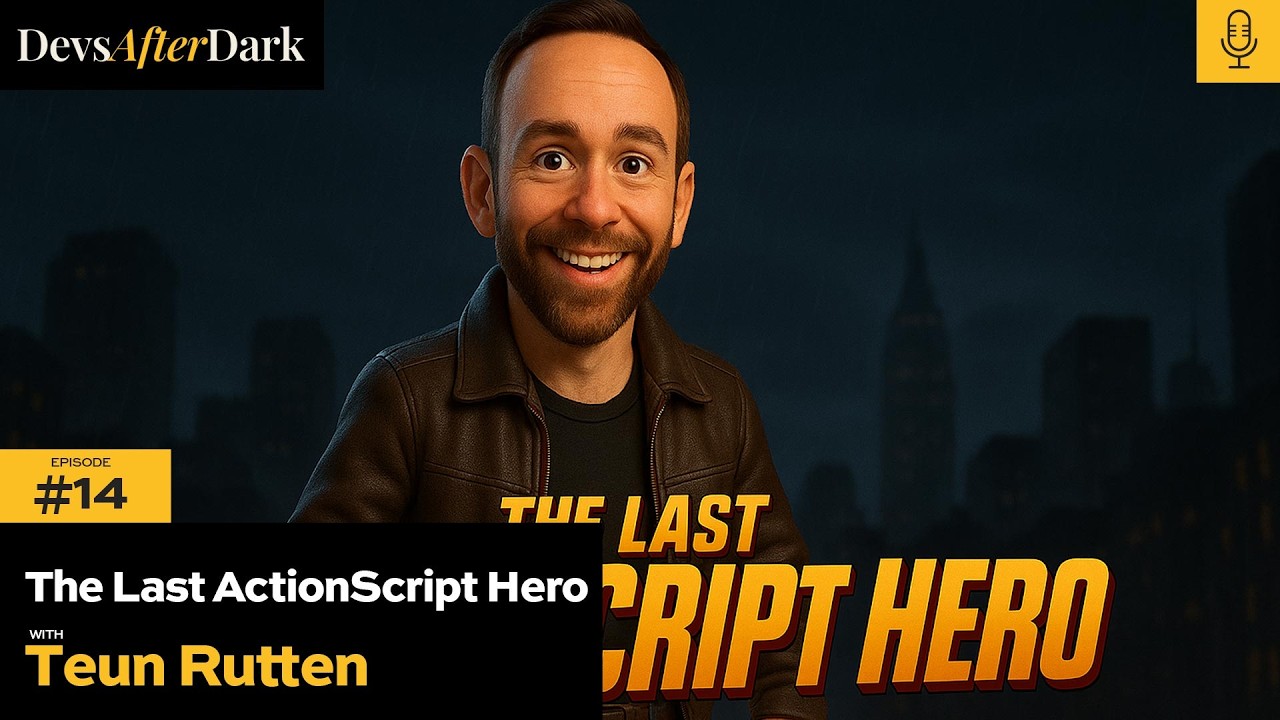
Teun Rutten, head of development at HubSpot agency Bright Digital, talks about learning ActionScript as Flash died, climbing from intern to agency lead, and why surrounding yourself with complementary talent matters more than knowing everything.
Chapters
Dennis's chickens are out there doing power squats and he's just like, yeah, that's awesome. They've got to have like little chicken treadmills and like, like weight. Like you got corner weights, you can do rubber bands, you can do all that.
Yeah, just build like a small gym. They don't even have to use it. Just put it there. And then people will be like, that one works out. So.
Boom. Beautiful. Love it every single time. This is episode 14. I am Nick. That is Dennis. That is AJ. And today we have a very, very special guest, what some would consider a rock star of the HubSpot developer community. But before we get to that, let me just really quickly go over just a couple of things real fast. Uh, first off, if you're not already following us on YouTube, And you want to see back episodes, you can easily go to youtube.com/@HubSpotDevelopers.
Oh my God.
Amazing.
Do you like that? No.
See, Dennis taught me and gave me control over some stuff, so now I can do like big boy things. So that's, it's always nice to be able to do that.
Proud dad. Proud dad over here.
And then if you ever want to know what's going on in the HubSpot development world, you can always also go to our changelog. And for those of you on audio, of course, developer.hubspot.com/changelog. And then last but not least, we have, uh, everything for upcoming dehugs right here at events.hubspot.com/developer. That's for my boy Dennis. If you haven't checked out too as well, if you have not checked out as well the React one that just happened, I believe on the 27th, uh, just recently, right? You should definitely go back and watch that. Very awesome. Was not able to attend that. I apologize. That was during my lost my voice and very sick phase.
Whatever.
Because you weren't there. It probably was. It'd be a lot more smoother. And then also, if you don't already feel like you don't know enough, head on over to the Academy at academy.hubspot.com and watch all of the things and check out all of the content and categories of things that you'll need to learn because it is vast and HubSpot covers it for you. So, but all that aside, without further ado, our special guest is going to be Toen. Toen, why don't you introduce yourself, tell everyone who you are and what you do?
Yeah, thank you. So I'm Toen Rutte. I live in the Netherlands with my wife, 2 kids. I'm the head of development and design at Bright Digital, which is an elite HubSpot agency. I think I've been working there for almost 9 years now.
Really?
Yeah, yeah, it's insanely long. I actually started there as an intern and they offered me a job after the internship, so I just sticked around. And I have the honor to lead an amazing team of 9 developers and 4 designers. Been working with HubSpot for, I think, 5 years now. And that's also how I was introduced to the community, right? I was kind of looking for complex use cases and bumped into the forum and just started asking questions there. And that kind of turned into a challenge to start and try answering questions of other people's. And that's how I became quite active in the community as well.
How did you get in, like, for at the very, very beginning, what was the thing that kind of, because you're leading both design and development now. So that's, that's like a wide range. What got you started just in general and into the whole kind of like technology spectrum?
Yeah. Great question. So before I did any technical related studies, I was actually studying international business languages. And I really liked the marketing part and the international part of those studies. However, the perspective that that study gave me wasn't really what I was looking for for my future. So I just took a break and I started working at a technical support center for a big internet and television company in the Netherlands. And in the meantime, I was trying to figure out what the heck I wanted to do with the rest of my life, right? And that's quite hard to make like a definitive decision on what studies you should follow. Well, I was also a bit of a gamer in that period, and I really liked the storytelling aspect of games and the way they were designed. So my girlfriend at the time, which is now my wife, proposed a study where you got the chance to start developing games. And it was called Communication and Multimedia Design. It was quite a broad study, right? So you had different semesters you could choose and kind of create your own path to get your final job at the end. So I thought, well, why not? And I tried those studies and I loved it. And during those studies, we had to choose our own classes to follow, right? So you can either pick a C++, C# study, You can choose game classes either in game development or game design, but also a class which was called Create a Rich Internet Application, and that used the MEAN stack. So Mongoose, Express, Angular, and Node in this case. That got me hooked, and after I had those classes, I just knew that I want to do something at either an internet company or at least start building web applications. So that's what got me started and got me into the development role.
How much—
oh, yeah.
Sorry.
Where was I? I apologize. When did you start doing that, getting into Angular development?
When it was? I think it's—
Yes, when. Yeah.
Yeah, I think it's 11, 12 years ago now.
Yeah, okay.
Yeah, I even, I even had a class that taught me ActionScript, um, and that was like during the period that we learned that Flash was going to be deprecated. So we was like, we were like, okay, what the heck are we doing right now?
No, seriously?
Wow.
I was gonna ask you, how much empathy did the technical support specialist role kind of instill in you? Because I first started as well, like right out of school, kind of my first job was kind of along those lines as well, but it was for like dental websites and like, uh, people in the medical field. But it was— most of it was a good, good portion of it was technical support. So how much empathy did that kind of instill in you having to kind of go through that as your, uh, as one of the first roles?
Um, I think quite a bit. It really taught me what, what challenges people run into when using either hardware or software, right? And that's really broad, what people can have challenges with, right? So we— you have, like, when you're working at a support desk, you're either helping people at the age of 20 who are quite tech-savvy, but also people in their 80s who are confused if they are using their media player or if they're using their old-school DVD player, right? So you really have to, you have to be able to place yourself in the situation of the people, the person you're talking to and try to see it from their perspective. And I think that quite helped me during the start of my career to kind of think about all the challenges people could run into when you're building an application or website in this case.
A lot of problem solving.
Yeah, yeah, exactly.
Oh, that's awesome. Now, being on both sides of the, uh, both sides of the sword, the double-edged sword of both design and development, is there, is there, of the two, is there one that you like more so than the other? Because I've kind of always leaned towards, like, I love development and I love coding, but like, when it comes to like the design aspect of things, that's something that always kind of drew me to something more so than the other.
I mean, I'm, I'm. I'm really a developer, and we have some amazing UX designers at our company. I'm definitely not a designer, but I really like the design aspect of everything that we're building. However, yeah, and this is a tricky question because I can get really excited about building that pixel-perfect website or creating a really complex animation. But when I'm developing a complex integration, which has nothing to do with the front end, but getting that complex functionality to work, it gets the same excitement, right? So it's really hard. But I think I'm, yeah, I'm not even sure, to be honest, which I like more. It's the same kind of satisfaction that you get when you're solving something really complex, right? And I have colleagues who really like the visual aspect of building an application or building a website. But for me personally, I get the same kind of satisfaction from solving a complex problem.
I mean, there's design to that too, right? I mean, there's a huge design aspect in there. Yeah.
I mean, if we're doing a complex integration, so we have to develop really easy integrations where you're simply syncing one object to another system. But when we're talking about multi-platform integration or really complex data model. And we're also creating entity relation diagrams. You have to create your architecture diagrams, your data flow diagrams. So there's a big design aspect before we actually start building. And that's kind of fun as well.
Awesome. Do you have any particular language that you draw to more than others or that you really find is kind of like, Because everybody has their like one particular language that they either interact with or that they write from scratch or whatever the case may be, but they usually have one that they would call their quota. I mean, they're all like, depending on what you do, there's, there could be quite a few of them, but is there one that's kind of like your personal favorite?
Yeah.
Um, uh, well, definitely JeffScript. However, uh, if we're talking about JeffScript, there are again, 2 parts that we can talk about. We have frontend languages and backend. I absolutely love Node.js and everything we can do with that, especially if we look at the HubSpot ecosystem. There's so much that you can do with Node.js. However, the way I always love React, right? So before we became a HubSpot agency, we were touching web applications quite a bit, and I could choose my own stack. So it would also Go either for a Node.js backend, uh, but always with a React frontend and having those 2 interact, that, that's kind of like the magic of it, right? Yeah. So if you work, if you're working with HubSpot and you're leveraging either serverless functions, but also using a React frontend, that, that's my ultimate dream.
Have you, have you ever thought about moving beyond Node to like, you know, was it Deno or Bun or anything like that?
I've thought about it, but that's where it stops, probably.
So, do you find— because you said you've also used Angular, right?
Yeah.
So, like, what— do you find React easier than Angular? Because I dabbled in Angular a little bit for a project way back. And I remember I tried to use it with HubSpot and just like the handlebars thing was just— it was just We, we ended up having to basically tell Angular to look for a different thing other than double curly braces, cuz that was Hubble at the time too.
Yeah.
Yeah.
And it, it was total conflict, but when we changed it up, it worked. But I, I'm just curious what your thoughts are on using Angular versus React now.
I mean, when, when, when I was building web applications outside, outside of HubSpot, so I had not to think about the tech stack that would work with HubSpot, right? I still would choose React because Angular has like it's it's an MVC framework, right? So you have your models, views, controllers, and and that kind of forces you in a certain way to develop your application. Where for me, I was kind of I think we're talking about five years ago, six years ago probably last time I really built a web application. Outside of HubSpot, that is. And GraphQL was becoming a thing then. And I really liked the Apollo GraphQL framework and library. And I also used Prisma then. That's like a data layer on top of whatever database you're using, which works really nice with upon GraphQL and other GraphQL solutions. But why I preferred React back then is because you can simply plug in React in whatever tech stack that you're using. But when you're using Angular, you suddenly have to keep Angular in mind and build your stack— tech stack around Angular. So based on that, my preference always goes to React.
How'd you feel about Vue? Because I feel like Vue is even more plug and play than React.
Yeah. And the trickiest thing about being a developer is that you kind of stick to the same thing always, right? And it's kind of scary to touch different languages. And that's why I love having a great team around me who gives me inspiration to try new things. But when I tried Vue, I was like, okay, man, seems like React. I do not really see the benefits right now. So I'll stick with React. But yeah, it's really fun language as well, but quite similar in my opinion.
If I remember correctly, one of your first frustrations with HubSpot was it wasn't React. Like you couldn't use, or it wasn't easy to use with React, correct? Yeah.
So before we started using, okay, let's go way back, right? When we started using HubSpot, I suddenly was confronted with the design manager. And I had to develop stuff in the design manager.
I see.
And me and the other developers almost quit our jobs because we were then— we were building mainly WordPress websites, but we had really nice boilerplates with Webpack and other preprocessors. And we could use whatever language we wanted. So we were using SCSS, and we were using React quite a bit for micro applications. And then we had to use the design manager, and that was like hell. But I think almost two or three months later, the CLI was announced. So we were okay. Heck yes, we can use Webpack again. We can try to start using React as well. But I tried to implement the normal React library, and it was hit with like a shitload of conflicts. And I think I. reached out to Zach back then.
Yeah, that'd be right.
Zach Wilson? Yeah, okay. About those conflicts, and we just couldn't get it to work. And then at that point, I switched to Preact. I'm not sure if you're familiar with that. It's like a tiny version of React. And that solved my conflicts with HubSpot, or using React inside HubSpot at that point. We've been using it ever since for micro applications because it's great when you're building a CMS website and you do not have to load the full React package. Yes, Nick.
I was just thinking about Zach for a second there.
But okay.
I was going to say something about the Super Bowl and the Eagles because I know Zach's a huge Eagles fan. For some reason, that was just popping in my head. Um, so he should be very happy to hear his name pop up. But, um, uh, overall, like, a question I have for you is what, what are like some of the, you don't have to name all of them because there, there could be many, but like, what were some of the, like, especially like transitioning from like those, those early stages in your like tech career into now, what were some of the things that you, you'd say like kind of came up as like roadblocks that you had to, um, kind of creatively overcome? Do you have any of those that you can think of?
Oh, I mean, when I started working at Bright, I was probably like one of the the only developers there, right? We were always with either one or two developers, and that was before we started using HubSpot because at that point we started to grow quite a bit. But I think that the tricky thing was to. Learn when you do not have other developers around you, it's quite hard to learn what there is available, how you can use it. And I think that was my main roadblock during my career that I didn't have that mentor. I had, I had a great mentor at the beginning, what is when I started. But during my career, I had a few periods where I was like the only developer or had a junior developer besides me. It's really tricky then to get inspiration, try new languages, understand how they are used. So you're kind of searching for other people to discuss that with and have those brainstorm sessions. So I think that was the trickiest part. But then I simply tried to get into communities, right? And join React communities and search for that kind of interaction there.
Yeah, I would just agree with that, man. Like, I remember I was in kind of a vacuum myself with just my, just developing on my own. And then I tried to take this freelance project. This guy said, you know, Git, right? Uh, no. So like, no one ever told me, like, I was just doing this all by myself, cowboy coding this entire time. And it's like, oh, you need to start doing that. And it's a huge difference when there's other people that can teach you how to do things.
Yeah, yeah, yeah, exactly. And I mean, right now I'm the lead, but you still have those moments where you're thinking, am I doing the right thing? Am I embracing the right languages? And you always need senior people or at least people with other experiences besides you to get that outside view on the way you're doing things, right? And I think that's the trickiest part for probably every developer out there.
Well, how do you make the decision now? I mean, you are the leader, so you kind of have to forge the path.
Yeah, but I mean, I have a great team, and, and I'm not the kind of leader who simply makes the decisions, right? So I, I like to confront my team with a problem and, and see what kind of solutions they come up with. And based on that, I always have like a general idea of what direction I want to go in. But based on the solutions they propose, we come kind of with a team effort to use some kind of final solution. And then you suddenly get really creative ideas that you wouldn't have thought of yourself, right? So for an example, right now we're kind of looking into how we can use AI in a more efficient way. And I'm simply dropping examples in the team and they get some really creative ideas on how we could leverage that and use certain prompts to make it more efficient. And that goes for all subjects, right?
So what I'm hearing too, and real quickly, and Nick, I apologize, I'm totally taking over here.
No, these are good questions. I can't argue with good questions.
What I'm hearing right now is that you let your team take your job and you're just lazy and you just let them do all the hard work.
Yeah.
And you say, they say it's like, I'm a teacher.
Yeah, exactly. Yeah. Okay. It really sucks because now I can't share this podcast with them, but it's like—
So, so let me ask you this in terms of like you said you started as an intern and now you're a lead. Do you find that, um, the way that you kind of lead the team Is based upon previous experiences from managers that you've had? So like, you're kind of building off of like the mentors that you've had throughout your life and taking bits and pieces from it? Or are you just kind of going into this going, I'm going to do the best that I can do in the way that I'm going to try and lead and forge like your own path forward in a leadership style? Or are you adapting yours based upon the mentors that you've had?
No, definitely based on past experiences, right? Based on other mentors as well. And just Taking the great things that you notice that would work for you and and try to adapt that in your in your own way of of working. And I think that that's great. I had some really great mentors in the past, definitely when I started, but also my current boss was more on the leadership part of my my role. A really great mentor. And you always you're always looking at what other people are doing and if that would work for your team. However, right now we have, we think around 5 teams and you really notice that the culture in the team can be really different, right? So we have marketing teams, we have HubSpot teams with only HubSpot consultants and implementation specialists. And they all really have a really different, they need a different approach and they have different needs in the way we organize things. Um, well, if I'm looking at the developer team, but also the design team, they really need a different approach compared to the others.
And I think you just said something that's really important is like, depending on what the purpose of the team, the approach is going to be different. And they're going to need different stuff. Because I've seen a lot of places where, you know, you have like 2 different development teams working on 2 different projects that are 2 different systems, but they're trying to utilize the exact same type thing and kind of like shove one mold into another. And it doesn't always come out great. Like, sometimes it works. Yeah, but it probably wasn't the most effective. So yeah, that's a good point.
Yeah, it really depends on the people that you have as well, right? Because the, the, the most important thing is that they have to fit in the team, mainly on a social level. But if they click with the team, then the way of working is also going to work for them, right? So, so I think that that's probably the most important aspect when you're trying to mold a certain approach And way of working with a specific team.
Yeah.
To pull on that mentor thread a little bit, is there a piece of advice that you've been given throughout your experience there that's kind of really stood out? And then follow-up question, and this could be the same answer too, so this might be a little easier, but is there then a piece of advice that you've kind of either formulated yourself or crafted yourself that you find yourself giving to like those on your team and people that you are kind of leading?
You don't have to say anything about me too.
It's okay. Yeah, yeah, okay. I'm, I'm, yeah, I'll do that.
First advice you ever got was from this guy named Dennis, and let me tell you, it did knock over.
Yeah, yeah, exactly. All right. Um, no, I think that, um, um, the best advice I have been given is that you do not have to, uh, know everything and be the best in everything, but you have to surround yourself with people that fill in the gaps, right? Because When I was kind of like at a few years ago at a point where I had to make a decision, do I go for that leadership role or do I go for that senior developer role? And if I would choose for that leadership role, which I did in the end, I wouldn't have the same time that I used to have to stay on top of all new technical developments, stay on top of HubSpot releases and everything that is happening in the ecosystem or in the world of JavaScript, etc. Et cetera, and and I really I was quite scared to not have all that knowledge again and and accept that I couldn't learn everything anymore than that I would used to learn, right? Because you only have certain amount of time in day, and and surrounding you with people who will probably outsmart you in in a few years is something that you have to accept, but is also really important. Uh, to start on quite soon. So I think that that was probably the best advice that I have been given. And, and to translate that to advice that I give is, is the same to my team. You don't have to know everything. Uh, start with working on something that you're passionate about and specialize in that. Then your work will become fun and, and the rest will Happen off that.
Love it.
Love it. Yeah, that's— I mean, I surround myself with people I'm hoping one day know more than me as well. I mean, Dennis and AJ, you're getting there. You're getting there. Working on it.
I'm totally 3 years behind.
That's all.
Without them, none of this happens. Just to be clear.
Yeah.
For those on audio who don't see me laughing at that. But, and I guess the question I have, and there may not be an answer to this, but you talked about that fear. I personally, like, I also have like that fear when it's not being, or not being sure that you're going to be able to, like, if you transition from one thing to another, like keeping up with like certain aspects of it. Is there something that you did to kind of, and I say kind of get over that because maybe people, maybe people don't get over that. I don't feel I have, but, um, whether that be in the form of like things you're reading or things you're like keeping track as far as like certain newsletters. Are there things that you do to try to keep up with technology to kind of reduce that fear?
Yeah, definitely. So I try to stay up to date with all the releases that happen and I really have to pick what I'm following, right? So if I go full focus on HubSpot, then I do not have time to stay on top of every front-end release that happens. I used to do all of it, but I have to choose where my time goes, right? So currently, I'm mainly focusing on everything that is happening inside and around HubSpot, and I'm simply trying to translate that towards my team. How we can adopt it if we want to adopt it, and and how we can build services around it because that's mainly my role, right?
I have to.
Well, first of all, my role is to make sure that my team can do its job in a fun way. But besides that, I have to also make sure that we have the right services to offer and that we can help our clients in the right way. So yeah, my thing right now is simply staying on top of the product updates, staying on top of the developer changelog. One thing that is really helping me is being part of the developer group because I get to meet a lot of different people that give me a lot of inspiration on how they leverage things and, and how they, uh, utilize everything that, that gets released. But besides that, my main focus right now is making sure that I have other people in my team who are starting to do the same things that I used to do, right? So I really got a lot of satisfaction from teaching my team I'm making sure that they are way further on a technical knowledge level than I am right now. Um, so that, that's, that's my main focus.
Excellent. It's, yeah, it's one of those things where I'm just trying to, in my head, I'm just thinking like, it's one of those things where you want to do everything all at once, but then reality kicks in and then real life on top of that, right? Outside of real life also then kicks in and it's kind of like, one of those things where it's hard to— you have to pick a focus at times. Seeing that time does become limited, are there any things that you've done as far as conferences or workshops or anything? It doesn't have to be right this second, or maybe there's some you want to attend in the future. I remember seeing that there was a— I can't remember the name of it now, I'll have to look it up, but it was an online React Uh, kind of conference and I can't remember what it was specifically about, but are there things like that that either you've done just recently that stand out in your mind as far as like, um, like workshops and conferences or something in the future that you know that's upcoming that like really sparks your interest right now?
Yeah. So I really liked the events that Git Nation is, is managing or where you get access to, but I think that the main thing that I want to attend is, is going to be the React Summit. That's in Amsterdam. I think it's also in the States, right?
Yeah.
Yeah. So that's the main event I'm looking forward to. But other than that, it's been quite some time since I've visited an event the last time. But like I said, the developer hook and webinars that we have from there are quite an inspiration as well, right? You get to meet a bunch of really inspirational folks. who are showcasing all kinds of cool stuff that they're building either with HubSpot, but also with different platforms. So that's kind of filling that gap right now.
Yeah.
Also, I would like to just point out that Toon was a mentor as well for the last go around. So I imagine that's a pretty huge deal.
During the mentorship program. Yeah, I freaking love that program. It's really fun to do and you get to meet a lot of ambitious ambitious folks who want to— yeah, they— the fun thing is that when you're starting the developer mentorship program, you're expecting people who want to learn how to become a developer. But I had 2 people who both told me, now I don't really want to become a developer. My goal is to become some kind of connection between our HubSpot team and the technical team, maybe like a solution architect role. And they really wanted to try and work with the development tools of HubSpot to understand how they could use that when designing a solution for their clients, right? And I really didn't expect that. They all wanted to build CRM cards. That, that's like the, the whole topic right now. Um, but it was really fun to notice that even not really people who want to become a developer were also trying to understand we had, we built things on top of Husky. Um, and I had 2 really amazing folks, uh, one from Spain and one from Norway, and they were so excited to start understanding the small aspects of building like a CRM card and how the front end is connected to the back end. And that was really fun to do.
That's awesome. That is really cool. That's like, yeah, that's It's one of those things where like, it's, it's not just nice to be able to like have, like, if you're going into development to like have a mentor, but like, like you said, it, it branches off. Like it may not, you may not even, cuz you know, we always, we always make this joke, like, like what you go to school for or what you like originally intend to do isn't always going to be the thing that you like find yourself, you know, oh, 10 years ago I never saw myself. Yeah, it's mostly true. And just to be able to have, like, I, I think stuff like that, like the mentorship and having people like you, which thank you for doing that, be able to help just kind of guide people. I wish I had that. Like when we were— So I wish stuff like that did not exist, or if it did, it wasn't even close to being at the level of stuff like it is now. Like we, like the mentorship currently is here at HubSpot. So it was like one of those things where, and it kind of goes back to a little bit about what you were saying before with some of the ways you kind of, there's so much out there and there's so much to learn. It's very, it's a roadmap with a million different ways to get to whatever someone considers success. And like having someone to kind of like nudge you in the right direction and like even ask questions or be a soundboard, right? Like you say, being on an island and being, having that is so much more beneficial and influential than I think like most people. I mean, you, you just kind of don't realize it sometimes. You take it like, that's working here for 4 years. You take it for granted, actually.
Yeah.
Yeah.
Where I'm like, oh, this is just the way it should be. Doesn't necessarily mean the way it is. So it's, um, but no, thank you for, uh, for doing that. 'Cause that is, um, like I said, I wish that was something that we had had.
Yeah. As I said earlier, you know, we, we working in a vacuum, right? Like we, we don't, it, it changes everything when you have access to these, these resources. Thanks, SJ.
Yeah. It's insane. Yeah. And I really love the fact that they made it even bigger this year, right? I think it's Full year now, nine months. Not even sure, to be honest.
Nine months, I believe it is. And yeah, like a hundred total.
Yeah, a lot of people for sure.
I know there were a lot a lot of people submitted to apply this year, for sure.
Yeah, yeah. A lot of mentors as well. Really great folks.
Yeah, yeah. Which just speaks to the quality of the mentors and then the quality of the program as well.
Yes, yes.
I tried to get Dennis to mentor me, but that just I ended up getting like a really like HR called me in. It was really bad.
Yeah.
All downhill from here, friend.
AJ was my mentor for my first couple years here at HubSpot and look where I ended up. So I can't really say—
Yeah.
I did what I could.
No one knows who I am and I just host a podcast. That's all I do. But no, but yeah, like I said, it's, thank you for doing that. And this list is one of those things that we, I mean, we appreciate it even though we weren't able to like take advantage of that, you know, going into the business as well. But I wanna kind of change—
I feel like technically we did a little bit because like the developer Slack was in an essence like— Okay. My mentors, you know?
Right.
That's fair.
That's fair. I didn't have that.
Before joining HubSpot, like, I remember talking many times to basically everybody who's right here and like all of us would just communicate constantly about like things we were building, things we were doing. And I learned a ton from everybody.
No joke, man. I don't know what I'd do with— like, it changed my whole developing world. I would not be working here today if it was not for the developer community.
Honestly, I have to say the same thing. Like, I wouldn't be anywhere in my career where I'm at if it wasn't for like the people that I met there and like all of this stuff. And like, even though Melinda tells me that I have a horrible taste in music, which I agree, it's pretty bad. But like, I've learned a ton from her as well, you know? Like, there's just everybody who I like. I feel like a lot of people have been my mentors, but to have a program that is strictly around that now, I just think it's phenomenal.
Sorry, I'm watching a school bus pull up on my corner. Long story. I'm gonna— let me change gears just a little bit and Now, Dennis has called you a rock star as far as the developer world.
What—
moving away from the developer world a little bit, what are some of the things that you do as non-techie as humanly possible can be? Everything's techie to a certain extent, but what do you do to unwind? And with that question, I will be right back. I promise. I just have to go do something really, really quickly. Awesome.
Okay, um, so as non-techie as possible. Well, I'm, I'm, even though I'm a developer, I'm really an outside person, right? I love to work in the garden. I think Dennis and I share a passion.
Yes, we do.
Yeah, so I'm, I'm starting— what is it called in English? We call it moestuin in, in Netherlands. It's the, the, um, growing your own food. Right in the garden. Yeah, yeah, yeah, yeah, yeah. So I'm currently, uh, I've planted the seeds right now. I, I put a few, uh, in my kids' room, a few downstairs. My wife is already going crazy because there are little plants everywhere right now in the house. Um, but that, that's really fun passion. Sadly only a few times a year. Um, but that's what I love. But besides that, I love building stuff as well, right? Simply building something inside of a garden. Uh, so we, we got bunnies a few years ago, and, and building them a really big outside fence so they have all the, the room to, to play around in is something that I really love. Um, and I recently picked up a, a new hobby, um, which I didn't thought I would get hooked into, which is, um, um, building aquariums. And you might think—
No way!
How the heck are you building an aquarium? But I really love the fact of aquascaping, um, simply getting an aquarium, making sure that you're getting the right, uh, ground for it in the right color, trying different plants, placing a bit of wood, maybe add some fish or, or some shrimp. But that isn't even the fun of it. Simply building like a little underwater world, that's something I really love.
Mm-hmm.
And, and I'm using quite a bit of my free time right now simply Managing the 2 that I, that I have currently. I think besides me, um, so yeah, that, that's quite a bit of fun to do. Um, but yeah, I think the biggest passion is anything outside, anything with gardening, um, and, and probably building, building stuff outside as well.
I just watched a 20-minute YouTube video on aquascaping, all that good stuff.
It's so much fun.
Yeah, I really want to do it.
I ran into a Reddit community regarding aquascaping and they have like the most insane builds that you're seeing. And each time I see one, I'm thinking, okay, I should get a 3rd aquarium. But then I look at my wife and I think, okay, I shouldn't get a 3rd aquarium. But it's so much fun to do.
Have you considered doing something outside? I like building like a little koi pond type of, I'm not sure if it's enough space you have.
Yeah, I don't have that big of a garden. It is fine, but not that much space. But we— I simply bought a, like, a plastic, a plastic tub. I think it's probably 200 liters or so, and just built some, some kind of wooden frame around it so it would look fancy. And that, that's the thing, things I will get excited about as well, besides anything tech-related in that case.
Does aquarium building get as crazy as PC building where there's like the newest little thing that you gotta have? Like, I like— there's, there's times where it's like, I don't need to buy anything else, it's fine. Because I used, I used to do that and it's like, yeah, you don't need that little part. It's not— it's like, it's completely aesthetic. You don't have to do it. Like, I imagine building aquariums, I would be— I would have the same just like itch where I'd be like, yeah, it doesn't need it, but I gotta have it.
No, exactly. Yeah, it's possible. I'm trying to stay away from all that. I'm simply— laugh— I buy an aquarium and start scaping, but you have like a, a shitload of different lights. You have like CO2 systems that you can buy that are hundreds of dollars where you simply manage the exact same amount of liters. Everything is smart right now, right? So you can, you can buy all kinds of smart stuff for your aquarium as well, like a temperature meter but also a CO2 meter, CO2 meter. Um, so you can spend a lot of money if you want to, but I try to keep this as simple as possible, um, because otherwise I will probably be broke in, in a few months.
Not, not to 100% derail this conversation, but consider— look into, uh, well, we can talk offline about it, uh, combining gardening with your, your fish tanks, because there's a hydroponics thing you could do with that, which is another level of Putting it all together and wasting money.
Yeah, yeah, yeah. I mean, that, that's the thing with stuff you like, right? There's always stuff to buy for it. And, and even, even more, um, um, let me rephrase that. So there's always stuff that you can buy for things you have a hobby for or a passion for, and, and it can get insane quite fast on everything that you can have. I think, yeah. Talking about gardening, you probably also spend a few bucks on, on the little stuff you have in your room. Um, so yeah, that's the tricky part, right?
Yeah, you kind of need that though. I think at the end of the day, you need something that kind of takes you out of your element just a little bit, especially if like, you know, with the world that we're in, or it's like, I don't know, I'll be a— I'll be a little conservative on the, on the guess, but like Anywhere from like 8 to 10 hours a day sitting in front of a computer, just work-related, if that. You know, the last thing you want to do is be like, my hobby is going to be another 8 to 10 hours staring at the computer. Like, you'd be like, yeah, it's just, it's painful. It really is. So like those types of things, um, I, I'm very appreciative of people who can find something that like motivates them. Like, you know, like being like, The love for tech and the love for work, having that same sort of love for something outside. Like, I try to do that with like carpentry and things like that. I'm horrible at it, but like, you try to do it.
I've tried.
He's seen the outcome of some of the stuff I've tried.
He tries really hard.
I do. It's, it's, you know, but it's like, yeah, no, I, I, I, there's, there's an, there's an appreciation and sometimes almost envious of like people who can like find something that they love and can pour that much passion into and And I'm sure the kids love it too with the aquariums as well.
Yeah, definitely.
They love it.
Fantastic, right?
Yes.
So no, I love that. I think that's really, really good.
By the way, y'all know I tend chickens, right? When my daughter helps me with the chickens, we have a chicken has a, how do I say, a heavy crop, which is like where they store the food in the breast area. And it's broken down in muscles a little bit and we might have to invest in a bra to hold up Her crop. Speaking of things, it's amazing.
Oh my gosh, Dennis's chickens are out there doing power squats and they just like— yeah, yeah, that's awesome. They've got to have like little chicken treadmills and like, like weight, like rubber bands.
Yeah, it's just build like a small gym. They don't even have to use it, just put it there and then people be like, that one works out. Sorry.
Yeah.
You could be the most popular webcam. Like, there's that— I was— I can't remember if I was talking about this on the last episode, but there's like that, um, it's like that app that just has like random like outdoor webcams because I was teasing everybody about Ireland. There's money for like that bar there. You could literally just have one on your like chicken gym and that would be like— people would just watch that all day. It would be fantastic. Well, it has to happen now.
Yeah, you are correct.
I agree.
Yeah, it's like a Gold's Gym for chickens. I love it. I apologize, I missed the first part of what you do for non-techie stuff. Was there anything besides the aquarium stuff at the—
No, gardening.
Gardening.
Gardening.
Yeah, Dennis and I share probably the same passion. Uh, just, just growing your own stuff in the garden. That, that's—
is there anything in particular you like to grow? I'm a huge peppers fan just in general.
Yeah, I agree. Peppers, uh, tomatoes, anything I can send the kids out to pick, right? That, that's the whole fun part of it. So they simply run into the garden, pick their own tomatoes, and, and we eat them. Uh, that, that's the great thing about it.
That's awesome.
I love that. I tried it last year, but I had like a massive snail infestation in my garden. It was quite rainy and they, they completely ate all of our plants in like a week or two. So that, that's the sad part of gardening, but other than that, it's quite a bit fun.
Oh, that's awesome. I love that. Um, let's go back a little bit. I want to talk about, uh, this is one of the questions that I wanted to ask you because I find that You can ask this question to probably about 100 people and get probably 99 different answers of those 100 people working in the exact same type of job, right? And that is with your current position, right? Like, what is a common myth about your current position that people tend to— like, for example, right? Oh, you're customer service, so you can answer any computer question. Or, you know, oh, you're a doctor. Well, what's Help me, I'm having this like pain here or here. It's like, you know what I mean? It's like, I'm a podiatrist. I don't know anything about your shoulder. Like, so what is like a common myth about your job currently?
Yeah, I think the biggest one is that developers are mostly introverts, right? And they stick to themselves and not easy to talk to. And I think that's probably a stereotype that quite a few people still have, right? If I'm talking to people and I tell them that I am a developer, they are sometimes surprised simply because of the fact that I'm not an introvert. And if I look at my team, I have really little introverts in my team. And it's quite an important aspect of our job to be able to work with marketers, with HubSpot specialists, with UX designers, but also with clients. So I think that that's probably the biggest myth around my job.
Do you think there's anything that—
sorry.
Oh, go ahead. No, no, I was gonna say, you're all in the office, right?
You have a— yeah, it helps out quite a bit, I imagine.
Yeah, definitely. And I think at our previous office, it was like a really kind of like a big home. So we had all different rooms and then we had our own development room, so we were kind of stuck in the attic, um, with a, with a few of our developers. And that, that wouldn't help the stereotype that there was. But right now we have like a really amazing open office and everyone is in the same room, and that, that really kills that myth as well.
Yeah, yeah. Now the question I was going to ask is, do you think there's anything like— because Before, yeah, it was a pretty common, like you would say developer, you would think, you know, the guy in the corner that doesn't talk to anybody that's in the dark with the lights on. Being in this, like having a team, you know, in a close proximity does help. Do you think there's anything, because I always, for me, I always thought like kind of the, not the invention of, but like being able to do something like this, right? As a developer.
Mm-hmm.
This wasn't commonplace, right? Like years back, right? This, this, you wouldn't see like developers just making podcasts or developers, um, like, like I have to give a shout out especially to like some of the people on, you know, DevRel, like that do like Bri or Brooke that do like really good videos, whether that be on LinkedIn or other places. That really wasn't commonplace for people in the developer community. Do you feel things like that or anything else have like helped attribute to breaking that stigma?
Um, yeah, definitely. Everything that you mentioned probably helped break that stigma simply by getting out there, right? And, and, uh, um, explaining that the stuff that you do and, and simply showing the character that you have is, is a big part of it. Um, if, yeah. Oh, that was my sound. It sounded like someone was asking something. But, um, um, I think if, if I look at my company and also, uh, and myself, I think simply putting people out there, having them talk to clients and, and having them interact quite a bit is breaking that stigma as well. Right now we're leading workshops where we're showcasing cases during big company meetings, and that, that's all contributing to Breaking that stigma.
That's fantastic. Yeah, it's one of those things where it's like you need— sometimes people need that little bit of a nudge too, I think, as well. And just kind of like getting people out of their comfort zone just a little bit. Yeah, it kind of helps with that because I mean, I know a lot of people, especially, you know, in the places that I've worked where it was even in a close room, there would be— it'd be, you know, no one would really talk to each other and it was just kind of You know, you'd be— me being— I kind of came into the developer role at that time, you know, through an odd path. So for me, that just seemed weird. It was just like, you're like, right, like you're sitting right there. You know, I even had a manager once, true story, that there was only 3 of us at the place. And he sat in the middle and I— he literally would not let me and the other guy on the other side of him talk to each other. And I was just like, it was just, it was— If he ever sees this, It's bonkers to me. I'm sorry, but it's just bonkers to me. I never understood the concept of it, but it was just like, it was literally this wall in between 2 developers that couldn't talk to each other and it was just goofy. And, uh, so yeah, I feel like there has to be, even if you do work in a close-knit, you know, like an office space, even there has to be that kind of push by, and it sounds like you have that kind of want to like people to go out there. Yeah.
Express themselves.
Yeah, you know, talk.
But also, I think if we look at the people who worked in IT or in software development, probably 20 years ago, compared to the people who are working in development right now, there is quite a big shift going on. A lot of people are becoming a developer who would have done something completely different in the past, right?
Right.
Even if I looked at my own studies, when I started those studies, I was like, okay, I'm probably going to be surrounded with only other nerds because I classify myself as a nerd as well. But it was completely different compared to that. I think most of the people who would have normally— who I would have expected— and, and now I'm kind of stereotyping other people as well, but I'm going to say it out, uh, so the people I would have expected in like a business economics or marketing studies were suddenly joining the development studies as well. And if I look at my own team, I have quite a few people who started as something else but took studies to become a developer later in life, right?
Mm-hmm.
I have someone who used to be a chef. I have someone who used to be a designer. I think that that's also helping. With people who are in the industry as well.
I mean, the word nerd changed, right? Like, that used to be kind of like a bad thing. Now it's like a badge of honor.
Yeah, exactly.
Yeah.
You should be able to get something in the HubSpot Academy certified for that at some point so you can put it on your listings and things like that.
Yeah, I agree.
Definitely. I know we're running close to time, but I did want to ask you, there's one thing I really did want to ask you, and that was Because to me, like, it doesn't just happen like when I first start my career, but like with every iteration or with every change in my career, there's always something that surprises me. There's always something when I go from either, um, one vertical to another, something surprises me, one company to another. So, so, um, you don't have to name all of them if there are many, but like, what are some of the things, like, especially in your current role, like, what are some of the things that surprised you when you first started?
Yeah, so probably when I finished my studies, I thought, okay, I know it all, I can build anything I like, right? And then I started working at a job. And I suddenly was confronted with the fact that I didn't know crap. Or at least I barely scratched the surface of what was possible. They taught me HTML, they taught me JavaScript, they taught me Angular, Mongo, Node Express, but all on a really basic level, right? And then I was confronted with a complex use case, and I thought, okay, crap, I don't know how to do this at all. So that that was quite confronting. But it also worked the the other way around. I think most developers or a lot of them have the the imposter syndrome, right? We're all confronted with that at least once, but probably many more times in our career. And I was also surprised with the fact that I knew more than I thought, right, during my career. So I was like, okay, no, I'm still a junior. I don't really know how to do stuff. And I was confronted with quite a few complex use cases. And only after that, I was able to solve quite a bit of them and also got the feedback from peers or mentors that I was doing the right thing, I suddenly thought, okay, cool. So I might even know how to do my job. And that's the complete other way, right?
Right.
Yeah.
You went to school in the Netherlands, right? Yeah. Yeah. I was going to ask, when you went through your studies, like you said you did like HTML and that, and I can only speak from like me and AJ went to Eastern Illinois here in the States. Was it— was it— was a lot of the stuff outdated like the minute you got out the door? Because that's how kind of like I felt.
Is it?
Yeah.
The example I've given, uh, uh, the fact that one of my classes was— and, and my classes all— so I had to pick a class, right? And, uh, they all took around, I think, 3 months. And one of them was ActionScript, but it was the same year that Flash was going to be deprecated. So that was kind of like the example of, okay, it's all completely outdated. I know that at the school that I attend to, they are doing a much better job right now. So they're really trying to stay on top of everything that is happening. But I think when I was doing the studies, they didn't even know what React was or all more, yeah, the bit more recent technologies.
And in full transparency too, like just in case EIU ever comes and finds me. I don't mean that in a negative way. I just mean like at that time, like a few years back, if not even a little bit before that, that was just kind of just because of— I mean, it's always rapidly changing, but there's something to be said about that period where it went from like rapidly changing to exponentially blowing up to be, you know what I mean? Like the amount of like different areas of expertise you can go into now versus—
Yeah.
A couple years back has dramatically increased. So If even if it was hard for them to— I mean, it's even harder now, but it—
Yeah.
It was still hard for like schools back then to try to implement some sort of curriculum in which wasn't obsolete. Hell, even while you were still taking the course by the end, you know what I mean?
Yeah.
So it's— that's always why I ask that, because I always just find it, um, I find it interesting. But then I think too, there's some supplemental, um, help, if you will, like now, because you have So many other avenues to help kind of bolster that learning, right? You have like the Academy, you have other things, you know, Codecademy, you have other places that can kind of help supplement some of those things. But I was just, I always find it interesting. And because, you know, you went to school in the Netherlands, I was just curious if it was the same there as it is here.
Yeah.
It's, yeah, it's one of those things.
Yeah. But, but even though I took the ActionScript class and it was outdated, it still, still helped me grasp the concepts of programming, right? I was really struggling with Java during my studies. But once I took my ActionScript class, I suddenly understood the aspects on how to use Java. And that, that helped me finish that class in the end. So I think, think, even though a programming language is outdated, the basic understanding of programming and having that logic in your mind is going to help you adopt any other language quite fast.
So true. My GeoCities course really, uh, I was able to leverage that and go straight into MySpace without— I mean, seriously, just went straight to it, no problem whatsoever.
What was the other one that was out there?
Was it—
was AngelFire hosting one of them too, right? Because I remember, I think it was an English professor I had in college where We had to, instead of hand in our papers, we had to create a website and then post them onto the page for him to then go and do it. And yeah, that was just— I remember I was excited because I kind of knew a little bit of, you know, MySpace development from the HTML areas.
And it was the fact that you put those words together.
And so like the MySpace developer era.
Okay.
I remember just doing that though. And it's like, yeah, even then, like you said, like back in those days, like tables were still the prime way to build websites and nothing was like responsive. CSS was just starting to do their own like floats and layouts and stuff like that. And it was like, yeah, I remember.
I dare you to put on your LinkedIn, on your resume, MySpace as the first one, like as a very, just at the bottom.
Do it.
I'll update mine after this. Yeah.
Just put all my— add it in there just to see if they catch it.
Just to see if they catch it. It could be for like a month or two. It doesn't have to be for anything long term, but just saying that, that, that was my job for at least a month was MySpace. That's fantastic. I know we're running right up at time too, and I wanted to say thank you so much for talking with us. I mean, I love the perspective. I love the way you handle, like, some of the complexities of the role that you have. And I like, personally, I like the, as a leader, I like what you're doing to try to help those that are on your team and those that you're trying to mentor as well, based on just the things that people did for you, you know, to help you.
Mm-hmm.
you through your journey. I just think that that's a really fantastic thing. Do you want to tell— do you want to shout out anything? Is there people that want to be able to find you and the company and stuff like that?
I mean, yeah. So I work at Bright Digital, which is an amazing company in the Netherlands. You can find me on LinkedIn. You can find the company on LinkedIn as well. So make sure to follow me and the company as well. And other than that, make sure to subscribe for the Developer Hook as well, Because we share some amazing people, amazing use cases, and amazing resources.
By the way, Toon just had a birthday on Friday. So just happy freaking birthday to you, my friend.
Yeah, thanks.
I did not know that. Okay, awesome.
Happy birthday, man. Fantastic. Yeah, thanks. Thanks.
What better way to celebrate, right?
Yeah.
Not on Monday, right?
Yeah.
Yeah. Love it.
No, thank you so much for having me. It's quite a bit of fun.
No, no, we love it. We absolutely love it. Thank you so much. Um, yeah, for everybody here, I just, uh, Dennis, AJ, you got anything you want to shout out?
Uh, D-Hug.
Yeah, probably developer hug more than anything. And yeah, dude, I've been following the things that you build, man. Like, I, I'm always in awe by the stuff that you come up with. Like, you're— you guys are really good at Bright. You guys do a great job at Bright Digital.
Yeah, thank you so much.
I'm giving around.
I'm giving around.
Thank you.
All right. Thank you everyone for tuning in. I'll leave you with this little piece of, um, little piece of knowledge here by, uh, Ralph, Ralph Waldo Emerson. He once said that nature always wears the colors of the spirit. Now the reason was because he really didn't understand how to take his brand colors and inherit them into the theme through the brand kit. But, and then set spirit as the default color. But once he figured that part out, everything was all good.
Oh yeah. It's just a toggle. It was fine.
All I had to do is go to the dev docs to learn it.
That's all I had to do.
Ending this stream right now.
More from AJ









Ep. 32 - HubSpot Dev Site: An Origin Story with A.J. and Brooke | Devs:After Dark