Fixing Pharmacy Staffing Shortages with Autumn-Kyoko Cushman | Catalyst Pharmacy Podcast Episode 147
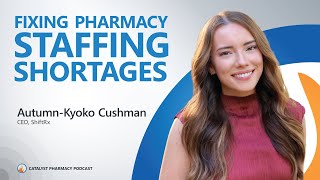
Podcast interview (Catalyst Pharmacy Podcast Ep.147) with Autumn-Kyoko “AK” Cushman, co-founder of ShiftRx. AK recounts a non-linear career from military hospital corpsman to healthcare IT and consulting, personal family health challenges, and founding ShiftRx to address staffing, pay, and burnout in pharmacy. ShiftRx runs a PRN marketplace used by thousands of pharmacists/technicians and over a thousand pharmacies; the company is launching an AI healthcare administrator called Holly (part of ShiftOS) to automate scheduling, credentialing, and workforce allocation with a public launch planned for early January. The team relocated HQ from Austin to San Francisco and raised investor support (including a fund connected to OpenAI co‑founders).
Chapters
Hey everyone, thanks for joining this week's episode. I had the pleasure of speaking with Autumn Kiyoko Cushman, she goes by ak, talked about of course her, her product or her company that she has come to co found called Shift rx. Really interesting story. Hopefully you'll get a chance to listen to it. Talks about just really starting out early. You know her parents were entrepreneurs and she really got to see an interesting lens into that that led her of course into joining the military to try to fill a need there as she, as she looked at potentially going to med school and then from there, you know, dealing with some, some things internally in her family, mom battling cancer that led her to a focus of we need to do more in some of these areas and help staff various places including pharmacy. ShiftRx is focused on doing just that. So she talks a really interesting story about just kind of what led to that process, what they're doing today, what they've created with Shift over the last couple years and also where they're kind of looking forward ahead and she's got some interesting things that she'll share. They are also releasing another product here next year driven by an AI admin assistant called Holly. Maybe I didn't let too much out of the bag as far as secrets of where they're looking to market this, but it is a great listen. Thank you so much and we'll take you there now. Well, good afternoon everyone. Thanks for joining the Catalyst Pharmacy podcast podcast. I have Autumn Kyoko Kushman here with ShiftRx. Thanks so much for joining and also go by AK. Right.
Yeah, I try to make it as easy as possible. The first name is, is quite long and so I always joke that I don't make people call me Autumn Kyoko unless I don't like them. Then I'm like say the full name.
That is fair. That is fair. Well, listen, thanks so much for, for taking some time with us. Of course we, we've got a, you know, a number of things that we want to unpack here. But you know, we'll talk about some, some good things of course with the, the business that you and the team are doing there as far as how you're helping out the pharmacy industry. But let's kind of start a little bit AKA about maybe you know, what kind of put you on this path here. Maybe that's, you know, early is that college leading into professional career. Share with me a little bit of what kind of, what kind of directed you along these lines.
Well, I sure as hell never thought I would be building automation tools for pharmacies.
Right, right.
I don't think any like 5 or 6 year old kid wakes up and is like, I'm going to build pharmacy software.
That's what I'm doing. Right.
Here we are, here we are. No. So I had a very long winded path to get to where I'm at now. And I think overall like the mission and the dream that we're working on is fixing a lot of the issues that exist in health care, which is what my co founder and I are so passionate about. But we actually met in high school, Leanne and I, who she spent almost 10 years of her career and in pharmacy I guess now more and counting, because this, this counts. But yeah, my parents were entrepreneurs when I was growing up, so very entrepreneurial minded. They spent a lot of time making sure that I was involved in the business. They were running real estate, we had apartment complexes, they were landlords, they did house flipping. And in 2008, the very infamous financial crisis happened and so we were completely wiped out and my parents had to reset. So we lost everything and totally restarted. We were homeless for the majority the entire time I was in high school and we stayed with a family member. And so it was like my parents resetting when I was 14 and going back to school and trying to pick careers that would, you know, ultimately lead to a much more stable lifestyle. And they really just drilled into me, if you don't want this to happen to you, you need to pick a recession proof job. So I from the onset was like, okay, what job is recession proof? There's like healthcare. Government, healthcare seemed the most appealing to me. I had a pretty clear cut path on how you can achieve financial success and security in healthcare. And to me that was being a physician. So from the time I was, you know, in high school, I was like, okay, I'm gonna be a physician. This is kind of my goal. And everything I did up until that point was was aimed at trying to become a physician. So when I got out of high school, I ended up going to college for a little bit. And I was working full time and missing classes because I was having to pay for rent and tuition and things just got really difficult. And so I ended up enlisting in the military and the Navy as a hospital corpsman. And to me that made the most sense because at that point I had been pursuing my nursing for my undergrad and I was like, okay, I can go into the Navy. Enlisted healthcare. They allow you to take civilian credentials and license your tests so you can get your emt, your paramedic, your lpn, you can do your trn, and then when you're done, you with your contract, you can go to medical school, courtesy of the GI Bill. And this is another problem that you have to solve for if you're coming from a lot of socioeconomic and security is it's not cheap to go to med school. Everyone knows that. But it's very hard to get that large amount of loans if you're going to secure them for yourself. But you also have to live. And so you're either taking out an even bigger amount of debt because you really can't work in medical school. So I spent five years in the Navy in Washington, D.C. working on hematology, oncology, the cancer center. And then I got selected for executive medicine, which was primary care, but for senators, congressmen and Supreme Court justices. And I think that was the biggest life trajectory changer throughout my entire journey. I met a ton of really awesome people and politicians, and I got exposed to people that had done, you know, their MBAs at Harvard and Yale and had gone on to be clinicians in our three star generals or selective service. And I was like, wow, this is really something that I am capable of doing. Um, and so I spent a lot of time thinking about healthcare reform during this entire time while I'm in the military. I'm doing odd jobs on the side because you just, spoiler alert, don't make that much in the military.
Whatever. Whatever you can do to fill the gaps, right?
Exactly. And so my last year in the military, it was like the height of COVID 19, and I was looking at it. I was working part time on Instacart and Rover and renting my bedrooms out on Airbnb, making $21,000 a year during the COVID 19 pandemic. And there was no great way for me to leverage my skills to make additional income on civilian side, even though it was so desperately needed. And so I'd spent time thinking about healthcare reform, and this dream job that I had worked all the way up to accomplishing was so close within reach. I was like, okay, now I just have to go to medical school. Which for some people, I'm sure they're like, that's square zero. But for me, it was like, this is the next path in this super viable plan. And I was like, what does it look like when I finish medical school? Because I wanted to be a private practice pediatrician. They just don't exist that much anymore. They're getting rolled up into PE and becoming generalists at healthcare Systems. You are not really in control of your own destiny either. When you graduate medical school, you're hoping for a specialty and a residency that you want, but it's so highly competitive that you might end up doing something that you have no interest in doing, but you just need to take a spot. And I was like, I certainly don't want to end up being like a gastroenterologist, right? I. For me, that was not something that was interesting. And so it was like I was kind of faced with this decision of what do I do? I've spent my whole life working towards this. And we. I was on terminal leave, which is like a gap period when you're getting out of the military that they give you to do a Skillbridge program and find a civilian job. And I got the opportunity to work on management consulting for the NCI nih. The associate director, they were like, we need someone who has cancer experience and knows all of the terms that we use here because it's a lot of vocab to learn, can navigate kind of the political hierarchy that exists at the NCI nih. There's a lot of built in bureaucracy at these academic institutions, especially in the government. And you need to have an IT degree and the job pays $120,000 a year. And I was like, I'll take it.
I'm in. I'll figure it out.
I'm in. Yeah, I'm in. I'll. I'll take it. And so I just had a slight problem of trying to figure out how to get a degree in it. So I needed a bachelor's in it. I was enrolled in American at the time and they were like, it's going to be two and a half years for you to even finish this course or this, you know, this degree if you want it. Because it was a total change from everything that I had been working on. And so I was like, there's no, I can't accept this. I started calling around. I found a school out of like Utah that allows you to test out of the credit suit. If you complete all the coursework, you do all the assignments, do the midterm, do the final, then you can get credit for the course. And I was like, great. I finished 88 credits in three months, got a Bachelor's degree in IT and Information Systems Management probably two weeks before my job started. And I was like, everything else I can learn. I'm so confident in myself right now that I can, I can learn it. And so I went and worked on, on precision medicine, which is these combination drug therapy trials where if you have late stage cancer they will genetically sequence you, put you in a drug combination therapy trial and try to give you the best chance at extending life. I had a great time at that job. It was the most money that I had made. I felt like I was making huge impact. But I did feel this like since for the first time in my life I was like, I'm working 10, 12, 13 hour days on this, but that's the least amount of time I've ever worked since I was like 14. And so I was like, this is crazy. I'm feeling pretty. Like I was feeling bored is not the right adjective to use but I was feeling underwhelmed. And so I was making changes where I could working, you know, cross team collaboration. And then I, I got another call probably a year in from a company, a big company called IBM and they were selling Watson Health to Francisco Partners through a big merger and acquisition. And everything they described to me was that this whole job was screwed and everything I was going to be working on was like a distressed asset. And to me that, that was really exciting. And it was another big pay bump and the opportunity to work with a smaller team kind of outside of. And so I told my boss at the nih, I was like, I'm leaving. And he was like, please no. And I ended up backfilling my position with my old boss from the Navy. And so he, he was super supportive. He ended up being one of our first angel investors in. So huge shout out to David. And I ended up taking this job at IBM and it was a blast. Initially I was having a ton of fun. We were working on, on market scan and databases, commercial claims and encounter data. We went from like a 9,000 person organization down to a three person or a 3,000 person organization. But I again started to feel that sense of like this isn't super fulfilling. I'm making more than I ever would have made as a physician. Why aren't I feeling this sense of fulfillment? And then while I was there, my mom got sick. She got diagnosed with a very rare aggressive form of brain cancer. And I think for me that threw literally everything into perspective because I was like, nothing matters right now. It doesn't matter that I have a well paying job. It doesn't matter that my parents got back on their feet and they have a house and stable jobs. None of that matters when someone is sick. And so I dropped everything. I went and spent some time with her and took a really brief leave of absence from work and was trying to figure out how they missed this diagnosis for 15 years. They missed, had spider webbed under her hippocampus and was totally altering her personality. And the funniest part about it, not funny, but ironic, is that she was unable to advocate for herself in the system, even though she's a healthcare provider herself. She's an occupational therapist, and during this time, she had aphasia right after the surgery. So that's a condition where you forget a ton of words. And she was trying to finish her master's degree for OT while she had lost a lot of her vocabulary because she was like, I have to get back to my patients. And I was like, this is nuts. Why do we have healthcare providers like this that are so determined to take care of great patients? And then you have people like myself and Leanne, right. I do think we are great healthcare providers, and we really did care about the patient, but we just burned out because we were like, we don't make enough money. We work too many hours. We feel underappreciated, under resourced, under supported. And so all of these things, my entire life path that was this absolute roller coaster all came together for what ultimately led to working on this problem and this, this company. So the problem that I decided to dedicate my life to working towards was fixing healthcare. And so my co founder, who was a pharmacy tech and went to school to be a pharmacist and dropped similar situation and lost her dad's colon cancer, I was like, someone needs to fix this. If we don't fix it, who's, who's. Who's going to. Who's coming to save us? No one is coming to save us. And so we've started building products from the perspective of having been those clinicians that burned out in a huge effort to try to, you know, boost their pay, retain them, incentivize new people to become healthcare providers and feel really good about what we're working on.
There's a lot of interesting key points there. Okay? But one of those things that I just think about is just these. These periods of just that exposure, you know, starting whenever, you know, everything happened in, in 2008 and you were. You got to see a lot of it, right? You got to see a lot of your parents growing their business thriving and then dealing with those transitions also while you're trying to, you know, acclimate to high school and all those things. You know, one of the, the more interesting things, like everybody kind of has a different path or they approach, you know, education and higher learning. I thought it was so interesting that you said, you know, especially during that kind of that bridge time, as, as most people are, you know, getting out of the military, they're just, here's that bridge to help you acclimate to civilian life. And here you did. Did you say 88 credits inside of three, three and a half months. I just think about just all of that. That motivation that you had which ultimately left you, led you to, Sorry, you know, just wanting something more. Sounded like, you know, kind of punching the clock. I think whenever you're at that, at that position just wasn't working out for you. What do you feel, you know, in that, in that scenario of, of working through that. And I don't want to go too in depth if that's not something you, you prefer to. But, you know, with that, with that path, with your, with your mom and then also with your, your co founder, what were some of the things that you said? Listen, these are the gaps that we want to help with in the healthcare industry. Why. Why bring you guys to a point of you're looking at. Fill in those gaps from like, a staff, not a staffing, but filling those gaps from making this process easier. What kind of led you down that road there?
Yeah, so I think one of the interesting early conversations between Leanne and myself was, would we have stayed healthcare providers if we were making over 250k a year? And both of us were like, yeah, probably. It probably wouldn't even have crossed our minds to leave. Right.
And so you wouldn't have had those conversations.
Yeah, correct. Right. And so, like, for her, the thought of making, you know, 100 to 200k a year as a retail pharmacist, but having to deal with all the things that retail pharmacists deal with on a daily basis when it comes to, you know, hitting vaccine numbers and hitting customer survey questions and all these other things dealing with the staffing, the scheduling, all these admin tasks, it just bogs you down and you feel really, again, underappreciated and underserved. And so we were like, okay, the pay thing is an equation that we think we could solve. The other thing is getting people, those great people to stay, because if we said, hey, we would have stayed because we were paid more. I think that you can also incentivize new people to want to become healthcare providers because of that as well. However, like, resources are quite limited, especially when you look at, like, the healthcare systems, right. They have notoriously thin operating margins and so we were like, how do we solve this pay issue? How do we pay people more so they'll stay? How do we get that to an attractive salary so that these new people looking at becoming a healthcare provider want to do it? And how do we say, give them the opportunity to say this is the best job ever. It starts with kind of consolidating some of these legacy vendors that exist in this space. When it comes to like workforce management, automating some of these non clinical roles, you have to find money back in the budget somewhere. It's very idealistic of me and for healthcare providers and whoever to say, oh, just pay them more. Right? If we can show the data that paying them more will get them to stay, an organization will do it for sure. But they have to have that money in the budget. It doesn't just come out of thin.
Air and it's also showing that organization the value. Right. We look at this from probably a number of aspects and I'm sure this comes up in your conversations of, you know, the, the cost that it is associated with going get somebody else and getting them up to speed as well. You know, there, there's a, there's a dollar, there's a value that can be placed on that in retaining someone, but also someone that can improve processes and efficiencies and help your organization grow. Somebody that's literally in that ecosystem that has been there for a considerable amount of time as far as just where you all are today in your business. And I know we just kind of, I guess we're, we're leading there now. Tell us a little bit about, you know, you and your co founder starting shift. What did that process look like? We talked about kind of the why, but what did that process look like once you and her identified? You know, hey, these are the important things for us.
Yeah, so it was getting started is the hardest part, right. It's so overwhelming to be like, okay, we're going to fix healthcare. Here's this very idealistic view of exactly how we would do it. Nothing ever goes according to plan. And we were like, okay, the first product that we're going to build will establish us some type of market penetration and familiarity which is really important in this market. You guys are in the pharmacy sector so I'm sure you know it's very hard for new name, like no name, new startups to come and earn trust with these customers. So the first product we built was that like Uber for pharmacy staffing model where it's not a super novel product but it was novel to pharmacy and saying, hey, we're going to cut out the recruiters and the middleman. We're going to help you find temporary floaters for much cheaper and quicker than anyone else on the market can do it. And we're going to make sure that they're pre trained on your system's unique workflows or your organization's environment and what you need from this temporary person. And trying to do that really well was very difficult. So building a double sided marketplace is super challenging. The chicken and egg situation is, is very difficult to solve for. So you know, we got a couple pharmacies on first and then they were like, no one's picking up the shifts. And then we had to go get pharmacists and pharmacy technicians and then we got a whole bunch of them first and new markets and then there's no pharmacies for them to pick up shifts at. And so they're, they're angry and they're calling and it is, it was so challenging. But we started figuring some things out and writing a playbook and then we went and raised some venture capital for it and we pitched this idea of hey, we're going to build this huge healthcare company. This is kind of just our first act. Our second act is working on this AI healthcare administrator and the scheduling and software solutions that we are about to unveil here shortly. But getting started that zero to one motion is incredibly challenging. It is. The very first thing we did was picked out a name for the company, picked out a logo which we, you know, we're in the process of changing, but we slapped it on some stuff, got an LLC together, spun up a website and then just started spamming people. And we were like, hey, we're you, please give us a chance. We swear this isn't a scam. And people are like, yeah, right, this is a scam, right?
I love just the motion there. I think so many times these groups, they kind of get inundated with paralysis by analysis of, hey, we've got to get the right logo, we've got to get everything right. You guys were, let's get it out, let's see what happens and let's continue to try to grow this. You bring up an interesting, you know, thing that you all, you all kind of live through in that you've got to get folks on the product, whether that be on the business and then on the staffing, the actual, the actual pharmacist, et cetera. A unique challenge for sure. I could see that. Tell me a Little bit more as far as, you know, who you service today and maybe talk about the growth over the years as you guys have developed the product and educated the folks on exactly what it is as you got out of the, hey, we're not scammers. We've grown a little bit.
Yeah. Over the years. The last two years. We're still a company in our infancy stages. The Peer End Marketplace is still running and it's an awesome product and we're super proud of what we've built with it. We actually have a former founder and pharmacy technician who's running it at our company and she's got a whole team. She's awesome. So big shout out to Courtney. But that product is still going. We work with over a thousand pharmacies across the US and 12,000 pharmacists and technicians. Those numbers actually might be a little bit stale, but it's super cool because we have people that, I mean, I had dinner actually not that long ago, maybe two months ago, with a pharmacist who came into town and was like, I've been using this platform to make extra money to pay for my son's stem cell treatments. And I was like, this is incredible. This is. I never could imagined, imagined the impact that that product would bring. And so I'm super proud of the work that we've done on it and the team that, that made that possible. And I know Leanne is as well. But I am really excited about the new product that we're working on and we started working on over the summer. We are building an AI healthcare administrator. Her name is Holly, aptly named after my sister and our very first employee slash intern. And she handles all the scheduling workflows for providers. So for pharmacists, technicians, interns, students, and she also manages their licensures and their credentials. And so she's looking at labor allocation and yeah, we can automate that scheduling piece. So our clients that we're serving today on the pharmacy side for the PRN marketplace are typically independents or small regional chains, some mom and pop shops, but across compounding ltc, Central fill, retail, specialty, and then on this new product that we've been building and are just starting to sell and getting pilots kicked off with large, large enterprise employers. It's anyone who employs and schedules a pharmacist or a technician. And soon I think we'll see that wedge branch out of pharmacy because we want it to be the thing that powers the health care labor force.
Wow. Wow. And just to ask real quick, as this is currently Going to that point of releasing us, when do you expect to have that product available?
So the product is being released with a few early pilot customers as we speak, but commercially available. We're planning a pretty public launch for it early January as I mentioned earlier before the podcast. And that's when we'll be unveiling the whole new everything. Yeah, we've got new logos, new designs, new website and basically the ShiftRx is going to just be the PRN marketplace. Shift Technologies is the biggest healthcare company and we're joking that we are friends of Holly. And so Holly and shiftos will debut probably early January and anyone will be able to demo it and sign up and start utilizing the product. And that will be thanks to our awesome early believers and pilot customers where we've been beta testing Holly's capabilities with.
That's exciting. Yeah, we'll definitely leave some info in the show notes as we have that available for our listeners. So we've of course gotten a point where, you know, we've seen success with, with the number of adopters of SHIFT RX as we look at this today, you know, and just to share with you too, you know a little bit about us. We, we have 12,000 pharmacies underneath our umbrella of PMS software that are, you know, throughout the US and today we've got a large marketplace as far as our large pool of pharmacists and technicians. You know, for somebody that's just looking at the product and maybe listening a pharmacy, tell me a little bit of what you feel are the instant ads for them whenever they adopt on or if you don't mind sharing, what are some of the processes for them to go, hey, this is something I've been needing. I wasn't aware of it. How do I get started with Shift?
Yeah, so when it comes to the shiftr XPRN marketplace, they can literally just go to shiftrx IO and sign up and start utilizing it. Find a floater pharmacist or technician. It's super straightforward, it's very intuitive, it's very user friendly and if it's not, then they can email me directly and we will make product changes and updates. We are super receptive to customer feedback is the biggest thing that we let guide our product roadmap. On the ShiftOS side, the huge value proposition here, a little less self explanatory than the PRN Marketplace. Right. But a lot of these organizations that employ and schedule pharmacists and technicians or their healthcare workforce are doing it so manually. The existing scheduling vendors that exist today typically are aimed towards nurses or physicians. And the scheduling software is super outdated. It's really clunky, it's all rules based. So it's still very manual. And what we've found in talking to so many of these pharmacy organizations, spanning from small, like mid sized regional chains all the way up to very large pharmacy enterprise employers, is that they are doing it manually on Excel sheets. We've heard from people that are doing it on Ms. Dos, which is crazy, or they're doing it pen and paper. And so they're spending that time on scheduling. And so if you're listening to this and you're thinking to yourself, I do spend time on scheduling, but it's not that much time. I would challenge you to add up how much time it really is because with our large organizations that we're talking to, it's 10, 20 hours a week from a lead pharmacist technician or a pharmacy manager or pharmacy director, where that time is much better spent on clinical activities like filling prescriptions or patient consulting. And so if you could have 10% increase in revenue, is that something that your organization would be interested in? Probably. And so if we can take that time decrease and say now that time 10, 20 hours a week that we're giving back to you is now spent, or even if it's monthly, is now spent on revenue generating activities, that's a pretty compelling case. The other thing that we're seeing from early pilot customers and these metrics that we're tracking for success is less medication errors, better patient outcomes, less time on burned out from your actual staff. Because it's not a great use of time from that lead pharmacy technician or from that pharmacy manager to spend time figuring out who's on PTO whose licensure is coming up to expiry if their BLS is active, if they have to pull them off the schedule, finding a replacement if there's a call out. These are things that are much better handled by the computer. And honestly it's, I'm surprised that it hasn't been fully automated now for some time. And so it's a tough operational challenge, but it's something that we are really excited to be working on and building on. And I think that once we can say, hey, none of your time is spent on any of these back office admin tasks is when we've reached a future where the clinicians are feeling really well supported.
Yeah, I just think of whenever we look at staffing, right. If we, if we segment that out within the work week for an owner, manager or someone along those lines. It's just such a routine process. We just think it's always going to be there. It doesn't change, it's regimented. I think sometimes they're just not thinking about it where they're focused on other parts of the business. How do I get more efficient in. In this area? You know, ordering efficiencies is something that they could potentially quickly calculate out a bottom dollar, some type of savings that they can see. You bring up a great point of, you know, they're doing this all the time. It's going to be something that consistently impacts them. I like that. Whenever we look at this, have you, have you been able to provide, I'm just asking here, what about any metrics you can show back to those pharmacy partners that you've had on the product for, let's say one of the initial ones for a couple of years, you guys provide any metrics or reporting back to them about maybe the staffing that they are using or anything along those lines? Is there. I didn't know if there's a dashboard or something yet you provide back to them visibly?
No, that's a great question. Not so much on the SHIFTR XP and marketplace side, but on the shiftos side that's something that we've built in from the beginning. We say Holly is only as great as the data that she gets, but she's pretty great because she gets a lot of great data. And so we plug her into the HR payroll provider. That way, if she's making scheduling schedule swaps or scheduling adjustments, people are being paid correctly and taking into consideration over time, et cetera. But with those insights, we can also see who might be feeling burned out, where you are having the most usage and deployment of staff, where your labor allocation pools could be adjusted, who's working most efficiently together. These are all really great, actionable insights for a pharmacy organization to be able to see. And the coolest part is with Holly, you're interacting with her just like you would your newest team member. And so you can say, Holly, I'm looking to see where staffing levels have been kind of ho hum, where are we having a lot of burnout or a lot of retention? Where are we having turnover? And she can compile these reports and send them to you hourly, daily, weekly, monthly, whatever you want to see. You're talking to her just like you would the newest member of your team and saying, hey, these are important things for us to be tracking. And then she can show you, hey, these are insights you're going to want to take action here. Here's where the ROI is kind of taking a hit. But here's also how much money you've saved or how much money you've generated from now. Automating the scheduling process, it seems so simple to be like, you should automate scheduling. Right. And some people will struggle at that and be like, oh, it's not that big of a deal at my organization or whatever. But the computer can literally do it in, in seconds and it doesn't make mistakes. And it can take into account those interpersonal dynamics of who works well together versus who doesn't. A technician needs to be supervised by a pharmacist. A pharmacist with a proctoring license can only supervise a pharmacy intern. Typically, software was very static and you couldn't give it all this context. But we are building AI native software. And so it's very dynamic, it's very fluid, and it learns off each organization's unique needs, which is really exciting to see.
Yeah, that is, you know, it has us thinking a lot different of staffing, you know, like you said, because it is, you know, it's, it's native. With that being said to just kind of ask, is there going to be, you know, obviously you're going to be bringing this product forward, probably going to be web based. Is there an app as well for, for administrators or anybody else that's going to be managing the product?
There is a web application for the administrators that are managing the product. However, comma, there is no mobile application for providers. We are trying to say death to the application. That is a huge mantra here at my, at my company, we've spent so much time talking about how you could literally fill your house with products that you couldn't use unless you had an application. You can have a bed that requires a mobile app and a coffee maker that requires a mobile app. And to work your tv, you have to have a mobile app to hail a car, you have to have a mobile app to. We're so sick of being apt to death. And so a huge question on getting software like this for these large pharmacy employers, right? So let's say you have 10 stores and you're like, it would just be such a headache to roll this out. Then we've got to get everyone trained and they have to integrate and they have to know how to use it. None of that is going to exist with Holly and shiftos, which is what we think makes her so delightful to work with. The administrator has a dashboard where they can See these actionable insights. They can see the schedule, they can publish it, they can send it out. During the pilot phase. They're training Holly just like they would a new staff member. So all that human context that lives in their brain around scheduling, all the ins and outs, they're giving that to Holly. She's making the schedule from that. By the end of the pilot, hopefully she's running on. On basically like an autopilot without, with very little human supervision required. But the clinician onboarding piece. So onboarding those pharmacists, those technicians, it's just SMS opt in. WhatsApp, opt in, voice, opt in. And so you're talking to Holly just like you would a person. And she's emailing them out the schedule every week, every month, whatever. Cadence is unique for your organization. And then, hey, Holly, I'm not feeling well. I'm gonna have to call in for my shift or my kid is sick. I'm so sorry. I'm going to have to take a day. Or I have PTO coming up and it just got approved. Can you make sure that you swap my shifts on the schedule? And she can go and ping other people that match your criteria within that organization and do an exact licensure match, an exact skill match. She's not going to put people where they don't belong because the computer is doing it just like a Tetris game. Right. Like it's running on a recommender system and it's able to identify those things intelligently and make those staffing and scheduling decisions, which is really cool. But, yeah, no more. No more apps. We want to make this as easy as possible. And so you can talk to Holly just like you would a real person and get your schedule from her emailed out or text it out, whatever your preference is. You can call her on the phone and be like, hey, I'm taking PTO in two weeks. And we think that's really what the magic is behind her because we are just sick of downloading apps.
Absolutely. I think the one unique thing is what you just said, but also I wonder if there's just a certain amount of getting that person that's adopting the service to really leverage and lean into it. Not that it's hard, it's just educating them on it will not be app driven. It's going to be a little bit different approach, but once they're on, they can see the value in it. That's really interesting. I felt like whenever you said death apps that you were talking directly to me and looking at Me, and the reason why I say that is, is I just moved into a new house. And you have those conversations whenever you do, you're like the doorbell and then the outside cameras and then you want to stream music. And then you get to this point, which I haven't made many of these decisions. I go, I don't want all these apps. I just want some holistic type of setup or I want to simplify. And I've kind of regressed and going, I'm just going to keep it simple. You know, you bring up a great point there. I thought you were talking to me personally.
But anyways, yeah, your entire life can live on the Internet of things if you wanted to.
It sure can. That's exactly right. A couple of things that I'll mention here. I think we're definitely aligned with you all providing, I would say, actionable insights and that data that you're able to report back to them and give to them. Because we always encourage our pharmacies to do that. You know, you're only as good as the data you have. It's internal in your systems, but you've got to get it out. And you're not always going to remember to sit down and run those monthly reports yourself. We want to make sure we're scheduling that and getting that to you. So I think we're certainly aligned there in that approach as we, as we look at this. One thing I wanted to ask and kind of came up was, you know, on the, on the ShiftRx side, whenever a store owner is looking for staffing, and I'm just, just curious here, is, is it a scenario where they can go and search for someone with experience, with certain software backgrounds, or would it be like pharmacy management software? Agnostic? What does that look like?
Yeah, so they can't search our database. That's not really how the platform works. It's much more like Uber. You can't search for nearby drivers. You're just putting in your request so you can set your own, you can set your own criteria, right? So let's say, Jonathan, you're running a pharmacy, you use Red Cell Pioneer rx. And you need that technician that's coming in to have that, that experience. You can set all of your own requirements and then only people that meet those requirements can apply to, to pick up the shift. And so we tell people, hey, like, if it's an emergency and you just need a body in here, then try to relax on the requirements. But if you're looking for someone that you're trying to See, hey, this is someone I could end up working with and could always call on as a flex person or I'm trying to build out a flex pool or I want to trial someone before I hire them full time. You can put up a shift or a week's worth of shifts or two weeks, have that person come in, make sure they're proficient in that technology. But we actually, we test for those things as well. So when we do those core competencies, if they say they've done blister packs or they say they have foundational experience. Yeah, yeah. Then we have our AI onboarding modules, which are generated based off of each person that signs up. So if you're a pharmacist or technician, we fully do like the background checks, the credentialing, the licensure verification, and we do skills verifications and assessments. And so if they say they know pioneer and they go pick up a shift somewhere that requires pioneer and it goes off without a hitch, then they get that skill verified.
That's great. It helps. And like you said, there are going to be situations. I need somebody asap, this is an emergency. So I'm going to, you know, open up that filter for any of those circumstances. So I love that. Well, good deal. You know, just kind of looking ahead, you know, I think for us, we just got back from one of the larger shows of NCPA in New Orleans at. It's always one of those things you'll get customers or potential customers come up and it's always a conversation of AI that's the most important topic today. I feel like we've got some things that we're looking at internally and looking to eventually bring to market some things that'll just save them time and energy and that might be just overall reporting or workflow efficiency with data entry. In your thought, what do you think some of the advancements that, you know, pharmacy management software can look at maybe with more intent to help improve those owners, you know, while it's important to have somebody to be there to staff the business. And if they do have someone staffing the business, what are some of the things that the software can kind of tailor into them or just improve on, you know, as they look to bring on someone.
Yeah. If I was. So if I was a. I'm going to answer this question in a little bit of a roundabout way, but if I was a pharmacy owner today, like, but let's say tomorrow I go and I buy a pharmacy and I'm going to stand it up, I would be using AI for 90% of everything that I'm going to do as a pharmacy owner. Like I would find an AI accounting startup, I would find an AI like labor port, labor force management tool, scheduling tool. I would be looking at AI prior auth tools, anything that you can again tie into a revenue generating activity. And I feel like owners have to shift, shift their framework and the way that they think about it a little bit because you might be like, oh well, this task is really manual, but it doesn't make me any money. I just want to look for things that make me money. But if you can automate that task, then your time can be better spent on something that is going to generate you more revenue. And so these might be incremental shifts, that might be big shifts. But there are so many AI tools on the market right now and I think there's obviously heavy skepticism, rightfully so, around some of them. But being an AI company ourselves, we use not just in our products, but we use AI all the time. Like AI note takers. We use AI for our accounting in our books and seeing actionable insights and trends on spend and recruiting and internal employment and how we're going to develop the product roadmap. There are a lot of tools on the market that are doing that and I think in the near future we won't have any humans that end up doing prior authorizations. I know that's been a really hot space over the last two to three years and there are so many companies that are doing it. But I think that is probably the general shift that in my opinion, pharmacists, technicians, owners especially don't need to be spending time on arguing with insurance companies and filing prior authorization claims. It's something that's really great to be automated with computers. And I think the second piece of that that's really great to be automated with computers selfishly is this the scheduling and the workforce management aspect.
I think you're right about the PA piece. Most importantly, also think about, you know, just overall claims and rejections and having to work those and benefits investigation and all those pieces and those aren't, those aren't the fun pieces of pharmacy. You know, those are the back end and they are time consuming and those they ultimately impact. It's something that we always encourage pharmacies to look at is that just across the business, the products you're using, the services is their overlap between those. And if you're not looking at those items on a regular basis, you're doing yourself a disservice. Right. I think there's going to be a lot of things we probably see here in the next 24 to 36 months that are going to be super impactful. Continue to make an impact today, but super impactful in the near future as well. So tell me a little bit more. You guys have big plans obviously leading into 26. What do you feel like for you, is your focus more on the new products that are going to be set to roll out or where are you at and what are you putting more attention to?
Yeah, I think our biggest thing is, I mean we've had a transformational year here at Shift. We segmented the Shift 4X product. We started building a new product, ShiftOS and Hollywood. We relocated our headquarters from Austin, Texas to San Francisco like two months ago. And so that was a whole thing. We're focused on finding top talent in the Bay Area and really hammering down on what we think the possibilities are with AI and building healthcare infrastructure. I think our next big market movement will be towards expanding services and product features. With Holly and shiftos dabbling even further into the labor and workforce allocation side of things. We'll probably end up raising another round. We just raised one, not super formally announced, but we brought in some really awesome investors. One of our most recent investors is running a fund from the co founders of OpenAI and so that's great and, and gets us really good access to an awesome network here. And so we'll probably raise another round, early Q1, maybe early Q2, and then see where we go from here. But we are just really trying to deliver as much value as possible to our customers in the pharmacy space. It's just, it's such a special place to be. Like pharmacy is so versatile, there's so many different settings. It's just a really interesting place, I think, to be building. And it's almost always overlooked, which I always think is a bit comical because pharmacists and technicians, they live everywhere, they're in healthcare systems, retail settings, grocers, insurance formularies, and they really get to touch all aspects of healthcare. And so I think it's, it's super important to start there.
Well, and, and I think one of the things that we look at and focus on is certainly AI features overall that can just help improve processes. I come from a technician background a very long time ago, but I just look at maybe over the last 10 or 15 years just the growth of technicians and opportunities that they now have and I see AI leading that path for them to continue to grow their skill sets because there are going to be Those things that they're typically doing in a pharmacy today that probably will be relieved by more of these AI services and features. So it's exciting to see that. And I know you had mentioned that you had some, some team members that were former technicians as well. So if anybody wants to find out more information about shift, where would they go?
So we have not yet unveiled the brand new website, but you can find us on LinkedIn, the peer in marketplaces at ShiftRxIO. You can find me on LinkedIn, I'm on Twitter and yeah, when we have this big unveiling, you'll see it, I promise, all over socials. It's going to be absolutely obnoxious. We are taking a consider consumer approach to a B2B AI software tool. We think it's going to be funny, it's going to be funky, it's going to be different, but it's how we like to do things around here. So we're always trying to break the mold and do things differently. So once that happens, I think it'll probably be@like Shiftos.com or something and you'll be able to find it from our LinkedIn and it'll be a, it'll be a fun thing, hopefully.
I'm not giving too much away, but maybe Holly gets her own social media in some form or fashion. But I don't want to. No spoilers, I don't know anything. I'm just saying that could be. You never know, Jonathan.
This is why they pay you the big bucks. You're smart.
Well, I'm going to go home and do a bit more of some inflection and I'm going to evaluate all of my apps that I now have and the ones I don't. I'm going to simplify what I have to get with you off the podcast and go, what do I need to be looking at? Right. I just think you bring up a great point with that, so. Well, I, I really appreciate it, ak thanks for coming on today and we, we look forward to seeing the, the new announcements here in 26 and what other products that you all are working on. Sounds like there's some exciting things for sure.
Thanks so much for having me on, Jonathan. And I think there is an app that you can download to consolidate all of your current applications.
The app for the app.
Right, there's an app for that.
There you go. Awesome. Listen, thanks so much. We appreciate it. Take care.
More from Autumn-Kyoko

Autumn-Kyoko Cushman — Fixing Broken Healthcare with AI and Human-Centered Design
The “Mission Over Metrics” Growth Strategy | Autumn-Kyoko Cushman on BeyondSaaS Ep 034