Trading guru - what they don't want you to know
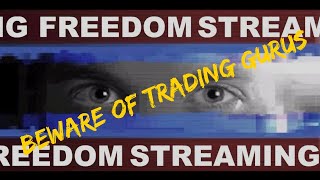
YouTube video by Alberto Costa explaining how some trading/investing 'gurus' use persuasive techniques (many drawn from NLP and public-speaking practices) to sell expensive courses. The speaker catalogues tactics—mirroring/raising hands, rhetorical 'yes' sequences, pre-framing, presupposition, double binds, ambiguous/embedded language, urgency/scarcity, and selective testimonials—and illustrates them with experiments, book references, and personal anecdotes (including nearly signing a $16,000 property deal). He urges viewers to learn to spot these manipulations, attend free seminars without payment information, and evaluate courses logically rather than emotionally.
Questions this video answers
November 25, 2019
A $16,000 US dollar property investment
Dark Angel
Chapters
I guess you've already realized that the topic today will be a little different. It will not be about trading or investing strategies, but rather it will be about trading and investing, teaching industry. Specifically these guys called guru that are out there to sell courses where they are supposed to teach you profitable strategies so you can make money. If you don't know where the background picture that I'm using is from, I will let you know at the end of the video. Maybe you are too young to know, but let's see later. Now, why do I want to speak about that? Because unfortunately with online and technology, yes, there are many opportunities, but also a lot of scams. Many of such gurus that are there teaching you how to make money actually are making money by selling these courses. But it doesn't mean that what they are teaching will really help you make money. So it's very important that you are able to identify these kind of situations. And that's what I'm doing with this video. I will share with you some techniques that you really can use to spot these scammers. You may be wondering why am I speaking about that? What gives me the authority to do that right now? I'm not here to tell you my qualification. You know, I have a PhD or that, by the way, I have, but it's not relevant here. Actually the reason why I'm doing that is because it's already a few years that I am going to this kind of trading and investing courses. Okay, I just paid for one, let me be honest. But I went to many free courses and I started to notice some similarities in the way they deliver, in the way they are speaking. And, and this was to me very suspicious. I say, well, it cannot be a coincidence that they are kind of behaving the same way. There might be something behind that, right? So I wanted to understand what was going on. Especially because they tend to be effective. You see at the end of the course a lot of people rushing to the, to the back of the room to sign. And then I was okay, there is something here. You. It cannot be like that. Now, before, before proceeding, I also want to tell you that I have studied Neuro linguistic programming, nlp. That is one of the techniques that they use, right? I mean they take a lot of techniques from NLP that can be great, but it also can be used to, let's say, I would not say manipulate, but be more convincing. Let's put it this way. And I also did, I was part of, I am still part of Toastmasters. That is something that focus on public speaking and leadership. And I was specifically doing my pathway, they call Pathways now on persuasion. So by learning nlp, reading books and going to trainings plus the toastmasters, when I went to these seminars, the trading seminars and investing guru speaking, I was better able to understand what was going on. And I want to share with you today about that, right? So let me start with this. And before. Wait. Another thing I want to tell you is I'm really sorry if my voice is a little weird, but I got a cold, so sometimes I may have this kind of noise. So forgive me about that. So let me start with this. There was a time when I started to go to these free seminars around three years ago. And those seminars were actually usually two, three hours. And why they do that? Because you go there, they teach you something more or less useful, it depends. And then at the end of the day, the real reason why they do that is because they want you to sign up for the expensive course, right? And I started to notice one thing that was really interesting. It was whenever we started, basically all of them, they keep asking these, raise your hand, raise your hand, raise your hand. And then I was like, okay, the first time, you don't even pay attention to that, right? And then you start to see that this happens every time they keep asking you to raise your hand. So I was like, why the hell are they asking me to raise my hand, right? So only later I understood that this is done for two reasons. Number one is because they want to increase the engagement with the audience, right? And number two is because they use it as a feedback. What do I mean by asking you to raise hand? Let's say that there is a room of hundred people and then you see that 20 are raising hand. Well, they know that only 20% roughly is following. So they need to change and adjust the strategy, right? And there is nothing wrong with that. Actually, everything that I'm sharing, there is nothing wrong with the techniques they are using because you know, they are there for. Because they have a business, right? So of course they want to sell more. If there is some technique that help them sell more, I find with that, the problem, and I will come to that later, is when they are selling something that is not really what they promise, right? So we will go to that later. Now about raising hand, the thing is that as I said, they are basically checking if the audience is connected and they want to create engagement, right? At some point, you will see later in the training that when they ask you to raise hand, they also raise hand. Also, this is something that in NLP is called mirroring, right? So you start to do the same thing that others are doing. And about that there is a very interesting experiment they have done I want to share with you because I think this will clarify much better than what I can say. So in this experiment there was a room, a waiting room of a doctor and there were actors inside, okay? And it goes like that. Every time that there is a red light on top of this room, every time the red light is on, then all the actors raise, they stand up and then after a few seconds they sit. That's what they were doing. Now there is a normal customer who doesn't know about that and he's entering, right? And then he start to notice that there is this red light. And when the red light is on, the people, they stand up and then they sit. And after a few times he was doing the same. And then one by one the actors enter, right, to see the doctor and then they leave. And then there are new normal customers coming. And so very funny. What happens at the end is that all the actors are out and you only have people inside and they are still doing the same. Whenever there is the red light on, they stand up and then they sit and they are doing these and they don't even know why they are doing, right? So this is an interesting thing because remember these guys that are selling you stuff, the trading, investing gurus, they know, they know how you think. They know that people decide following emotions and maybe later they use logic to justify. Like this group of people in the doctor waiting room, right? They were standing up, they don't even know why they are doing that right? Now why I'm saying that, because as I said, there was this concept of mirroring that is one of the concepts of nlp, by the way. Another example of this is when they ask question where rhetorical question, they are saying, right? So they ask you a question where the answer is obviously yes. So would you like to be more successful? Yes. Would you like to be more rich? Yes. Would you like to be free? Yes. And then they ask you a few of these yes questions. And then later they also ask you another question and you are more is more likely that you will also say yes, right? So they may ask you after three or four of these questions, the next one will be would you like me to show you how you can achieve that? And then it's very weird if you say no right? Now if you look at the, if you look at the book that I suggest you to read by Chris Voss, that is called. What was the title again? Let me think. How to Split the difference. Sorry? How to split. Never split the difference. Actually never Split the difference. So Chris Voss is an ex FBI negotiator and then he's describing in these books many techniques you can use. And he's saying that this asking yes, yes, yes is not really working. Okay? Because when the yes that you are answering are fake, you will not basically say yes to the next question. But they are not asking this question as a sequence. They may put one here and one there. So there's not really asking three or four such question in 10 seconds, right? So in that case it may work better. Now I say that this raising hand is very, is very used in these seminars. What are other techniques that these people are using for convincing you to buy the course? So one is called, one is called pre framing. Okay. Pre framing is basically the idea that the best time to address an objection is before the objection is even made. So for example, one of the main objection that people have for such courses is, well, if the strategy that you are teaching me is so great, why do you need to sell a course? Right? Because they know that people will ask these. They already have some way to answer, right? Or they may even say that at the beginning of the seminar, right? So imagine you are sitting there and then they may say something like, oh, I know that some of you are thinking or are wondering why I am here selling a course if I am already so successful and financially free. And then they may say something like, well, the reason why I'm doing that is exactly because I'm financially free. Because now that I'm financially free, I. I have the freedom to choose to do what I love, and this is what I love to do. And then you may be wondering, well, it really doesn't reply to my question, but it kind of makes sense, right? And so you just, you are just convinced by that. But if you think logically doesn't mean anything. It's just a circular argument, right? The thing is that again, they are using some techniques. So here we, you know, could be very like more advanced. There is something called light of mouth pattern in nlp, but let's not touch that. It's just for you to know that pre framing, so in a way, handling raising objection or handling them before you even make it is something that they do. So one thing that you can start to notice is if at the beginning of the seminar they are doing this kind of claims. Now you know why they do another one that they Use that is very, very common is the presupposition. So what is a presupposition basically is a way to how to say, shift the focus in what they say so that you will accept what they want to accept what they want you to accept. I give you an example. It's much easier. Let's say that I say, oh, you will learn how I made 1 million by 26. Now what's the point here? If you think about that, they are shifting, right? The question to how I made 1 million by 26. So you may not even question the fact that they made actually the million by 26. In other words, they are not saying that they may or may not made a million, right? This is of course it's true, you don't know. But you will focus on how and when you focus on how they made 1 million, implicitly you are assuming that they made 1 million, right? So this will basically become a kind of okay, I accept that. Teach me how you made a million, right? Another one that is very common is the double bind. Double bind is basically giving you two options and every option is assuming that what they want you to do is true. Again, example, this is often at the end of the seminar they may say something like, oh, when you go back to the room and then you speak with our assistants and you can decide if you want to pay by card or cash, let's say. So what is the point here? They are already assuming that you will go speak with the assistant and buy. It's only a question of will you pay by card or cash. So these are other NLP techniques that they use, right? And, and this is exactly the reason why, you know, it's crazy. Sometimes I was speaking with someone there and then I have this feeling that they are doing like they are signing and they don't even know why. You know, because again, I want to repeat the main point of this is that they are using your emotions. It's not a logical process. When you are engaged at the emotional level and then you really want to succeed and then you are so excited to be the next millionaire. Your logic basically is on vacation, right? And maybe later you will realize that, well, maybe was not a great idea, but it's too late. So we have touched the pre framing, the presupposition, this mirroring. What about. Oh, there is another one that is really great. They use ambiguities when they speak. Now, maybe not all of them, it depends how good they are, but they may tell you something like that. Let me give you a simple Example, a sentence that they may tell you, for example, I know you like me by now can already see the value of the this isn't it? So I repeat, I know you like me by now, can already see the value of this, isn't it? So imagine that they are saying that in the middle of the seminar, maybe after they show you some strategies and you may not even be aware of what's going on. So let me show you what exactly this sentence means and how they use this kind of patterns. The first one is they say something like I know, I know in NLP is called mind read. So basically they are speaking as if they know what you think. Now why is this powerful here? Because here they say that you know that you can see the value of this, right? And of course you are there at the seminar because you want to become rich. So of course you see the value, right? Because when someone is using the mind read to say something positive that you like, you will not question. If I tell you I know you are really smart, you will not say, how do you know? You will just feel good about that, right? So this is the same. And by the way, when they say the value, right, they often use some kind of language that is not really specific. Why? Because maybe for you the value is the fact that this strategy will allow you to get your financial freedom. Maybe for another person in the audience, the value of this is that, I don't know, they will be able to create more money, more sources of income, so eventually they will be able to buy a bigger house, who knows? So instead of telling you specifically, I know that by now you see that with this strategy you can buy Lambo, right? They will tell you something like the value or very generic stuff. And the point of this that is related in NLP to what is called the Milton language is that you will accept or you will interpret this the way you want to interpret, right? So the more generic it is, the easier that everyone will interpret the way they want and they will accept it. But there is more. I know you like me, you like me, you like me basically because they say, I know that you can see the value of these, you are already assuming. And this we go back to the present position, they are already assuming that, well, yes, you know, you know actually what I'm thinking. And since you say also you, I know you like me, you like me may have two interpretations, right? It can be I know and you also know that there is value. Or it may be that you in the audience like me, the speaker, and then Suddenly this is the kind of language such that eventually you feel that oh, I like that guy. I don't know why, but I like him. He understands me, right? So this is exactly what they do. And then there is the other one that I also saw in another video by this guy called Mike Gwynette. I think I will put the link in the description. He made a great video about techniques that people do with a live event. Is really good. I suggest you to watch. It is a Buy now is another ambiguity because buy now is by now right in theory. But since it's not written, it's spoken, it can be also interpreted as buy as B U Y. So I know you like me by now. Can buy now means you buy now. This course I know you buy now. So when you put all these patterns together, you think that this sentence is very normal. It's not. It's not. There are patterns that are used to give you comments. It's called embedded comments. What is the point? The point is that your conscious mind will not be able to filter out that. Especially because if they put a lot of them, they stack one on the other, you will be so confused. But subconsciously you will understand the way you want to understand. And because they already are engaging your emotions there and you want to be. You are believing that you will be the next millionaire. You are at that course most of the time because you are buying the drink that they are selling. Then it's possible that you interpret a sentence like that in such a way that well, I will buy the course. I like this guy. Because this program has value, right? You will not question that. And the thing is that you will have this feeling from inside and you don't even know why. Well, now you know why. This is from courses I've taken, even expensive. And I'm telling you for free this stuff. You're welcome. The thing is that I really want you to know what is going on. I really want you to know why after attending such courses you feel that way. Why you see a flow of people rushing to sign up, right? And speaking of rushing to sign up, there is another thing that in the video of Mike they also is also mentioned is that they leverage on emotions again, scarcity and greed. Fear of missing out. They may say something like, oh, we only have 20 or 30 or whatever places left. It's not true. It's not true. But because they tell you that, then you will rush because you don't want to miss the opportunity after maybe two, three hours. Then they keep. They put you Basically in a kind of trance state where you are constantly reminded that this is great, this is the way to solve your problem. They will amplify the problem usually at the beginning with. With a very sad story how they were at the beginning unsuccessful and maybe they went to through bankruptcy or shit like that. And then how thanks to these techniques they evolved, they were able to achieve great results. And then, and then you will feel like, oh, well, that's great. You know, I am also kind of like that. I'm also in a situation where I want to achieve more. And then they will say, well, if you want to do that, you can now. But we only have 30 spots left and they have not even finished the sentence you're already rushing. Another one they use is the price. They may say, well, only for today the price will be huge discount. Now this is something that Chris Voss in his book also mentioned is a good tip when you are negotiating your salary, right? HR is asking how much you want. And then Chris is saying that it's good if you give a range where the lower bound is what you like and the upper bound, if he's not too close to the lower bound is better. Why? Because let's say you go to HR and you say, well, I would like A salary of 3,000 to 3.5,000 right now HR may or may not agree, but if you say I would like 3 to 4.5 thousand, even if they give you three, they will feel good because they will say, well, this guy wanted this range. We were able really to save money, but actually you were okay with 3,000. So here they use the same principle on the other side. So they say, well, the price was originally 5,000 and only for today will be $900. So you will say, holy shit, from 5,000 to $900 is a great discount I have really to profit. But you will not question who said that the real price was 5,000. WHO determined that value? They did. Right? But nobody questioned that. I never seen anyone in the audience raising hand and ask, how did you come out with this number? Right? And again, it's because of what I was saying before. You at that point are just using your emotions, not your logic. And you will filter out whatever is not congruent with the story that I can be millionaire, I can be successful, I can make money, I can be the next Warren Buffett or better, or even better. Now another point that I want to make, and this is also the reason why all the things that I'm sharing now can be negative. So just to Clarify. All the things that I shared so far are techniques that can be used to increase the sales, okay? And there is nothing wrong with that. Frankly, the reason why it's wrong, as I said, is when they use it to promote something that is not what they claim. If you watch the Coffeezilla on YouTube that I really suggest you to promote, watch. He uploaded so many video about fake gurus. You will understand what I'm talking about. There are so many people coming out with fake claims and fake review and testimonials that really, this is really scary. So let's say that the testimonial they use are not fake. There are many fakes, but let's say they are not fake. What I don't like, especially in the trading and investing teaching environment, is these people that they choose the testimonials in such a way that you will get a distortion on the real value of the product. What do I mean by that? Let's say that there are hundred people that went to this course, right? And let's say that on average maybe 60% are not profitable. Maybe 20, 20%, 30% are doing okay. And maybe there is someone doing well. And then there are a few outliers, maybe 12 person out of 100 that got crazy results, okay? What is going to happen? Usually these guys that got crazy result because they are so excited and because they think that they are getting crazy result because the strategy works, they will often write to the guru, you know, with a great review. And this great review will be publicized. It will say, okay, this is what you will achieve if you follow my strategy. Well, no. Just because 12 person out of hundred achieved those results doesn't mean that you will as well. Because what they fail to tell you is what about the rest? Show me a distribution of the return. Show me the result of everyone, not just a outlier. Then I can trust that your method works. Because if the method works only for one over 100 people, you cannot take that as example to say that this is what you will get, right? And if you notice many times these kind of testimonials with great results are not always the same. Maybe they got those results because they were not even using the strategy. Maybe they were taking crazy risk, you know, and then maybe one month they made 80% and then the next month they are bankrupt. But you will never heard by them when they are bankrupt, right? Why is that so? Because think about that now with the online and all these social media, there are many of these courses that offer platforms and groups where People can share what they do right now, what is the problem? The problem is that if you are in this kind of, let's say there is a Facebook page or whatever, then you are very happy to put your success story, isn't it? But if you fail or you got a very bad result, or you are down 30%, would you like to go there and show to everyone that you got this bad result? No, you will not do it. So what will happen is that you hear only from those that are successful is a kind of survivorship bias. So the problem to me is when people claim that some strategy that is the objective, like that is the main content of a course allow you to reach the objective that may be 30, 40% a year, 50% a year. And using as a proof to support this just a result of a few people without telling what happened to the 99% of the others. To me, it's not really honest and is really about integrity. It's not a lie. I mean, of course there are people that can achieve great results. But the problem is when you give a distorted perception to potential buyers that this is what you will get. This is definitely something possible. But what they fail or they forget to tell you is how likely it is. That's why I would say show me a distribution of returns. Show me what the majority of people following your system are making. Then maybe I can, I can start to see if this is really interesting or not. But don't just show me once in a while. One guy who got crazy results just for luck, because you know, is you can always, you know, I can teach you a very simple strategy to become a guru if you want. You know, you take a group of people, right? And then you may tell half of them to buy, half of them to sell, and then the price will go up or down. So let's say the price goes up. So the guys that you told them to buy, they will think, oh, it was good, good call. The others will think, well, no, it was not good. So now you take the 50 and again out of those 50, you tell next, okay, this one you buy, right? To half of them to 25. And the other 25 you say to sell. And maybe next time the price will go down. So you see what happened. 25 of them will say, oh, this guy actually got it right twice. And you can go on forever. I mean, not forever, but you may get a small group of people where it seems to them that you are God, because you know what is going to happen. But what is the problem? What happened to all the others? And it's the same principle here. You take a outlier to represent the whole population. You use a testimonial that is not statistically significant. That's a problem I have with many of these courses, not about the techniques. So why did I teach you about the techniques actually in this video? Because I want you to do something. It's really a suggestion that will really help you. Start to go to these seminars. The free seminars, they may maybe is even online, but better if you go live. Start to go. One warning. Leave your cash home. Leave your credit card home. Just go register and go to listen. And now that you know these techniques, start to notice when they use them. Start to notice when they raise, they ask you to raise your hand. Start to notice when they start that they are using this double buying. Okay, you do this or do that. You can pay by card or by cash, right? All the things that I share in this video, oh my God, my voice is going away. So it's better if I conclude soon. But go and learn because the more you learn, the more you listen to them, the more you experience that, the easier for you to catch them. And when you start to catch them, then it will be much easier for you to be less involved emotionally and more logically. That's where you want to be. You want to be able to logically assess if what they are selling has value or not. Because I'm not saying that all of them are selling shit. Some of the courses may have value, but you need to be able to be in this kind of situation where you can distinguish between the I think it's good because of the emotional manipulation or I think it's good because logically I really think it's good. Okay, so that's what I wanted you to focus on. I really hope this video will help some people. People, because I know that this kind of situation happens more and more. And I know I heard some crazy story even I think it was a video, this coffeezilla where there was these guys saying that, you know, they basically push someone to raise the credit card limit to buy. So this is, this is not good. This is not where you want to be. And I want to share with you another thing that happened to me. And then I really stopped, you know, a few years back I was in a conference and it was in Hawaii and we were at this Hilton hotel and there was a call the first day, a kind of seminar for free, right? And then I realized later that they was. They were showing you properties so the main idea was you come to this free seminar, you listen to a presentation for, for, I don't know, 30 minutes. And then just for that we give you a voucher of a few hundred dollars. So because I had time, I said, okay, why not? So I went there and, and then, I mean, I don't know what happened really. I was kind of scared. I. I didn't know at that moment a lot of NLP and these things. But I tell you, really, believe me at some point, because one of these guys was really good. I was signing, I had in front of me, I was signing for a 16,000 US dollar investment in one of these properties. And. And then I kind of, you know, it was very weird to describe. It's like I was about to sign and then I woke up and I said, what am I doing? Wait, wait, wait, wait, wait. What is going on here? And then I have to say, okay, wait, wait, wait. I have to think about that. I'm not really confident about this offer and I was able to save myself. But that to me was the perfect example of your logic was on vacation. And then hopefully it came back from a vacation before I signed. So what I'm saying is that these things can be really powerful. You need to know they exist. Please go to these courses to learn and practice, not just for the what they are delivering. It may be good information, but really focus on these techniques and probably one day you will take me. Because the scams are so spread already that is very likely you will find one of them. So with that I would like to conclude this video and thank you for listening. I know it's very long and oh, before, before ending. As I told you, this background picture I'm using is from Dark Angel. Dark angel was a series that in the 2000 with Jessica Alba that I really like. Unfortunately, there were only two seasons and there was this guy that was called Eyes Only, I think that was doing some streaming to tell to the people things that other people didn't want to know. That is more or less what I'm doing, you know, that's why I choose it. I'm telling you something that many people may not like you to know, but I think it's very important and I really hope it will help you. So if you find this video useful, you can share it. I mean, or if you don't want to share the video, at least share the content with other people. Help others to be aware of this so they may not fall for this scam. And thank you for watching and as usual. See you next time.










